Is the native dog on Solana more cost-effective? Use Kelly's formula to calculate the real situation of playing local dogs
Original Title: "Are Chinese Dogs on Solana More Cost-Effective? Using the Kelly Formula to Calculate the True Situation of Playing with Chinese Dogs"
Original Author: Frank, PANews
Chao Tu Gou seems to be the timeless wealth password in the encryption industry. It is full of the most magical stories of getting rich in the field of cryptocurrency, and it is also an exclusive track for many who hope to make big gains with small investments. From Ethereum to BSC, and now to Solana, on the one hand, the stories of skyrocketing prices have enabled a few lucky ones to embark on the road to freedom. On the other hand, it has also left the vast majority of investors with nothing after repeatedly chasing after Chao Tu Gou.
Currently, there is a view that although the "Chongtu Dog" (a slang term for Chinese cryptocurrency investors) wins less and loses more, winning once can earn many times the investment, making it a high-quality gold mining track. From a scientific investment perspective, is it a reasonable decision to invest in the Solana project? Next, PANews will conduct a comprehensive analysis of this track from the perspectives of practical operation, winning rate, and odds using the Kelly formula.
Assuming you have $1000 in capital, should you invest in Solana Shiba Inu or not, given that the investment could either result in a total loss or a 10x return? And if so, what percentage of your capital should you invest?
Solana speculation is more cost-effective than Dogecoin?
Solana has become the most dazzling public chain currency in this round of market trends. Its highest increase within a year reached 15 times, driven by the significant increase in on-chain data. According to Defillama data, on December 22, 2023, Solana's on-chain highest daily trading volume reached 2.6 billion US dollars, surpassing Ethereum's highest daily trading volume of 2.5 billion US dollars in 2023, and becoming the most active public chain for trading. The active performance is inseparable from the popularity of trading dog coins and mining on Solana.
Compared to traditional Ethereum-based dog coins, there are several characteristics of dog coin transactions on Solana: low gas fees, high transaction volume, and fewer backdoors in token contracts.
Gas Fee: The average on-chain transaction fee on Ethereum ranges from a few dollars to tens of dollars. However, the on-chain fees on Solana can be so low that they are almost negligible.
Tokens contracts have fewer backdoors: Compared to the various contract vulnerabilities on Ethereum's Dogecoin, such as the Pixiu Plate, High Tax Plate, and Siphon Plate, Solana has few contract backdoors due to its mechanism. Apart from increasing issuance and contract permissions, there are hardly any other contract backdoors (these two items can also be easily seen on the on-chain data website).
Lower trial-and-error costs: The token price of SOL, the mainnet token of Solana, is much lower than that of Ethereum, which also brings a more friendly entry threshold for players looking for golden dogs on Solana. Many players invest 0.1 SOL once, which is about $10, while this amount is often not enough to pay for a transaction fee on Ethereum.
These conditions make it seem like a good opportunity for the "tu gou" (a term used in the Chinese cryptocurrency industry) on Solana to take a chance and upgrade from a bicycle to a motorcycle. But is this really the case?
玩家永输的「屠宰场」
translates to
The "Slaughterhouse" where players always lose
Players familiar with the Chinese cryptocurrency market know that trading cryptocurrencies is almost like a game of luck, rather than an investment. This type of trading is more similar to gambling or lottery than investment. If we view trading cryptocurrencies as a gambling game, the Kelly criterion is a mathematical formula that measures whether this game should be participated in, and what is the most reasonable proportion of funds to participate in each time.
Kelly Formula (Kelly Criterion) is a mathematical formula used for optimal capital management in investment and gambling. Its core idea is: when facing bets with positive expected values, how to allocate capital to maximize long-term growth rate. The Kelly Formula was proposed by John Kelly in 1956, initially used for information transmission problems in telephone lines, and later proved to be very effective in the fields of gambling and investment.
The basic form of the formula is:
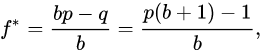
F: The proportion of funds that should be invested.
B: Odds (the ratio of the amount staked to the amount won is 1:10, so the odds are 9).
P: Winning rate (if you invest 100 times and win 3 times, the winning rate is 3%).
A: Loss rate (q=1-p)
Through this formula, the capital ratio to be used for each investment or bet can be calculated in order to maximize long-term capital growth. An important feature of the Kelly formula is that it considers the balance between risk and return, helping to avoid high-risk situations caused by over-investment.
We will calculate the proportion of funds that should be invested in Dogecoin transactions on the Ethereum and Solana chains based on the Kelly formula.
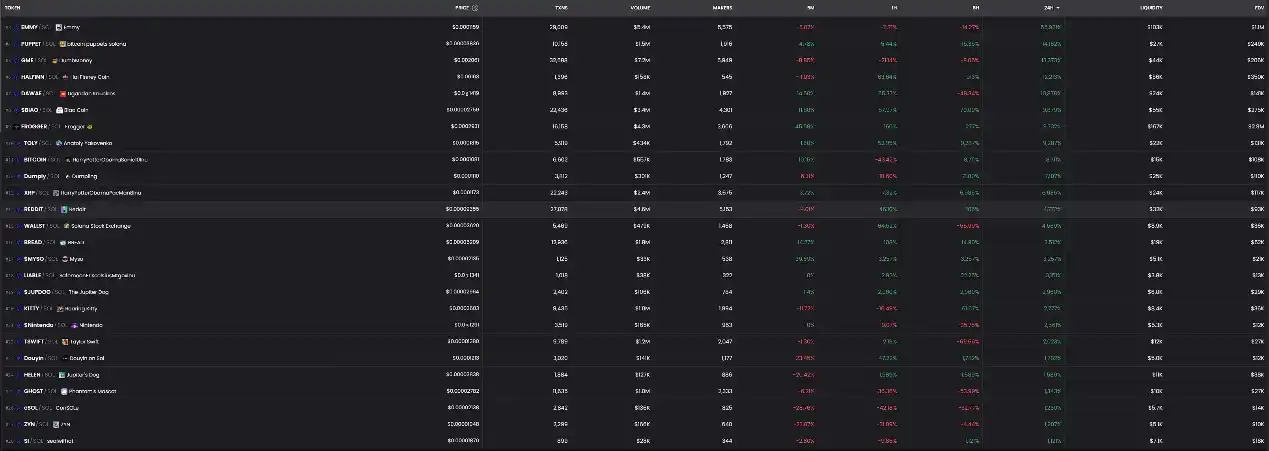
We calculate based on 24-hour data. Within the sample period, there were 1743 new issuances of the Shiba Inu project on the Solana blockchain, while the average for Ethereum is currently around 213.
Here sets a condition for a potential "golden dog". The holder must have more than 100 people, and the increase in the past 24 hours must be more than 10 times.
Under these conditions, the potential number of golden retrievers on Ethereum in 24 hours is 7, and the potential number of golden retrievers on Solana is 28.

Assuming we have a capital of $1000, our winning standard is to buy a Shiba Inu and gain a 10x increase. The odds are 10, with an Ethereum win rate of 3.28% (7/213) and a Solana win rate of 1.6%.
The numerical values of the Kelly formula for both:
Ethereum:
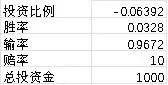
Solana:
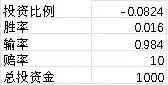
Formula interpretation:
According to the data, we can see that the Kelly criterion value for Ethereum is -0.06, and the value for Solana is -0.08. When the Kelly criterion calculates a negative value, it means that the expected return on investment or bet is negative based on the given odds and win rate. In other words, this is an investment or bet that is expected to lose money. In this case, the Kelly criterion is actually telling us not to make this investment or bet.
As a professional player in the cryptocurrency industry, you can monitor the market 24/7 and buy in at the first opportunity when a project goes online, and sell when the market rises 10 times. How much capital should you invest in the cryptocurrency market? According to the Kelly formula, you should not participate in this game at all, as in the long run, it will only lead to the loss of your capital.
Welcome to join the official BlockBeats community:
Telegram Subscription Group: https://t.me/theblockbeats
Telegram Discussion Group: https://t.me/BlockBeats_App
Official Twitter Account: https://twitter.com/BlockBeatsAsia

 Related Articles