Data analysis of Osmosis: Why it can become the network and liquidity center of Cosmos?
Original Title: "Osmosis Protocol Data Analysis"
Source: E2M Research
E2M Research: Shawn ( October 2023)
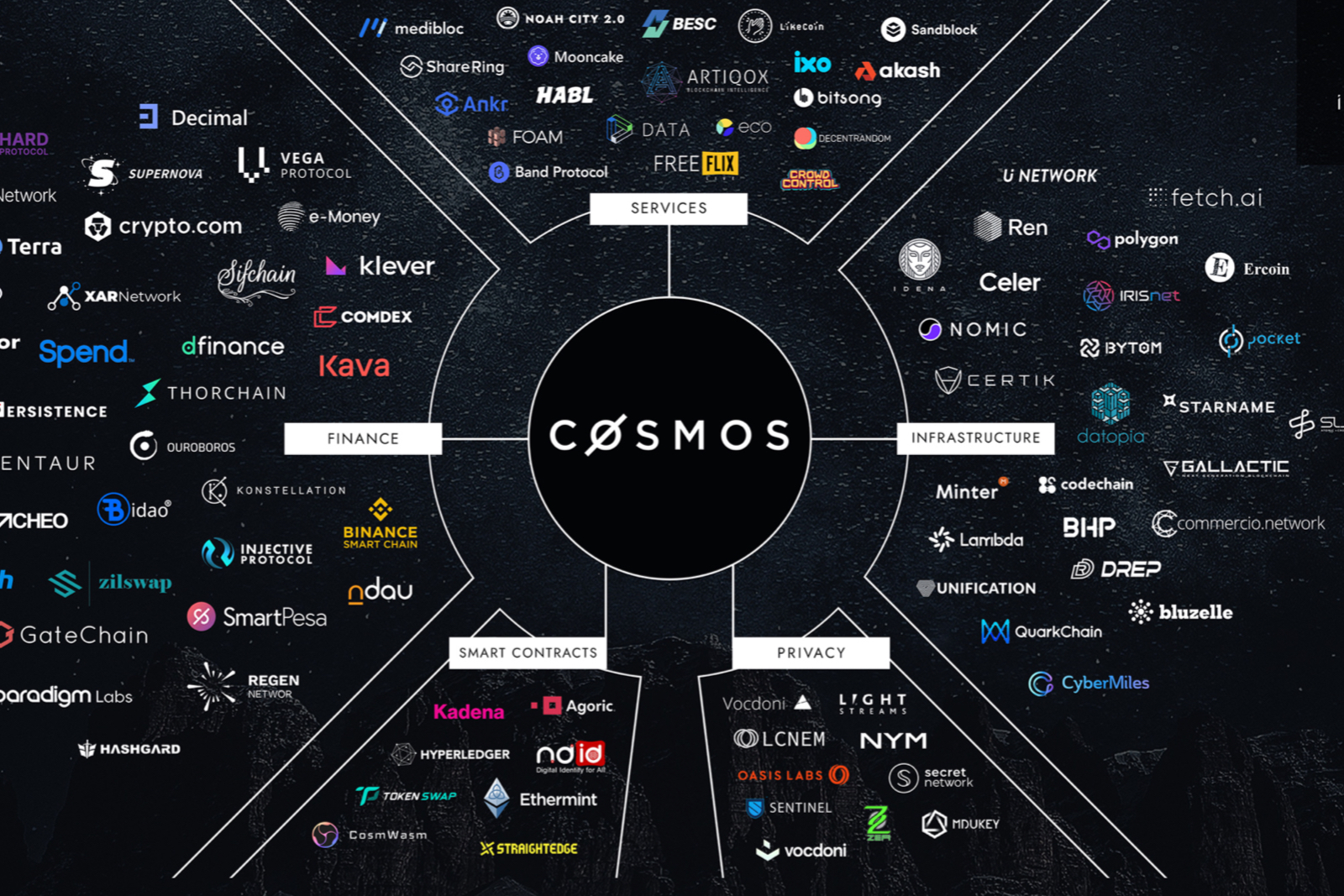
Osmosis is a cross-chain DEX application chain built on the Cosmos SDK. It has become the most widely connected and liquid chain in the Cosmos ecosystem.
1. Liquidity Data
The project went live in June 2021, and since then, TVL has been on the rise. In March 2022, it reached its peak at around 1.8 billion US dollars. However, starting from mid-2022, TVL has sharply declined and has now dropped to around 80 million US dollars.

Data source: https://defillama.com/protocol/osmosis-dex
The highest value of UST was approximately 200 million US dollars:

Data source: https://info.osmosis.zone/token/USTC
While LUNA's highest value was around $170 million:

Data source: https://info.osmosis.zone/token/LUNC
OSMO's highest value was approximately 700 million US dollars:

Data source: https://info.osmosis.zone/token/OSMO
ATOM's highest TVL is approximately $400 million.

Data source: https://info.osmosis.zone/token/ATOM
Other major assets are roughly summarized as follows:
JUNO: $80 million USD.
STARS: 5000 million US dollars.
AKT: $50 million USD.
SCRT: 2000 million US dollars
Adding other assets, its total TVL is basically consistent with the data provided by Defillama.
Among them, the total TVL of LUNA+UST is about 370 million US dollars, accounting for about 20%. Therefore, although the TVL of Osmosis has dropped sharply due to the LUNA incident, its proportion is not very high. The main reason for the decline is still due to the drop in the token price of the Cosmos ecosystem (but there is also the reason that the public is not optimistic about the Cosmos ecosystem due to the LUNA incident).
From 1.8 billion, it dropped to 80 million US dollars, a decrease of 95.6%. As for other mainstream DEX data,
Uniswap has dropped from $10 billion to $3.2 billion, a decrease of approximately 68%.

Data source: https://defillama.com/protocol/uniswap
Curve dropped from $25 billion to $2.3 billion, a decrease of 90.8%.

Data source: https://defillama.com/protocol/curve-dex
Another reason is that the Cosmos ecosystem does not have native stablecoins like USDT and USDC, which makes its TVL more vulnerable to price fluctuations.
2. Trading Data
The trading volume of Osmosis reached its peak in early 2022, with a monthly trading volume of approximately 3 billion US dollars. It gradually declined thereafter, with a monthly trading volume of about 200 million US dollars in 2023:

Data source: https://defillama.com/protocol/osmosis-dex


Therefore, if the following indicators change, it indicates that the advantage of Osmosis is being lost:
2. The number of chains connected through IBC in the entire Cosmos ecosystem is decreasing;
3. The network status of Osmosis in IBC is declining (for example, the number of chains connected to Osmosis is decreasing, while the connections to other DEXs are increasing);
4. Other active network indicators, such as the decrease in the number of native stablecoins and the decrease in daily trading volume.
On the contrary, if the above indicators are observed to be increasing, it indicates that the network status of Osmosis is strengthening.
As for the development of the Cosmos ecosystem, it involves the competition between sovereign application chains and Layer 2, which will be an important direction for the future development of blockchain. The author believes that the scalability of current Layer 2 solutions is still unable to meet the needs of large-scale users. Once the market turns around and on-chain activities become prosperous, Layer 2 will still face congestion and high transaction fees. Additionally, Layer 2 cannot completely solve all problems, and certain large-scale projects still need to be implemented in the form of sovereign chains to meet specific requirements. This can be seen from the migration of dydx and MakerDao's consideration of using Solana to build the backend through forking. Therefore, in the future, there will still be a coexistence of Layer 2 and sovereign application chains, with the Ethereum ecosystem as the main one and other ecosystems as supplementary.
Reference articles and data:
https://docs.osmosis.zone/overview
https://osmosis.zone/blog/unveiling-osmo-2-0
https://dydx.exchange/blog/1-click-onboarding
https://mapofzones.com/home
https://www.mintscan.io/osmosis/assets
https://defillama.com/chain/Osmosis
Original Link
Welcome to join the official BlockBeats community:
Telegram Subscription Group: https://t.me/theblockbeats
Telegram Discussion Group: https://t.me/BlockBeats_App
Official Twitter Account: https://twitter.com/BlockBeatsAsia

 Related Articles