Launching a $20 million incentive program, is dYdX up to something?

Table of Contents:
· Traders as the main incentive, with market makers as a supplement
· Previously, dYdX's liquidation mechanism was questioned by the community
November 29th, Chaos Labs announced a $20 million liquidity incentive program in collaboration with dYdX to promote early adoption and smooth transition of dYdX Chain.
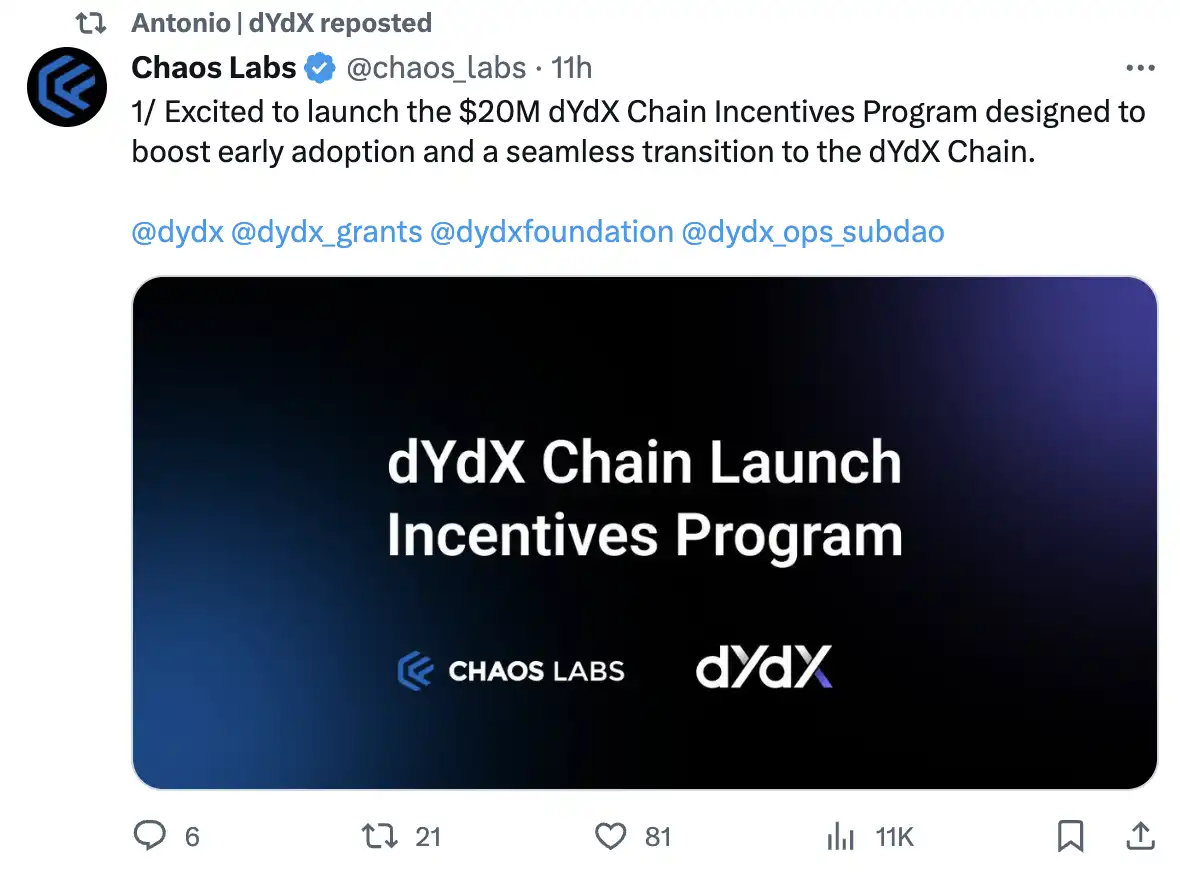
According to reports, the plan will last for about six months and aims to encourage diverse participants to migrate and interact with dYdX Chain: "Traders are at the core of this plan, and rewards are based on trading activity levels, measured by the transaction fees paid."
Incentivize Traders as the Main Players, with Market Makers as Support
According to the detailed official document, the main body of this incentive plan includes incentives for traders and market makers. For traders, Chaos Labs has also introduced a performance-based component to promote healthy competition and encourage participation from traders with different levels of trading experience. Please refer to the official document for more information.
In addition, the plan focuses on two main goals of traders: improving profitability and increasing trading volume.
As for market makers, the plan provides specific incentive measures for those who exceed the 0.25% market maker trading volume threshold, aimed at encouraging a competitive environment among market makers, thereby narrowing market spreads and enhancing liquidity.
Regarding the selection of incentivized market makers, it is pointed out that an important short-term goal is to encourage market makers to prioritize the dYdX chain, enhancing the trading experience through "narrower spreads and larger trading volumes": "Our goal is to quickly integrate their services with our exchange through a six-month incentivization program for market makers. This will reduce risk by stabilizing the market, maintaining low financing rates, and promoting efficient settlement."
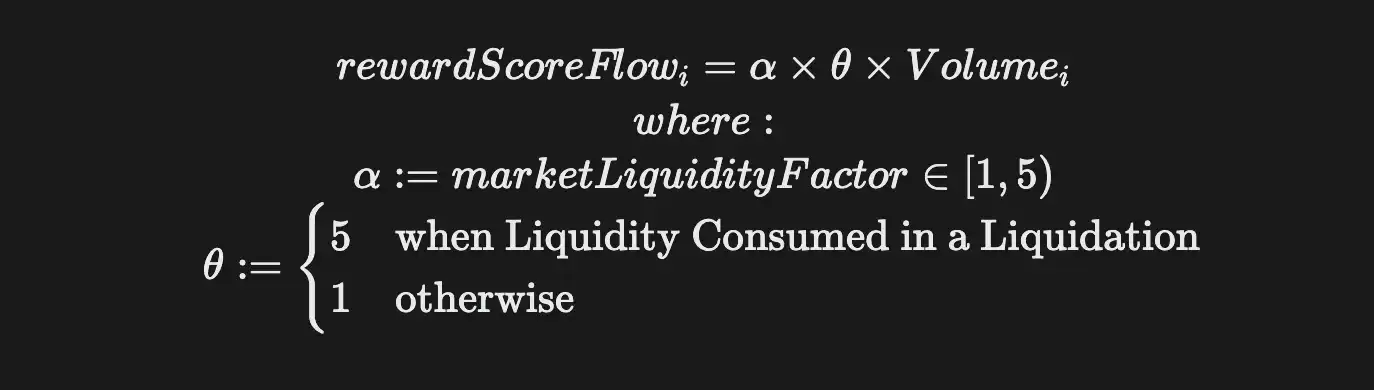
Official document specifically for LP reward formula
It is worth noting that a large portion (70-85% in total) of the transaction rewards in the incentive plan are specifically allocated for trading activities: "This allocation method is designed backwards to ensure that certain rewards remain attractive to traders at all levels."
Complementing the activity-based rewards are performance-based rewards (starting from the second quarter of the incentive plan), which account for 15-30% of the total allocation of transaction rewards.
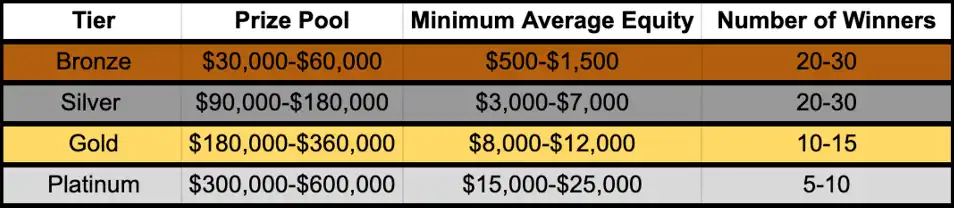
This is the translation of the content:
In fact, just 10 days ago, dYdX was widely questioned by the community on November 18th .
At that time, the data analysis platform Arkham announced that due to the sharp drop in YFI, approximately $50 million of open positions on dYdX were closed. It is reported that prior to this, nearly half of YFI's open positions were held on dYdX.
Arkham added that the trading volume of YFI on dYdX is usually very low, but the recent surge in the token's price has led to its open interest reaching a peak of about $60 million in the past few days.
Related reading: "$50 million position liquidated due to YFI crash, dYdX liquidation mechanism questioned by community".
Subsequently, on November 19th, dYdX officially stated on social media that it had used approximately $9 million from the dYdX V3 insurance fund to fill the gap in the YFI market liquidation: "The V3 insurance fund still has sufficient funds, with remaining funds of $13.5 million, and no user funds have been affected. The team is working hard to investigate the incident."
Many people in the community have pointed out that "dYdX has never truly decentralized", so some believe that dYdX needs to further improve its mechanism.
Welcome to join the official BlockBeats community:
Telegram Subscription Group: https://t.me/theblockbeats
Telegram Discussion Group: https://t.me/BlockBeats_App
Official Twitter Account: https://twitter.com/BlockBeatsAsia