Ethereum vs Solana, heading towards their respective development paths

Original Title: "Ethereum vs Solana: My Personal Take"
Original Author: Ignas, DeFi Research
Translated by Lynn, Mars Finance
Editor's note: This article was written and published on X (formerly Twitter) by overseas DeFi researcher Ignas, analyzing and discussing Ethereum and Solana. It not only compares the two, but also attempts to think from the perspective of large-scale adoption. In addition, Ignas holds both tokens.
Disclaimer: I hold both ETH and SOL.
After reading the discussion on X, it seems that many people have missed the fundamental debate behind the Ethereum and Solana-like religious disputes.
The basic discussion here is not just a comparison between Ethereum and Solana, but how we can expand blockchain to achieve mass adoption. Jumping to the conclusion, I believe that everything is still uncertain, and this or that issue is not as simple as it seems. This is great because we are still early in the game!

Continuously improving my artificial intelligence skills. DALL-E does not insert SOL flags, but including ETH flags is not a problem. The dilemma here is not only technical, but also related to cultural values. However, after reviewing the services provided by this week's sponsor Reserve for DeFi users seeking profits, we will have more discussions on this.
What is the significance of non-Ethereum L1?
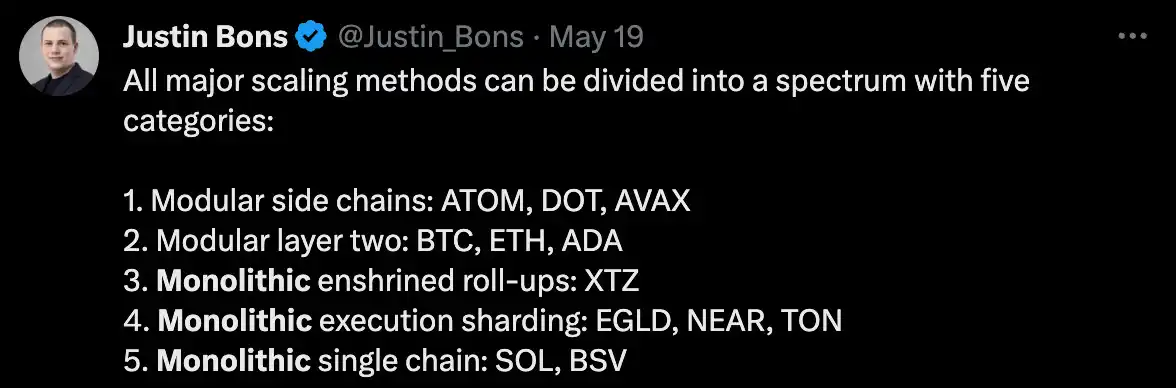
In order to understand the overall debate between Ethereum and Solana, I would like to briefly review the value propositions of other major L1s. This will help us create an L1 landscape based on scaling solutions.
Recently, I have conducted 6 AMAs, focusing on L1 and zkSync, discussing the role of L1 in the L2 era.
The main topic of discussion is the purpose of alt-L1 when Ethereum's L2 can extend Ethereum through fast transactions and lower fees, while also benefiting from Ethereum's security.
It is not surprising that the biggest issue of disagreement in the industry is whether Ethereum has won the L1 game. Sanket from Polygon and Alex from zkSync believe that Ethereum has basically won the L1 game, while the teams of Solana, Avalanche, and BNB Chain disagree with this view, which is also not surprising.
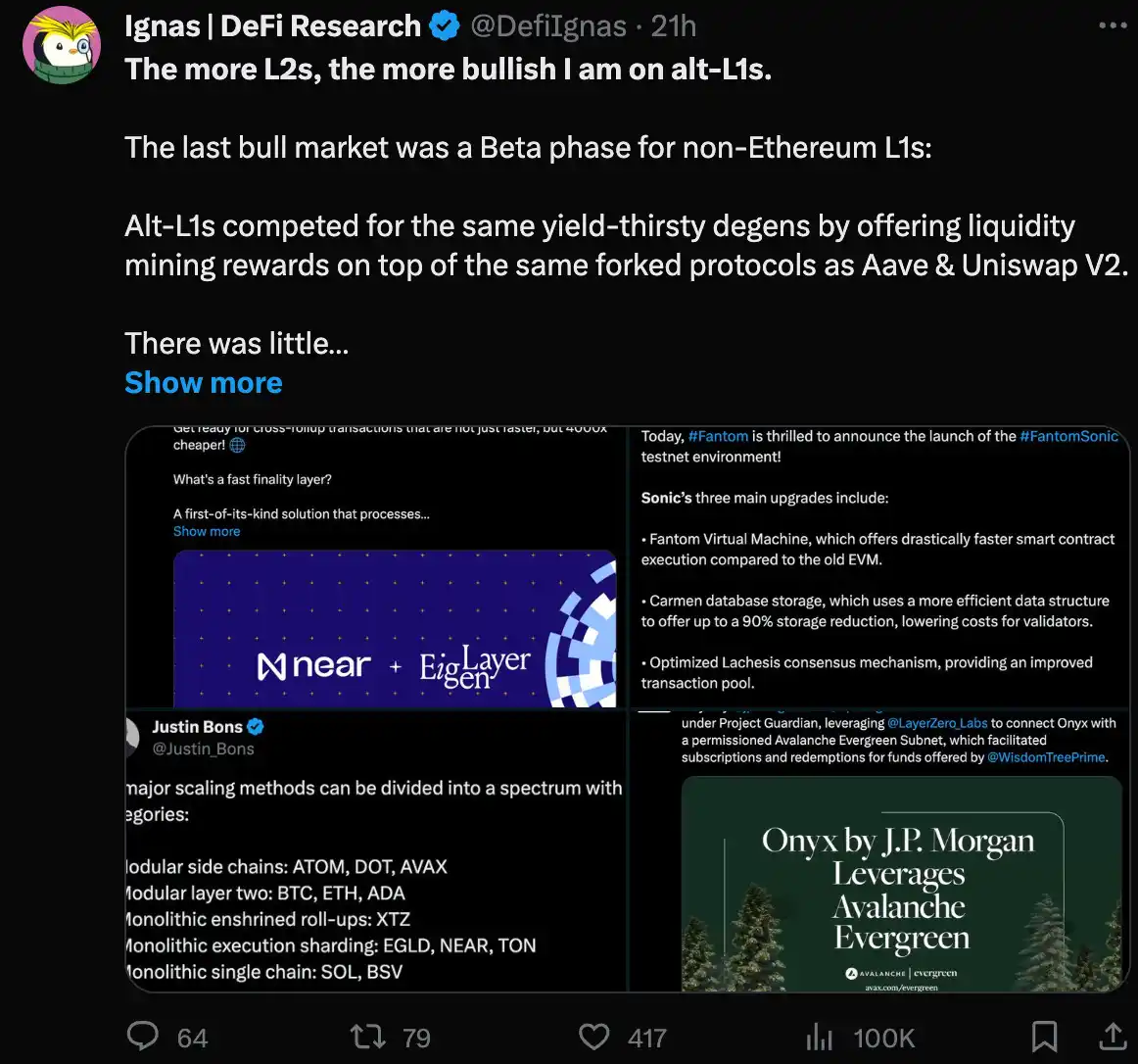
The stance of Near is subtle: Ethereum will continue to dominate, but other layer-one solutions will thrive in areas where Ethereum design is not good at. The value proposition of Near has always been somewhat unclear, but they recently partnered with Polygon to expand Ethereum on the data availability layer, which aligns with the above view.
Bankless stated in their podcast that Near is migrating to Ethereum's Layer 2 solution, but this is not accurate. Near exists as a standalone entity and is also helping to improve Ethereum's scalability through Near's data availability and storage capabilities.
In fact, Near can also provide fast termination for L2, and Arbitrum will settle first to Near, and then settle to Ethereum, while providing Ethereum + Eigenlayer security guarantees and decentralized sequencer for L2.
Eigenlayer retrying transactions to ensure the sorter is honest.
The core proposition of Avalanche's modular design is to expand through subnets, allowing anyone to seamlessly build their own blockchain. Architecturally, Avalanche sits between Cosmos and Polkadot, with a P-Chain (for validation), C-Chain (for smart contracts), and X-Asset (for sending and receiving funds). You can learn more about how it works in my AMA with Luigi, Avalanche's DeFi/DevRel lead.
The launch of BNB Chain is to solve the high Gas fees of Ethereum. However, even if the gas fee is less than 0.5 USD (and has made compromises in decentralization), BSC is still not cheap enough for many use cases such as high-frequency trading. To solve this problem, BNB has launched opBNB L2 on BSC and Greenfield to achieve data availability.
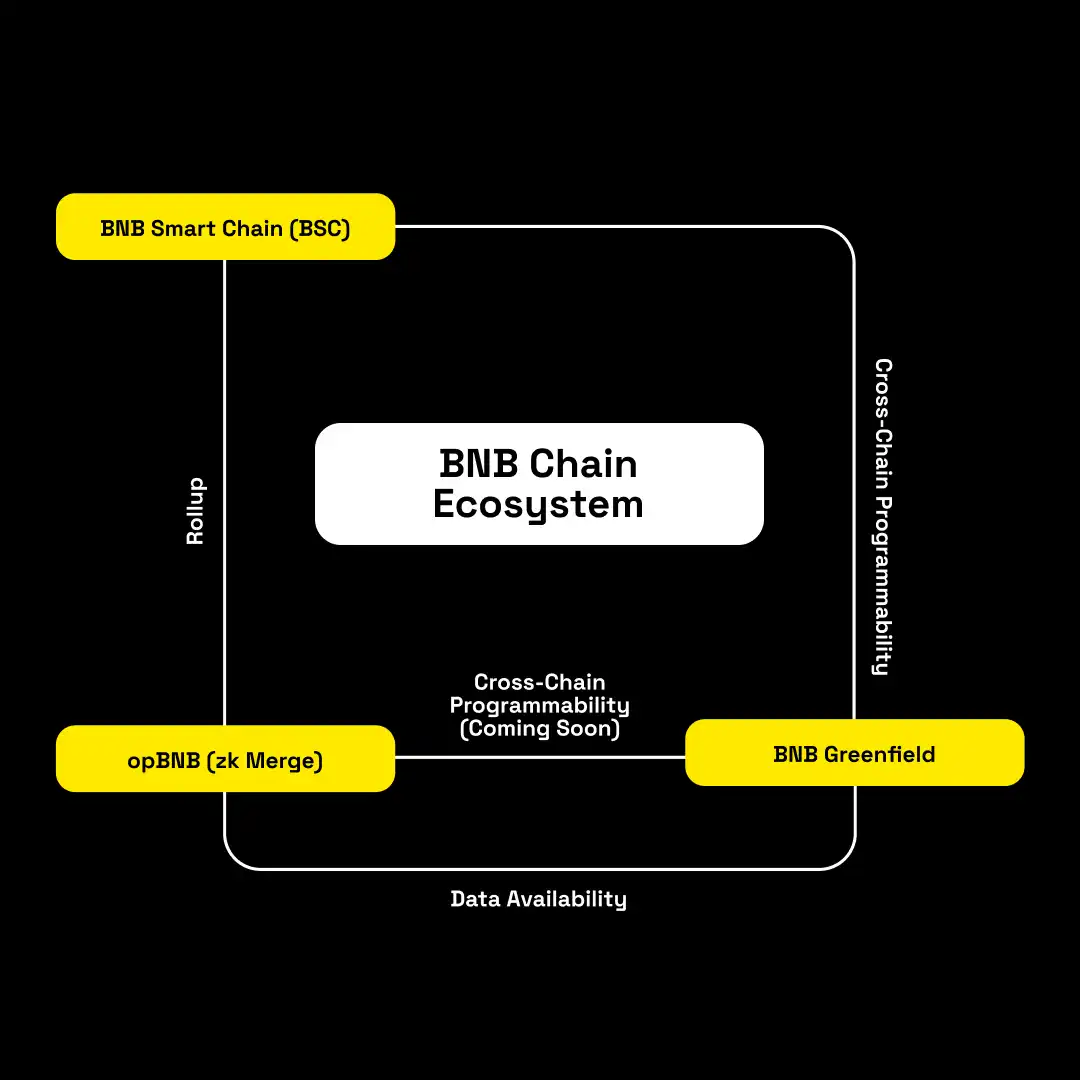
For more information, please refer to my previous blog post on collaboration with the BNB core development team.

The assumption here is that a single blockchain needs to compromise on three key aspects of blockchain technology: security, scalability, and decentralization. A blockchain can only have two, and Ethereum focuses on security and decentralization, leading to high gas fees and slow transactions. Therefore, it outsources scalability to the execution layer and data availability layer.
For more related content, please refer to my X thread below.
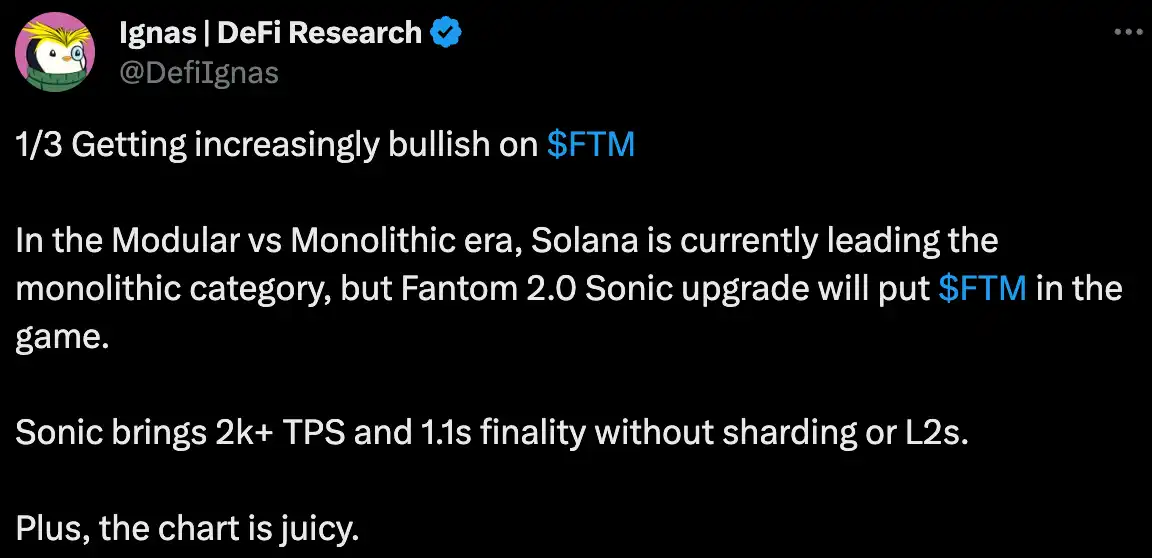
However, Solana is ambitious and hopes to solve the blockchain trilemma through a single cohesive design.
Protect Solana
Solana's vision is to bring together the advantages of cheap and fast transactions, fast finality, and low latency. In practice, this eliminates the need for cumbersome bridging, at a cost that is only a small fraction of what the best Layer 2 solutions currently offer.
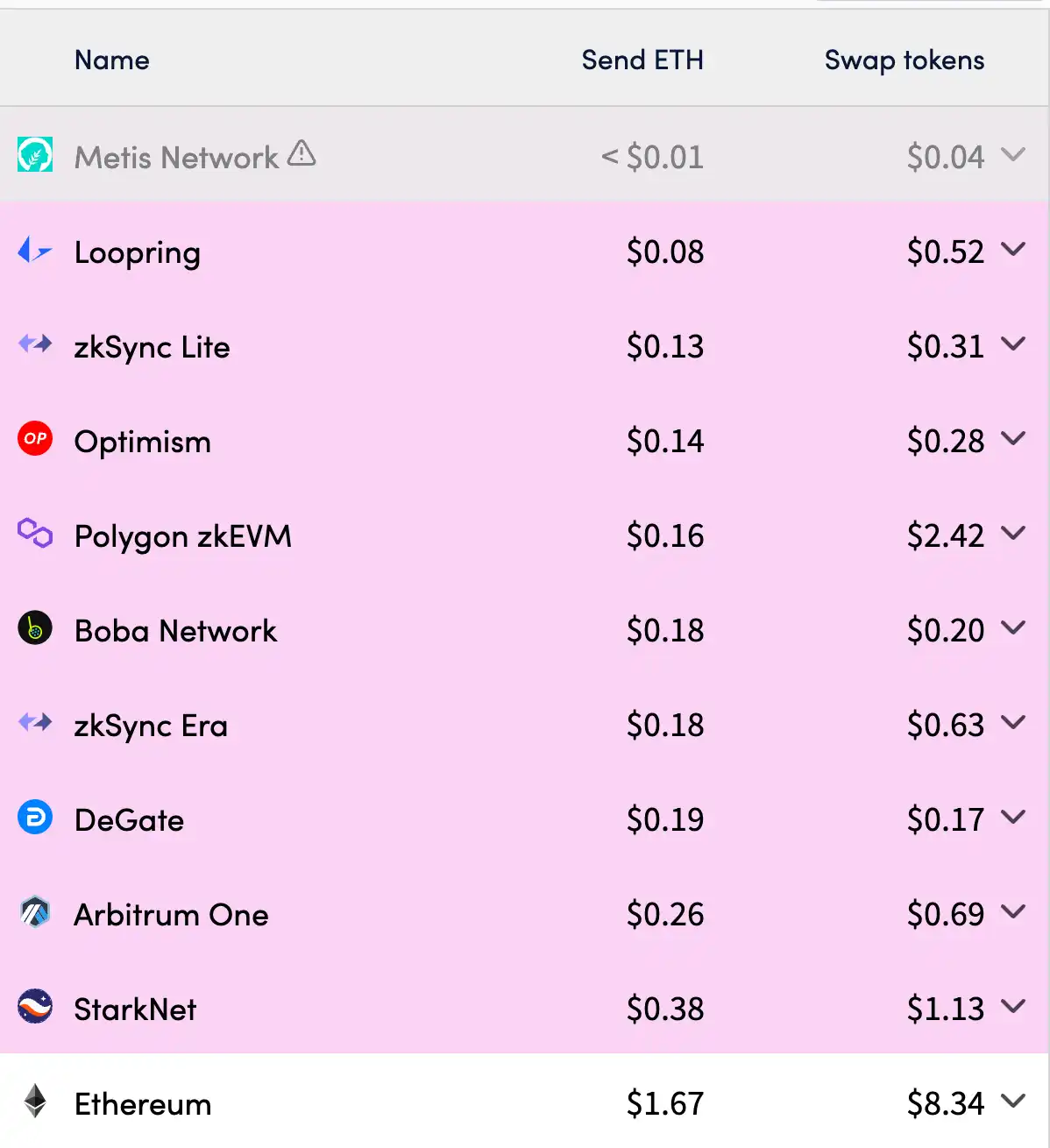
Single transaction fees on Arbitrum are not good at $0.69 (at the time of writing) ... we need L3 as soon as possible!
Now, all of these good things require powerful hardware, which makes the cost of running validators very high (there is a calculator here). In fact, due to the high development costs, the benefits have even withdrawn from the liquid stSOL bet.
In addition, the allocation of SOL has also been criticized, with 48% being allocated to internal personnel/VC. Finally, Solana lacks a second production client (there is only one blockchain software client in Solana, which means that only one program needs to be modified to cancel ownership).
Due to the aforementioned characteristics, the Ethereum community (note that most of my investment portfolio is in Ethereum) claims that Solana is not as decentralized as Ethereum. This is a sensitive topic, but my current perspective is as follows:
Ethereum L2 is not truly decentralized (sequentially centralized);
Hardware prices are trending downwards, which is beneficial for Solana in the long term;
Solana will launch its second validator, Firedancer, to decentralize the network;
Welcome to join the official BlockBeats community:
Telegram Subscription Group: https://t.me/theblockbeats
Telegram Discussion Group: https://t.me/BlockBeats_App
Official Twitter Account: https://twitter.com/BlockBeatsAsia

 Related Articles