Basic overview of Türkiye’s Web3 use cases and encryption market
The original title: "Web3 Use Cases in Turkey and an Overview of the Cryptocurrency Market"
Source: Asia-Africa-Latin America WEB3 Research Institute
This article selects the perspective of "Turkey's Cryptocurrency Market" from the 3WW3 Asia-Africa Research Institute Space event, and summarizes the precautions to be taken when participating in blockchain activities in Istanbul.

Tommy Liang: Bitget Research Chief Researcher.
Shan:TheVentureTvH co-founder
小川:706 Lead Researcher Translation:
Xiaochuan: 706 Lead Researcher
ABMTF:Odyssey dao Co-founder
Turkey's Web3 Use Cases
Tommy Liang (Data):
- The number of daily cryptocurrency traders in Turkey (on all cex) reached 500,000 to 700,000 people in December 2021. However, due to the bear market, the number of cryptocurrency traders in Turkey's entire network dropped to 270,000 to 410,000 people in February 2023.
- At the same time, the usage rate of non-custodial wallets in Turkey is relatively low. Turkish users have a strong dependence on CEX and relatively low understanding of Defi. In addition, Turkish users have a high level of interest in Bitcoin and Ethereum, and like to use cryptocurrencies for fiat hedging. Turkish users are also very passionate about football and have a high enthusiasm for fan tokens.
Xiǎo Chuān (Policy):
- The Turkish government's attitude towards web3 has always been unclear. Although the Turkish Ministry of Digital and Technology mentioned in a strategy paper in 2018 that they wanted to establish a national blockchain infrastructure, there has been no significant progress seen in this area.
- In 2021, the central bank issued a policy that prohibited Turkish citizens from purchasing or providing services based on cryptocurrency. However, the director of the digital transformation office under the Turkish presidency's office denied the policy of banning cryptocurrency transactions issued by the central bank at that time was not a ban on Turkish citizens owning cryptocurrency assets.
- Recently, the candidate mentioned that "Turkey's next unicorn company will emerge from Web 3". This may also reflect Turkey's appreciation for cryptocurrency policies.
ABMTF (Local):
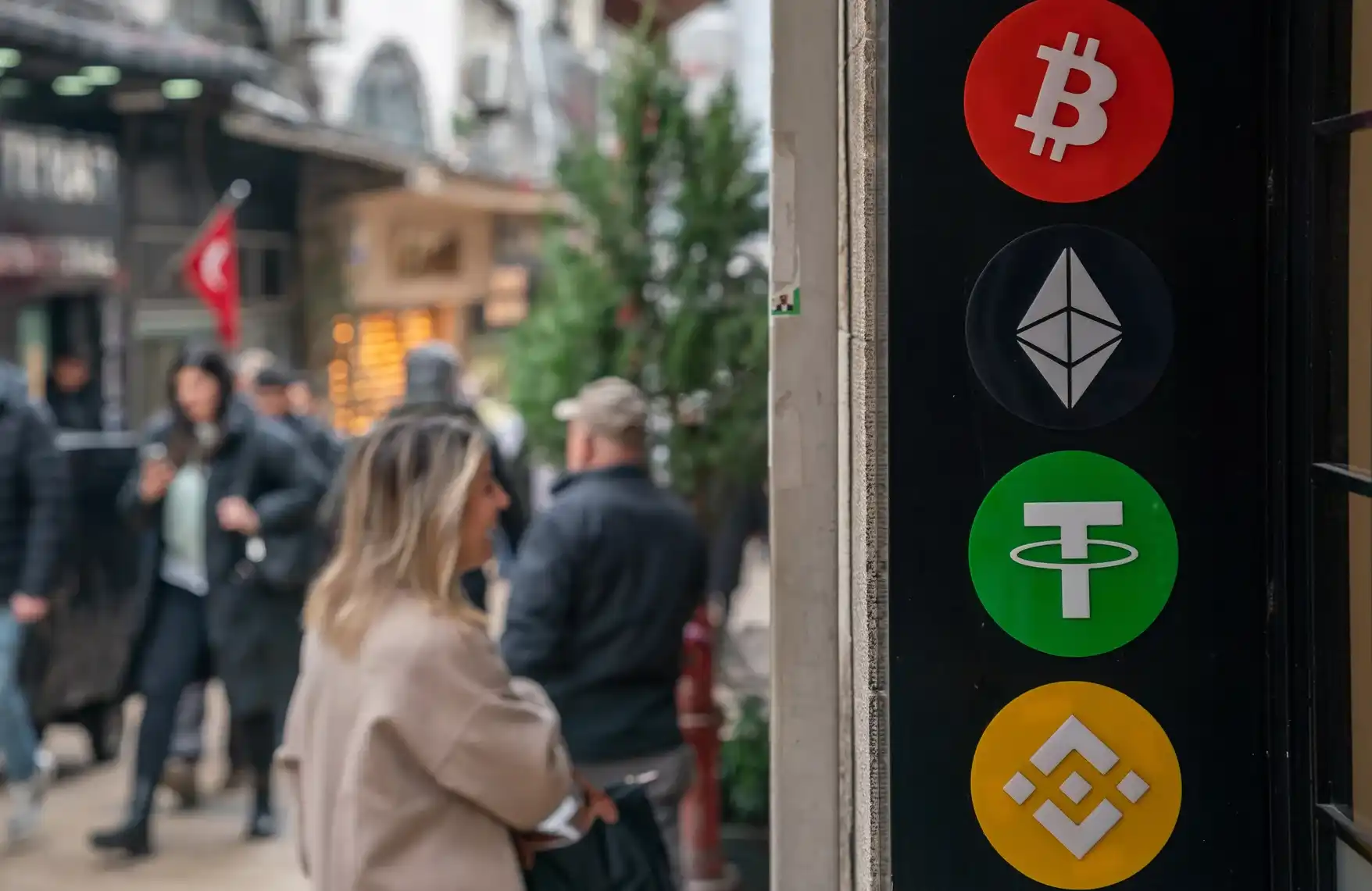
- When you disembark in Istanbul, you will see advertisements for local exchanges on every gangway, and there are many places for OTC cryptocurrency exchange, seamlessly connecting cryptocurrency and daily life.
- Before, when taking a taxi, the driver would use a cryptocurrency exchange to make some trades while parking, and OTC transactions are often done in offline stores that are only a few square meters in size.
shan (local):
- Many people in Turkey can discuss with you the recent prices of BTC and ETH. I will go to my boyfriend's (who is Turkish) family and all the elders, such as grandparents, can discuss with you the rise and fall of ETH and BTC.
- When investing in real estate, most agents will default to asking if you want to use cryptocurrency for transactions. Even when I recently booked an offline venue for an event, the restaurant owner proactively said, "You can transfer the payment, and we'll accept it in cryptocurrency."
- Many young people like to decorate their bedrooms with items featuring the Bitcoin logo, and Bitcoin is often mentioned on television programs.
Turkey's Development Status in Various Web3 Fields
shan:
- From my experience with funds and projects, there is relatively less DeFi. Centralized exchanges are also a part of it. Due to the gambling mentality, gaming currently holds the mainstream position.
- Many gaming projects are being developed by people who have transitioned from web2 game development. There are also many who have transitioned to Gamefi, Socialfi, and NFT projects.
- Developers are also transitioning and there may be some infrastructure projects, but their overall fundraising capabilities are much worse than those in the Asia-Pacific region because there are not many VCs in Turkey, and relatively fewer invest in web3.
- Compared to last year, both users and developer communities have become more mature. I have a feeling that the application layer is no longer dominated by projects such as gamefi and socialfi, but there will also be the emergence of Cyber security, smart contract, and auditing. Recently, there have also been some people from the political and academic circles working on RWA projects.
Tommy Liang:
- The website traffic of Lens Protocol is nearly 16% from Turkey, which to some extent indicates that socialfi or Lumaohexinli is popular in Turkey. Because Turkish users like to search for "free Bitcoin" on Google, they will look for websites that offer small amounts of Bitcoin for completing tasks.
- Shan note: From the perspective of retail investors, they are more willing to buy Coins with long-term value rather than chasing after MEME Coins. Many people may only participate in airdrops.
Xiǎo Chuān:
- Actually, we can pay attention to the views of the Blockchain Research Institute of the Turkish Scientific and Technological Council, a government agency in Turkey, on the application of digital currencies. They are optimistic about DID and the use of smart contracts to put government data on the blockchain.
- And we can also pay attention to the digital transformation office under the Turkish Presidential Office, the digital song event (similar to a hackathon), which can indicate which type of development the government will support in terms of policy.
Notes for attending conferences in Turkey
shan:
- I believe there is no need to worry about the situation-related issues. The area where the activity takes place is very safe, and protests will only affect traffic at most. Although Istanbul is a Muslim country, the lifestyle is more European and American. The lifestyle of parties, bars, and convenience stores is closer to that of Europe and America. There is no requirement for women to wear headscarves when entering or leaving certain places.
ABMTF:
Welcome to join the official BlockBeats community:
Telegram Subscription Group: https://t.me/theblockbeats
Telegram Discussion Group: https://t.me/BlockBeats_App
Official Twitter Account: https://twitter.com/BlockBeatsAsia

 Related Articles