The Web3 wallet track is saturated, how to find opportunities in the competition?
Original Title: "Winning the wallet war: 3 essential frameworks for builders and investors"
Original Author: MICHAELLWY
Original Translation: Deep Tide TechFlow
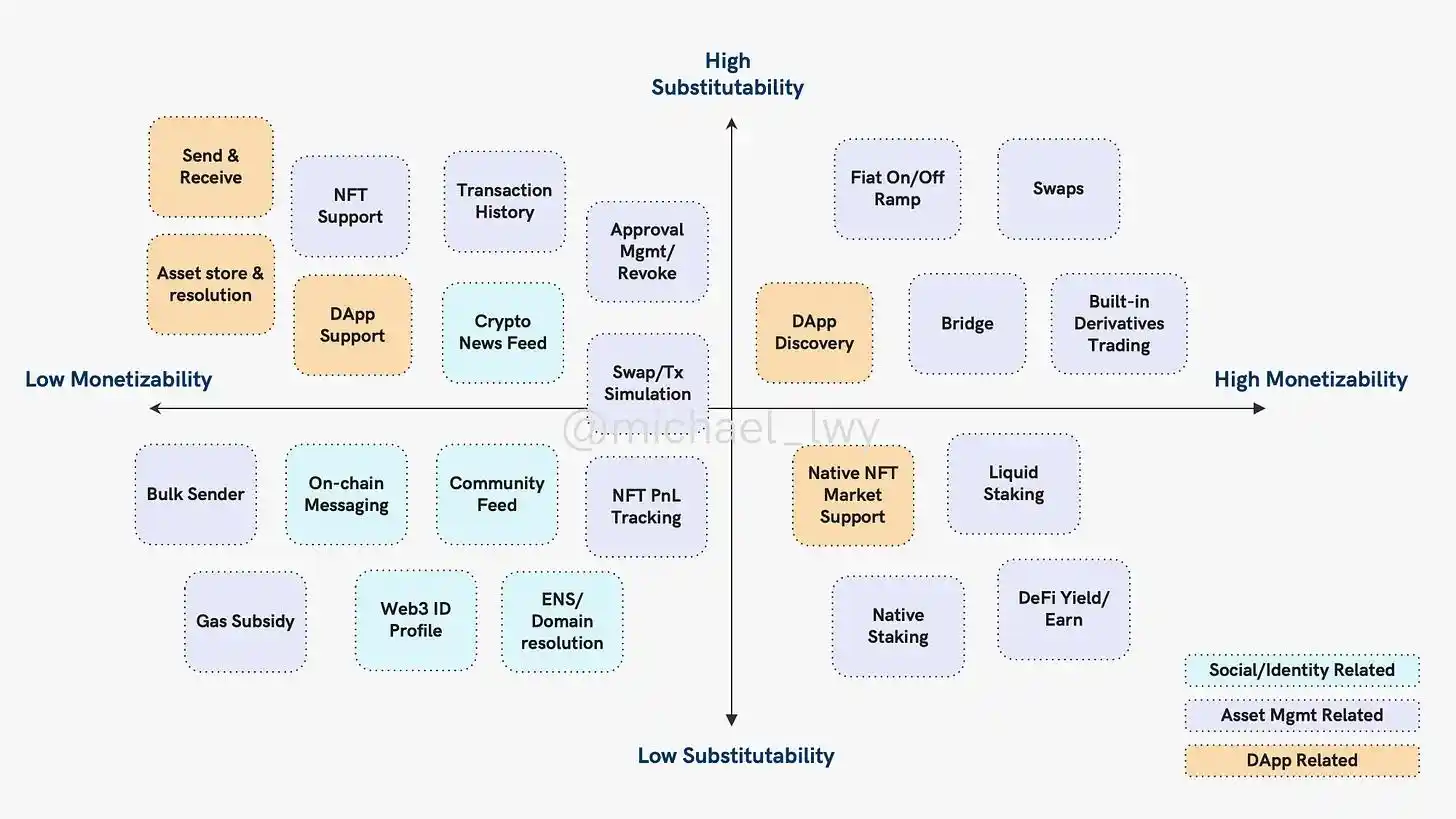
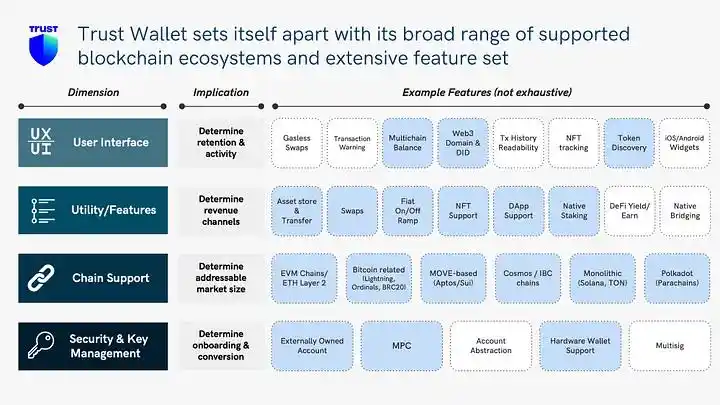
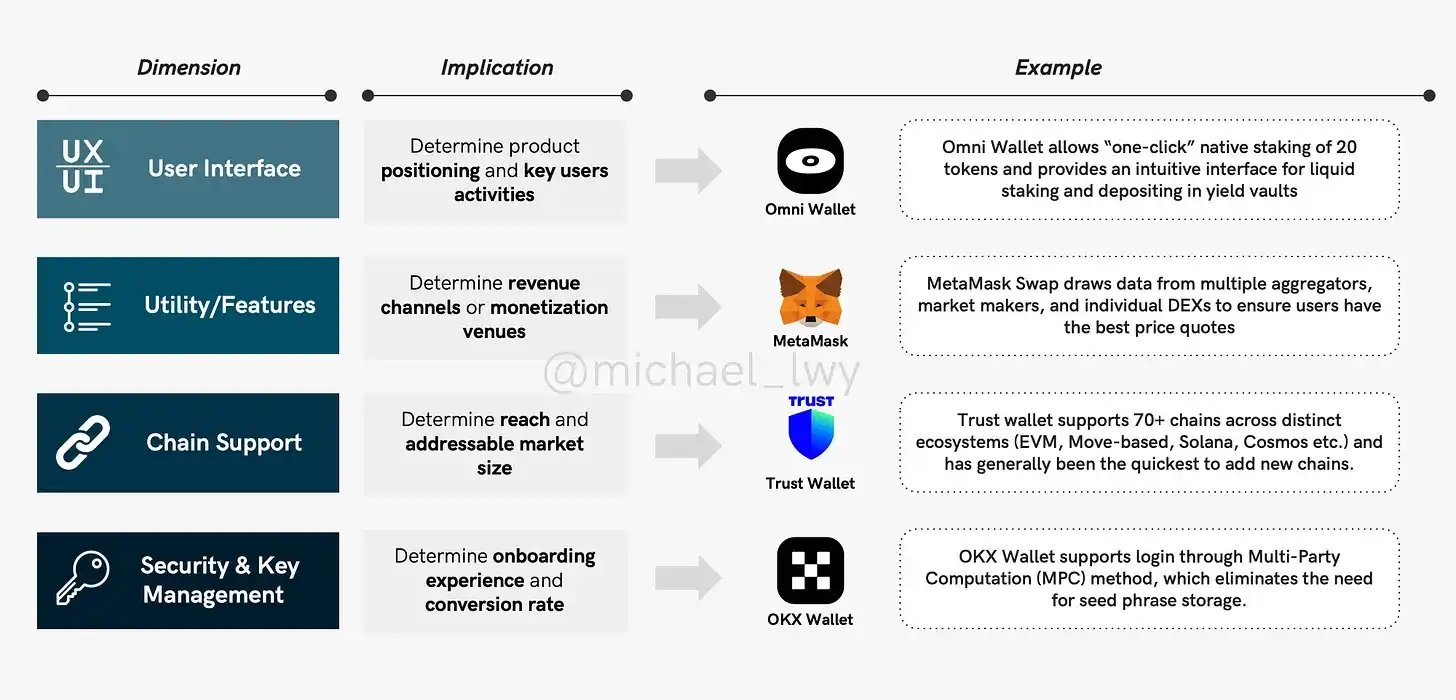
Web3 wallets serve as the primary gateway to on-chain services, allowing users to interact with dapps and store their digital assets. With over 350 wallets showcased on the WalletConnect website, it's clear that this sector has become one of the most saturated areas in the crypto industry. The reason for this saturation is obvious: wallets represent the initial point of contact for all things on-chain, and as we know, with distribution comes great power. In this article, I will not delve into technical details and classify wallets into EOA, AA, MPC, and ERC-4337. Although these technical classifications are important, they usually only represent differences within specific levels of wallets. Instead, my focus is on presenting three frameworks to understand the business and strategic positioning of Web3 wallets. These frameworks will provide builders and investors with a clearer understanding of the wallet ecosystem and answer questions such as: How can existing projects capture additional value in this saturated market? What strategies can newcomers use to carve out their own territory among existing giants? Which areas in the wallet market still have room for growth? These are the considerations that will guide our discussion. In this analysis, I plotted the main wallets along two different axes: functional features and blockchain ecosystem coverage. Although this classification is not a strict quantitative or scientific classification, it draws on my firsthand experience with these products. Rather than focusing on the exact position of the wallet on the grid, it is more useful to observe the general quadrant in which they are located. For example, wallets focused on the Move chain and Bitcoin Ordinals ecosystem are located at the bottom of the chart due to their specific ecosystem focus. On the other hand, wallets specifically designed for use cases such as trading, staking, and socializing tend to be on the right side, indicating their specialization. Top left corner: This is a fiercely competitive area, where wallets strive to offer a wide range of features, practical tools, and chains. Typical participants in this quadrant include CEX-affiliated applications such as Trust (Binance), Coinbase Wallet, OKX, Bitget Wallet, and more. Upper right corner: Although these wallets maintain extensive chain ecosystem coverage, they do not pursue every available feature. Instead, they focus on meeting the use cases of the most active user groups. For example, Zerion and Zapper offer integrated DeFi investment portfolio tracking features. Rainbow is more inclined towards NFTs, with internal minting and other features. Bottom left corner: Wallets here have a clear preference for specific ecosystems. Although they may support multiple chains, their loyalty is more inclined towards specific chains, such as Phantom's inclination towards Solana, or Core Wallet's inclination towards Avalanche and its subnets, despite also supporting other EVMs. Their goal is to gain an early foothold on emerging chains and establish a loyal user base from the beginning. Bottom right corner: These wallets focus on specific features and have clearer goals, such as staking and exchanging. They selectively support chains and allocate resources to those with the most activity/liquidity, potentially offering promising investment returns. In the second framework, I drew inspiration from Messari's Kel idea. He divided wallet stacking into four components: 1) key management, 2) blockchain connectivity, 3) user interface, and 4) application logic. Based on this foundation, I delved into the strategic implications of different stacks. In Kel's analysis, these four dimensions are described as different elements that, when combined, determine the accessibility, specialization, and business focus of the wallet. Security and Key Management: Self-custody is the most critical feature of Web3. This dimension focuses on how wallets manage private keys and ensure security. Features here include multi-party computation (MPC), hardware wallet support, multi-signature functionality, and social login supported by account abstraction technology. Elements around key management shape the wallet's onboarding journey and its ability to successfully convert new users. Chain support: Wallets can differentiate themselves by the chains they support. Some focus on the Ethereum ecosystem (L2 and EVM), while others serve Bitcoin-related protocols (BRC-20 and Ordinals), Cosmos chains, or single chains like Solana and TON. In fact, a wallet's chain compatibility defines its potential market coverage. Practicality: This dimension emphasizes the core functions that differentiate the wallet from others. Examples include facilitating basic asset transfers, supporting dApps, native staking, and NFT management. The practicality of the wallet establishes its revenue stream. Most wallets now offer basic services such as exchange and fiat exchange. Therefore, the ability to stand out depends on improvements in the next layer. User Interface/User Experience: As the initial interface, UI/UX coordinates how users interact with the wallet. This layer includes the logic for feeless exchanges, transaction alerts, displaying balances across multiple chains, and integrating Web3 domains into decentralized identities (DIDs). This dimension shapes the primary user activities within the application. Now let's look at two examples: one from the Trust Wallet in the upper left quadrant, and the other from the Uniswap Wallet in the lower right quadrant. Trust Wallet is a symbol of "fat wallet". It has almost all the functional packages covering all four aspects of stacking. It is particularly noteworthy for its strong support for almost every chain ecosystem. In contrast, Uniswap Wallet adopts a "simplified" approach. Its design and functionality are clearly aimed at the trading experience, making it a more professional tool. Here we have more examples to illustrate how different wallets uniquely position themselves in specific dimensions. Omni Wallet, formerly known as Steakwallet, emphasizes native staking. It provides a simple UX to facilitate native staking for over 20 tokens. From the beginning, Omni's mission has been clear: to highlight DeFi yield opportunities in staking, liquidity staking, and yield insurance pools, thus opening up a unique space. Metamask operates its exchange functionality as a meta-aggregator, sourcing liquidity from DEXs, DEX aggregators, and market makers. This strategy ensures users get the best possible price. In return, users pay Metamask a 0.875% exchange fee to access the aggregation service. Trust Wallet stands out for its extensive chain support. It supports over 70 different ecosystem chains, including EVM, Move-based chains, Cosmos, as well as independent chains such as Solana and TON. OKX Wallet has been committed to improving user onboarding and conversion. They have launched a MPC-based social login that allows users to create wallets using their email. This feature bypasses the step of memorizing 12-word mnemonic phrases, which is a common obstacle for beginners. Another useful framework for evaluating wallet products is to examine their monetization and substitutability of features. Monetization refers to the potential for generating revenue from internal wallet functions. For example, certain functions such as fiat and token exchange and bridging can easily generate revenue by introducing additional platform fees. Features related to staking and DeFi rewards can allocate a portion of the rewards as platform fees. In addition to the asset management field, functions related to dapps, such as dapp discovery/marketing, also provide another revenue stream: platforms can charge advertising fees to increase the visibility of certain dapps. Welcome to join the official BlockBeats community: Telegram Subscription Group: https://t.me/theblockbeats Telegram Discussion Group: https://t.me/BlockBeats_App Official Twitter Account: https://twitter.com/BlockBeatsAsia
I am a professional in the encryption industry. Please translate the following Chinese text into English without considering the context or industry-specific terms and names. Do not omit any English words or phrases, including capitalized ones such as ZKS, STARK, and SCROLL. If there are English characters in an tag, do not translate them and return the tag as is. If the content consists only of punctuation marks, return them as is. Do not translate HTML tags such as , , , and
. If an HTML tag contains English characters, omit the translation and return the tag as is. Please preserve any content within tags. Translate all Chinese characters.
The text to be translated is:
Introduction
Part 1: "Universal Wallet" and "Professional Wallet"
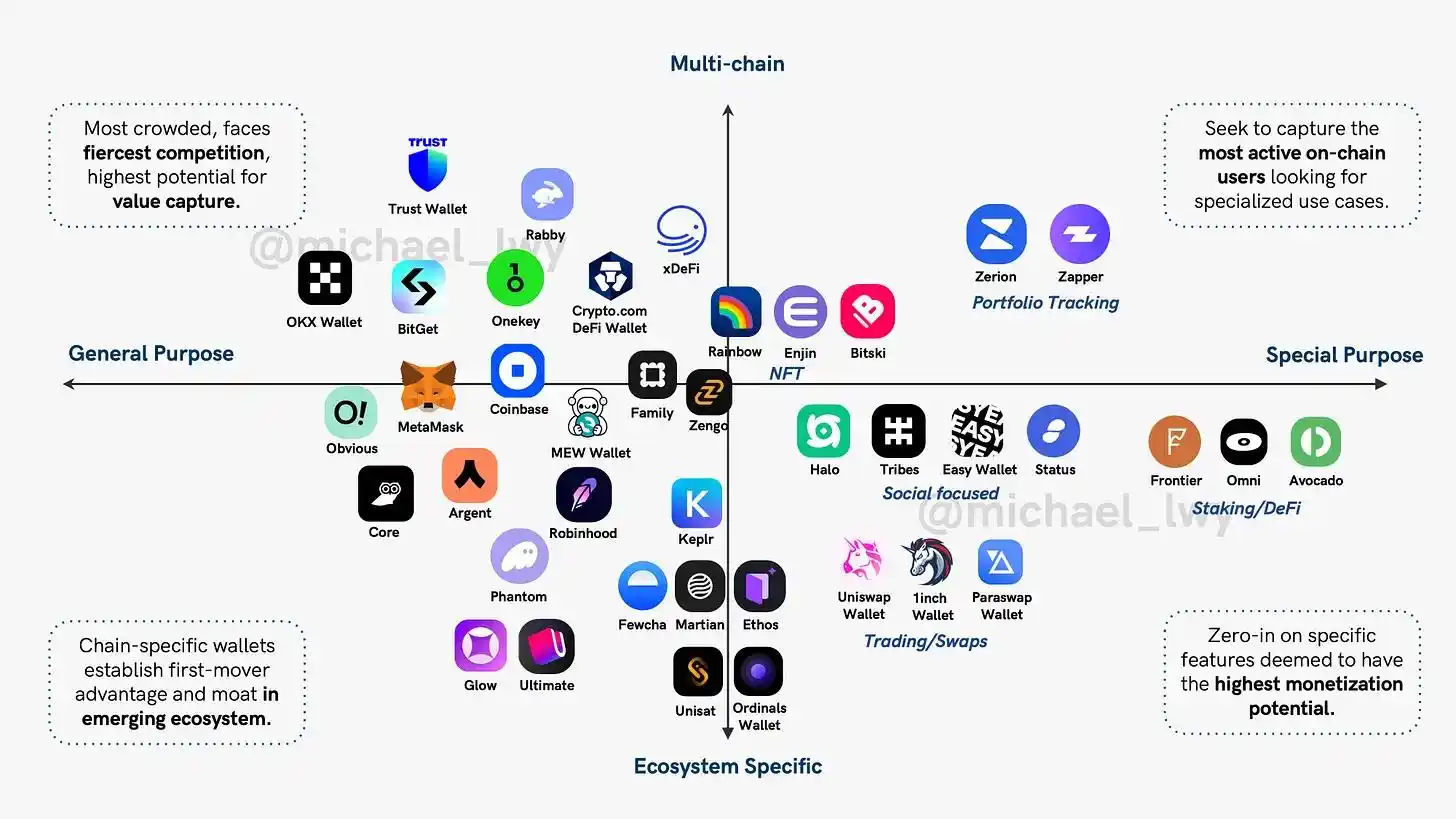
This framework divides the landscape into four different categories:Part 2: Wallet Stack
In my version, wallet stacking is more like a layered cake, with security and key management being the most important dimension at the bottom. Based on a solid design at the lower layers, wallets can focus on more decorative UI adjustments to improve user retention at the top layer. The features in each layer have specific impacts on product strategy in terms of onboarding, conversion, monetization, and retention.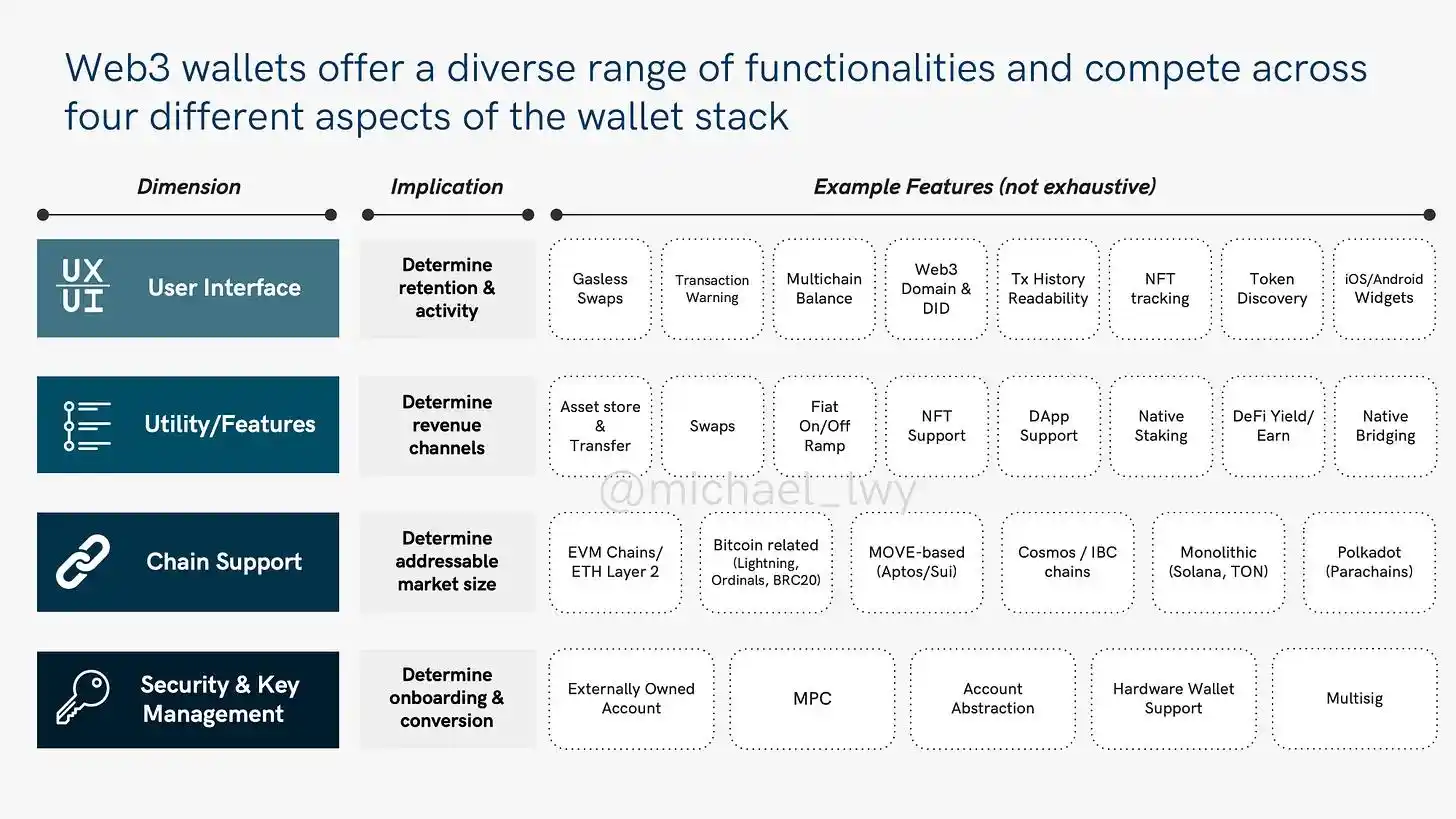
Part III: Monetization and Substitutability