Bankless: Bearish on Bitcoin in this round of market trends.

Bitcoin has rebounded 40% from its mid-September low. As the spot Bitcoin ETF is about to be approved, the price of Bitcoin is rising, and the crypto Twitter is ecstatic!
The report released by Galaxy, a cryptocurrency investment company, shows that the bullish expectations for a spot Bitcoin ETF in the market indicate that once approved, it will create a $14 billion buying pressure for Bitcoin and should cause the Bitcoin price to soar by 74% in the first year after its launch!
However, despite the brave ones who have positioned themselves at new heights in the encryption industry, external capital is needed to take us there, and simply approving a Bitcoin ETF for spot trading does not guarantee inflows of funds.
Although it is commonly believed that institutions and investment advisors are waiting for the arrival of spot ETFs to trigger a capital tsunami in the cryptocurrency field, there seems to be little evidence to support this claim. Since July 2022, the management scale of Canadian spot Bitcoin ETFs has hardly changed.
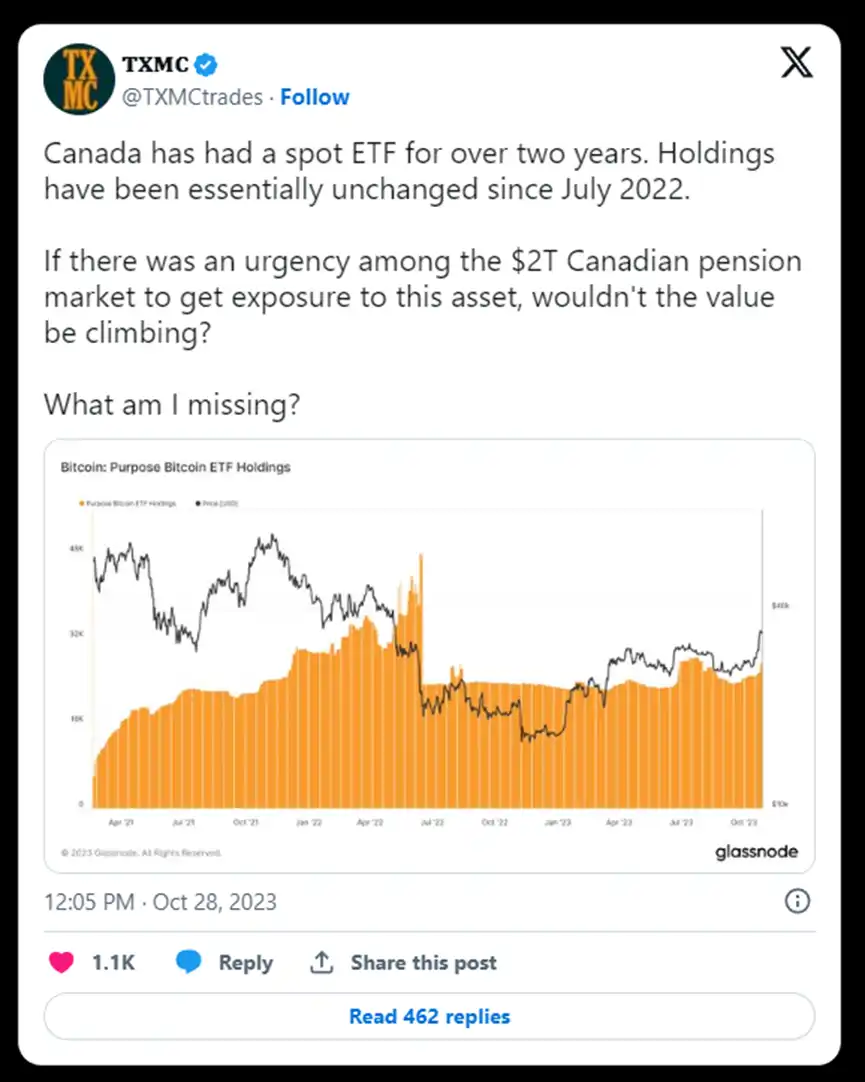
https://x.com/TXMCtrades/status/1718116872195805355?s=20
Cryptocurrency is still a zero-sum game, with limited available dollars for asset competition. Pumps are just the result of internal capital rotation. There is no evidence that capital will flood into the industry after the approval of a Bitcoin ETF.
Tokens like BTC, LINK, and SOL have become the focus of attention due to their extremely low liquidity, which allows them to barely maintain profits. This makes it possible for a small amount of buying pressure to cause large-scale fluctuations, but the market lags behind the leaders. This indicates that the rebound is driven by the outstanding performance of a few assets, and the cryptocurrency market lacks breadth.
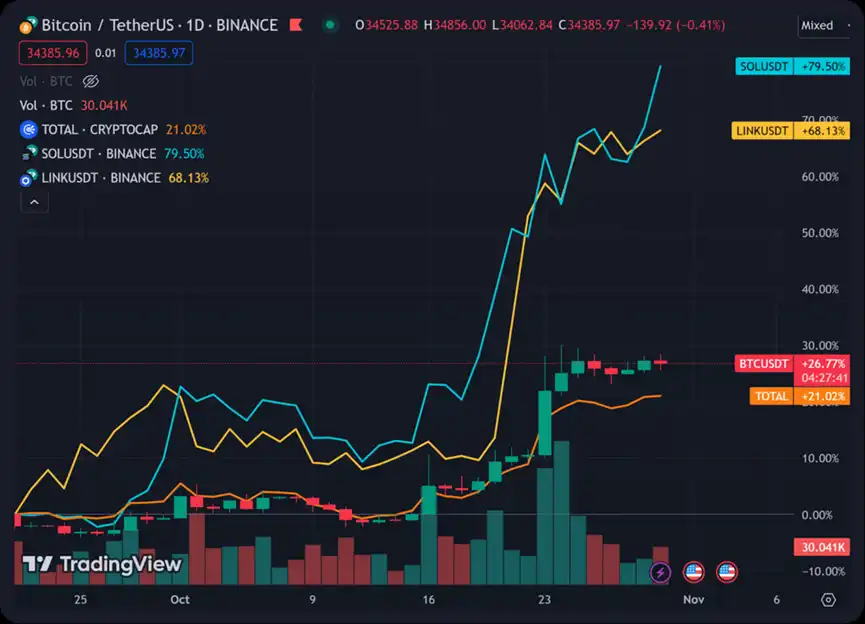
Source: TradingView
Just as the market has turned from indifference to prosperity in the past month, market sentiment may also turn in the opposite direction in a nanosecond. Although the recent rebound is exciting, it is time to lower your expectations and remind yourself that we are still in the depths of the macro economy.
The Chairman of the Federal Reserve, Jerome Powell, has been steadfast in his commitment to bringing inflation back to the Fed's long-term inflation target of 2%, which is achieved through raising interest rates. Meanwhile, the US deficit continues to expand, and major US Treasury holders such as China and Japan are selling off dollar assets to defend their struggling currencies, further adding upward pressure to yields.
The Bank of Japan announced yesterday that it will modify its yield curve control policy, allowing the interest rate on long-term Japanese government bonds to exceed the previous upper limit of 1%, indicating that interest rates may need to continue to rise.
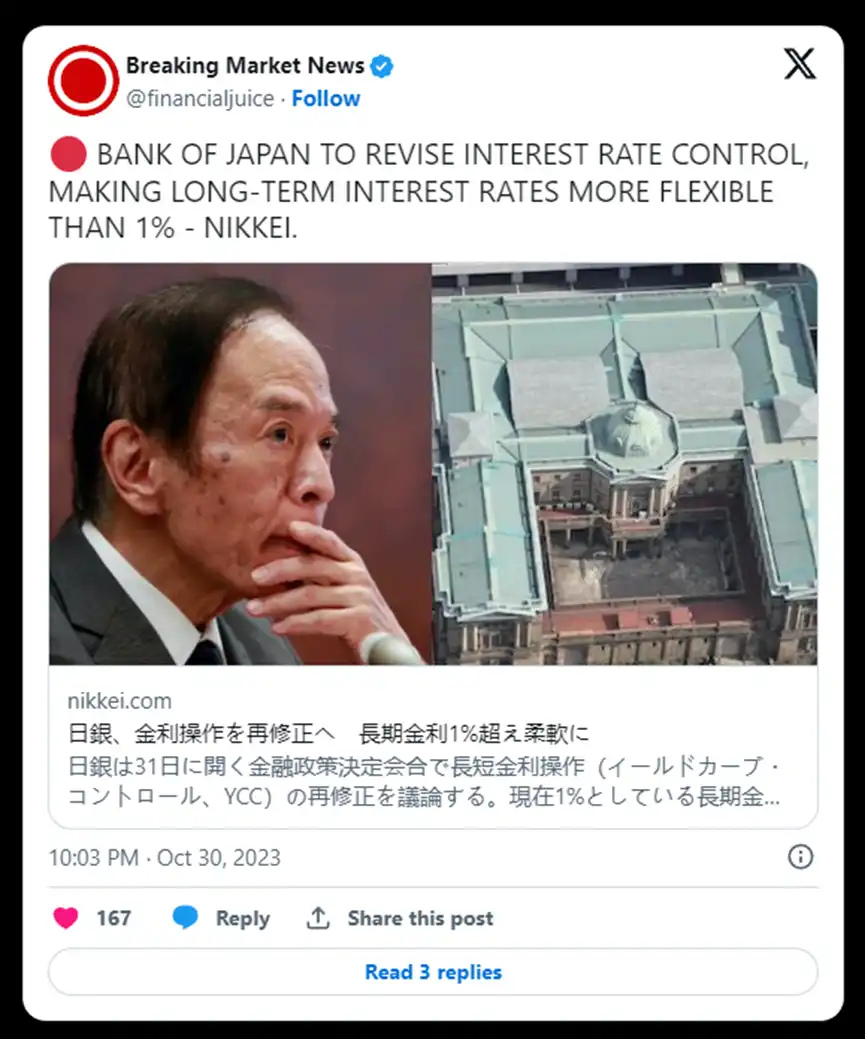
https://x.com/financialjuice/status/1718991974236094529?s=20
Cryptocurrency is a long-term investment, and "long-term higher" interest rates may lead to the evaporation of liquidity from risk markets such as cryptocurrency and stocks, further suppressing valuations.
The only alternative to further interest rate hikes is economic collapse, and monetary policy makers will respond by lowering interest rates. Although the global economy has shown resilience to previous rate hikes, cracks are beginning to appear in the financial system, which could weigh on the prices of risk assets.
Consumer spending is financed through continuously increasing levels of debt, but high interest rates have led to a surge in credit card default rates and pushed auto loan default rates to new highs! While stimulus measures have delayed the inevitable end of the business cycle, it has resulted in inflation, and remedial measures - higher interest rates - have left many borrowers unable to repay their loans.
Meanwhile, since May, personal disposable income has been declining, which means consumers have less money to repay the increasing debt burden. This indicates that delinquencies and defaults may further increase, leading to further declines in spending levels, forcing companies to lay off employees and causing further economic contraction.
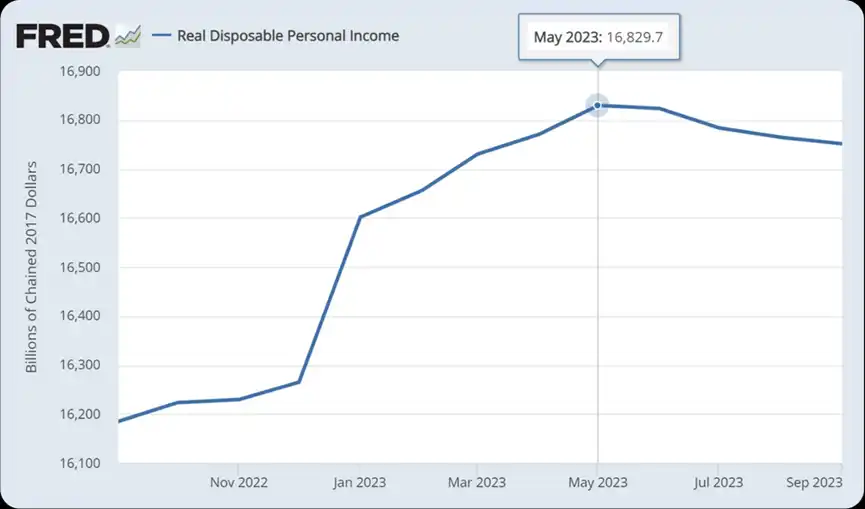
Source: FRED
Although the fast and loose monetary era has helped cryptocurrencies reach historic highs in 2021, the credit bubble that emerged after the COVID-19 pandemic is facing the risk of bursting. Investors will need to compete for the US dollar, and the resulting deflationary depression is almost certain to put pressure on cryptocurrency investments.
The only asset that has a chance of surviving the burst of the bubble is Bitcoin. If central banks around the world adopt a new round of quantitative easing policies to contain the crisis, Bitcoin may become a potential hedge against currency depreciation. However, it will still compete with the US dollar during periods of deflation.
Although in low liquidity environments, moderate FOMO can lead to short squeezes and temporary price increases for cryptocurrencies, interest rates will continue to rise until things start to break, and when that happens, rising unemployment and further income declines will force long-term holders to surrender and sell their coins.
Regardless of whether it is in a "long-term upward trend" or a deflationary depression, there are almost no assets that have the opportunity to be denominated in US dollars.
Original article link
Welcome to join the official BlockBeats community:
Telegram Subscription Group: https://t.me/theblockbeats
Telegram Discussion Group: https://t.me/BlockBeats_App
Official Twitter Account: https://twitter.com/BlockBeatsAsia
 Related Articles