Interview with Zee Prime Capital: Writing is our second nature.



Interview: Jack, BlockBeats
Editing: Jack, BlockBeats
Compilation: Luccy, BlockBeats
In the field of cryptocurrency, many professional media organizations have emerged to track and report on the current trends in the industry. Various venture capital firms have also established their own news sections, including Zee Prime Capital. As a partner of Zee Prime Capital, Marty's articles demonstrate unique insights into the cryptocurrency industry. When people mention a certain article, they may first exclaim "Oh, this was written by Marty" rather than focusing on the content or structure of the article.
On the Zee Prime Capital blog, team members will publish some articles, while Matti will also publish some articles on his own blog. These articles are usually not business-oriented and may sometimes be too philosophical. Given the depth and insight of Matti's articles, BlockBeats has also compiled and organized them.
Matti's writing style has not only brought him fame, but also deepened the community's understanding of Zee Prime Capital. Is this a promotional tool for Zee Prime Capital? How did Matti develop his unique writing style? Behind Zee Prime's founding partner's public expression of disappointment and concern about the current DeFi market, what new insights are there? To explore the answers to these questions, BlockBeats interviewed Zee Prime Capital partners Matti and Ken, and the interview content is summarized below.
The "Philosophers" of the Cryptography Industry
When you open the official website of Zee Prime Capital, in addition to learning about this famous venture capital firm, you can also browse the official team's blog content. Currently, the first two articles on the webpage are the latest blogs published by Matti, which are also posted on Matti's personal blog account. These articles present Matti's insights on cryptocurrency and Web3 from an interesting perspective, and have been well-received and shared by individuals and teams from Filecoin and IPFS.
At first, Matti worked at a traditional financial company, mainly dealing with hedge funds, private equity, and venture capital businesses. Later, he learned about a project called Grid Singularity, of which Gavin Wood was the co-founder. After investing in the project, Matti became immersed in the narrative of Ethereum and, together with his college friend Michal, established Zee Prime Capital at the end of 2018 and the beginning of 2019.
But before that, Matti also founded a crypto venture capital firm, investing in projects such as early Polkadot, Ocean Protocol, etc. However, considering that this investment method is too traditional, Matti hopes to establish a cooler and more crypto-oriented investment method. So he left that company and founded Zee Prime Capital.
Matti and Michal formed a team around this project and began investing in early 2019, with investments solely in cryptocurrencies, not just DeFi or middleware, but covering all areas related to cryptocurrencies. Their goal from the beginning was to create a unique and down-to-earth investment company.
Zee Prime Capital has a certain reputation in the West, and is even considered somewhat eccentric, but this has attracted the attention of many people, including Ken. Ken had early exposure to cryptocurrency when he and a friend were trying to mine, but the money they mined was not enough to satisfy them. Later, while working in traditional finance, Ken continued to follow the development of cryptocurrency. At that time, Ken noticed the articles written by Zee Prime Capital and believed that they truly understood the industry. Therefore, he officially joined Zee Prime Capital at the end of 21 and the beginning of 22.
Zee Prime Capital has a seven-person investment committee. Matti hopes to maintain a small and intimate atmosphere, rather than a large fund, to establish a more concentrated and founder-friendly fund, and then do some avant-garde things that are more in line with the characteristics of the crypto-native, like punk. "Our team is very small, and it feels like a family with Zee Prime," Matti said.
For Matti and Zee Prime Capital, what they want to do is to spread or sow an idea and make people accept it, even if there may be flawed analysis. "I think this is also the reason for attracting founders," added Matti, "we hope to establish a direction and regulations."
Using Writing to Gain an Advantage in Fierce Competition
BlockBeats: You established Zee Prime Capital in the early stages. When did you think of using writing to express your thoughts and thereby enhance the visibility of Zee Prime Capital? How did this process begin to be implemented?
Matti: Before publishing on the website, I wrote a lot on substack. Hasu also published articles on Deribit Insights when he was in charge, but I still prefer writing on my substack. Later, I realized that writing is a great way to let more people know about us. Even if we make mistakes sometimes, it's my personal substack disclaimer. I think writing is the best way to spread our ideas. If our ideas are good, people may pay attention and continue to develop on them. Later, Ken and Rapolas joined us, and we all enjoy writing, so we leverage this advantage in our team.
BlockBeats: Do you think this is a formal promotional method now?
Matti: No, it's just that the three of us are always writing something. They're like they have ADHD, always actively looking for new topics every day.
BlockBeats: When people have a good idea, it is beneficial for your investment and entrepreneurship if they first think of the authors who write related articles.
Ken: Yes, we have always been able to attract such people. After we publish articles, teams often contact us proactively. Even when we meet them by chance, they will say, "Oh, you are Zee Prime? I like the article about XXX."
About a month or two ago, I published an article about storage. In the article, I discussed the idea of creating different types of permanent storage on platforms like Filecoin, and how to philosophically consider building it in different ways, rather than just using Arweave as the only option. Later, when I spoke with someone who was building permanent storage on Filecoin, I spent a lot of time communicating with him, just like when we first met. They said, "Oh, we like that thing. A part of the article is our favorite."
Matti: On the other hand, we are preparing for Zee Prime, starting with Zee Prime 1, which has now entered Fund 3. Zee Prime 1 only has internal capital, and we are not managing any external capital. We are raising funds for Zee Prime 2, and even Zee Prime 3 is still in the process of fundraising.
But interestingly, when we talk to potential investors, they ask us questions about investment strategies, and I always tell them to read our blog. If you really want to understand us, go read our blog, because we are very frank about things. Even if some things may have been proven wrong now, we still encourage them to read, because this is us, this is our thinking.
I believe that some people respect our views and articles because they are not just neutral analyses, but also often include certain risk predictions. Although we have not told anyone what to invest in, we have told everyone who wants to know about us, especially our potential investors, to read our blog. There are also some founders who have not read our stuff, but only know us through others' introductions. If they want to know about us, we will send them our content, which they usually enjoy and say, "This is really great."
Even if there are sometimes companies with smaller funding rounds that are very attractive, these articles help us gain an advantage in the competitive funding rounds. Because in this era where most interactions are done online, when people like you, they can quickly get to know you. So through your articles, both investors and founders can get to know you, and I think this is a simple way to be recognized by people.
BlockBeats: Now many venture capital firms or institutions have also begun to write their own articles in this field, but in the encryption field, your articles and Zee Prime's articles are quite special, such as an article about opposing FOMO. This writing style is more philosophical and very different from other articles about why we invest in a certain project, how we view RWA, and analysis of different tracks or fields.
Related reading: "The FOMO trap of crypto Twitter and the quiet arrival of ROMO art".
Matti: People may say this is not practical, and some may find it too philosophical and not practical enough, but I think it's enough. Because when I write, I'm not giving people advice, and I don't want people to read it as a prescription. Just like the recent article published by Coinbase, some people may write requests about construction, but I think readers are much smarter than me. If they think my ideas can lay a foundation for them and inspire them, then they should try it.
So from this perspective, I may be more like a philosopher. I don't want to give people advice because they know how to build better, they just need to take a part of what I say and combine it with everything they already know to create something that may develop in the direction we are thinking. I think this writing style is the best for us, not only because it is prescriptive, but also because it has the nature of an investment paper, and more importantly, it makes people aware that "hey, this is what I'm thinking about, maybe you're thinking about it too, maybe it will resonate with you, and you can use it to build something."
I don't know if Bitcoin is still a hot topic now, but we said at the time, don't feel FOMO because of this particular hot topic, but look at whether it can have different developments in the long run? This is the benefit of writing, because it forces you not to indulge in today's topics. But you have to step back and think deeply, and then you may find that maybe I can avoid this thing, I don't necessarily have to participate in it. So I wrote an article about FOMO, it's hard not to feel FOMO when something is popular, but writing is a natural way to make you less FOMO.
BlockBeats: Do you know if other startup companies, organizations, or teams are doing similar things in terms of writing, or like Uncommon Core hosted by Hasu?
Ken: Many companies will publish something, such as MultiCoin, Paradigm, A16Z, and most people now have blogs. Perhaps we are different in some ways, as what was just mentioned is more like a philosophical perspective.
Matti: We can talk about planning and mandatory aspects, and we don't create content just for the sake of it. Sometimes I feel like people just put out content because they want to have content out there. Of course, if you're a media platform, it's obvious that you're in it for the content, just like many crypto podcasts and blogs are for investors. These contents are like what investors hope to see, so these authors publish something.
But we are not presenting content for the sake of content, because we do not schedule the publication of articles, we just publish them naturally, perhaps that's why people like Zee Prime. However, it's not for everyone, after all, it can be considered unique to some extent. For us, writing and publishing is not about gaining recognition, nor is it just about content for content's sake, it's really just because we have some ideas and feel that maybe someone can benefit from them.
Ken: This is very useful for us internally, even if we don't make it public, we may still write it, because this is how we push each other's ideas and come up with unique insights that others may not discover. Just like how Matti pushes me to put all my views and ideas about a particular thing on paper.
But when you put it on paper, it looks different. We can argue formally, like in a philosophical discussion, which may lead to some new insights that we haven't thought of before. I think in many ways, that more philosophical perspective is very different, and it will ultimately become a style that is different from other venture capital or other content, of course, we also have risky content. We often read those insights on paper because they are useful, and people will summarize a lot of data and do a lot of hard work to organize them.
Matti: The problem is, besides these contents or other investors, what else do we like? Do we like the content or other things we want to know?
BlockBeats: Do you know which investors or institutions would write this type of content?
Ken: The Compound VC team has written some great stuff. They not only focus on the crypto industry, but can also be considered OGs in AI investment, as they were investors in the AI field before it became a hot topic.
Find Your Position in the Noise of the Cryptography Industry
BlockBeats: Do you have KPI standards? For example, do you need to write for two hours every day?
Matti: We don't have any specific rules, everything happens naturally. Sometimes I ask Ken, what do you want to write about next? Because he's always working on three things at once, so he might finish one first, or discuss with Rapolas the topic he wants to explore next. For us, writing is not just about publishing, but also about better understanding things and analyzing them. Once we have a topic we want to explore, we write about it, and what we write is usually very interesting, sometimes even controversial, so we publish it.
But we don't have a fixed publishing frequency, everything goes with the flow. For example, I have an article ready to be published now, but before that, I may have written other articles that are not ready to be published yet. In addition, I attended the DeSci (Decentralized Science) conference in Berlin last Friday and gave a presentation on DeSci. Now I want to turn this presentation into an article and publish it. So I need to consider how to arrange the publication of these two articles, but this is not planned, it's spontaneous. We usually publish once a month or once every two months.
BlockBeats: I see that you focus on different topics. Do you consider writing as a job or do you separate it from Zee Prime Capital? How do you view the relationship between the two in terms of writing?
Ken: To me, these two are closely related. For example, when we discuss a topic in the team, such as the interaction between real-world assets and DeFi, Matti pushed me on this topic and asked me to write an upcoming article where I detailed my views on the current state of RWA. After the discussion, I told Matti that this is my opinion on the issue that I wrote down, and then we continued to discuss and exchange ideas. Another example is that as part of Zee Prime Capital's investment, we are researching a real-world protocol, and we discuss and present my views from a specific perspective.
Matti: Then I wrote an article and commented on it, and this article will also be published. So everything is very natural, and I don't separate my life into work and leisure. We operate like a big family, going on vacation together and living together for a few weeks.
Thinking about problems and brainstorming ideas can sometimes backfire, because you still have to do practical work. But I do think that writing has some practicality, because I can't go and establish all the protocols and applications, but I have some ideas that may be useful for builders in the implementation process. So I will think about cryptocurrency and work issues in my daily life, and sometimes I will suddenly think of something while taking a shower, and then write it down and expand on it later.
For me, writing is like second nature. I often write, but I don't have a set schedule for it. It's just a natural thing for me, and sometimes I don't even realize I'm doing it. I think the best state to be in is when you don't know what you're doing. So if I force myself to write, I might not enjoy it as much, and I don't put pressure on myself or my team. But usually, only 10% or 5% of what I write is actually published, because the rest is pretty bad.
Sometimes I write a lot, with great focus and effort, but a few weeks later I may feel that the article cannot be published. However, in the future, I may look back and extract a paragraph from it to make it useful in another article.
BlockBeats: As a cryptocurrency media, we need to report on almost daily emerging trends, and sometimes it can be easy to get lost in all the noise. Your job is to report on these trends, which can leave you with little time to reflect. So how do you find your place in the midst of all the noise in the cryptocurrency industry?
Matti: Because people create this environment, and you are just giving them what they want, like junk food. People want junk food, so someone supplies it. This doesn't mean you are causing the phenomenon of too much information, but rather people crave information. They want to scroll, swipe, and so on, which is the dopamine stimulation they want to quickly obtain.
BlockBeats: How do you handle this information? Do you check Twitter every day?
Matti: Yes, there are various methods.
BlockBeats: There are many popular things now, such as friend.tech, and Ordinals, etc. How do you digest this information?
Ken: I think it comes down to how consciously you handle the information you receive. Participating in discussions on Twitter is important, but at the same time, you need to be able to take a step back and use writing as your anchor, because whether it's Twitter, WeChat, or any other platform, there will always be a constant narrative wave. If everyone is constantly moving forward on the ship, we'll focus on AI for the next two weeks, then friend.tech for two weeks, then maybe go back to Ordinals, and then focus on something else. But if you're writing, you might say, let's drop anchor here, which means you have to force yourself to stop and think.
Matti: So the answer is self-discipline. If you don't want to get lost in the daily noise, you may need to have self-discipline. But it's hard, especially for me. I have a team who are always talking about things on Twitter, and they filter and digest this information for me, so I don't have to be on Twitter all the time. And when they discuss, I listen beside them, thinking, "Wow, this really happened."
BlockBeats: Is there a specific example that illustrates how you extract information from Twitter?
Ken: Ordinals is a good example. We received a lot of information about the Ordinals project at the time, so the team had a lot of discussions about whether to participate, the long-term value of the project, and the philosophical aspect of the long-term value of Bitcoin.
Matti: He used to be very anti-Bitcoin, but later changed his attitude when Bitcoin became popular on Twitter. The issues we are discussing are not philosophical, but practical.
Matti: Just like my feelings towards Solana in late November and December last year, I felt very FUD. I participated in a call where a lot of FUD was being spread, such as "it will go to zero," but if you stop and think about it, you'll realize it won't go to zero. For the crypto space, every important project will go through a disillusionment phase, just like Bitcoin had in 2016 or at other times, and Ethereum definitely went through it in 2019, and Solana is going through it now. You will get a lot of ideas that are constantly being spread, but if you only accept what is being spread, it will be difficult to make decisions in the long run.
Matti: I entered this industry because of cryptocurrency. I read the Ethereum white paper for Gavin Wood's project, and when I read this article, I felt that this could be the most influential technology of the century. In my opinion, this will change everything, ignoring artificial intelligence and everything else, cryptocurrency may lead to disobedience. But I'm not talking about bad disobedience, but a beneficial, inspiring, and productive disobedience. This is a healthy resistance to control, a civil disobedience, but not chaos or anarchy.
Maybe I can create something strange and create it in an isolated space. When I first learned about cryptocurrency, I thought it would be the most influential thing in my life. I wanted to be a part of it, whether it was governance, finance, energy, or other industries. I just thought it would be the decisive technology of the next century, so I got involved. I still believe this, even in a bear market, but I believe it more than ever before.
When you decide to take risks, you feel like you are becoming a part of history, with a sense of mission. I know this will become very important. Of course, part of the reason is opportunism, but if it didn't have such an impact, if it was just a gamble, I wouldn't be attracted to it because I don't like finance, and I don't even like discussing the details of DeFi, which makes me bored. For me, the most important thing is the impact it brings, which is a bit opportunistic. I think we will gradually realize it, make it bigger and bigger, and in the next few years, it will become even bigger.
Ken: For me, the composability of open systems is the most important. Often, people ask what value cryptocurrencies bring and what value the industry has. We often discuss decentralization and other issues, but people often forget that the biggest feature of enhanced economic productivity is composability. It allows for the acquisition and use of data and functionality from other systems, and combining them to create new economic products.
Composability is the killer feature of cryptocurrencies, because it allows for the creation of new things that were previously impossible. If data is isolated in different places, it can never be communicated and we may never find new insights. But if we can query it, discover new functionalities and aspects of the data, then we can fundamentally create new products, new economic benefits, and change the world.
I believe that the thing that can change the world is something that pushes us towards stitching all these things together. And the only thing that truly drives these things is cryptocurrency, which represents an open system and allows for composability, while everything else is a "hands off my cake" mentality. This is like the contrast between zero-sum thinking and positive-sum thinking. In Web 2, everyone was protecting their cake because it made them a lot of money. Of course, there's nothing wrong with that, but when we can open up these cakes, perhaps the cake is actually much bigger than when everyone is holding onto it.
DeFi is experiencing disillusionment
Against the current backdrop of "strong macro", all markets will exhibit a "Correlation of One" trend, and the cryptocurrency market is no exception. At this time, excessive technical and fundamental analysis is not very meaningful. After two rounds of bull markets in 2017-2018 and 2020-2021, Crypto has gradually developed towards various clear application scenarios. Nevertheless, the biggest bottleneck for the cryptocurrency market is still its disconnection from the real world. This is not only due to its technical attributes, but also due to its ideological preferences. However, if Crypto wants to "go mainstream", it is inevitable to come into contact with the real world.
The most typical case is DeFi. In the current macro background of "once in a century", many income-generating opportunities cannot be realized through DeFi. However, various brokerage platforms have strict capital reviews on retail investors, which also causes many people to miss out on golden investment opportunities. If DeFi can meet these needs, it will have great prospects. This is also Matti's view on the true DeFi 2.0 - "the ability to build complex structured products".
Related reading: "What will be the narrative of the next cycle in the crypto industry?"
Anyway, the new narrative is built bit by bit by developers and market participants. Therefore, if you want to shine in the next cycle, you should work hard to Build now, not just Build Web3, but also Build Web3 that solves needs. In Matti's words, "demand is the mother of invention."

Understand trends in the early stages of trends
BlockBeats: Can you provide a detailed introduction of the vision, methodology, and areas of focus for Zee Prime 3?
Matti: We are raising a small fund for Zee Prime 3. First, we will invest a large amount of fund capital. As GPs, about one-third of the fund is invested by ourselves. If we want to invest early and invest with excellent founders, although there seems to be a lot of space on the surface, there are actually not many projects available for us to invest in, at least for us. So our focus is on maintaining a small scale, operating the small fund in our way, becoming the best allocator, and getting the highest return we can get, rather than optimizing the scale of large asset management. We have always been like this.
We not only focus on one field, but on every field. We try to understand trends in their early stages, and may invest in them at the beginning and observe their development. If it doesn't work, we abandon it. However, we place great emphasis on long-term investment, as our previous two funds were 10-year funds, and the Zee Prime 3 Fund is also expected to have a similar term, possibly shortened by about a year. We strive to be targeted, and use our ideas to inspire people to take action.
BlockBeats: For example, a few months ago, there was a network meme coin craze. Perhaps we didn't pay attention to it at first because there was nothing there, but Ordinal started with network memes and various things happened, and finally people decided to pay attention to it. So for you, what is a trend worth paying attention to, or is it just another FOMO tipping point?
Ken: I think it's determined by business volume.
Matti: We have many ongoing projects, so we are paying attention to this issue. However, we will not pay attention to things like meme coins because we are not speculators or traders. Moreover, I am convinced that every token on the market has a certain meme premium, meaning that every token is, in a sense, a meme token. Therefore, even if there were clear meme coins, I would never pay attention to them. I believe this is a conceptual mistake.
Ken: Just like the example of Ordinal, when we see some people trying to create new primitives in the Bitcoin field, we think that this idea is persistent and novel, although it is not always the case. But if we can meet these problems and philosophical explorations, then we are willing to participate in these things. I think DeSci may be a good example.
Matti: Although DeSci may not have as high a popularity rate as other cryptocurrencies, it is still a very new thing. Like some other very small projects, it is gaining more and more attention and becoming increasingly popular. This is interesting because they are solving some real-world problems and have practicality that most cryptocurrencies simply do not have, making them more like a cryptocurrency of cryptocurrencies.
Actually, the mining of DeSci is not like before, because when we pay attention to it, it has already been called Deci and is happening instead of being a trend. But it is a molecule we invest in, and there are some other similar projects that are becoming bigger and bigger. So in terms of trends, it is not top-down for us, but bottom-up.
But that doesn't mean we wait for it to form, it just happens. Some of the things we write may not necessarily become a big trend, but it's possible. So it's not necessarily that we see a clear trend already and then focus on it; usually we anticipate a trend, so we know something is forming.
Usually we write before the trend, but that's because we see the trades, so we know something might become a trend. Deci is one of them, it wasn't a big deal back then, but now it's getting bigger and bigger. When DeSci wasn't a big trend yet, the product was just a very niche thing, still very small compared to other trends, but I think it's a special trend.
Ken: The reason we continue to pay attention is to maintain interest in something. Our interest in something begins in the early stages, and then we continue to see its progress, which keeps us interested. For example, is this new product reliable? Are the things they are doing interesting? Such things keep us engaged.
Most people are talking about the future of traditional finance rather than DeFi
Matti: Now DeFi has become a major trend, and it has a sense of disillusionment, or it is now in a period of disillusionment. It's like Ethereum in 2019, and DeFi is experiencing the same disillusionment that Ethereum experienced four years ago. However, when we started investing in DeFi, it wasn't even called DeFi yet, but more like a bunch of projects called open finance. Maybe someone like the Dharma protocol invented the term, but they are no longer operating, and since then we have been paying attention to and investing in DeFi.
This is a huge driving force for innovation, such as Uniswap, etc. Interestingly, I have talked to Gnosis, and they had already basically established an AMM prototype before Hayden deployed it, but they thought it would never be successful, meaningless, and would not push it to the market. However, Hayden did it, and now Uniswap is basically commanding the Ethereum market, but at that time it was just an innovation. Then there is Synthetix, they have liquidity mining, and other projects followed suit, and speculation began to form.
However, by the end of 2020 and in 2021, we feel that DeFi is no longer as exciting as it used to be, as progress has been very gradual and it is more about imitation than innovation, followed by a market downturn. So we are early in this trend and not much breakthrough has happened. Nevertheless, we continue to invest in more interesting projects because it is still an important part of this field, and I might say that DeFi will revive in some form, but it does need to prove itself.
BlockBeats: In your opinion, what kind of innovation is needed to revitalize DeFi?
Ken: Obviously, the hottest trend right now is tokenized government bonds. We have an article about DeFi that discusses many ideas in this area, but overall, I think people's views on art, real-world assets, and tokenized government bonds are very narrow. They basically just take something and say it represents US government bonds as an NFT. But this doesn't fully utilize the best part of cryptocurrency, which is composability.
For example, when considering how to make DeFi more interesting than traditional finance, we believe that simply turning all traditional financial assets into tokens and putting them on the blockchain is far from enough. This approach is very boring, but you can put these assets in a digital native environment to make them more interesting. Similarly, loans or other things can also exist in a digital environment, not just NFTs representing that loan or real-world assets. All of this important and interesting information can be integrated together, requiring more metadata. For example, what is the credit rating of the loan? What is the yield? Companies can report cash flow directly to the loan.
Essentially, it is about attaching more metadata to these assets to make them more composable, so that the advantages of the digital native environment can be fully utilized. When a loan is a piece of paper with everyone's signature on it, sitting in a drawer at a bank or other lending institution, its composability is not strong, especially when the specific agreement is not linked to the company's financial statements in any way. In this digital native environment, we can combine all of these things together, and then you can do amazing things, like if I want to check my loan, I can query different contracts and see how much cash the company had during this specific time window, because the contract is clear, so I can sleep soundly tonight knowing that my loan to this company is still valid.
And you can do more interesting things. When you compare it with traditional finance, you will find that things in these digital environments actually make my life easier. So, I am more interested in using them than just tokenizing them. But why is this better than what I am doing now in traditional finance? I think the revival of DeFi or the increase in attention from everyone will be achieved by realizing more unique things in these digital environments, which cannot be achieved in other environments. This is how things become more special.
Matti: The assets in the real world and most of what Ken discusses are the future of traditional finance, not the future of DeFi. The future of DeFi may be that I really believe Web3 is a consumer field, where people want to consume these tokens. The utility of tokens will be more, but I think currently the token as a product is the most important. So is this a bad product? I gave the example of Kim Kardashian's fitness DVD. Some people will spend money to buy it, but I would rather turn a token into zero than buy these DVDs, so this is a form of consumption, and most things have a product vision. But just like most products are bad, most tokens may also be equally bad.
BlockBeats: This reminds me of Telegram Bot or Unibots, etc. It's like a product built on top of something else, exchanging memes.
Matti: Meme is a product. When you buy Nike or other brands, there are memes in the brand, and you pay a premium for the memes. So maybe it's not important whether it's modular in the future. Maybe you can think of Ethereum as Nike, and Solana as Adidas. It all depends on consumer preferences, not fundamental technological differences. But I do think that many investors and industries need to have these debates, making it sound like there are many fundamental technologies behind it, but in reality, it may be simpler than that. If it wins the debate, then its technology should be simple, because the best technology rarely wins.
BlockBeats: How do you view the entire Telegram Bot? Do you think this is a trend?
Ken: In many ways, it is often difficult to extract a lot of value from building products on platforms like Telegram, but that doesn't mean things can't be successful. It just means that the persistence of extracting value is often challenged. You can look at things that were built early on in Facebook in many ways, many of which were very successful at certain points but ultimately got squeezed out by the market or closed APIs. Because if you see a lot of value being extracted and you have the underlying platform, then you have the incentive to capture that value.
So I think in many ways, this could be challenging. Because Telegram has its own token and they want to build their own ecosystem, the bigger issue is not specifically the Telegram trading bot, but the entire Telegram ecosystem and how the user base interacts with potential different application ecosystems. Assuming they can successfully get Telegram users to use the Telegram encrypted ecosystem, and Telegram has 500 million or even 1 billion users, so only a small percentage of people are needed to have a very large impact on the entire ecosystem.
Matti: The robots on Telegram indicate that we need a simple user experience. I remember we wrote an article about super applications, but we didn't write it because we had a related discussion, but because everyone claimed to create a super application. The first rule of a super application is that you will never say you are a super application, just like Google will never say they are a monopoly, because they don't want people to know they are monopolizing.
Related reading: "Paradigm shift: Is the era of Web3 super applications coming?"
Telegram has demonstrated the potential of super apps, much like China's WeChat. In the West, we don't have that kind of unified user experience, and now it's all very fragmented, so Telegram Bot is an attractive proposition. From an investor's perspective, it doesn't necessarily have to be MetaMask, but it must be a comprehensive wallet, so it could also be Intel, not necessarily Telegram. That's why Unibot is succeeding now, because it's an application you may be using every day.
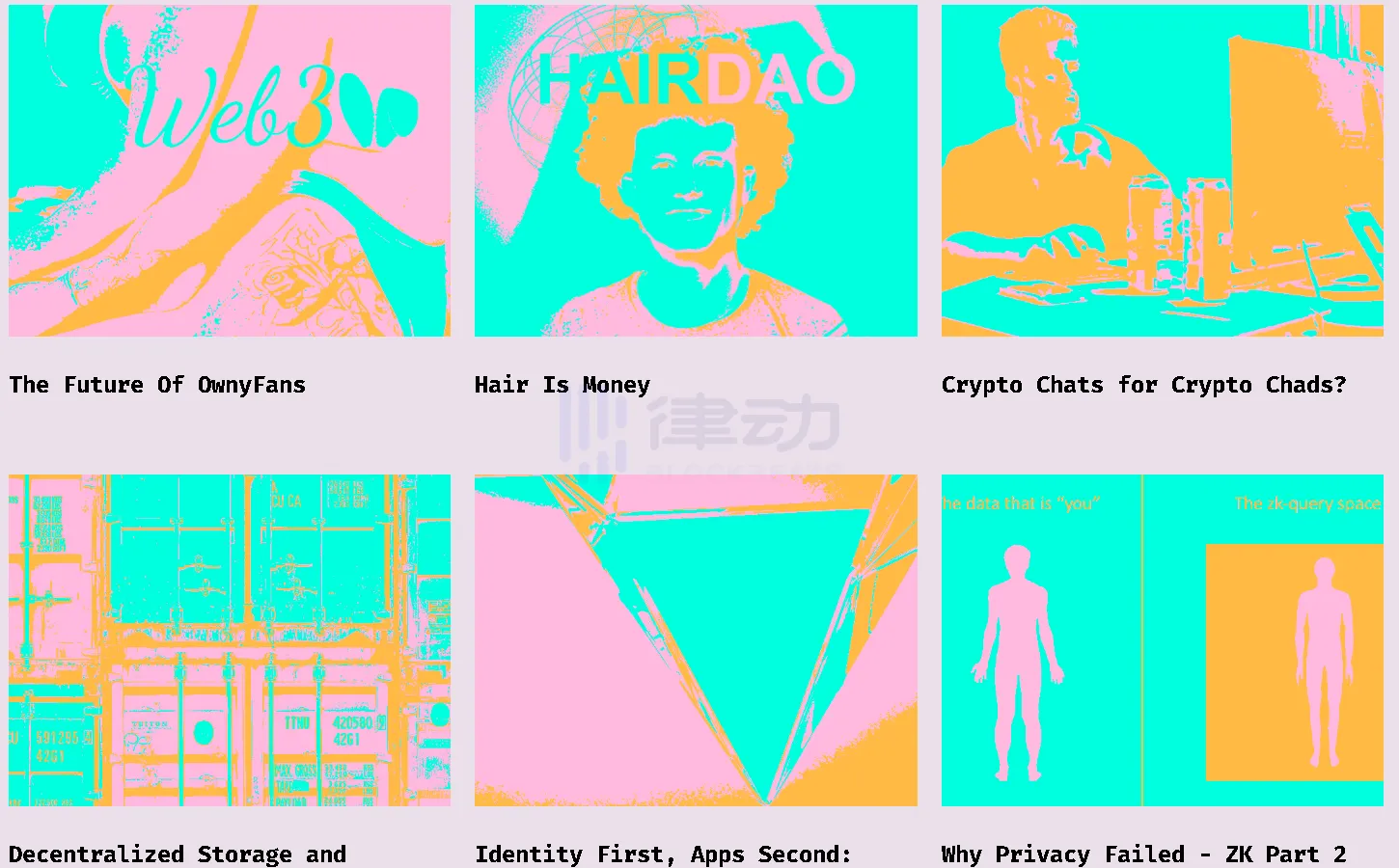
A few months ago, Rapolas published an article titled "Cryptocurrency Chat for Cryptocurrency Chads". When I was reading the draft and he was describing Telegram, I thought, "Wow, I like Telegram, I want to invest in Telegram, not these cryptocurrency chats." It's programmable, people are already using it, and it could be a good narrative driver. When you integrate things like Friend.Tech, maybe it will become even more fanatical, like a basic element of the social finance field, getting people interested in gambling or other things. So I think this is an interesting activity with great potential.
BlockBeats: Do you have anything to say to the builders or developers in China? Perhaps it can attract their attention?
Matti: For us, I think there are a lot of ideas, and more importantly, there is a lot of motivation. From Chinese entrepreneurs, I feel a lot of motivation, dedication, and focus, which is exactly what we like to see. So we are always happy to invest in the Chinese community, but language barriers can sometimes be a problem. We want to understand our founders, not just as founders, but also their way of thinking and what kind of people they are. But you can't really get to know someone very well, especially when there is a language barrier. So I would say, learn English.
Welcome to join the official BlockBeats community:
Telegram Subscription Group: https://t.me/theblockbeats
Telegram Discussion Group: https://t.me/BlockBeats_App
Official Twitter Account: https://twitter.com/BlockBeatsAsia