Exposing FTX’s Genius Programmer — The Glory and Fall of Gary Wang
Original Title: "The Rise and Fall of Gary Wang, the Chinese Genius Programmer Who Forged the Sword for FTX"
Original Author: Giovanni Chen, Special Invited Author for Meta Era
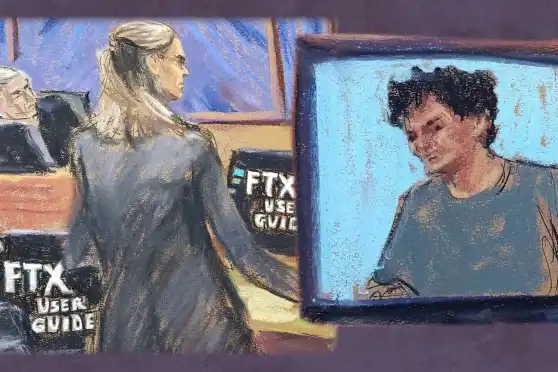
On October 3rd, the bankruptcy case of FTX, once the second largest exchange in the world, officially went to trial in New York. The judge, SBF, and a group of witnesses were present, and there were frequent revelations of various testimonies and statements, reviewing the various details of how SBF operated FTX. This uncovered the internal mysterious operations of this cryptocurrency exchange, which was once ranked second in trading volume and had a market value of up to 32 billion US dollars.

On the day of the trial, the heavyweight figures closest to SBF within the company, Gary Wang, Caroline Ellison, and Trabucco, all appeared in the witness stand. One of the Chinese faces attracted the attention of all media and the public. The witness, who wore glasses and appeared somewhat introverted and polite, was none other than FTX's co-founder and CTO, Gary Wang.

Gary Wang's export is a strong tip, and he personally revealed that there is indeed a backdoor in the relationship between FTX and Alameda:
SBF allows Alameda to withdraw funds from FTX without limit. In 2019, Gary, as the CTO, personally wrote the function for Alameda to steal customer funds in the FTX system. Additionally, Alameda can trade with more funds than it actually owns in its account. This gives Alameda the privilege to misappropriate user assets and trade without limits.
When FTX crashed, Alameda increased its credit limit to an exaggerated $65 billion. Alameda even directly withdrew $8 billion from the FTX platform. This $8 billion happened to be the funding gap in FTX's account, which came from FTX customers.
In addition, the real balance of the insurance fund (which ensures trading protection against counterparty liquidation risk) announced by FTX is fraudulent. It is generated by a random number generator, and the amount does not match the database. The actual number is lower than the generated number, revealing the fraudulent behavior of FTX's financial statements and response to audits.
Seeing his once most important "comrade-in-arms" testify in court and reveal shocking data and information, SBF's body trembled uncontrollably. He rubbed his eyes vigorously in an attempt to calm down, but his eyes were filled with despair.
Who is Gary Wang?
According to Gary's own statement, as a co-founder of FTX, he earns a salary of $200,000 per year and owns 17% of FTX's shares and 10% of Alameda's shares, making him the second-in-command after SBF. In FTX's operations, SBF is responsible for company strategy, public relations, and communication, while Gary focuses on coding.
According to the equity value of FTX and Alameda, in April 2022, Gary, who is only 28 years old, became the richest person under 30 with a net worth of 5.9 billion US dollars on the Forbes rich list.

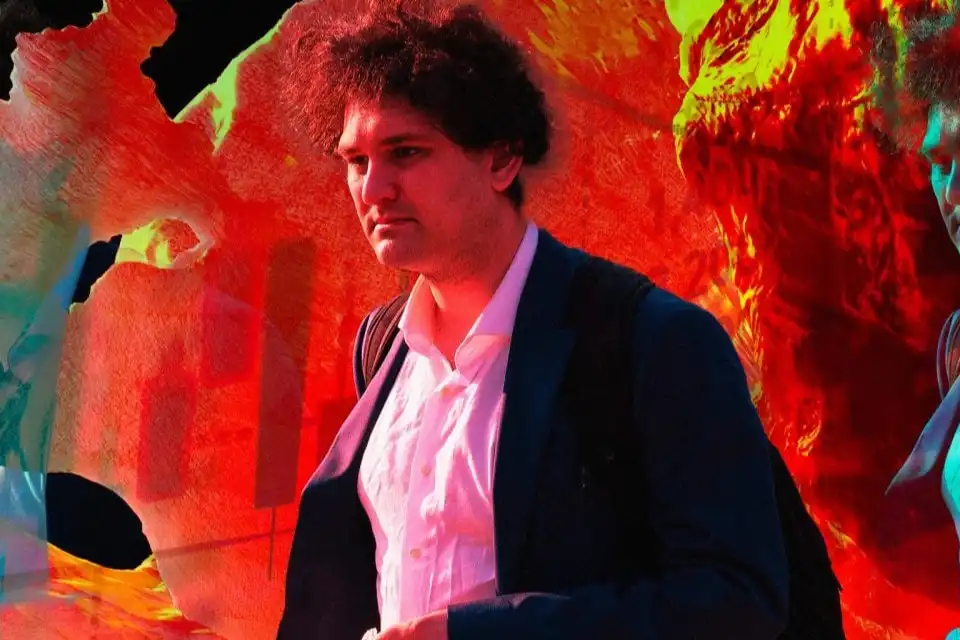
As the most mysterious billionaire executive in the encryption industry, Gary is usually very secretive and rarely appears in public. There are only a few photos of him online, and even his colleagues often don't see him for a long time. Even his LinkedIn profile only has a photo of his back.

Gary and SBF's acquaintance and understanding
According to online sources, Gary was born in China and immigrated to New Jersey, USA with his parents at the age of 8. He excelled in his studies from a young age, particularly demonstrating a high level of talent and interest in mathematics and programming.
In 2010, he participated in a high school mathematics competition and happened to meet SBF and Trabucco (another executive of FTX). The three of them participated in a mathematics summer camp training held by the Massachusetts Institute of Technology (MIT). All three successfully entered the mathematics major of MIT. Trabucco and Gary pursued a bachelor's degree in mathematics and computer science, while SBF pursued a bachelor's degree in physics.

SBF and Gary gradually built trust in college. They were roommates for three years and often played games and solved puzzles together in their spare time. They also participated in the Epsilon Theta fraternity together. Gary is introverted and many people find him difficult to communicate with, but SBF has observed him for many years and understands his personality and abilities, especially his talent in programming and mathematics (Gary once won the championship in the MIT programming competition).
"Many people think that Gary is difficult to get along with and keep their distance from him, but I don't. I believe that Gary doesn't want to deliberately distance himself from the world. He is very intelligent and can make time to think about some very difficult problems," SBF recalled.
Their years of studying together have formed a deep friendship. After graduation, SBF went to Jane Street, a trading fund on Wall Street, to work in trading, while Gary went to Google to work on the development of the flight price integration engine, Google Flights.
In November 2017, SBF founded Alameda Research, a quantitative trading company focused on the cryptocurrency market, in San Francisco. At the first moment, SBF thought of Gary, who worked at Google, and immediately flew to Boston to persuade Gary to join Alameda: "Your talent for trading will definitely work, and the cryptocurrency market is full of countless new opportunities. Let's create together!" SBF vividly described his ambitions and aspirations to Gary.
Gary believed that he couldn't find enough challenges in his job at Google, so he accepted SBF's invitation to move to San Francisco.
They often fight side by side, with Gary coding day and night and SBF sleeping at the company frequently. The two of them only sleep for 4-5 hours a day.

Gary Wang's Quantitative Program
At the beginning, SBF operated Alameda with its own funds, trading mainstream and altcoins. However, the performance was poor, with losses reaching as high as $500,000 per day.

After Gary joined Alameda, the team spent a long time exploring and eventually settled on a trading strategy that utilized the price difference between Bitcoin in Japan, the United States, and South Korea. In the most critical part, Gary wrote the entire quantitative program for Alameda, which was used to quickly arbitrage in different trading markets. This program only needs to capture the price difference between exchanges and execute it quickly to complete a risk-free arbitrage operation. With this method, SBF was able to raise $170 million from investors, and Alameda's daily trading volume once exceeded billions of dollars, with daily revenue reaching an astonishing $25 million.

Gary Wang's Liquidation Engine
However, this is not the beginning of everything. As early as 2018, SBF requested Gary to write a program for a Bitcoin exchange, and Gary completed a CryptonBTC exchange in just one month. Although it was not eventually launched as a product, SBF knew that if Gary were to write a contract exchange program, he could complete it within a month and the quality would be better than any exchange on the market. Gary is an undisputed programming genius.
However, the common problem with contract trading platforms at that time was that when a client's position suffered losses and needed to add margin, the exchange would first ask the client to add margin. If the market changes too quickly, the exchange would bear the loss of this part of the funds first.
In the later code of the contract exchange, Gary invented a new clearing engine mechanism that can monitor customer positions in seconds and immediately execute clearing when the customer's margin is insufficient, thus protecting the exchange's funds. Although this feature is annoying to traders, it solves a key problem that has long plagued many exchanges. After Gary added the clearing mechanism to FTX, Binance, Kraken, and other exchanges followed suit in developing this feature.

Gary's Cross Margin
In addition, in general contract trading, users need to have corresponding assets as collateral for borrowing, which lacks flexibility in funding. To address this issue, Gary developed the "cross-margin" feature for FTX, allowing users to use multiple digital assets as collateral for a single trade. This feature has also been subsequently introduced by other contract exchanges.


Welcome to join the official BlockBeats community:
Telegram Subscription Group: https://t.me/theblockbeats
Telegram Discussion Group: https://t.me/BlockBeats_App
Official Twitter Account: https://twitter.com/BlockBeatsAsia

 Related Articles