All DAO organizations are either forking or on the path to forking.

Author: Jaleel, BlockBeats
Editor: Jack, BlockBeats
Establishing a sound forking mechanism does not necessarily mean encouraging forking, but forking may be an inevitable path towards decentralization for DAO.
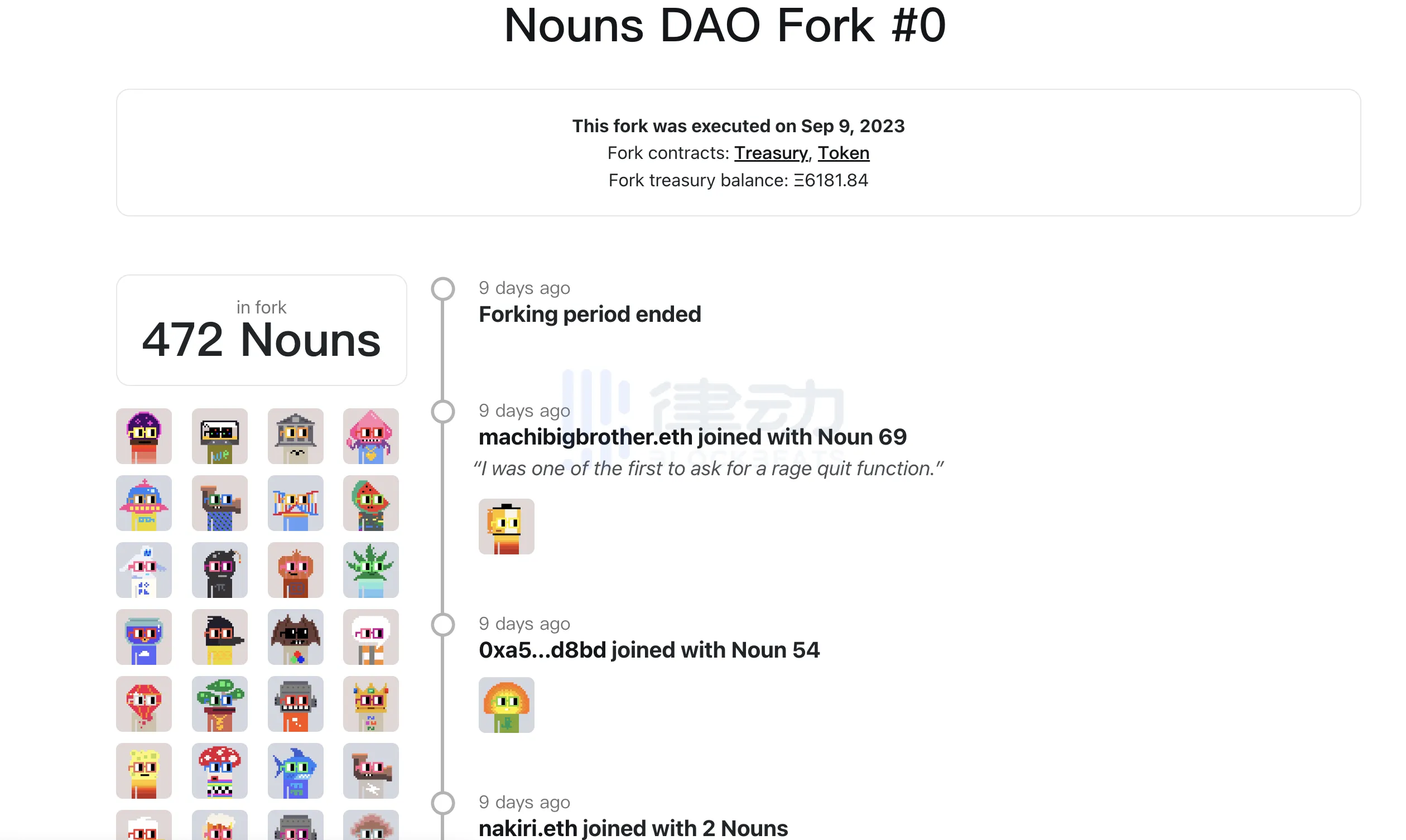
The forking of NounsDAO has been discussed many times, but it was officially implemented last month after the approval of Proposal 356 for NounsDAO V3. After the Forkv3 proposal was approved, NounsDAO launched a forking page on its official website, where holders can join the fork and split the DAO treasury. The time window for supporting the fork is one week, and according to the rules, if 20% of Nouns NFTs support the fork after the window period ends, supporters will separate from the NounsDAO entity and directly split the corresponding proportion of ETH from the treasury.
On September 9th, 214 Nouns NFTs chose to join the fork, exceeding 20%. The fork of NounsDAO has become an inevitable event.
Will the forking mechanism always lead to a fork? How does the trust crisis occur? DAO not only needs to be decentralized, but also needs to be "dehumanized". The degree of "dehumanization" should reach a reasonable level, which may be a continuous challenge for all DAO organizations. As the Nouns fork progresses, the debate about DAO forks is once again brought to the stage, forcing the entire crypto community to re-examine the governance of DAOs and re-understand forking.
DAO Exploration in Governance Mechanism
That DAO, which is widely recognized by many OGs as one of the most elegant in the cryptocurrency industry, has forked.
Nouns, born on August 8, 2021, is still conducting daily auctions as a major part of Nouns culture. After each auction, 100% of the proceeds are sent to the treasury and managed by Nouns owners.
On September 16th, a day known as "Fork Day" in the Nouns community, NounsDAO completed a fork. 472 out of 846 Nouns NFTs participated in the fork, and over half of the holders who chose to leave Nouns withdrew nearly $27.3 million worth of ETH from the treasury.
Angry withdrawal doesn't just mean "withdrawing in anger"
The biggest difference between the fork0 of NounsDAO after the fork and the original NounsDAO is the "ragequit" mechanism. Like the fork, the ragequit mechanism has been discussed many times in NounsDAO, but has never been implemented.
"Contrary to what many people understand, rage quitting is not just used to describe the behavior of DAO members angrily leaving. " said Wang Chao (@cwweb3), an OG participant in the DAO field, during an interview with BlockBeats. "The rage quit function originally came from the design of the Moloch protocol. If a member is very dissatisfied with a decision to invest in a certain project, they can vote against it. After voting against it, if the protocol still passes, the member has seven days to choose to rage quit the DAO. However, the practice of rage quitting in the DAO field is not common, and can even be said to be very limited."
The rage quit function refers to allowing members to burn their own tokens to exit, in exchange for a certain proportion of the treasury shares. The Moloch protocol has spawned MolochDAO, which can be said to be a pioneer in investment DAOs. It is a DAO that promotes ETH2.0 through donations and is the first DAO launched based on the MolochV1 protocol. After receiving support from Vitalik and ConsenSys founder JoesphLubin, each donating 1000ETH, Moloch became famous overnight.
Although MolochDAO has not invested in many well-known projects other than Tornado.cash, it can be said that about 30% of all types of DAOs currently running worldwide are built on Moloch.
Afterwards, some DAOs have gradually adopted the "rage quit mechanism". Considering the individual will of a small group of people under the consensus of the majority, this is the value of the "rage quit mechanism". For example, if a member of a DAO disagrees with the group consensus on a decision, they can exercise the "rage quit" ability.
Due to the openness of NounsDAO, anyone can join freely. As the members' desires continue to evolve, the convergence of various opinions in the DAO is inevitable. As more and more dissatisfied members gather in the DAO, angry exits may have been a choice that should have been made earlier.
In March of this year, one of the initiators of NounsDAO, 4156, wrote in a blog post about his thoughts on the rage quit mechanism: The original intention of "rage quitting" was to protect the minority in the DAO and prevent them from being oppressed by the majority. The basic logic is: if a proposal is supported by the majority but opposed by a minority, then these opposing members have the right to withdraw their share from the DAO treasury and quit before the proposal is executed.
An extreme example is the "51% attack", where a majority of voters propose to extract the entire fund. However, more often it may be concerns about legal risks or dissatisfaction with fund allocation. We cannot explicitly encode in the protocol when minority rights should be protected, so their rights are ultimately guaranteed by the "rage quit" mechanism. Implementing "rage quit" reasonably can not only provide protection for the minority of DAOs, but also prevent an existing minority from becoming a majority through strategic actions. Developing a highly compatible "rage quit" mechanism should be seen as a top priority, as this will ensure that future minority groups are protected and make DAOs more focused on their core goals, further unlocking their potential value.
Related reading: "Thinking About Rage Quit: NounsDAO founder 4156's thoughts on rage quitting mechanisms."
The DeFi lending protocol Vesta Finance, in which the encryption KOL DCFGod participated and served as a strategic advisor, has recently been embroiled in a major dispute among the project team. Two of the three co-founders of the project, James "Atum" Peterson and Midnight, proposed an "angry exit" on the governance forum to withdraw from the project.
Some investors, including early supporters of the project, have called for an "angry exit". Vesta's main investor, Ogle, believes that "an angry exit is the best outcome for investors at the moment. It's hard to recover from all of this." Several DAO members are also strongly demanding an "angry exit", which is the "best solution" for all parties involved.
On the question of whether the rage quit mechanism is important, BlockBeats interviewed Shawn (@ShawnMelUni), the head of the SeeDAO incubator. Shawn believes that a DAO should have three basic mechanisms: first, to ensure a multi-signature treasury; second, to have a sound on-chain voting mechanism; and third, to have a rage quit mechanism.
In an interview with BlockBeats, Shawn emphasized the importance of establishing a rage quit mechanism for DAO organizations: "In a DAO organization, the rage quit mechanism should be a basic and fundamental function. Currently, many teams, whether successful or not, will encounter various problems in the early stages, and it is not uncommon for team members to choose to leave due to differences in opinions. However, if there is a "rage quit" mechanism, most problems can be solved more smoothly. After all, it can also solve the partnership problems that we often encounter in traditional companies. Personally, I believe that the rage quit mechanism is a cornerstone of DAO."
Guardians behind DAO in the late night
When NounsDAO forks, I seem to see the moment of the fork between Ethereum and Ethereum Classic in 2016.
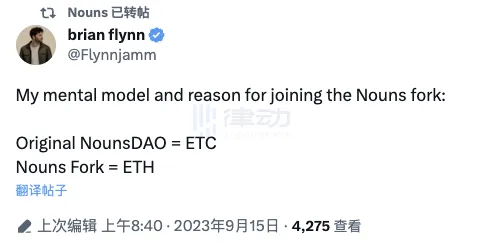
Rabbithole's CEO Brian Flynn (@Flynnjamm) has expressed a similar view. He supports the fork and has chosen to join the NounsDAO fork0. In his eyes, the original NounsDAO is more like ETC, while the forked version is more like ETH.
Compared with the rage quit that many DAOs ignore, forking is one of the most native cultures in the cryptocurrency industry. It allows the holder community to migrate together to a new protocol instance, thus maintaining the original ecological momentum as much as possible. The most famous examples are the Ethereum Classic fork and the Bitcoin Cash fork. However, for many people, whether it is forking or rage quitting, they seem to be a sign of pain and confusion for DAOs, a bad omen.
Therefore, many opinions believe that the first fork of Nouns involving over 28,000 ETH is a staggering number and a very bad thing.
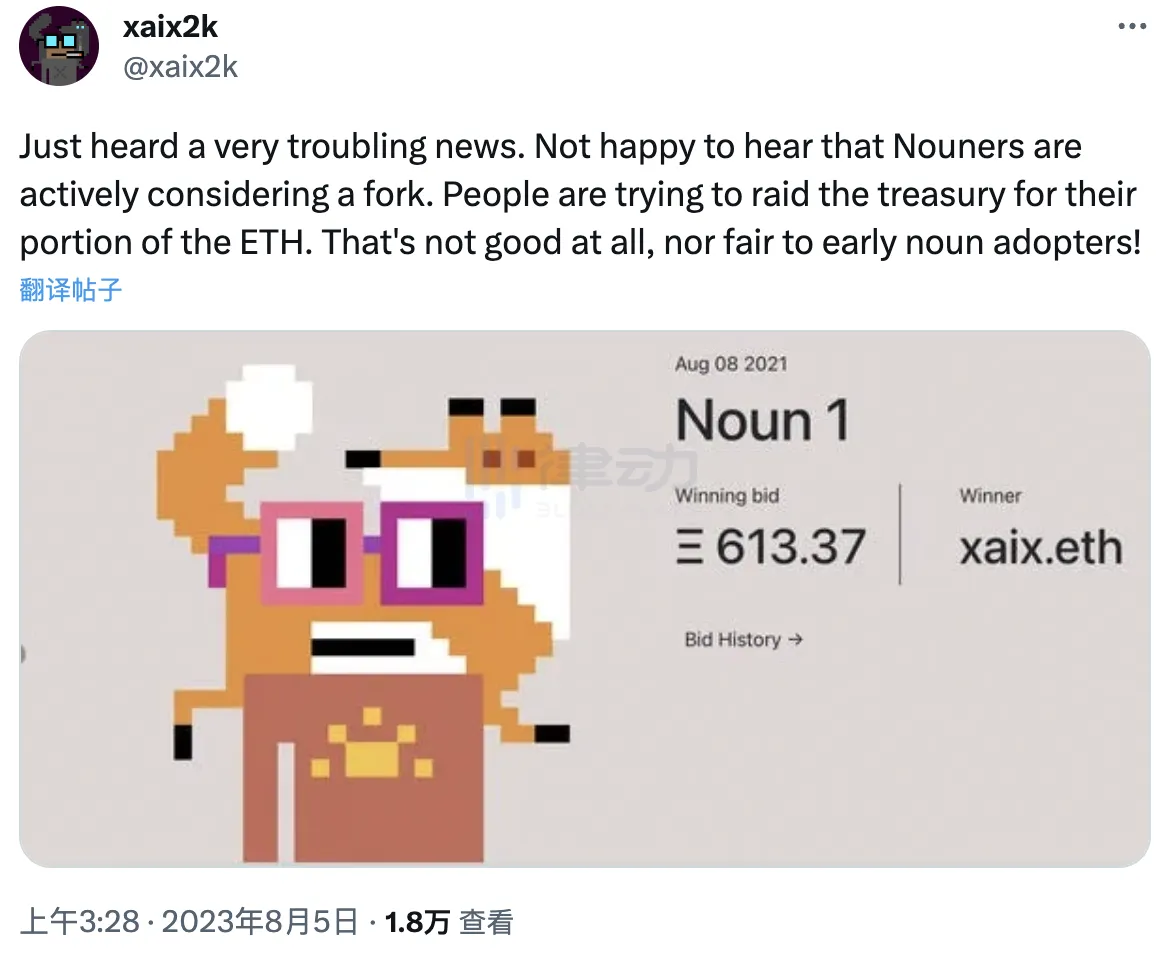
As a well-known NFT collector, xaix2k is also the owner of Noun 1. He successfully bid for Nouns' first auction on August 8, 2021, with 613.37 ETH. Although he did not comment much on the subsequent development of Nouns, it is clear that he is reserved about the fork and rage quit of Nouns, believing that it is not fair to early holders.
Nouns Protector Governance Team expressed their strong support for forking, but they voted against proposal 356 for two main reasons. Firstly, it was a mixed issue as proposal 356 bundled two vastly different topics. The Fork proposal involved deep incentive mechanisms and organizational structure changes, while V3 focused on improving governance participation processes. This bundling caused confusion in the discussion and damaged governance transparency.
More importantly, the NounsDAO Fork proposal bypassed the regular process and should not have been proposed by just one team. From start to implementation, the Fork function was emotionally driven, avoiding the expected process. After the angry exit of Proposal 248, a utopian voice emerged in the community, envisioning an infinite forking future for NounsDAO. Two emotional currents hastily launched the NounsDAO Fork function, bypassing the regular process.
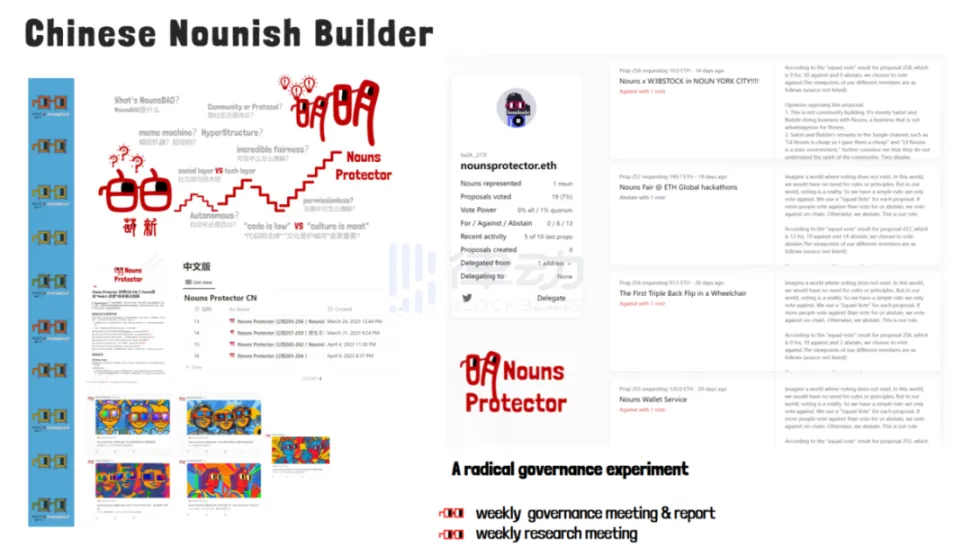
"The quick introduction of forking mechanism and its incentive mechanism may distort the behavior of community participants," Therefore, the Nouns Protector Governance Group recommends rejecting Proposal 356, pushing for the upgrade of V3 without forking functionality, returning forking functionality to the research stage, initiating the DAOFork Research Sprint, soliciting research from multiple parties, and resuming the proposal.
When a new proposal appears, members of the governance team conduct extensive research behind the scenes and make discussions at the meeting every Tuesday night at 8pm. "Sometimes when we see a good proposal, we are glad that we have voting rights and can support it. It's worth spending time studying. On the other hand, for proposals that are too bad and need to be shot down, we are glad that there are organizations like Nouns Protector to supervise."
Nouns Protector does not vote in favor, they choose to appear in the face of relatively radical proposals, believing that excellent proposals will be liked and voted in favor by everyone, while proposals that waste funds need to be discerned and supervised. Therefore, Nouns Protector only votes against or abstains, presenting the risks to DAO members and pouring cold water on the feverish brainstorming, like a NounsDAO's cold guardian and the protector behind the DAO in the late night.
Rethinking Forks
Zora's co-founder Jacob has a positive view on Nouns' fork. Generally speaking, forking is a good thing.
Jacob believes that, unlike the fork that Ethereum underwent to combat large-scale hacker attacks, the fork of Nouns is long-term and continuous, and has become an inherent part of the protocol. The design of Nouns is a progress because it allows Noun holders to easily choose whether to fork, while the entire community can transparently monitor this process.
Not only that, unlike the fork with Ethereum where people can hold both ETH and ETC, Nouns holders must choose between the original Nouns and the new version. Additionally, this forking mechanism provides a complete exit strategy. With Nouns' design, users can choose to exit peacefully and retrieve the value behind their Noun, which is approximately 36.6 ETH.
Related reading: "Zora founder talks Nouns, Fork is a good thing".
Establishing a sound forking mechanism does not necessarily mean encouraging forking, nor does it mean forking is a must. Forking is merely an option, and the forking mechanism is just a feature.
Healthy forking is positive evolution
Forking mechanism may be the most unique feature of DAO. It allows the creation of new versions of the system under new ownership by copying it. Just like mutations in biological evolution can lead to the creation of new species while the old ones still exist.
The forking event of NounsDAO is a big deal in the crypto community, and one of the main reasons is that the community is rethinking and understanding forks because of it. Although forking is a big challenge that may reduce liquidity, lower talent concentration, and increase management complexity, it may be a natural result when the community becomes large and wealthy. This may also be a litmus test for a DAO, and a DAO that can solve these problems may be a successful experiment.
If we consider DAO governance as a way to find consensus among countless decisions, rather than just allowing a few decisions to be made by the top, then we can view it as a way to split large, inefficient groups into smaller, more efficient subgroups while creating value for each other. From this perspective, forking is actually the highest form of decentralization, transforming governance into social interaction and helping people find like-minded small groups to achieve their goals.
This form of governance is centered around encouraging community sharing and expressing their preferences: good governance leads to good user experience. Through healthy disagreements, we can encourage the formation of sub-DAOs, thereby promoting the development and growth of the ecosystem. Forking, like cell division and biological reproduction, can generate diversity.
Healthy forking is not only an improvement in technology or governance models, but also a refinement of community culture and values. It allows a large community to be subdivided into smaller, more focused groups, thus meeting their unique needs and goals. This subdivision is not a zero-sum game - one group gains while another group loses. Instead, it is positive-sum, as each sub-group can innovate and thrive according to its specific needs and goals.
In most cases, the appearance of a fork is due to a disagreement within the community on a certain issue. Large organizations are inevitably faced with disagreements, and if these disagreements cannot be reconciled, it may lead to a fork. All surviving organizations will have a group of steadfast supporters, and as long as the overall consensus is not damaged, the community will not disappear.
From another perspective, forks can be seen as a form of "evolution" for the community. Just as species adapt to their environment through natural selection and mutation, communities can also adapt to their unique challenges and opportunities through forks. This adaptability ensures the community's longevity and resilience, allowing them to thrive in the ever-changing world of cryptocurrency.
In the era of memes and CC0, there are even more hidden forks, and a new perspective and use case for a story based on core IP is forking. By incentivizing anyone to use their IP for free, more value will return to the core IP. By giving up the requirement for short-term revenue, the value of the brand may be more valuable.
Regarding the IP of meme and CC0, it is still a form of brand building and marketing communication. Therefore, forking is not just a zero-sum game that replaces the original version, but it may also be a positive-sum game that accumulates value back to the original IP and brand.
subDAO is another form of fork
Nouns ecosystem has many existing subDAOs, which are essentially DAOs that receive funding or organize and carry out work within the Nouns ecosystem. Nouns Builder is a tool specifically designed to make this precise action as simple as possible. By presetting auction parameters such as auction cycle and starting price, anyone can launch a DAO structured like Nouns. The team behind Nouns Builder is Zora, who used this tool to establish Nouns BuilderDAO. Nouns BuilderDAO applied for 1000 ETH from the NounsDAO treasury and used this startup capital to incubate more creative NounishDAOs and spread the Nouns model.
One of the typical subDAOs in the industry is LilNouns. Apart from parameter differences, LilNouns follows the same rules as Nouns in all other aspects. LilNouns has a 15-minute auction cycle with a starting price of 0.15 ETH. The number of votes in LilNouns' treasury will participate in the voting for each proposal in Nouns, bringing more members into the Nouns ecosystem by lowering the participation threshold.
Related reading: "Nounish DAO: The Diffusion of DAO, Governance, and Cultural Symbols".
subDAO is more flexible, to some extent reducing the limitations and impacts of large scale and complexity, like another form of fork.
Maker is one of the oldest DAOs, and MakerDAO's annual revenue is over 142 million US dollars, with project expenses of over 44 million US dollars. At this scale, MakerDAO has been struggling with governance coordination issues for many years. To solve the governance challenges in the MakerDAO ecosystem, this veteran DeFi project announced that it will address them through the Endgame plan, which has caused dissatisfaction among many VCs, including a16z, who sold all their tokens.
Aside from rebranding, subDAO is undoubtedly the biggest feature of Endgame. After all, community governance is an issue that any cryptocurrency project cannot avoid. Rune, the founder of MakerDAO, believes that in order to govern the community well, it is necessary to "simplify complexity" and divide the complex system into various subsystems, which is exactly what Endgame aims to achieve.
During an interview with BlockBeats, MakerDAO founder Rune expressed his views on subDAO: "Even when subDAO was still in the hypothetical stage, I could clearly see that subDAO is the future trend. I believe that any project that wants to succeed and have the opportunity to expand in this field will adopt some version of the subDAO model. If separation management is not carried out from the beginning, as a DAO, it can only expand to a certain extent or become a company, thereby giving up the entire decentralization and governance. Now we have further development, and we have shaped DAO according to market and community signals."
MakerDAO has four subDAOs, among which Sakura DAO has rapidly risen in the Japanese community, and Spark DAO has enabled the Korean community to discover that they can build interactions here. People in Singapore and Southeast Asia are not interested in games and innovation, but want to deal with real assets. Therefore, MakerDAO has established a subDAO that focuses on physical assets and private credit in Southeast Asia.
Related reading: "Interview with MakerDAO: Solana is not our only choice."
Behind the Governance of War and Arbitrage: How Trust Crisis Arises
Many people in the community believe that the main reason for the NounsDAO fork is the decline of trust among community members. Noun 40 (@noun40__) also expressed his opinion on this issue: It is certain that the reason for adding the forking mechanism is not to repay arbitrageurs or to invite people who disagree with us to leave. The reason for adding the forking mechanism is to allow the remaining factions to coordinate with more trust. I am not saying that the forking mechanism will necessarily lead to a fork. My hope and expectation is that the existence of the forking mechanism will allow both sides to obtain more sincere cooperation from each other.
And similar trust issues are not only happening in NounsDAO.
BuidlerDAO, Paraspace: Who is in control of the treasury?
At the beginning of this year, BuidlerDAO was involved in a controversy surrounding its treasury fund management and disputes between the founding team. Chen Jian, a former member of the BuidlerDAO team, claimed in his circle of friends that "the founder did something that crossed the bottom line." Subsequently, this statement attracted widespread attention from the community, and there were even rumors that the founder was using the treasury to speculate on coins, causing BuidlerDAO to be in a credibility crisis for a while.
A few months later, Niels, the founder of BuidlerDAO, clarified the controversy publicly, stating that it was caused by a conflict between him and another core member of the team, Chen Jian. According to Niels' clarification, he admitted to adjusting 150,000 U assets in the treasury to ETH and BTC in December 2022, but this operation was consulted and advised by investors, and there was no evidence of any funds flowing to personal wallets or exchanges. The on-chain data is as follows: https://etherscan.io/address/0x72Dcfc6F1Aa963d01b1D48C53a1b0630EF87db28.
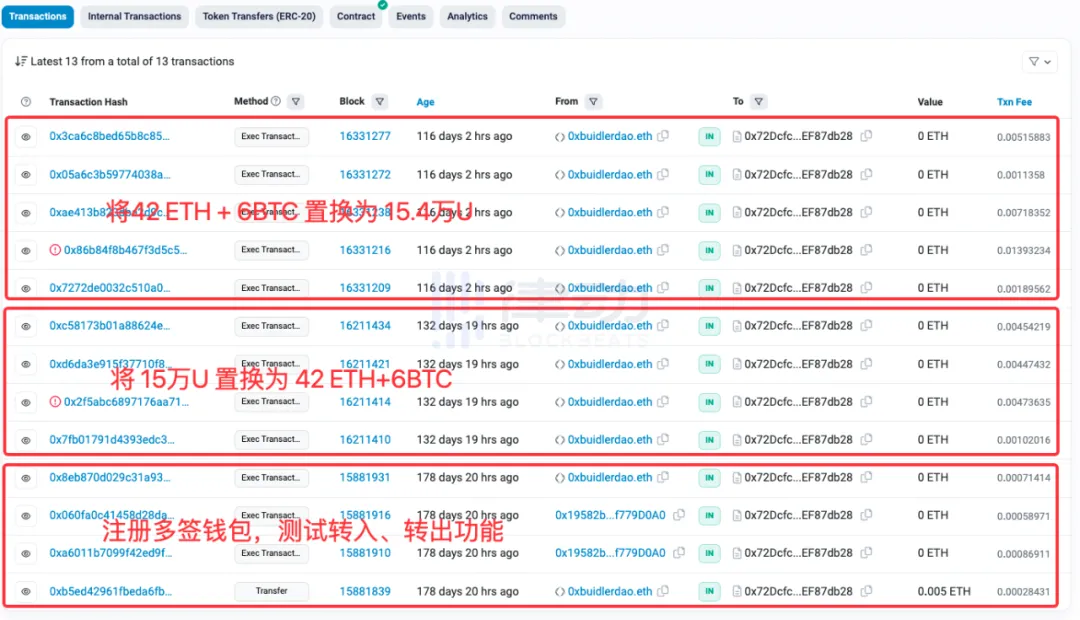
The BuidlerDAO incident is not just a conflict between the two founding team members, but also reflects core issues in DAO governance such as transparency and automated governance. Although Niels, also known as Kui Xiaoba, has provided a reasonable explanation for his actions, the fact that the BuidlerDAO treasury multisig wallet was controlled by him alone due to the lack of established treasury signers and rules has left him open to criticism, to some extent weakening the transparency and credibility of BuidlerDAO. This incident serves as a valuable lesson for BuidlerDAO.
Not only BuidlerDAO, but also Paraspace, a team that has received top VC investments of over tens of millions of dollars from Sequoia, Coinbase, Founders Fund and other top investors, has staged a wonderful "power struggle" due to funding-related issues. On the afternoon of May 10th, several well-known KOLs issued warnings about problems with the NFT lending protocol Paraspace and advised users to withdraw their funds as soon as possible. The news quickly spread and caused strong panic on Twitter and in the community. Paraspace founder Yubo not only faced allegations of misappropriation of funds, but also internal governance disputes erupted like a volcano.
The cause of the incident was that Paraspace suffered financial losses due to a hacker attack. When the security company BlockSec intercepted the damaged funds and returned them to Paraspace, the agreement for full return of the funds was not promptly fulfilled.
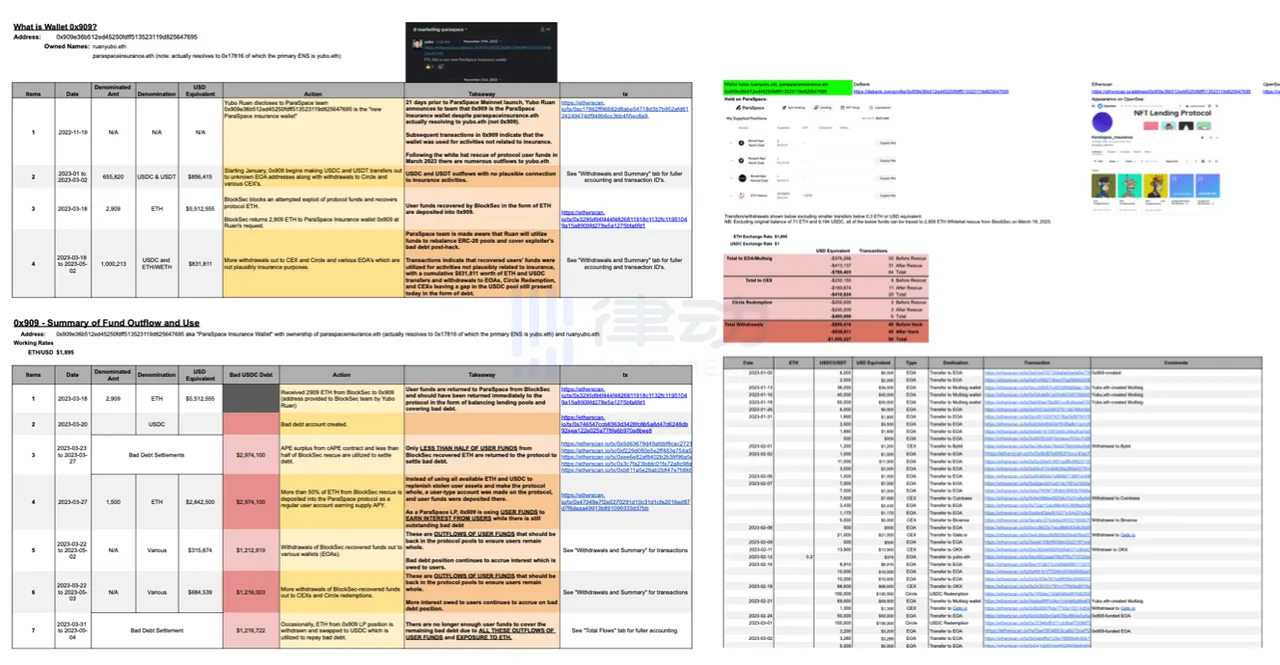
Regarding the accusation of embezzlement, Yubo stated on Twitter Space that this is because the debt gap of the agreement is stable currency, but BlockSec returned the funds in ETH. Therefore, it was decided to gradually sell and make up for the debt gap of the agreement in combination with market changes. The address starting with 0x909 is actually Paraspace's daily operating wallet, which is controlled by the person himself for efficiency reasons. As for multiple small transfers, they are normal expenses such as payroll transactions and GAS refunds for Paraspace employees, all of which have chain records that can be checked. In fact, the reason why there is a dispute over "embezzlement of public funds" is precisely because Blocksec sent the stolen funds to a user address that the protocol smart contract cannot control. However, as a whole, the Paraspace team should have immediately decided which address to use to receive the funds and what the repayment process would be after the stolen funds were recovered. The main point of contention in this "battle" is the specific repayment process of the funds, which has led to a crisis of trust.
Longer-lasting Arbitrage than DAO
Arbitrage activities in the market have been around longer than the existence of DAO organizations themselves.
Returning to NounsDAO, the issue of wasteful spending of Nouns treasury funds has increasingly caused dissatisfaction among community members. The constant stream of arbitrageurs, high approval rates for garbage proposals, and poorly delivered approved proposals have led to many holders expressing their grievances. One of the initiators of NounsDAO, Seneca, admitted that in the early stages of NounsDAO's development, the attitude towards finance was indeed lax, which not only wasted opportunities to try many experiments but also damaged the network value of Nouns. However, NounsDAO should now improve in this aspect.
Kol hype (@hype_eth) also exposed on social media how nounsbrand stole nearly 400e (about $640,000) from the treasury: first, they raised 355e from the treasury to establish the brand nounsbrand, and then they applied for 33e from the treasury to make counterfeit LV suitcases with shaking heads, but they never delivered anything. They have now also deleted all nouns-related content from their pictures, website, and social media.
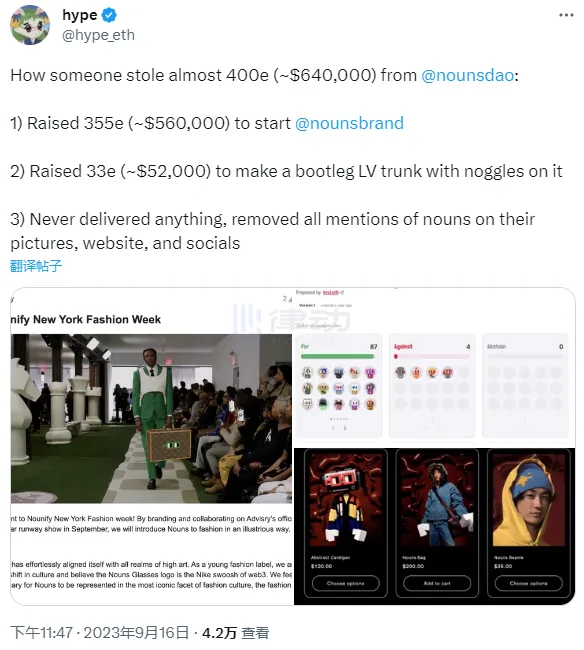
0xBobateas is the proposer of "Nounify New York Fashion Week" (Proposal No. 129), and he has also disclosed this in an article: After meeting the Advsiry team, Advsiry promised to provide Advice X Nouns attendance badges and Nouns gifts to guests, post the Nouns brand at the venue, host a Nounish afterparty, showcase Nouns objects designed by Keith Herron on the T-stage, and shoot a documentary for Nouns, all of which are priced at 33ETH.
After leveraging 0xBobateas' connections to garner support, Proposal 129 passed with a vote of 59 to 1. However, it was disappointing that there was almost no presence of Nouns during New York Fashion Week. The proposal was almost not executed, and 33ETH was not refunded, which eroded trust among Nouns community members. Since the inception of Nouns, community members have been contemplating how to use treasury funds to purchase influence and become prioritized decision-makers in the public domain culture. The proposal's loose passage seemed like a design flaw to many holders.
During the entire forking process of Nouns, it was also a large-scale arbitrage activity.
For fork participants, they can choose to continue using the new NFT in the new DAO fork or use the "rage quit" mechanism to withdraw their ETH contribution in proportion. Considering that participating in the fork may bring a book value of about 35 ETH, and the current market trend shows that the Noun price has always been lower than its "book value", the auction price is mainly between 20-30 ETH, and arbitrageurs clearly see the price difference in the middle.
In recent months, arbitrageurs have been actively buying Nouns during the market downturn, hoping to exchange their ETH for higher returns after the fork. These voters have purchased nouns at a value lower than their book value and have opposed most proposals, only holding a positive attitude towards v3 audits, core development funds, and voting refunds - all measures that directly or indirectly support their arbitrage or cost-saving efforts.
Regarding such arbitrage behavior, Shawn, the head of SeeDAO incubator, told BlockBeats: "This phenomenon is actually expected, it provides a challenge and opportunity for DAO organizations, even a touchstone for DAO organizations. It's like a witch attack, we can't avoid it, but similar attacks can actually make the organization more perfect. It is important for the organization to recognize these phenomena and make corresponding adjustments and improvements. Without such challenges, the organization may become complacent and no longer progress."
BlockBeats learned from the Nouns Protector Governance Group that pure arbitrage operations account for only a small part of the reasons for the fork. From May of this year until the launch of the fork, the number of Nouner has basically stopped growing, while Nouns auctions are still ongoing. During this period, participating in the auction to "hoard" Nouns, and obtaining more Nouns from the secondary market before and after the fork launch, are normal market behaviors, among which there are participants who truly long Nouns and contribute to Nouns. The final widespread participation in the fork should not be attributed to individuals, but to the overall spontaneity.
Not only decentralization, DAO also needs to be "dehumanized"
During an interview with BlockBeats, OG participant in the DAO field, Wang Chao, expressed his views: "If we follow the standards and principles of DAO as defined in the previous Ethereum whitepaper, there may not yet be a true DAO in the world, and human participation and governance are still needed in actual operation."
The concept of DAO is to automate certain governance processes so that they can continue to operate without human intervention. In the Ethereum white paper, a true DAO should be a completely decentralized autonomous organization that does not rely on human coordination. Even Bitcoin only partially achieves this concept and is closer to the definition of DAO, but not completely. Strictly speaking, although many organizations claim to be DAOs, they have not yet achieved true autonomy and self-governance. DAO not only needs to be decentralized, but also needs to be dehumanized.
Reduce human intervention and move towards autonomy
In some DeFi or communities, due to flaws in governance mechanisms or other constraints, excessive "human governance" has led to unreasonable decisions or actions. On March 28th, the Arbitrum community launched the Arbitrum Improvement Proposal 1 (AIP-1) voting on Snapshot, proposing to introduce a decentralized autonomous organization structure called ArbitrumDAO, which will be managed by ARB holders. The Arbitrum Foundation will also serve and be managed by the ArbitrumDAO community.
However, the vote has not yet ended and the AIP-1 proposal has not yet been passed. It was revealed in a blog post by Patrick McCorry that the Arbitrum Foundation had already created a multi-signature wallet with the name "Arbitrum DAO Treasury2" and received nearly 700 million ARB tokens, which had already been sold for stablecoins. The community and some partners are extremely disappointed with the Arbitrum team and the so-called governance, believing that AIP-1 is not a real vote and that DAO principles have been thrown out the window. The proposal was executed without community consent, so what is the point of such a vote?
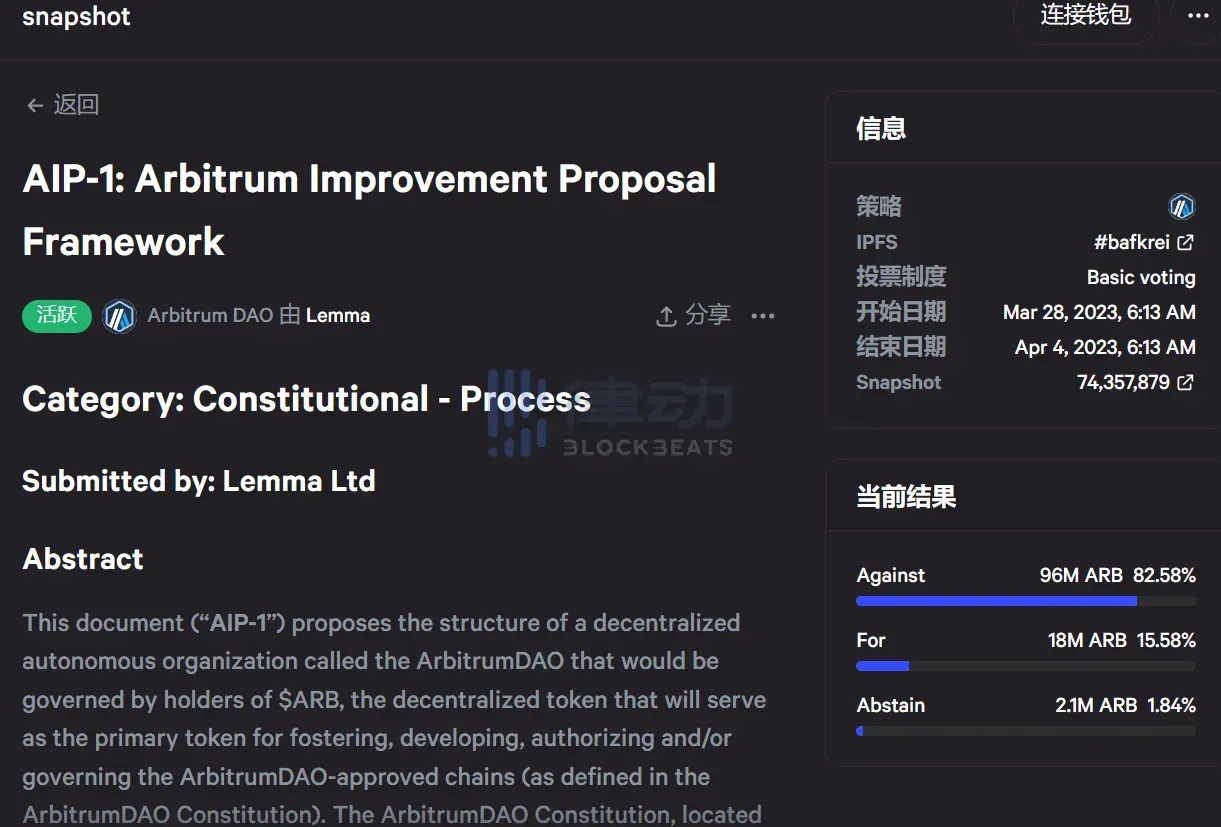
Although the concept of DAO aims to make organizations completely controlled by code, in reality, many DAOs still have too much human involvement and decision-making. And it is this excessive human involvement that is the root cause of the trust crisis in DAOs.
During an interview, OG participant in the DAO field Wang Chao told BlockBeats that to some extent, he agrees with the view that "if DAO still requires a large amount of human governance, then it may have deviated from the true definition of DAO. When an organization relies too much on human decision-making, it is closer to a simple decentralized organization rather than a fully autonomous DAO," he said.
With the development of smart contracts and infrastructure, DAOs are gradually increasing their decentralization. For example, NounsDAO has implemented fund management through a multi-signature wallet, while using smart contracts to automatically trigger the allocation of funds after a proposal is approved.
However, complete on-chain governance remains a major challenge for many projects. Despite continuous improvement in underlying technology, many complex decisions and business logic are still difficult to automate. This means that human involvement is still necessary in many cases, such as the execution risks faced by DAOs in the real world, whether it is disbursing funds in batches, reviewing task completion, or most importantly, executing proposals.
DAO not only needs to be decentralized, but also needs to be dehumanized. Dehumanization should reach a reasonable level, which may be a continuous challenge for all DAO organizations.
After the fork, where do we go?
Which one is more legitimate, the new DAO or the original DAO? On this issue, the Nouns Protector Governance Group told BlockBeats that the current debate on legitimacy is not important, as it is too early to discuss this issue. Many discussions about legitimacy are only because people are pursuing actual benefits. It would have been absurd to discuss the legitimacy of Ethereum in 2016. In the short term, the party with the most funds often has greater influence. However, in the long run, the key is which organization can nurture meaningful and valuable innovations.
Of course, many people are also concerned about the possibility of unlimited forks for Nouns. On this issue, BlockBeats learned from Wang Chao that from a tool perspective, Nouns seems to be easily forked. However, in reality, it is believed that forks will not occur frequently, and successfully maintaining an active and socially-consensus organization is extremely challenging.
"Despite the recent fork causing prolonged debates and exposing some dissatisfaction, I believe this is only a temporary state. I am not entirely clear on the current development trend, but this fork is likely a wake-up call, and I still believe that Nouns can continue to develop healthily," said Wang Chao.

After the fork, where do the holders go? BlockBeats found that the community's choice is to be loyal to their own trust. Where their trusted friends, team, and community members are, that's where their choice is.
NounsDAO's forking plan has also attracted a lot of attention in the governance of other DAO organizations, becoming a reference blueprint for other DAOs. For example, members of FloorDAO have also proposed a proposal in the community to fork DAO into "FloorkDAO" and implement an angry exit mechanism for token holders.
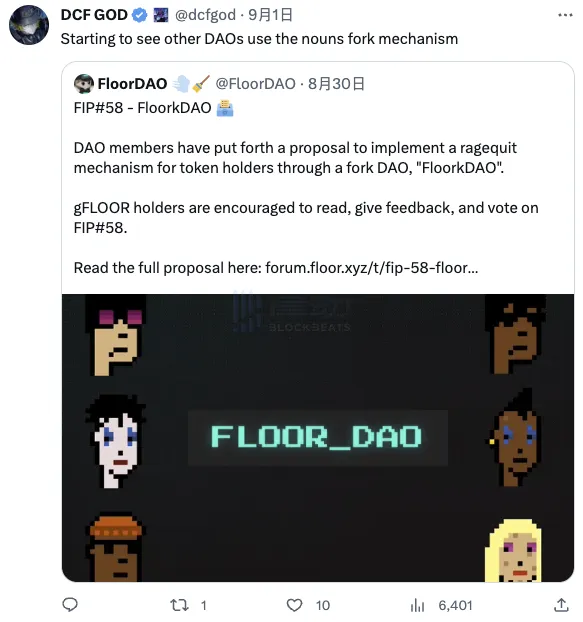
Is complete autonomy and decentralization just a utopian illusion? In this encrypted new world defined by "code is law", does human subjective will still play an important role? The NounsDAO fork event has also prompted many governance practitioners and the encrypted community to re-examine the meaning and prospects of DAOs.
Perhaps at present, DAO is difficult to completely eliminate the influence of humans, and the road to autonomy is tortuous. However, with the progress of AI tools and the infrastructure of the encryption industry, the future of DAO is definitely not just a large-scale experiment for those idealists.
This article gives special thanks to: Nouns Protector Governance Team, DAO OG Participant Wang Chao, and SeeDAO Incubator Director Shawn.
Reference:
1. "S1E10|VENTUREDAO Prequel: The Arrogant Proposal of the Unknown, Becoming the Cornerstone of the Industry|DAO Special Issue"
2. "Keeping up with the Nouns"
3. "Introducing Nouns Fork: A Last-Resort Minority Protection Mechanism"
4. "Thinking About Rage Quit"
5. "Fork is a good thing: This is a new feature, not a bug"
6. "Cross-community sharing-When the elegant NounsDAO encounters governance attacks"
Welcome to join the official BlockBeats community:
Telegram Subscription Group: https://t.me/theblockbeats
Telegram Discussion Group: https://t.me/BlockBeats_App
Official Twitter Account: https://twitter.com/BlockBeatsAsia

 Related Articles