August DeFi Market Review and Outlook: Which protocols and airdrops to focus on?
Original author: THOR HARTVIGSEN
Translated by: Deep Tide TechFlow
This article will delve into the recent market performance and analyze the highest revenue protocols within the past month. The article will be divided into the following sections:
Market;
News and Catalysts;
DeFi Airdrops and Strategies.
Market
These three charts provide an overview of the current performance of monitoring blockchain and DeFi adoption.
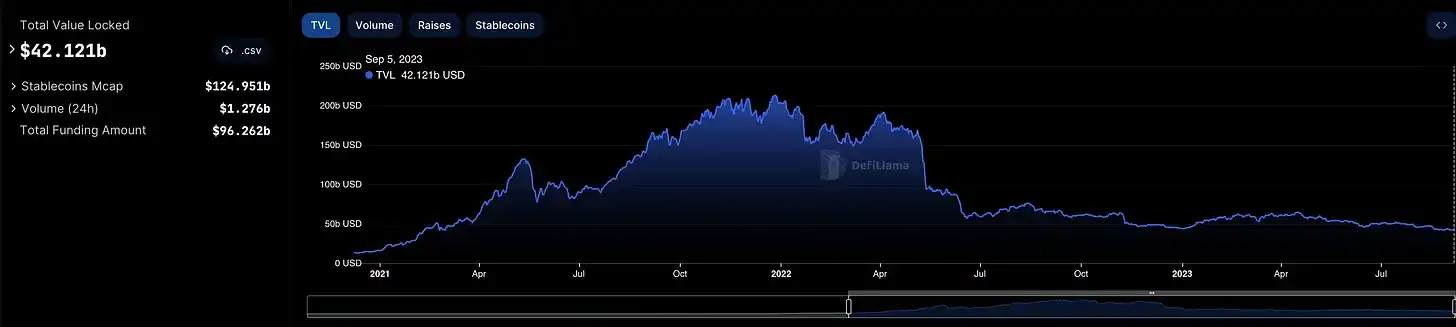
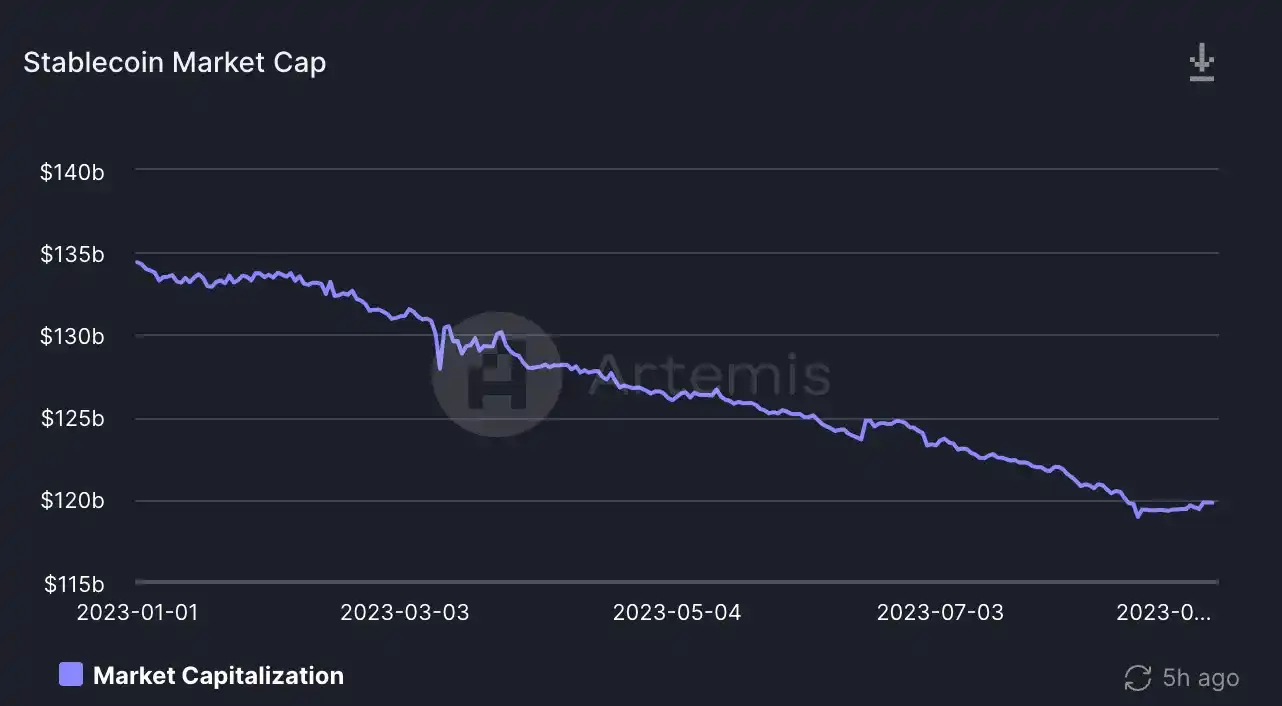
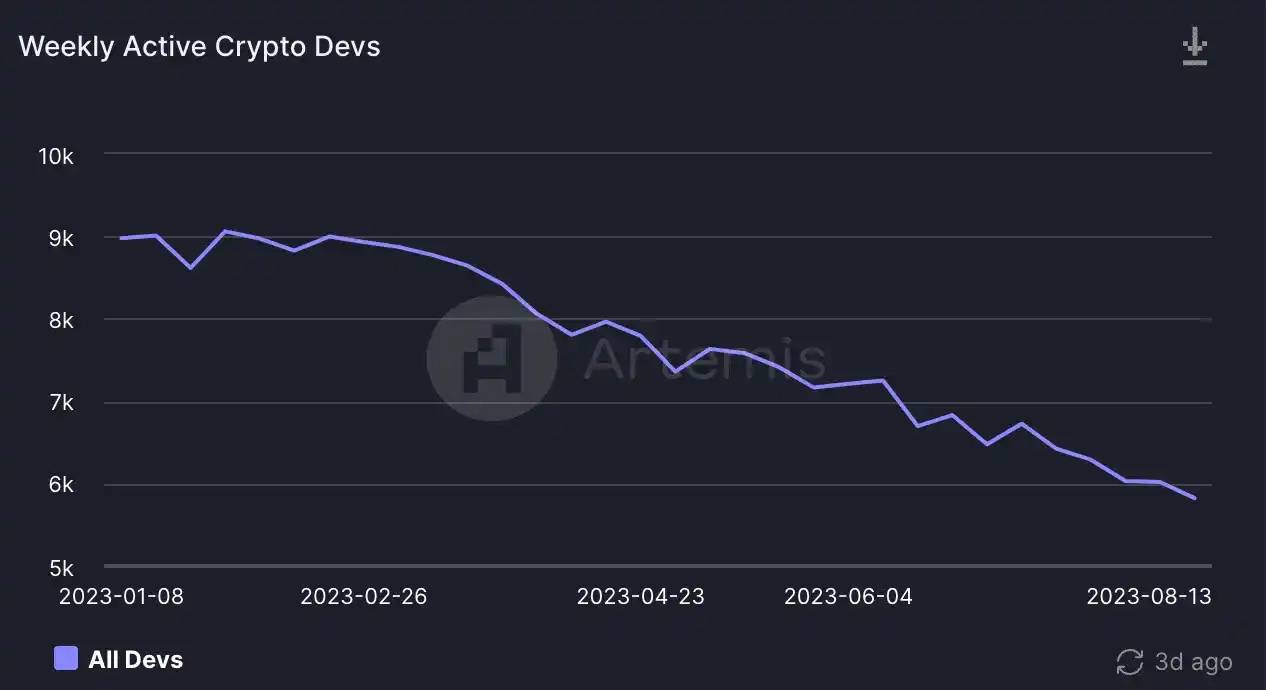
Its charts depict a fairly clear picture. Funds are flowing out of DeFi. As demand for on-chain products decreases, the need for developers also decreases, resulting in a decline. Although prices and these indicators continue to decline, it is more due to unfavorable economic conditions than special risks in cryptocurrency. If you are still here, two years into this bear market, and believe that the future will be better, let's identify the current winners.
Income Winner
Below is a top protocol table based on 30-day revenue ranking, along with their respective valuations.
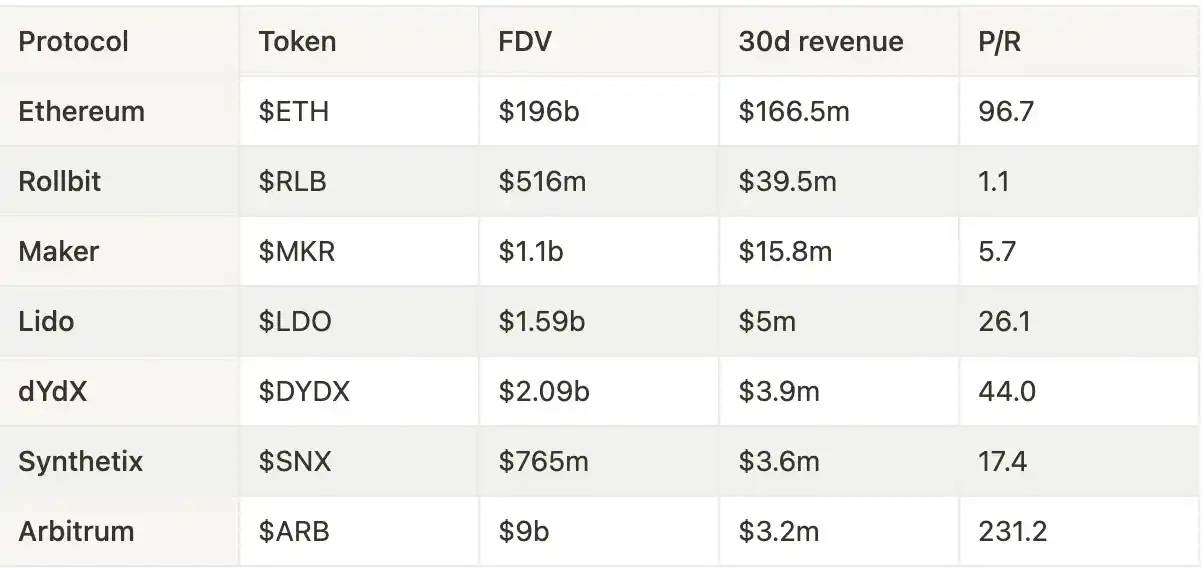
As you can see, in terms of revenue, Ethereum is still the leading application with a 30-day revenue of $166.5 million. Other protocols with revenue exceeding six figures include Maker and Rollbit.
Maker charges fees on all collateral that supports the $DAI stablecoin. Currently, over 50% of revenue comes from real-world assets that support DAI, such as US Treasury bond yields. This business model is straightforward - to increase revenue, Maker must increase the supply of $DAI. Relative to revenue, the valuation of $MKR is relatively low. Price/Revenue (P/R) is calculated as FDV divided by 30-day annualized revenue.
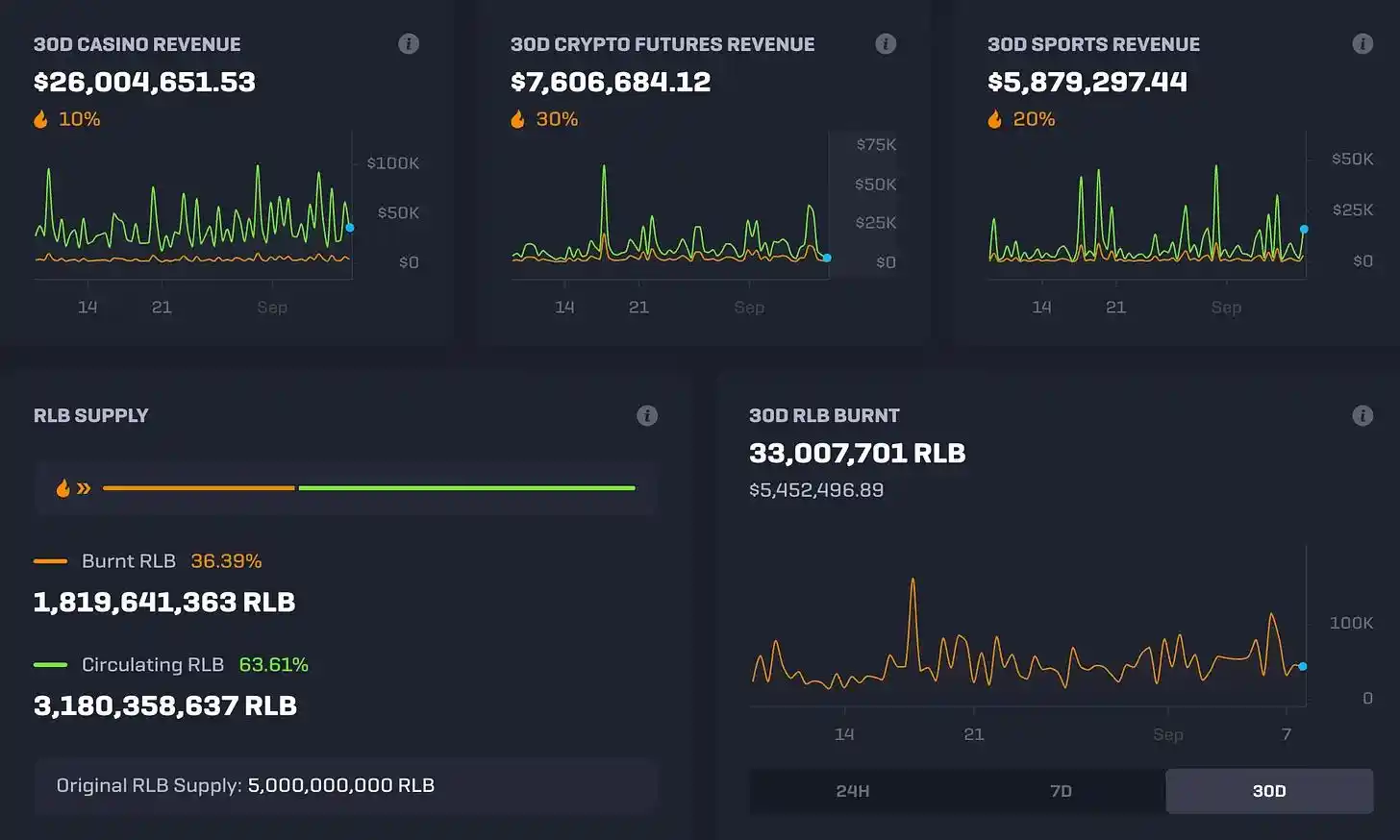
Rollbit is another impressive protocol in terms of 30-day revenue, with a P/R multiple of 1.1 for $RLB. Rollbit generates revenue through its casino, sports betting platform, and cryptocurrency futures trading. It is worth noting that its revenue cannot be verified on-chain and can only be trusted through the revenue dashboard (shown below). Part of the revenue from these products is used to buy back and burn $RLB, thereby exerting deflationary pressure on the token.
Other recent revenue winners include Synthetix, dYdX, Lido, and Arbitrum, as shown in the table.
News and Catalysts
This section will focus on three protocols that are about to undergo significant upgrades.
Frax Finance
Frax Finance's ecosystem is about to undergo a series of major upgrades:
frxETH V2
Due to the dual-token nature of frxETH and sfrxETH, the Frax ETH liquidity staking solution still generates the highest returns in LSD. V2 will introduce permissionless validation instead of a subset selected by the team. V2 will serve as a lending market between ETH stakers (borrowers) and ETH validators (lenders) to ensure an efficient but decentralized staking system.
FRAX V3
Frax recently passed a proposal to use real-world assets as collateral for $FRAX. This upgrade (Frax V3) is expected to be launched later this month, and the revenue generated from these real-world assets will be distributed to $FRAX holders through so-called Frax bonds with different annual maturity dates.
Frax Chain
Later, an unnamed custom mixed Rollup will be launched. The chain will host various Frax applications and products, such as FraxSwap, FraxLend, frxETH, FraxFerry, etc., but not limited to native Frax applications. The chain will use frxETH as the native Gas, which may significantly increase the staking return rate for sfrxETH holders.
"Fraxchain is not an application chain, our goal is to become the largest L2 on Ethereum. We hope it becomes the largest L2. The way we are actually trying to do this is by making it the most useful yield from the federal rate, the best staking rate for ETH, and the best inflation protection rate. All of these extremely useful ways to earn income are the hallmark and core of Fraxchain." - Sam Kazemian.
Radiant Capital
Radiant Capital is a cross-chain lending market on Arbitrum and BNB chains. They launched V2 earlier this year, introducing new assets into the money market and a new RDNT issuance structure for greater sustainability. This has led to a surge in TVL and widespread adoption, as shown in the following figure.
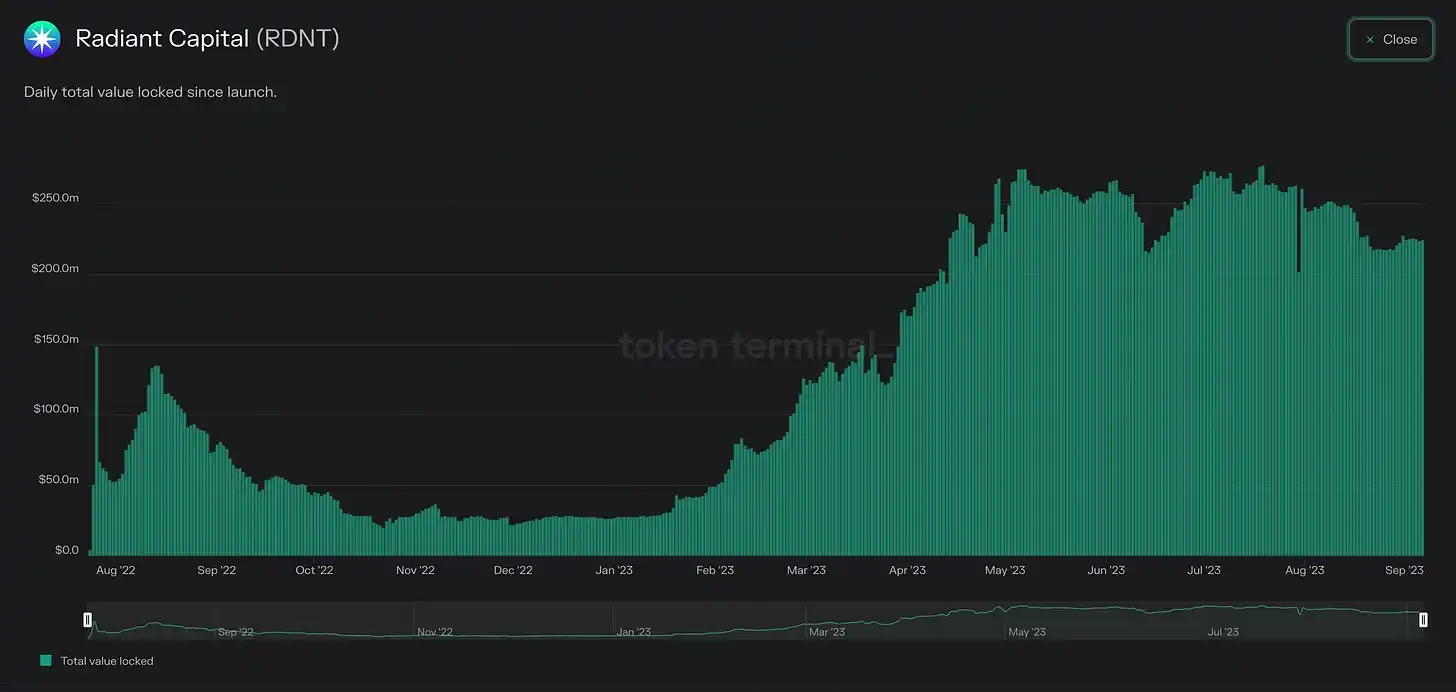
Radiant will expand to the third chain in early October, which will be launched on the Ethereum mainnet. This may attract more funds into the protocol, as the Ethereum mainnet is still the liquidity center of the DeFi field. It is currently unclear which assets will be supported on Ethereum.
Synthetix
Synthetix is about to launch the full version of Synthetix V3, aiming to make Synthetix the liquidity center for all protocols in the EVM ecosystem. Front-ends such as Perps, options protocols, and decentralized exchanges will be able to easily leverage Synthetix's liquidity across various chains.
Potential multi-collateral pledging;
Permissionless liquidity layer;

Aerodrome
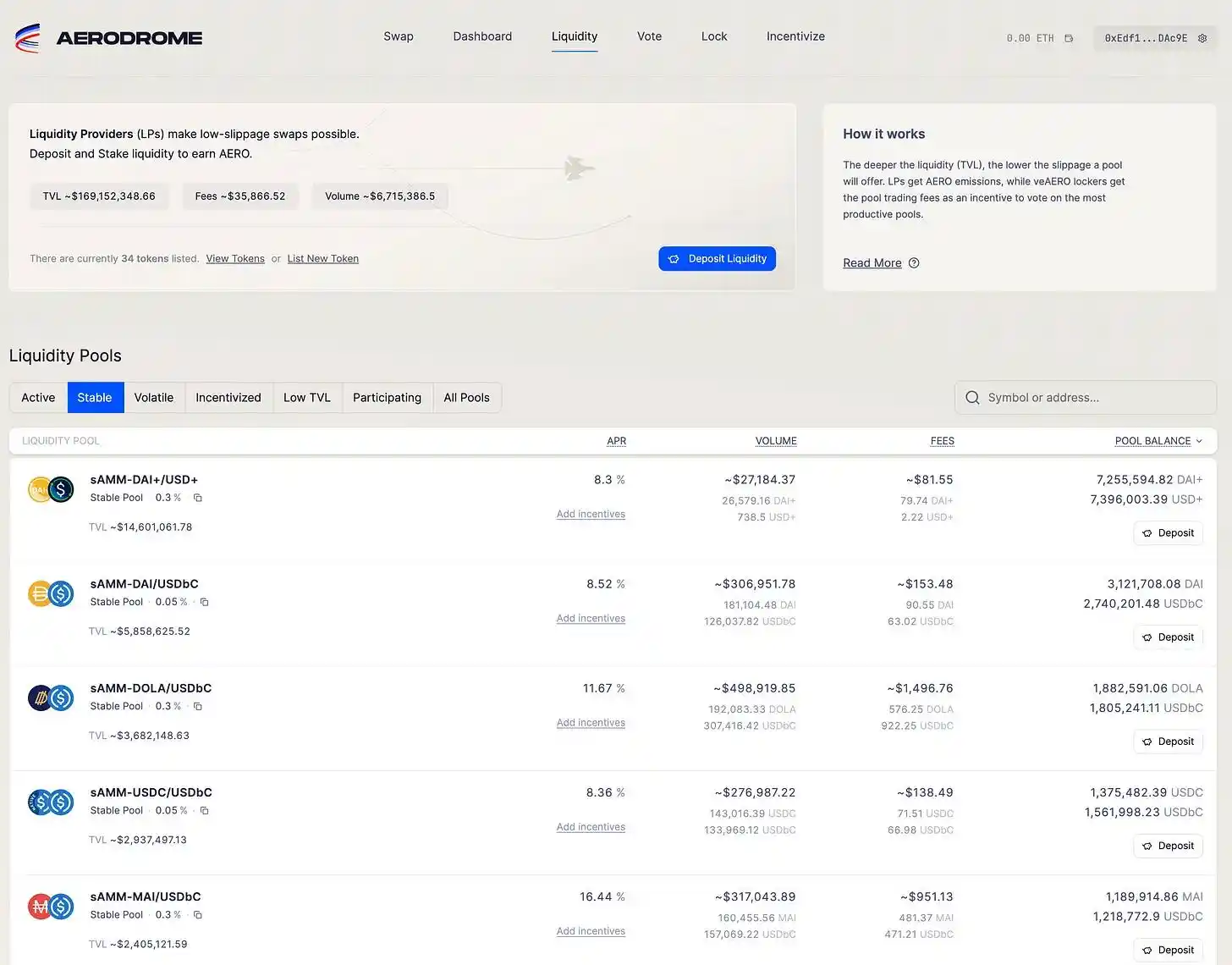
Pendle Finance
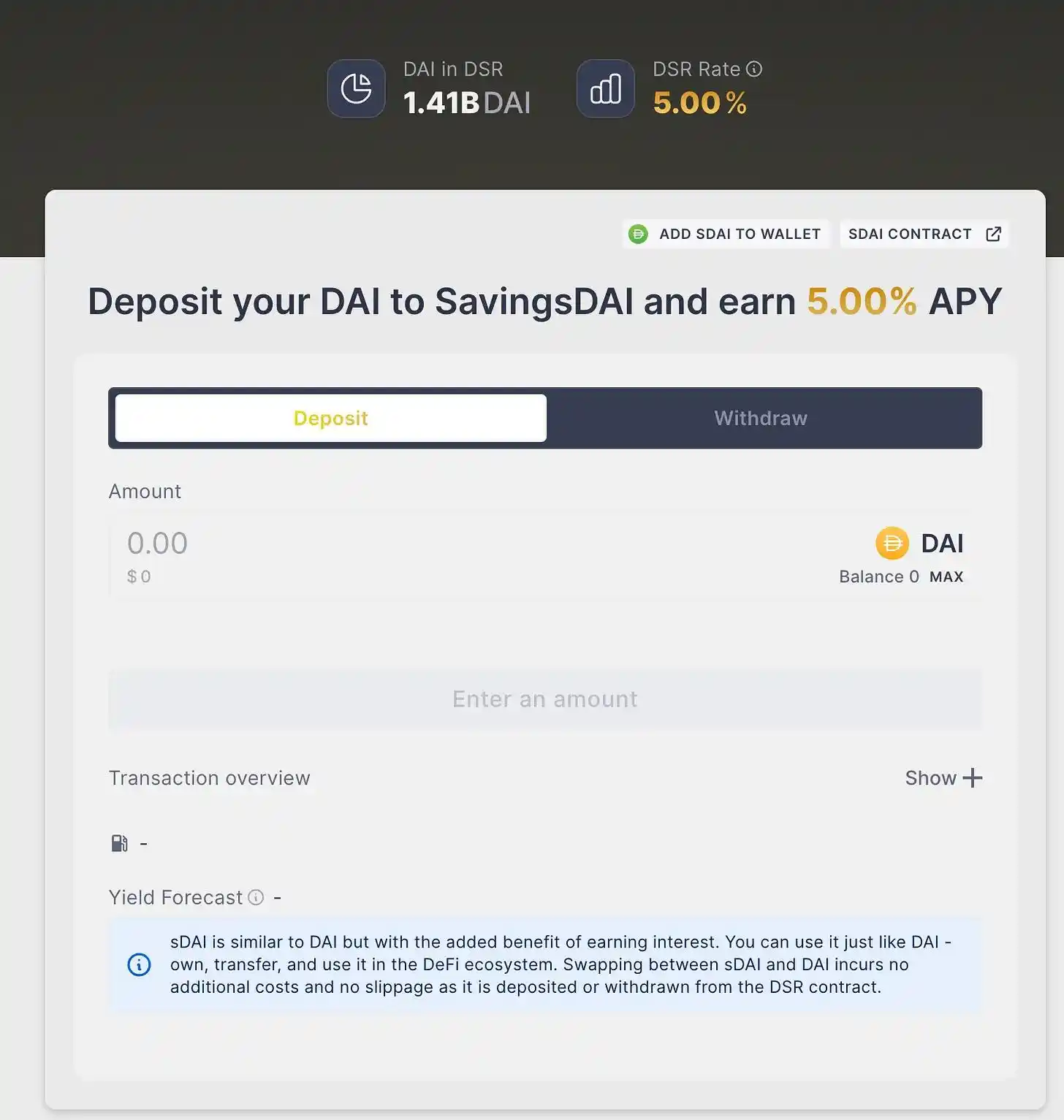
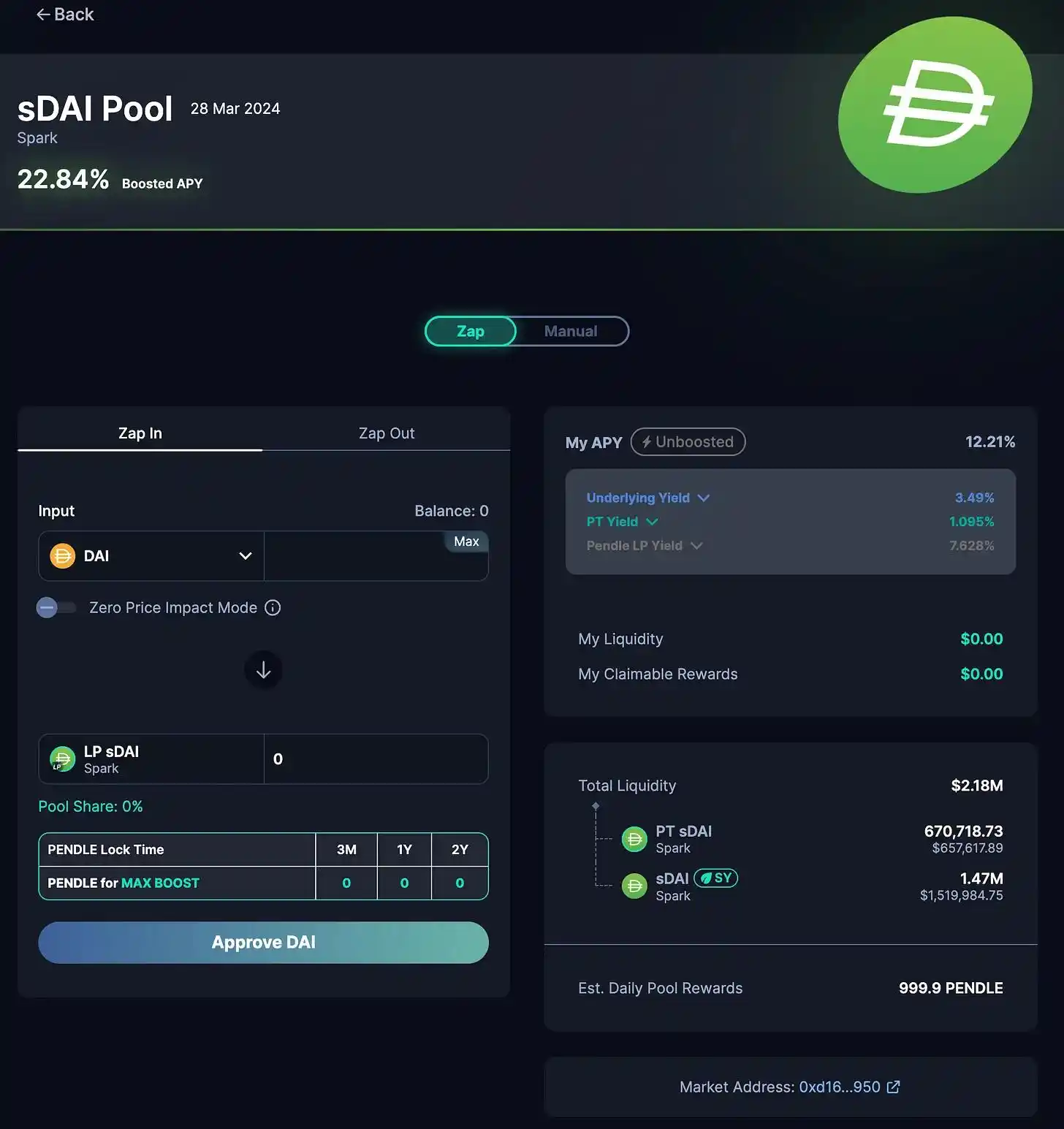
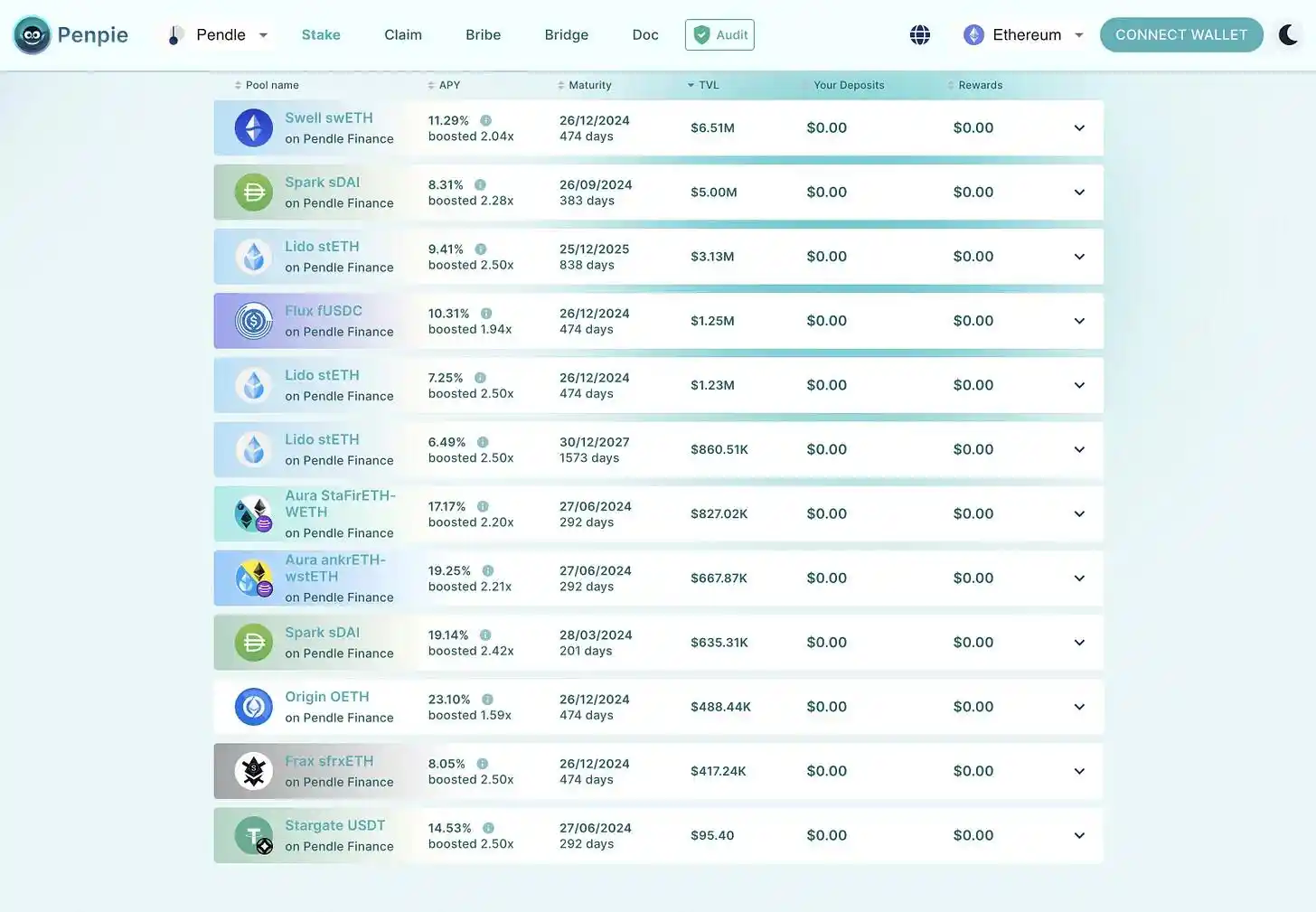
To achieve higher returns, deposit sDAI (representing the liquidity of $DAI in DSR) into the liquidity pool of Pendle Finance. The current yield is an unboosted 12% APY, which can be increased up to a maximum of 22.8% APY by locking $PENDLE as vePENDLE. The returns come from underlying 5% yield, transaction fees, and PENDLE issuance.
Risk: Smart contract risks for Spark Protocol and Pendle Finance.
Original article link
Welcome to join the official BlockBeats community:
Telegram Subscription Group: https://t.me/theblockbeats
Telegram Discussion Group: https://t.me/BlockBeats_App
Official Twitter Account: https://twitter.com/BlockBeatsAsia

 Related Articles