1confirmation co-founder: Predicting that the market will be the next mainstream market to attract attention.
Original author: Cookies
Original translation: Lynn, MarsBit
GP Nick Tomaino and Jason and Santiago from 1confirmation discussed the investment framework adopted by 1confirmation and his paper on user guidance (not user experience personnel), DAO, NFT, RWA, and stablecoins on Empire.
In this article, I focus on the key points proposed by Nick and provide my thoughts, while inferring some points to determine potential innovations.
Next-generation L1 is nonsense
Nick believes that social innovation is more critical. In Nick's view, in order to achieve new social innovation in L1, there needs to be a radical on-chain governance method/sovereign chain method, where not only a single chain can solve the problem, but there will be multiple application chains for settlement, while being interconnected.
The author's thoughts: I have been thinking about the concept of "governance as a service" (disclaimer: at this stage, this is a very, very simple idea). This idea stems from several considerations:
There are many stakeholders involved in governance (protocol founders, protocol operators, and users), and these stakeholders have very different views on what they believe may be beneficial to the protocol/themselves.
When we look at the broader perspective, the interconnectivity of existing protocols is evident: LST CDP, loan market, yield farming, and so on.
From the above two points, I believe there is a need for a universal platform with universal governance indicators. This allows stakeholders to better understand how their choices affect outcomes and proactively prevent the passage of certain protocol proposals that may affect other partner agreements.
With a universal framework, it can track protocol data based on proposal history records. For example, how the number of protocols changes after a proposal is passed. More metrics can be tracked, including user metrics. Ultimately, as more information is organized into the database, it can be used for backtesting. In the future, new protocols can refer to such retrospective test results to understand which proposals to launch and may use available data to create a simulation framework.
However, I believe that the starting point must be some kind of incentive plan to solve the cold start problem of participation. After that, it becomes a slow adjustment game of gradually eliminating incentives to maintain market balance.
Solana
Nick gave the example of Solana, and the description was very clear: (a) cheaper, (b) faster. It is intuitive and meaningful to people, but in the long run, it is not important.
Author's thoughts: Nick did not delve into why it is not important in the long run, but I think it is because Solana is a foundational layer that people will not interact with visibly and tangibly, and I agree with this. Nevertheless, I would like to say that the advantages brought by the foundational layer will be presented in the application layer, which directly interacts with users. An example is DePIN, which performs better on chains like Solana because of its essence: speed. So, is this really important in the long run? Maybe, maybe not.
Cosmos
Then Nick gave the example of Cosmos, which so far doesn't seem to have a clear narrative because it has nothing to do with anything existing. What he refers to as Cosmos is the concept of a sovereign chain.
Powerful narrative is often far from the truth
The fact is subtle, and most people do not appreciate subtle differences. There is a narrative that suggests many people believe something, which indicates a lack of subtle differences and a significant gap between statements and facts.
Author's reflection: In a sense, is narration necessary before people can recognize subtle differences?
Is having the best product enough to win?
Santiago put forward the view that sometimes the best product does not win. For example, Osmosis, led by Zaki and others, created a very interesting product that meticulously dealt with the existing landscape. However, without a BD and marketing team to attract market appeal and product adoption, it did not succeed.
When asked about how the above phenomenon affects the investment thesis of 1co nfirmation, Nick mentioned that he focuses on authenticity, and over time, authenticity will prevail. As for aspects such as BD and marketing, they may not be as important in the long run, but perhaps a product with good BD terms in the short term may lead the trend. Regarding authenticity, Nick simply mentioned that it refers to products that innovate from a social perspective and effectively promote the advancement of space.
Author's thoughts: In the early stages of new technology, it is often very subtle and not intuitive for the market and users. My belief is that good UI/UX and BD need to be combined to attract the first wave of users. Perhaps in the long run, the stickiness and usefulness of truly beneficial products/technologies will eliminate the need for excessive BD/marketing, but this does not seem to be the case in the early stages.
This is also one of the reasons why I have been paying attention to whether there are UI/UX automation tools, which are not only used for design, but also for evaluating users' responses to various designs.
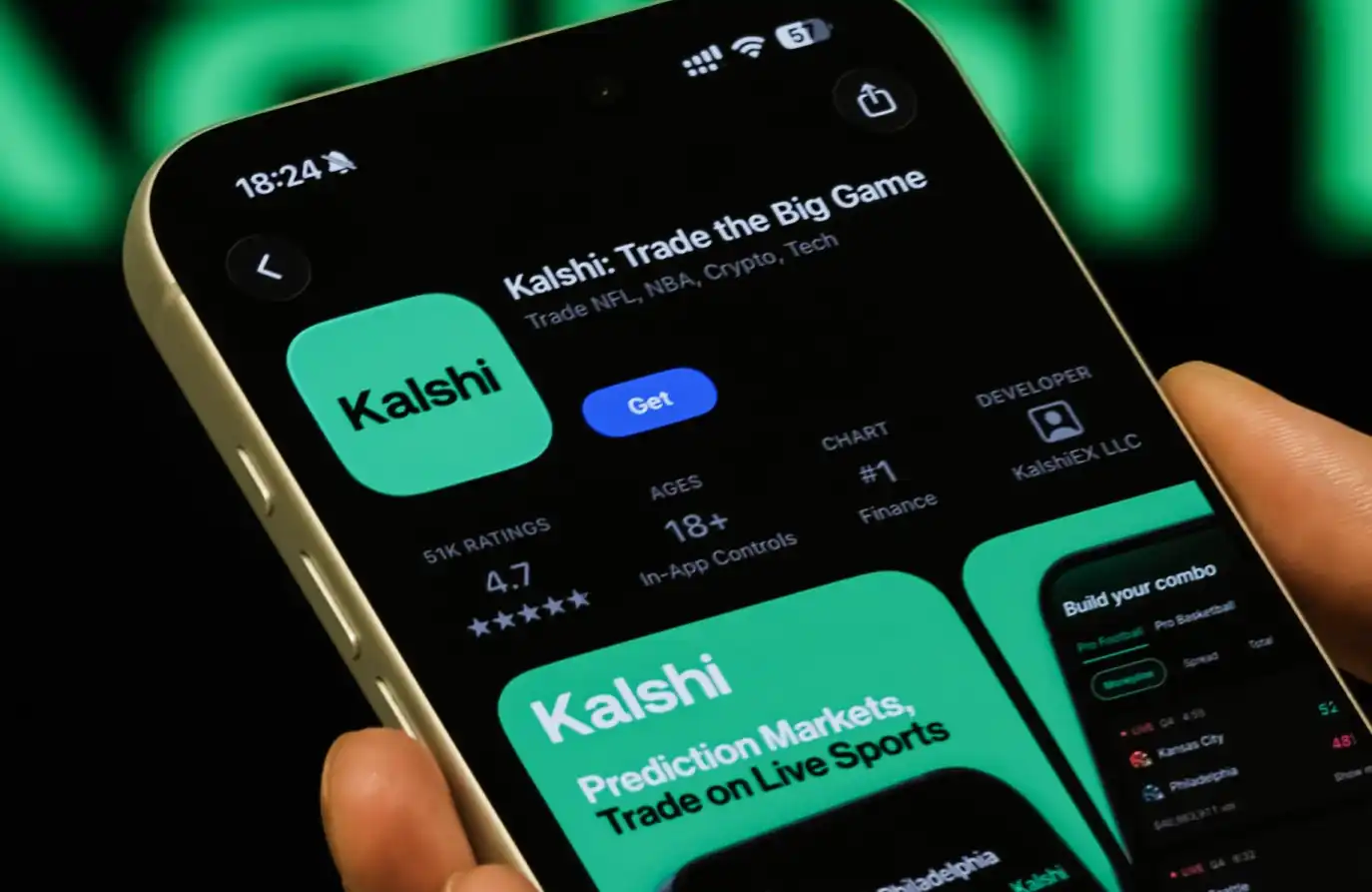
Market Prediction: The Next Market to Attract Mainstream Attention
Jason asked Nick for his opinion on the role of prediction markets in the context of public disillusionment with institutions. The truth of society has historically been governed by self-governance and institutions, but in recent years, it has become increasingly difficult to find the truth. Following this line of thought, a large-scale global prediction market may be the best way to reveal true information.
Nick agrees with this view and emphasizes that, compared to the media and narratives, the market is fundamentally a better source of facts. This is because predicting the market is not just descriptive, but participants are people who are guessing the outcome, which can bring truth to society.
The author's reflection: But in this situation, how likely is the possibility of group thinking/peer pressure? People may instinctively make choices based on what they see/the choices of the majority.
Nick proposed a very interesting idea about the potential of prediction markets as a business model for creators. This idea stems from the mention of the founder of Polymarket in a paper, who pointed out that the success of NFTs is due to the excellent business model they provide for creators. The same is true for prediction markets, where each influencer creates their own pool and generates revenue by charging fees.
DAO Topic
The question that the market needs to consider is whether "our product will bring speculation and dependence on investment capital beyond the main aspects". Nick's bet on DAO is to allow people from different parts of the world to contribute resources to the same/different organizations to the extent that it can develop in human organizations. Nick also emphasized that he has not yet seen a product that makes it easy for people to participate in DAO.
NFT Topic
Nick has put forward several viewpoints regarding the NFT vertical field.
1. Within 5 years, NFTs have the potential to become a market larger than cryptocurrency.
-NFT as an investment category will continue to grow.-
The author's thoughts: It's a very strange case when it comes to how these investment opportunities can be presented in a potential way. So far, I think projects that explore using ERC-6551 could be very interesting because they are researching new design boundaries and may be able to introduce new design forms.
In addition, defi has always been touted as decentralized finance and provides financial services to everyone. The NFT scene in a sense reminds people of this, as the traditional art scene is highly restricted.
2. NFT Valuation Framework
Given the lack of available cash flow to value cryptocurrencies and NFTs in traditional ways, some have suggested valuing them based on beliefs. Nick mentioned that the approach taken in this case is relative valuation, such as Bitcoin to gold, CryptoPunks to Dogecoin, and so on.
3. Idol Drama
Nick quoted "Desire is not based on ourselves, but on others." This is obvious for NFTs, when a particular NFT collection is minted by a celebrity or even a well-known figure who releases NFT collection memes, it may significantly increase the demand for that particular collection among users.
The author's reflection: very similar to existing fan behavior. For example, fans often go to the coffee shop that their idols frequently visit. NFTs can also achieve similar concepts.
4. NFT Fragmentation
This results in a transfer of ownership from the strong to the weak. In theory, it is reasonable and can promote inclusivity, but it takes time to achieve the appropriate balance.
5. OpenSea's future tokenization?
Santiago asked about the future of OpenSea, as market share continues to decline due to strong competitors such as Blur. Given that tokenized crypto markets often better coordinate users and investors, does it make sense for OpenSea to eventually have its own token?
Nick found that OpenSea is the best product for newcomers to enter the cryptocurrency field. He acknowledges that there are indeed some crypto-native products that are more attractive to traders due to token incentives. However, he believes that with the entry of retail users, OpenSea is in a favorable position to attract these users, as other platforms are not geared towards mainstream users in terms of their working methods and interfaces.
However, Nick found that it is important for the market to give users ownership and hopes to see OpenSea hold tokens in the future.
The author's reflection: OpenSea's dominant position may also be related to market cycles:
(a) OpenSea's market share growth is very significant, assuming it reaches 70%.
(b) Competitors entering the market caused OpenSea's market share to drop to 45%. Despite the decrease in market share, OpenSea still maintains its position as the market leader.
(c) New users entering the field are attracted by market leaders, in this case still OpenSea. This further increases OpenSea's market share.
This may be a cycle, as long as OpenSea maintains its position as a market leader, market cycles and the entry of new users will help keep its market share in a balanced range. It can be considered a first-mover advantage.
RWA Topic
However, the above composability feature may further develop in the future. The infrastructure layer may mature to allow easy access to both defi assets and RWA through a single platform. As mentioned above, asset management dapps may also have "default investment portfolios" available for users to invest in. For example, for users with a higher risk appetite, they may choose an asset management dapp with 80% defi assets + 20% RWA, while users with a lower risk appetite may choose products with a higher percentage of RWA.
Nick mentioned that, in terms of potential, he would prioritize music NFTs over RWA. The reason for doing so is that it is difficult for people to understand RWA because it is not physical.
Author's thoughts: It may not necessarily be physical. However, with the current efforts in the RWA vertical field (including treasury bonds), users are likely to enter RWA in a shorter period of time because they can compare their existing activities with their activities in life. In addition, as protocols such as MakerDAO incorporate RWA into their products, cryptocurrency natives will seamlessly introduce "new" asset categories that they have not previously been heavily involved in. Ultimately, as web2 users and cryptocurrency natives adopt RWA over time, the Lindy effect can be established, relaxing the entry of large institutions.
Nick mentioned that the narrative of cryptocurrency on Wall Street might be like this: "It's interesting and experimental, but nothing really happens."
The author's thought process: Is this where RWA can potentially provide assistance? When Wall Street analysts obtain something they already know how to calculate, such as MakerDAO's vaults containing a significant amount of RWA, and with the emergence of more RWAfi, it can actually help with the adoption of TradFi.
Although acknowledging that smart contract wallets will help with onboarding, Nick's paper on user onboarding still highlights new user behavior. This may take the form of NFTs or DAOs, both of which give users true ownership.
Stablecoin Topic
Stablecoins have a clear PMF as a trading tool, which is currently the main use case, namely their use in DeFi protocols. However, we have not yet seen stablecoins widely used as a medium of exchange. For example, NFTs can be seen as e-commerce in a sense, but they are mostly traded in ETH and SOL.
One of the main reasons why stablecoins have not yet emerged as a major medium of exchange is the lack of developer tools. The focus has been on the issuance of stablecoins rather than creating a good developer experience. Bridge.xyz, one of 1confirmation's investment portfolio companies, provides APIs for fintech companies that want to use stablecoins on the backend. Another use case may be for DAOs that want to pay taxes but do not want to manually execute the process of interacting with fiat currency or banking systems. Bridge.xyz can facilitate this process by converting the DAO's stablecoins to USD and paying taxes through a fintech company that has integrated their API.
Original Link
Welcome to join the official BlockBeats community:
Telegram Subscription Group: https://t.me/theblockbeats
Telegram Discussion Group: https://t.me/BlockBeats_App
Official Twitter Account: https://twitter.com/BlockBeatsAsia

 Related Articles