Regulation, Insider, and Essence: The Story Behind Kalshi's $22 Billion Valuation
Video Author: John Collison
Translation: Peggy, BlockBeats
Editor's Note: Over the past few years, the prediction market has shifted from a relatively niche financial experiment to the center of discussions on technology, finance, and public policy.
It has drawn widespread attention not only because of the allure of "betting on the future" itself but also because, against the backdrop of amplified noise on social media, repeated polling inaccuracies, and declining credibility of the traditional information system, a more fundamental question has emerged: Can market price become a signal mechanism closer to reality than opinions, emotions, and narratives?
This discussion revolves around this question. The participants include John Collison, Co-founder of Stripe; Matt Huang, Co-founder of Paradigm; as well as Tarek Mansour and Luana Lopes Lara, Co-founders of Kalshi.

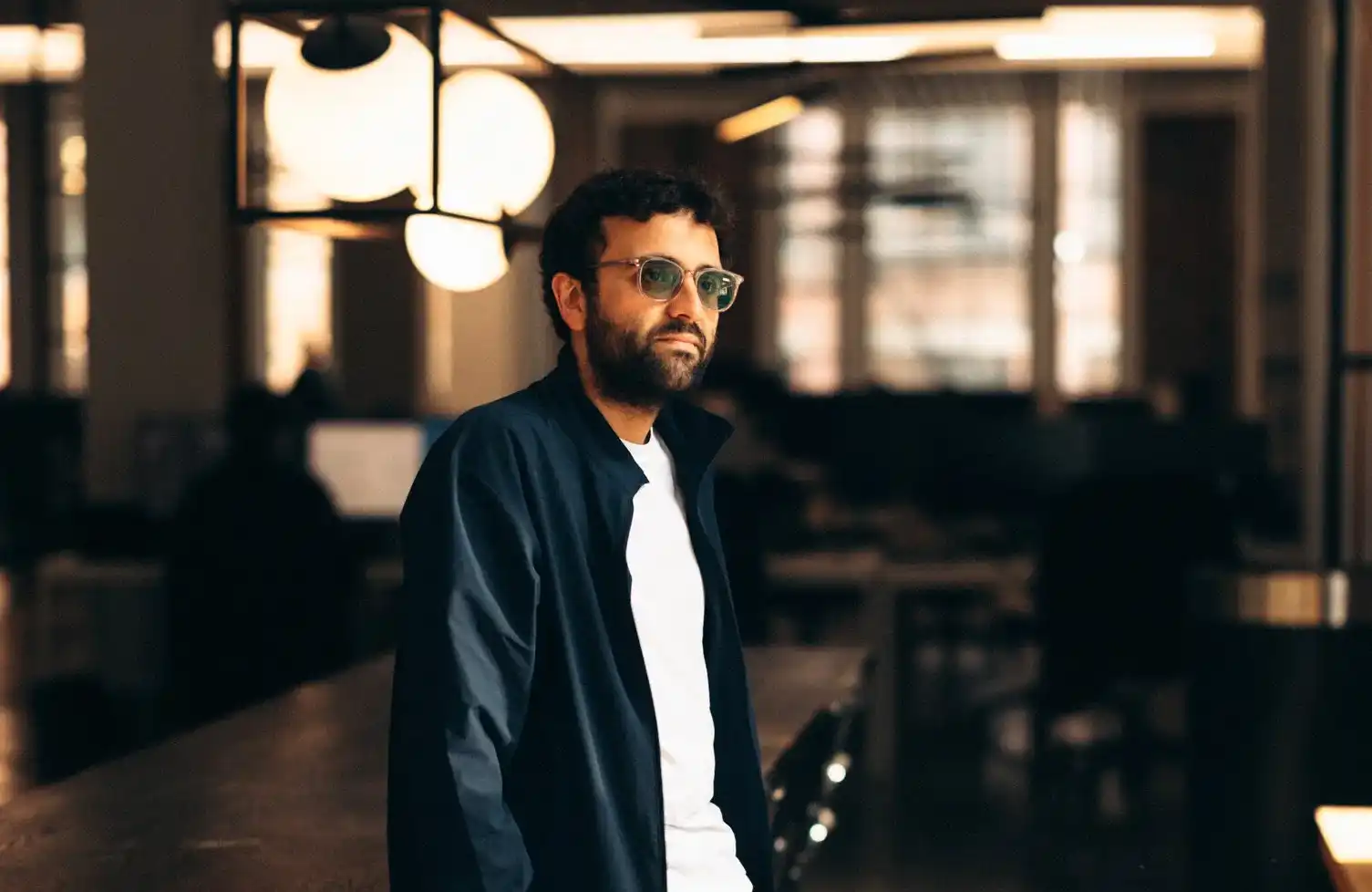
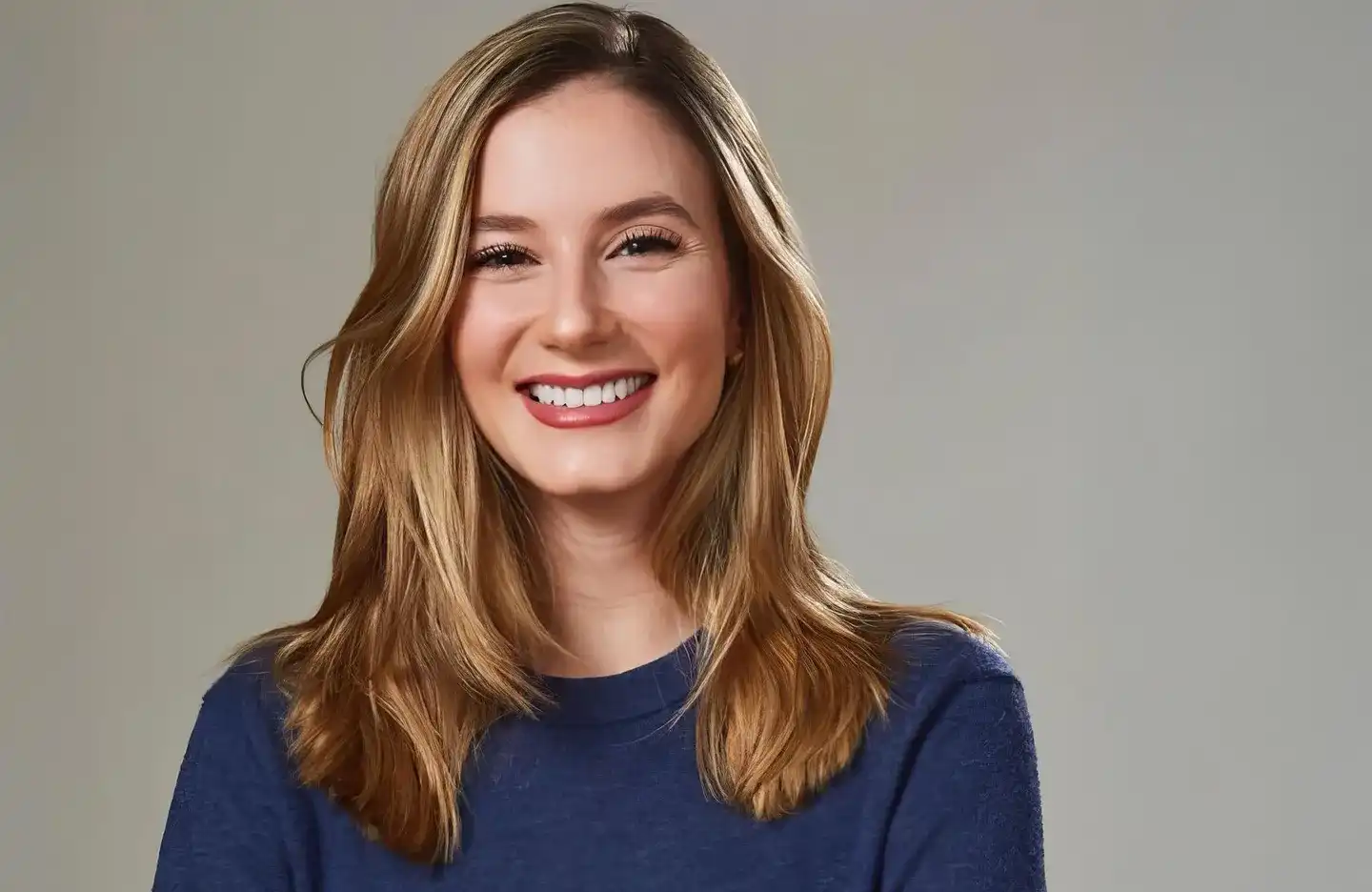
Kalshi's Co-founders Tarek Mansour (right) and Luana Lopes Lara (left)
As one of the most prominent compliant prediction market platforms in the United States, Kalshi rose to fame during the 2024 U.S. election. Prior to this breakout, it had spent several years in a back-and-forth with the U.S. Commodity Futures Trading Commission (CFTC) and ultimately, through a crucial lawsuit, paved the way for the legalization of prediction markets in the U.S.
The first part of the discussion focuses on Kalshi's journey: why the two founders chose not to follow the common "build first, ask questions later" approach in Silicon Valley but instead insisted on "compliance first, growth later"; why they were willing to endure lengthy approvals, layoffs, and external scrutiny to secure the "election market"; and how the lawsuit against the CFTC became a pivotal turning point for the company's takeoff.
The second part delves into the operational logic of prediction markets. Tarek and Luana explain the fundamental difference between Kalshi and traditional online betting platforms: it does not rely on a "house model" profiting from user losses but operates as an exchange centered on fees, encouraging liquidity and information flow into the market. They also highlight a counterintuitive reality: Kalshi's liquidity does not primarily come from traditional large market makers but from a large number of individual traders, "super predictors," and small teams. In a sense, the prediction market is not just a financial product but also a mechanism that directly translates dispersed cognition into price signals.
In the latter part of the conversation, the discussion extended to the future boundaries of prediction markets: from elections, sports, to AI, GPU power, macro variables, and policy paths, more and more uncertainties in the real world, can all be broken down into tradable, feedbackable, decision-assistive market issues? At the same time, a series of unavoidable controversies have emerged—how to define insider trading, whether sports contracts will amplify online entertainment risks, and how platforms and regulations should establish a new balance between innovation, transparency, and user protection.
It is for this reason that the significance of this conversation is not only about Kalshi itself. What it truly tries to answer is: Will the prediction market become the next-generation financial market or the next-generation information infrastructure?
The following is the original content (slightly reorganized for better readability):
TL;DR
· Kalshi chose an unconventional path of regulation first, growth second: Spent 3 years getting licensed, sued the CFTC to open the election market; the core judgment is whether the prediction market can legally exist, which is more important than growth.
· The essence of the prediction market is to incentivize real information with money: Compared to polls and social media, the market filters information through a profit-loss mechanism, seen as a signal system closer to the truth.
· Ordinary people, not institutions, constitute the core liquidity of the market: Over 95% of the matching comes from individual users and super predictors, not traditional market makers.
· Kalshi emphasizes being an exchange rather than an online entertainment platform: Revenue comes from fees, not user losses, encouraging experts to participate, rather than restricting winners as in the online entertainment industry.
· Elections are the Holy Grail scenario, but the future market is much more than that: From sports, macro to AI, power variables, the team hopes to build a derivative system where everything can be priced.
· The prediction market is becoming a new information infrastructure: Users not only trade but also consume probability; 80% of users mainly use it to interpret the world rather than to bet.
· Behind its rise is a distrust of the traditional information system: Polarized social media and inaccurate polls are driving people towards price-based judgment mechanisms.
· Core Long-Term Goal: Improve social decision-making efficiency, not just be a trading platform. Through continuous pricing and feedback, enable faster formation of real consensus in areas such as politics and economics.
Interview Transcript
John Collison (Stripe Co-founder & Interviewer):
Tarek Mansour and Luana Lopes Lara are the co-founders of Kalshi. Kalshi is an emerging prediction market company that quickly gained popularity during the November 2024 U.S. election. In order to establish the first domestically compliant prediction market in the U.S., they spent four years navigating regulatory agencies and seeking approval before officially launching. Today, Kalshi's monthly transaction volume has exceeded $10 billion.
So, how do you two usually divide your work? But more than division of work, I'm curious about how you differ in your approach to problem-solving?
Luana (Kalshi Co-founder & COO):
Actually, our backgrounds are almost identical. We both studied math and computer science at MIT, had similar internship experiences, basically no differences. But I'm the type of person who is very optimistic, enjoys taking risks, always believing things will work out in the end; he is very cautious, even a bit pessimistic. So I think, this just happens to create a very good balance. Looking back, besides the daily division of work, what truly complements each other between us is actually this.
Tarek (Kalshi Co-founder & CEO):
Let me add a bit of background. I originally planned to be a trader; that was almost my defined career path. If you've ever met such people, you might understand, their minds are always like they have an expected return calculator.
Matt Huang (Paradigm Co-founder):
A very typical trader.
John Collison:
Yes, but—
Tarek:
If you are truly that kind of trader, you will be constantly thinking about tail risks, the worst possible outcomes. She usually doesn't think like that. I think, it's actually this difference that brings about very good results.
Compliance First, Growth Later: Why Kalshi Chose the Hardest Path
John Collison:
I was just about to ask that. Your starting point is very interesting. After Kalshi was founded, for several years you couldn't really operate until you obtained approval from the CFTC. Most companies don't start like this. On the other hand, Silicon Valley has a very common, often criticized but also widely existing pattern, which is the early days of PayPal, Uber, where they just did it first—got things done first, then later fill in the structure, get the permits, more of a "ask forgiveness later" rather than "ask permission first" approach.
So can you talk about how it all started? How did the whole approval process unfold? And I also want to discuss whether this path is also applicable to other companies.
Luana:
I think from the very beginning we were very clear that if you are in financial services or healthcare, you can't just dive in and figure it out later. When it comes to user funds in the financial sector, the cost of failure is very high, as seen with FTX; not to mention healthcare, which has had too many catastrophic precedents. We wanted to do things the right way. More importantly, when we looked at the market back then, the core issue wasn't whether this thing would grow, but whether it could even be done legally in the U.S. So we decided to first tackle this major issue head-on before moving forward. For a long time, many thought this was the wrong strategy.
I think until we won the lawsuit regarding the election contract, everyone kept saying that those who went to offshore markets were doing better, growing faster. But when we won that lawsuit, proving our legal understanding was correct, demonstrating that this company could operate legally in the U.S. as we envisioned, that's when things really took off.
John Collison:
What was the timeline like for this? When did you start? And when did you win the lawsuit regarding the election contract?
Luana:
We founded the company in 2019 and joined YC that year. It took us three years to finally receive regulatory approval and launch, around 2022. Then we won the lawsuit regarding the election contract at the end of 2024, and it was only after that the company truly started to accelerate.
Tarek:
There are actually two aspects to this. First, it's a very practical consideration. We felt that if we wanted real mainstream and institutional adoption, the core issue we couldn't bypass was whether this could operate within a regulated, trusted, and secure framework. After all, it's a complex market involving the flow of user funds. We had to first solve this toughest problem, as that was the path to success.
The second aspect is more principled. What initially excited us was when we wrote that one-page document on Google Docs, listing a series of questions: Why are we building this company? Why does this excite us so much? Our answer was that we wanted to build the next generation of the New York Stock Exchange. We wanted to establish a domestic, trusted, regulated financial market in the U.S. We weren't excited about building something offshore similar to that. The key is, what kind of company do you really want to build? Why are you doing this? There are many paths to success, but the other path isn't the one we truly want to take. We want this to happen here, in the U.S., on American soil.
John Collison:
You are the first prediction market to be CFTC-approved and achieve a certain scale.
Tarek:
Yes, that's right.
John Collison:
And up to today, each of your contracts still needs individual approval, right?
Luana:
Yes. We submit each contract to the CFTC, and they have 24 hours to intervene.
John Collison:
So, they are almost receiving your contract information flow in real-time?
Luana:
Yes, you can understand it that way.
Tarek:
Yes. To reach the current state of this contract processing network, it has actually been a very long process. You have to imagine that the first time we walked into the CFTC building, the concept was all in our heads, and the regulators also had to keep up with lightning speed. Because you are talking to them about a product that is not backed by traditional financial underlying assets and also facing the possibility of dozens or even hundreds of contracts every week. Now, of course, we have done much more, but initially, this regulatory model was not prepared for this scenario at all.
So, this process is actually very much like iterating on a product, except you are not making a product for customers but rather figuring out with the regulatory agency how to regulate this thing? What are their concerns? What can we do to address these concerns?
Luana:
In a sense, this is about finding a regulatory-level product-market fit.
Matt Huang:
So now you are more accustomed to this rhythm. You issue the contracts first unless they explicitly stop you. Have they rejected anything recently?
Luana:
Not recently. The biggest rejection was actually the election contract, so we ended up having to sue them. They rejected us for two years around that issue. But now, we have been working with them for too long, and we both understand where the boundaries are. They also trust us, know that we are a self-regulatory entity, understand what can be done, and what cannot be done. For example, markets like war or assassination, we do not participate. As long as it's within the established boundaries on both sides, the whole process will be much faster.
John Collison:
So let me confirm, the crux of that election lawsuit was that they are generally willing to approve various contracts, but they are just not willing to approve contracts about who will win elections, which happen to be the most popular type, especially during US presidential elections. So you sued the CFTC.
Tarek:
Right. Actually, it's their own rule—
John Collison:
And usually, suing your own regulator is not considered a best practice.
Tarek:
Exactly. So, we started advocating for the prediction market from the end of 2021, engaging with policymakers, and communicating with Congress and regulators. Initially, everyone would say, "That sounds good." However, as time went on, they never made progress. By the end of 2022, they effectively delayed approval until after the election, essentially a pocket veto. It was a very tough time for the company; we had to let go of many people. Even more challenging was that the team, investors, and even most investors no longer believed in this path.
John Collison:
It's not that they didn't believe in the idea itself, but they no longer believed in this strategy.
Tarek:
Right, no longer believing in this strategy, and even starting to doubt the idea itself. People started feeling uneasy, questioning if you should be doing something else. Clearly, this path seemed unviable. But we just couldn't force ourselves to do something else; we really couldn't. So we said, "Fine, let's try again."
You can imagine, at that time, team morale had hit rock bottom, and everyone was waiting for a new strategy. Many people left, many were laid off because we had to downsize. Then at the next stand-up, we told everyone that the strategy for 2023 is—let's try again.
John Collison:
So, we're going to keep doing the same thing, except this time it will succeed.
Tarek:
Right, that's exactly it; this time it will work. Even though almost all evidence points in the opposite direction. I have to say, a large part of this was really driven by her. Of course, I also really wanted this to succeed, but my rational brain kept saying, listen to these people, this path won't work. But she was more determined. So we tried again. By the end of 2023, they blocked it again. At that point, I almost felt—
John Collison:
Well, this prediction market thing just can't be done.
Tarek:
Right, that's exactly how I felt at the time. Then she said, now, among all possible options, the only thing left to do is to sue the government. My initial reaction was: this is too crazy. We brought this up to the board for discussion, I remember Alfred, Michael, and Seibel on my side were there.
John Collison:
Just like Alfred Lin and Michael Seibel.
Tarek:
Exactly. I remember those board discussions, and they usually started with, "We have to make it very clear to you that this idea is terrible." There were many reasons for that. Your opponents are regulatory bodies; you are just a team of twenty-something people; the government really wants to target you, and there are countless ways to shut you down, revoke licenses, they can do it all. And this is not just a theoretical risk. Even if you win, you might have been dragged through the process to death.
I also remember, before we formally talked to the board, we had an internal meeting. It was the night before we had arranged lawyers and were about to initiate litigation, and I suddenly backed off. I said, "Why don't we just become a clearinghouse or focus more on financial products, instead of going all-in on this, instead of betting everything on this one thing?" And on that call, I can't remember the exact words, but the gist was, "Are you kidding me?"
Luana:
That does sound like something I would say.
Tarek:
At that moment, I realized, okay, I can't win this argument. But another part of me knew we just had to do it. Later, when we talked to the board, their response was essentially that this was clearly a pattern against the norm, a bad idea. But many great companies are built on some sort of anti-pattern, something abnormal always happens, and maybe this abnormal thing is yours.
John Collison:
That's a good point. Every company eventually emerges in some new, unusual way, so maybe this is your way. So, when you later won the election lawsuit, what was the legal basis? Was there any particularly interesting policy angle?
Luana:
At its core, it's quite simple. The government cannot arbitrarily ban a type of contract unless it determines that the contract is against the public interest, and this prohibition must fall within specific categories, such as war, terrorism, assassination, etc. The CFTC's stance at the time was trying to shoehorn elections into these categories. They would say, elections may be illegal under the laws of certain states, and they even brought up some state laws regarding bucket shops, trying to find any reason to stop it.
But our legal position was very clear, elections have economic implications, and as long as there are economic impacts, it should be tradable on a futures exchange or derivatives exchange. That lawsuit was essentially telling the CFTC, you can't just do whatever you want.
John Collison:
So, what you're saying is that the so-called prohibited category must genuinely belong to one of those explicitly prohibited categories, which clearly elections do not.
Luana:
Exactly, that's right.
Tarek:
That's very important. We often talk about how the law constrains businesses, but it equally constrains the government.
John Collison:
Right. Matt, were you about to mention the point about litigating against the government in the past two to three years?
Matt Huang:
Yes. I initially thought that litigating against the government seemed unusual in the realm of crypto and prediction markets, but I later found out that it is actually much more common than in traditional Silicon Valley thinking. Coinbase has litigated against its primary regulatory agency; in the GovTech space, SpaceX, Anduril, Palantir have all sued the government for various reasons. So I'm curious, given your extensive experience with the government, what advice would you give to those looking to do similar businesses? In what circumstances do you think initiating such a challenge is the right move?
Tarek:
I think it should only be done when there is no other choice. It's still very painful.
John Collison:
But do you really have no other choice? Without the prediction market, can't you proceed? Of course, the prediction market is a very visible and attractive category, but I guess it is not the primary source of contracts for most of you today.
Luana:
I think it's just too important. Perhaps this may sound a bit obsessive, but it truly is the holy grail market. It best demonstrates the data utility of this market and embodies the value of this market. Take the 2024 election, for example, where polling was way off, and the market clearly did a better job of aggregating information. I think it's the most brilliant case study that proves why a prediction market is beneficial, why the U.S. needs to have it under regulated frameworks. Other markets don't have such a strong exemplar.
The Core Logic of Prediction Markets: Producing Information with Real Money
Matt Huang:
John just mentioned the logic of "build first, ask for forgiveness later" like PayPal and Uber. In fact, at that time, there were already other prediction markets operating offshore and showing real demand. So I'm curious, did this matter help you in your lawsuit? For example, did it help to demonstrate that the election market does not go against the public interest—after all, people were already engaging in it?
Tarek:
I'm not sure. But from a courtroom perspective, the focus was actually more on the solid grounding in the text of the law itself. We discussed the Commodity Exchange Act, which is one of the core laws of financial regulation; another corresponding one is the Securities Exchange Act. The emphasis was on reading through each clause, interpreting these laws, and then determining if the regulatory agency had overstepped its bounds.
However, from our own perspective, the existence of offshore markets has indeed been helpful because it allows us to still refer to some external data under the path of regulation first and product later. At that time, we couldn't learn directly from our own product because we insisted on getting a license first before doing anything. So in a sense, some external data, external evidence, can indeed help us make decisions. It also started to make more people aware of what a prediction market is and how it can be used. But in terms of policy, did offshore players help us a lot? I don't think so.
John Collison:
If Kalshi had appeared ten or fifteen years earlier, would it have never taken off? Is it because the current CFTC is relatively open, or does it require certain technological maturity, such as stablecoins?
Luana:
I do feel that part of the factor comes from crypto. At that time, early prediction markets like Augur had already appeared. I think the existence of these things would indeed make the CFTC feel that we need a legal, regulated alternative. Before, they could have just said no. I think this did play a role, but probably only 5% to 10%, not more.
Tarek:
Speaking more broadly, I think people have always had intellectual interest in prediction markets, starting from the 1950s. Everyone has long known that this is a better signal source than many other information mechanisms. But ten or fifteen years ago, there wasn't such a strong real-world pain point; and in the past few years, this kind of pain point has been real. I think the country has become more divided, the world has become more divided. Social media has fragmented the information flow into different camps, clickbait is rampant, and a large amount of content we read today—whether it's traditional news, social media, or something else—the incentive mechanisms are increasingly geared towards sensationalism. It is also because of this that more urgent problems have emerged, and this problem has spawned this wave of adoption of prediction markets. I don't think a situation like today would have occurred fifteen years ago because the problem was not as serious back then.
Luana:
And most of our users are actually not here to trade. About 80% of users are more about consuming information. They come in to see, for example, who will win the Texas primary election yesterday, take a look and know that the polls say the two sides are evenly matched, but they are not really. The function of being an information carrier is much more important today than before.
John Collison:
So you mean, in the age of algorithmic information flow, markets like Kalshi are very suitable; if this were placed ten or fifteen years ago, people might not have been so interested.
Tarek:
Yes. I think more accurately, people's distrust of traditional sources of information is significantly and continuously increasing. So you need a new source, and this mechanism does work. The incentive mechanism of the prediction market points to the truth, more trading volume, more liquidity, ultimately leading to more accurate predictions. This process takes a bit of time; people need a few rounds of validation to start trusting it. But once it establishes a track record, people will no longer be willing to use a product that is obviously worse.
John Collison:
Speaking of transaction volume, could you outline Kalshi's growth trajectory for us? It seems to have surged very rapidly.
Tarek:
The transaction volume in February this year was $10.4 billion.
John Collison:
So that's a transaction volume of $10.4 billion in contracts.
Tarek:
Yes. Compared to six months ago, it has grown approximately 11 times, maybe a bit more.
John Collison:
It's growing so fast that you don't even bother looking back a year because that's already ancient history.
Luana:
Indeed, a year ago feels like ancient history. For example, a year ago, we only had one sports market.
Tarek:
Yes, it was in February. Anyway, the growth is indeed very rapid.
Matt Huang:
Aside from AI, it might be one of the fastest-growing companies.
Tarek:
I think so. It may even hold its own against some of the top AI companies. I don't know the latest data on Cursor or Anthropic, but —
John Collison:
And even when placed within AI, an 11x growth in six months is already quite remarkable.
Tarek:
Indeed, very rapid. I think the reason is that we are a true market and possess natural market attributes like network effects. As the market's product categories grow, liquidity deepens, user retention improves, and user engagement and transaction volume continue to grow over time. This, of course, drives their own usage growth, but also fuels the usage of others because there is more liquidity in the system, the product becomes more user-friendly. Then users are more willing to share with others. So, these forces combined are driving the current growth.
Matt Huang:
A significant portion of your early growth actually came from other brokerage platforms. Today, that structure has changed. How do you view the broker line? What is the current breakdown?
John Collison:
By broker here, do you mean platforms like Robinhood?
Tarek:
Yes. That's a very interesting question.
Luana:
I can start by explaining the broker part, and as for the specific numbers, let him share them. In simple terms, because we are essentially an exchange plus clearinghouse, our role is more like the New York Stock Exchange, or more accurately, more like the Chicago Mercantile Exchange. This means that brokers can connect to us. You can trade stocks on Robinhood, and likewise, you can trade Kalshi's contracts on Robinhood; in the future, the same will apply to Coinbase or other platforms.
From the very beginning, we have been very clear that we are first and foremost an exchange and clearinghouse, not something else. Being able to connect with institutions like Goldman Sachs and Robinhood is very key to our understanding of the entire ecosystem.
At the beginning of last year, our first brokerage partners to go live were actually Robinhood and Webull. During that initial rapid growth phase, the brokerage channel accounted for a very high percentage, which was actually beneficial because brokers brought in a lot of demand, and once the demand arrived, market makers were willing to enter because they wanted the other side of the retail flow. This way, we also bought ourselves time to slowly refine our user-facing product to what it is today.
Our current understanding is that the core will always be an exchange + clearinghouse. Users can access directly through our app, website, API, or through any broker. We are now increasing our focus on institutions and international brokers. In the future, if you are in Brazil, you can also trade Kalshi directly, all of this is coming soon. As for the numbers, why don't you share.
Tarek:
She is not willing to share specific numbers, but what we call direct, which is the part of the business that is consumer-facing like kalshi.com, and the Kalshi App, has seen growth rates significantly surpass the intermediary channel, namely the broker channel. I think this is mainly because the brand has become well known. Now, whenever people have a disagreement on something, their first reaction is, let me open Kalshi to check the odds or let me place a bet on Kalshi. The brand has become synonymous with this behavior itself. There has been a lot of organic growth, and I believe this trend will continue in the coming months.
An Counterintuitive Market: The Importance of Retail over Institutions
John Collison:
What you just talked about is the retail side, how individual users are growing, some coming through brokers like Robinhood, and some coming directly to the Kalshi website. But as an exchange, there is another crucial aspect you must address, which is market-making. The New York Stock Exchange doesn't have to worry too much about market-making because the economic incentives are strong enough, once the scale is sufficient, this ceases to be a big issue. However, I am curious, how did you handle this in the early days? Did you do the market-making yourselves? Did you collaborate with external market makers? How did you incentivize their participation? How did your market-making system evolve from scratch?
Luana:
The market on Kalshi can actually be divided into two categories, each behaving very differently, so the market maker incentives are also completely different.
One category is the long-tail markets, such as markets on whether One Direction will reunite. These markets are actually difficult to price, and demand is usually low, so we really need to attract market makers through various incentives, including recruitment incentives, and so on. One of our long-term key concerns is: How can we establish stable, sustainable liquidity for these long-tail markets? We may have about ten thousand markets now, but what if we have fifty thousand or a hundred thousand markets in the future, how can we still ensure liquidity?
The other category is the more traditional markets, such as crypto, sports, and so on. For this category, market making is actually much easier because the demand is clear, and the pricing logic is more mature. The market maker incentives on this side are not direct monetary rewards, but instead a partial fee rebate. At the same time, we set very strict obligations, such as must maintain a certain spread or a certain order book depth within a certain time frame. Because in these markets, we are more like incentivizing the stability of the order book rather than just encouraging market makers to participate.
John Collison:
When you say incentivizing order book stability, what exactly do you mean?
Luana:
For example, in a live match or in a crypto market where trades settle hourly—
John Collison:
If there is no new information, you don't want the price to jump around wildly for no reason, right?
Luana:
Exactly. Even if there is new information, such as someone about to score, you don't want the entire order book to lose all liquidity instantly. Of course, you allow the spread to widen appropriately, but you still want users to be able to trade. Especially when we start moving towards a brokerage model, brokers will come to us with expectations from their traditional markets. They will say, we want the spread and depth to be maintained at a certain level no matter what time it is. So we have to negotiate with market makers on how to design incentives in these cases. Because if you let the market decide on its own, it may naturally widen a lot during high volatility; but to serve all users, including broker channels, we have to do more design at the incentive level.
Matt Huang:
So in those moments when the spread widens dramatically under normal circumstances, do market makers lose money? Are they using profits from other more stable periods to subsidize these moments?
Luana:
Now, because overall demand is very strong, even if the spread is narrow, they can still make money from the spread. But this is also the significance of our incentive plan; you have to look at the overall benefits brought by the whole plan. Maybe you will lose a little at certain times, but as long as the overall revenue is high enough, it's worth it.
Matt Huang:
So your goal is to always maintain a tight spread in the major markets.
John Collison:
In other words, the major markets need to achieve tight spreads around the clock. This actually needs to be meticulously designed.
Tarek:
Exactly, this is very challenging. But what's even more interesting is that the truly unique aspect of the prediction market is that a large portion of liquidity actually comes not from your typical market makers, but from regular people.
This brings us back to the original logic. We've solved the regulatory issues, but next comes the liquidity problem. Traditional exchanges like the New York Stock Exchange, CME, will say, 'We want to launch a grain futures product,' then spend two years designing the product, bring in the familiar fifty market makers, prepare together months in advance, and spend years promoting this product. That's the traditional way. But the prediction market is completely different because you have to, on a weekly, daily, or even hourly basis, continuously create liquidity for new events. How do you do that? Its rhythm is highly dynamic, with something new always emerging.
John Collison:
Many people find this counterintuitive, that you actually need to incentivize market makers to provide liquidity. Because in the stock market, you don't need to incentivize high-frequency trading firms; they will eagerly invest and build low-latency links between New York and Chicago to do this. So is this because the prediction market is still in its early stages, or is there some fundamental difference at play here?
Tarek:
This goes back to the key point I mentioned earlier. What you're facing now is a model that requires instant liquidity provision, much faster and more dynamic than traditional markets. Traditional Wall Street market makers don't operate in this way. You can't expect them to set up a desk on short notice in an hour to price topics like politics or culture.
What's truly interesting is that the prediction market has a very counterintuitive feature; in many markets, the best people at pricing it may not necessarily be the so-called experts or authorities, but rather ordinary people.
Matt Huang:
Internet anonymous individuals.
Tarek:
Yes, exactly, those super forecasters. This ability is highly distributed. It's hard to say that a specific demographic is the best at pricing. And the reason we are where we are today is that it took us a long time to ultimately nurture an entire community, a group of super forecasters on Kalshi who can quickly and efficiently price these things. Initially, it was challenging to turn their interest into part-time work, and then from part-time to full-time. But as the market pie grew larger and larger, this finally happened.
Luana:
Here's some data we can share: on the platform, those traditional large institutional market makers, in the traditional sense, account for the largest one being less than 5% of all executed market orders.
Tarek:
So, you're saying they only represent a very small portion of matched liquidity.
John Collison:
Really?
Luana:
In other words, of all the filled orders, the proportion from those familiar large institutional market makers is less than 5%. In other words, over 95% is peer-to-peer or those small funds with only two people.
Tarek:
This is very uncommon on exchanges.
Matt Huang:
So, how many of these small, full-time market-making teams are there?
Luana:
There are probably over 2,000 people actively providing liquidity on Kalshi.
John Collison:
Matt was actually asking, who are these so-called market makers on Kalshi? Are they institutions like Jane Street, Akuna, or are they someone coding in a garage at 3 am fueled by Red Bull?
Tarek:
Ironically, the garage coders are the most crucial.
Matt Huang:
And you just said they make up 95%.
Tarek:
Yes. They are critical to the entire system because they price quickly, always watch the order book, and monitor the situation continuously. They are the truest observers of the situation.
John Collison:
So, Kalshi is built on top of a group of people who are constantly monitoring the situation.
Tarek:
Exactly. I'll give you an example. In the past few years, the best inflation predictor on Kalshi was not those institutions or well-known hedge funds, but a person living in Kansas. He had never traded in financial markets before, just enjoyed reading the news, had a sense of inflation, and thought he could feel where it was going. And you'll find many such people on the platform. Formally, there may be several thousand people participating full-time, but broadly, there are tens of thousands of people like them who know a lot about various topics, actively price these things, and are rewarded for this ability.
Luana:
Let's talk about my favorite user.
Tarek:
By the way, I recently have a new favorite user too.
John Collison:
Alright, each of you share about your favorite user.
Tarek:
I was thinking about this earlier today. Actually, the one from that tax story in The Wall Street Journal—
Luana:
Oh, right, he is indeed a strong contender. But my favorite user is a huge Ariana Grande fan. He discovered Kalshi during the election season but he actually doesn't like elections at all, has no interest. Then he found our Billboard market, which is that kind of ranking market.
John Collison:
That's a very important market for him.
Luana:
It's very important to him. He has made over $150,000, paid off his student loans, got a master's degree, and bought a car with that money. He had never traded before or done anything similar, but he had a very strong, almost obsessive interest in music charts. For the first time, he was able to monetize this hobby. And he is particularly friendly to us on Twitter.
Tarek:
I have many favorites, but this one is currently at the top of the list. Last week, The Wall Street Journal wrote an article about a very active tax accountant on Kalshi, named Alan. When DOGE came out, everyone was discussing how much it could reduce expenses. He went and dug through a lot of tax laws and regulations, researched deeply, and finally came to a conclusion that it could never meet the expectations of the outside world. He almost made this judgment in a deterministic way. Then he went back to his wife and said, I have very high confidence in this trade. To some extent, it's a bit like Michael Burry in "The Big Short," except this time he was shorting DOGE. And he really went all-in on this bet, and he won in the end.
This is the cool part of prediction markets. If you really have that kind of knowledge, and that knowledge is often very niche—like I guess none of us here have read that stack of tax laws—then you can really go and research, understand the world better, and get rewarded for it. It's amazing.
John Collison:
An important early application of AI was poker bots. Have you seen any impressive AI market makers now? After all, no one probably went through all those tax laws, so now it may not work out except for Claude.
Luana:
That's true. Maybe we should indeed ask it.
Tarek:
We have indeed seen more and more people using agents to trade, especially on the API side; this has become quite apparent.
John Collison:
So have any users already successfully operated that highly agentic market-making business? Meaning, where most of the process is driven by agents?
Tarek:
Users generally don't disclose their strategies to us in detail.
John Collison:
But you do chat with them, right?
Tarek:
We do, John; the answer is yes. My understanding is, in the early days, Renaissance Technologies was already using some form of agent-based trading model, wasn't it? Of course, that was just a very early version. I think today it's just continuing to evolve, and it will only get stronger. Many traders' systems on our platform already have some AI-based summarization and decision-making modules.
John Collison:
What I'm really curious about is those fully autonomous systems, operating without human involvement, ingesting information on their own and pricing based on that. It feels like this is rapidly approaching, if it hasn't already arrived. For example, your Claude is already market-making on its own.
Luana:
I'm not sure if fully unmanned systems exist yet. For instance, in scenarios like international elections, I know many systems automatically translate documents, conduct polls, and perform various processes. But I'm not sure if it's already fully automatic.
Tarek:
We actually don't know if the models have reached that stage yet. We recently launched Kalshi Research, with one direction being to collaborate with some research labs to establish an entirely new benchmark to see which models are better at predicting the future. This benchmark is very unique because it tests not memory patterns but the model's understanding of the world itself. I'm also looking forward to the results.
John Collison:
How do you plan to evaluate it?
Tarek:
It's not entirely set in stone yet. But the general idea is to have the models run continuously on the same set of markets for a month or two, and then see who performs better, such as in terms of prediction accuracy, long-term PnL, and so on.
The Essential Difference Between Online Entertainment: Transaction vs. Gambling
John Collison:
Another question regarding market making. In sports online entertainment, there is a well-known phenomenon where online entertainment companies target the so-called sharp, who are too smart or too good at betting. Many people may not realize that, for online entertainment companies, the ideal bettor is actually someone who is not very professional, just supporting their home team; while the worst is someone who is particularly good at identifying mispriced niche markets. Because online entertainment companies may offer odds for ten thousand markets, as long as they make a mistake once or twice, professional players will specifically target those errors. So they will identify you through behavioral signals, if you just registered, only bet on your home team, that's good; if you behave too professionally, they will shut you out.
Actually, this is very interesting. You think you are just betting according to the odds it provides, but if you are too good at it, it doesn't want you. It's a bit like a Las Vegas casino asking you to leave. Does Kalshi also have this issue of dealing with sharps? I originally thought not, because you should welcome them. But would market makers worry about facing too clever opponents?
Tarek:
The issue is that the sharp itself is part of the market. Let me explain one thing first—
Luana:
We will not limit winners. We don't do that kind of thing. We want the smartest people to come.
Tarek:
We need these sharps. Without them, how would the market be more accurate? This is our biggest difference from online entertainment companies.
John Collison:
That's true, but not exactly the same. Because what you want is liquidity, to maintain a narrow spread throughout the entire game process, the entire election process. And sharps may just rush in when the odds are wrong, make a big profit, and then disappear. So, providing liquidity and making accurate judgments are still two different things.
Tarek:
But many sharps would actually earn more if they provided liquidity. They can totally be part of the liquidity. This is crucial. Many people will say I'm not gambling, I'm trading, although sometimes this statement sounds like self-consolation, but I think it does point out an essential difference. The business model of gambling is the house eating the customer's losses, your income comes from the user's losses. So the behaviors you just described are completely reasonable for online entertainment companies - if someone makes money, I have to stop them because that's a direct loss on my profit and loss statement; if someone loses money, I have to find a way to bring them back.
This is completely different from the traditional financial markets. In the financial market, the core of institutional design is fairness and transparency. You need to create a set of rules that are fair to all participants. Maybe Matt is better than Luana, maybe Luana is better than Matt, they can compete inside and determine the winner themselves.
John Collison:
So your incentive system is completely different. You don't make money by having one party lose money to another; you earn from transaction fees.
Luana:
Exactly. For us, the best outcome is for users to feel that the market is fair, with good prices and stable liquidity, so they are willing to trade here. Of course, to achieve this outcome, we also need to design different incentives for different roles. That's why we have various liquidity programs. If you are providing liquidity and taking on a higher impermanent loss risk, then your fees should be lower; if you are acting as a taker, engaging in sniper activity, then your fees should be a bit higher because you are paying for that behavior.
John Collison:
So, you use fees to incentivize pro-social behavior.
Luana:
Yes, I think that's how financial markets are supposed to work.
Tarek:
The traditional financial markets operate based on the same logic.
Luana:
It's just not stated so explicitly.
Tarek:
In essence, it's about tilting the playing field slightly towards those who genuinely create value for the market and giving a slight disadvantage to those who only extract value.
John Collison:
So, what behavior is considered pro-social, and what is considered anti-social?
Tarek:
Insider trading is, of course, considered anti-social behavior.
Luana:
That's the most typical example.
Tarek:
And it's illegal. As for sniper activity, it is actually a part of the market. Suddenly someone obtains new information and then trades based on it, this happens every day in traditional financial markets. It's just that if you want to maintain liquidity, make these market makers willing to commit resources, then you have to provide them with certain incentives.
And I think this is also one of the reasons why prediction markets are being increasingly accepted by more and more people. Everyone likes this kind of mechanism—your advantage is directly proportional to your research depth, level of information, and the time and effort you put in. The traditional financial markets are actually the same, but for many, those markets are not as interesting. Instead of pondering IBM's earnings report every quarter, I think it's much more interesting to research DOGE, study elections, explore how people perceive an election, why they vote the way they do, it's much more intriguing.
John Collison:
Kalshi has built a new type of market where real-world outcomes themselves can be traded. For example, whether the U.S. will confirm the existence of aliens before 2027. Thousands of participants can open positions, transfer funds, settle in real time, and the underlying is actually a very complex multi-party fund flow system. Behind this fund orchestration at Kalshi is powered by Stripe Connect, completing participant onboarding, handling payments, routing funds, managing payouts. When the fund flow itself becomes programmable, new products and even new market structures can emerge. So, if you're building a brand-new, fund-flow-intensive product, Stripe Connect is ready for you.
Tarek:
Sorry, everyone.
Everything Can Be Priced? The Future Boundary of Prediction Markets
Matt Huang:
Let's talk about different market verticals. Now everyone can understand markets like elections, sports, economic indicators. But I think the prediction market is actually like a search function applied to all interesting markets that humans want to trade. In the past, traditional exchanges like CME determined what products to list, usually commodities like wheat, oil, corn. But now you can launch a thousand markets in a day. So as this happens, what do you think we will eventually discover?
Luana:
There is one direction we are particularly excited about, and we have already started moving in that direction, such as watches, handbags, more towards the collectibles side. In fact, it is entirely feasible to create derivatives around these things.
Another thing worth mentioning is GPU computing power. This is also a very interesting direction. We are increasingly thinking that there are many assets that are more suitable to be structured as traditional futures rather than binary yes/no markets. In other words, it's not a binary question of whether the price will reach a certain point, but more like real futures where you can have margin, more institutionalized liquidity. This direction is important because once we move away from purely binary markets and enter more traditional derivative structures, we are actually expanding the trading underlying from grains to computing power.
Matt Huang:
Historically, the most successful futures markets have always been these bulk commodity categories because they are already significant spending categories. And we are currently in an era where humans are spending the most on a new commodity.
John Collison:
A new category of commodity.
Matt Huang:
Yeah, a new commodity. And the traditional markets haven't really been attacking this category of computing power.
Luana:
Our perspective on this is that we want to become the world's largest derivatives exchange. To achieve this, there are four key things in our product roadmap.
First is the breadth of market themes. This means we want to cover topics like compute power, sports, elections, securities, and so on.
Second is market structure. Currently, we only have binary yes/no products, but in the future, we want to have futures, swaps, options, and more.
Third is the margin system. The current system is actually very poor, as you have to put in all your funds upfront.
John Collison:
Meaning, the capital requirement is too heavy.
Luana:
Yes. This makes it very difficult for many markets. For example, in a market like whether there will be a hurricane this year, if you want to make a market or sell these contracts, the capital efficiency is almost unfeasible. Fourth is liquidity.
Our internal assessment is that if we can succeed in these four areas—having the broadest market themes, the most robust market structure, an excellent and efficient margin system, and good liquidity—then we will succeed no matter what we do. So, everything in the company ultimately falls into one of these four buckets.
So-called thematic expansion essentially means how to match the right theme with the right market structure, the right margin model, and then align the liquidity. You were absolutely right just now. If we could rebuild these margin systems from scratch, we could more quickly introduce new margin models in the future and list more new types of markets.
Matt Huang:
Because you have a direct-to-consumer mobile product, I'm a bit curious if you naturally lean towards markets that retail users find interesting, rather than more professional or institutional markets? For example, compute power, which in my view is more of a professional-to-professional market. How do you consider the liquidity and interest cultivation in these types of markets?
Luana:
To be honest, internally we almost see the company as two parts as well. One part is to make existing markets better, such as sports, crypto, and other things that have already emerged; the other part is to continually drive the next new thing. Because I think what truly brought Kalshi to where it is today is not regulation or anything else, but that we have been strongly pushing the next new thing. First, it was elections, then sports. For us, continuously defining the next thing and doing it well is essential. If we stop doing that, the company won't succeed.
The current organization of the company is also roughly like this, with market operations, engineering teams leaning more towards maintaining and optimizing existing things; while new teams, such as the institutional team, margin team, international team, lean more towards pushing forward. On top of that, there is a platform layer responsible for core exchange, compliance, and other infrastructure. We have always been balancing between different themes. But ultimately, we are only 120 people, with a lot to do, so it's indeed challenging.
Matt Huang:
So now on the institutional side, they've started reaching out to you on some topics?
Luana:
Yes, of course. For example, we just launched a feature called Block Trades a week ago. You know what a block trade is, right? This is a very institutionalized way of trading where I can call you directly, arrange a trade, and then submit it to the exchange for matching confirmation, rather than everything having to go through the public order book. We are now working on many such features, hoping to attract more institutions.
Matt Huang:
Are they trading the same things as Kalshi's retail side? Or will you offer new products?
Luana:
Yes and no. For example, if they are interested in a particular topic—like many people were interested in the tariff issue before, whether there will be tariffs; recently, some have been focusing on the future of oil reserves—as long as we hear that they want to trade this market, we usually just list it directly and make it available to everyone. But I do think that in the future, what institutions will ultimately trade will be very different from what ordinary retail users are interested in. However, at least in terms of listing on the market, the cost for us is now very low.
John Collison:
When Uber first appeared, it wasn't actually bad for the taxi industry because it mainly fed on idle supply and met incremental demand at the beginning. But later, as it grew in scale, it really began to impact the taxi industry. What about Kalshi and other prediction markets? Are there any existing industries that will increasingly feel your impact? Because once this market is larger and more liquid, it may replace some of their functions. For example, traditional futures exchanges, perhaps in the future, hedging soybean prices will be more convenient on Kalshi. Similarly, sports online entertainment companies, political polling agencies—the latter may find that you can provide similar information more cheaply. So who do you think will be the first to feel the effects of being surpassed by the prediction market?
Luana:
You know that meme, right? The bouncer at the door asking who's next? Actually, we don't really want to call out who will be taken down directly. But the directions you mentioned are indeed all in there. Traditional online entertainment industry is certainly one, we just talked about many structural issues in this industry, and we are completely different from it. The traditional futures market is also one, as we are now starting to encroach more and more into their territory. Political polling agencies will also be affected, I think since the last election, many campaign teams have been using our data. And parameter insurance. Once we have a more mature margin system, we can enter true risk pricing scenarios like hurricanes and disaster insurance.
Matt Huang:
Will the pollster create a tragedy of the commons? After all, part of the reason prediction markets are accurate is because they rely on interpreting polls. In other words, polls act as sensors, and prediction markets provide a mathematical interpretation of these sensor outputs. So, if everyone stops conducting polls, could it weaken prediction markets instead?
Luana:
My view is the opposite — polls will only get better. In the future, people will realize that if their polls are more accurate, they can make money. So, they will be willing to commission better polls and design better methodologies. Right now, you can actually have many different polling models competing in the same market.
John Collison:
Just like the meta-polling interpreter that 538 does.
Luana:
Yes, and even go further. Eventually, you can arrive at a single number that aggregates all these different things. In the last election, someone actually did this; they specifically commissioned a new polling method, similar to the nearest neighbors approach. Although I don't remember the specific details, the result was that they made more money in the market. This is the power of real money in play — it aligns incentives with the truth. Polling is no longer about telling me what I want to hear but about providing the actual numbers.
So, I think they complement each other, just like the news. Many people say prediction markets will destroy the news industry, but I believe it's more about complementarity. For example, when discussing an election, news commentators will still give their opinions, while the market does not provide opinions; it provides a number. You still need commentators; they can now say during commentary, "This is the probability the market is giving, and this is my personal judgment." I don't think opinions will disappear.
John Collison:
You mentioned insider trading earlier, and there is actually a very complex policy issue here — where should the boundary of insider trading in prediction markets be drawn? Even in the stock market, this issue is already complex enough. For example, everyone knows that the SEC often enforces illegal insider trading, but there are also some legal situations, such as a hedge fund using its unique Walmart parking lot satellite data to predict earnings, which is obviously information others don't have but is legal. Similarly, in prediction markets, the boundary will also be very complex. We probably all agree that government officials should not trade ahead of military actions. But what if someone knows in advance how long Bad Bunny's halftime show will be before the Super Bowl? Some people will have this information ahead of time. So, what do you think, how should the boundary of insider trading be drawn?
Luana:
Your statement is actually very accurate. This is a very complex issue. The stock market is even more complex and on a larger scale. The principle we are currently following is to abide by federal law.
John Collison:
So this includes both CFTC rules and other financial regulatory rules?
Luana:
Yes, CFTC and SEC both have relevant frameworks. In simple terms, if you have signed a confidentiality agreement, promising not to disclose certain data, then you cannot trade on that information. For example, if I work at the Bureau of Labor Statistics, my confidentiality obligation prevents me from disclosing inflation numbers before their release, so of course, I cannot trade on that. However, if you know that the Super Bowl halftime show rehearsal is on Thursday and you happen to be outside and overhear Lady Gaga singing, that is okay. The same logic applies to traditional hedge funds using alternative data like Starbucks foot traffic. The role of the market is to encourage information to enter the market. We welcome information into the market, but the condition is that it cannot be unfair information. If you obtain it in an unfair way, then you should not trade on it.
John Collison:
So, if you have a confidentiality obligation regarding such information, you cannot use it to trade.
Luana:
Exactly. In fact, we go even further. For instance, if you are a government official, you cannot trade on whether a certain bill will pass, even if I'm not sure they signed some formal confidentiality agreement.
John Collison:
Very interesting because it's widely known that members of Congress can actually trade stocks.
Luana:
Yes. So, in this matter, we are actually more stringent than the current system. We have also been in constant communication with regulatory agencies because this is a new issue for both them and us. We operate in a regulated market, so we have a robust internal monitoring department that tracks every anomaly nearly 24/7, trying to investigate all issues. Just about two weeks ago, we disclosed two insider trading cases. And precisely because we are within a regulated framework, we can impose very high fines on these individuals, fines exceeding five times their ill-gotten gains and impose permanent bans, and so on.
John Collison:
I find it interesting that you are already doing this. In the public stock market, the SEC has always been very active in enforcing insider trading. So, what is the CFTC's stance on this issue?
Luana:
That's a good question. You can understand the whole mechanism as a three-tier system. The first level is our own monitoring and enforcement. The second level is the CFTC's own monitoring and enforcement. The third level, if it gets more serious, would involve the Justice Department. The reason why SEC cases are more prominent is that often exchanges themselves would first investigate, handle, fine, and freeze accounts in many situations, before moving to the subsequent steps. We operate similarly here at Kalshi. Every trade on Kalshi is simultaneously visible to the CFTC; they can see everything, every case. We also submit these cases for review by the CFTC. As for whether they will take further action, we don't know, but at least the ball is now in their court.
John Collison:
So you would hand the case over to them, but with a first layer of protection.
Luana:
Yes, that's right.
Matt Huang:
I'm also thinking of another type of scenario. In some markets, the future outcome is unknown to anyone right now, so by definition, insider trading is almost impossible to exist. However, there are also markets where a single individual can influence the outcome, such as whether a certain political figure will mention a specific word in a speech, or if a particular player will take a certain number of shots. So how do you view this spectrum?
John Collison:
For example, in a so-called mention market, could it inherently be a bad idea because it's too easily manipulated?
Matt Huang:
Or, could it be that such markets are inherently unable to scale up?
John Collison:
Like whether Brian Armstrong will mention a certain word in the Coinbase earnings call, these markets are the same.
Luana:
I actually think mention markets are great. Just think about the Fed. So many hedge funds sitting there, watching which way the chair tilts during a speech, whether a certain word was used or not, any change in tone. Because we all know that the presence or absence of certain words conveys very specific meanings and can strongly move the market. Trump is the same. If he says we're going to war, the market will definitely fluctuate significantly; if he mentions tariffs, it will similarly see a big swing. In fact, many public figures' words have always been influencing the market, driving it. So I think mention markets are very important.
Of course, those involved in writing the speeches or the speakers themselves cannot trade; neither can their teams. That's our constraint. For example, if you're Gavin Newsom, and the market is betting on whether you'll say a certain phrase, then you and your staff cannot participate in trading. My principle is, as long as we can ensure market fairness by restricting certain participants, and this market itself has positive value and economic utility, then it should exist. We shouldn't say this market shouldn't exist just because maybe five people could manipulate it. Otherwise, the stock market shouldn't exist either. The key is not to eliminate the market, but to establish a set of robust rules and prohibitions that allow the market to exist while still being fair.
John Collison:
Another major controversy you are deeply involved in is sports contracts. Critics would say that the expansion of online sports betting has brought many known negative consequences that are measurable. Especially in the United States, the legalization of online sports betting has made significant progress in the past decade, and now there is some data available. On the other hand, I personally do not have strong moral objections to alcohol, even though the distribution of alcohol's consequences is actually quite similar; the vast majority of people just enjoy it normally, but a few people will have very bad outcomes. However, the moral discussion in society about alcohol and online entertainment is clearly different, even though their distribution shapes are very similar.
In addition to my own experience - online sports betting has actually been around in Europe for a long time, since the early days of the internet. Initially, it was through various loopholes and licenses like Malta, before gradually becoming more regulated. People have always had access to it, and life has not collapsed because of it. Obviously, this is still a major point of contention around Kalshi. What are your thoughts on expanding access to sports contracts?
Luana:
There are actually many layers to this. Why did we decide to launch into the sports market? First and foremost, undoubtedly, there is a huge demand for sports; secondly, sports is an area where people are willing to spend a lot of time researching and are genuinely knowledgeable. But traditionally, people have not had a really good way to turn their knowledge in this area into profits. In traditional online betting, as soon as you win too much, you will be limited, and the whole system actually does not work well. So whether you like it or not, there will always be people betting on sports; the question is just how to let them access this in the best possible way.
I think the market has a key difference compared to bookmakers, as the market is objectively a better mechanism. I have hardly ever heard anyone seriously argue that a state-regulated casino system is really a good thing. Recently, there have been some promotional messages from stakeholders in the online betting industry, saying how reasonable this system is, but if you really ask them for data to back it up—
John Collison:
Just looking at the scale tells you. Online sports betting companies have an approximately 10% house edge, while prediction markets may only have a 1% or a few percentage points.
Luana:
But the predatory aspect is not only seen in the house edge. The worst thing about traditional online sports betting is that when you start losing money, the first thing they do is give you a bonus, offer you $1000 cashback, deposit bonuses, and things like that to reel you back in because what they really want is losers, not winners. Their core is to make you keep coming back and keep losing. We don't do any of that.
John Collison:
The people who lose the most at sports betting companies are actually the most profitable customers.
Luana:
Yes, this creates an extremely distorted incentive. We don't have any of that. I think the fundamental issue is that there will always be people going to Robinhood, Coinbase, to speculate on stocks or crypto; and there will always be people wanting to speculate on sports. They should have access to the best infrastructure. And traditional sports betting companies are simply not it. We firmly believe that our market is far superior to them in terms of security.
As for prohibitionism, it's actually like what you just said about alcohol. Prohibiting alcohol doesn't stop people from drinking; it just drives people to underground bars. Prohibiting sports speculation is the same; people will only run to offshore platforms, where there is less protection, almost no self-exclusion mechanisms, no limits, none of the protective measures we are implementing now, and regulators don't even know what these people are up to. That is worse for the users. So I think, simply relying on prohibition never works.
John Collison:
The policy discussion around this is also very interesting. It reminds me of Canada, such as in the province of British Columbia, where most liquor stores are government-operated. On one hand, the government says this thing must be strictly controlled, but on the other hand, they sell it themselves as a source of revenue. The same goes for lotteries.
Luana:
At the end of the day, everyone is making money from this thing. The state government wants to make money, and so do the casinos. That's just how it is.
Matt Huang:
Speaking of market verticals. Just now when you weren't here, we were discussing which new directions are worth getting excited about. What do you think is most promising?
Tarek:
I find a very interesting direction to be breaking down a stock into more atomic components.
Matt Huang:
For example, directly trading Nvidia's GPU shipment volume, rather than—
Luana:
Instead of delivery volume or other metrics.
Tarek:
Yes, rather than just looking at its overall financial report. This idea, when further expanded, will enter a more macro-level, exploring which key factors are driving the entire economy. For example, AI, can we break down a series of questions around AI to price it? Or, for instance, healthcare events like something similar to COVID-19.
But the really interesting part is that there was a paper by Kevin Hassett that suggested, as society becomes more complex, the information carried by asset prices will naturally decay because there are increasingly more factors influencing an outcome, leading to higher-dimensional vectors. If you don't have a good understanding of dimensions X1 to XN, you can't estimate Y well.
The core conclusion of this paper is that you need an infinite market, and predictive markets are essentially a way to reach an infinite market. In other words, you need a price for each X, and then these prices are fed back to help price traditional assets. There was actually a good example of this last week. You know Citini released a research report, right?
Luana:
Yes, and surprisingly, quite a few people actually bought into it.
Tarek:
Yes, I would say it received more attention and appreciation than expected.
John Collison:
It's the report about AI in 2028.
Luana:
Yes, everyone has been talking about that recently. In fact, 38% of people took it seriously.
Tarek:
I think to some extent, there is a societal tendency right now to really want to believe that AI will ultimately destroy us. This sentiment is real, and it does affect the market; stocks will drop because of it. So, we launched a prediction market around that report. Earlier on, Citadel also put out a rebuttal report, and we launched a market around that as well. The market gave a probability of 10%.
John Collison:
So, you're saying the actual probability of that economic scenario predicted in the report is only 10%.
Luana:
More precisely, it presented five conditions, and if three of them are met, it could be considered to some extent realized.
Tarek:
Right. If three out of the five conditions are met, you could say the outcome is somewhat realized. However, the market only gives a 10% probability to that result; if all five hit, the probability is even lower.
So, this is crucial. Because if you can feed this market price back into a pricing model, maybe the market wouldn't react so violently. For example, maybe people wouldn't just sell off DoorDash solely based on that report. You don't have to take my word for it, but you might trust the market; the market will tell you that the analysis around DoorDash is actually quite mediocre.
Matt Huang:
The world you're imagining is actually a world where everything has a price at any given moment. I'm curious, is this really a world we want to live in? For instance, Stripe benefits now from remaining private in large part because it doesn't have real-time pricing, which is much smoother for employees, compensation, and emotional stability.
Luana:
By the way—
John Collison:
Because public pricing itself introduces noise.
Matt Huang:
Right. In the long run, prices indeed get closer to the truth, but in the short term, they also amplify panic. So I wonder, do you really think this is the world we want to live in?
Luana:
We certainly have a bias because we love the market; we think the market is a good thing, so we definitely have a stance. But our view is: more data is always better than less data. Even if you think some data is not good enough, such as second-by-second stock prices being too noisy, then you can choose to ignore it.
John Collison:
The CEO of a public company would probably say that choosing to ignore is not that easy.
Luana:
That's true. But overall, I still feel that having this data and then treating it as one of the inputs is better than not having it. Just because we say many things should have a price doesn't mean everything should. There are many markets we will never touch, such as wildfires, terrorism, assassination – those are bad markets. There is certainly a moral boundary in prediction markets that we will not cross.
But overall, in a world surrounded by social media, you increasingly don't know what is real. In my information feed every day, it's, Is this true? Is that true? Did this really happen? In this situation, having a source of signals that does not depend on personal positions and can be used to judge the world would be better. I think this value is very real.
Tarek:
I would use a simpler framework. You are essentially increasing the market efficiency of all these issues. Even though some issues may involve private companies, the logic is the same. Think about why companies go public? Why is real-time market price so important? Yes, public markets have drawbacks, sometimes being too volatile, sometimes overreacting in any direction. But over a long enough time scale, the market is still a good weighing mechanism and a good capital allocation mechanism. So I don't think pricing more issues would fundamentally harm. On the contrary, it would improve efficiency and make the whole resource allocation system work better. Of course, there will be net losers, some people or things that shouldn't originally receive capital allocation may not get it in the future.
Luana:
And this is also a good feedback mechanism. For example, if you are the CEO of a public company and you announce something but the stock price continues to decline, then you would think, maybe I'm wrong. Politicians are the same way. In a debate, if they say certain things and then their market probability goes down, they will realize that maybe that answer wasn't good enough.
I think in many areas, this faster feedback loop will make decisions better. For example, in a government scenario, prediction markets have a very important application called conditional markets, where the government can ask, if we pass this bill, will employment rise or fall? You can price these questions to assist in decision-making. This means a tighter feedback loop and better incentives.
John Collison:
Have you felt that we are starting to see the impact of prediction markets on politics? Social media has clearly already changed politics, the political game has changed, popular candidates have changed, and the way political discussions happen has changed. What about prediction markets? Has their impact on politics started to emerge?
Tarek:
Definitely. The candidate themselves is using the prediction market price.
John Collison:
But that may just be a convenient reference point. Social media is not just used by the candidate; it changes the candidate themselves, the campaign style itself.
Tarek:
Right, it will reflect these changes.
Luana:
I think the most important point of the prediction market is that it is less biased than the party machine. If there is a underdog candidate that the public actually likes, but the party elites prefer another more establishment figure, the market often more accurately shows the underdog's chances of winning.
John Collison:
So you mean the power of the party machine has been slightly weakened?
Luana:
I think so. It will clarify what people really want, which may not necessarily align with what the party wants to push. Perhaps we haven't seen very clear national cases yet, but in the Texas primary, the polls said one person was a clear winner, but the person with higher odds in the prediction market ended up winning. I think many times, the market presents the electoral situation more fairly than the party narrative.
Tarek:
Another important point is that it somewhat depolarizes, as Luana just mentioned. In a way, it is even an antidote to social media. Social media forcefully compresses a senatorial race into one dimension; your information feed quickly determines if you are a Republican or a Democrat and continuously feeds you corresponding content. But the prediction market is not like this because those truly participating in this market are not asking who the good guy is and who the bad guy is.
John Collison:
I think you mean that social media's information flow very quickly labels you – are you a Democrat or a Republican? And then it just shows you things within that framework. Many people complain that they are pushed into a rabbit hole because the system quickly categorizes you. And you are saying the prediction market doesn't have this phenomenon.
Tarek:
It's even the opposite. It will make you rethink if we are too certain about this person. This mechanism drives the discussion to depolarize because the issue is no longer a one-dimensional Republican/Democrat; it brings out more dimensions. So you will start hearing judgments like, this person is actually pretty cool, maybe even though they are a Democrat, they would do well in Texas.
Luana:
The New York City mayoral race was the same. Almost everyone thought Cuomo would win easily, 100% sure. But we saw Mamdani's odds steadily rising. I think this reflects that the progressive message is indeed effective among New Yorkers. The market captured this change, and this depolarization comes from people willing to take a step back, no longer just judging by camps, but seriously thinking about what is more likely to happen. Because the incentives align.
John Collison:
It's a bit like the Iowa / New Hampshire effect in the U.S. presidential primaries. Before the election, everyone thinks a certain big shot is going to win, like Hillary Clinton in 2008. But Iowa and New Hampshire not only measure the mood of these two states, they also create a narrative. What you're saying now, to some extent, is that the prediction market can also create this Iowa / New Hampshire effect, thereby influencing the final outcome.
Luana:
I'm not sure if it will change the result. I'm more inclined to say that it will reveal the result that is more likely to occur in the end. If it does indeed change the result—
Tarek:
I think there will always be some impact, but—
Matt Huang:
Obviously, there is some influence.
Tarek:
There will definitely be some, just like with polls.
John Collison:
You guys seem a bit understated. You can totally say that the prediction market has value, and there's nothing wrong with changing things.
Tarek:
I just want to emphasize that high odds don't necessarily mean a good outcome. For example, Mamdani reached 94% on Kalshi, and he himself kept reminding supporters that they must go out and vote. Because the odds are high, it may make people feel confident and think, "I don't need to go." So, it's not that simple. I don't think the change in reality caused by the prediction market will be greater than the change in reality caused by polls. It will certainly have an impact, but it doesn't act alone in a vacuum. In reality, there's also social media, chat rooms, various opinion platforms; you're adding the prediction market on top of that, so its marginal impact is not so linear.
But I want to mention something I find very interesting, whether you find it meaningful or not. We found that many people, after participating in the prediction market, will take a more serious approach to understanding the underlying events. They really become more knowledgeable. Because once you're ready to bet, or you already have real money on the line, your way of reading information changes. You won't just casually speculate like on Twitter. You will go look up, read, and find out: Who is this person? What happened? What do they support? What do they oppose? What is their stance? This really immerses people in a research mode.
Luana:
Exactly.
Tarek:
This happened in the New York City mayoral election and also in the Brexit referendum. Many people voted for Brexit at the time because they thought we should leave the EU; then after voting, they realized, wait, did we really want this? Did we not understand what we were voting for in the first place? And the prediction market will make this kind of involvement more informative. Sports leagues actually tell you the same thing; once the audience places bets, they will care more about statistics, which player performs well, what actually happened in the game. I think this kind of thing is starting to happen on a large scale in politics, and that's a good thing.
Luana:
I would even go so far as to say that politics would be better because of this, as candidates' messaging and policy proposals would receive faster feedback. Right now, a candidate may say ten things, and in the end, whether they win or lose, we can only make a single overall judgment of what worked and what didn't. Even with polling, there is always a delay, and the sample is very limited. But now you can see in real-time, he said this, how did the market react? With this faster feedback loop, I think politics would be more like entrepreneurship — you can iterate quickly. All candidates ultimately want to win, and if they can continuously optimize their expression to make it closer to what the public truly wants in terms of policy and information, then I think they will ultimately become better because they will have a clearer understanding of what people really want.
Tarek:
It's like you no longer just get one overall score, but everything you do has a score.
Luana:
Yes. It's like launching a new feature, and you can see ten metrics simultaneously, this one went up, that one went down, and then you can iterate. The market can provide this ability in many things. Music is the same way, like when you're in the charts market, a user listens to a song and says, this song will never be a hit. Then you will know that maybe you should change direction.
Matt Huang:
Do you also use prediction markets internally to make decisions?
Luana:
Every decision we make essentially involves judging probability. Even election litigations are the same.
Matt Huang:
But that's still your own probability estimate. Have you ever thought about really creating an internal market for employees to participate in?
Tarek:
The answer is yes. As a regulated exchange, we actually cannot trade ourselves.
John Collison:
It's a bit like the separation of church and state issue here.
Luana:
Exactly.
Tarek:
So we have been asking the regulatory authority if we could do some small-scale trading ourselves. Like with small amounts. Because this is indeed something we really want to do.
Matt Huang:
After all, you do want to "eat your own dog food."
Tarek:
Yes, we really want to use our own product.
Luana:
But this is really challenging.
Tarek:
Because all our employees are under restrictions.
John Collison:
So, employees can't even transact personally. That's too cumbersome. You're right, you can't really dogfood.
Tarek:
Yeah.
John Collison:
Facebook employees use Facebook, so they can polish the product better. You can't do that on your end.
Luana:
For us, continually asking users becomes especially important.
John Collison:
That's really interesting.
Tarek:
Although it's painful, those power users, super forecasters, actually have a huge impact on the product direction.
John Collison:
I guess you must have spent a lot of time with those power users, super forecasters.
Luana:
Yes, they will win, so we must do our best to satisfy them.
John Collison:
One last question, where do you hope the policy environment around prediction markets is going? If you're talking to folks in government or if you had a magic wand, what would you advocate for?
Tarek:
I think our company's stance may be a bit different from many typical big tech companies. Our stance is that innovation has to happen in America, America has to lead in this, and it has to win the right way. Anything that Americans want to do and that America as a country needs to win should happen on American soil. But at the same time, we are supportive of regulation.
At a higher level, there's always a tension between innovation and regulation. Many people default to the idea that policymakers always want to regulate and companies always want to evade regulation.
John Collison:
On that point, you may be more like a traditional financial company than a typical Silicon Valley company. Because many Silicon Valley companies grew up unregulated, but financial companies have always had regulators from the start, that's the reality.
Tarek:
Yes, this is part of the financial culture. After all, it took us four years to navigate regulation. But we do believe in regulation. I think regulation is a bit like insurance; it may make you feel constrained at times, but when things really go south, it protects you from major harm.
So if you ask me what good policy looks like, I would say any policy that helps keep these innovations in the United States, ensures U.S. wins this competition, and enhances market fairness and transparency is good policy. For example, how to make insider trading harder to happen; how to put more restrictions on government officials, members of Congress in their trading to prevent them from using information they shouldn't have.
Luana:
We actually just talked about this.
Tarek:
Yeah. Honestly, I personally am very supportive of a complete ban on congressional insider trading.
John Collison:
It might even go beyond just banning insider trading to outright banning congressional trading.
Tarek:
I don't think that would necessarily be a bad idea.
Luana:
That's actually how we see it.
Tarek:
Another point is social fairness and transparency. Because we are addressing many public issues, if people can trade around politics, we should make these trading data as open as possible, visible to anyone for auditing purposes. I think this is a good thing. Imagine if opinion polls could be opened up to this extent—you could check every person surveyed, check what the sample looks like—it would be very different.
Another aspect is user protection. This is very important in the long run. Because as a consumer-facing product goes mainstream, the platform itself bears a huge educational responsibility. This has happened repeatedly in history. In our scenario, we want to ensure that users know what they are doing, do not overtrade, and do not put themselves in uncomfortable positions. We will certainly do our best at the product and marketing level, but we also need policymakers and regulators to help turn these requirements into industry standards and to help us raise the bar on this protection.
Luana:
By the way, I actually think that not just us, even those traditional retail brokers should start adopting many of the user protection measures we talked about today, which they are not doing now. Any trading platform targeting retail investors should take this step.
Tarek:
Yes, that's probably our overall view. We also hope that the future direction will move in this direction. Of course, you can have many different viewpoints, some people may feel that all speculation should be banned, whether in the stock market, crypto market, or prediction market. We do not agree with this. We think that would be a very bad outcome, partly because the liquid market itself has many positive values; and secondly because if you actually ban it, you will magnify the risks you originally wanted to guard against because these activities will only move offshore, where you cannot monitor, enforce, or protect users.
John Collison:
Great. Thank you all.
Welcome to join the official BlockBeats community:
Telegram Subscription Group: https://t.me/theblockbeats
Telegram Discussion Group: https://t.me/BlockBeats_App
Official Twitter Account: https://twitter.com/BlockBeatsAsia
 Related Articles