5 innovative DEXs you must try

Original author: Ignas, DeFi researcher
Translated by: Noc, kaori, Leo, BlockBeats
When it comes to the most innovative DEX, people may first think of the release of the Uniswap V4 code draft that was popular on the internet recently. It will introduce three new features: "Hooks", "The Singleton", and "Flash Accounting". Its innovative points are indeed worthy of praise and may take DEX to new heights. However, Uni V4 has not yet officially launched, and perhaps it still needs time to polish. In addition to the appearance of the Uni V4 code draft, there are still many DEXs in the industry that are innovating. DeFi researcher Ignas wrote an article about the "5 most innovative DEXs in recent times", which BlockBeats compiled as follows:
Maverick
Maverick is referred to by Delphi Digital as the "most challenging challenger to Uniswap's dominance since the launch of Uni V3" DEX. For several months, I have been swapping and adding liquidity on Maverick.
Maverick is a pioneer of Dynamic Distribution AMM, which automates liquidity strategies that previously required manual maintenance or reliance on meta-protocols such as Gelato. Its architecture focuses on liquidity positions, similar to the Trader Joe model, and price generation is done using the constant product formula within the position, allowing for zero slippage trading. Slippage occurs when all liquidity in a position is consumed and liquidity from adjacent positions must be used.
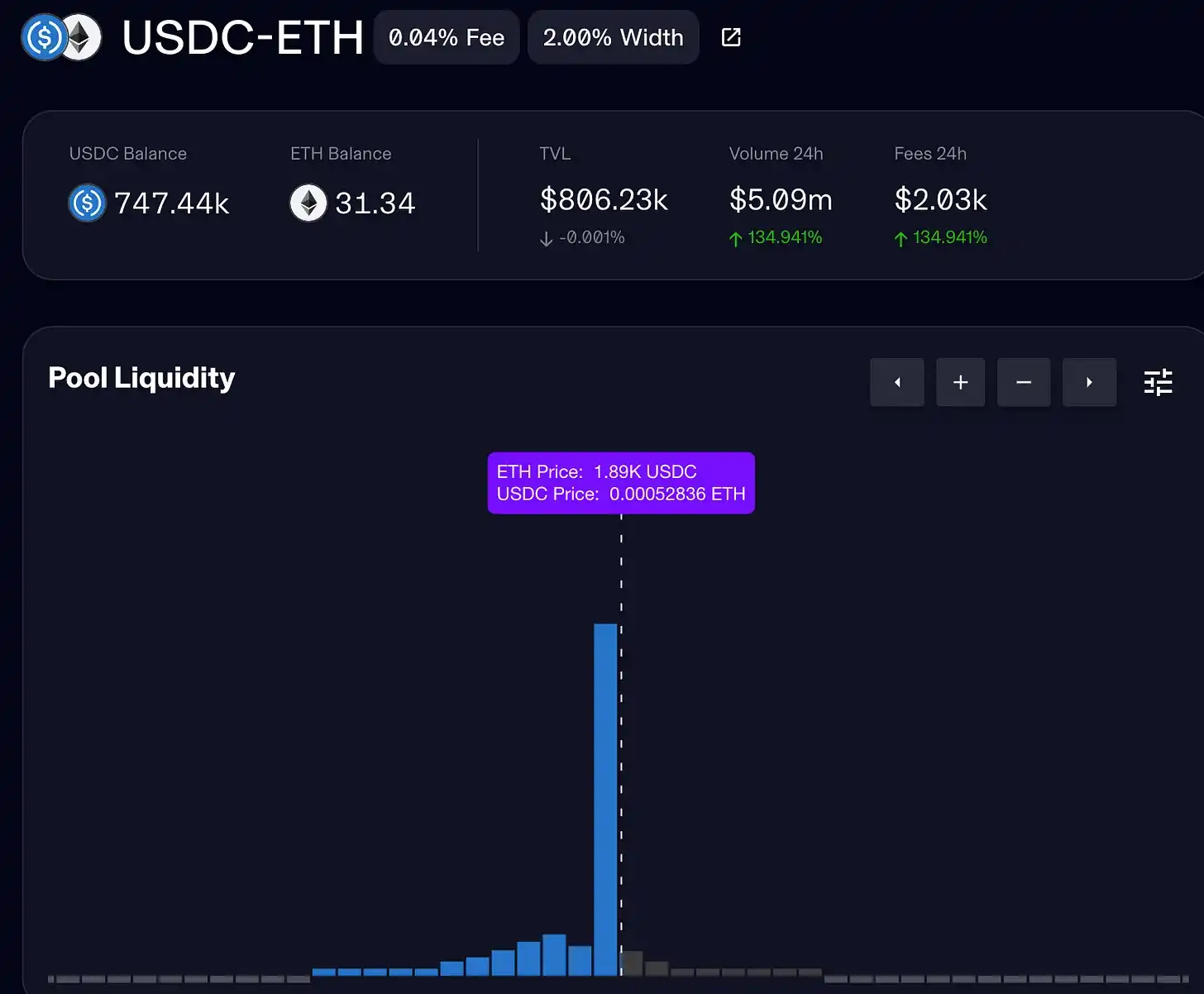
I also like the constantly accumulating trading fees, so LPs do not need to make separate claims.
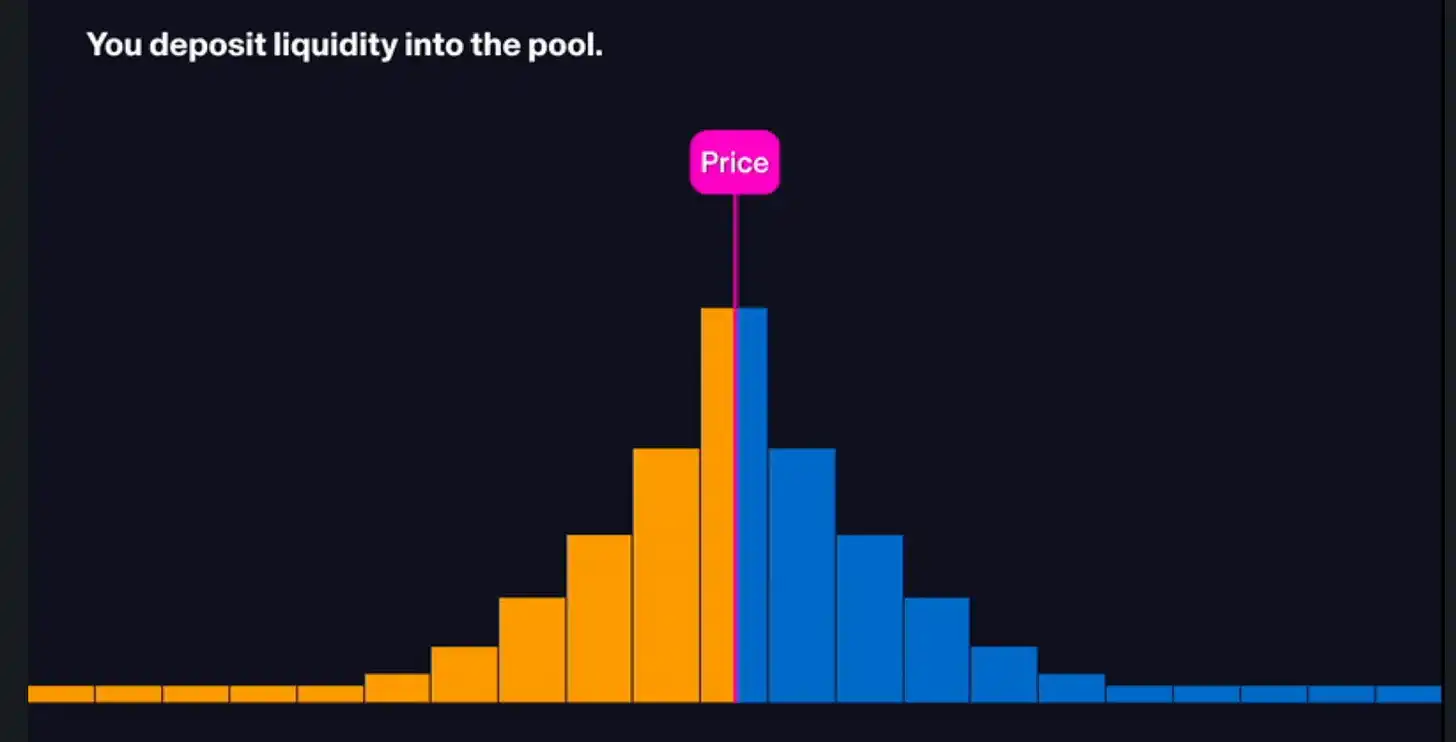
There are four modes of liquidity provision, which depend on your strategy:
- Static mode
-Right shift mode.
-Left shift mode.
- Bidirectional mode
Static Mode
Right Shift Mode
The right shift mode is a liquidity strategy that tracks the upward (bullish) price trend in the funding pool.
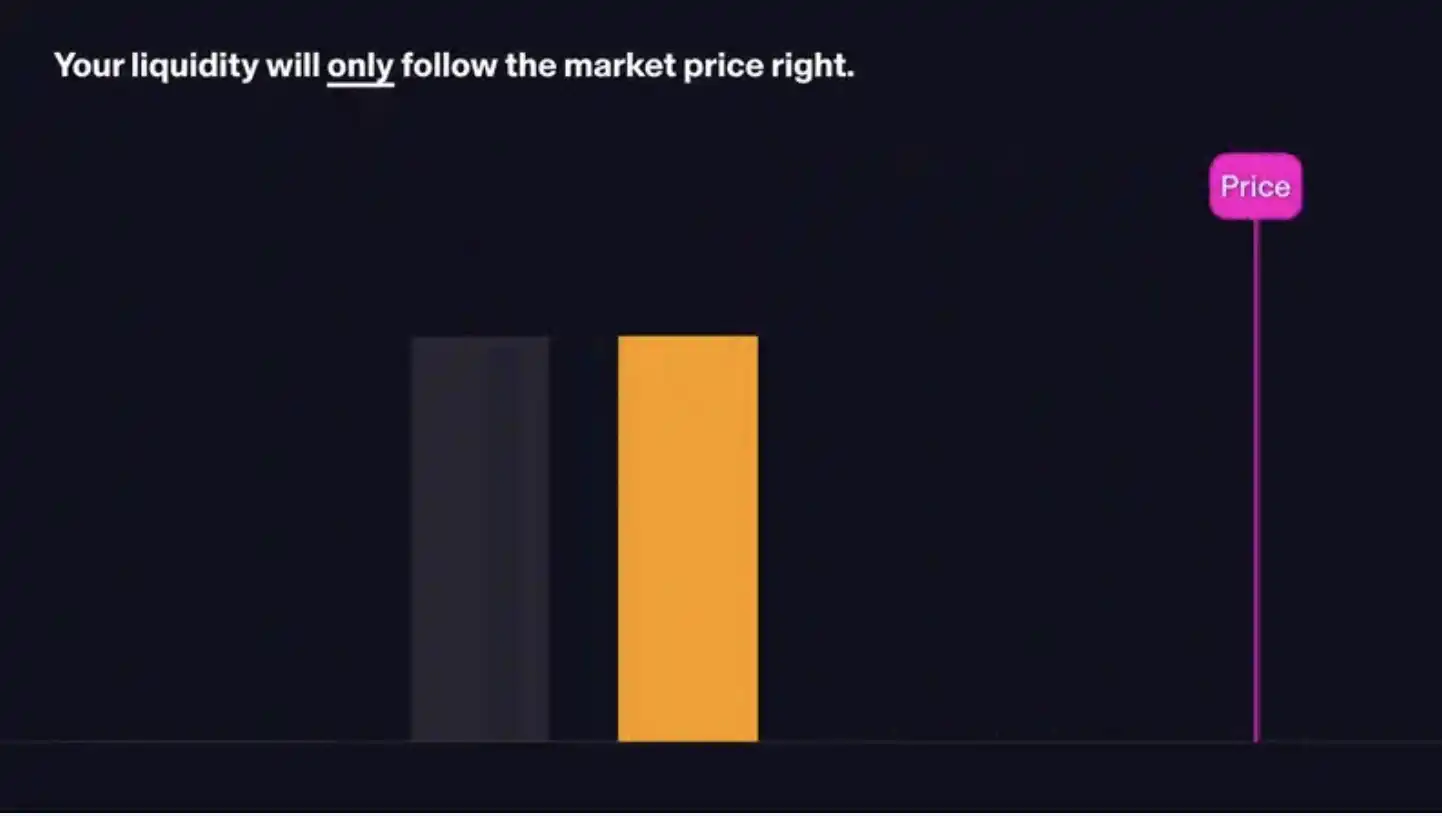
It allows LP to obtain fees by adding liquidity to the position on the left side of the active position. This strategy aims to track the price trend in a single direction, enabling LP to execute active liquidity strategies by taking advantage of the upward price trajectory.
Example:
For example, in a USDC-ETH pool, ETH is the underlying asset on the liquidity graph on the right, and USDC is the quote asset on the left. When ETH is bullish, demand for ETH will be higher, causing traders to exchange USDC for ETH in the pool. This exchange activity changes the ratio of ETH to USDC, causing the price line to move to the right on the chart.
AMM adjusts the price of ETH by increasing the amount of USDC required to obtain 1 ETH, effectively reflecting changes in the ratio. Under this strategy, when the price falls, LP is entirely composed of ETH. However, the right-side mode only moves to the right with the price, and LP should be cautious of potential impermanent losses if the price moves to the left.
Left Shift Mode
Obviously, the working mode of the left shift model is opposite to that of the right shift model. It tracks the left (falling) price trend in the liquidity pool and profits from the downward trend of the quoted asset price by immediately adding liquidity to the position on the right side of the active position.
Bidirectional Mode
The bidirectional mode strategy is also applicable to price fluctuations in liquidity pools, whether they are to the right or to the left. LPs can add liquidity for active positions and adjacent positions.
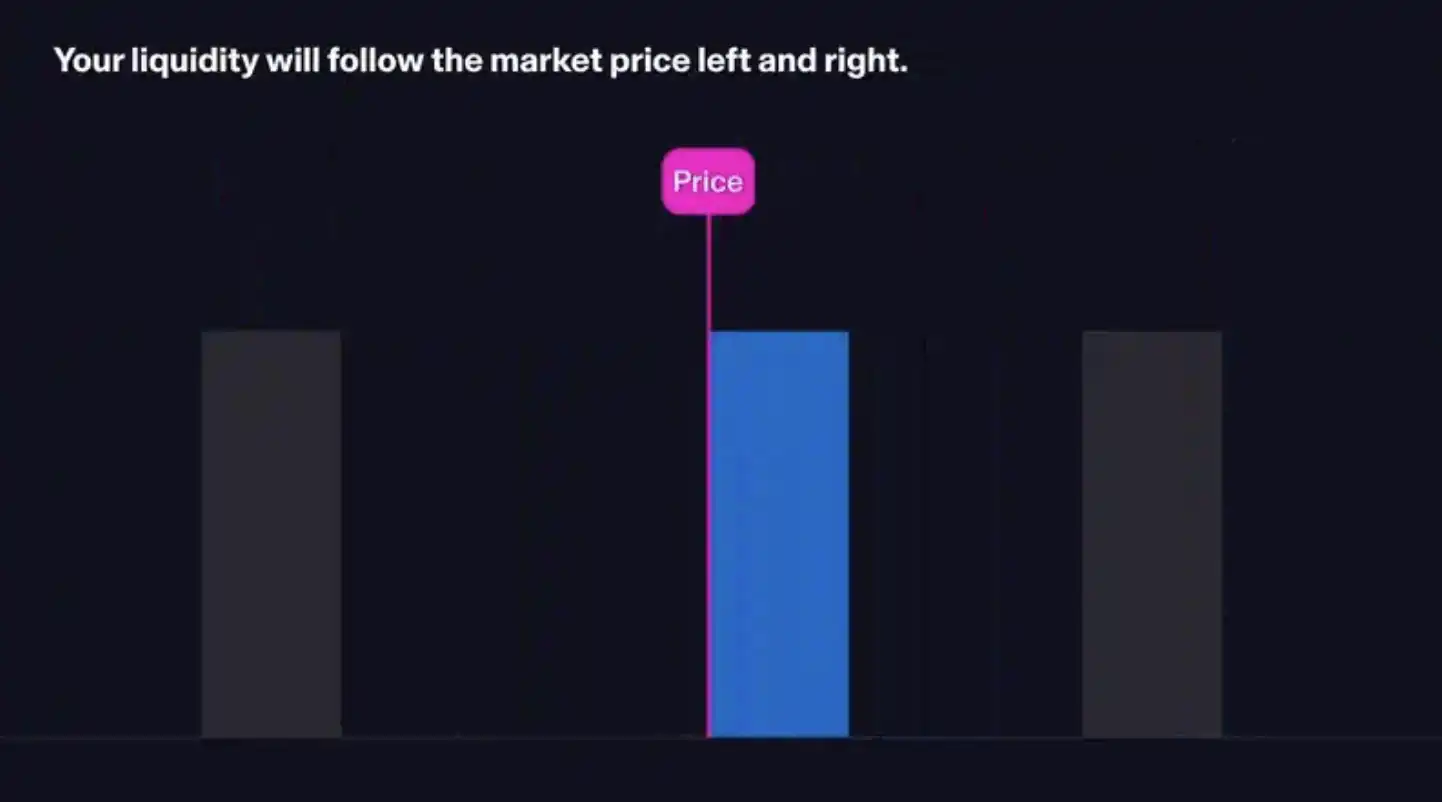
If the price moves in any direction to a new position, the liquidity on the other side will automatically re-concentrate to the new active position, bringing liquidity closer to the price.
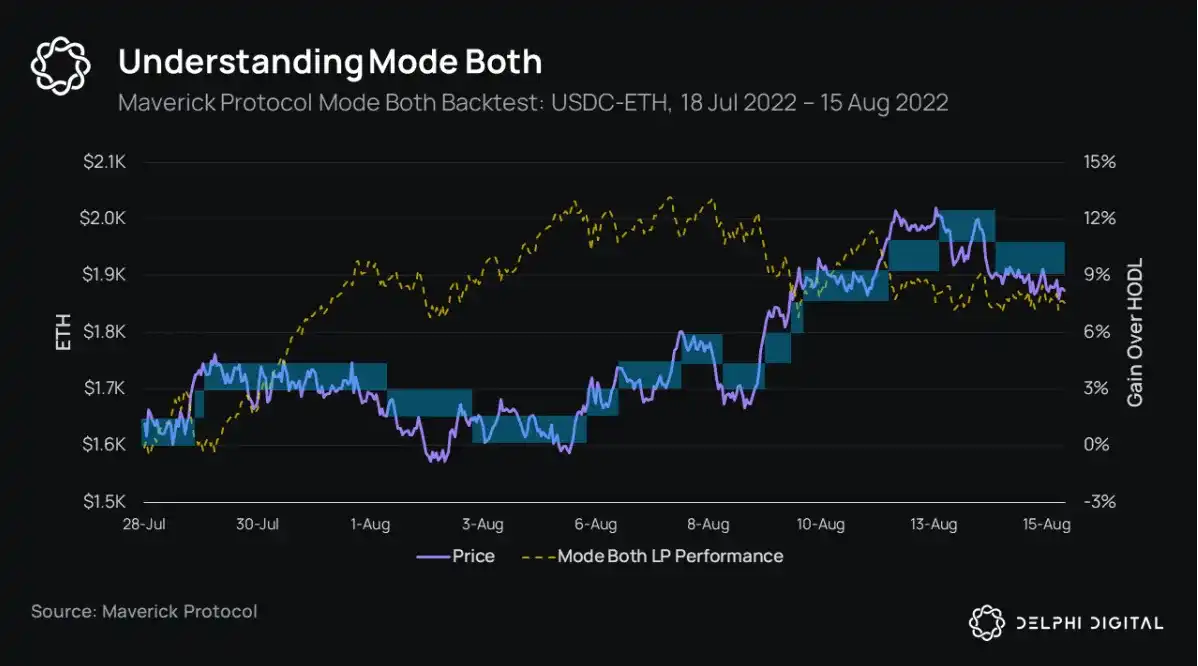
The bidirectional mode aims to obtain fees by maintaining near the price, but it bears higher bidirectional impermanent loss risk.
Maverick's Competitive Advantages
I usually deposit liquidity into the ETH/USDC pool using the bidirectional mode and get rekt through IL, although the APY of the position on zkSync Era is 302%. So you need to choose a strategy that suits you.
However, the highlight of Maverick lies in LSTs and similar assets (such as stablecoins) that will not show significant price differences. This is the effort made by Maverick to catch up with Curve.
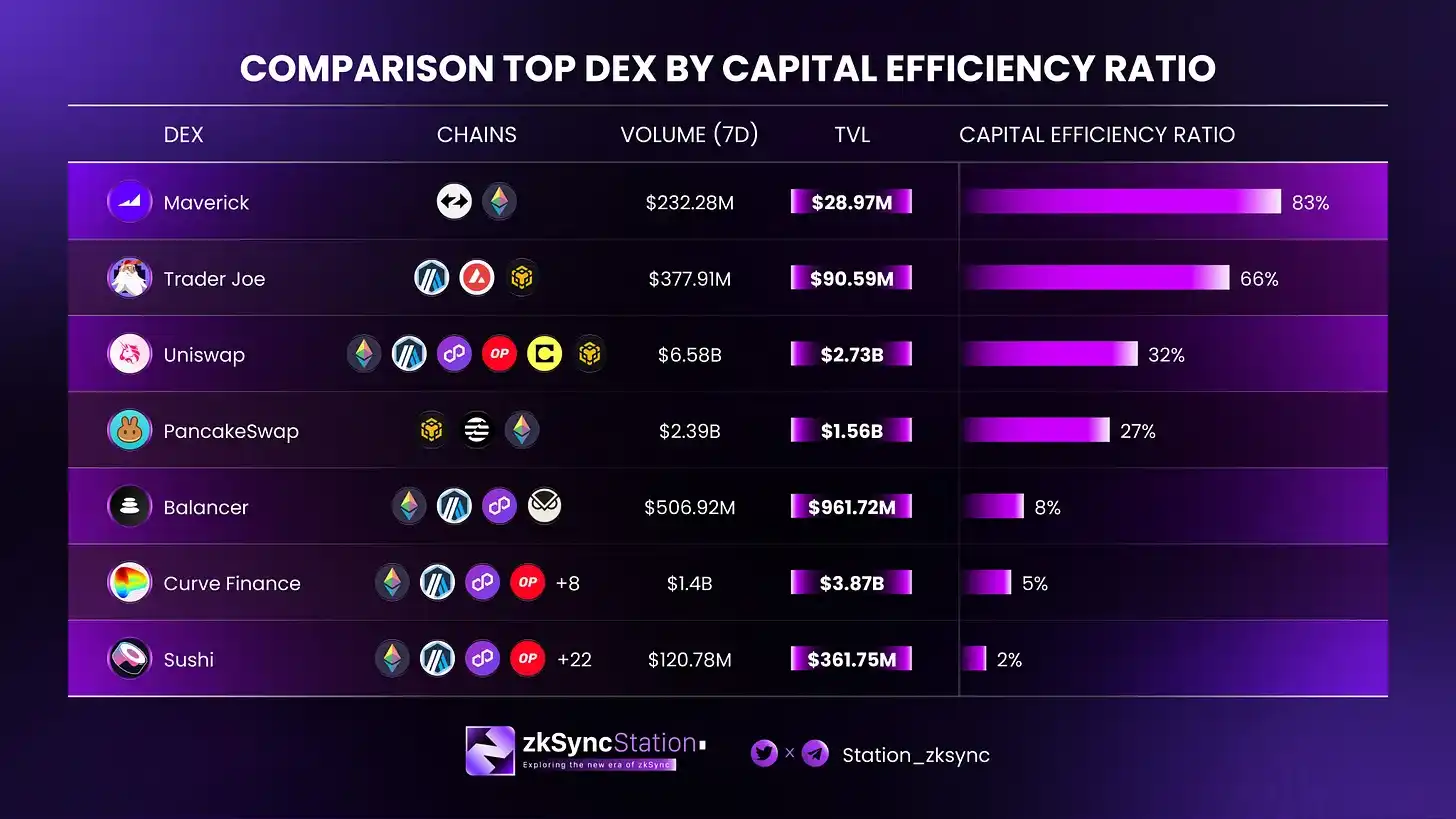
Its Token MAV was recently issued and can be traded on Binance and other CEX/DEX platforms. The token has also been airdropped. Click here to find out if you are eligible for the airdrop.
Maverick uses veTokenomics (remember the Curve Wars?) and veMAV to create a flywheel effect.
Website: https://www.mav.xyz/
App: https://app.mav.xyz/
Twitter: https://twitter.com/mavprotocol
Docs: https://docs.mav.xyz/
Ambient
Ambient (formerly Crocswap) claims to be the most efficient decentralized exchange (DEX) based on Ethereum. It achieves this goal through a hybrid model of bilateral AMM, combining centralized and environmentally constant product liquidity.
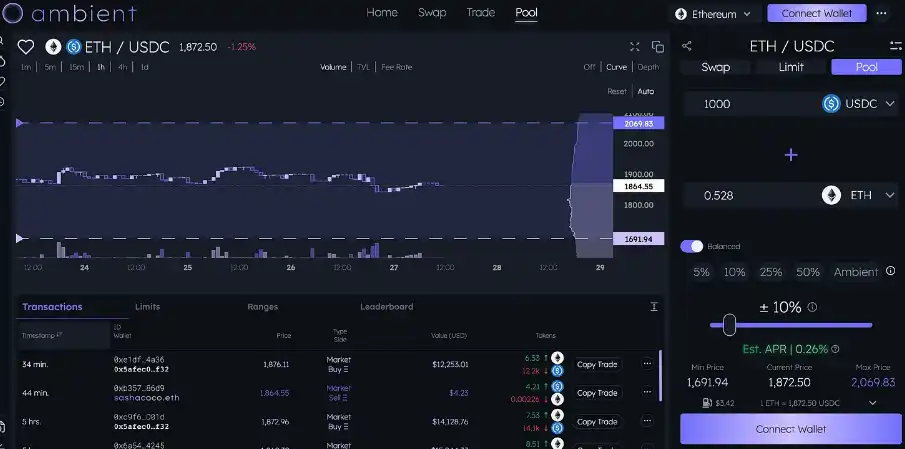
Ambient has received attention for another reason: some claim that Uniswap's V4 features, such as hooks, were copied from Ambient. However, let's put this issue aside for now and focus on what Ambient's best features are.
Combining concentrated ("UniV3 style") and ambient ("UniV2 style") liquidity
The V2 and V3 versions of Uniswap have fragmentation issues in liquidity. Ambient solves this problem and improves the experience of traders, liquidity providers, and pool creators. It simplifies the process for liquidity providers to provide liquidity in the same pool for both ambient and concentrated liquidity, similar to using Uniswap V2 and V3 separately. This ensures that traders get better and more liquid swap trades because all liquidity is in one pool.
Limit Order Leveraging Knockout Liquidity
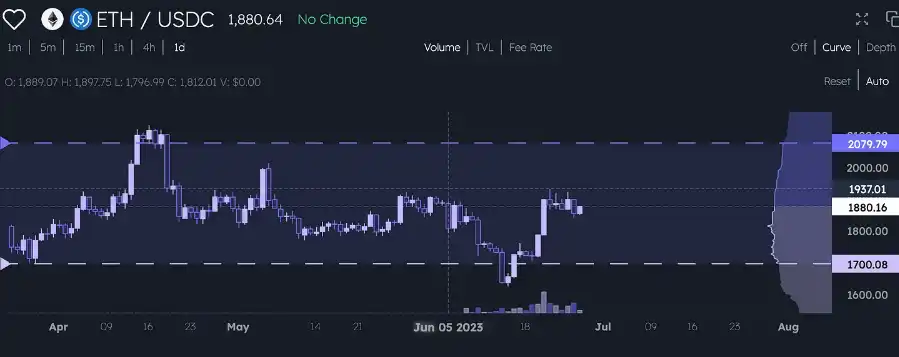
This is one of the features that Uniswap V4 has been accused of "borrowing".
Account Abstraction
App: https://ambient.finance/trade
Twitter: https://twitter.com/ambient_finance
Docs: https://docs.ambient.finance/
Shell protocol
Not just DEX
In October 2020, the Shell Protocol team released Shell v1, which is an AMM specifically designed for stablecoins. However, with V2, Shell began a larger mission.
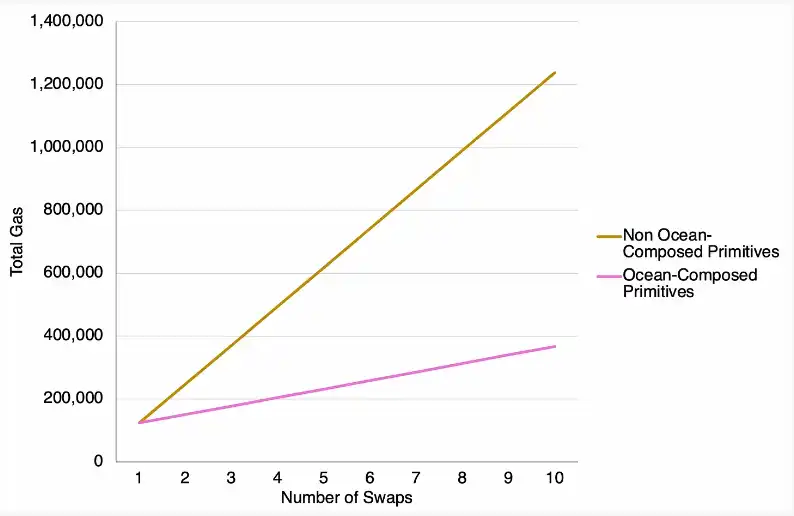
As we all know, the existing architecture of DeFi can be likened to a "currency building block" system, where different financial primitives (the basic building blocks of DeFi) can be combined to form more complex systems and transactions. Although it is theoretically promising, there are practical limitations. Transactions can usually only interact with one primitive at a time, making the entire process cumbersome, expensive in terms of gas fees, and lacking in atomicity (a feature required for certain use cases such as arbitrage trading).
For example, 1inch allows users to split trades across multiple AMMs to obtain the best exchange rate, but this increases complexity and gas costs.
The Ocean: A Universal Adapter for DeFi
As the core feature of Shell v2, The Ocean serves as a universal adapter that simplifies the interaction between different DeFi primitives.
This innovation rethinks the Token standard, DeFi accounting logic, and instant-updating storage methods, while making the combination of multiple primitives more efficient and cost-effective.
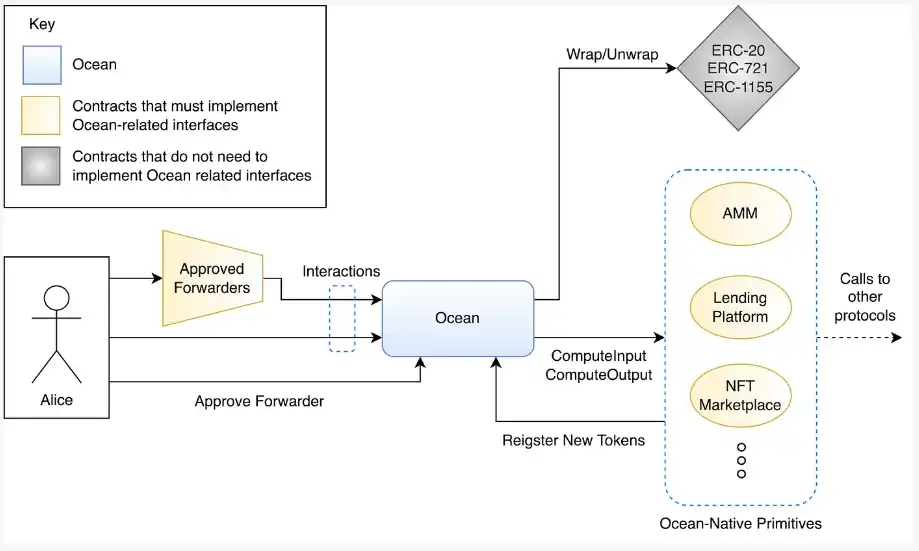
Ocean Complete Diagram Source: White Paper
There is a lot of content to digest, and this article cannot cover everything, but here are the key features of Ocean.
Ocean's main features
Ocean has introduced a series of innovative features, including:
· Introduced a single ERC-1155 ledger for all tokens, reducing gas costs for each interaction.
· Provided standardized accounting framework for all primitives, simplifying transactions and improving efficiency.
DEX: Proteus
The first primitive launched on Ocean is Proteus, which is the AMM engine of Shell. It is currently running on Arbitrum.
Proteus is more efficient in terms of capital efficiency than Uniswap V3 and more user-friendly than Uniswap V2. It can provide excellent exchange rates with only a small portion of competitors' liquidity. - Shell Protocol documentation
This is how it is achieved?
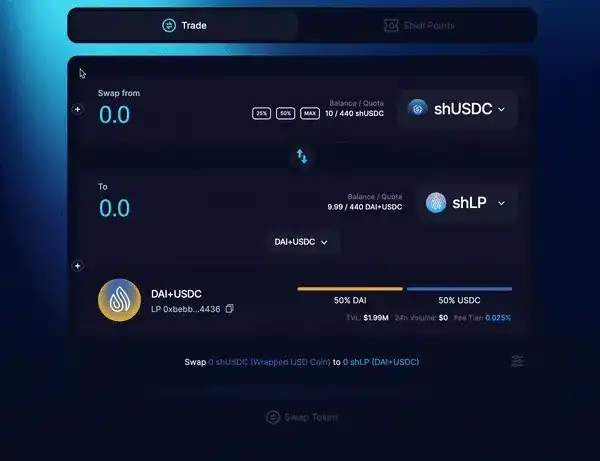
In the world of AMM (Automated Market Maker), the user's trading results depend on the accuracy of the price range set by the user. The price range can be imagined as pixels on a TV screen. The more pixels the user has, the better the image (in this case, trading performance) will be.
Proteus performs better than Uniswap V3 in providing higher accuracy and supporting more price ranges. It's like the difference between an old TV and a 4K TV.
Take the DAI+USDC pool on Uniswap as an example. Here, liquidity is highly concentrated between 0.9998 and 1.0002.
However, with Proteus, the precision is almost infinite, encapsulating the entire distribution in a substitutable Token without the need to mint multiple NFTs.
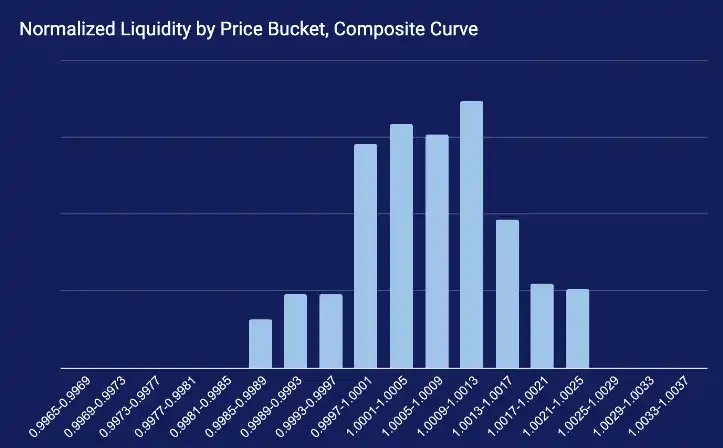
The result is unparalleled trading performance, similar to trading in 4K resolution.
Transferring LP funds in Proteus is as simple as executing a single swap, thanks to the aforementioned "Ocean", which is Shell's composability layer.
But this is not all.
There are AMM bonds for volatility tokens, fractionalization of NFTs, and The Government Toucan AMM-NFT automated market maker that uses the Proteus engine.
Users can learn more information in the Shell Protocol documentation.
App: https://app.shellprotocol.io/trade
Twitter: https://twitter.com/ShellProtocol
Docs: https://wiki.shellprotocol.io/getting-started/overview
Swaap
Swaap recently released the Swaap v2 whitepaper. Swaap previously sponsored an article on my blog, but I assure you that this article was not paid for by Swaap. I truly believe that Swaap has a killer feature that I need as a liquidity provider (LP).
解决加密市场做市商的二元性问题
Solving the binary problem of market makers in the encryption market
There are divergent opinions among market makers in the current encryption market: centralized opaque participants and transparent automated market makers (AMMs). For LPs, the problem with AMMs is obvious - negative returns caused by impermanent losses.
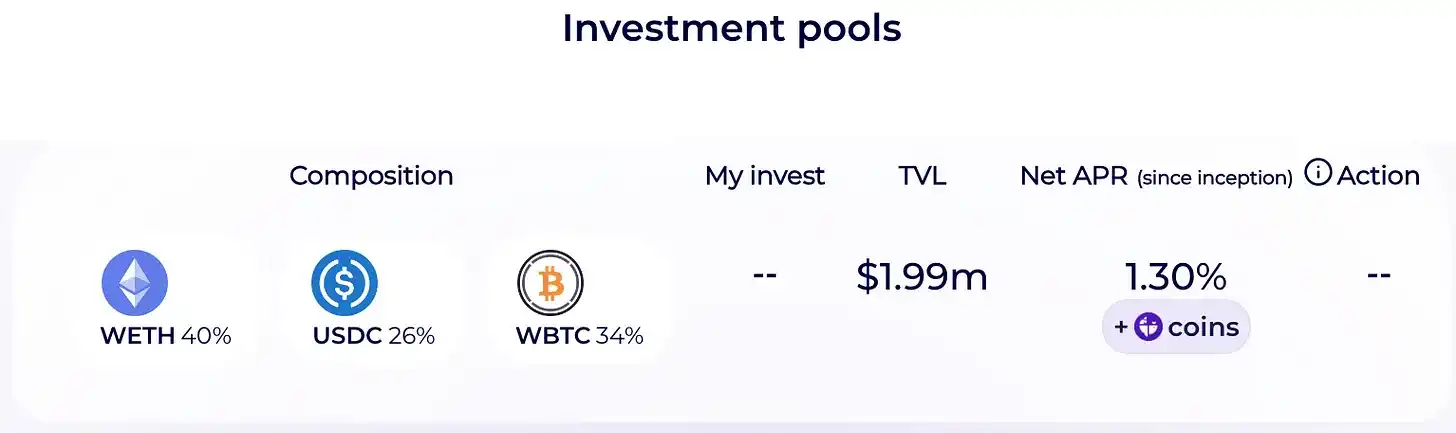
Despite v2 not yet being launched, even in the WBTC/WETH/USDC pool, v1 has only managed 0.1% of impermanent loss in the past year.
App:https://beta.swaap.finance/
Twitter:https://twitter.com/SwaapFinance
The v2 whitepaper:https://www.swaap.finance/v2-whitepaper.pdf
Mangrove
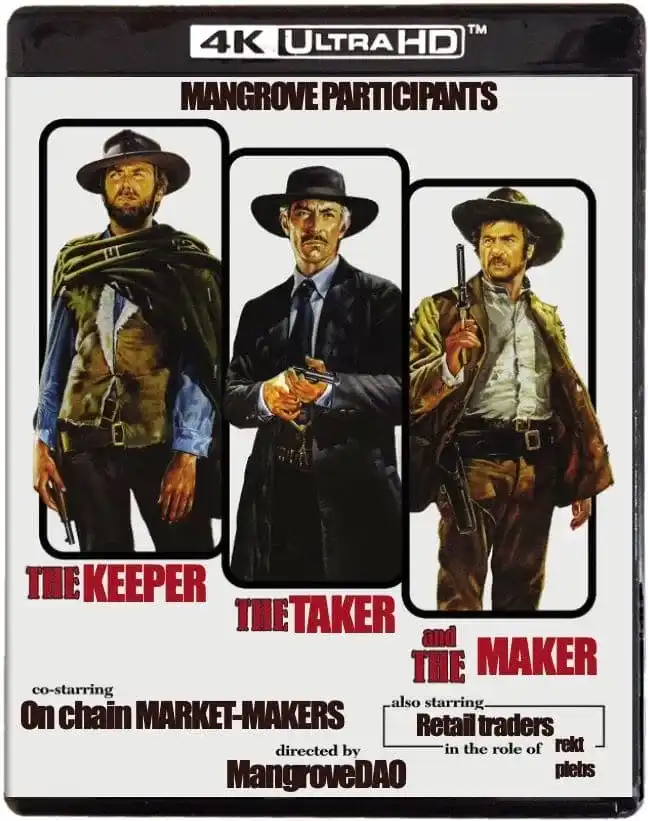
Mangrove is pretty good at making memes.
What is Mangrove?
Mangrove works in the following way:
The unique feature of Mangrove is its ability to attach code to quotes, with the following main characteristics:
Reactive liquidity: The offer will not be locked in a pool and can generate revenue elsewhere on the blockchain until it is adopted (such as Aave).
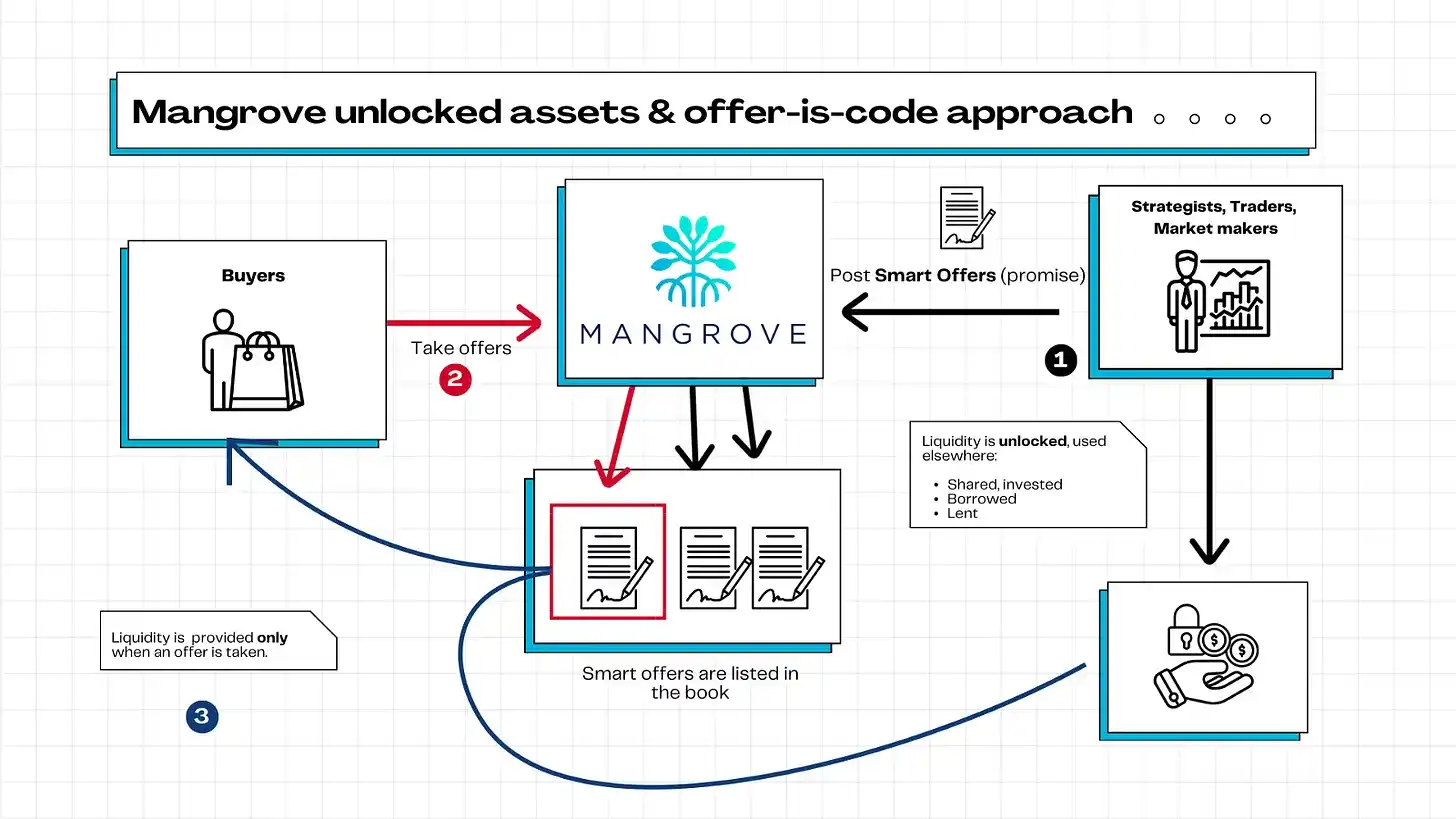
I bet you are still confused about the actual operation of Mangrove, so feel free to check out the testnet APP (who knows, maybe there will be an airdrop?), and read the explanations in Mangrove's blog articles.
Website: https://www.mangrove.exchange/
App:https://testnet.mangrove.exchange/trade
Twitter:https://twitter.com/MangroveDAO
Docs:https://docs.mangrove.exchange/
Conclusion
My original plan was to introduce 7 protocols, but this article turned out to be longer than I expected. The other two DEXs are:
Carbon: The DEX implements automatic trading strategies, and its customized limit and range orders have anti-MEV properties. They can be adjusted on-chain and are irreversible when executed, enhancing user control and promoting the development of new trading strategies.
Button Swap: A DEX launched for LSD currency pairs. The innovation lies in "reservoirs", where tokens from forward tracing (such as stETH) flow into reservoirs instead of active liquidity pools. This approach solves negative arbitrage opportunities after the accumulation of events during the tracing period.
There is also EulerSwap, but details about it are still scarce.
Overall, there are many innovations in the DEX field, so don't be fooled by the calmness of the bear market. When the bull market returns, we need to know where we can get the maximum returns.
Welcome to join the official community of BlockBeats by LuDong.
Original article link
Welcome to join the official BlockBeats community:
Telegram Subscription Group: https://t.me/theblockbeats
Telegram Discussion Group: https://t.me/BlockBeats_App
Official Twitter Account: https://twitter.com/BlockBeatsAsia

 Related Articles