Interpreting the Chainalysis research report: How do retail investors, experienced traders, and institutions contribute value to trading platforms?
Original Title: "Interpreting Chainalysis Research Report: How Retail Investors, Veterans, and Institutions Contribute Value to Exchanges?"
Original Translation: Deep Tide TechFlow
Introduction:
The cryptocurrency market is becoming increasingly complex.
Individual investors, whales, institutions, and trading platforms... Different roles have different trading behaviors, and identifying and understanding these behaviors is more important than ever before.
This report from Chainalysis provides in-depth data analysis and unique insights, revealing the behavioral patterns of all users associated with trading platforms and demonstrating how they impact the development of the entire cryptocurrency market.
The report delves into multiple dimensions of wallets, including their types, activity levels, total value of inflows and outflows on trading platforms, and user churn rate. Using FTX as a prime example, it further breaks down the various user groups that contribute to the influx of funds into FTX and conducts an in-depth analysis of their behavior.
These data help us understand the value contribution, activity, and churn rate of various users on the trading platform. If you are an operator of an institution or trading platform, this report will help you better understand your users and optimize your operational strategies. If you are a cryptocurrency investor, this report will help you better understand market trends and make more informed investment decisions.
Key Data Summary:
1. User Segmentation: Users can be divided into six categories based on the age of their wallet and the amount of assets they hold: Early Retail, Early Professional, Early Institutional, Late Retail, Late Professional, and Late Institutional. The total number of retail users (individual investors) is in the billions, but their combined assets are not as much as those of institutional investors.
2. Funds inflow situation in CEX: The total value sent by late-stage institutional wallets accounted for the highest proportion, at 23.6%. Late-stage professional and early-stage retail wallets followed closely behind, accounting for 18.8% and 19.0% respectively.
3. Funds Flow in FTX: FTX has mostly retail users, but the average weekly fund inflow from retail users is only $700. On the other hand, although institutional users are fewer in number, their average weekly fund inflow is as high as $2 million.
4. User Churn Rate: The churn rate for professional and retail wallets in the late stage is less than 1% in CEX, while the churn rate for individual investors is as high as 15%.
Market Overview
In 2023, the cryptocurrency market thawed and the price of Bitcoin rose by more than 50%. However, trading platforms faced challenges as the number of active centralized trading platforms decreased from 750 at the beginning of 2022 to 640. As competition from decentralized exchanges (DEXes) intensified, the trading volume of CEXs further declined.
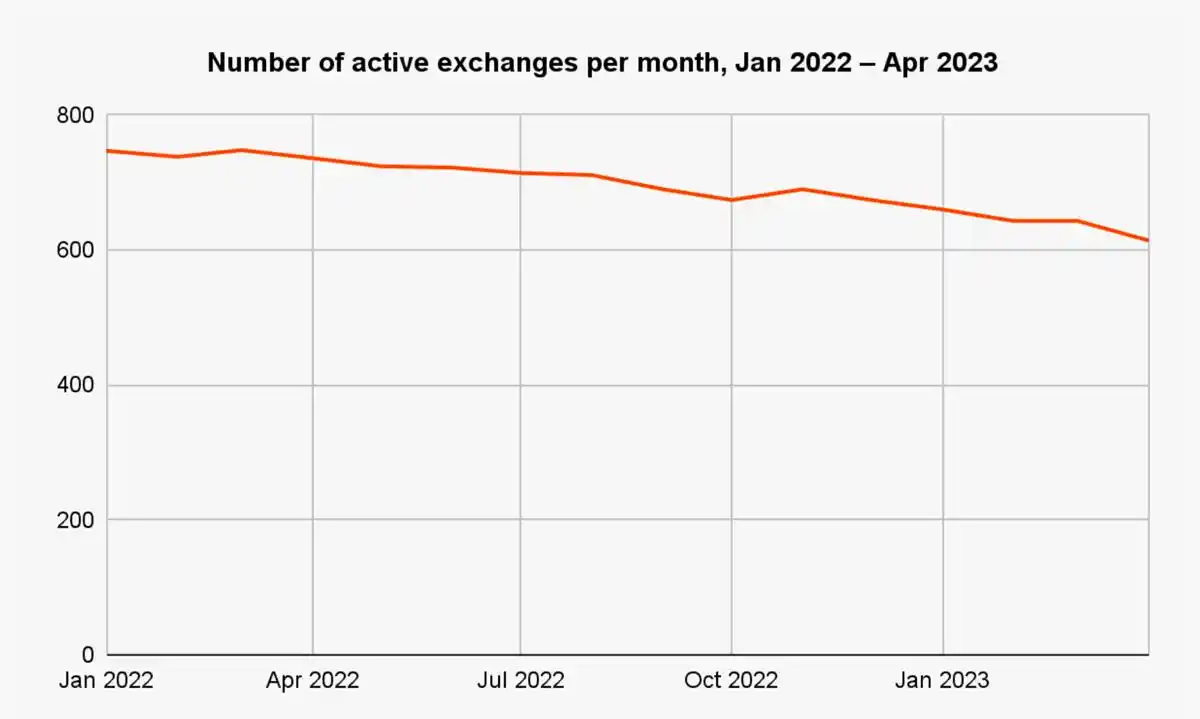
Despite this, the number of cryptocurrency users is still growing. Looking at the number of individual wallets (also known as non-custodial wallets) that have been active or hold a balance on all blockchain networks supported by Chainalysis over the past five years, there is a clear trend of user growth.
Shenzhen Stock Exchange Note: The following figure shows that the number of active individual wallets has increased from around 50 million in 2018 to over 300 million now. However, the original report did not disclose the calculation method for such addresses, such as whether they are deduplicated.
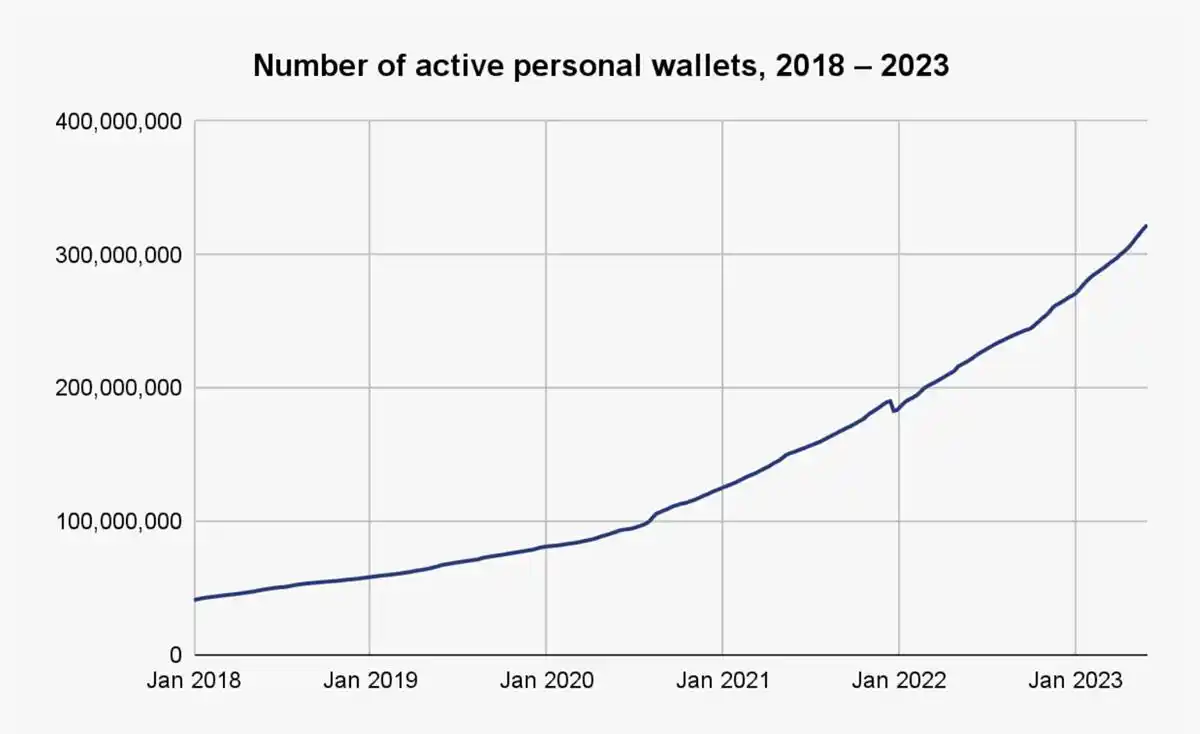
By comparison, when the decline of CEX meets the gradually increasing addresses, it means that the trading platform needs to segment their users more and focus on attracting and retaining those who will bring the greatest value to their business.
User Segmentation
This report divides users into 6 categories based on all the wallets that can be collected, taking into account the age of the wallets and the amount of assets held in them: Early Retail, Early Professional, Early Institutional, Late Retail, Late Professional, and Late Institutional.
Deep Tide Note: Retail refers to individual investors in common parlance. Professional users can be understood as whales.
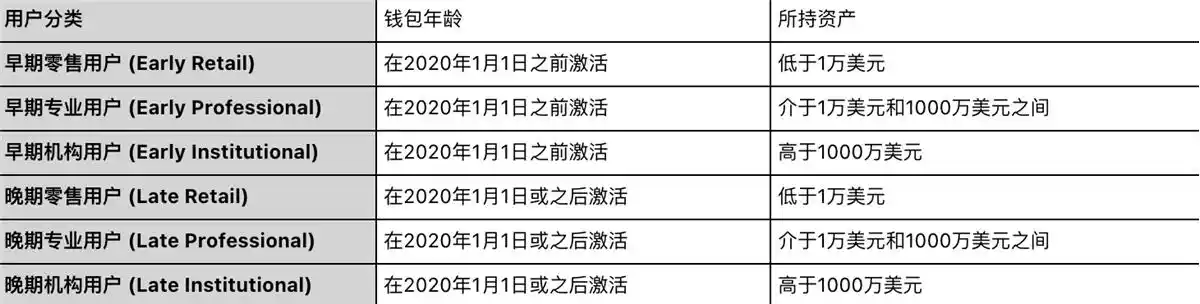
According to the above classification, the number of assets in Bitcoin and Ethereum networks in these six types of wallets is summarized and counted, and the results are as follows:
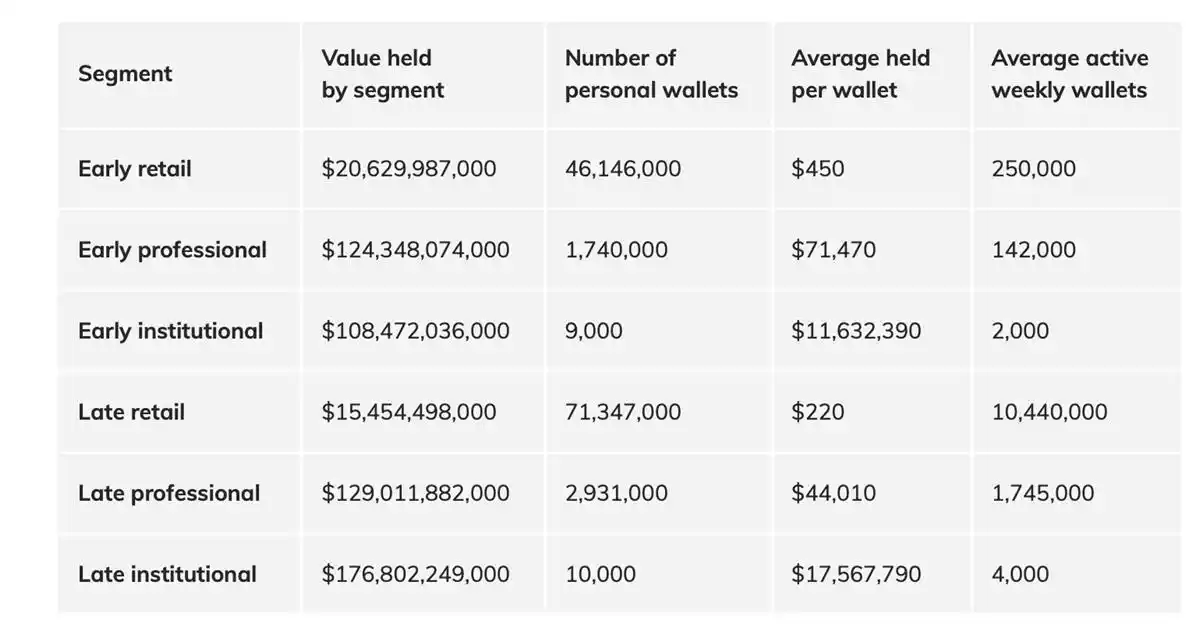
You can see the expected result: the total number of retail addresses is higher, but the total asset amount is lower than that of institutions.
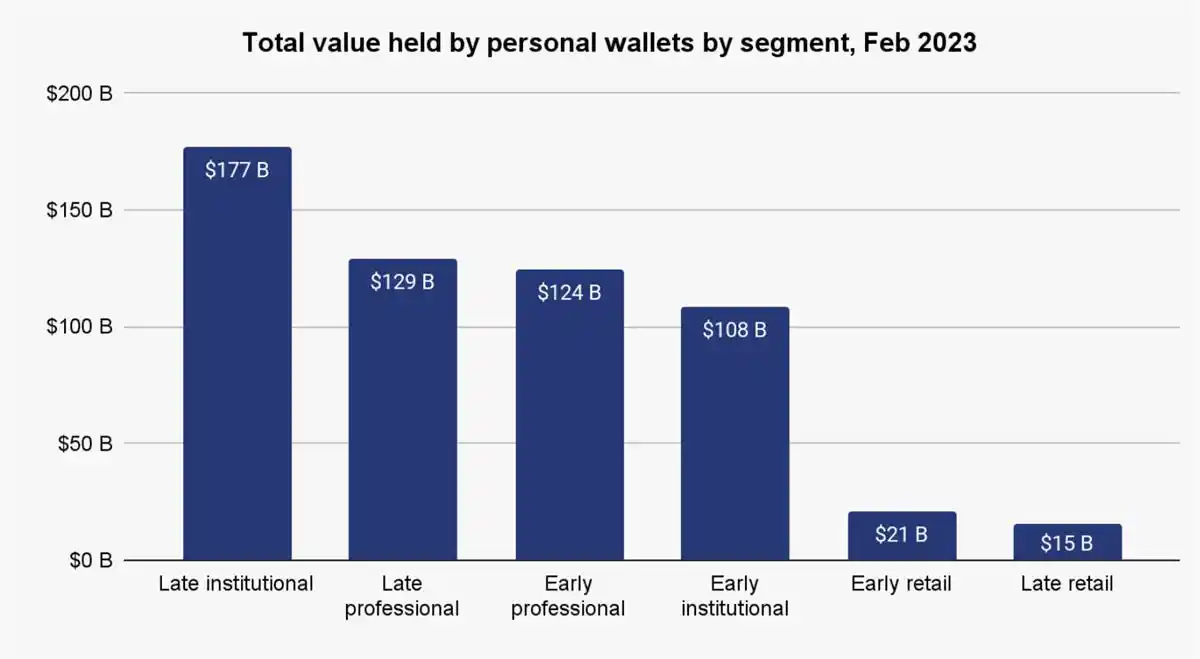
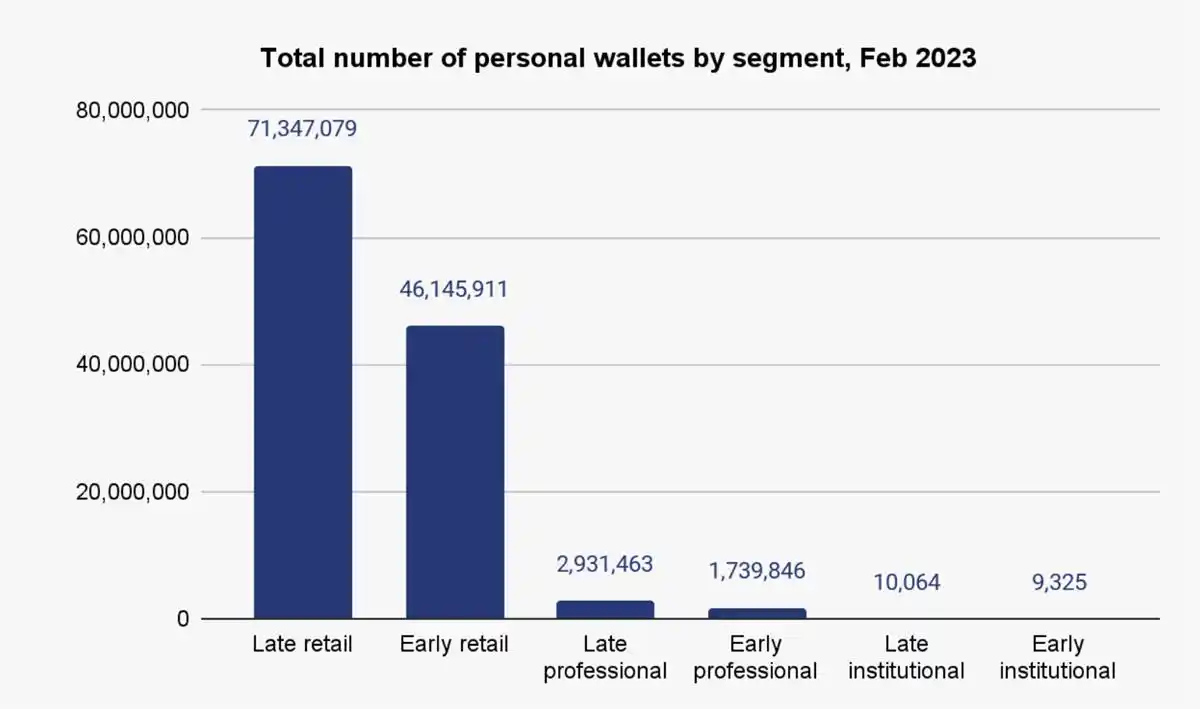
In addition, currently, the majority of active wallets on a weekly basis are late-stage retail users. These users have created wallets for a short period of time and have low balances in individual wallets. The number of active late-stage professional wallets is also higher than early-stage retail wallets, indicating that in recent years, more relatively large amounts of funds have been invested in cryptocurrencies.
用户在 CEX 中的资金流
User's Fund Flow in CEX
Overall, relatively newer late-stage institutions and late-stage whale wallet groups hold the majority of Bitcoin and Ethereum currently held in personal wallets. However, for this study, the more important question is how these groups interact with trading platforms?
Centralized trading platforms typically generate profits through transaction fees. Although we do not have access to the necessary data from the order book of the trading platform to calculate the fees generated by each group - we only have on-chain data.
However, we can assume that the total amount of money transferred to the trading platform on each group's chain roughly matches the transaction fees generated by each group. Cryptocurrencies are usually sent from personal wallets to trading platforms for trading, rather than being held, so this seems like a reasonable assumption.
According to this calculation method, since the beginning of 2021, late-stage institutional wallets have accounted for the largest share of the total value sent to centralized trading platforms, at 23.6%. Late-stage professional and early-stage retail wallets followed closely behind, accounting for 18.8% and 19.0%, respectively.
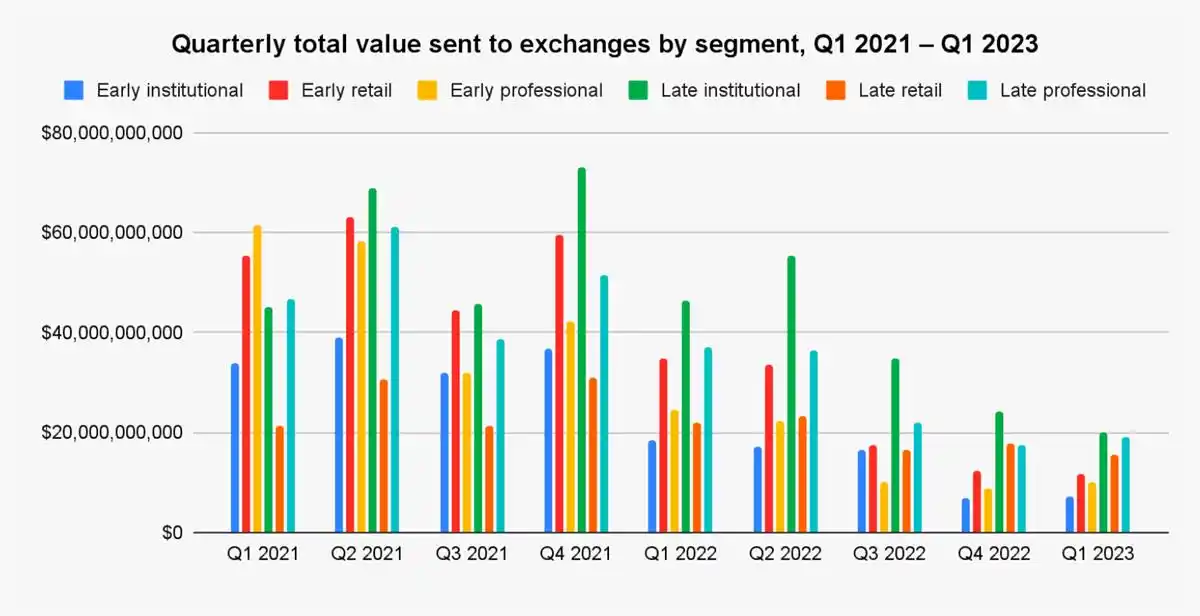
Overall, in most quarters, the value sent by various groups to trading platforms remained relatively stable, except for late-stage retail wallets and early-stage institutional wallets, which accounted for 11.4% and 11.9% of the total value sent to trading platforms during this period, respectively.
These two groups have different reasons for this lag - late retail wallets because they have the least capital compared to other groups, and early institutional wallets because they have the lowest share of all active wallets.
Case Study: User Fund Flow in FTX
Taking FTX as an example, although it collapsed in November 2022, it was one of the most popular trading platforms in the industry before that. Interestingly, FTX's user base does not entirely conform to the aforementioned overall wallet pattern.
From an absolute quantity perspective, late-stage retail wallets make up the vast majority of user base in FTX, and late-stage professional wallets are almost always the second largest group on a weekly basis.
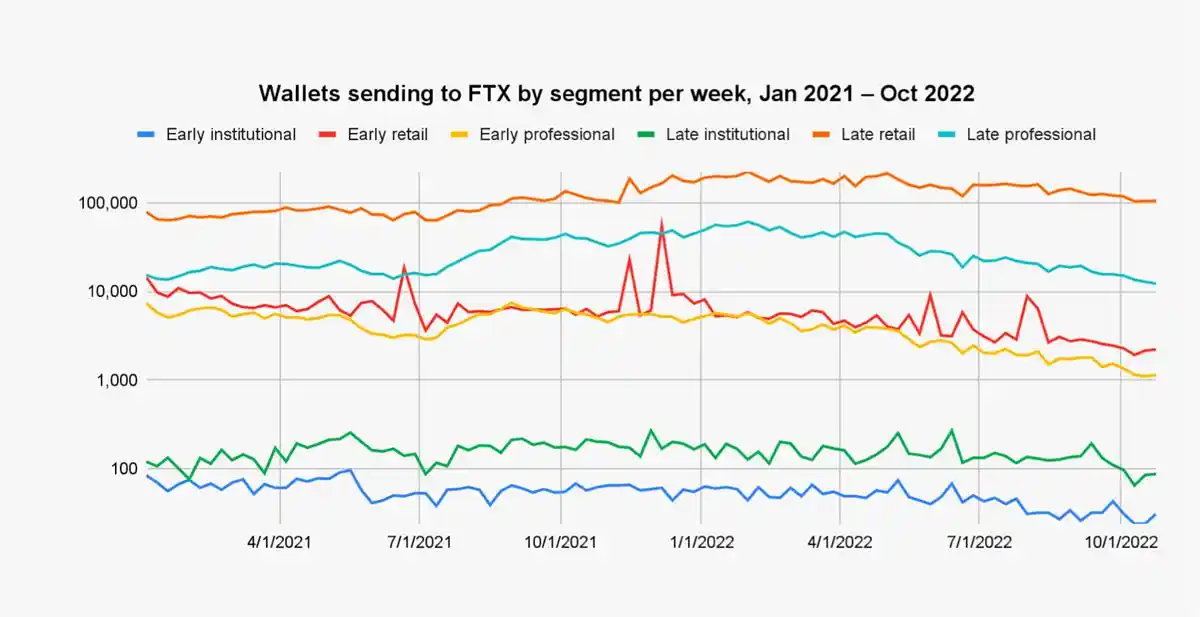
This actually indicates to some extent that the majority of people sending money to FTX are retail investors.
Meanwhile, late-stage institutions and early-stage institutions, these two small yet super wealthy groups, occupy the smallest share of FTX's user base - but if we evaluate these groups based on the volume of inflowing funds, the situation is not as such:
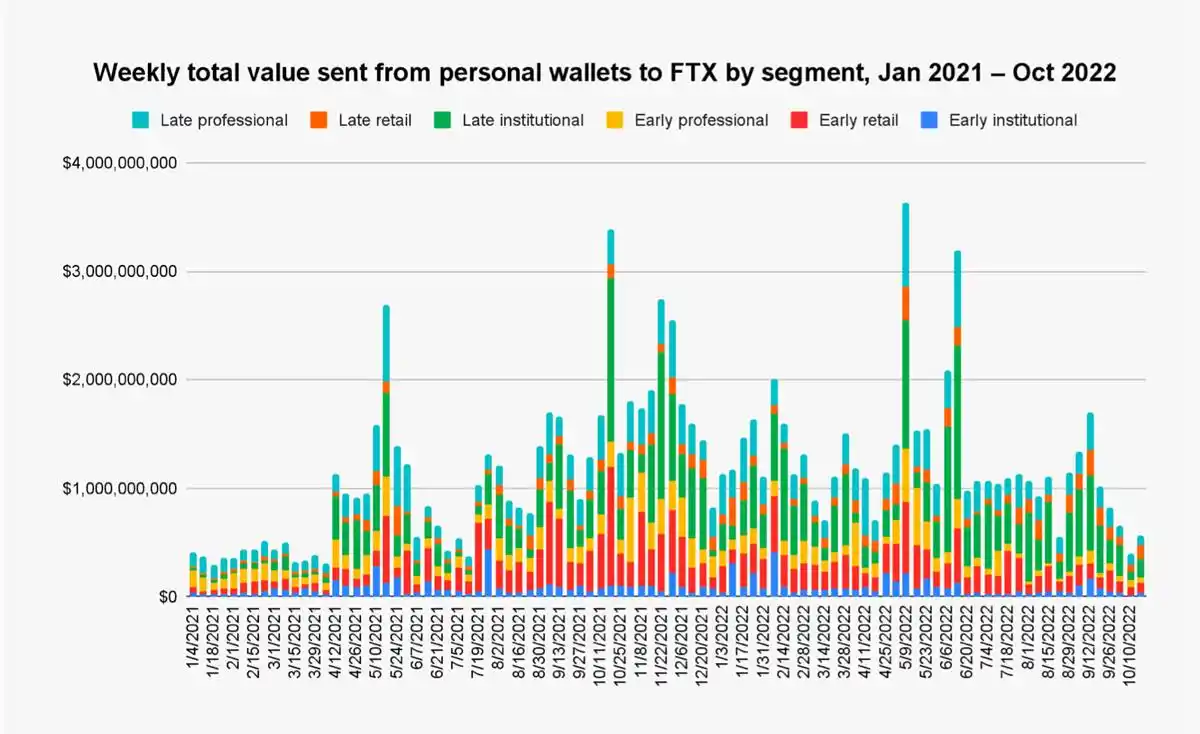
- Late-stage institutional wallets dominate the total funds flowing into FTX.
- Despite only accounting for 0.1% of the average weekly user base, during the period of study, the amount of funds flowing into late-stage institutional wallets accounted for 30.0% of the total.
- Ranked second in the professional wallet industry in the late stage, accounting for 21.4% of the value received by FTX - this is consistent with their 17.6% share of FTX's total user base.
- The total amount of funds flowing into the late-stage retail wallet accounts for only 7.6%, despite accounting for 75.8% of the total number of users on average per week.
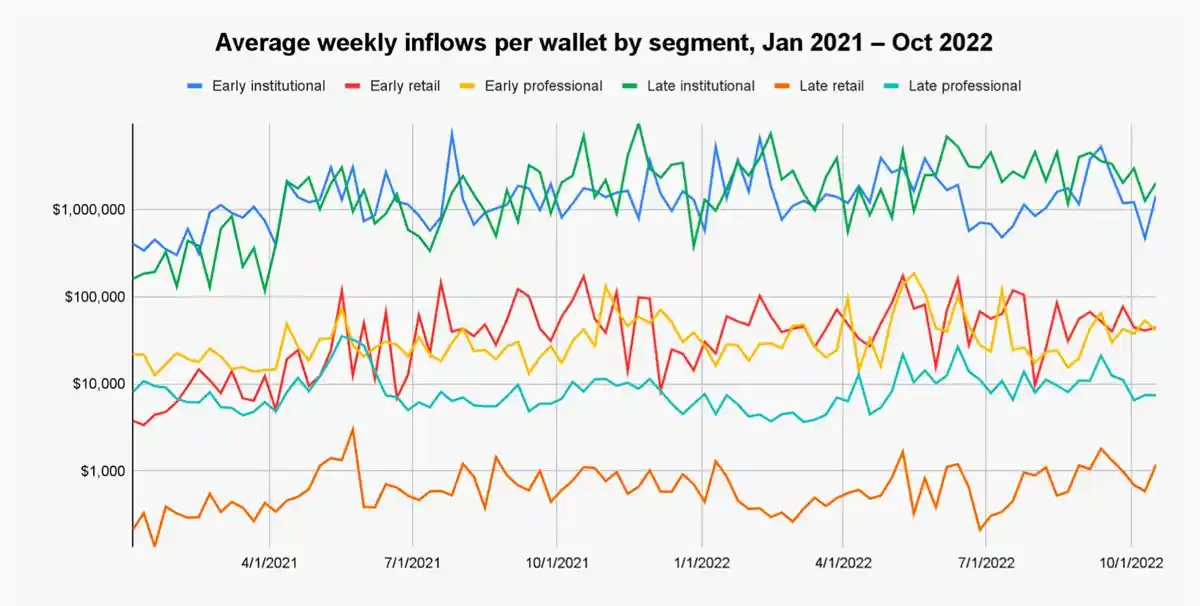
However, at the beginning of the time period - from January 2021 to mid-April 2021 - the late-stage institutional wallets often had the lowest share of inflows, until the fall of 2021 when they firmly became the largest user group. This pattern may be due to the fact that more institutional investors entered the cryptocurrency market during the price increase in 2021, but this may also suggest FTX team's efforts in attracting these high-value users.
If the six types of user value contributions to the trading platform are classified, it can be visually observed that institutions are still in the first tier, and the total inflow of funds is significantly higher than that of retail investors.
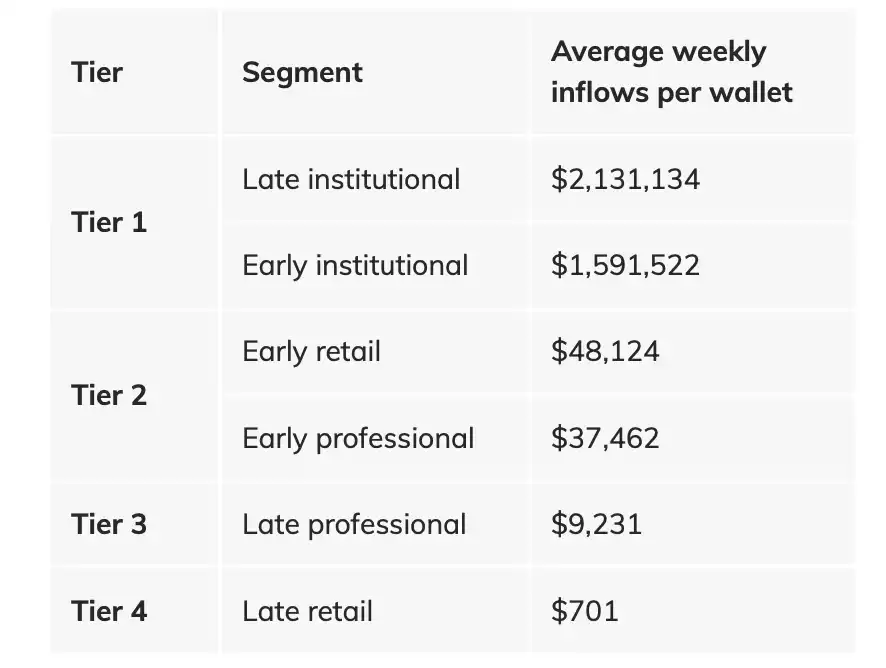
These data show that, although the number of users of late-stage institutions and late-stage professional wallets is small, the value they bring to the trading platform is very significant.
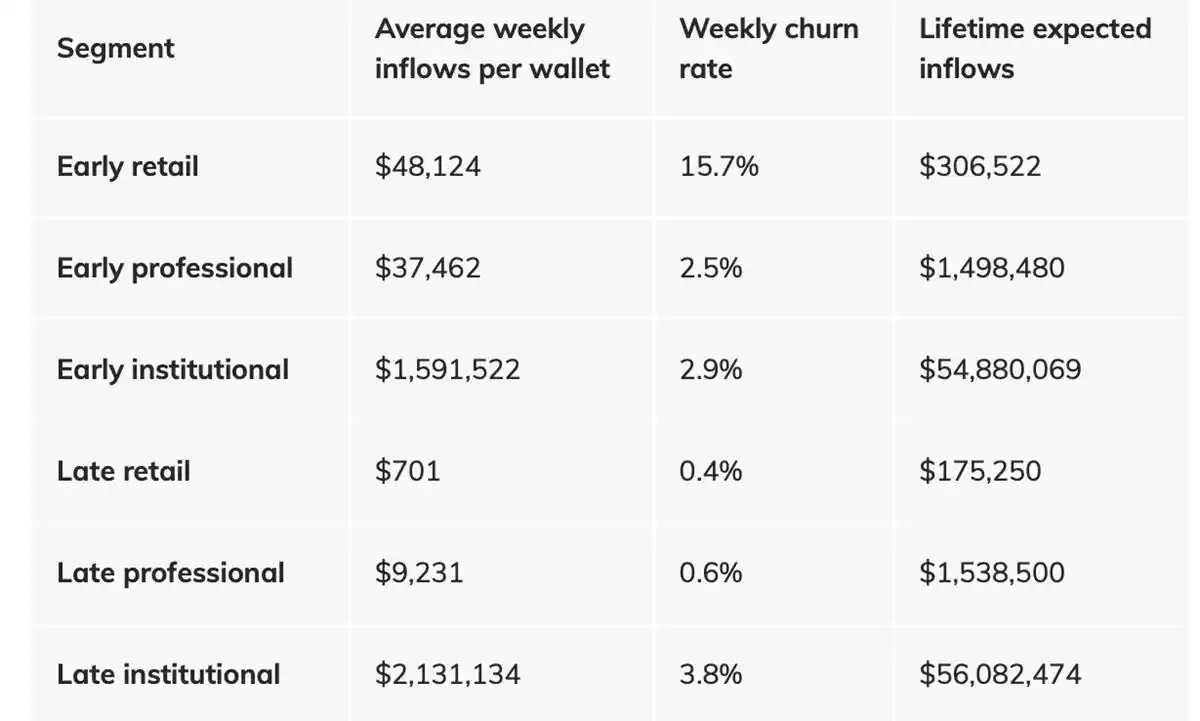
The user churn rate is also an important indicator for evaluating the value of users to the trading platform. We found that the churn rate of early retail wallets was much higher than any other category, at 15.7% per week, while the churn rate of late professional and late retail wallets was the lowest, at 0.6% and 0.4% respectively.
And if we consider the funds that a wallet brings into the trading platform throughout its entire lifecycle, we can better calculate the expected value that the trading platform can obtain from users.
In this report, the expected amount of funds flowing into a certain wallet throughout its entire lifecycle is equal to the weekly average inflow of funds divided by the weekly average outflow rate.

According to this calculation method, institutions are expected to contribute more value to the trading platform (with low churn rate and continuous weekly inflow of funds).
Summary
These insights are very valuable for user acquisition and retention strategies as well as product development for trading platforms.
For example, FTX hopes to acquire new users by airdropping rewards to individual wallets that are active on other trading platforms. By dividing the target wallets into these segmented parts, FTX can provide different rewards to each wallet based on the expected lifetime inflow of each wallet's corresponding segment.
Similarly, if FTX wants to improve the retention rate of its regular users, it may conclude that it should focus on the early retail segment, as even a slight improvement in their high churn rate would result in excess returns, given their high average weekly inflows. Regardless of the specifics, the ability to determine the value of each wallet will help FTX market more effectively to its users and potential users than other methods.
At the same time, we also believe that this report reveals to some extent the pattern of the entire cryptocurrency market trading ecosystem. Retail investors have small trading volumes but large numbers, and high churn rates; while large investors are the opposite. For individuals, understanding the characteristics and behaviors of different trading counterparts can also add a sense of calm in the dangerous world of cryptocurrency.
Original article link
Welcome to join the official BlockBeats community:
Telegram Subscription Group: https://t.me/theblockbeats
Telegram Discussion Group: https://t.me/BlockBeats_App
Official Twitter Account: https://twitter.com/BlockBeatsAsia

 Related Articles