Chainalysis Web3 Report: Trading Platforms Usher in Liquidation Moment, DeFi Dominates DAO
Original title: " Chainalysis Web3 Report: Exchanges Have Their Moment of Liquidation "
Original author: Joel John, decentralized.co
Original compilation: old yuppie
This article comes from the WeChat public account: Old Yuppie
Retail investors join through NFT and games
It is often ordinary users who bring cryptocurrencies to the altar. But technology doesn't jump straight from 0 to 100. In one sense, it won't go from secretive military technology to popular mass overnight. It permeates every fabric of society, insisting on niche markets. This is very evident in the report. The first thing that caught my attention was the graph below.
As early as the first quarter of 2021, the volume of transactions across networks began to decline, but the number of transfers did not. It didn't grow until the first quarter of this year. One reason for this is that the token price has been at an all-time high in the second quarter of 2022 - so when you multiply by the base price, it shows higher trading volume. Transaction volumes are down, but the number of transfers is within 10% of all-time highs, and there are several reasons for this.
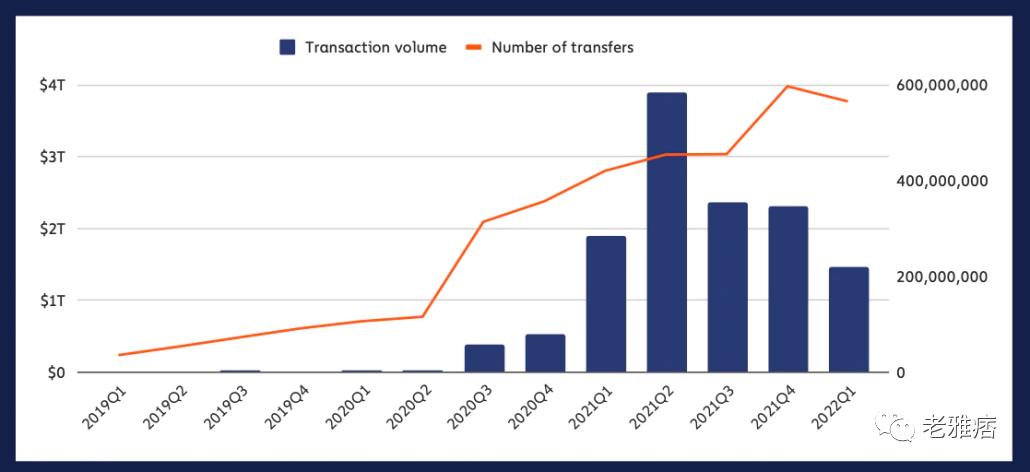
The graph below shows the relationship between the transaction volume and the number of transfers.
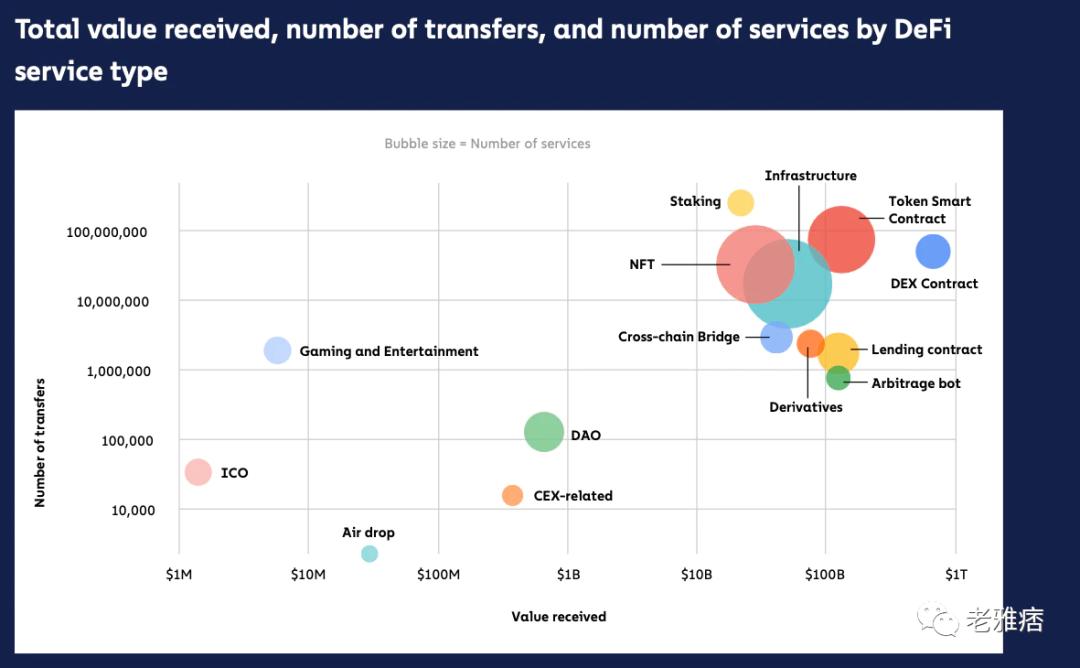
Here are two retail-based services that caught my eye. One is a game and the other is an NFT. Compared with games, NFT seems to be more prominent in terms of transaction volume (over 100 billion US dollars) and number of transfers (over 10 million US dollars), while the number of transfers of games seems to be only about 8 million US dollars. Of course, part of this may be due to the increased price of NFTs such as Bored Apes (valued at over $500,000 at peak) compared to in-game assets. My point is that these two industries seem to have captured the public psyche and there is enough interest in it now (compared to 2019).
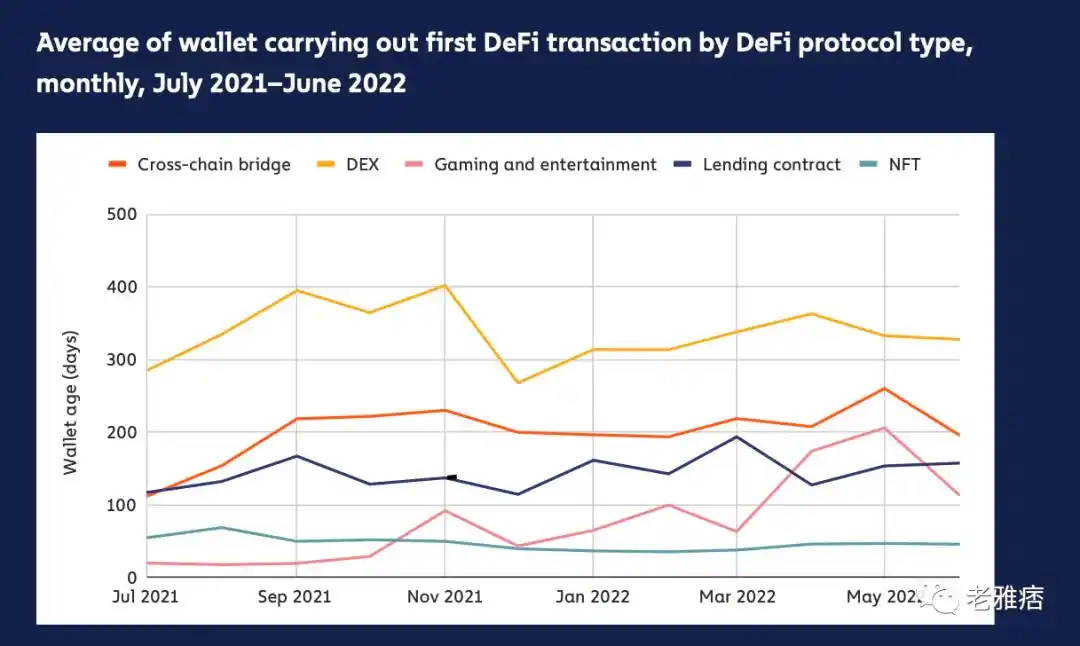
The important thing is that it expands the market. The chart below shows the average age of wallets in each product division. Dex wallets more or less leveled off at about 300 days. This infers that the average DeFi user has been active for about 1 year. On average, games and NFT wallets have been active for less than 50 days.
The fold line is higher for game-related wallets. I think it has something to do with the play-to-earn mode that has been explored for the past few months, only the old wallets are still in there. For NFTs, this number has been flat. This means that more and more newer active accounts have entered the ecosystem. (Or it could mean that users try NFTs and leave immediately, keeping average active wallet age low..)
< /p>
New wallets don't mean much until fees are paid, which is what the chart below reveals. NFTs account for less than 5% of fees paid until July 2021. It's about 20-25% now. I find this interesting because of all categories of data in Chainalysis, NFTs are the fastest growing. So maybe we should change the negative image we have of them..

Long story short: the average transaction amount is on a downward trend, More transactions are happening, and NFT is becoming an important part of being on the "retail stage".
The trading platform ushered in the moment of their liquidation
The decentralized trading platform is in the An exciting time. Their on-chain transaction volume is now comparable to that of centralized exchanges. In its heyday, DEX-related transaction volume was about 2.5 times that of CEX, but this likely has a lot to do with liquidity mining. In the absence of incentives, users may return to centralized exchanges for speed and cost-effectiveness.
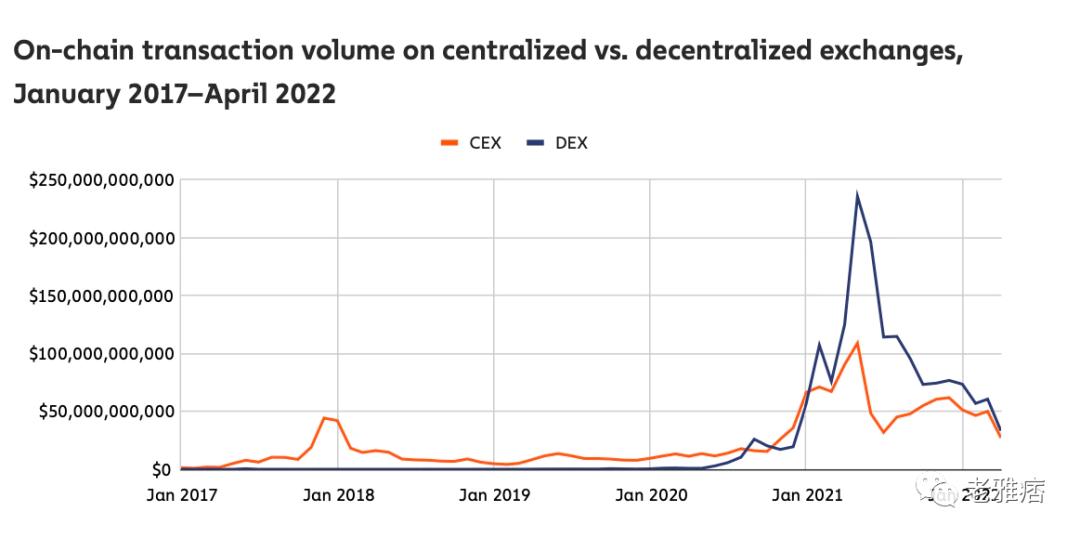
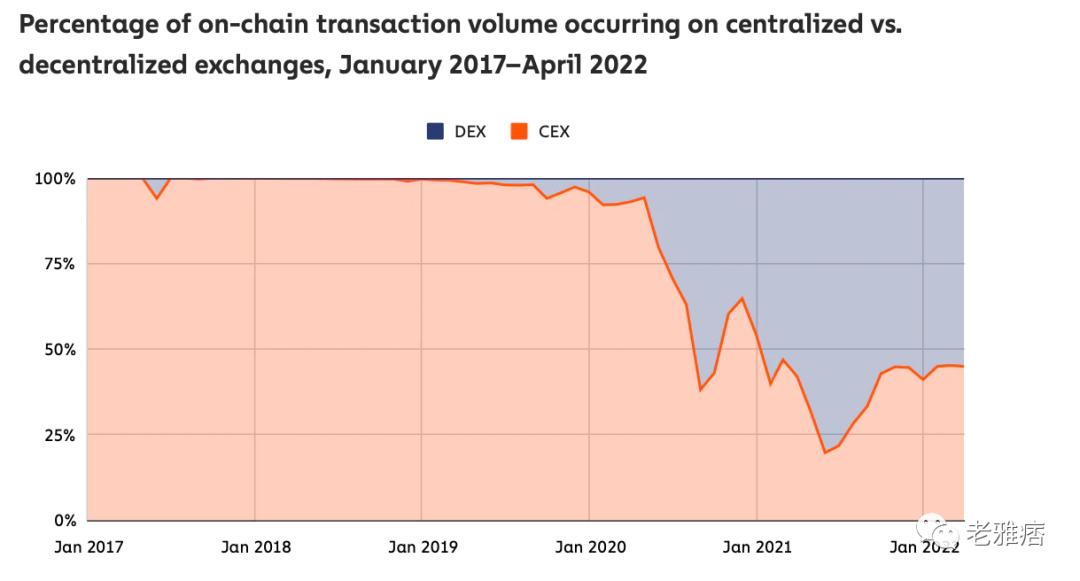
More on-chain transaction volume flows to decentralized exchanges rather than centralized ones. Today, around 55% of trading volume goes to decentralized exchanges. I think this number will continue to trend upwards as layer 2-centric exchanges mature in DeFi. There are several reasons to support my judgment:
DeFi is dominated by whales - therefore, the average transaction volume of DEX is much higher than that of centralized trading platforms transactions made by ordinary people.
Once you deposit funds, CEX does not record transactions on-chain. Their transactions do not contribute to on-chain transaction volume.
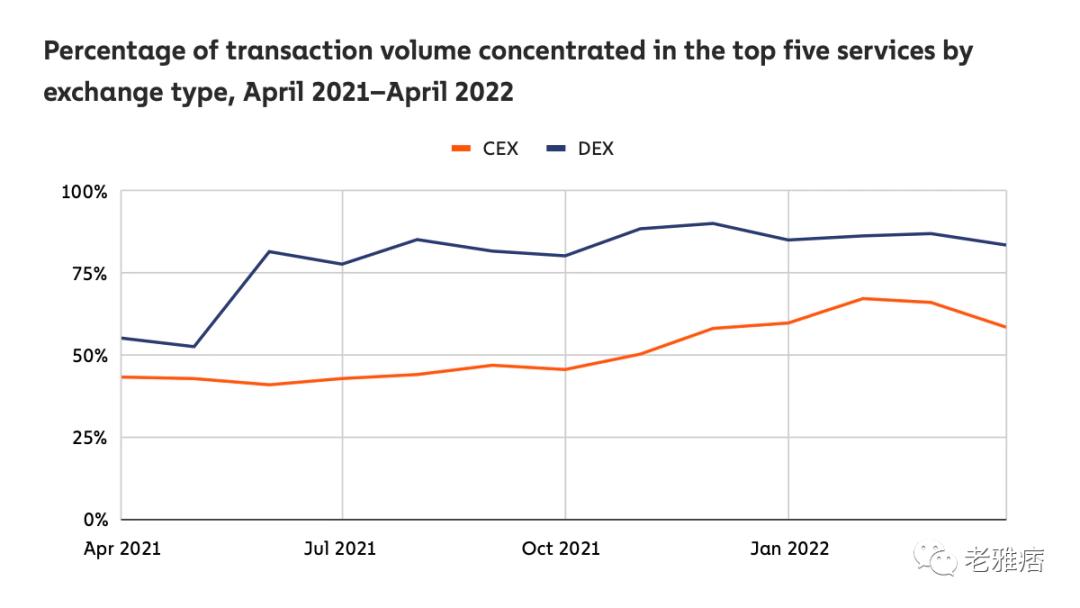
Interestingly, the data shared by Chainalysis also observes a brutal power law in DeFi. For example, the top 5 decentralized exchanges account for about 85% of trading volume. Among their centralized counterparts, the figure is higher at around 45%. So if you’re not in the top 5 in the exchange category for DeFi, you’re fighting for about 15% of the trading volume.
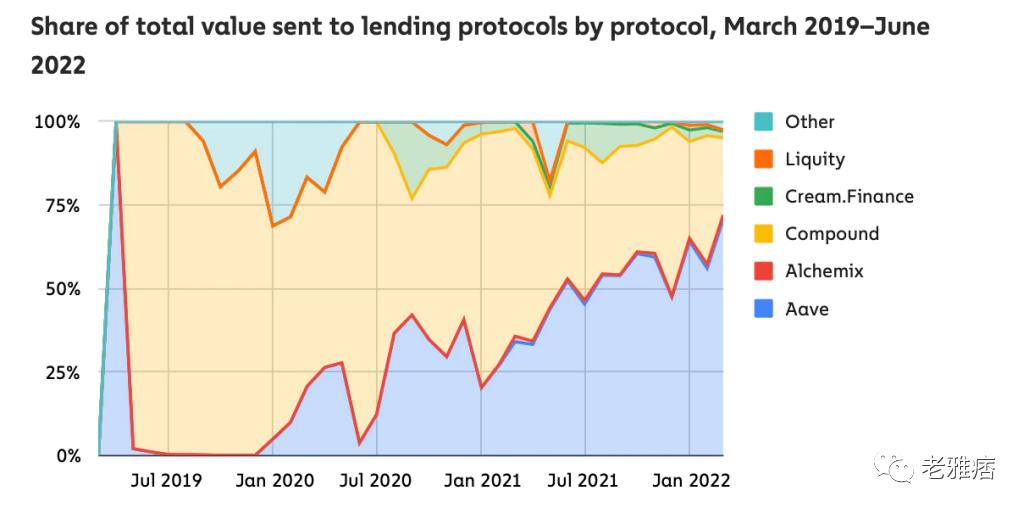
What about loans? Aave and Compound currently control 90% of the lending platform’s trading volume. The “Other” category here is all the other competing lending platforms. They get less than 10% of the remaining loan volume.
People can look at this data and say, 'DeFi lending is so concentrated'. The market follows a typical power law pattern in the venture capital world. If anything, these platforms have performed exceptionally well given the volatility and frequency of liquidations over the past few months. I chose these datasets to show how competitive DeFi is among more minor protocols. I think it is not easy to become a DeFi founder.
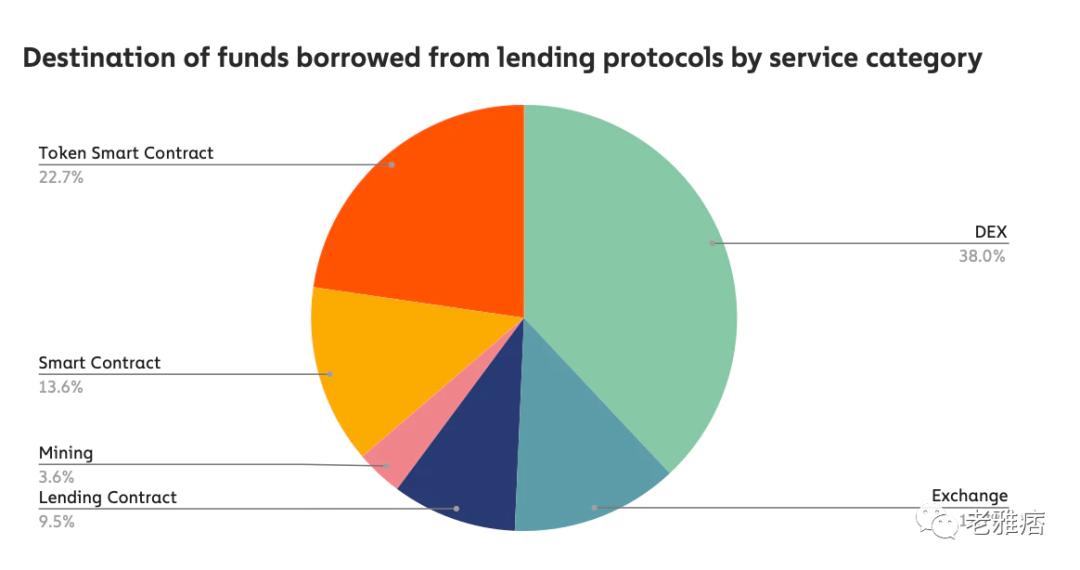
These data interestingly show the purpose of most people using DeFi loans. About 38% of users send assets received in loans to DEXs. This is usually to trade it for another asset that may appreciate faster than the interest paid on the loan. About 13% of trading volume goes to typical trading platforms. Overall, half of all loans taken in DeFi go back to exchanges in some form.
I found it interesting that only 3.6% of the loan funds went to miner-pegged wallets. I speculate this may be because the leverage between miners comes from more centralized sources like Nexo or banks. So at the moment it’s safe to say that DeFi-linked loans are (mostly) traded.
DAO dominated by DeFi
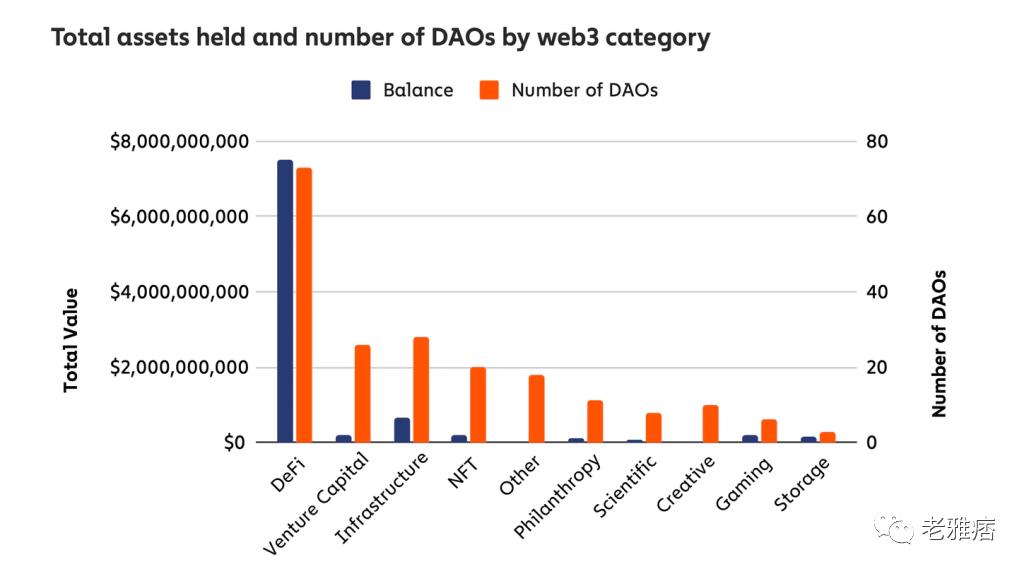
There is a DAO for almost everything these days. Their validity and relevance are still being questioned, but it is increasingly clear that DeFi-related DAOs will dominate for the foreseeable future. DeFi-related businesses hold around 83% of the capital in the DAO. The average DeFi-related DAO manages about $100 million in funds. There is a reason for this. The cash flow and typical op-ex of DeFi-related businesses are entirely on-chain. When a DAO interacts with the off-chain world, it becomes difficult to verify what happened.
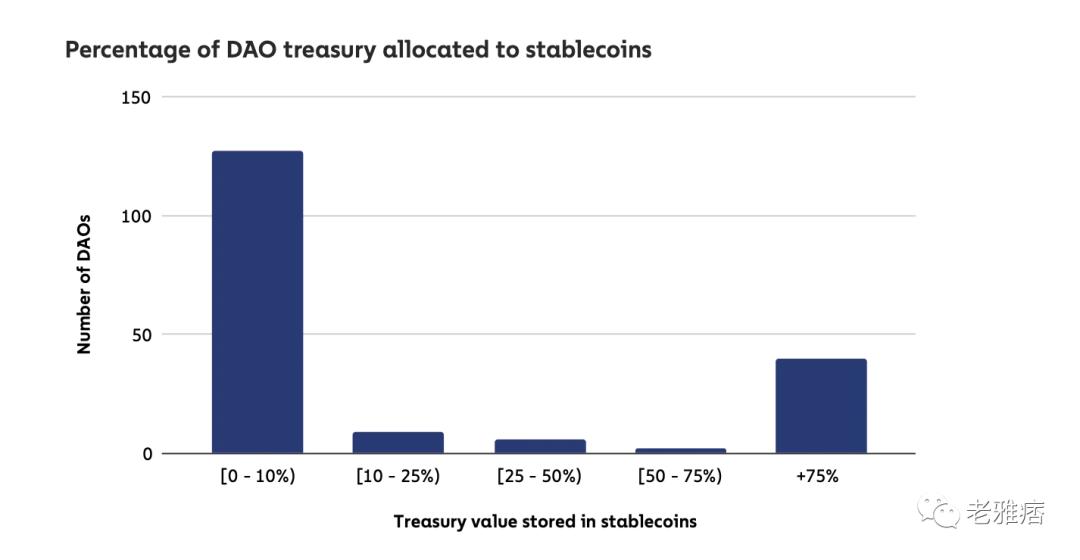
However, there is one caveat. About 85% of the DAOs reviewed by Chainalysis store their entire funds in a single asset. I think this is usually a token issued by a business. Only about 23% of the DAOs covered by chainalysis use Stablecoins. Of these, about 130 DAOs had an AUM of less than 10%, while about 40 DAOs had an AUM of 75%. This data is a bit problematic as it only examines the number of DAOs and the percentage of capital allocated to Stablecoins. Knowing the monetary value would make the point better.
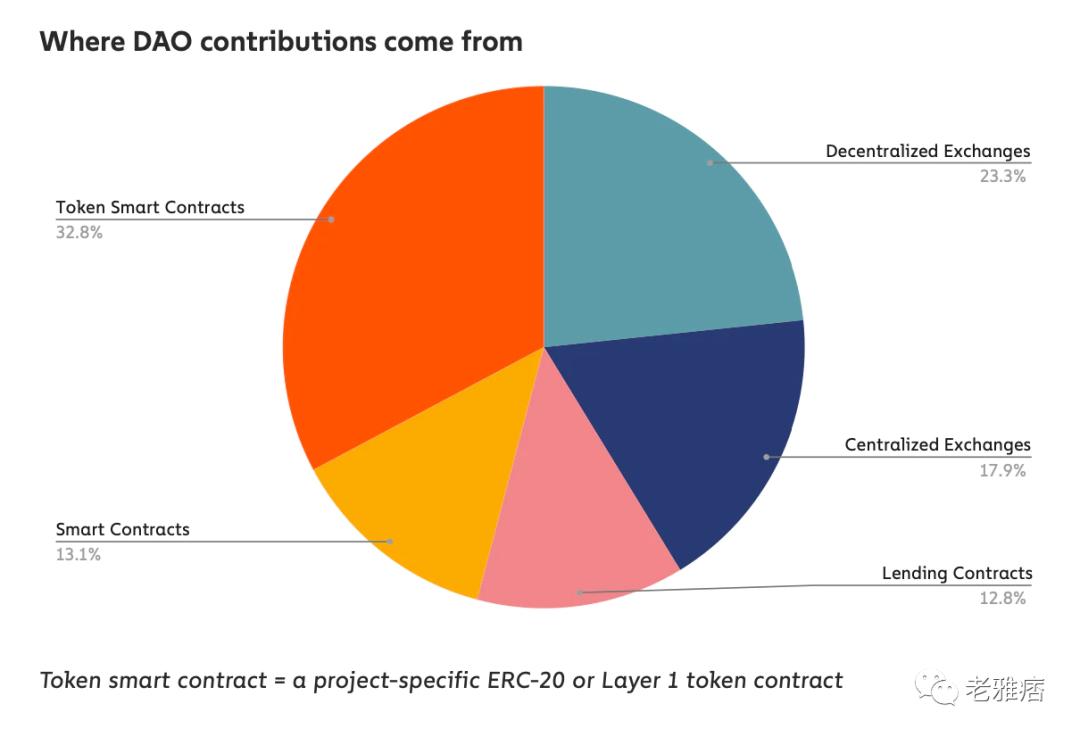
This dataset also contains information about who uses DAO. Today, of every $5 that flows to DAOs, only $1 comes from centralized services. Instead, most of the funds managed by DAOs come from other smart contracts, lending platforms, or decentralized exchanges.
NFT is the new DeFi
Think Bears Freeze NFTs? No. Already around $37 billion will be spent on NFTs in 2022, compared to a total of $40 billion in payments in 2021. There are some more interesting findings in these data.
At the time of publication, approximately 750,000 NFT buyers and sellers were active on-chain. The number peaked in the first quarter of this year, when it hit almost 1 million users. This is the total size of the NFT market so far. What I find intriguing is that compared to the first quarter of 2021, this number has increased by about 20 times. It hasn't been a bad year for NFTs.
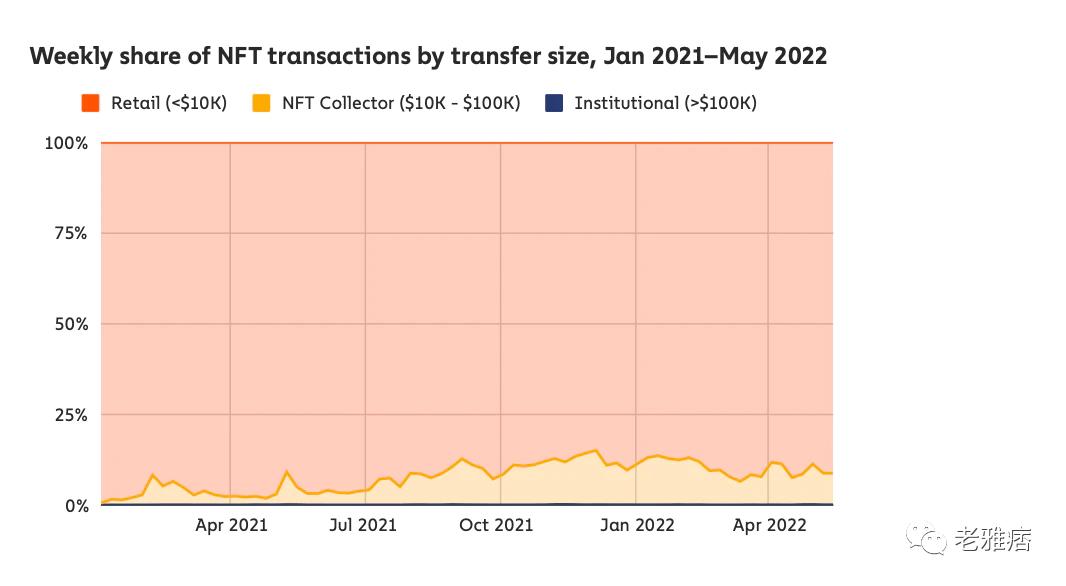
The number of NFT-related transactions made by institutions is very small. In terms of transaction frequency, it appears that more than 90% of assets traded are worth less than $10,000. Does this mean that institutions and traders are not important? no. Traders and institutions dealing with $10,000-$100,000 worth of assets (traders trading over $100,000) account for about 90% of trading volume.
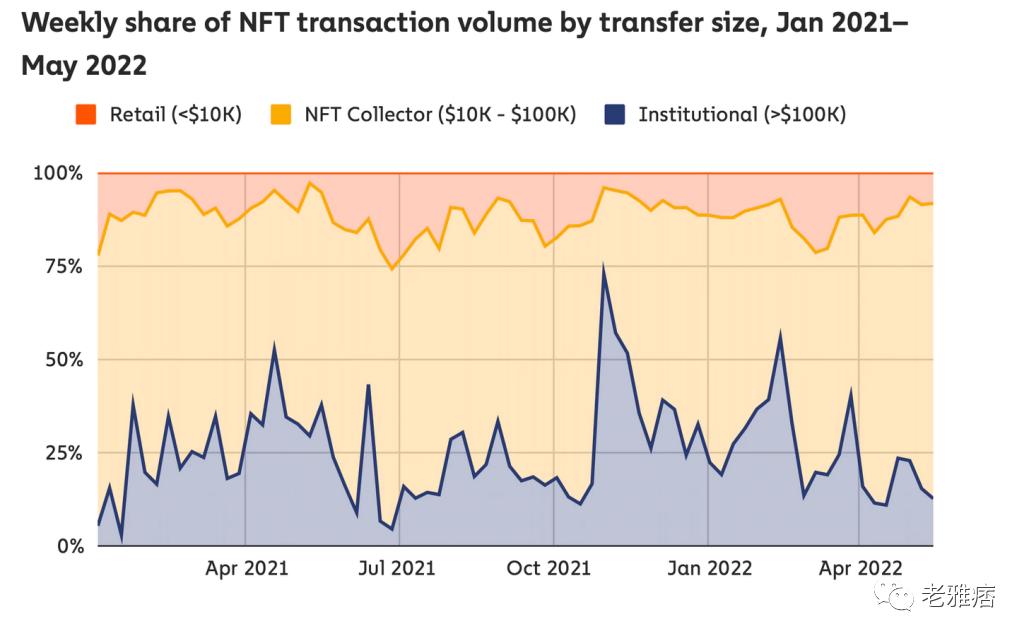
I think at this point we will see the market split in two.
1. Low-end, reasonably priced NFTs are likely to be mostly on the second layer or on low-cost networks like Solana. This will focus on relatively low transaction fees and increasing user experience rather than being a speculative vehicle.
2. An expensive NFT comparable to art. Think tokenized music rights or something like Boring Ape for that. They may be at a level where the "old" money of early adopters already exists. They don't mind spending a few hundred dollars in fees as long as the deal is finalized.
Founders will have to choose to serve either of these. For most NFTFi-related founders, focusing on the latter is likely to be critical to scaling. Metastreet.xyz is a good example and the diagram below explains why:

Value over $100,000 The number of NFT-related transactions is currently peaking. As of the end of April 2022, there are more than 4,000 transactions worth more than $100,000 per month. It can be very profitable for businesses to capture a fraction of this transaction volume and charge even 0.2% on top of it. The report also delves into Metaverse real estate holdings.
“In 10 of the 11 projects we studied, users held VRE NFTs for less than 25% of the time the NFT collection was live. In 6 out of 11 projects were held by users less than 15% of the time. In other words, the VRE purchases in most of the above projects are better described as speculative.”
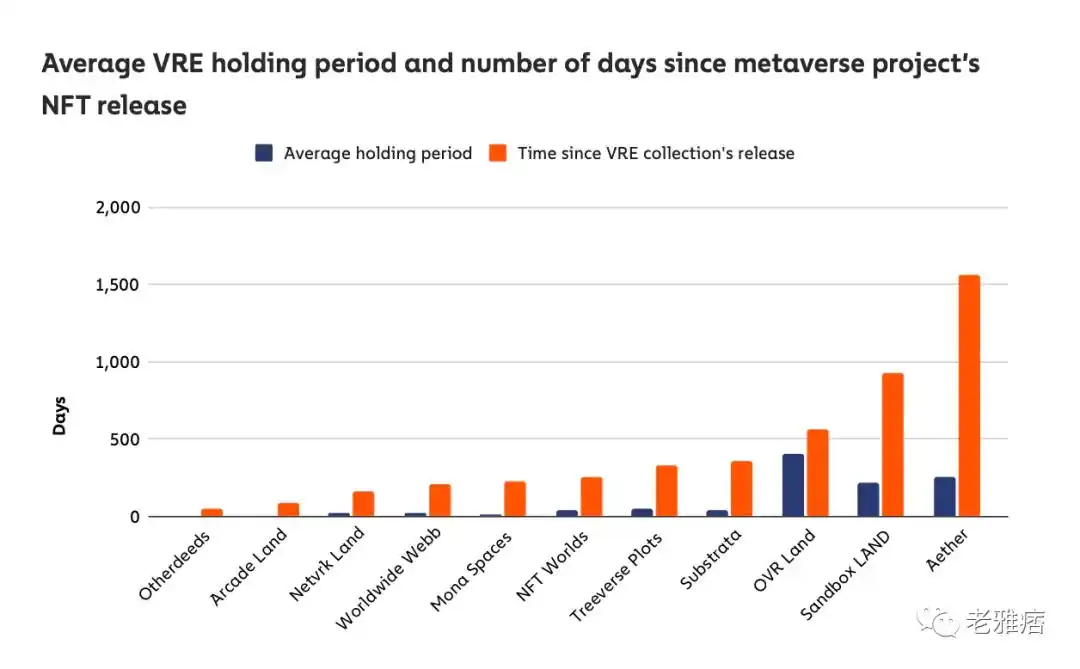
It shows the trend of metaverse real estate similar to token tools. People are currently buying it in order to sell it at a higher price. One of the things I'd love to see here is the average time in days for each world's real estate parcels to hit their all-time highs, and how long it's been since then. I speculate that the current ATH for real estate assets is within a few days of launch, and they don't hold their value over time. I have access to some metaverse datasets, so we'll dig into that later.
The remainder of the report covers information on the UST decoupling. I'll avoid discussing this for now, but will summarize the most active wash traders I've seen. The report mentions a “platform” that rewards tokens based on transaction volume. I presume this is looksrare. They had launched a token earlier this year.
Wash trading generally refers to people trading among themselves to create the illusion of volume. In the case of cryptocurrencies, one person can start thousands of wallets to claim an airdrop. These wash traders are impressively blatant. They did a volume of about 650,000 ETH, selling and buying 3 identical NFTs between each other.
They have never interacted with any other sellers or buyers. The wallet in question managed to spend $114 million in gas fees for tokens worth around $185.5 million.
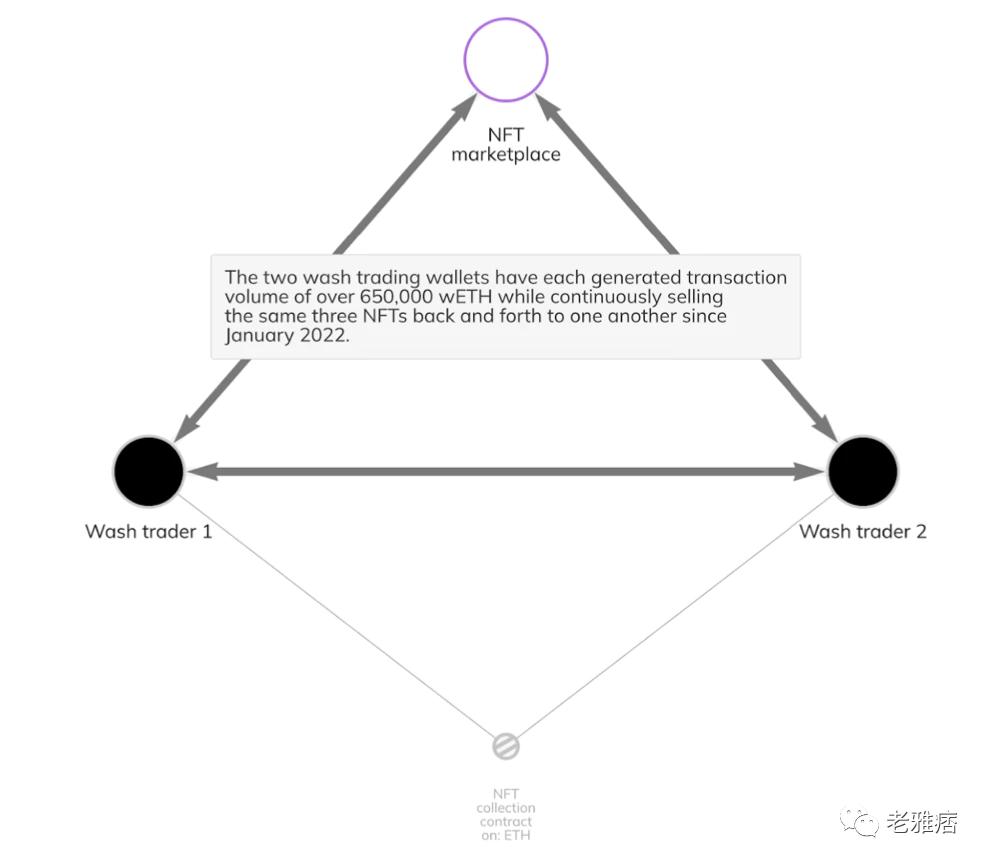

I just didn't bother stopping these rewards for the team Confused because it's easy to see these spam transactions on-chain.
Summary
Decentralized trading platforms have surpassed $1 trillion in trading volume.
They also have about 55% of their assets going to exchanges.
NFT is a key part of the onboarding of retail investors. Wallets that interact with NFTs have an average lifespan of 10 days, compared to 300 days for DeFi.
NFT is also the fastest growing on-chain payment segment. From about 5% per year on Ethereum to 25% now
Decentralized exchanges have terrible laws of power. The top 5 DEXs accounted for about 85% of the trading volume.
The trend is the same for lending platforms. Aave and DeFi together control about 90% of the funds transferred through lending platforms.
50% of all assets obtained from the lending platform flow to the trading platform
The average DeFi-related DAO has around 100 million AUM. (60 DAOs handling a combined $6 billion).
85% of DAOs tracked by Chainalysis hold their funds in a single asset. USDC is more popular than DAI for DAOs dealing with Stablecoins.
Transactions below $10,000 account for more than 90% of NFT transaction frequency. There were approximately 750,000 active buyers and sellers of NFTs in the last quarter.
Original link
Welcome to join the official BlockBeats community:
Telegram Subscription Group: https://t.me/theblockbeats
Telegram Discussion Group: https://t.me/BlockBeats_App
Official Twitter Account: https://twitter.com/BlockBeatsAsia

 Related Articles