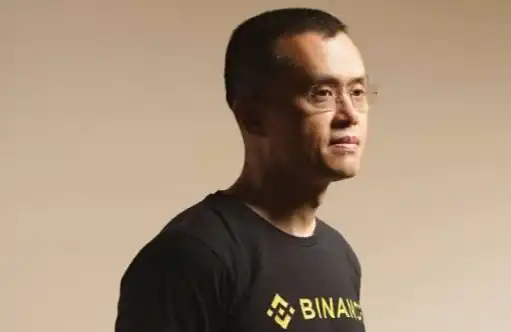
Interview with BeWater: When Internet OG looks at Web3, how do they reframe the industry logic?

Interview: Jack, BlockBeats
By Jaleel, BlockBeats
On June 18, 2022, BeWater successfully held the BeWater DevCon 2022 Worldwide Developers Conference in the Bay Area of Silicon Valley. This event, which spans the East and the West for the first time, brought together more than 100 offline blockchain core developers, and simultaneously made video connections with developers around the world to discuss deep issues in the fields of programming language, cryptography, decentralized protocol, privacy technology, secure computing, open finance, etc.
Austin Griffith, core developer of Ethereum, Ye Zhang, co-founder of Scroll, and Yi Liu, founder of Octopus Network all delivered wonderful speeches. BeWater community initiator BMAN shared the original intention of creating this blockchain developer community, he hopes to build a community without anxiety, open, altruistic, pursuit of essence. Adhering to the spirit of "the best is like water, water benefits everything without competition", BeWater is the force that supports Builder, bringing innovation and achievement to every developer. To support Builder, BMAN and Huobi co-founder Du Jun co-founded ABCDE, a $400 million fund focused on investing in Web3 Builder.
Starting from the community, BeWater has launched an open innovation platform focusing on online and offline event hosting and ecological construction, providing a set of standardized process scheme system for hackathons, Demo Day, product design, business innovation and other types of events. BeWater's vision is to create an open, inclusive, and positive Builder community and ecosystem services platform that inspires cross-boundary collaboration between Builders from all industries, generating amazing chemistry.
BeWater has made significant progress in the past half year. Co-founders Thomas Yao and Pearl Chen joined the team, and BeWater launched its product with the BeWater Web3 Innovation Challenge. BlockBeats caught up with BeWater co-founders Thomas Yao and Pearl Chen to find out more about the team's history and future prospects.
Open source OG meets Encrypted OG
As a co-founder of BeWater, Thomas's transition from traditional industries to emerging technologies like Web3 was a fortuitous one. Thomas has been focusing on games for two years during the epidemic. He was not interested in the blockchain industry at first, and was far from participating in ICO and issuing "air coins". However, some of his friends started dabbling in blockchain back in 2014 and 2015, developing products whose chains were built by some of their best friends in the tech community.
After two years of gaming, he stumbled upon the Metaverse concept, so some friends approached him and asked him to try his hand at it. "We were a group of very hardcore gamers, and I was interested in the sense of engagement that could be achieved, the interaction that could be achieved, combined with a financial system that could be connected to reality." Therefore, Thomas decided to try to innovate and grow with his team in this emerging field.
Prior to joining BeWater, Thomas grew up with a passion and commitment to the open source community. As early as 2009, while still in high school, Thomas began to actively participate in and take over Shanghai Linux User Group (SHLUG), the earliest open source community for Linux enthusiasts in Asia. Under his leadership, the tech community has been revitalized, organizing about 60 offline gatherings and networking events each year. While participating in and organizing the open source community, Thomas has been heavily influenced by hacker culture and the UNIX development philosophy as the underlying philosophy for his approach to problems and work.
In 2011, at the age of 20, Thomas founded the first code hosting service in China -- GitCafe with the influence of hacker culture and underlying philosophy. It was the first GitHub in China and helped push domestic programmers and project teams to use git and understand Github more widely. GitCafe used to be the largest Ruby team in China. It was the biggest sponsor of Ruby China Conference every year. In order to further promote the open source culture, Thomas co-founded the Open Source Society with Microsoft, and successfully launched the first female tech community in China, Tech Cat, to encourage more women to participate in the tech industry.
Thomas says they are happy to share industry knowledge, such as how to build communities and ecosystems. Thomas and his team hope to bring their extensive experience and expertise in open source community building, hackathon organizing, and ecosystem development to more participants in the Web3 industry and help the industry flourish.
ABCDE's name stands out among BeWater's partners in this online competition, and the birth of BeWater is closely related to ABCDE. (BlockBeats Note: For more information about BMAN and ABCDE, please visit theABCDE Capital Co-founders BMAN: ABCDE's "Root Leaf Investment Philosophy""). Thomas recalls meeting BMAN on Twitter while working on the Web3 company Desert Tech. BMAN had already created BeWater, a blockchain technology community, with some early results. However, BMAN was eager to tap into the community's potential further, and after organizing some well-received offline events, he took to Twitter to ask for advice on how to keep the community alive.
After the two paid attention to each other, Thomas took the initiative to send BMAN a message, sharing with BMAN his successful experience in the open source community and how to design the process management solution of the world's first online hackathon. BMAN was impressed by Thomas' sharing and believes that Thomas' experience will be of great value to BeWater's development. At the same time, Thomas acknowledges BMAN's purity in creating the BeWater community. The two decided to work together to develop BeWater into a pool of professionals and early-stage projects serving the Web3 industry.
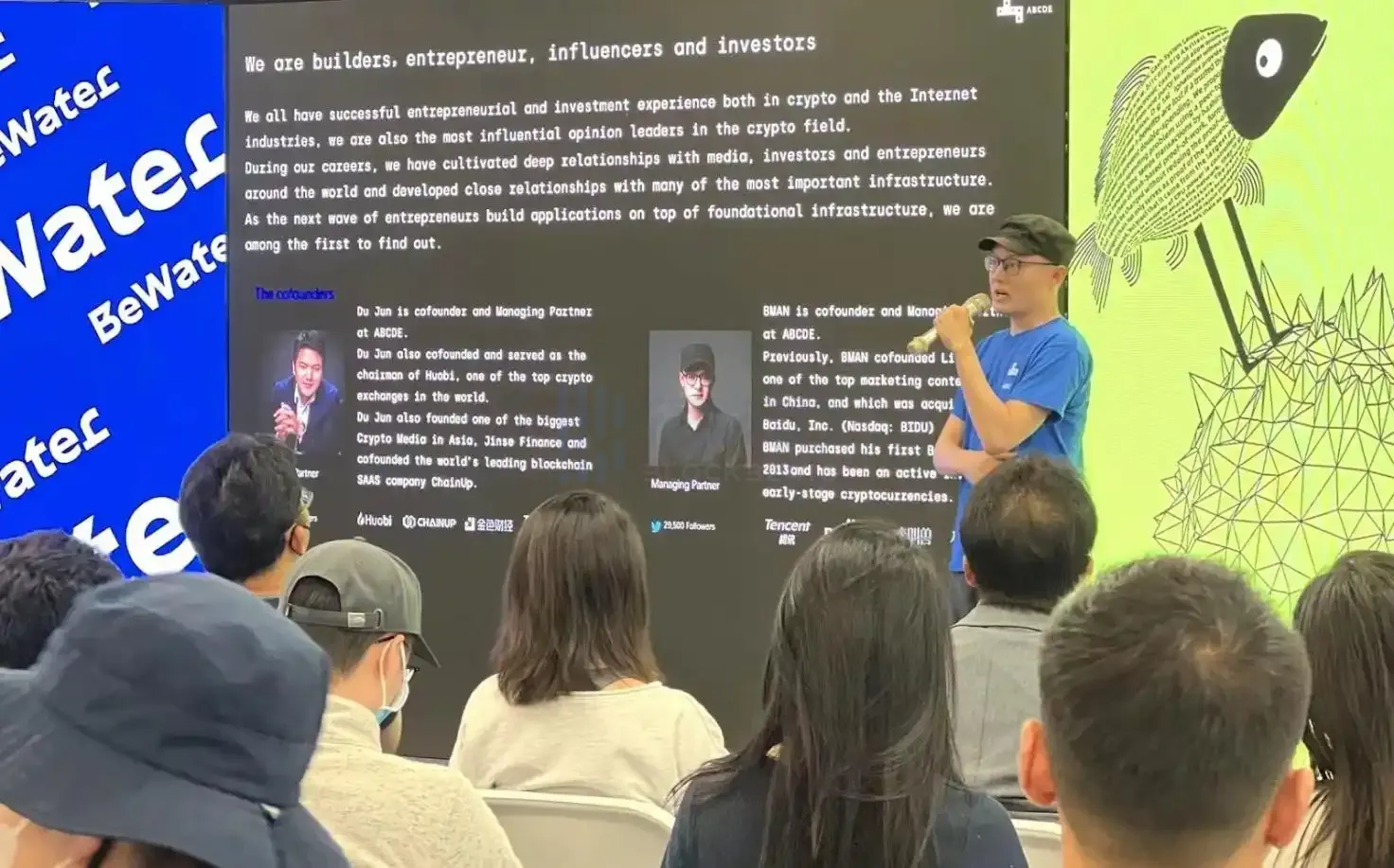
"I didn't plan to do BeWater at first, because BeWater is a subsidiary company and there are other Metaverse projects on it, but I thought the cooperation resources were good, and BMAN is also a very practical person, so we cooperated. If it's a money maker or a money maker, I don't waste my time talking to them." Thomas says.
Do Web3, but not all Web3
The name of BeWater's Logo is interesting, Satofish, which means a fish from a silicon-based civilization. "Destroyed by the time and space in which Satofish was born, he travels back in time with the technology and knowledge to save the Earth from a repeat disaster. He is open, sincere, curious about today's Earth, but also a little old-fashioned and dead-headed. As a silicon-based fish, he is lonely and eager to seek like-minded partners and use technology to make the world a better place. " While describing the name of Logo in this way, BMAN seems to be describing BeWater's dedication and enthusiasm for breaking Web3.
BeWater is committed to helping the Web3 ecosystem thrive, leveraging the power of Web2 developers to incorporate real needs. In the field of Web2 development, BeWater has accumulated extensive experience working with large customers, understanding their needs and translating them into practical applications in the Web3 ecosystem.
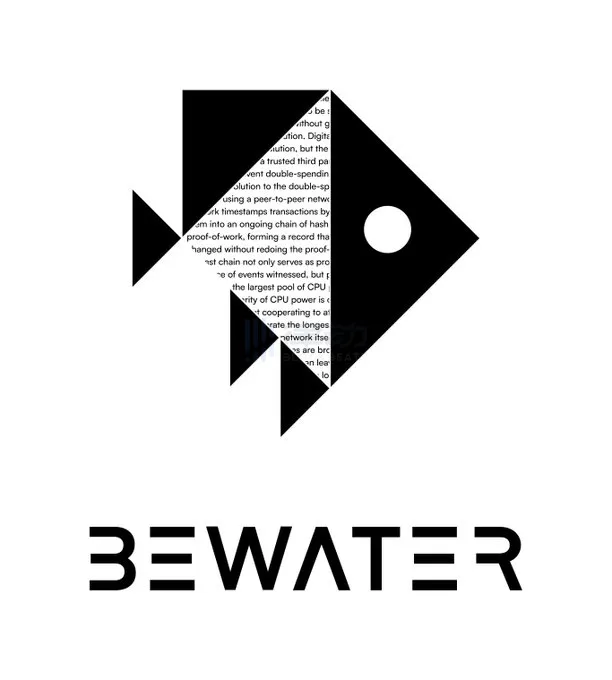
BeWater is an open innovation platform jointly created by Desert Tech and ABCDE. Bewater aims to provide Web3 and other industries with online competition, Builder collaboration and early Demo project services, providing Web3 industry with top talent and early stage project pool. This strategic platform brings Thomas and his team's passion, awareness and expertise to the forefront of technology development.
But Thomas isn't content to simply wrap up his nearly decade-old "online hackathon solution" in a Web3 package. He wants to build on BeWater's existing solution to serve more types of Builders and enterprises. This platform will no longer be limited to the technology industry, let alone the so-called Web3. On BeWater, Builders in product, design and other fields will have the opportunity to collaborate across Multi-skillsets.
"In fact, many of the needs of toB's traditional business giants are human words, to put it plainly, the needs of human beings. Our advantage and competitive barrier lies in the pursuit of business and the real business needs of human beings, without which all things are pavilions, and Tesla is a business at the end." BeWater's core competency lies in a deep understanding of business needs, combining traditional business with Web3 technology. BeWater's goal is to bring these business cases to the platform and deliver these requirements to Web3 developers. After the Web3 binge, technology needs to return to practical application to meet the needs of enterprises. In order to achieve this goal, BeWater turns enterprise innovation into an event that acts as a bridge between Web3 and the enterprise, helping developers to have a dialogue with the enterprise. In this way, BeWater aims to take Web3 ecology to new heights and truly realize its potential value.
Why would you want Web3 people to work with traditional industries? Thomas says BeWater's goal is to attract more engineers and founders from Web2 and get them involved and contributing to the Web3 industry. BeWater is committed to explaining to these incremental markets what it means to participate in Web3. Rather than focusing on the existing population of Web3, BeWater is more concerned with the incremental market in Web2. "Our attitude right now is that we don't care about the 'stock' of the industry, their glass is full and they can't fill it. It's the incremental market in Web2 that we're affecting, and we're talking to them about why it makes sense to participate in Web3."
Thomas reveals: "Later, we will bring in some of the founders of successful Web2 projects to give suggestions for Web3 projects, and then they will give incentives back. It makes sense. I take the advice you give me on the project, and I make the product experience or various aspects of the project better, and I give you something in return like a consultant fee."
Indeed, the incentive mechanism of Web3 to attract successful Web2 founders to participate in the form of Web3 will be a great example, many professional people can come in and give some advice on Web3 projects. The most important thing for the Web3 project was to be able to tell the story to the founders and product managers of these early Internet giants and convince them. For example, how can DeBox explain to wechat why DeBox is stronger than wechat, but also let wechat can be convinced.
BeWater will make a set of such high-frequency interaction mechanism, which can not only attract new users but also realize good money driving out bad money. "You can't teach fish to swim in front of these people. This is a very real thing. Investors like to see this thing most.
BeWater also hopes to gain insight into the digital needs of enterprises, show people that Web3 technology can meet real needs and create business value, and then translate these needs into competitions and express them in easy-to-understand language to Web3 practitioners to attract them to participate. "We want to actually produce demos that have commercial potential, and then empower B-side users, and try to build this ecological chain, and let more people know what they're doing in the Web3 space."
However, this path requires a lot of talent, just like the traditional Web2 developer ecosystem. That's why the Web2 ecosystem thrives, including developers, development marketplaces, technical mentors, commercialization monetizers, and project teams that specialize in how to spread technology across different verticals. "We wanted to find an outside force, the actual business side of Web2, and grow with it," Thomas said.
BeWater's priority is to polish the product and improve the process of the hackathon. When the product is standardized and has a good user experience, BeWater will try to commercialize it. BeWater wants to build a model that will accompany the growth of the Web2 business, allowing companies to understand the value of digitization and Web3 and turn it into a commercially valuable event.
As a SaaS platform, BeWater will include both free and paid versions. The paid version will provide more functions for the B end. The specific process includes activity release, team registration, project preparation, project submission, review and result announcement, etc. After the result is announced, the smart contract will directly pay bonuses. "I provide a standardized result, no custom service. This is a minimal MVP, and BeWater will continue to develop more features to improve the system."
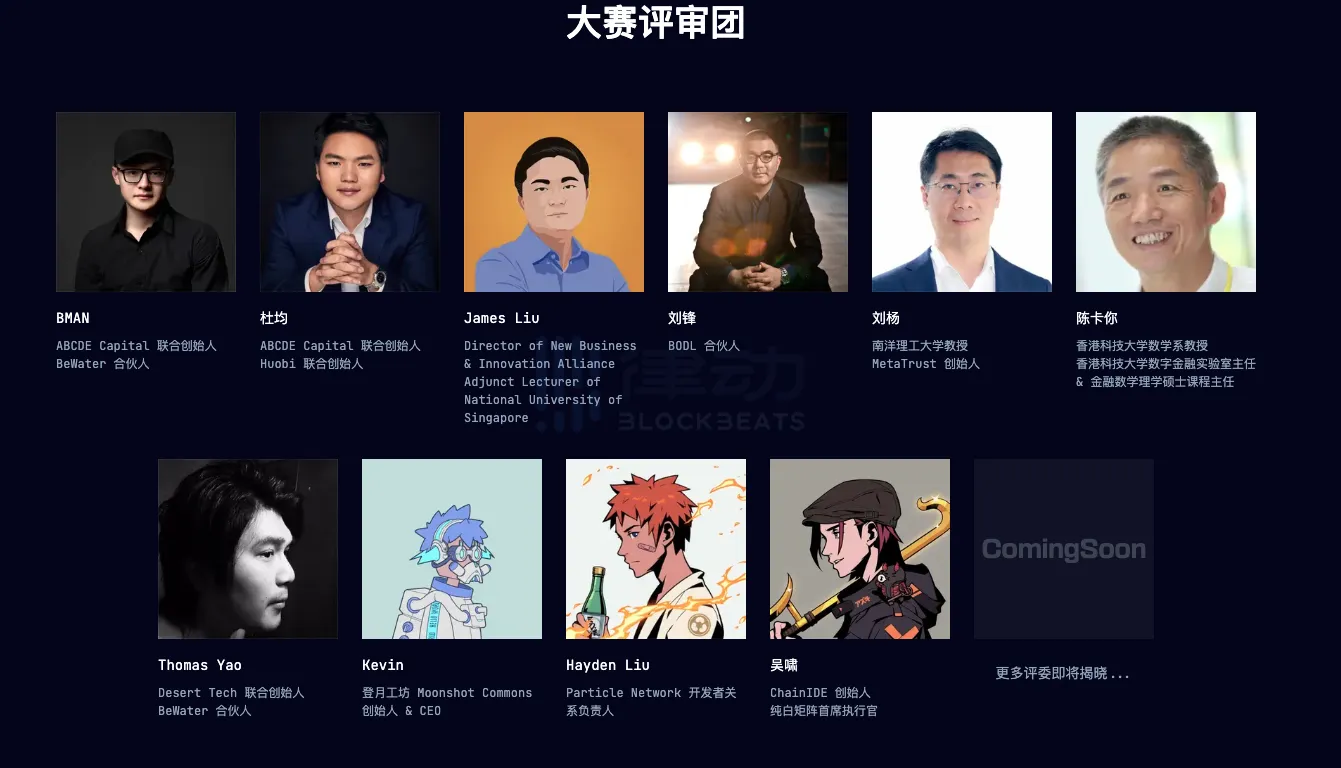
BeWater's first event was a startup competition for Chinese Builder. Participants can submit project ideas for Web3, which will be reviewed by the judges. If you have a code repository, you will get a code technical score. BeWater will also integrate third-party apis from partners to help detect security breaches in the contracts of participants and provide comprehensive evaluation.
BeWater Web3 Innovation Competition is an online competition for Chinese Web3 entrepreneurs. It is organized by BeWater and co-produced by ABCDE, Ali Cloud and SeeDAO. It aims to provide entrepreneurs with a passion for Web3 technology with an opportunity to present their projects to senior investors and industry experts, as well as access to resources such as media exposure, mentorship and funding. The Innovation Challenge opens for registration on May 5, with teams and projects open for submission. Thematic directions include Web3 Security, ZK, DeFi, GameFi, NFT and DAO Tool, with a total prize pool of $30,000 so far. Preliminary screening will begin on May 20, and online Demo Day will be held on May 25.
Unlike regular hackathons, the deliverables for contestants will be documents. Here's what Thomas thinks: "A lot of people in the industry now turn hackathons into entrepreneurial demo days, doing demo and PPT presentations, which is a funny thing from the point of view of our technology community. So we will classify the types of events according to these things, and launch various competitions. In addition to a lot of project presentations, hackathons involve submitting code repositories."
In addition to hackathons and the BeWater Web3 innovation competition, there are also design competitions, "and some communities like SeeDAO are in ongoing discussions with BeWater to hold science fiction competitions". Thomas stressed that BeWater will promote two types of cross-industry collaboration: one is cross-industry collaboration, that is, Web3 with other industries; The other is cross-skill collaboration, where people from different skill areas can work together. Their target audience is not only programmers and technicians, but also designers and so on.
"Who pays for Web3?"
Web3, the industry's most vaunted technology, has been booming, but it seems to have gone off the rails when it comes to practical applications. How to combine it with actual business needs has become a key challenge for the industry, and BeWater also believes that the biggest problem in Web3 today is the inability to map and symmetry technology into actual business scenarios and real needs. Therefore, as an innovation platform, BeWater is committed to connecting Web3 with the innovation needs of various industries, applying Web3 technology to different business scenarios, and providing a strong boost to the development of the industry.
In an interview with us, BeWater co-founder PearlPearl shared his views and insights with BlockBeats. She believes that the evolution of the Web3 space needs to focus on real needs and scenarios, rather than just technology and cryptocurrencies.
Pearl is a longtime friend of Thomas's, and the two have known each other for 10 years. Pearl is one of the top developers in China for Microsoft and CSDN, providing annual service framework for IBM, Intel and other large companies, recruiting, event organizing, and advertising, all of which Pearl has been responsible for. For her, SaaS serves many practical needs as a technology implementation in the traditional Web2 world. For example, SaaS can support service transactions, decision transactions, post-transaction services, and so on.
"I often say how sophisticated it is. If you look at the financial SaaS, the underlying, the CRM, the user marketing, they are as sophisticated as Swiss watches." The implementation of these services requires a combination of various underlying technologies to build a complete technology system. However, the Web3 domain has not yet developed a similar system. Many people focus too much on the technology itself rather than its practical application scenarios and business value.
"In Web3, these things have not yet become a system, people who shout technology shout technology, people who shout cryptocurrency shout cryptocurrency, essentially it is not in the same dimension as the real needs of human beings. Just like in Web2, we don't think of keyboard as an industry, similarly, many technology chains in Web3 are not enough to constitute an independent industry. More than 90 percent of Web3 startups don't talk about application scenarios, don't talk about commercialization, and all of their narrative contexts revolve around Web3."
Yes, technological innovation requires bold experimentation, but who will pay for it without any consideration of business value and liquidity? In the process of value generation, each link involves the exchange of productive forces. This is a very practical economic model. Web3 cannot be completely divorced from these factors. For example, when issuing tokens, we need to consider the conversion from the monetary level to productivity and the value that is provided.
Pearl cites an example where airlines and passengers are concerned not with Web3 or distributed technology, but with their specific needs. For example, how do user miles correspond to different rights and interests on different routes? How can airlines provide passengers with better mileage points management and value-added services? Traditional points systems are limited to redeemable miles or business-class upgrades. How can points become more valuable? Can they be converted into digital products or NFT?
"What do we talk about now when we talk about Web3, when the bull market happened, how much bitcoin went up, that's all. But I don't think it's Web3, it's just cryptocurrencies, Web3 it's supposed to be an era," Pearl said. In her view, many people focus on the volatility of the cryptocurrency market and ignore the value that Web3 is supposed to carry as an era.
From BeWater's point of view, Web3 and Open AI are just technical points and technological innovations. Therefore, BeWater does not position itself in a certain field, but hopes to serve as a broader open platform to support more events. BeWater is not thinking about Web3, nor does it think that BeWater is a Web3 community. Instead, it claims to be a SaaS service innovation platform that enables industry innovation and provides solutions for everyone.
"The Web3 era will come when all Web3 people" understand people ". In BeWater's opinion, when people are aware of the needs of various fields, such as people's food, clothing, housing and transportation, science and technology, cars, and bulk needs, practitioners can realize different scenarios and create real commercial value through technology tool Web3, that is, when technology and commercial value really look at each other and can be well combined. The real era of Web3 has arrived.
Welcome to the official community of BlockBeats
Telegram subscription group:https://t.me/theblockbeats
Telegram communication group:https://t.me/theblockbeatsApp
Official Twitter account:https://twitter.com/BlockBeatsAsia
Welcome to join the official BlockBeats community:
Telegram Subscription Group: https://t.me/theblockbeats
Telegram Discussion Group: https://t.me/BlockBeats_App
Official Twitter Account: https://twitter.com/BlockBeatsAsia