Why did Meta abandon plans to integrate NFT into social products?
原文标题:《 Meta 为何放弃了 NFT 计划? 》
原文编译: Leah,Foresight News
As I mentioned in the last post, Meta abandoned plans to integrate NFT into their core Facebook and Instagram products. If the markets had not been rattled by the banking crisis, this would have caused considerable concern. Like thunder in most bear markets, we don't want to talk about it, but it's worth learning from it.
First, it's worth thinking about why Web2 is so important for a tool like NFT. Ordinary people spend a lot of time on platforms like Facebook and Instagram. To understand the impact these platforms have on users, we can cast our eyes back to a few years ago, when Instagram "copied" Snapchat by adding a feature. Before that, Snapchat was a place for teenagers to share information about their lives, and the pictures they uploaded stayed on the platform for only a day.
After two failed startup acquisitions, Meta started rolling out stories features on Instagram and WhatsApp. Consumers (myself included) started using these products to share stories and memes, as our social circles began to build on these apps. When India banned TikTok a few years later, Instagram steadily rolled out Reels, which tried to replicate TikTok by allowing users to scroll through short videos.
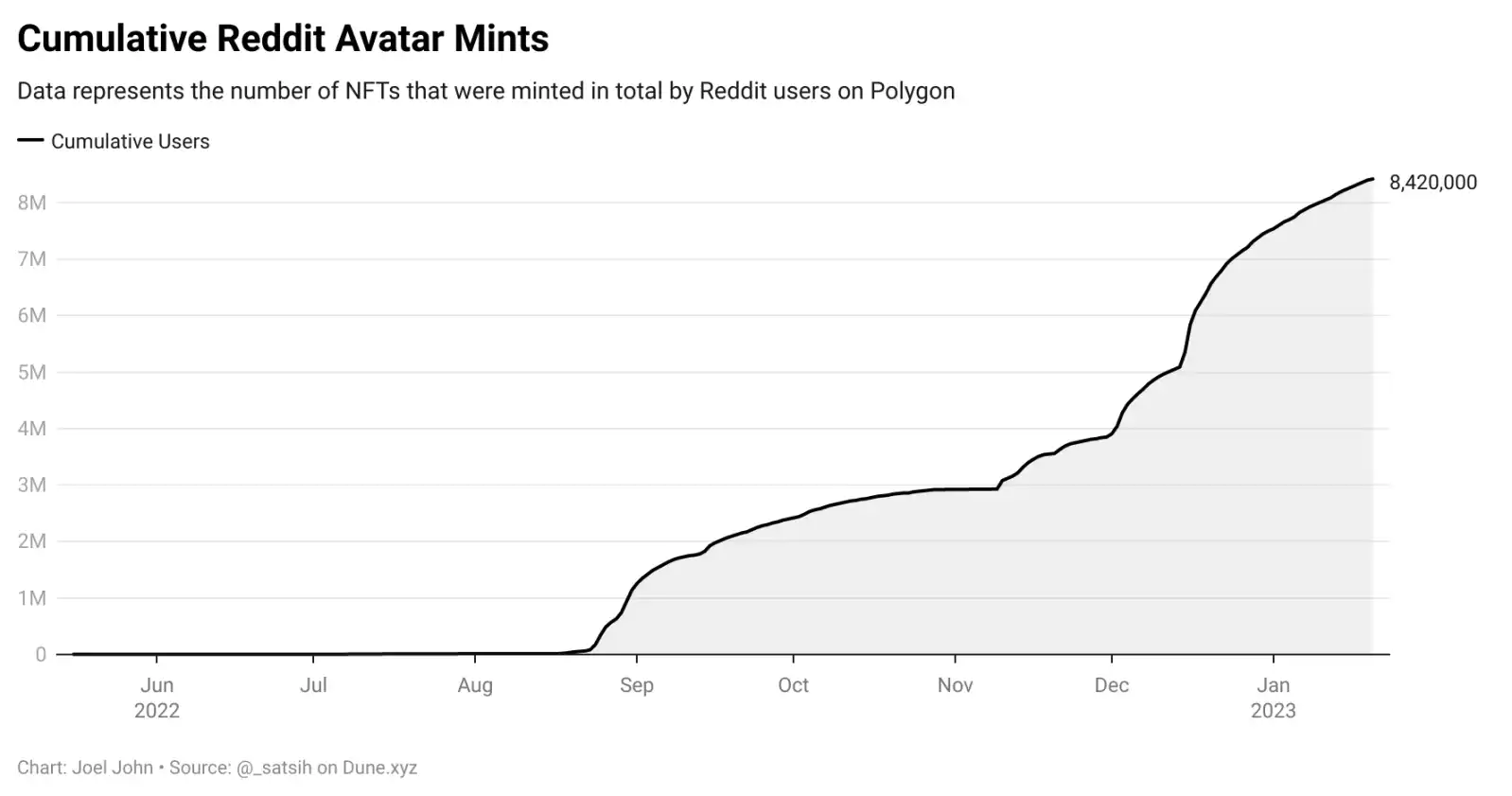
Do you see the trend here? Large platforms can drive user behavior, so allowing users to verify their NFT on Twitter or link NFT to their Instagram profile is a big deal. (We'll come back to that later.) To get a sense of the scale of the Web2 platform, recall that Reddit's NFT has been mint over 7 million times on the Polygon network. Web3 products must be close to where users are.
But Meta doesn't seem interested in incorporating NFT into their core strategy. Why?
In short, NFT is in an awkward position on the Web2 platform. Social media platforms like Instagram are status-seeking machines. Users compete on filters, locations and lifestyle tags to move up the social rankings. We quantify these "rankings" by liking and engagement.
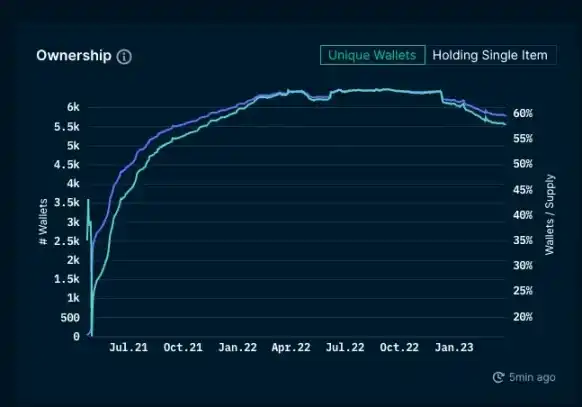
Source: Nansen
When Meta enabled the NFT access mechanism, it assumed that NFT would be a mechanism for users to show off their assets or brand loyalty. But even a large NFT such as Bored Apes only has 5,800 holders, so focusing on this niche audience is a hassle and doesn't add much value to Meta.
But why is it in an awkward position? NFT went mainstream, with stars endorsing it over the years. However, in the wake of the FTX debacle and the industry's deluge of lawsuits, celebrities have no reason to keep talking about JPEG images on their blockchain. So these signs of "NFT taste" are gone. For the NFT to become a mark of taste, it must stand the test of time. Harvard, Louis Vuitton and Bitcoin share the same reason for their taste claims -- the Lindy effect.
The Lindy effect describes the idea that the life expectancy of a non-perishable item (such as an idea or brand) is proportional to its age. From this perspective, religion ranks highest in terms of the Lindy effect. NFTTS like Bored Apes and many similar animals have failed to appeal to a wider audience because only a small number of wealthy tech elites can associate expensive NFTTS, unlike luxury bags, whose "value" can be measured in real time.
Another element of the story is that the average person with a boring ape NFT may not want to prove their NFT ownership to their social circle, because the cryptocurrency social circle is not the same as the social network in the offline space (school, dating, or work). The crypto community is often hit by bad press, so not everyone is willing to identify themselves as part of the cryptocurrency niche.
In the last few years, NFT was in its infancy. You were in a small circle, and the fraud did not reach ordinary people. Large platforms like Meta may give NFT scammers access to your Facebook contacts. All Web2 platforms have their fair share of bots and fake identities, but verifying users is relatively simple: they just need to provide real-life credentials. But what do you do when a fake NFT is linked to someone's wallet? What happens when third-party intellectual property is used in a user-owned NFT?
American law protects platforms from liability for user content. Because of that, no matter what someone posts in a WhatsApp chat, Zuckerberg won't be subpoenaed. For the most part, brands are unlikely to Sue platforms directly, but fake NFTS can be used to spread scams. What would that look like? I learned this from bitsCrunch. If you recall, I mentioned this in my newsletter a few months ago during their early launch phase.
On-chain intellectual property infringement
The model they developed detected that Coodles' collection infringed the McDonald's brand IP. You might not think this is a big deal, but consider that there are about 434 NFT's associated with McDonald's IP in this series. According to bitsCrunch, these FTTS have generated more than $500,000 in sales. How much of that does McDonald's get? Probably not at all, because we couldn't find any evidence linking Coodles to McDonald's.
This may not seem like much on the surface, but back before Blur came along, we thought the NFT business model would work. The idea was that a brand could post a set of assets (as NFT) that the community would trade. Some of the royalties will go back to the brand. From the perspective of platforms like Meta or Twitter, there are two new challenges:
First, if brands are unable to detect, censor, and remove pirated FTTS on their behalf, they will lose the incentive to promote their own. Imagine buying a "fake" Nike sneaker NFT on Facebook and showing it to your friends. On the one hand, brands lose money; Users, on the other hand, feel cheated.
Instead, there is a risk that royalties as a concept have gone bust. In this case, building features that allow users to trade NFTS on the platform becomes pointless. By focusing on payment channels or traditional markets, Facebook gets a piece of every transaction, and now Facebook is promoting it in a big way. This is not to say that NFTS don't have a future, they are still here, and we are witnessing a transition from "high-priced Veblen goods" to "low-priced consumer goods". What does the NFT look like at the end of this transition?
NFT must be as universal and easy to buy as universal media subscriptions are today. You don't give it a second thought when you subscribe to Netflix, and the same goes for Spotify. In the future, NFT may be built into the platform like event tickets; This is nothing new. NFT has been around for a while but has yet to catch on. However, two forces are likely to make NFT tickets possible: celebrity support for NFT tickets and the secure purchase channels provided by social media networks.
Now, suppose a concert doesn't have a complex network of participants behind it. However, since these tickets can be sold between users (as is already common), the case for using tickets as NFT on social platforms becomes clearer. Users who have purchased specific tickets can connect with others attending the same event through NFT. Indeed, what better way to express your love for an artist than to display a series of verifiably owned tickets to an event on your social media profile? Ticketmaster is already experimenting with this model.
The ability to detect intellectual property infringement along the chain is in its infancy. The bitsCrunch team showed me a Discord bot that was being used to call users' attention to brand logos on NFT. Their system frequently automatically scans for NFTS and flags potential infringers. It is still early days, but it will be interesting to see the evolution of NFT-related tools from just analyzing on the chain to scanning the contents of the NFT itself.
I talked to Nameet Potnis from Asset.money about this whole situation. He added that no single player has succeeded in attracting more than 5 million users to the NFT platform. Sure, there are millions of wallets on Reddit, but there's no way to verify that the actual users are behind those wallets, because the wallets are connected through other apps. Today, you can only verify that you have a wallet by connecting to an app like Metamask, so platforms have to connect wallets to get in on the Web3 bandwagon. This will leave them facing censorship issues, as they did with Libra and Diem.
For Meta's management, these efforts may not be worth the trouble.
Original link
Welcome to join the official BlockBeats community:
Telegram Subscription Group: https://t.me/theblockbeats
Telegram Discussion Group: https://t.me/BlockBeats_App
Official Twitter Account: https://twitter.com/BlockBeatsAsia
 Related Articles