Will the Fed's $300 billion emergency measure be enough to stop the crisis?
原文标题:《 美联储的 3000 亿美元应急措施,是否足以阻止危机? 》
Original article by Joseph Politano
This is a Block unicorn
Is the $300 billion in emergency funds the Fed lent to banks after the collapse of Silicon Valley Banks enough?
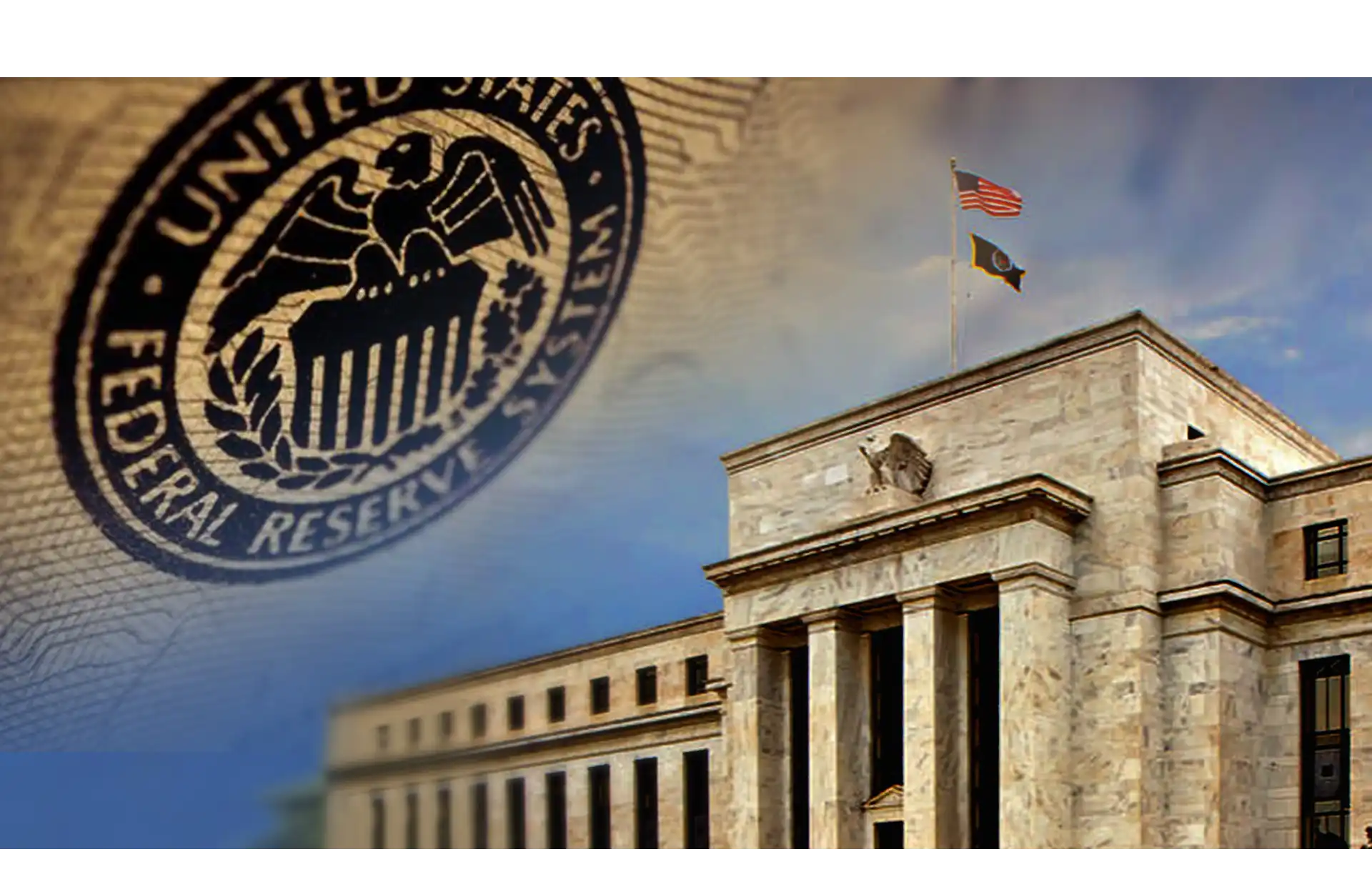
For the first time since 2020, the Fed has rushed to shore up the US banking system. Several major regional banks are struggling after last week's failures of Silicon Valley Bank and Signature Bank, and the troubled assets of these failed institutions are still managed by the Federal Deposit Insurance Corporation. The Fed has pledged to protect banks and the financial system throughout the crisis, and has backed up those commitments with strong practical actions - backing the Federal Deposit Insurance Corporation, opening a new bank lending facility over the weekend, easing the terms of emergency credit lines for banks, and pledging to provide liquidity to any thrift that gets into trouble.
As of Wednesday, they had also extended more than $300 billion in new loans to U.S. banks - more than double the amount of direct credit created at the height of the pandemic in early 2020. So far, this has been effective in containing the crisis - no more banks have failed in the week since the Federal Deposit Insurance Corporation, the Federal Reserve and the Treasury joined forces to deal with the crisis - but many banking institutions remain at risk. So will the Federal Reserve's $300 billion emergency response -- and their new set of policies -- be enough to stop the crisis?
Break down the Federal Reserve's emergency loans
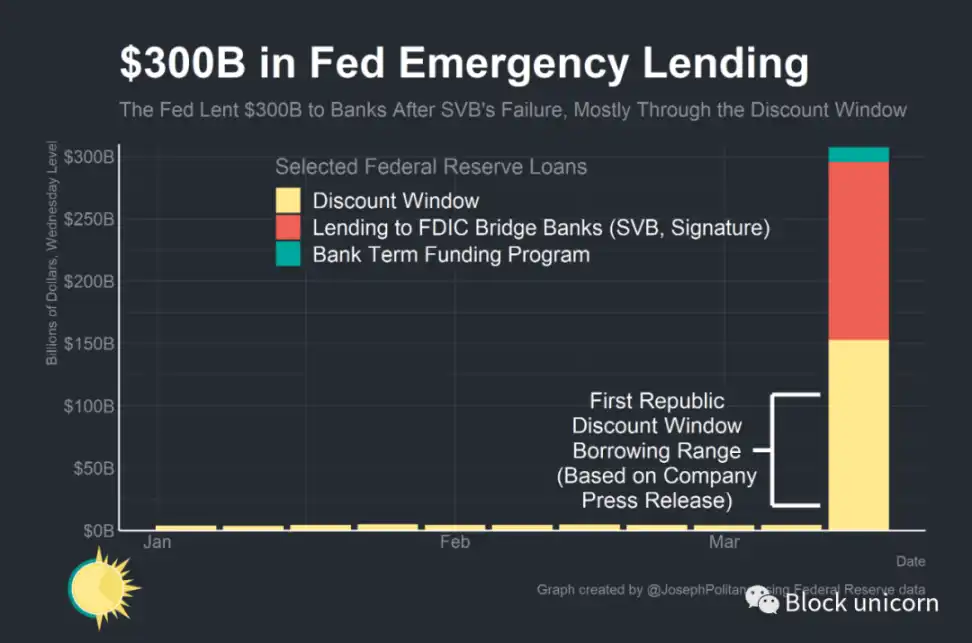
As of Wednesday, the Fed had provided more than $300 billion in secured direct loans to the banking system - more than at any time since the global financial crisis - in an effort to contain the fallout from the failures of Silicon Valley Bank (SVB) and Signature Bank. More than $11.9 billion of the loans came from the Bank Term Funding Program (BTFP), a newly created facility that allows banks to pledge government-backed securities at face value in exchange for loans for up to a year.
Most of the Fed's lending, however, $295 billion) from the discount window, the collateral direct lending facility that the Fed has historically retained to provide emergency liquidity to banks. The Fed provided $142 billion in loans for SVBS and Signature Bank to the FDIC's Bridge Bank and $152 billion in loans to private banks through the discount window. Of that $150 billion in private borrowing, one private Bank probably accounts for the bulk -- First Republic Bank, which issued a statement saying that their discount window borrowings have ranged from $20 billion to $109 billion since Silicon Valley Bank's collapse.
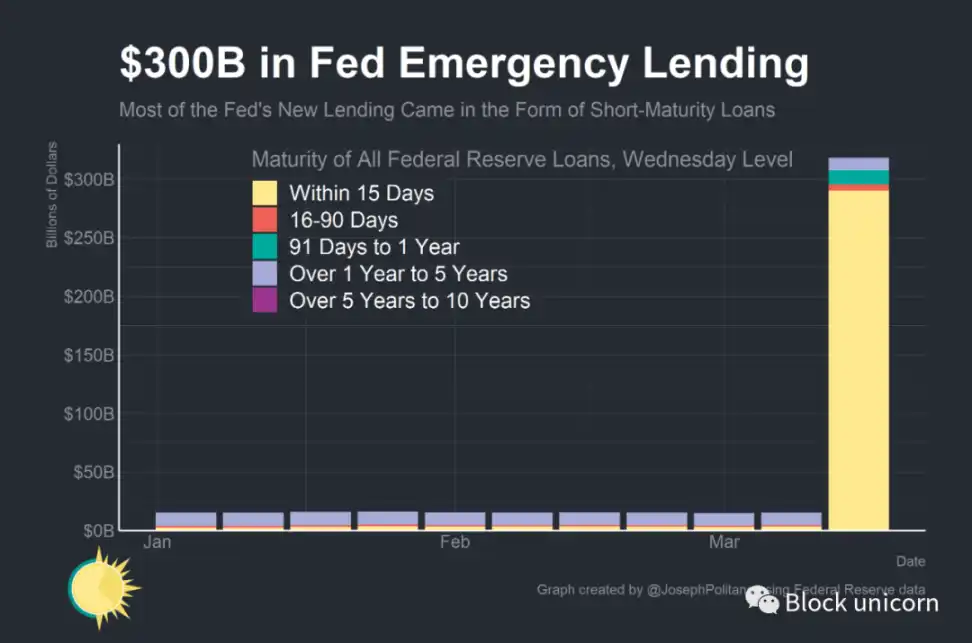
The vast majority of these emergency loans are very short-term loans, with a record $290 billion maturing within 15 days and only $540 million maturing between 16 and 90 days, almost all of them discount window loans. In addition, The $11.9 billion in loans matures between three months and a year, almost exactly corresponding to the maturity of the BTFP loan.
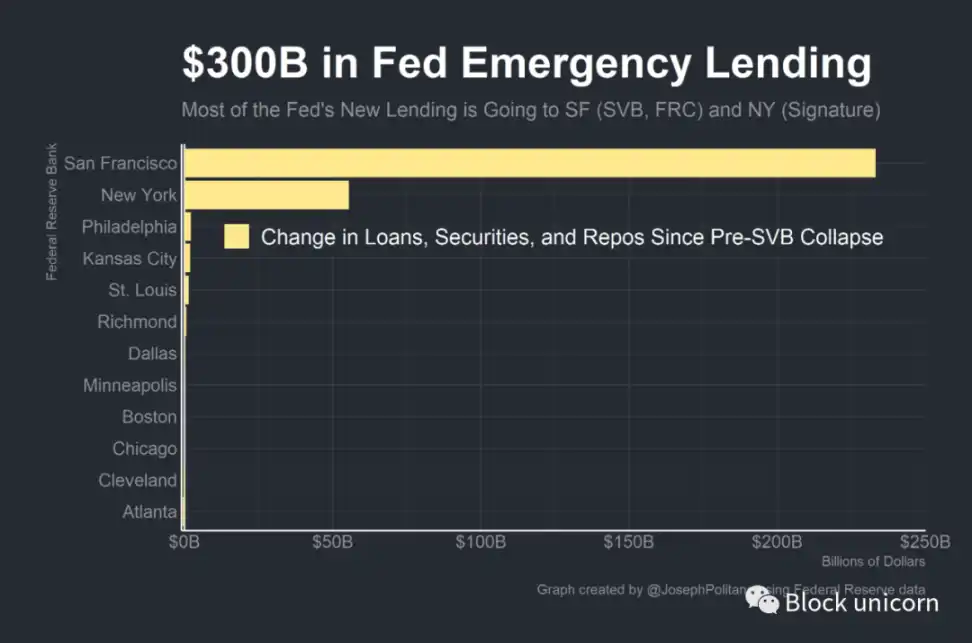
The Fed intentionally does not immediately release which institutions they are lending to and how much they are borrowing, but by looking at the total assets data of the regional Fed banks, we can get a rough idea of who is getting liquidity from the Fed. Looking at programs including discount window lending and BTFP funding, we can see that lending is not evenly distributed across the country, but is heavily concentrated in two Federal Reserve banks. The San Francisco Fed, which has jurisdiction over SVBS and First Republic Bank, saw its assets increase by $233 billion, while the New York Fed, which has jurisdiction over Signature, saw its assets increase by about $55 billion. This does not necessarily mean that all lending is concentrated in three banks, SVB (Silicon Valley Bank), Signature Bank, and First Republic Bank - several West Coast regional banks are also in trouble, and the New York Fed has been critical of many financial institutions that are not necessarily exclusively in New York (e.g. Most foreign banking organizations) have jurisdiction -- but it does mean that the crisis did not necessarily cause banks across the country to borrow from the Fed.
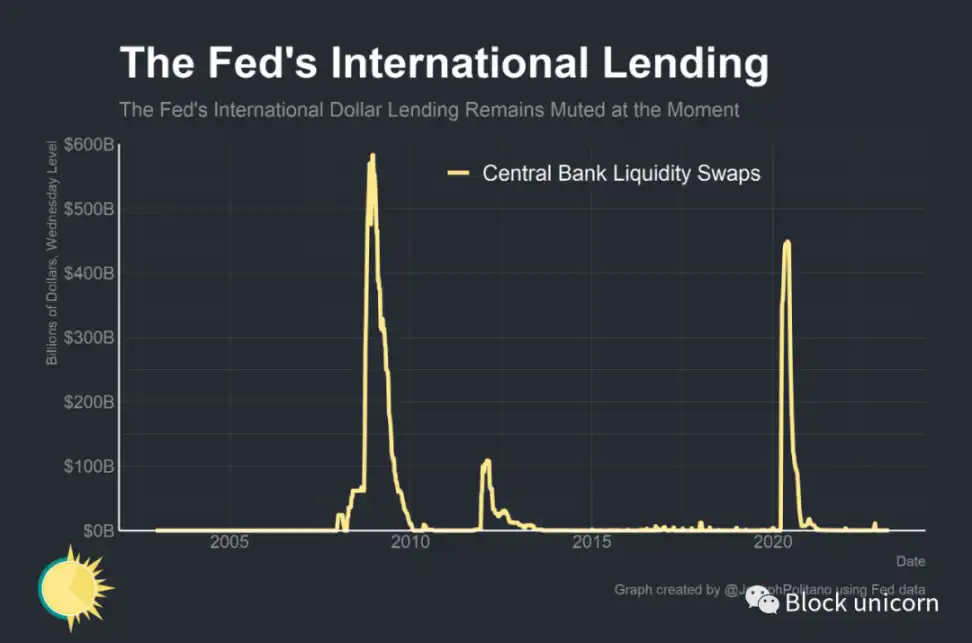
Borrowing through the Fed's dollar swap lines, which foreign central banks can use to make dollar-denominated loans to foreign banks, is also modest. While the recent weakness of foreign financial institutions such as Credit Suisse may soon require the use of swap lines, the current withdrawal of such lines means that the crisis has so far been largely contained within the US, with the main recipients of the Fed's emergency funds coming from US banks that borrow from the discount window.
Understand the new era of the discount window
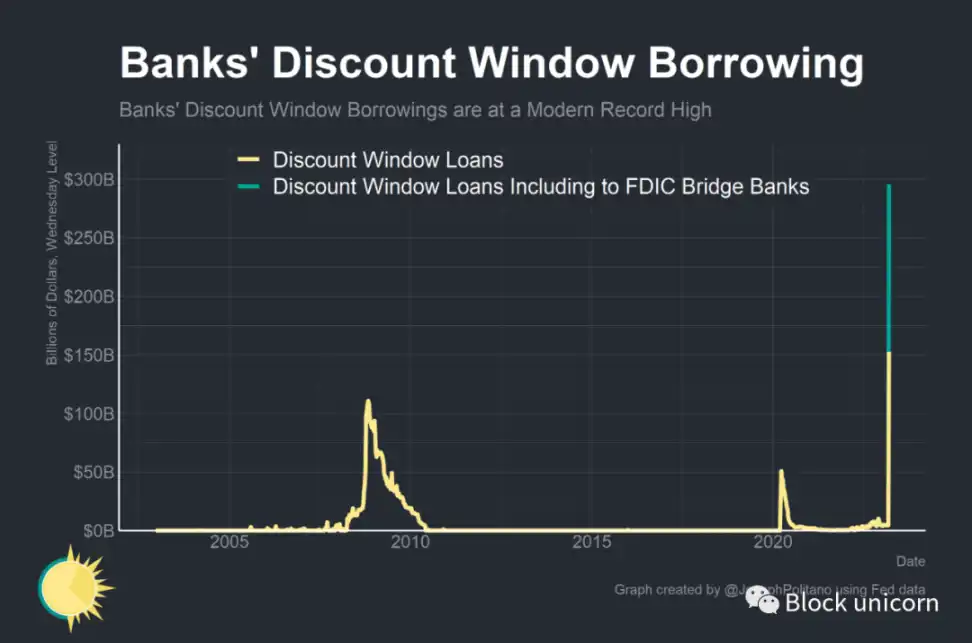
In many ways, the Fed was caught off guard by the collapse of the SVBS and the risks its aftermath posed to the banking system. Regulators have gone easy on smaller "regional" banks in the mistaken belief that their failure would not pose a systemic threat to the financial system, and the Fed believes it is not raising rates fast enough to destabilise the banking system. In a way, however, they were very prescient - the Fed has been trying to institutionalize discount window reforms aimed at improving financial stability in the wake of the early covid financial crisis. Today's unprecedented use of the discount window partly reflects the intended outcome of those reforms.
In the early days of the Fed, many institutions had largely borrowed from the discount window, making it more of a regular monetary policy tool than an emergency backstop for the financial system. By the late 1920s, the Fed had increasingly opposed the use of the discount window, arguing that over-reliance on it bred financial stability risks and that the tool was obsolete and ineffective in an era when the Fed set policy rates by injecting or removing bank reserves from the system. Each time banks borrowed from the discount window again, the Fed tightened its requirements, added surcharges or restricted lending more to push banks away from the window. This led to a serious problem - with the Fed strongly opposed to the use of the discount window, overall utilization was very low, and any bank that tried to borrow using the discount window in a true emergency faced great shame.
By borrowing from the Fed, banks are showing that they are in a truly desperate situation and have no other choice. If shareholders, creditors, depositors and even government regulators find out you used the discount window, they won't go easy on you - essentially a fireable crime for bank executives. The result is that even troubled institutions that are innocently stressed will choose to take unnecessary financial risks rather than turn to the Fed for help, making the entire financial system more unstable.
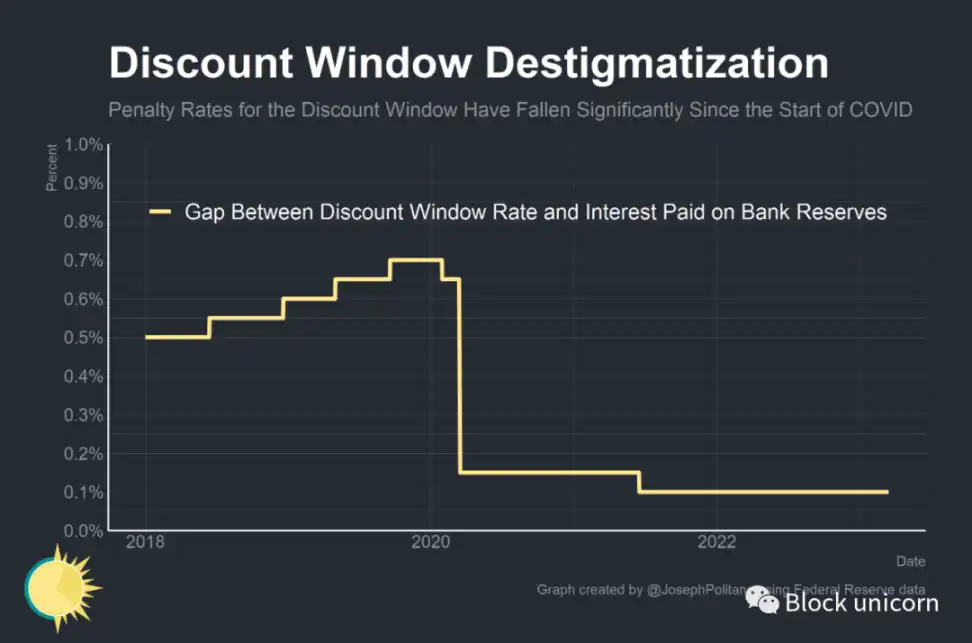
After the financial crisis in early 2020, the Fed made several reforms aimed at encouraging more banks to use the discount window and reducing the stigma of borrowing from the Fed. First, the maximum maturity has been extended from overnight to 90 days, allowing banks to lend longer and more flexibly. Second, the "penalty rate" charged for borrowing from the discount window has been sharply reduced so that the cost of borrowing from the Fed is no longer significantly higher than market rates -- as of today, the main discount window credit rate is just 0.1 percent higher than what the Fed pays on bank reserves. Compared to 0.7% before the pandemic. .
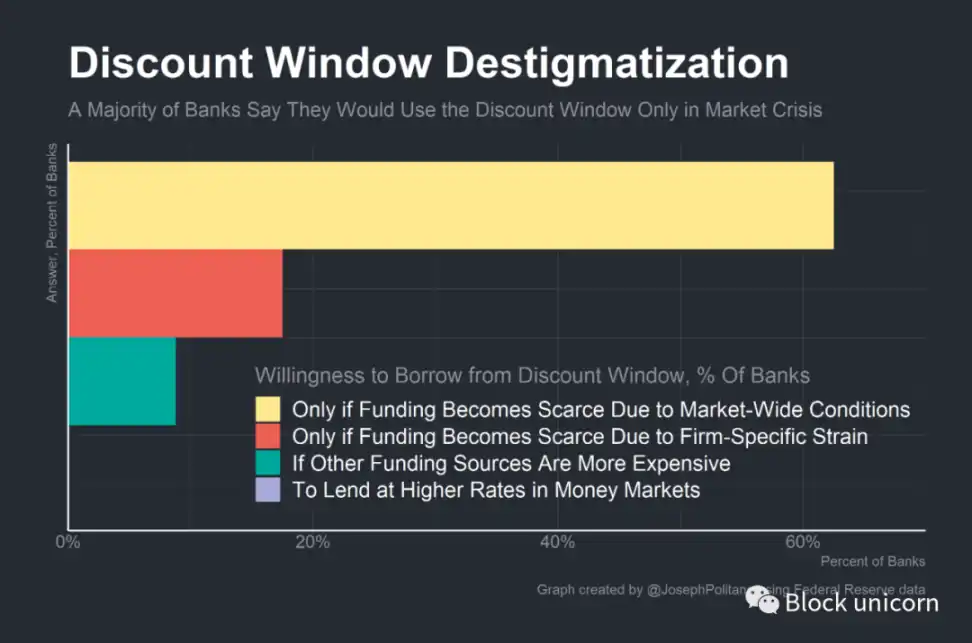
While discount-window use can cause a bank's creditworthiness to suffer, the effect of discount-window use has diminished since the pandemic -- more than 60 percent of banks said they would borrow from the Fed if market conditions made funds scarce, which was the case before March 2021, and before the SVB collapse, Banks often borrow billions of dollars from the discount window. Changes in the further easing of collateral requirements following the collapse of SVBS could encourage more banks to use the discount window and help reduce damage to creditworthiness. It is a bad sign for America's financial health that so many banks feel the need to use the discount window, but it is a good sign that they use it rather than trying to cope independently without the Fed's help.
Ironically, however, because of its association with the collapse of SVBS, BTPPS (term financing programs) may end up inheriting the discredited problem of the discount window. However, nbsp; The $11.9 billion in outstanding loans suggests that banks are not overly concerned about the image of borrowing from the Fed, a positive sign for financial stability. If impaired creditworthiness becomes an issue again, the Fed could try to resurrect or adjust the "term auction facility," a Great Recession-era program in which the Fed auctions off a set amount of mortgages to banks to prevent any financial institution from being exposed to impaired creditworthiness for asking to borrow from the Fed. However, the Fed may view continued use of the discount window as a sign that the system is working as intended for the time being.
conclusion
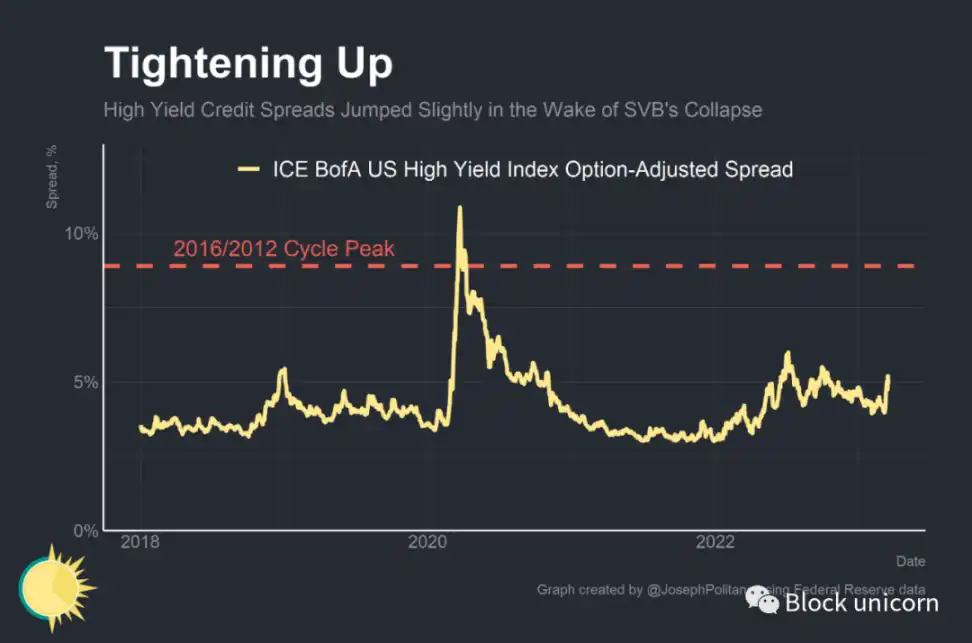
So far, the Fed's intervention has succeeded in preventing a catastrophic tightening of financial conditions -- while corporate bond spreads have increased markedly since the SVB failure, suggesting that borrowing conditions for major companies have become more difficult, they remain below recent highs in July and October. But this should not be misinterpreted as a sign that the crisis is over - First Republic, for example, had to take $30 billion in deposits from several other large banks, in addition to borrowing billions from the Federal Reserve. With several banks still at risk, it could take time for the Fed's emergency measures to stabilize the banking system.
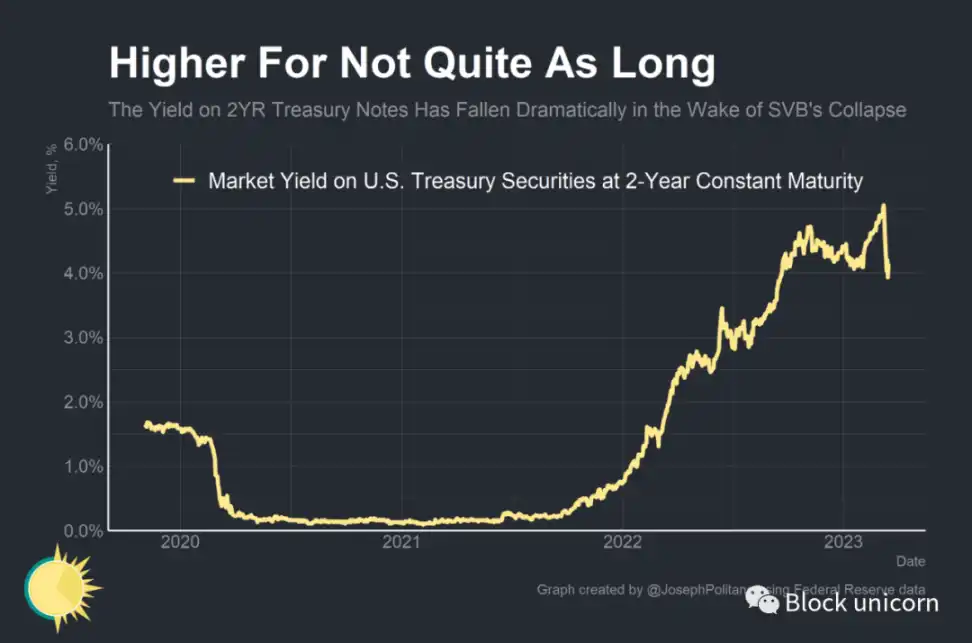
What is clear, however, is that the lingering effects of the SVB crisis have worsened financial conditions while also lowering expectations for near-term interest rates. Interest-rate futures markets on March 8 priced in a 0.5% rate hike at next week's FOMC meeting, the most likely. -- Today, they think there's a good chance there won't be a rate hike at all. Yields on two-year Treasury notes fell more than 1%. , has been swinging wildly in the past week. Banks are already pulling back on lending as economic forecasts have worsened - and the events of the past two weeks cannot have made them any more excited about future economic prospects. Whether the Fed's emergency efforts will be enough to restore confidence in the financial system will depend on whether banks can restore stability without creating a credit crunch big enough to bring down the US economy.
Original link
Welcome to join the official BlockBeats community:
Telegram Subscription Group: https://t.me/theblockbeats
Telegram Discussion Group: https://t.me/BlockBeats_App
Official Twitter Account: https://twitter.com/BlockBeatsAsia

 Related Articles