With crypto-friendly banks collapsing in a week, How can the crypto industry ease the liquidity crisis
Original title: Crypto-Friendly Banks Collapse in One Week, How the crypto Industry can Ease Liquidity Crisis
原文来源: R3PO
Original article by zf857.eth
Silvergate and SVB disrupt the crypto industry
After a tumultuous year, Silivergate Capital, the controlling parent of crypto-friendly Slivergate Bank, announced at the close of U.S. markets on Wednesday that it would wind up its operations in an orderly regulatory manner and voluntarily liquidate the bank's assets.
Silvergate's annihilation has spread to more traditional financial institutions, causing an even greater liquidity crisis. Last week, on March 8, one of the oldest cryptocurrency-friendly Silicon Valley banks, Silcon Valley Bank (SVB), announced it was in financial trouble. On Friday, California's Department of Financial Protection and Innovation announced that it had officially closed Silicon Valley Bank and that the Federal Deposit Insurance Corporation had been named receiver of the bank and taken control of its deposits. It marks the bank's official collapse, making it the biggest bank failure in the United States since the global financial crisis. The crisis also saw more small and medium-sized banks lose their footing in the Fed's rate hikes.
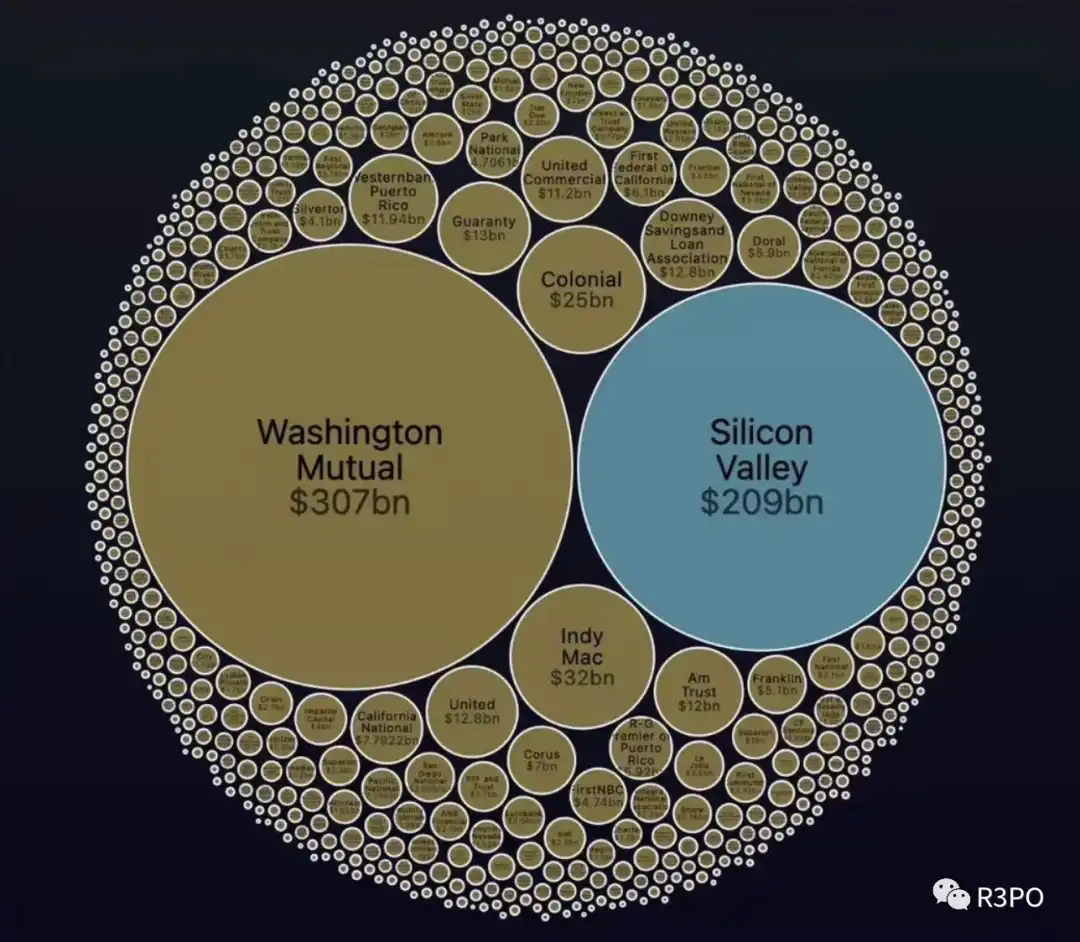
After the collapse of Silicon Valley Bank (SVB) caused global investor panic, many prominent blockchain venture capitalists (VC) held assets worth more than $6 billion in SVB. Despite the US government's intervention to promise Silicon Valley bank depositors their money back, the equity and debt values of crypto banking entities have been wiped out. On Nov. 16, Block.one and its CEO collectively owned about 16.8% of Silvergate and currently have a theoretical loss of over $70 million on their investment in Silvergate stock
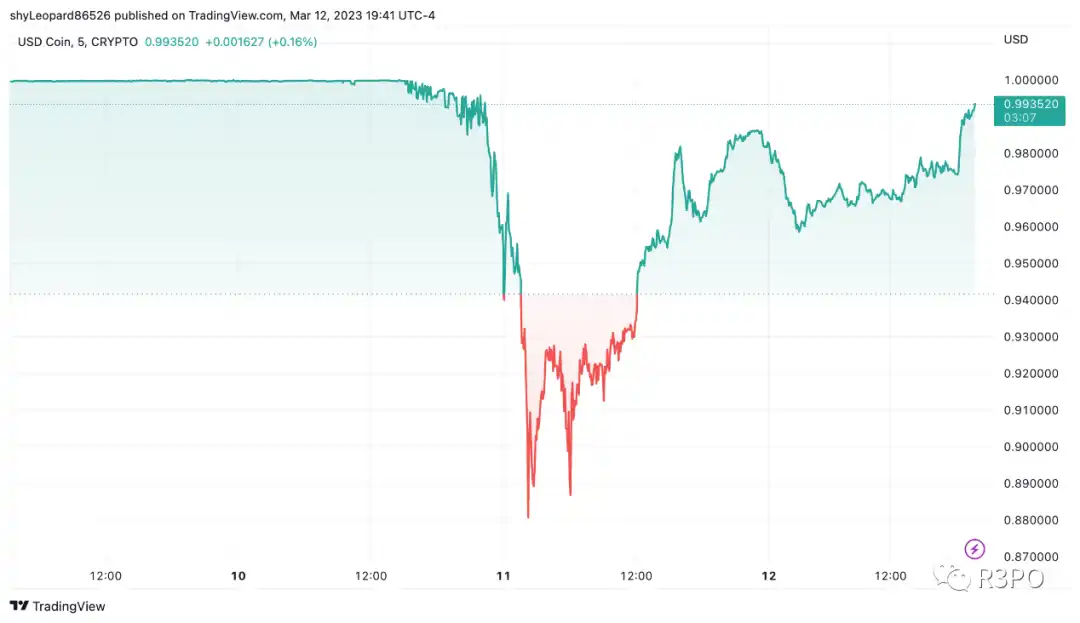
The annihilation of two federally insured members of the Federal Reserve system, SVB and Silvergate, has also caused many ripple effects in the cryptocurrency ecosystem, with a subsequent crisis of confidence, Uncertainty over USDC stablecoin issuer Circle's $3.3 billion deposit in SVB led to the decoupling of USDC over the weekend, reaching as low as 0.889.
R3PO article in JanuaryThe Death of Crypto-Friendly Banking, Silvergate Explodes and Abra SuffersIt's been analyzed and predicted and it says 2023 could be the end of more crypto-friendly banks.
Signature Bank -- the second financial institution to close after Silicon Valley Bank
The closure of Signature Bank, a regional bank based in New York, was announced by US regulators on Sunday evening, the US Treasury, the Federal Reserve and the Federal Deposit Insurance Corporation said in a joint statement: "We are also announcing a similar systemic risk exception for Signature Bank in New York State, which was closed today by its state-chartered agency."
Signature Bank has reduced its exposure to the cryptocurrency market in advance, but it has not escaped the crisis. As of February 1, 2023, it will no longer allow any cryptocurrency trading platform client to buy or sell less than $100,000, which is the same for all cryptocurrency trading platforms. The announcement confirms Signature Bank's commitment to reduce its exposure to the crypto market and will only handle transactions over $100,000 for Binance. In December 2022, Signature Bank also said that after the explosion of cryptocurrency trading platform FTX, it intends to cut up to $10 billion of customer deposits in cryptocurrency assets in a wide range of divestments in the cryptocurrency sector. In its quarterly filing on March 2, Signature Bank also reiterated that it does not currently lend against encrypted collateral, invest in digital assets or hold digital assets for any clients.
But why was Signature Bank still shut down by regulators? Back in January, the US Federal Home Loan Bank System (FLB) extended more than $13 billion in loans to two of the largest cryptocurrency banks, Signature Bank and Silvergate, to mitigate the impact of a liquidity crisis caused by a surge in withdrawals, according to the Wall Street Journal. The entity is understood to have lent Signature Bank nearly $10bn in the last quarter of 2022, making it one of the largest borrowing deals in the banking industry in recent years. In addition, Silvergate has received at least $3.6 billion in loans from the FHLBS. Thus, the liquidity crisis of these two well-known crypto-friendly banks was already on the horizon after the FTX explosion.
The cryptocurrency industry is Mired in a fiat liquidity crisis
The first point worth highlighting is the Silvergate Exchange Network (SEN), which plays a key role in facilitating non-blockchain money transfers between big investors and cryptocurrency trading platforms. Silvergate launched SEN in 2018, and the platform was rapidly adopted, with transactions reaching nearly $800 billion for all of 2021. Almost all major U.S.-based cryptocurrency exchanges became Silvergate customers and began moving money through the network. For cryptocurrency traders, the technology appears to have been a game changer, serving as a convenient bridge between traditional finance and the cryptocurrency ecosystem.
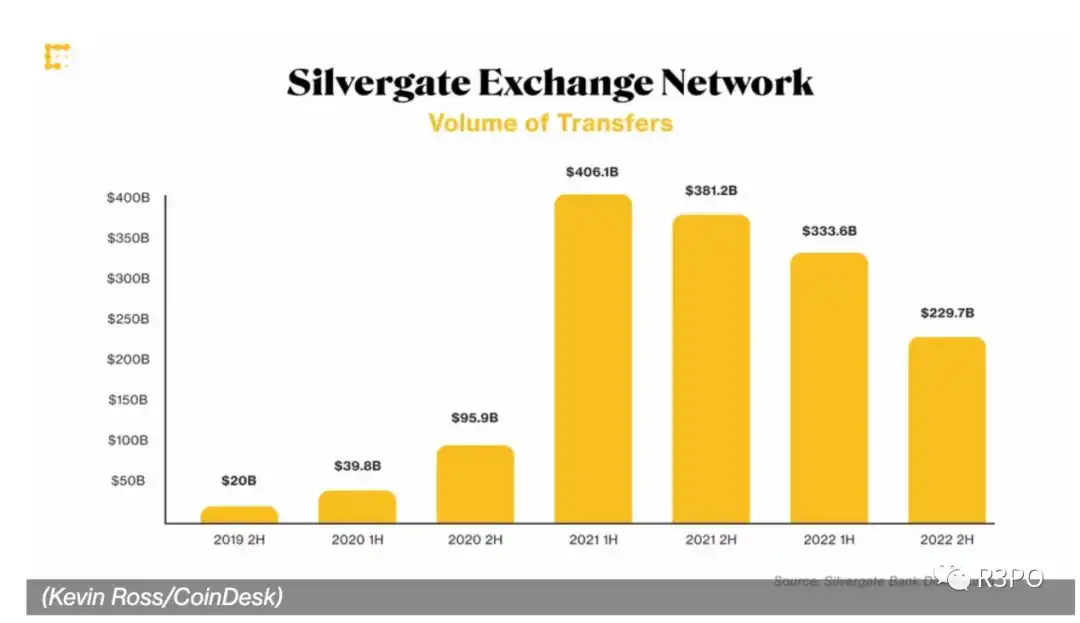
As Silvergate moved into voluntary liquidation last week, jpmorgan had predicted customers would migrate to Signature Bank's Signet payments network. Cryptocurrency companies can incorporate Signet networks into their platforms using application programming interfaces (apis). Yet Signature Bank is hardly immune.
Once again, the vulnerability of stablecoins was demonstrated when USDC, the lowest level of asset pricing infrastructure in the cryptocurrency industry, decouped. When people find that decentralized finance is still affected by centralized financial conditions and loses value, they are likely to consider increasing the pursuit of fiat money. But when the crypto industry lost Signature and Silvergate, two major crypto-friendly banks, crypto companies lost their main key access to fiat currency. With few options for fiat money coming in and out of crypto companies, and any new crypto company having a hard time getting new bank accounts, faco-cryptocurrency liquidity in the crypto industry will be severely limited until a new bank steps in.
R3PO believes that as the infrastructure of the nascent cryptocurrency market, the core value of the blockchain trading network is huge. The shutdown of the SEN platform and Signet payment network will undoubtedly cause further damage to the current tight liquidity of the cryptocurrency market. But it is certainly a potential opportunity for rival banks to step in quickly at this point to fill the void and take the lead in the cryptocurrency business. Currently, only Customers bank, Sygnum, and seba bank, deletc bank, and BCB are the only crypto banks in the United States.
The crypto industry actively rescued itself, and the crisis gave birth to life
Circle, the group at the centre of the controversy, issued a statement today saying: "100% of our deposits with SVBS are safe and will open for business tomorrow. 100% of our USDC reserves are also safe and secure, and we will complete the transfer of the remaining SVB cash to BNY Mellon. As previously stated, USDC liquidity operations will resume tomorrow morning when banks open for business. With the announcement tonight of the closure of Signature Bank, we will no longer be able to process mints and redemptions through SigNet and will instead rely on clearing from the Bank of New York Mellon. We will introduce a new transaction banking partner with automated mints and redemptions as soon as tomorrow. We are committed to building robust and automated USDC clearing and reserve operations with the highest quality and transparency."
"Despite the recent turmoil we've seen in the traditional banking sector, Coinbase continues to operate as usual," Coinbase said in a statement. "All customer funds continue to be secure and accessible at Coinbase, including the USDC conversions, which will resume on Monday. All customers' cash with the bank continues to be protected by FDIC pass-through insurance, and as the FDIC suspends Signature's transactions, we are currently facilitating all customers' cash transactions with other banking partners."
While the closure of Silvergate, as well as Signature Bank, two crypto friendly banks, has led to the crypto capital market going back to where it was before 2014 -- with no access to banking relationships for any new startup, cryptocurrencies have officially become unbanked. However, the regulatory failure and financial crisis of centralized financial institutions will stimulate more cryptographic original capital to rely on and believe in cryptographic original assets such as bitcoin. In the future, the blockchain industry will reduce its dependence on US dollar stablecoins, broaden the universality and stability of the blockchain payment network, and increase more payment scenarios directly using cryptocurrencies, so as to reduce its dependence on centralized financial institutions. R3PO firmly believes that there will be fully decentralized banks In the future, In Trustless we Trust.
Original link
Welcome to join the official BlockBeats community:
Telegram Subscription Group: https://t.me/theblockbeats
Telegram Discussion Group: https://t.me/BlockBeats_App
Official Twitter Account: https://twitter.com/BlockBeatsAsia

 Related Articles