CeFi, a star managing more than $30 billion in assets, has become a target for criticism.
Startup maniacs' Lehman Moment is Celsius
Original article by 0xergou, Deep Tide TechFlow
"Celsius Network has twice as many users as all DeFi combined... That's because we give 80 percent back to our community while Maker and other projects keep 50 percent for themselves."
A 2019 tweet from Alex Mashinsky, founder of crypto lending platform Celsius, provoked a backlash from DeFi enthusiasts, with one saying, "DeFi gives us total control over our money, yet the moment you go out of business we have no way to get our money back..."
DeFiPrime is directly removed from Celsius Network.
"We are taking Celsius Network down. An opaque company, a crazy CEO, this is a strong red flag, so we no longer recommend this product." "All CEFis should be removed from DeFi Prime," said AAVE founder Stani.

Nearly three years later, Celsius Network, which has grown into a crypto unicorn, issued a sudden notice suspending all withdrawals, transactions and transfers from its platform.
Celsius Network may seem strange to most Chinese, but the story of the founder and company has almost all the elements required by a legend:
A Ukrainian comes to America with $100 and turns into an entrepreneurial maniac, starting eight companies and creating three unicorns. Did VC, raised $1 billion, withdrew more than $3 billion, IRR 54%; Twice loss of assets due to theft; The arrest of former CFO Moshe Hegog; Porn stars are executives...
Now Celsius Network, once worth $30 billion, has reached a "Lehman moment" as a massive run on funds halted withdrawals. Where does the crisis come from? Can Mashinsky, the entrepreneurial maniac, turn things around again?
A madman Mashinsky
Mashinsky was born on October 5, 1965, in The Ukraine of the Soviet Union, and in 1972 moved with his family to Israel, where he spent most of his childhood.
As a teenager, Mashinsky used to buy and sell impounded goods at customs auctions at Tel Aviv airport and then sell them for high prices, demonstrating the potential of a brilliant businessman.
In college, Mashinsky studied electrical engineering at Israel's Open University and economics at Tel Aviv University, though he never completed his studies.
After three years in the Israeli army, Mashinsky conceived the idea of going to Europe to do something big. He chose Paris as his first stop, and soon became frustrated by "the lack of imagination in Europe." "Why not fly to New York and see what America is all about?"
With only $100 in his pocket, Mashinsky arrived in New York and took a bus to 42nd Street, where he made the same vow as any urban youth striving in a big city: he would never go back until he had achieved something.
In the US, Mashinsky embarked on a crazy entrepreneurial journey.
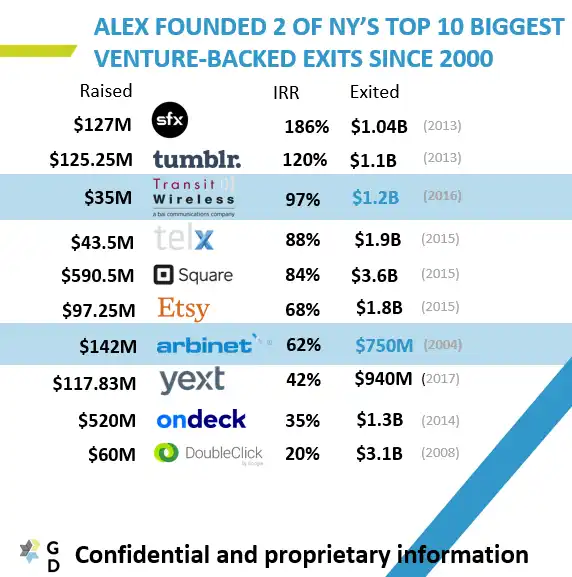
In 1995, Mashinsky founded Arbinet, a telecommunications company that provides operators and service providers with three international voice traffic services, including Skype, Facetime and Whatsapp.
After six rounds of funding, Arbinet raised more than $300 million from 12 VCS, and finally went public in 2004 at a valuation of more than $1 billion. In 2005, Mashinsky sold its shares and exited completely.
During this decade, Mashinsky wasn't content to be just one company.
In 1997, Mashinsky founded Comgates, a telecommunications software company that raised $20 million and was acquired by Telco Systems.
In 2001, Mashinsky started Elematics, a network virtualization company that raised $23 million and exited in 2004.
In 2003, Mashinsky founded Transit Wireless, a telecommunications company that used a network of distributed antenna systems and was later acquired.
In 2005, Mashinsky founded the ride-sharing app GroundLink, which was later acquired.
In a word, Mashinsky's entrepreneurial track record is that he founded two of the top 10 most successful venture-backed exits in New York City since 2000.
In addition to his entrepreneurial prowess, Mashinsky also started a VENTURE capital fund, Governing Dynamics, in 2004.
Governing Dynamics has raised over $1 billion, invested in over 60 companies, withdrawn over $3 billion, and achieved an IRR of 54%.
In addition to investing in traditional businesses, Governing Dynamics has also invested in blockchain. Perhaps convinced of its potential, Mashinsky launched Celsius Network, a cryptocurrency deposit and lending platform, in 2017. Its appeal comes from offering customers annualised interest rates of up to 18 per cent.
Celsius Network closed a $400 million funding round in October 2021, then expanded to $750 million, led by WestCap and Canada's second largest pension fund CDPQ, at a post-funding valuation of more than $3 billion.
This is Mashinsky's eighth company and third unicorn.
Celsius, the anti-bank encryption bank
Celsius may be a stranger to most of us in the Chinese world, but in the US and UK Celsius is CeFi, a household name with more than 1.7 million users and over $30 billion in assets under management.
When it comes to business models, Celsius is like a bank. The asset side uses a large amount of precipitation funds to earn income through loans and other forms, while Celsius makes profits from interest rate differentials at both ends.
How does Celsius Attract Customers to save money?
Narratively, Celsius tells an "anti-bank" story using a bank's business model.
"Traditional banks are failing and blockchain will disrupt Wall Street!"
- Banking is Broken
- Unbank Yourself
- Replacing Wall Street with Blockchain
- 99% vs. 1%
When it comes to advertising, Celsius says the same thing, but it's effective: Save in cryptocurrencies and get annual returns of up to 18%, with weekly dividends.
When a Crypto asset is deposited, the interest is calculated with this asset. For example, when a Crypto asset is deposited, the interest is collected with SNX.
C -Cel Reward a Crypto asset is selected as Celsius equal NT Cel, and the overall APY is higher.
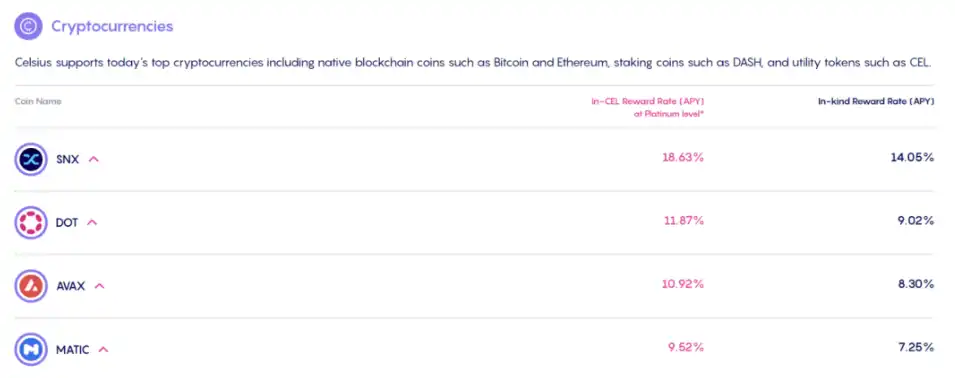
As a whole, Bitcoin yields 3% to 8%, Ethereum 4% to 8%, and USDT 9% to 11% on Celsius, so where does a risk-free return come from?
Lending business is of course a relatively stable business model, but faced with the problem of capital efficiency, not all funds are matched to generate income, low capital efficiency will lead to low APY, thus affecting the expansion of the liability side (absorption of reserves).
As a result, an unspoken rule of the industry is that, Celsius, BlockFi and other lending platforms tend to look elsewhere for revenue.
In the bull market of music carnival, it is not difficult to obtain "risk-free returns" through a variety of arbitrage strategies, such as GBTC arbitrage and contango arbitrage in the futures market, or even layer upon layer nesting, adding leverage to DeFi to obtain returns... In a bull market, this is a common behavior, after all, peers are doing this, rapidly expanding the size of assets, you do not do so behind the others.
However, the bull music has to stop.
When the opportunity for stable arbitrage disappears, Celsius has to resort to more exotic and riskier financial instruments in order to generate high returns for savers.
For example, Terra ecology's Anchor Protocol, Celsius, is the super whale on Anchor. It sends hundreds of millions of dollars of encrypted assets to Anchor before a thunderstorm, which becomes one of the last straws to break UST.
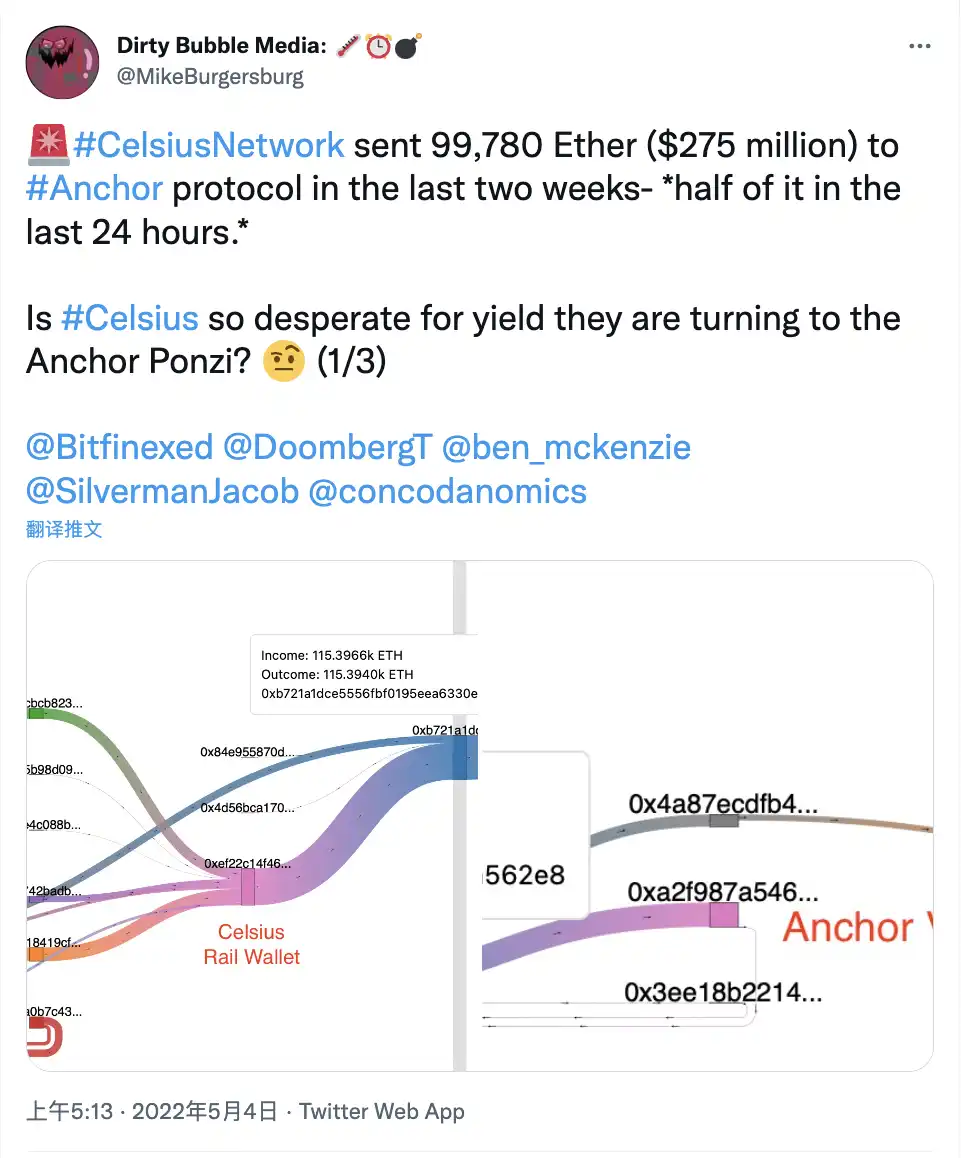
Second, Celsius promised depositors a return of up to 8% on their Ethereum deposits. To achieve this return, Celsius chose to swap a large number of ETH for ETH2.0 derivatives, such as stETH, to earn collateral income, which set the stage for today's liquidity crisis.
What happened to Celsius?
No matter Celsius or BlockFi, or years ago, the collapse of all kinds of banks business model companies is due to the liquidity crisis.There are several cases:
Losses on bad debts.
In fact, all banks will have bad debts, but as long as they don't break their bones, the problem is not particularly serious, depending on the size of the bad debts, the worst case is a huge deficit, insolvency.
Ii. Mismatch between current liabilities and non-current assets.
Generally speaking, the maturity of the debtor side is short, such as demand deposits; On the asset side, the maturity is relatively long, such as long-term loans, so as to obtain higher cash flow income. However, once black Swan event occurs, liquidity shortage will easily occur, and lead to asset selling and running.
Spreads are essentially compensation for the "bank" taking on liquidity risk.

3. Demand for withdrawal increases and liquidity decreases.
Financial markets need confidence most, both up and down the chain, and even traditional large banks fear runs because any bank will have liquidity mismatches.
Unfortunately for Celsius, it has all these problems.
If you have to say the trigger, the first is UST depeg.
Celsius had $535 million in Assets in Anchor Protocol before Nansen's on-chain data analysis confirmed Celsius was one of seven whale wallets that facilitated UST Depeg.
That is, Celsius fled before the UST completely exploded, probably without much loss of assets, but it severely damaged market confidence and caused a lack of confidence in Celsius.
More than 750 million us dollars were lost from May 6 to May 14 as funds began to withdraw from Celsius.
And then,Celsius two previous theft incidents were reported and fermenting.
Lost 35,000 ETH on Stakehound
On June 22, 2021, Eth2.0 pledged solution company Stakehound announced that it had lost more than 38,000 ETH private keys stored on behalf of its customers. After analysis on the number of ETH private keys stored on the chain, 35,000 of them were considered Celsius. Celsius kept the incident a secret and has yet to admit it.
The BadgerDAO hack lost $50 million
In December 2021, BadgerDAO was hacked and lost $120.3 million, more than $50 million from Celsius, including about 2,100 BTCS and 151 ETH.
A total loss of $120 million doesn't overwhelm Celsius's balance sheet. As a unicorn that has enjoyed a bull market dividend after raising $750 million in 2021, its cash flow position should be healthy, but it's not.
Celsius chose to expand into mining during the bull market, rushing to go public.
In June 2021, Celsius Network announced a $200 million investment in bitcoin mining, including equipment purchases and a stake in Core Scientific.
In November 2021, Celsius invested another $300 million in bitcoin mining, bringing the total investment to $500 million.
In May 2022, Celsius MiningLLC, a wholly-owned company of Celsius, secretly submitted a draft registration statement for forms-1 to the us securities and exchange commission (SEC) to begin the process of going public.
Mining is an investment project with heavy assets, high expenditure and slow return. It is difficult to withdraw funds quickly when funds are trapped. Of course, the harsh market environment does not support IPO with high valuation.
Celsius is experiencing a liquidity mismatch in the current volatile market environment.
Temperature allows asset redemption at any time, but many assets are not liquid. If a large number of depositors run out, Celsius cannot meet the redemption demand. For example, 73% of ETH is locked in stETH or ETH2, while only 27% of ETH is liquid.
Celsius developed a "HODL Mode" that bans withdrawals and requires more documents and requests to remove it. This is a message to investors that we are losing our grip, adding to the panic.

To cope with withdrawal and obtain liquidity, Celsius sold BTC\ETH and other assets on a large scale, and lent USDC and other Stablecoin assets through DeFi agreements such as AAVE and Compound.
Celsius had $594 million in collateral with AAVE as of June 14, more than $400 million of which was stETH, and a total of $306 million in loans.
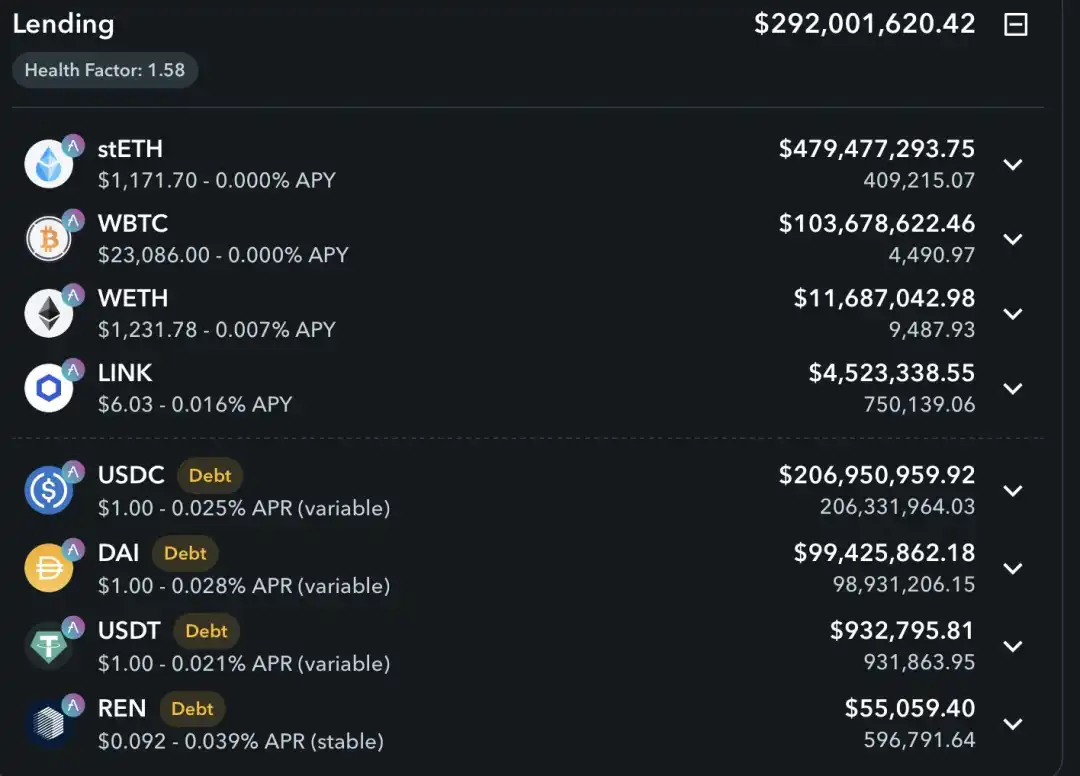
Celsius has more than $441 million in collateral on Compound and $225 million in liabilities.

On Maker, Celsius has assets of $546 million and liabilities of $279 million.
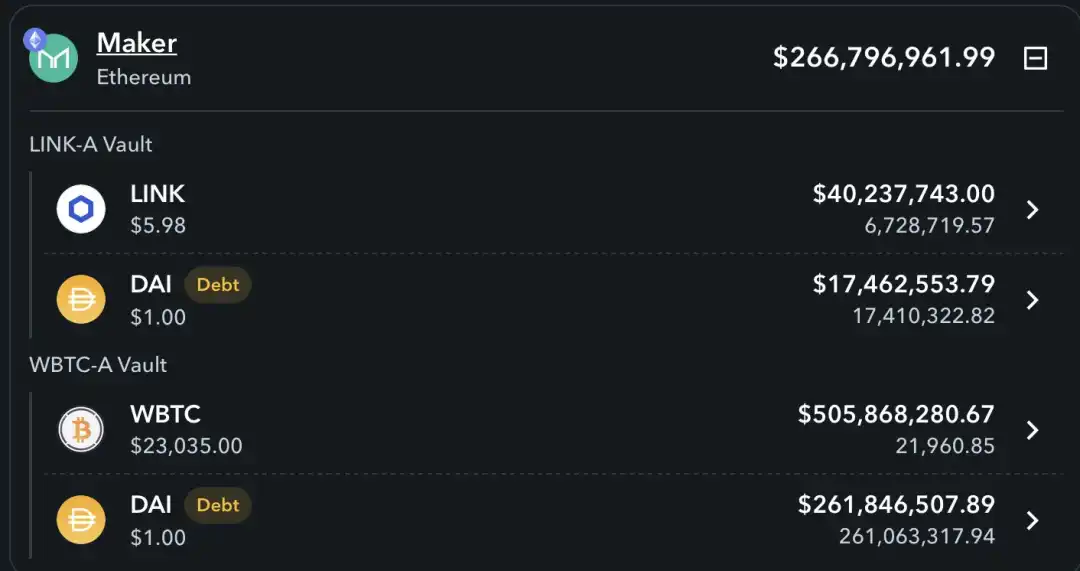
Mortgage rates look good, but they are dangerous.
When stETH dropped anchor and the price of ETH and BTC continued to fall, it had to increase its asset collateral. While the constant withdrawal demand would reduce its liquid assets, Celsius took the ultimate measure -- banning withdrawals, transactions and transfers.
In The dark forest of DeFi, Celsius is perceived as a transparent target, with hunters lurking in the shadows ready to pull the trigger, snipe at assets and clearing lines, and pick up bodies.
It's a terrible vicious circle.
Unable to obtain high yields - capital shortfalls - liquidity mismatches - run - mortgage assets - price falls - cover positions - continue to fall - continue to run...
While Celsius's balance sheet is still a black box, it may need to be saved by a white knight. Crypto lending platform Nexo tweeted that it could buy Celsius any remaining eligible assets at any time.
While some are counting on Celsius's early investor, USDT publisher Tether, Tether seems intent on distancing itself, saying Celsius's ongoing crisis has nothing to do with Tether and will not affect its USDT reserves.
Every round of bull and bear cycle transformation always experiences the pain of deleveraging, and there are always people or institutions who become the "price" to be sacrificed. After the collapse of LUNA's stable DeFi narrative, CeFi also faces the moment of narrative disillusionment.
Mashinsky, a crazy entrepreneur who hasn't had much of a rough ride in his life, may now have to bow his head and surrender to the market before the cycle.
All the gifts of fate, already in the dark bidding good price.
Afterword.
Nothing new under the world, now Celsius, look past, full of the shadow of China Mutual gold enterprises.
Wild growth in the era of excessive liquidity, with high yield as bait, crazy marketing to absorb reserves, expand the debt end, when the loan business can not meet the use of huge precipitation funds, crazy foreign investment, real estate, listed company debt, VC LP...
In order to pursue higher returns, assets sink to the second level, bad debts and capital mismatches become the emperor's new clothes, we turn a blind eye, one mind rushed to the listing bell ringing, writing life legend.
The music of liquidity will always stop that day, Buffett's famous saying is never out of date, only until the tide goes out, you know who is swimming naked.
It is important to be self-aware. Whether it is THE US stock market or Crypto, the winners will enjoy the Beta dividend after all. Most people's wealth comes from the cycle, not strength.
But do good, Revere the cycle!
The original link
Welcome to join the official BlockBeats community:
Telegram Subscription Group: https://t.me/theblockbeats
Telegram Discussion Group: https://t.me/BlockBeats_App
Official Twitter Account: https://twitter.com/BlockBeatsAsia

 Related Articles