How does co-ownership platform Lore drive the NFT cultural production engine?
Based on some NFT communities and web3 social clubs there are always sub-communities formed. These subcommunities are usually collections or groups of common interest with the same characteristics, and subcommunities often have a stronger consensus, a clearer mission statement, and a more ambitious cultural heritage. With this in mind, the new co-ownership platform, Lore, was born. What is Lore? What specific functions are provided for sub-communities and teams? BlockBeats has a brief look at this.
Lore: A new co-ownership platform
Lore, formerly known as Prysm, is a new co-ownership platform and a member-generated binding narrative that allows communities to form smaller sub-communities and squads to produce and consume culture in a web3 context, and to express or profit from it by consuming, curating, collecting and holding it.
Lore gives communities a deeper way to express their common identity - to strengthen ties and build new ones. Lore hopes that similar users will form groups around a certain atmosphere or interest, with members connecting, chatting, mimicking and building a shared language, ritual and culture that will allow communities and teams to pool resources or collect NFT on Lore. Simply put, Lore is a tool for buying NFT with friends, forming sub-communities and squads, pooling funds to buy NFT, and forming a culture within Lore.

Lore's smart contract wallet and vault technology based on Gnosis Safe provides a one-stop shop for managing the entire life cycle of a multi-member vault, from fundraising, adding members, tracking equity, coordinating transactions, member exit, allocation and more.
Users on Lore can quickly initiate transactions across any NFT marketplace, turning them into proposals that can be executed together. Lore supports many applications through WalletConnect, such as Safe and ApeCoin staking and some Dapps like staking have their own unique community dashboards on Lore.
A new engine of culture
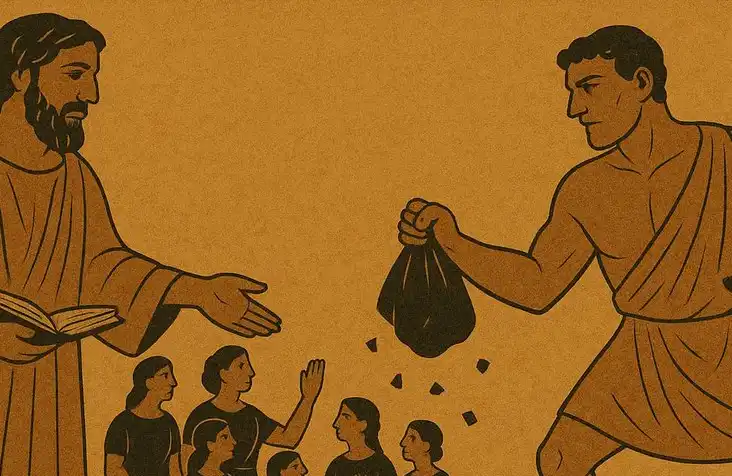
Lore argues that culture building in the past has been from the top down, with brands creating culture by mimicking a way of life. Early adopters contribute a lot of the building, but all the monetary rewards are earned by the brand, creating a new cultural supply chain: Brands export early products, early consumers buy, and early consumers inspire more early adopters. The birth of the NFT introduced a new mode of cultural production, rewarding early tastemakers and creators, and making culture grow from the bottom up. NFT transformed these early adopters into cultural engines, with artists, curators and creators in the community becoming new centers of cultural consumption and production. For example, a secret is an Internet-scale cultural program where subcommunities curate, collect, and create media to move the entire media world forward.

Lore believes that when Lore attracts more fans, the culture that the group owns and creates will increase in value and will attract more members to the community. As the community grows, it is stratified into smaller groups and squads that recombine central knowledge to create new subcultures, products, and brands. The Moonbirds community, for example, is divided into a number of feature-based 30-plus sub-communities that remix Moonbirds' central culture into a series of discrete cultural movements.

Community & subcommunity
Based on some NFT communities and web3 social clubs there are always sub-communities formed. These subcommunities are usually collections or groups of common interest with the same characteristics, and subcommunities often have a stronger consensus, a clearer mission statement, and a more ambitious cultural heritage. Lore, which allows communities of all sizes to manage repositories, provides a place for sub-communities to work together for economic activities, cultural production and other on-chain activities. Some typical communities and subcommunities include:
Birds Society started out with over 50 members as an offshoot of the Proof community, aiming to buy skelly Moonbirds and grow their brand. Their vault on Lore has grown to over 90 members and 150ETH assets, and through seven rounds of funding they have grown into an exclusive brand. The MVP69DAO started in Memeland's MVP community. They pooled their resources together to buy Potatoz, cast Captainz and even Quest. The Squallet is the FWB nft-general-chat's vault, affectionately known as the squallet (squad Wallet). Their mission is to support emerging culture, art and meme culture in the community of Friends with Benefits.
How can I create my own community using Lore?
Squads are more casual groups than communities and sub-communities, they may not have a formal mission statement, and interact online to pool funds to buy and mint NFTS and reap benefits together. Typical squad includes: 824 is a group of 16 Internet friends who get together to "make degen games", as their mission statement says, they have grown from 23 ETH to over 80 ETH in a few months.
The full life cycle of a team typically consists of creating a vault/wallet, getting started, and building a governance model with early members, followed by raising funds from the community, including raising ETH, ERC20, and even NFT.

After the collection is completed, the ownership of the vault and wallet is tracked. After having the funds and members, the task needs to be considered through which on-chain transactions to complete the task. At this time, the members propose transactions and vote on which transactions to make and execute. Then some simple methods are used to track holdings and value assets such as NFT with subjective value in a fair manner.

Publicize and publicize the team's achievements to attract new members and funding, while existing members may wish to quit or be allocated; Finally, the team will refine the mission, plan the next more ambitious governance and fundraising effort, and repeat the process.

Lore's development of the co-ownership framework allows groups to achieve any grants and missions that help fulfill the mission of the team and enable the team to grow throughout its life cycle. In addition to squads, Lore can also be used for one-time events that do not need to have a long term mission, but rather as long as there is a common goal, such as expected Mint, pledge NFT, or flip.

Lore already offers customized Access NFT to some of its partner communities, Include Proof, Friends With Benefits, Crypto Packaged Goods, Floor, HUG, Memeland, Techie Club, Black, etc. Lore users who satisfy the Lore application requirements can send a request for free Access NFT via Airdrop. NFT is also available on the OpenSea platform and does not charge any royalties.
Welcome to join the official BlockBeats community:
Telegram Subscription Group: https://t.me/theblockbeats
Telegram Discussion Group: https://t.me/BlockBeats_App
Official Twitter Account: https://twitter.com/BlockBeatsAsia

 Related Articles