From Frax/Yearn's LSD to leverage Staking to re-staking

原文标题:《 LSD 高阶玩法及其本质 》
Original article by CapitalismLab
ETH Staking incentives are relatively equal, so what's with all those high-staking LSD projects?
There's a famous saying: If you don't know where the revenue is coming from, you're the revenue.
From Frax/Yearn LSD to leverage Staking to re-staking. This article is all about what is needed.
Agreed asset incentive
First, let's analyze the revenue distribution system of Frax/ frxETH, with the revenue sources highlighted in yellow:
FXS Token incentive means that the equity of Frax Finance is directly stimulated to frxETH Pool
Frax-controlled vlCVX/veCRV voting indirectly excites CRV/CVX to frxETH Pool
ETH Staking incentives
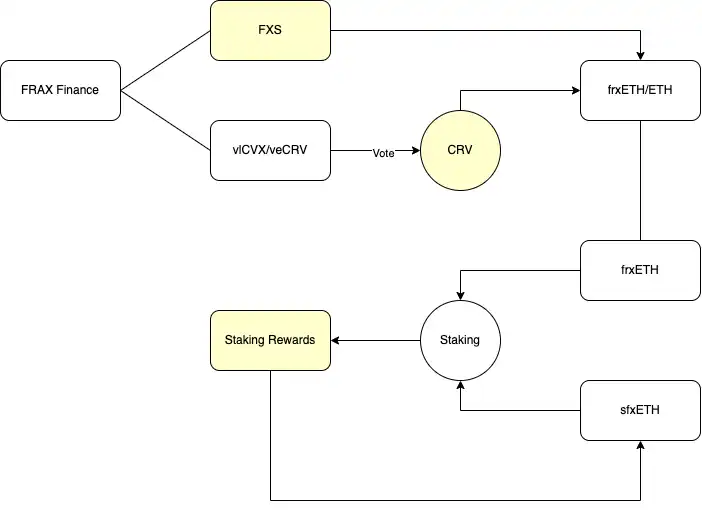
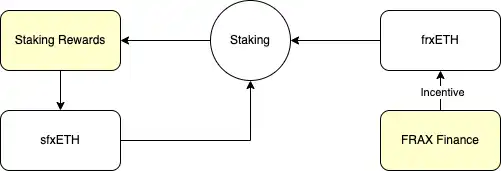
Whether direct or indirect, Frax Finance is essentially the incentive, but the form and packaging is different. So if we simplify this graph, it is very clear that the revenue source and distribution are:
Frax Finance agreed assets/agreed revenues incentivize frxETH
Both frxETH/sfrxETH are Staking and sfrxETH is staking
sfrxETH eat "two portions" Staking and staking, and the APR will be high
Similarly, let's analyze yETH that Yearn recently:
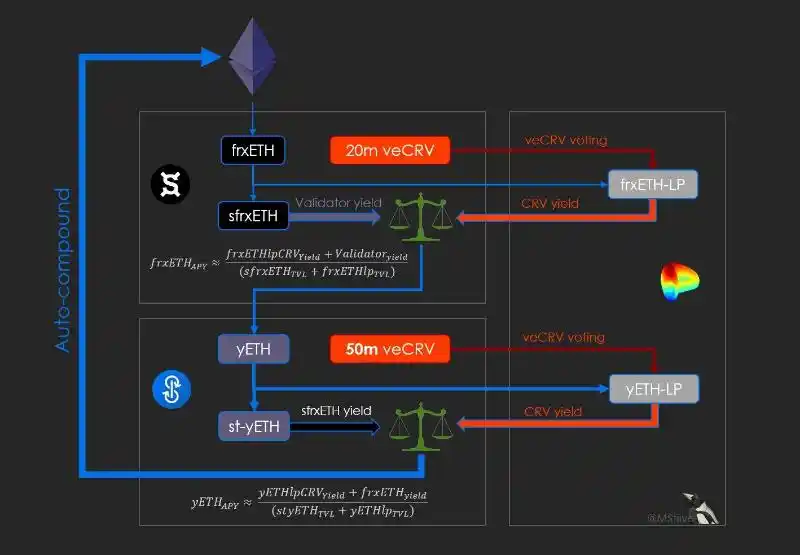
To simplify it too, at a glance the source and distribution of income are:
Assets that Yearn Finance incentivize liquidity thus indirectly incentivize yETH
All sfrxETH proceeds from both yETH/st-yETH go to st-yETH
It's important to note, however, that the so-called "contract assets" here are not just owned by Yearn exchequers, but may also include voting rights that Yearn to shift from yCRV products
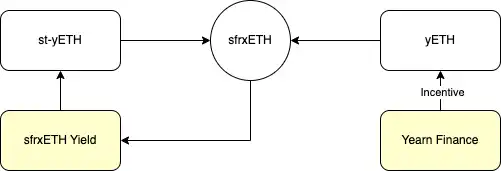
Yes, frxETH/st-yETH excess income source is the agreement assets in direct or indirect subsidies!
Oh, isn't that an infinite set of dolls? but
Agreement assets have opportunity costs. For example, vlCVX/ veCRV itself can be used to earn bribes.
If the agreement is not air currency, it needs to be enabling, such as revenue sharing. After reaching a certain scale, the subsidy and the sharing are close, then the excess returns will no longer exist.
So what's the point? It is expected that LSD will erupt after being upgraded in Shanghai. According to the following tweet, LSD is bigger and has a moat, so take advantage of this to expand the scale and grab the tickets, and then there will be considerable profits.
Related reading:The story of Lido: Value, growth and Moat Shanghai upgrade, liquidity pledge track battle in sight
Are excess returns sustainable?
The increase of pledged assets/negotiated assets will undoubtedly dilute the excess return. If negotiated assets are rising relative to ETH due to reasons such as price, it will prolong the process, and vice versa. In other words, this pattern is obviously reflexive. Therefore, although this model is subsidy in nature, elaborate and complex packaging is also necessary. Through more wonderful narrative, the value of the agreed assets can be increased, thus promoting the positive spiral.
To simplify it, the source of income is both the negotiated asset and the underlying asset, so the asset classes at both ends could be more diverse, right? Staking bestLSD is an staking project that calls itself staking on both the staking and underlying assets. Staking is somewhere from GMX/GLP to CRV/CVX/Velo, somewhere from AMM LP to Barre, all staking on both sides to drive up earnings.
Related reading:A thread about bestLSD
While this may seem a bit wild, it is a reminder that agreements to hold any other interest-bearing asset besides CRV/CVX are currently up for grabs. The bar for this is low and will likely be steep in the future. So it "s another use case for GLP and gDAI, gud!
Spread arbitrage
As for making leverage by staking a loan agreement and increasing profits, staking is essentially spread arbitrage. See this tweet below. While it appears that depositors are being arbitraged at a loss, borrowers are also taking on additional LSD protocol risk and liquidity risk. The loan agreement acts as a conduit for passing the interest rate on the pledge to the original asset.
Related reading:The loan agreement will be the biggest hidden winner after ETH Shanghai upgrade
Get another job
Re-staking. An unprofessional statement stating that third parties are staking the ETH staking staking staking.
Networks, applications need to operate need nodes and so on to ensure security
There's a price to pay for doing bad things like nodes
So let him put up a security deposit, and he'll forfeit it
Staking is capital efficient. ETH Staking is an staking staking staking
Someone else is Staking an asset. Someone else is staking
You do node to the third party, and then play a job, the third party will naturally give you wages
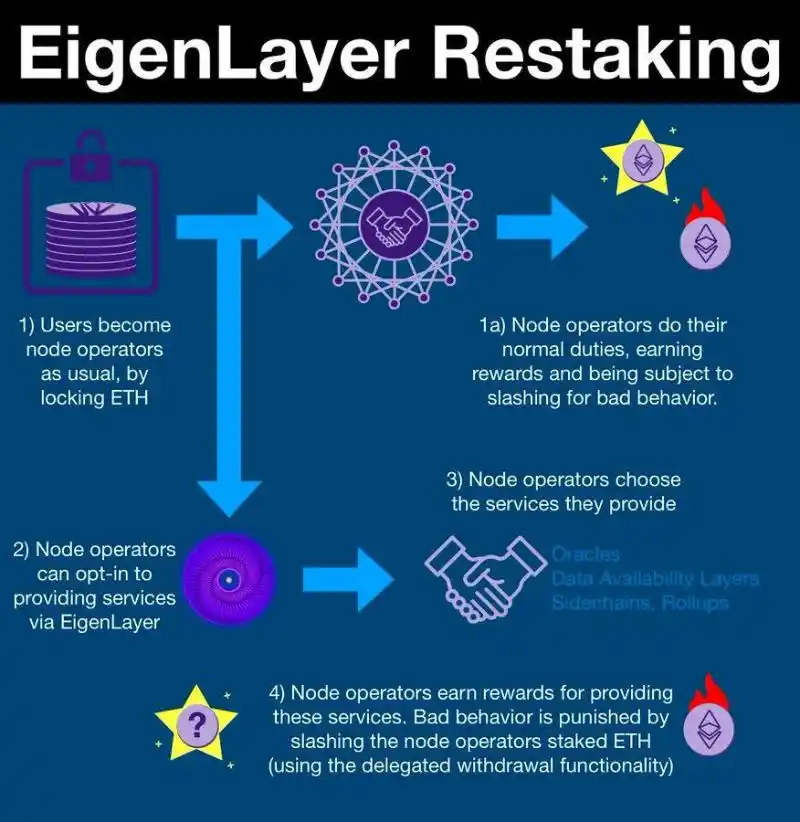
To sum up, negotiated asset incentives, spread arbitrage, and taking a second job are the three sources of excess returns. It must be emphasized that complex play brings more risk, so it is necessary to assess whether excess returns can cover the increased risk. After all, whatever source of returns may eventually become a source of income for scientists.
LSD's originally involved interacting with offline entities such as Validators, which are relatively "heavy" work, but the higher level gameplay above, which operates by wrapping LSD assets, translates into relatively "light" work, where the barriers to entry are obviously lower and more varied than traditional LSD's. It's worth keeping an eye on, so keep an eye on the frog seeds @NintendoDoomed Thank you meow for continuing to parse LSD meow for you.
Original link
Welcome to join the official BlockBeats community:
Telegram Subscription Group: https://t.me/theblockbeats
Telegram Discussion Group: https://t.me/BlockBeats_App
Official Twitter Account: https://twitter.com/BlockBeatsAsia

 Related Articles