Ordinals protocol controversy: Is it OK to post an NFT on the Bitcoin blockchain?
Title: Interpreting the Ordinals Protocol Controversy: Is it OK to post an NFT on the Bitcoin Blockchain?
原文作者: Jordan,PANews
Reference: Cointelegraph & forkast
Bitcoin is currently the world's largest cryptocurrency blockchain, but there is one use case that is rarely seen on the Bitcoin chain: NFT. NFT, or non-homogeneous tokens, is one of the hottest use cases on the Ethereum blockchain, generating over $36 billion in on-chain transactions to date. However, some crypto practitioners are hoping to change this dynamic and have launched a new protocol. Surprisingly, the idea of building an NFT protocol on top of Bitcoin has caused a backlash from the community.
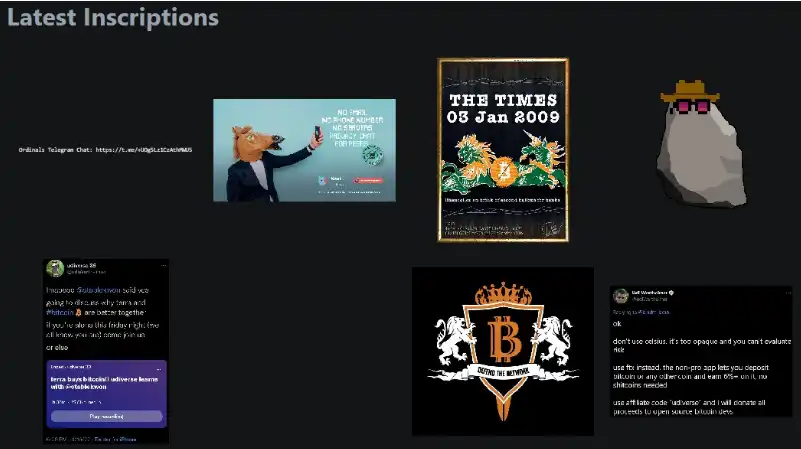
On January 30, Ordinals, an NFT protocol created by software engineer Casey Rodarmor, was launched on the main Bitcoin network, The protocol allows users to create bitcoin versions of NFT -- described on the Bitcoin network as "digital artifacts" that support content in JPEG images, PDF, video, or audio formats. Like many NFT projects on the Ethereum chain, these "digital artifacts" will be cast on the Bitcoin network.
The casting of NFT on the Bitcoin chain has sparked controversy
Casey Rodarmor, creator of the Ordinals protocol, explains that the protocol's NFT is created by writing anything on "satoshi" (the original Bitcoin network currency).
根据 Ordinals 协议文档描述,所有被写入 NFT 内容的「satoshi」都可以被保存或被转移到其他比特币地址,交易会在比特币区块链上显示铭文内容,这些内容与「staoshi」有着千丝万缕的联系,Ordinals 协议会将这些内容变成一个不可篡改的「数字工件」制品,并且允许用户追踪、转移、储存、购买、出售。铭文将在比特币主网上铸造,不需要侧链和其他 Token ——简而言之,用户可以通过 Ordinals 协议将大量「数据/内容」插入交易中,包括在网络上创建可收藏的「图片」。
Normally, the NFT protocol/project is launched on the Ethereum chain with a wave of community attention and transactions, but after the Ordinals protocol was released, controversy erupted in the Bitcoin community, with some arguing that the NFT protocol could provide more financial use cases for bitcoin, Others say it deviates from Nakamoto's vision of Bitcoin as a peer-to-peer cash system, and that NFT could take up block space on the Bitcoin network, driving up transaction fees. In addition, the "opponents" of Bitcoin NFT also argue that the NFT avatar is a privileged status symbol that only wealthy investors have access to, and that a large increase in network fees will inevitably exclude more people from the Bitcoin network, which will not promote the adoption of encryption.
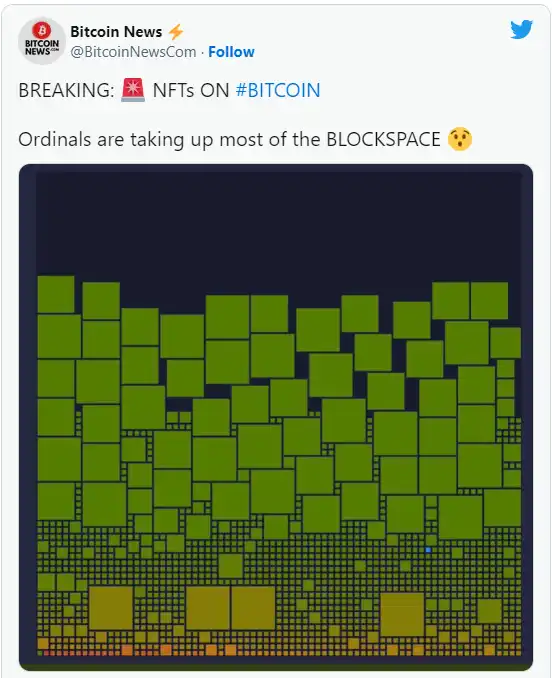
Former Kraken executive Dan Held, one of the backers of the Ordinals protocol, said that while the NFT protocol would increase the demand for bitcoin block space and raise transaction fees, it would also create more financial use cases for bitcoin. "If you pay a transaction fee, it's a" junk "transaction, Bitcoin is license-free and doesn't prevent anyone from BUIDL on the Bitcoin chain in any way."
Moreover, with the launch of SegWit in 2017 and Taproot in 2021, today's Bitcoin is more than ready for a protocol like Oridinals to extend NFT capabilities over the network.
Breaking Ethereum's NFT monopoly?
NFT is seen as an important part of reimagining the Web3 Internet, with games, social media and financial services all available through NFT. But the problem is that NFT has long been "commandeered" by Ethereum, a blockchain that already owns about 70% of the value of NFT sales.
For quite some time in the past, many blockchain networks (Cardano, Solana, Polygon, etc.) have been labeled "Ethereum killers" and want to take a bite out of Ethereum's market share in Web3 or NFT, but so far the results have not been obvious.
Yehudah Petscher is the NFT relationship strategist of CryptoSlam, a blockchain data aggregation service platform. He believes that bitcoin blockchain can completely break Ethereum's NFT monopoly through its "historical advantages". "Bitcoin has been around longer than any other cryptocurrency, And it has a huge user base, so in terms of adoption, Bitcoin can compete with Ethereum more quickly in the NFT space than other blockchains."
Still, Ethereum has a lot going for it right now. Due to the early exploration of NFT use cases, a number of NFT tools have been created on the Ethereum platform, and Ordinals is currently just an NFT protocol on the Bitcoin network.
What's the next step?
According to Dune Analytics, the Ordinals protocol has struck more than 1,000 NFT since its launch, setting a single-day record of 420 on Thursday. The average transaction fee on the Bitcoin network hit $1.53 on the same day, the highest since Dec. 27, 2022. According to Hashrate Index data, when Ordinals launched on January 21, the highest percentage of online transaction fees as a percentage of miners' block awards was 2.1%. But that figure rose to 3.44 percent on Jan. 24 and 3.86 percent on Thursday.
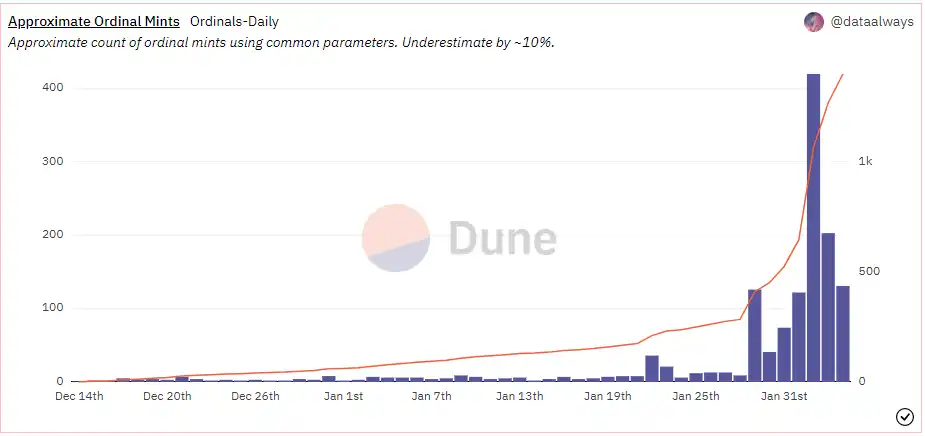
The numbers don't lie, and higher transaction fees are indeed a side effect of NFT's addition to Bitcoin's main network. Bitcoin transaction fees depend on the amount of data in the transaction and the speed at which users wish to complete the transaction. Once network traffic increases, users who want to prioritize transactions pay more to facilitate their transactions to be confirmed earlier.
However, the real change Ordinals brought to the Bitcoin network may not just be creating new types of digital collections, but proving that developers can "BUDIL" on the oldest blockchain and change market dynamics. While bitcoin maximalists have stuck to Satoshi Nakamoto's original vision of a peer-to-peer digital currency, Ordinals has certainly made the bitcoin network more practical.
Technically, NFTS are also financial assets, and Bitcoin is perfectly capable of supporting such assets to grow exponentially on its network, even at the risk of driving up regular transaction fees. What's more, the added effect of using BTC to trade NFT could also raise the price of BTC further, meaning that both miners and long-term holders could benefit.
Overall, the Ordinals protocol is a positive development for the Bitcoin network. It is up to the community and users to decide whether BTC will always be a "peer-to-peer digital currency", and limiting Bitcoin use cases is unrealistic. In fact, Bitcoin has been explored and experimented with since its inception, otherwise there wouldn't be a two-tier solution like the Lightning Network -- after all, in a decentralized world, nothing is impossible.
Original link
Welcome to join the official BlockBeats community:
Telegram Subscription Group: https://t.me/theblockbeats
Telegram Discussion Group: https://t.me/BlockBeats_App
Official Twitter Account: https://twitter.com/BlockBeatsAsia
 Related Articles