Bankless comments on Bitcoin Inscription: Exploring NFT innovation in Bitcoin
The Bankless Guide to Ordinals
Author: Bankless
Translation: Luccy, BlockBeats
Editor's Note:
With the introduction of the Ordinals protocol, the Bitcoin ecosystem has undergone a revolutionary change. In this market cycle, Ordinals has not been smooth sailing, from its birth to Bitcoin Core developers proclaiming "fix the inscription" and tokens skyrocketing or plummeting.
The challenges caused by inscription casting have sparked widespread discussions about the future direction of Bitcoin. Bankless reviews the design principles and adoption of Ordinals, pointing out the opportunities and risks faced by the Bitcoin ecosystem in the face of challenges. He believes that in the future, the development of the Ordinals space and its impact on Bitcoin and the wider crypto economy are worth paying attention to. BlockBeats translates the original article as follows:
The core feature of the Ordinals system is the ability to engrave any data on the blockchain. That's why the term "inscription" has recently become synonymous with "Bitcoin NFT" or "Ordinals-style NFT".
This engraving process is accomplished by including data in Bitcoin transactions. Specifically, the data is placed in the transaction witness, which is a part of Bitcoin transactions and typically includes signatures and other authorization proofs.
The data engraved here can be diverse, ranging from simple text to images, SVG, or even HTML. Once the data is engraved and the transaction is mined, the inscription becomes permanently existent. Its security, immutability, and decentralization are the same as other data on the Bitcoin blockchain. This means that once engraved, a satoshi will always carry its data, always distinguishing it from other satoshis.
In addition, thanks to the Ordinals theory, we can track the circulation and ownership changes of an engraved token in different transactions and time periods. This allows us to trade, give away, or sell these engraved tokens just like any other Bitcoin transaction. However, special care must be taken in transactions (coin control) to ensure that specific engraved tokens are correctly transferred, as Bitcoin transactions typically do not distinguish individual tokens.
Ordinals on the chain
For the sake of flexibility and practicality, many NFTs on Ethereum store their art and metadata off-chain, for example, stored on storage networks like IPFS instead of directly on Ethereum. This is because the cost of storing on-chain on Ethereum is high, in addition to its narrow data limitations.
Compared to Ethereum NFTs, each Ordinals coin is completely on the Bitcoin chain thanks to the way underlying data is stored in transactions, and the storage cost is much cheaper than on-chain Ethereum NFTs. Although they lack advanced smart contract functionality, they have the best permanence and cost ratio in the current NFT field.

BRC-20
Ordinals has driven the popularity of creating 1/1 NFTs and NFT collections on Bitcoin. However, the top-level Ordinals itself has also welcomed BRC-20, an experimental and unofficial interchangeable token standard built through inscriptions.
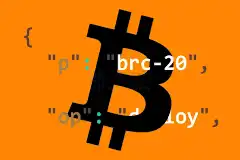
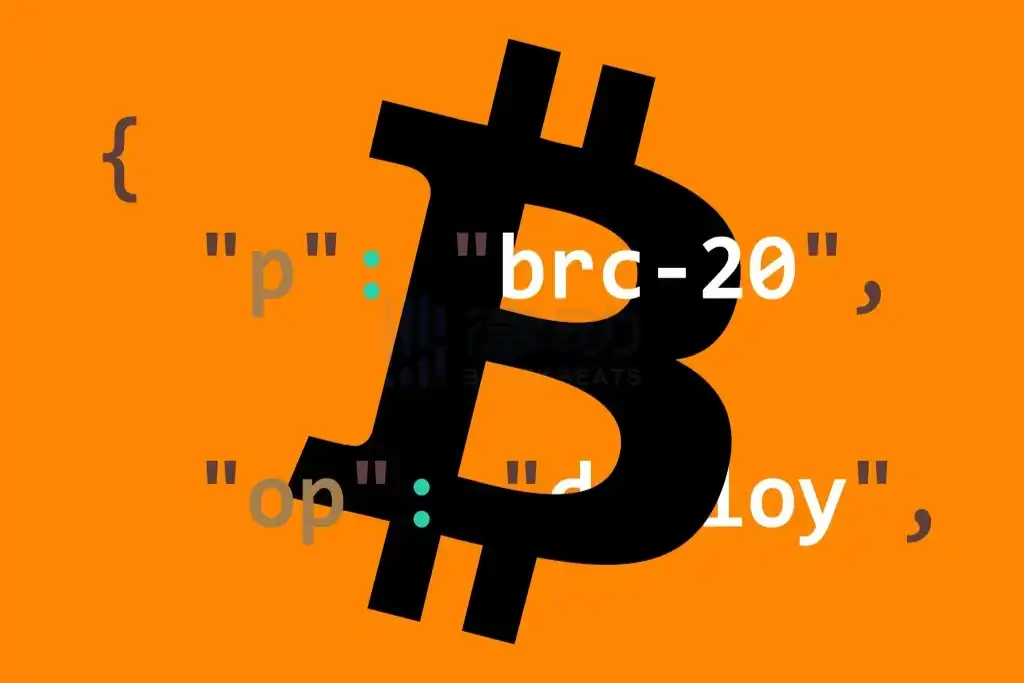
BRC-20 is not like Ethereum's ERC-20, which is based on smart contract tokens, and they are not completely interchangeable. They are created by engraving fragments of JavaScript Object Notation (JSON) text into Bitcoin NFTs. This JSON contains basic information about the token, such as maximum supply and token identifier. For transfers or trades, an additional NFT is engraved to track balance adjustments in batches, such as 100 tokens, 500 tokens, 1,000 tokens, etc.

In recent months, BRC-20 tokens have rapidly risen in popularity, with $ORDI becoming the first token in the cryptocurrency economy to break the $1 billion market cap.
Rare sats
The Rare Sats triggered by the Ordinals protocol have brought a new level of cognitive awareness to Satoshi.
The core of understanding Rare Sats lies in Rodarmor Rarity Index, named after Casey Rodarmor, the founder of Ordinals. This index categorizes them into different categories based on the uniqueness and scarcity of each Satoshi. These categories range from the most common, which make up the majority of Bitcoin supply, to the mysterious, including the first Satoshi mined in the Bitcoin genesis block.

This index also identifies other important categories, such as unusual, rare, epic, and legendary tokens, each with its unique features and maximum supply, typically related to key moments on the Bitcoin timeline, such as mining difficulty adjustments and halving events.
除了这些类别之外,还有其他独特类型的聪具有历史意义,例如 Pizza Sats、Palindrome Sats、Block 9 Sats 等,每一种都是为了纪念比特币历史上的特殊时刻或模式。例如,Pizza Sats 是为了纪念比特币历史上已知的第一笔购买实物商品的交易,而 Palindrome Sats 则具有引人入胜的数字对称性。
Translation:Aside from these categories, there are other unique types of satoshis that hold historical significance, such as Pizza Sats, Palindrome Sats, Block 9 Sats, etc. Each one is created to commemorate a special moment or pattern in Bitcoin's history. For example, Pizza Sats are named after the first known transaction where Bitcoin was used to purchase a physical item, while Palindrome Sats have fascinating numerical symmetry.
The growing obsession with Rare Sats has given rise to the practice of "Sat Hunting", which transforms ordinary satoshis into highly sought-after collectibles, creating one of the latest niche markets within the NFT ecosystem.
Top-tier Ordinals Market and Wallet

To create and transfer Ordinals and BRC-20, you need a wallet that can recognize and manage engraved tokens. Some popular wallets in this regard include:
· Xverse - "Bitcoin wallet for everyone"
· Leather - "Entering the Bitcoin Economy"
· OKX - "Your Web3 Portal"
Once you are ready to use your wallet, you can start browsing popular Ordinals markets to see if there are any NFT listings or BRC-20 tokens that catch your attention. Some of the largest markets include OKX's Ordinals Market, Magic Eden, and Gamma.
Ordinals
(This content contains HTML tags and English characters, so it will not be translated. The text will be returned as is.)
In 2023, with the introduction of the Ordinals protocol by Casey Rodarmor, the Bitcoin community began to address the surge in Bitcoin NFT minting. This protocol promoted a method of converting individual satoshis (the smallest denomination of Bitcoin) into non-fungible digital art.
It is worth noting that the Ordinals protocol has been mocked by some "old-school" Bitcoin supporters, similar to their opposition to the Counterparty NFT based on Bitcoin being considered spam in 2014. Their argument is that Bitcoin should only ever be used for payments.
Compared to that, senior members and new generation creative experimenters in the Counterparty industry believe that the Ordinals method may have a revolutionary impact on the Bitcoin NFT scene. Most importantly, these new NFTs are pushing up transaction fee revenue for Bitcoin miners, finding an alternative direction for the gradually decreasing block rewards in the future.
Enlarge Perspective
The introduction of Ordinals not only diversifies the use of Bitcoin, but also triggers debates about the fundamental nature of Bitcoin. Although some traditionalists advocate for preserving Bitcoin as the original purpose of a payment system, more and more people view these developments as a natural evolution of network capabilities, providing new avenues for creativity and financial opportunities.
By storing diversified data types on-chain at a relatively low cost, the Ordinals protocol has proven to be a legitimate disruptor in the NFT field. It challenges preconceptions about what can be achieved on the Bitcoin blockchain and extends its utility beyond simple currency transactions.
However, this innovation is not without challenges. The surge of Bitcoin NFTs, particularly the popularity of BRC-20 tokens and the practice of "Sat Hunting," has led to increased network congestion. This phenomenon has raised concerns about the scalability and efficiency of Bitcoin L1 as it enters new domains of digital asset creation and management.
Welcome to join the official BlockBeats community:
Telegram Subscription Group: https://t.me/theblockbeats
Telegram Discussion Group: https://t.me/BlockBeats_App
Official Twitter Account: https://twitter.com/BlockBeatsAsia

 Related Articles