Where will the next wave of disruptive innovation in crypto come from?

Original title: "Where will the next wave of disruptive innovation in the crypto space come from?"
Original author: Mason Nystrom, Former analyst at Messari
Original translation: Katie Gu, Odaily Planet Daily
The term "disruptive innovation" was first proposed by Clayton Christensen in the 1990s. Disruptive innovation occurs when new technologies are combined with innovative business models - new market entrants are able to surpass existing companies. Cryptography, like every emerging technology, is full of breakthrough technological innovations (including cryptography, mathematics, finance, and computer science). A large number of technological innovations usually means that disruptive innovations in cryptography often come from protocols and companies that implement new cryptoeconomic models or Token distribution mechanisms.
By focusing on new trends in Token distribution mechanisms and cryptoeconomic model innovation (two components of the crypto business model), we can try to answer the question: Where will the next wave of disruptive innovation in the crypto space come from?
How do Token distribution mechanisms and cryptoeconomic models drive innovation?
Blockchain networks provide a "blank sheet of paper" for Token distribution and cryptoeconomic models. Bitcoin's cryptoeconomic model, Proof of Work, has spawned a variety of new PoW currencies, the most famous of which are Zcash and Ethereum. While Ethereum offers various technical innovations compared to Bitcoin (i.e. Turing completeness, smart contracts, etc.), Ethereum’s first killer application did not become popular until 2017, when the first Token Offering (ICO) leveraged smart contracts and the ERC-20 Token Standard to trustlessly distribute Tokens to participants. This Token distribution model was critical to the development of Web3, and as a result we saw further iterations of the core concept: Initial Exchange Offerings, Initial DEX Offerings, Liquidity Bootstrapping Pools (LBPs), automated crowdfunding platforms (e.g. JuiceboxDAO), etc.
NFTs are another interesting technological innovation, but they did not really explode until the deployment of NFT marketplaces such as SuperRare, Larva Labs, and OpenSea, which facilitated the transfer of on-chain royalties.
Another excellent example of the power of business model innovation over technology innovation is ZK technology. Ethereum’s scaling race has driven billions of dollars of zero-knowledge research and the development of ZK technology. To date, ZK rollups such as Aztec, Scroll, Zksync, and Hemez have been the driving force behind various breakthroughs. Now, the next wave of Ethereum scalability solutions will be driven by design innovations in cryptoeconomic models that incentivize ZK sequencing, proofs, authentication, and network value capture.
The Next Wave of Cryptocurrency Economic Models
Each wave of cryptocurrency is dominated by new Token distribution mechanisms and cryptoeconomic models. Next, let’s study three new emerging models: Contract Secured Revenue (CSR), Nounish DAO, and MEV Orderflow.
On January 22, Canto announced Contract Secured Revenue (CSR), which drove Canto’s current surge.
CSR is a fee sharing model for the Canto Network that enables contract developers to earn revenue by taking a percentage of the transaction fees paid to the network when users interact with their contracts.
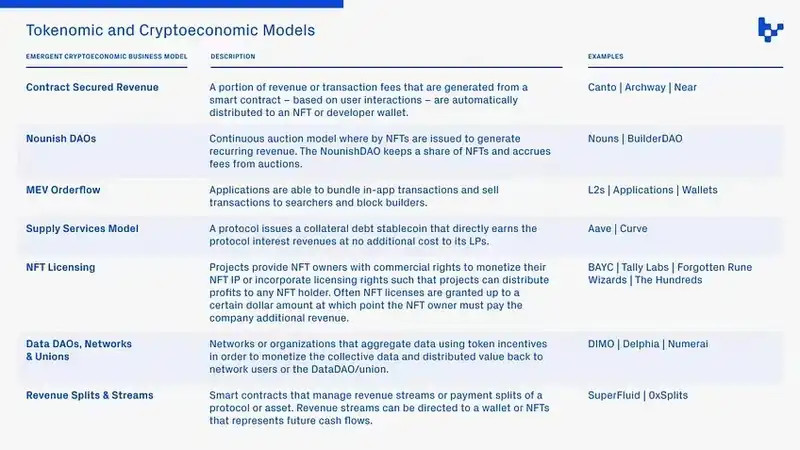
Contract Security Revenue Fee Allocation Model (CSR)
The Contract Security Revenue Fee Allocation Model is where a portion of the fees generated by using a smart contract are attributed to the NFT or address (such as the developer). On Ethereum, fees for interacting with smart contracts are burned, and the protocol that generates usage does not receive any rewards for creating value, except for revenue from any application-specific transactions (such as NFT market fees).
L1s like Canto will use CSR as a core element to coordinate developer and economic activity. Importantly, CSR NFTs can extract certain fees from multiple smart contracts (such as smart contracts in different versions of the protocol).
Another L1 on Cosmos, Archway, also rewards applications on the network. Archway offers three configurable reward distribution mechanisms: Gas rebates (50% of rewards go to developers), inflation rewards (25% of rewards go to application developers), and smart contract premiums (e.g. custom fees).
This model of rewarding developers or protocols based on utility provides a unique approach that does not necessarily require governance Token as a revenue claim or requirement for the protocol to charge additional fees on top of the network's Gas cost. In addition, CSR as an economical business model has the potential to reduce the acceptance rate of middlemen and further coordinate protocols built on L1/L2 or applications that generate a lot of demand on top of existing protocols.
More interestingly, this model can be applied to any type of application where a portion of demand or usage-based revenue should go to stakeholders such as creators, developers, and users. Imagine if TikTok's Creator Fund (which is an important part of how creators make money) applied a CSR model, distributing a portion of inflation rewards or advertising revenue directly to content creators based on the number of views or watch time on the platform. CSR provides a business model that can further coordinate applications built on the protocol.
Nounish DAO Issuance Method
Nounish DAO Auction Model - An NFT issuance method pioneered by Nouns DAO, the original method requires a new NFT to be generated and auctioned every day indefinitely. However, recently we have seen a wave of NFT projects adopting the Nounish issuance method, issuing multiple NFTs per day with no deadline. Such projects belong to the Nounish DAO type.
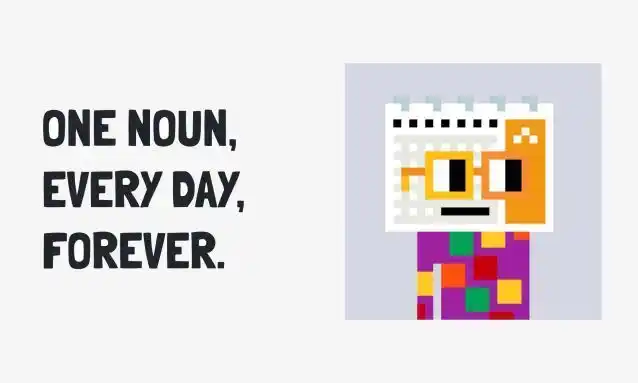
As NFT royalties face an uncertain future, two important questions loom: where will the stable income from NFTs come from, and what is the best NFT business model. Nounish DAO is a project that uses the Nouns auction model to continuously sell NFTs, providing a model for small communities within the community that are united by a common goal, or can coordinate around capital composition and allocation. The Nouns generator allows anyone to create a Nounish DAO in minutes, and has supported the creation of dozens of new Nounish DAOs since its launch.
Perhaps most notably, many of the early Nounish DAOs built through the Nouns generator were not focused on creating more Nouns memes, but instead found alternatives through innovation, such as the following three examples:
ArtHaus - a Nounish DAO focused on working with artists, which will be launched from the ArtHaus DAO;
Spores - a Nounish DAO focused on creating a next-generation remix device for on-chain music;
BLVKHVND - the first DAO to win a professional world championship has now transitioned to the Nounish model.
The Nouns mechanism is not suitable for all types of organizations. Jacob Horne, co-founder of the NFT trading marketplace Zora and the Nouns Generator, hypothesizes that the Nouns model is most efficient when applied to general purposes rather than specific applications. A core component of this hypothesis is that Nounish DAOs are most effective when they can fund competing approaches to achieving broad goals, and are generally less effective when applied to specific approaches to specific goals.
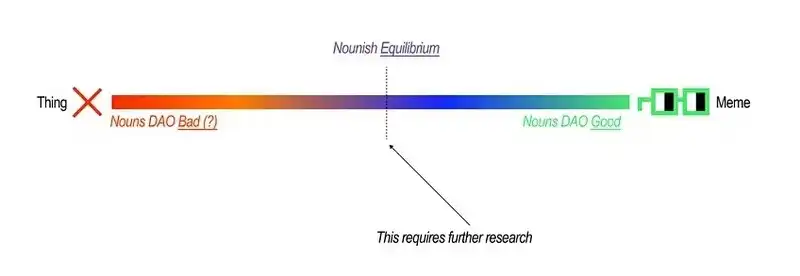
Take the following examples of broad and specific goals:
Increasing Nouns memes vs. making Nouns movies
Creating renewable infrastructure vs. building solar farms
Carbon consumption vs. buying carbon credits
Nouns There are a few existing use cases for DAOs:
Brands, Memes, and IP
Membership
Special funds or investments
Creating SoV (stored value) assets (like art)
As the Nounish DAO model modularizes, it has begun offering features such as non-CC0 IP (for other brands and IPs), minimum NFT purchase amounts (for larger funding needs), Splits (e.g. sharing funds between other DAOs), etc. These additions and broader experimentation will expand the class of communities and DAOs that leverage the Nounish model.
MEV Order Flow/PFTF (Payment for Transaction Flow)
As MEV is split into multiple stakeholders (i.e. Seekers, Block Builders, and Proposers), applications that control users (and therefore transaction flow) will be able to bundle user transactions and sell them in a private meme pool to Seekers and Block Builders.
Similar to how Robinhood pioneered Payment for Flow (PFOF) to funds and institutions, applications such as wallets and DEXs will be able to adopt the Payment for Flow (PFTF) process to build blocks. As the MEV category continues to grow, and the multi-chain MEV opportunity expands, Rollups, application chains, and super Dapps will see MEV as a new source of revenue. Another potential end state is that these PFTF profitable applications will redistribute their MEV order flow revenue, partially back to users in the form of Gas subsidies or other discounts.
MEV will become an integral part of cryptocurrency. As applications and protocols factor MEV into their product decisions, we may find MEV becoming increasingly important as a guaranteed revenue stream and a core component of emerging business models.
Towards Better Web3 Business Models
The fact is that Web3 has yet to standardize its epoch-making business models. The most successful applications today all rely on Web2’s transaction-based models — DEXs, marketplaces, etc. These models will likely continue to be popular and profitable, but the ability to program and tokenize value also brings the potential for new business models. New Token distribution mechanisms and cryptoeconomic models will be the key catalysts for the next wave of experimentation and disruptive innovation.
Original link
Welcome to join the official BlockBeats community:
Telegram Subscription Group: https://t.me/theblockbeats
Telegram Discussion Group: https://t.me/BlockBeats_App
Official Twitter Account: https://twitter.com/BlockBeatsAsia

 Related Articles