The 13 encryption projects that have not yet launched tokens are expected in 2023
Original title: 13 Most Anticipated Cryptocurrency Projects in 2023
Original source: milesdeutscher
Lynn, MarsBit
Many of the next cycle's high-performing projects have yet to be released. These items have the potential to reach 50-100 times in the next bull market. The next $SOL or $MATIC could be right in front of you.
Here are the 13 unreleased projects I'm looking forward to.
In this topic, I'll break down my favorite unreleased Layer 1, Layer 2, interoperability protocols, and the next cycle of DApps I have my eye on. At the end, I'll give you 4 steps to profit from these items, since none of them have tokens yet.
-- Layer 1 --
1. @SuiNetwork
Sui is a high-performance L1 that uses the Move programming language.
It was founded by former FaceBook engineers who worked on the now-defunct Diem project.
Some consider it superior to its counterpart, Aptos -- which also uses Move.
The advantages of Move (memory, speed of testing, expressiveness) compared to other languages such as Solidity make it a compelling language.
Sui's high throughput plus low latency is its main selling point.
2. @SeiNetwork
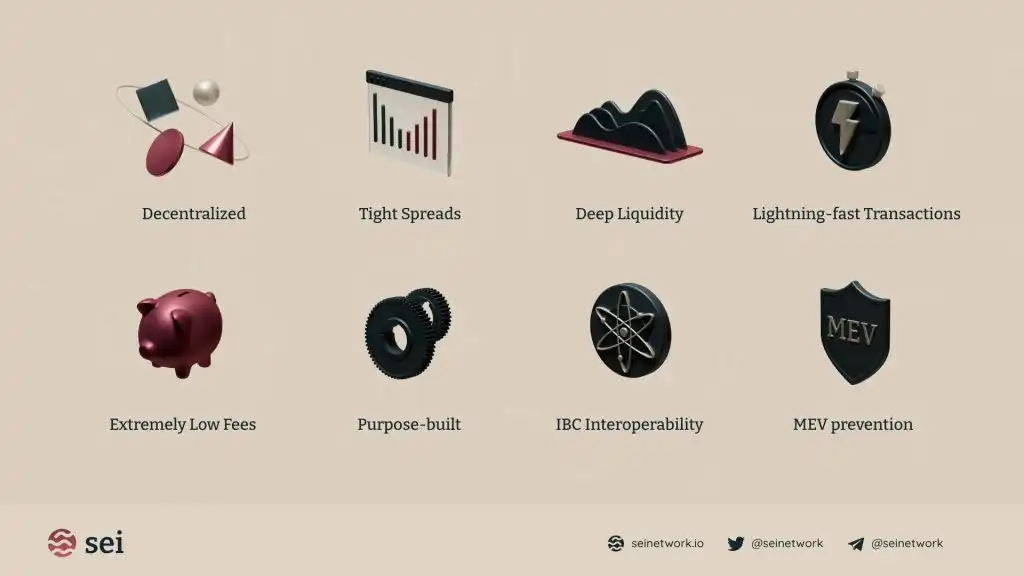
Built on Cosmos, Sei is the first industry-specific L1 blockchain dedicated to trading to "" give an unfair advantage to exchanges" ".
It is the first order-focused L1 blockchain and is designed to be faster and more reliable than other types of blockchains.
The blockchain is built on five key pillars.
1. Local order matching engine
2. Dual Turbo Consensus (improves throughput and latency).
3. Breakthrough Tendermint (time to final result is about 600ms)
4. Market-based parallelization
5. Front protection
The Sei aims to be a "decentralized NASDAQ," allowing smart contracts to access shared liquidity.
In my opinion, its unique approach to a particular use case makes it an exciting project to watch.
3. @CelestiaOrg
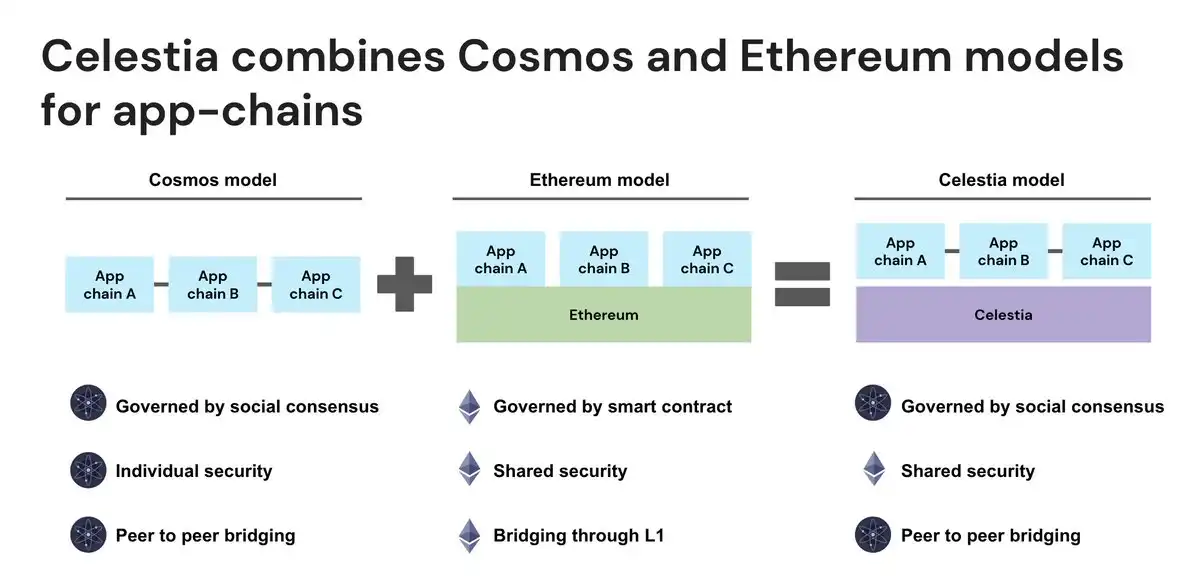
Celestia is a modular network that makes it easy for anyone to deploy their own blockchain with minimal overhead.
Celestia's modular approach enables it to:
, & have spent Provide both consensus and data availability
, & have spent Allow sovereign roll up
4. @fuellabs_ (Fuel)
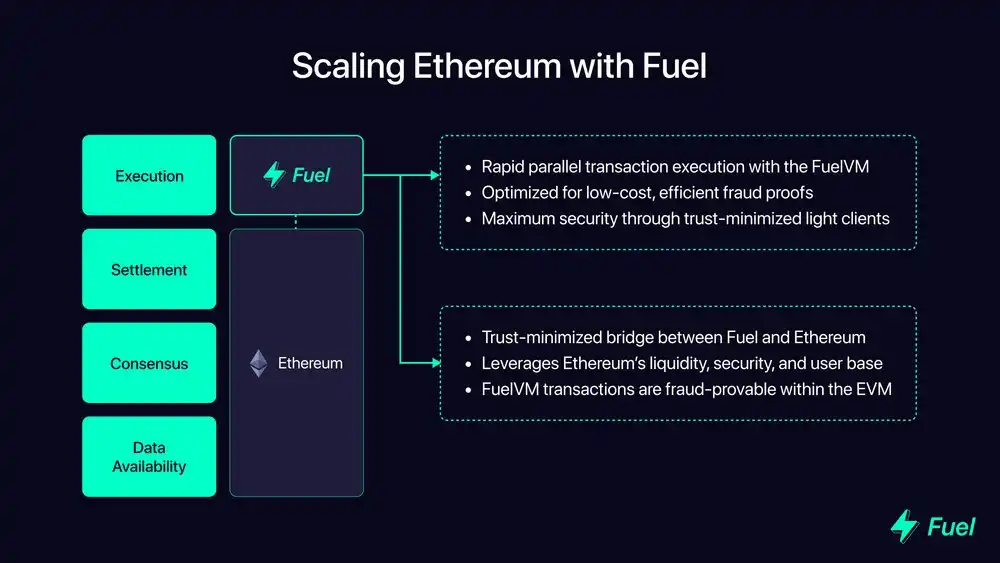
Fuel Labs is building Fuel, "the world's fastest modular execution layer."
Modularity allows the executive layer to take advantage of Ethereum's security without the limitations of EVM.
The transaction is executed on their virtual machine, FuelVM.
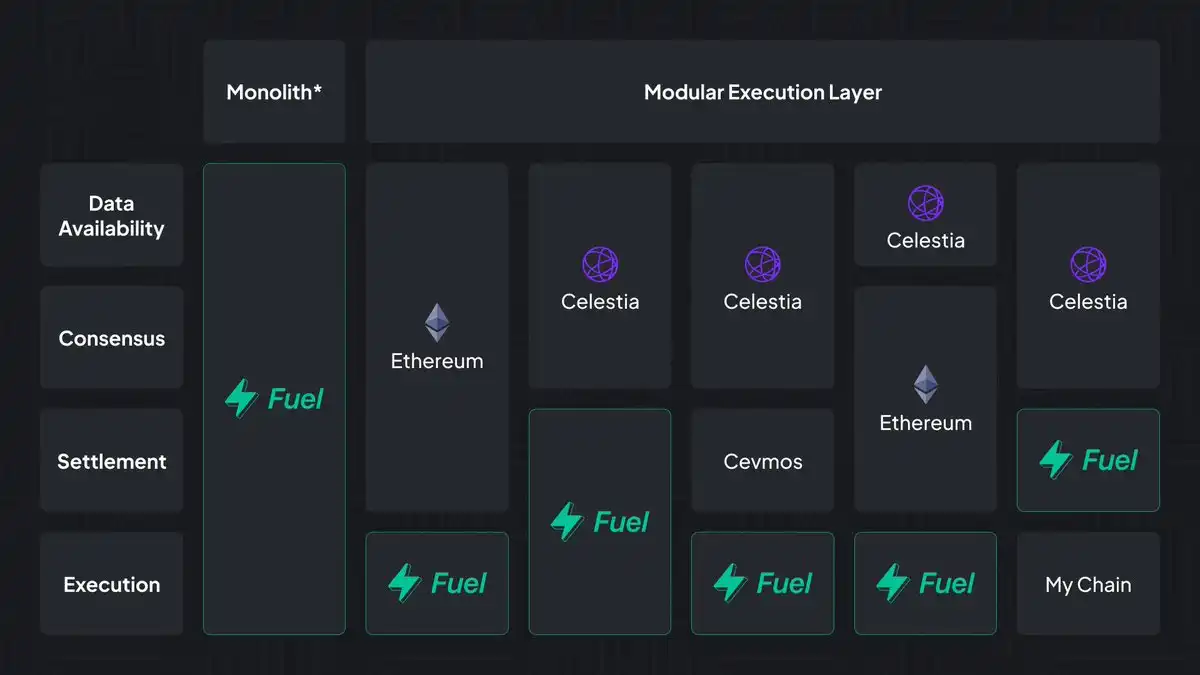
Fuel can be implemented in sync with Ethereum and Celestia.
As stated in their white paper, "As a modular implementation layer, Fuel can function in any of these categories. Developers can configure Fuel as needed by switching modules on the client side."
5. @QuaiNetwork
Quai Network is a Layer 1 blockchain network that leverages a novel combination of merged mining and sharding.
It is a proof of work network organized by multiple chains in a hierarchical, "pyramid" structure.
One of the main benefits of Quai is that it is easy to build Bridges between chains.
This is due to its consolidated mining structure allowing cross-chain contracts and asset transfers.
There are five test nets that start before the main net (so there may be airdrops), as well as many adoption rewards.
-- Layer 2 --
1. @zksync for @the_matter_labs
It's clear that ZK is the future of expanding Ethereum, and @zksync is at the forefront of that innovation.
Their full main network hasn't even started yet, but the ecology is already huge.
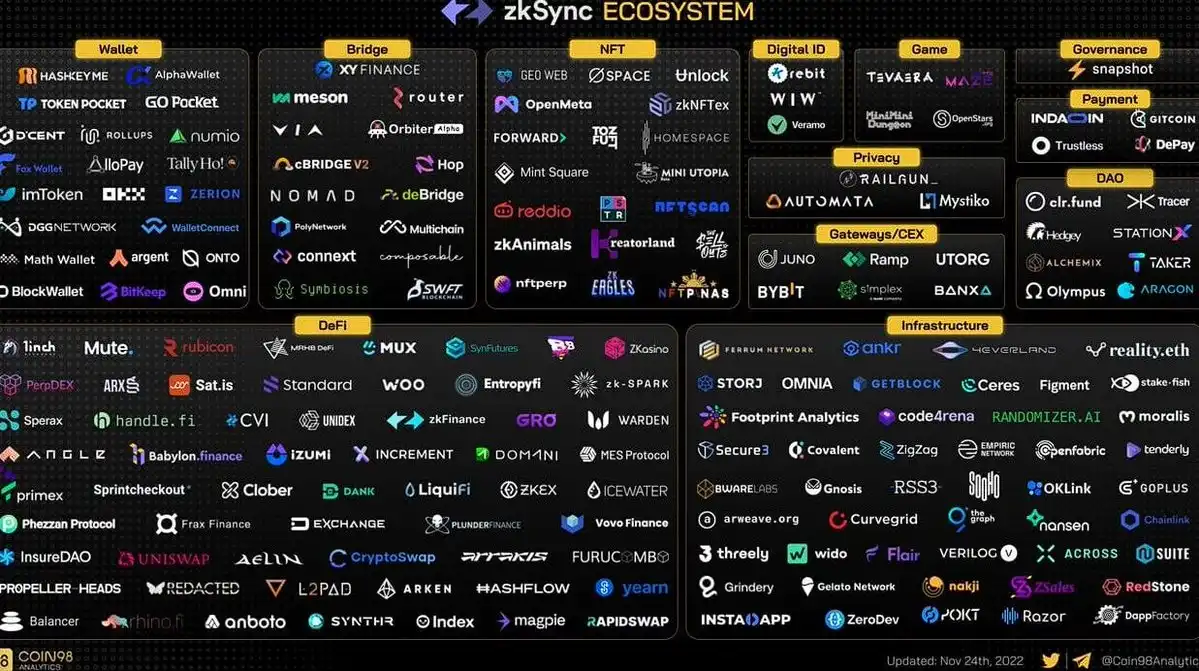
zkSync addresses 3 key issues with Ethereum by providing:
, & have spent Much lower gas bills
, & have spent Enhanced scalability
, & have spent User experience first wallet and dApp powered by zkSync
2. @StarkWareLtd
StarkWare is a secondary scaling solution that utilizes STARK Proof to reduce the amount of information sent to the Ethereum blockchain and ease blockchain congestion.
SnarkNet, like zkSync, utilizes ZK-Rollup technology to achieve this goal.
3. @arbitrum
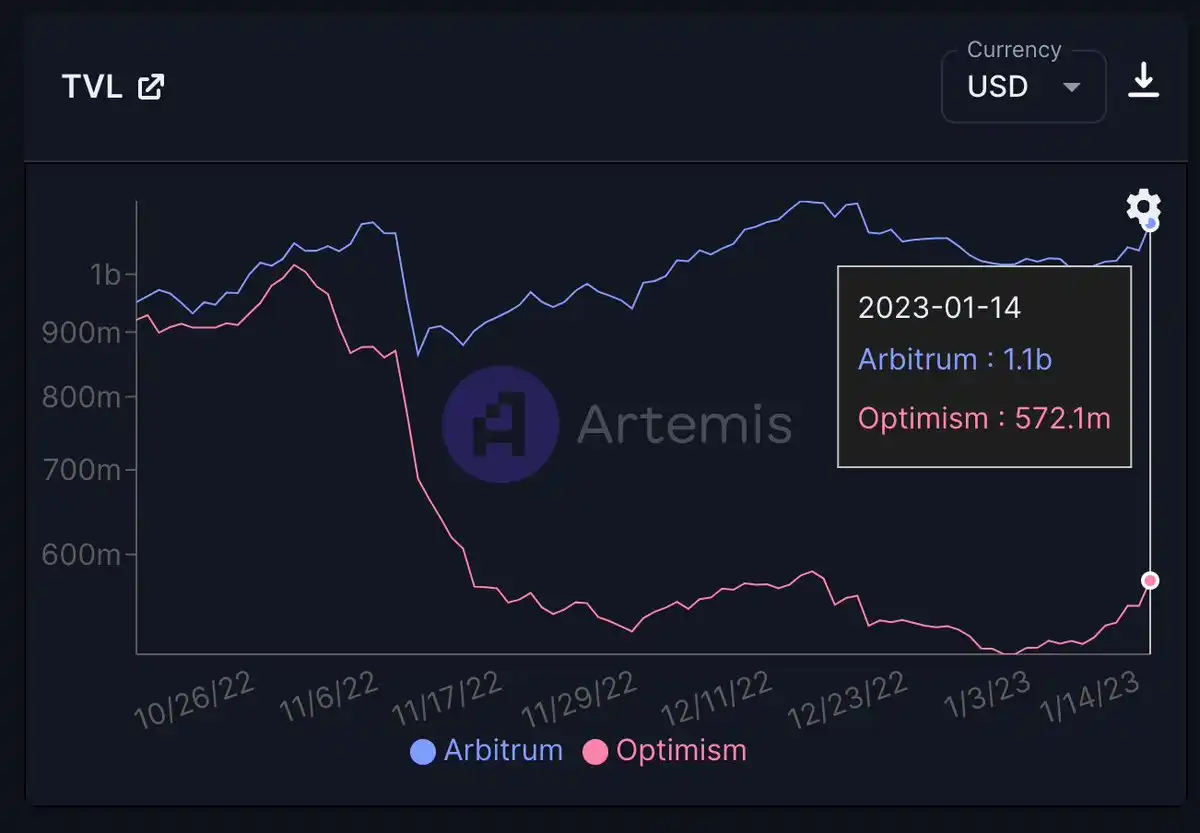
Arbitrum has had tremendous growth in recent months, reaching over $1 billion in TVL.
Like Optimism, Arbitrum was launched optimistically.
Their token is about to launch, one of the most anticipated offerings in cryptocurrencies.
4. Hermez at @0xPolygon
Polygon recently acquired Hermez, a ZK roll-up extension solution.
They merged the network before Polygon's zkEVM main network rolled out.
The $MATIC token will be the main beneficiary.
-- Interoperability --
1. @LayerZero_Labs
LayerZero is an interoperability protocol designed to connect multiple chains.
This allows it to:
, & have spent Seamlessly connect assets across multiple chains
, & have spent Achieve composability and functionality across chains
To do this, it uses oracles and Repeaters to transfer information from chain A to Chain B.
This is as opposed to using a single "intermediate" network to forward messages (which is less secure).
Think of it as the ultimate interoperability layer (which I'm pretty positive about).
The LayerZero token (rumored to be $ZRO) will likely launch sometime in the near future.
2. @zetablockchain
ZetaChain is a L1 built for all-purpose chain interoperability.
It enables the transfer of information between omnipotent chains, universal smart contracts, and any blockchain.
Developers of existing Dapps can adjust the codebase to create new multi-link DeFi products.
"Zetachain makes multi-strand Dapps as easy as single-strand Dapps."
Following the successful launch of the test network, their main network is expected to launch soon.
-- Other --
1. @QuadrataNetwork
Quadrata allows you to do on-chain KYC without publicly revealing your identity.
There is a gap in the market for effective on-chain identification, and Quadrata's passport could be a much-needed solution.
2. @DriftProtocol
Drift is a perpetual DEX built on Solana that uses a mixed and decentralized limit order model.
I'm always on the lookout for exciting new DEX.
They have confirmed that a token will be released soon.
-- How to get involved
Since these items don't have tokens yet, you can't buy them on the open market. You came in early enough. And that's a good thing. Here are some ways you can get involved (the best way depends on each project).
1. Air drop.
Some projects drop tokens at launch, as we have seen with $APT, $OP, $UNI, etc.
This usually involves test net participation and ecological interaction.
2. Invest in ecosystems/related agreements.
Projects are never done in isolation. There are always related agreements that are indirect beneficiaries of a narrative's success.
These projects may be in the same ecology, or in related ecology under similar niches.
3. Invest in ICOs.
Typically, pre-sale rounds are reserved for venture capital firms, funds, strategic partners, friends, etc.
But some tokens do have a public turn, or give away tokens.
If you like an upcoming project, make sure you follow them and join the discussion boards to stay updated.
4. Trade after the token is introduced.
This is the most obvious way.
But before you invest, make sure.
, & have spent Study the token economy of a wide range of projects.
, & have spent Don't go in blindly on the first day.
, & have spent Consider valuation (a good project is not necessarily a good buy).
Original link
Welcome to join the official BlockBeats community:
Telegram Subscription Group: https://t.me/theblockbeats
Telegram Discussion Group: https://t.me/BlockBeats_App
Official Twitter Account: https://twitter.com/BlockBeatsAsia

 Related Articles