MEV Track Investment opportunities Outlook
原文标题:《 MEV 是不是一个好的投资机会? 》
Source: zixi
MEV originally stood for Miners extractable value, applied under the worker POW, and is a measure of the profit a miner can make by their ability to add, exclude, or reorder trades at will within the blocks they produce. Mevs are not limited to miners in proof-of-work (PoW) based blockchains, but also apply to verifiers in proof-of-interest (PoS) networks. Maximum extractable value MEV refers to the maximum value that can be extracted during block production in excess of the standard block incentive and gas cost by the verifier under POS by adding, deleting and changing the transaction order in the block. MEV now stands for maximum extractable value.
Now that Ethereum has transitioned to POS, any user pledging 32ETH can become a validator. During each period of time, a proposer is randomly selected to implement a transaction into a new state. This proposer then packages this block to other validators for validation. From the description above, it would seem that the validator is figuring out how to order the transactions in the block in order to be profitable. But in fact, most MEVs have searchers to arrange them. This is because searchers need to have specialized algorithmic technology, search calculation sort. A Searcher submits it to a proposer via its algorithm in a Mempool/ private domain channel, etc., which a proposer then packages into a blockchain. One manifestation of MEV is the sandwich attack (clip).
Mevs have pros and cons. Advantages are: can improve DeFi efficiency, relying on Searcher can quickly close the price gap. The disadvantage lies in that some MEVs have extreme impact on user experience, for example, attacked users will face higher slip point and poor user experience, and because of the existence of gas priority fee, searcher will sometimes significantly increase the gas fee, resulting in network congestion and poor user experience.
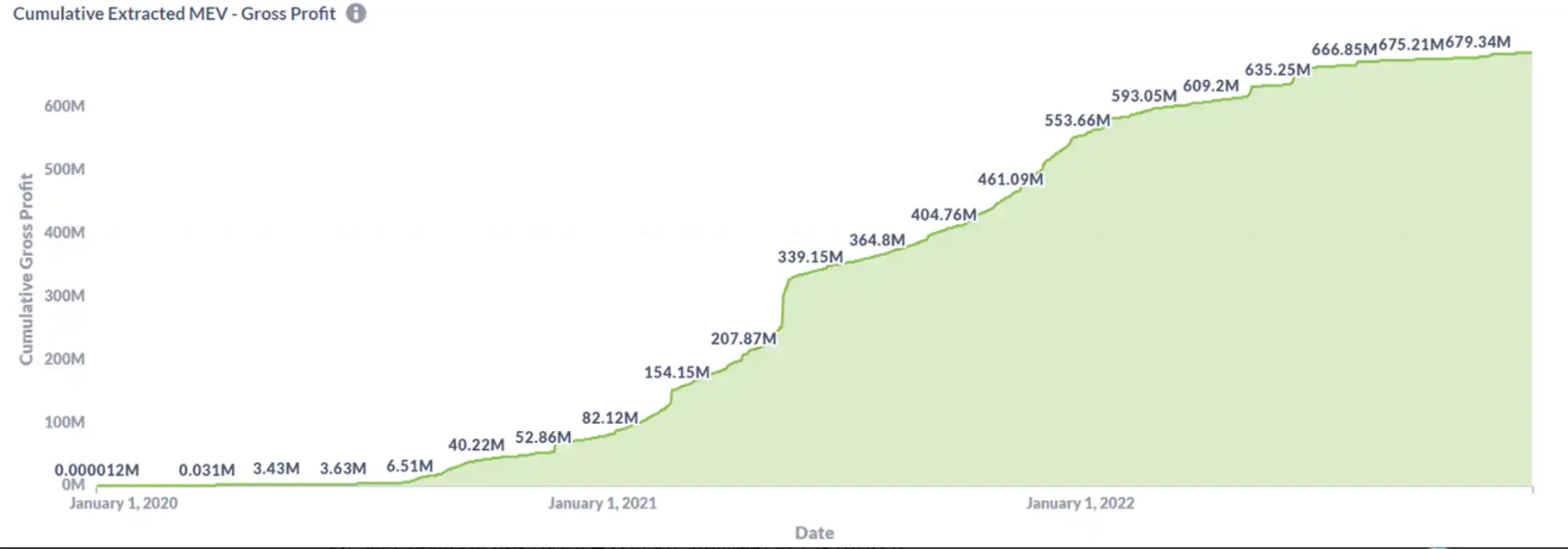
Figure 1: MEVs implemented over the years for the 10 defIs in Ethereum
The following is a brief description of the roles in the Ethereum MEV.
Searcher listens to the public trade pool and Flashbots private trade pool, and then uses the algorithm to figure out the most profitable intra-block trade order, which is packaged and sent to the Builder. At this point the Searcher will make a bid expressing the maximum cost it is willing to pay, which is visible only to the builder, not to everyone through the p2p network, thus reducing the on-chain usage pressure.
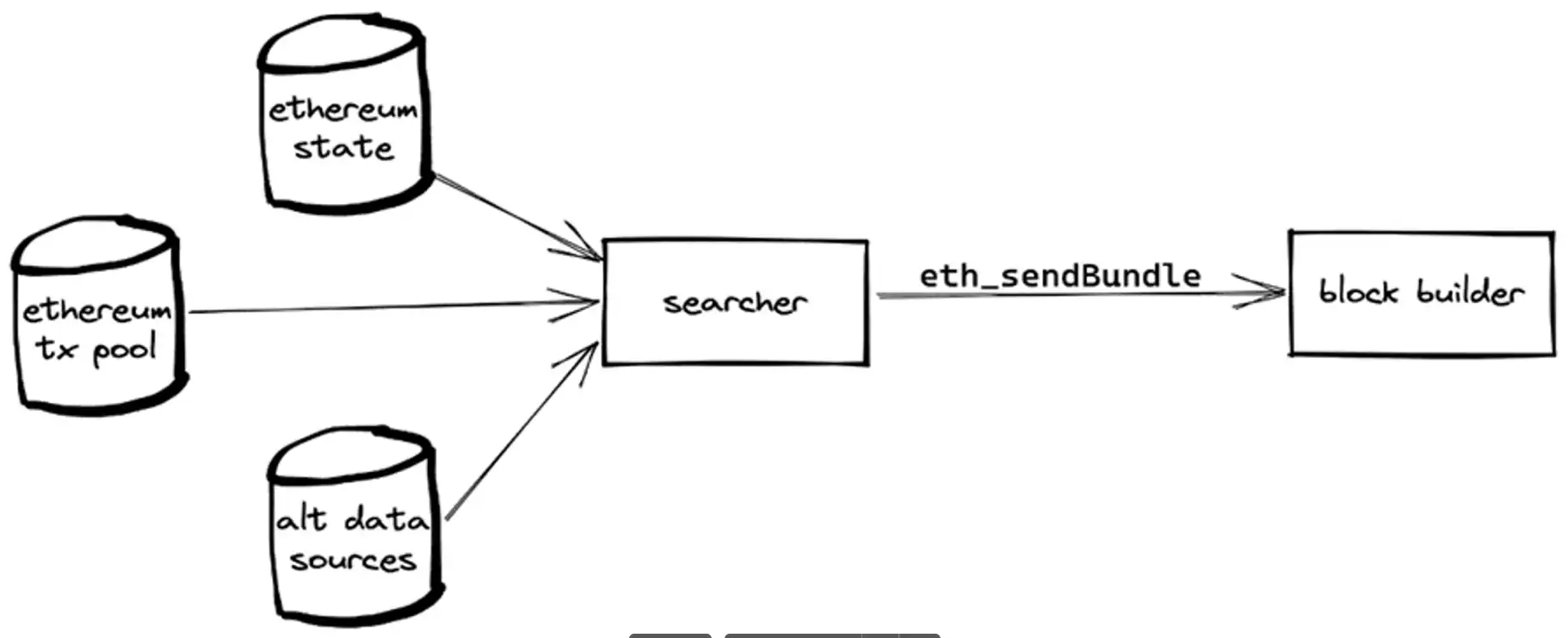
Figure 2: The Searcher listens to the public and private trade pools to make an algorithmic offer
Any user who downloads MEV-Boost can become a Block Builder. The Builder accepts the transaction from searcher and further selects profitable blocks from it, which it then sends to relay via MEV-Boost.
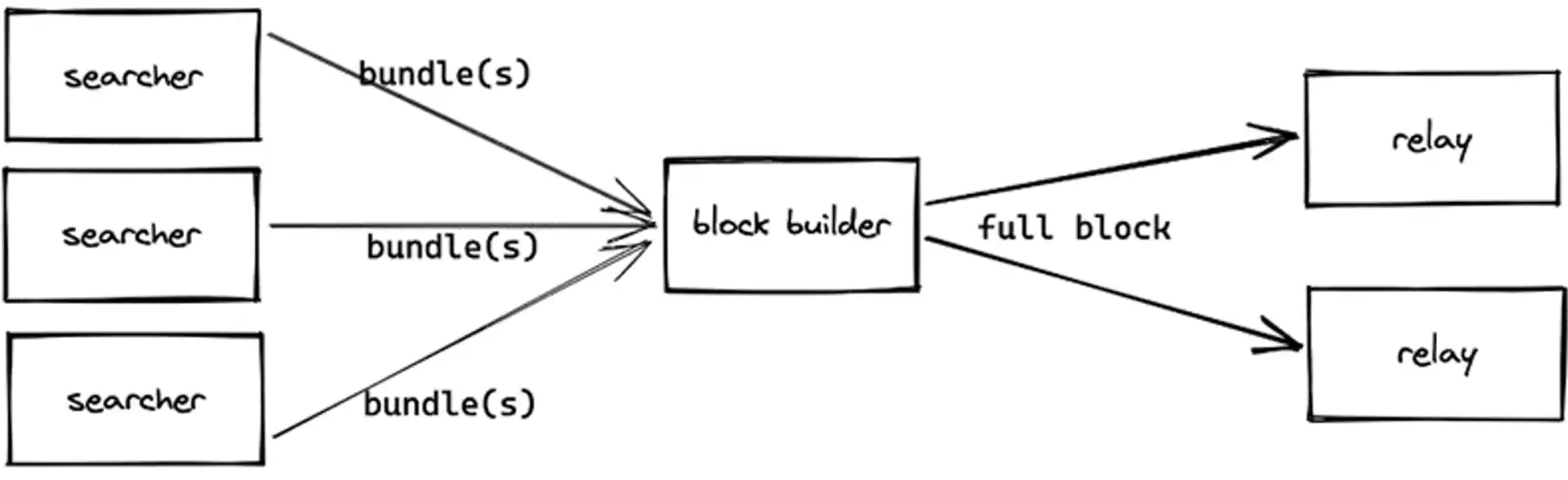
Figure 3: builder collects quotes from different Searchers
Relayer is an integral part of the implementation of the PBS separation, hosting the blocks passed from the Builder for Proposer. Relayer accepts the blocks transferred by the Builder and passes the most profitable block header to the Validator. After the Validator has validated the block header, relayer then feeds the entire block hair to the Validator to speed up the Validator's work.
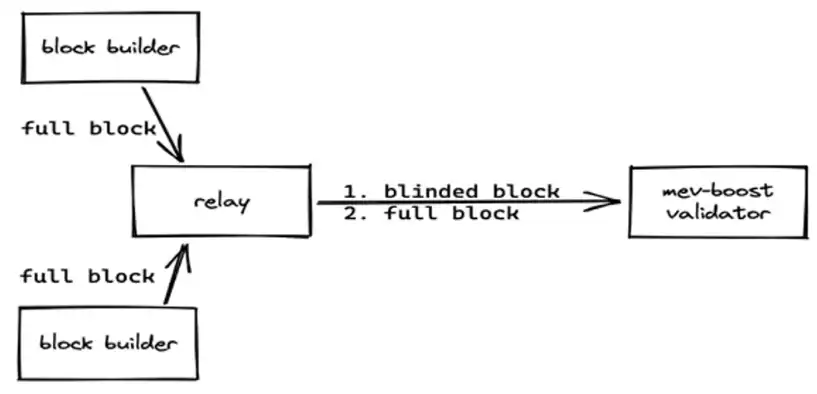
Figure 4: relayer collects blocks of different Builders
Any user under POS can pledge 32ETH to be the Validator. Lido is by far the largest Validator. A Validator simply uses MEV-Boost to select the most profitable block from a number of relayer proposals, charging a priority fee, and then a Proposer from a number of validators.
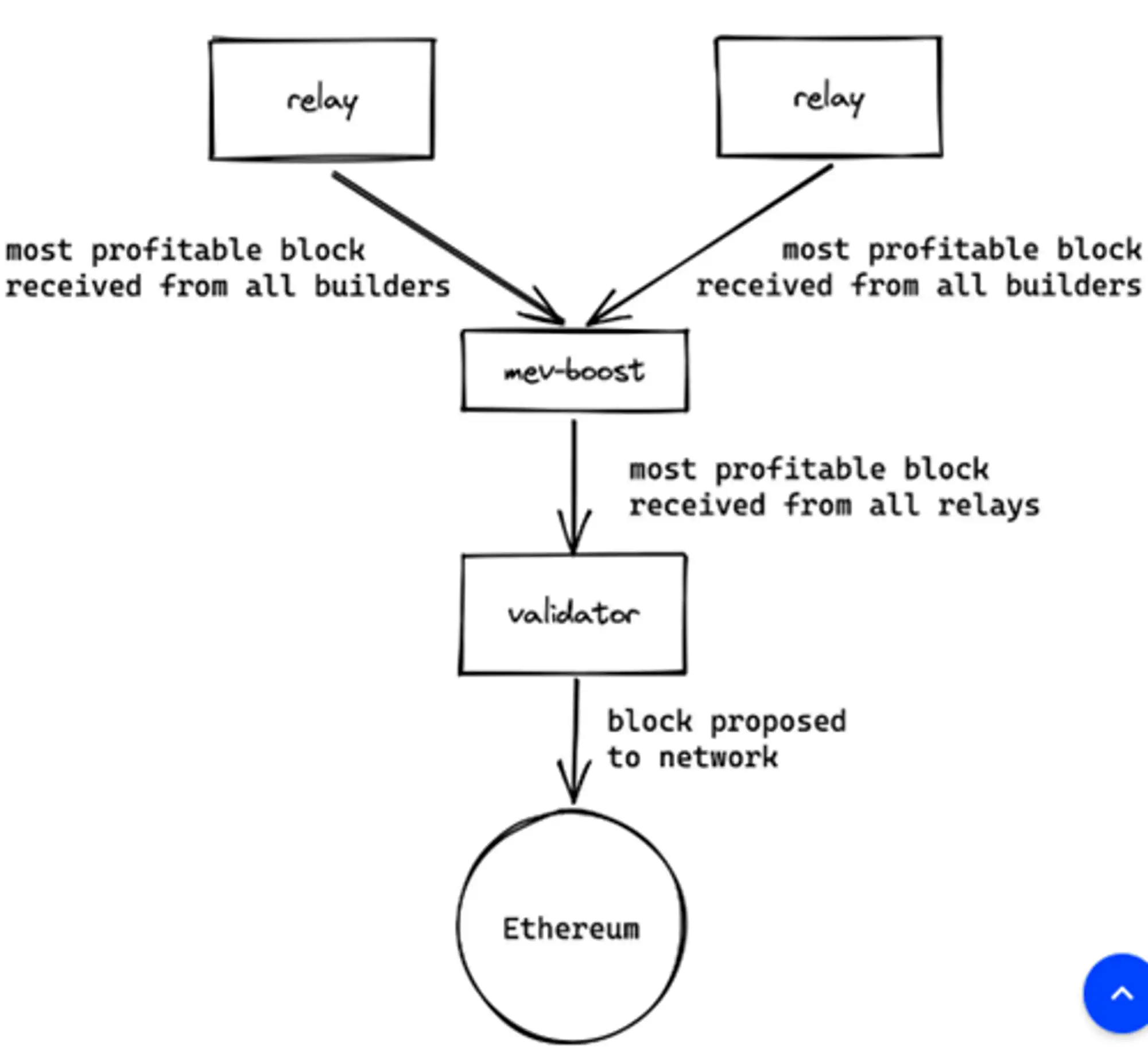
Figure 5: Proposer(Validator) finally selects the most profitable block to build with.
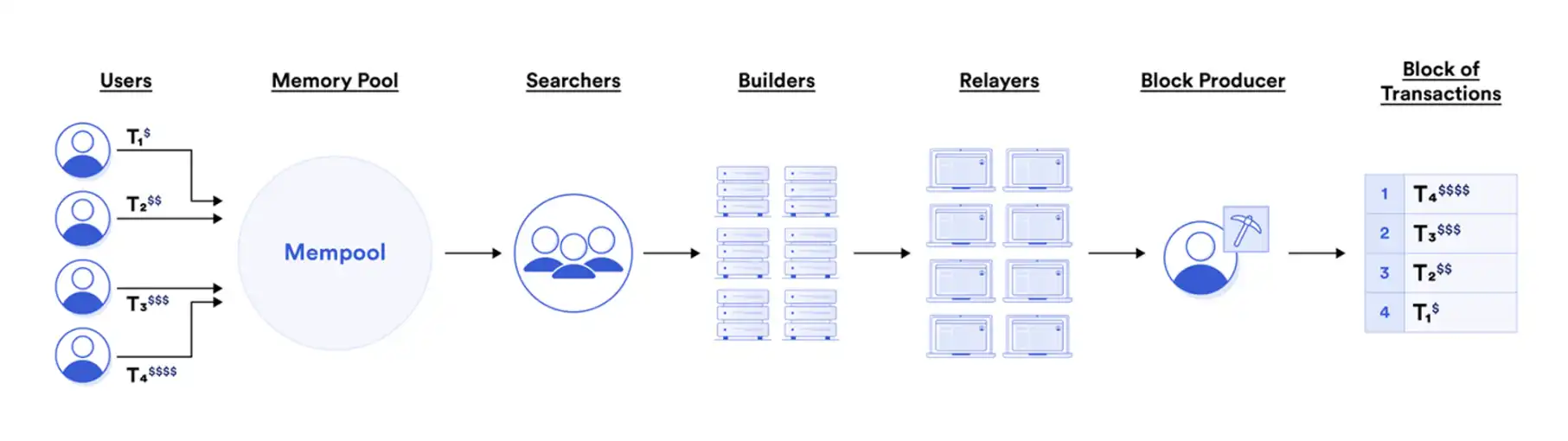
Figure 6: The entire MEV industry chain
Most MEVs contain several forms: 1.Dex risk-free arbitrage. Searcher uses on-chain data for analysis and uses the price difference in Dex + flash loan to carry out risk-free arbitrage. 2. Liquidation of loans. The searcher queries the data on the chain as quickly as possible to determine which borrowers can be cleared, and then is the first to submit a clearing transaction and collect a clearing fee. Sandwich attack. For example, if I want to buy ETH from Uni for $1 million, this will cause ETH to increase significantly from Uni. With Searcher paying the highest gas priority, the Searcher just needs to listen in the trading pool, advance his ETH purchase order to my ETH purchase order, and then sell immediately after my purchase to complete the sandwich attack. Although the MEV may fail, i.e. the Gas priority fee is not high enough, it can be seen from the figure that the cost of failure is very small in the total cost (failure cost + success cost).
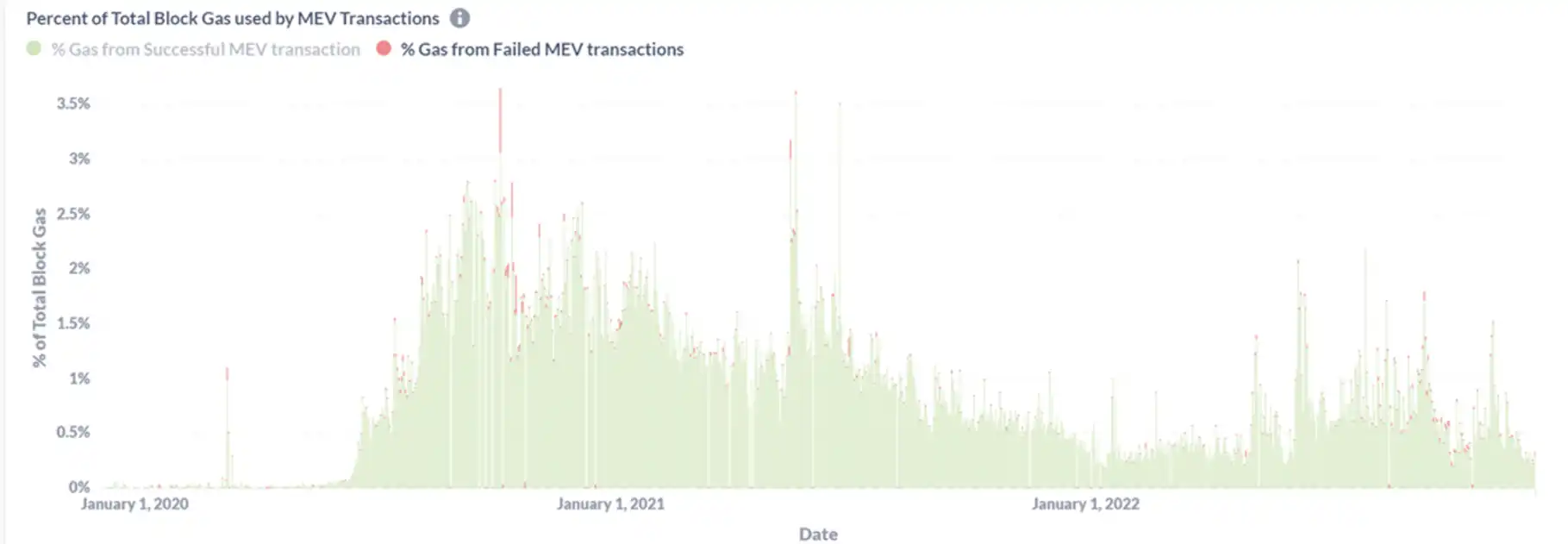
Figure 7: In MEVs, the cost of failed MEVs is small
Flashbots is a research and development company that aims to mitigate negative externalities (such as on-chain congestion) caused by MEVs. Flashbots comes out with several products, For example, Flashbots Auction(with the Flashbots Relay), the Flashbots Protect RPC, MEV-Inspect, MEV-Explore and MEV-Boost, etc. Auction (MEV-GETH) and MEV-Boost are mainly introduced here.
在没有 Flashbots Auction 之前,例如在 2020-2021 年初的 DeFi Summer 中,以太坊使用量激增带来了很大的负外部性,例如 gas 很高以及以太坊拥堵。这是由于在过去的常规交易池中,用户将 gas 出价费用 p2p 广播到所有节点,然后矿工(现在就是 validator)来计算最有利可图的区块。这种公开竞价方式会导致高 gas,且所有普通散户也要承担高 gas,导致用户体验很差。此外,由于拍卖失败(就是 gas 交少了)的交易也会在链上恢复,占据一定区块空间,最终导致区块空间浪费且矿工(validator)降低收益,双输。因此 Flashbots 创立了 Auction 以缓解上述问题。Auction 提供了一个私人交易池+隐私的投标区块拍卖机制,允许 validator 无需信任地外包最有利可图的区块构建工作。在这个隐私私人交易池中,searcher 可以私下交流,并不需要为失败而支付费用。 MEV-Boost 是由 Flashbots 开发,依靠链上 Validator 运行的一个开源中间件,用来完成 Block building 业务,从而实现 POS 下 Proposer 和 Builder 分离。目前还没有实现 PBS,所以会导致规模效应和中心化,即越大的矿场越有能力开发算法提升自己 Search 的能力;但目前 PBS 已经写入了以太坊发展历程。MEV-Boost 通过链接多个 relay,从而选出最有利可图的区块交给 Validator。MEV-Boost 目前也有 90% 以上的采用率。但伴随越来越多的用户参加 MEV,MEV 的竞争开始激烈。Seacher 的利润开始被降低,Producer 的利润开始升高。从目前累计数据来看,64% 的 MEV 总利润还是被算法为主导的 Searcher 占据。此外 MEV 也存在在其他链上,例如 BSC,Avalanche 等,其他链的竞争不激烈,但天花板相对较低。
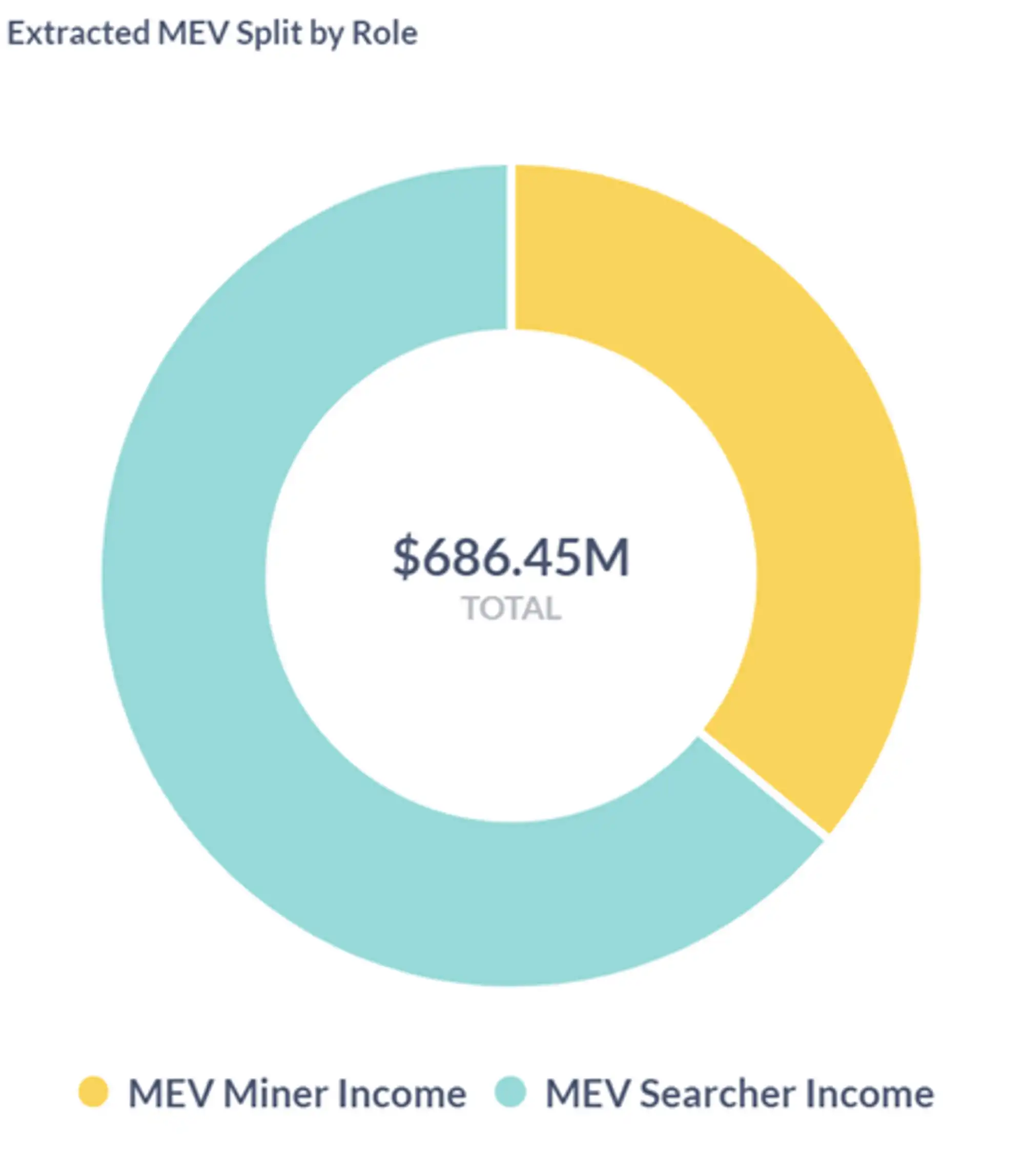
Figure 8: Searcher's revenue margin is around 64%
One current trend is centralization of builder, with CR5 reaching 84.29%. Because the Builder has exclusive order flow (because the Builder has built-in privacy features or because the builder makes it easier to select transactions from this user) and cross-chain (users can send me not only Ethereum transactions, but also other chain transactions to package), So the builder becomes centralized. Builder centralization will cause the failure of Ethereum POS decentralization. Therefore, to solve the above problems, Flashbots developed SUAVE (the Single Unified Auction for Value Expression).
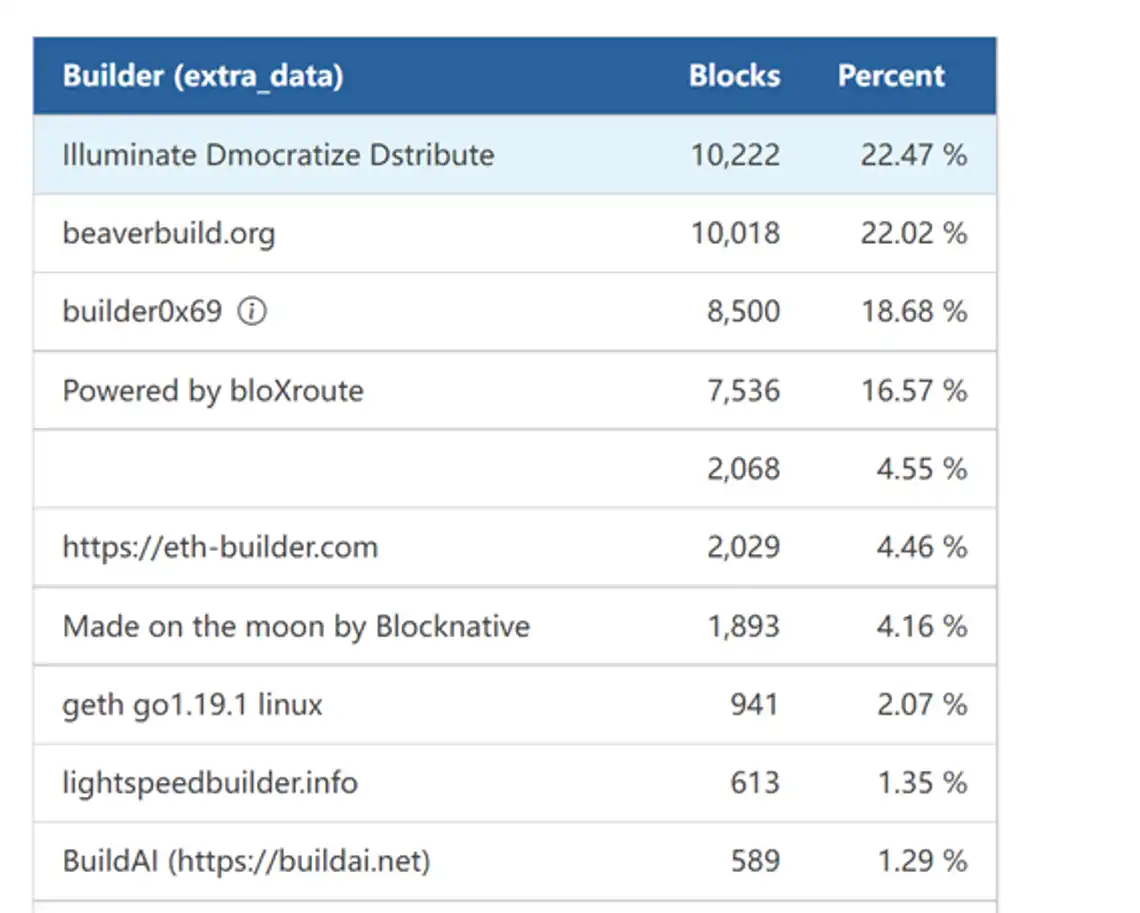
Figure 9: Builders are becoming more centralized
SUAVE is a standalone blockchain, but can be thought of as a plug-in that can be plugged into any other chain, acting as a Mempool and builder for other chains. SUAVE separates the Mempool and builder for all chains from the other roles and allows for specialized management to improve the efficiency of the whole chain (if you don't have multiple chains, you will phase out the builder in single chains). SUAVE is a win-win: the blockchain itself is more decentralized, validator revenue is maximized, searcher/builder is able to set preferences and potential revenue is larger, and users can make private transactions at the cheapest price possible.
Figure 10: SUAVE architecture
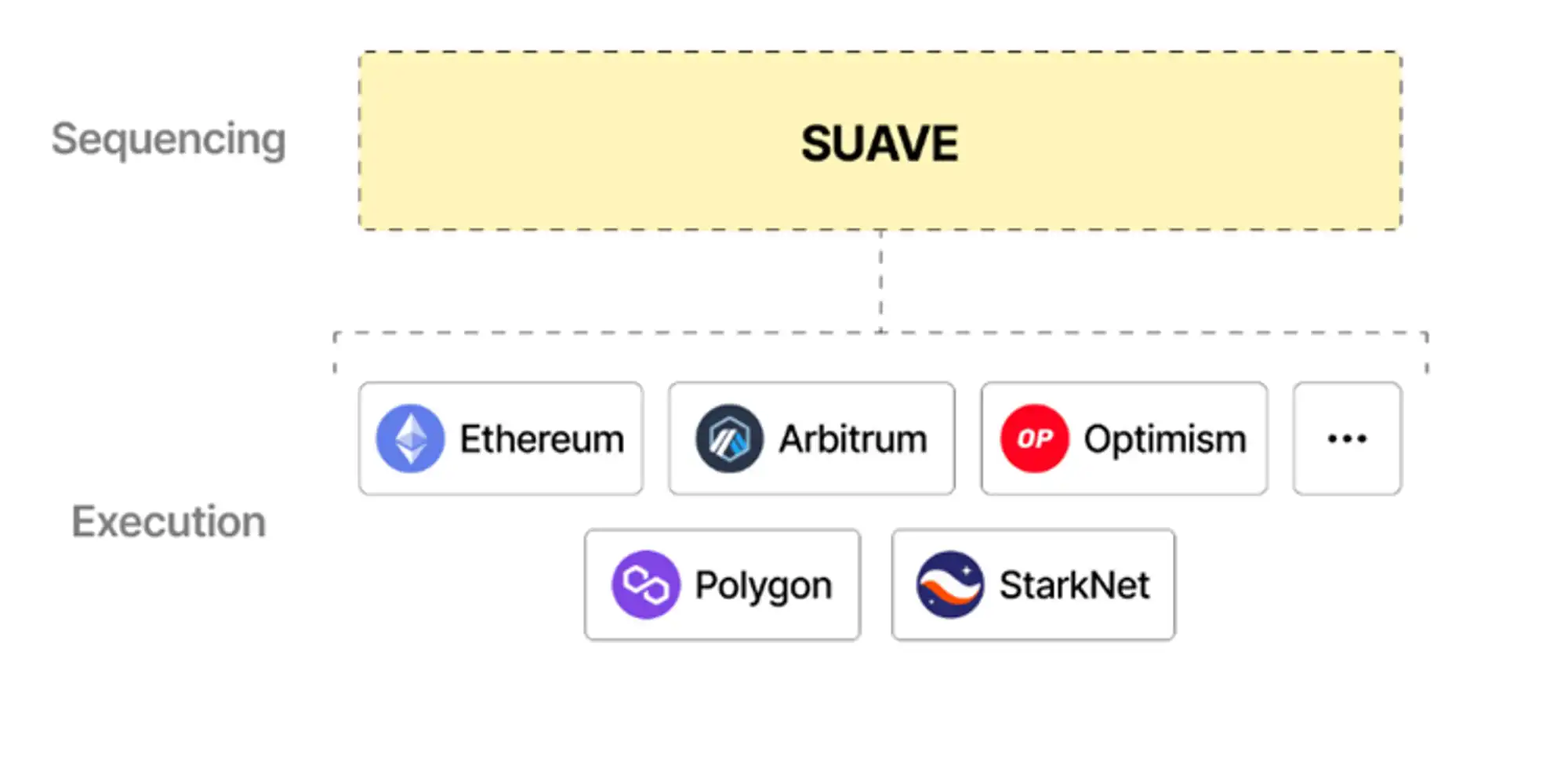
Figure 11: SUAVE can implement cross-chain MEV
According to Flashbots, in 2022, MEV gained 70K ETH in 10 head DeFi projects on Ethereum, that is, $133 million in revenue. Compared with the accumulated revenue of 188K ETH in 2021, the revenue of $475 million decreased significantly. Reasons include: on-chain trading turned bear (full-chain dex trading volume decreased from $1575B in 2021 to $1255B in 2022), and on-chain leverage ratio decreased (the liquidation chain burst is also one of the sources of MEV's profit, but due to excessive decline, the on-chain leverage ratio has decreased); However, the overall gross margin improved, from 61% in 2021 to 65% in 2022, due to the introduction of Flashbots, which improved the searcher gross margin. Mevs are highly dependent on on-chain activity/volume, and on-chain activity/volume is highly influenced by market conditions, such as the bull market in 2021, with an overall revenue ceiling of $476 million.
However, according to recent research, with more and more novice Searchers entering the MEV circuit, Searcher's gross profit margin is declining seriously. The novice searcher simply pushes miner Fera up to 99%, leaving only 1% of profits for his peers, which can lead to the other extreme. No matter how advanced your algorithm is, once it is copied by peers (after all, it operates transparently on the chain), no tacit peer will minimize everyone's excess returns for their own profit. So at the end of the day, no matter how you sort, you have to pay more than 99% of the gas, and there is no net profit, so the searcher's motivation for sorting is greatly reduced.
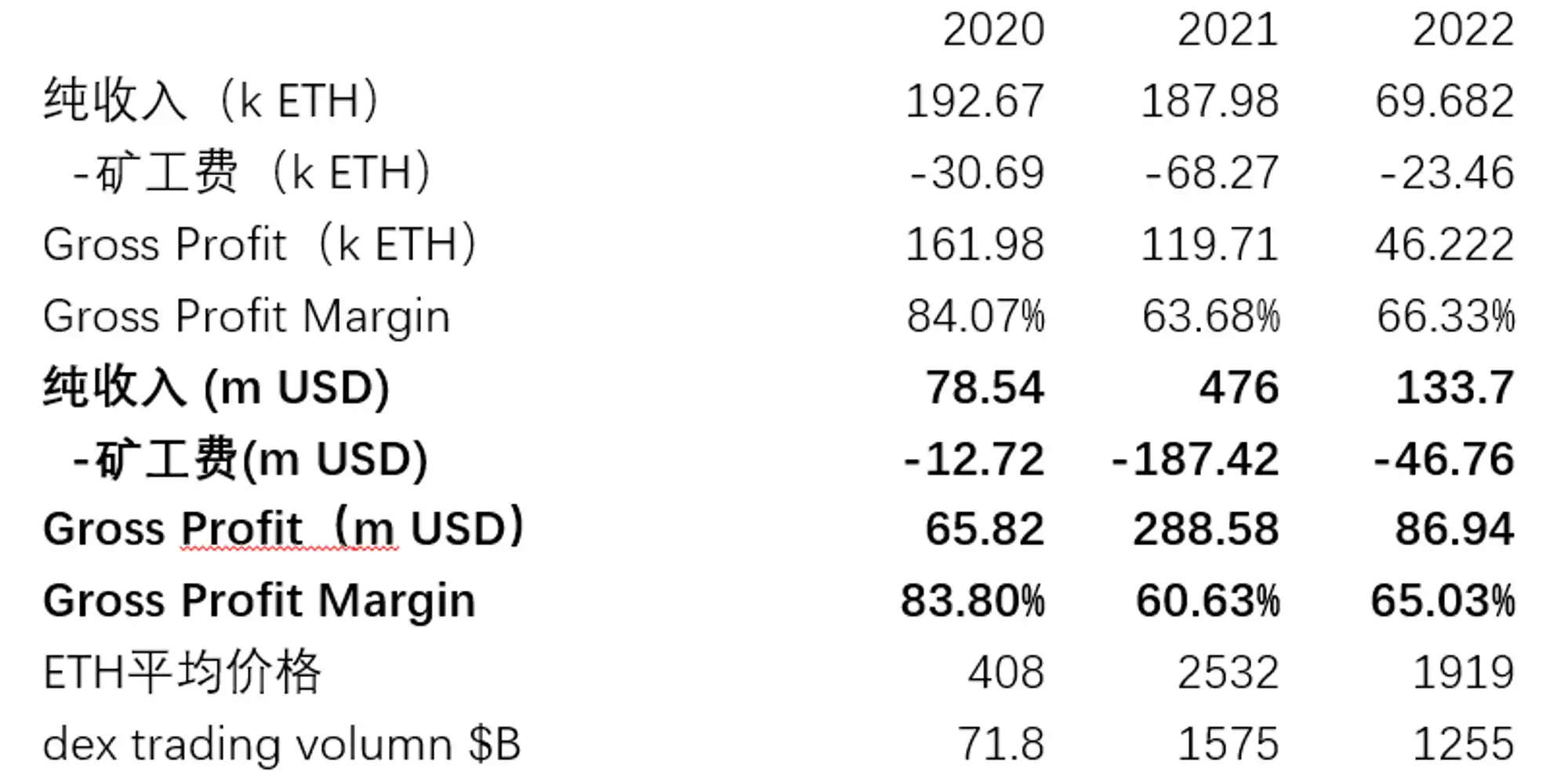
Figure 12:2020-2022 MEV revenue split
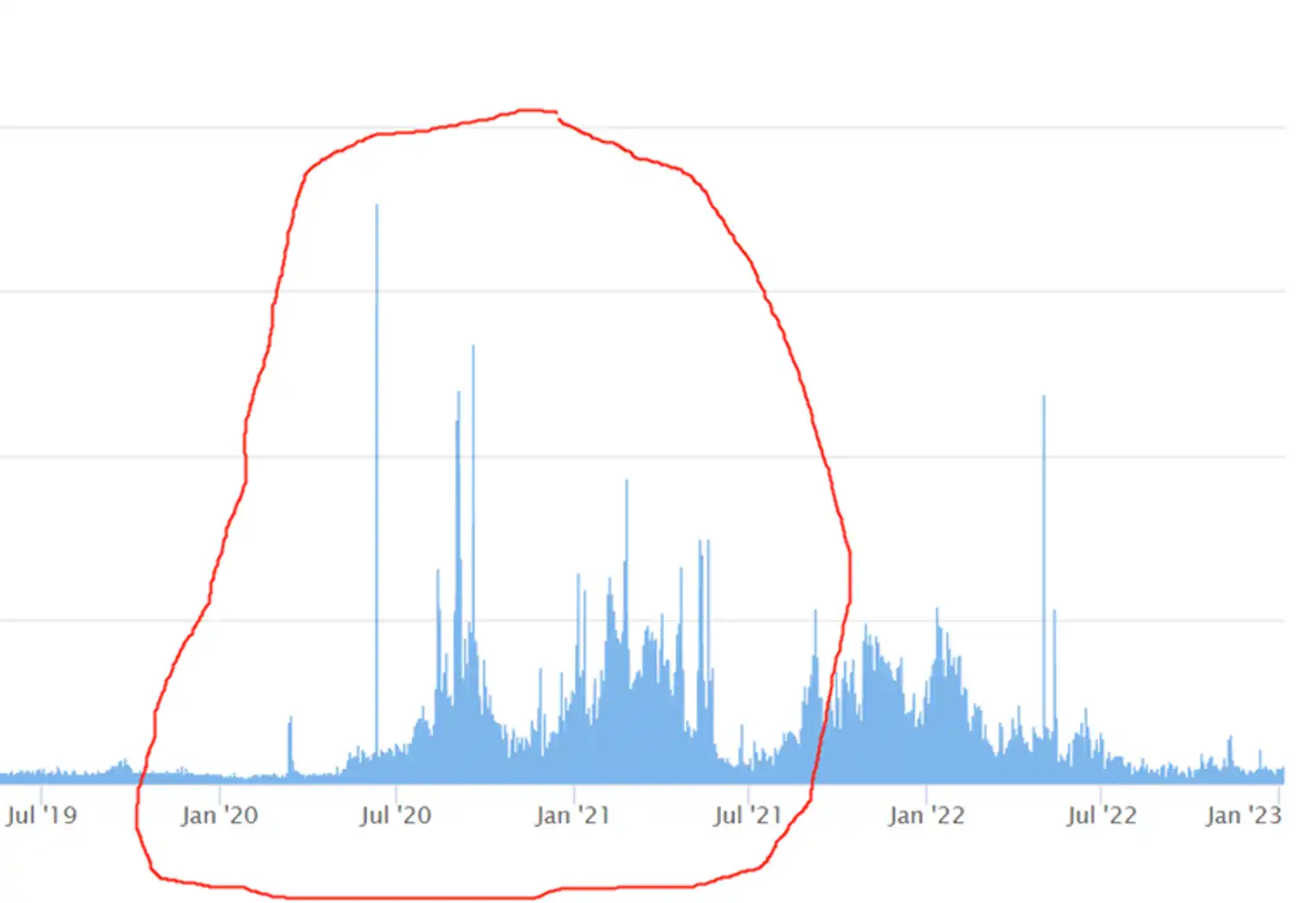
Figure 13: The bull market is full of opportunities. The MEV market is large, but Gas costs are high and profit margins are low. Bear market volume is low, MEV market is small, but there is no longer high Gas War, profit margin is high
Mevs are a strong cash flow track and are highly positively correlated with cycles (on-chain transactions, etc.). We compare the 2022 bear market with DeFi, also a strong cash flow business. Without taking into account the cost paid to miners, we get a $133.7 million payout for all Searchers in 2022 on the first 10 defi projects in Ethereum, which is a huge amount of real money in the entire blockchain industry. It's not as big as opensea, but it's larger than dydx, pancake, convex, maker, synthetix and others. In addition, this $133 million only covers the 10 DeFi items in the head of Ethereum, not including other defi on Ethereum and Layer2+ other POS Layer1 revenue. Compared with other competitors selected, the weighted PS calculated 12.43. Finally, the weighted PS was used to calculate the reasonable valuation corresponding to MEV Searcher, which is about 1.662 billion USD. So considering Taifang Full Chain +Layer2+ other POS Layer1, the ceiling would be much higher than $1.6 billion.
Figure 14: MEV revenue versus other DApps in the first 10 DEFIs of Ethereum in 22
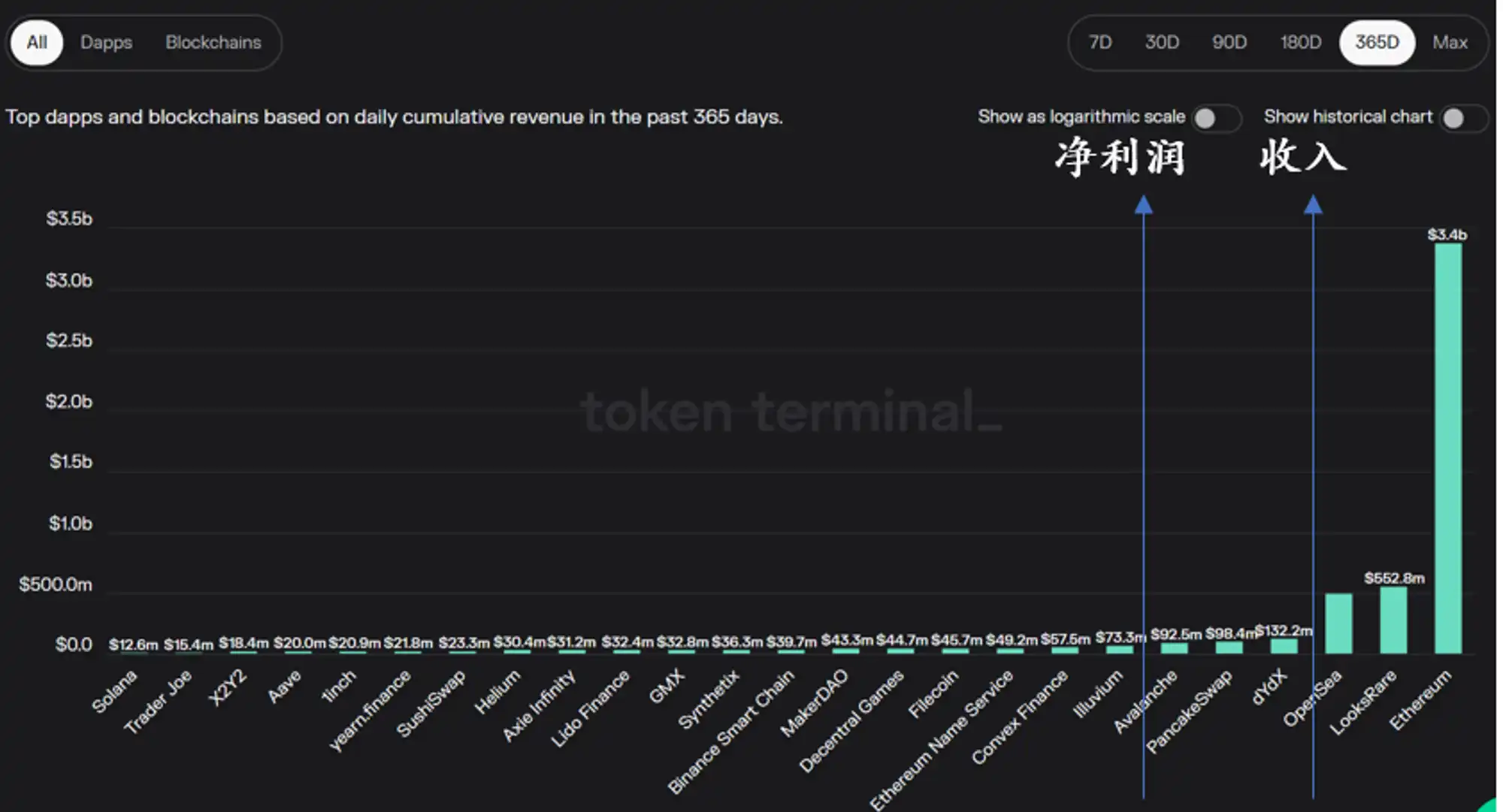
Figure 15:22 MEV Searcher's revenue was lower than opensea's and better than dydx's, ranking highly among all blockchain projects
In summary, MEV is a rare low-level circuit with strong cash flow, strong transaction correlation, high income but relatively low risk in blockchain. Mevs can be similar to quant and market makers in some strategies, but because they don't take on any counterparty risk, MEVs are more stable than quant and market makers (at least they don't get dry burned like some market makers). The MEV strategy is more rigid, but also less risky, and is typically represented by clamping and arbitraging in DEX. From the performance of Searcher in 2022, Ethereum's top 10 head Dapps bring in $133.7 million in MEV revenue. Subtract about 1/3 of miners' gas fees, and the take-home revenue is about $87 million. Plus other Layer1 and Layer2, The MEV revenue for blockchain as a whole is quite high. However, according to the recent feedback of some searchers of Ethereum, more and more new people began to enter the MEV track to do searchers, resulting in the original oligarchic competition of searchers gradually into perfect competition, and the excess returns are greatly reduced. Revenue from Searchers has ended up going to Validators, which explains why Lido's revenue has increased in the past year and a half. In addition, for other L1 students represented by BSC, although the overall scale of BSC MEVs is smaller than that of Ethereum MEVs, there is no unified bidding system and the competition is not fierce, so the overall net interest rate of Searcher will be very high. In addition, we see MEV projects like Flashbots that want to dominate the market on Cosmos.
From the perspective of investors, the MEV (Searhcer) is a typical equity structure project, which will be similar to the investment of market makers, but there is no counterparty risk, so the overall risk is smaller. Since such companies are less likely to issue money, the exit path may only be mergers and acquisitions, dividends, etc. The core of the evaluation of MEV (Searhcer) project is 1. The search algorithm is reliable 2. 3. Control the cost of gas; 4. Expand other chains, etc. Therefore, the overall technical requirements for the team are relatively high, and the industry is typically not BD oriented, which may be suitable for Chinese people. Therefore, when investing in a company like MEV (Searhcer), if the first round, second round valuation is low and the team level is high, you can consider the layout. If we consider companies with MEV bidding system, when the chain vitality is high enough and there is no unified bidding system, we may be able to produce flashbots like products, which may be suitable for foreign teams to build Infra and then BD.
Last word: If you want to do MEV but don't know anything about it (like me), you might as well just buy Lido as collateral and end up working for lido validators. Non-investment advice.
Original link
Welcome to join the official BlockBeats community:
Telegram Subscription Group: https://t.me/theblockbeats
Telegram Discussion Group: https://t.me/BlockBeats_App
Official Twitter Account: https://twitter.com/BlockBeatsAsia

 Related Articles