How to Build a true crypto Game?
原文标题:《 链游启示录——如何构建一款真正的加密游戏 》
原文来源: WHeart
In 2022, the bull market in the crypto industry is over and the winter is coming. DeFi, NFT, GameFi, no track is safe. FTX, 3AC, Voyager, BlockFi, Terraform Labs shut down, although this happened many times in the previous bear market. But this time was different. First, the crypto ecosystem is much richer today than it used to be; Secondly, the amount of capital investment in the crypto industry in 2022 actually increased compared to the bull market in 2021; Third, crypto practitioners are more confident about the future of the industry than ever before.
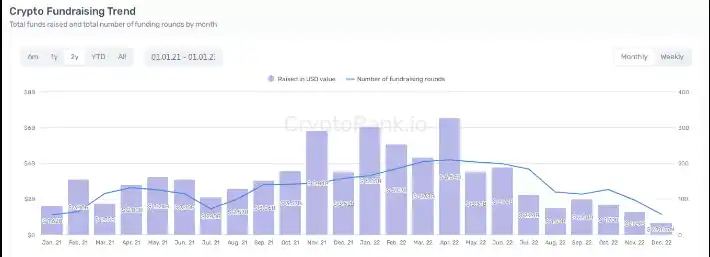
Crypto financing trend chart
All this indicates that the winter will finally pass, and now is the best time to focus on industry construction. As for which track will stand out in the next bull market, everyone has their own opinion, with many institutions and individuals believing that crypto will once again shine.
I've been using the term "crypto gaming" rather than GameFi, because GameFi is a circuit that needs to reinvent itself ideologically. The first generation of GameFi represented by Axie fell to the bottom in the beginning of 2022. After that, X2Earn represented by StepN ignitesGamefi again. However, almost all projects do not break out of Pond's vicious circle. Even at StepN, its governing token GMT is down 95% from its high, so we need to rethink GameFi and think beyond the box!
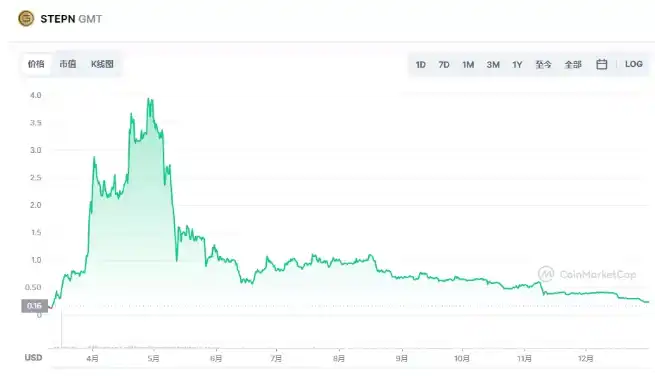
GMT price chart
I was writing earlierGameFi Is Dead -- The Seven Deadly SINSThis article provides a detailed answer to the seven questions that GameFi has now. Please note that many of the solutions mentioned in this article have not been effectively proven and are the author's own.
The main contents of this paper include:
1. Making money is the process; entertainment is the goal
2. Return value to gamers, not investors
3. Lower the barriers to entry
4. Make a fun game
5. Improve economic models
1. Making money is the process. Entertainment is the goal
If a chain game only attracts players by making money, it won't last anyway. Some people may consider introducing third-party funds, such as providing toB services such as advertising and co-signing, and subsidizing C-side players with toB money. The premise of all this is that the game has enough traffic. Judging from the number of daily users of the current chain tour, I am afraid that few project parties are willing to put advertisements in it (according to incomplete statistics, There are only 6 chain Tours with daily activity exceeding 1K, of which there are inevitably many people and studios involved).
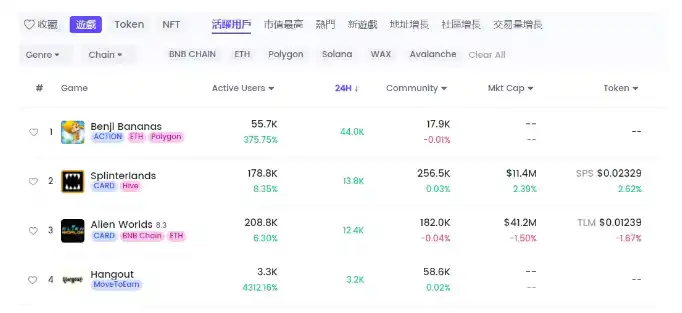
Data statistics of active users of chain travel
Without a "blood transfusion machine", it now comes back to the classic question: Every player in a chain game wants to make money, so whose money is it? The answer is obvious: old players take money from new players, a classic Ponzi scheme. Of course, you can also look at improving the design of the economic model, and game theory is clever enough to give older players multiple options for input and output, so that the entire economic system reaches an equilibrium. This type of design is not uncommon in DeFi projects, but porting directly to GameFi is not a good option.
A good economic model is the finishing touch of the chain tour, it can open the initial flow of the Game entry, can also extend the life cycle of the game, which we will talk about later, but it is absolutely not all, otherwise the existence of the game is meaningless.
The online game industry has been born for more than 50 years. Many games such as DNF, Fantasy Westward Journey and World of Warcraft also have similar money-making mechanisms. They have been running stably for many years and are worth learning from. At the very beginning, games are designed to entertain and kill the boring time. Players are willing to recharge for better game experience, and the project side needs to provide better game content for users in order to make continuous profits. This business closed loop is very firm. As the game grew, the mall expanded until it could offer either in-game transactions or in-game fiat currency transactions, giving birth to "gold farming" players.
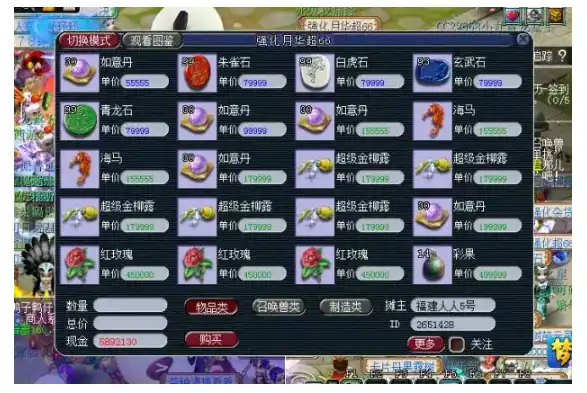
Fantasy journey to the West props
However, from the perspective of the composition of the whole game players, gold mining players are only a small part, they mainly serve the medium and heavy krypton players, while the largest user group of the whole game is the most common zero krypton and micro krypton players, so the most stable player structure of the game is "a small number of gold mining players + a small number of bosses + most entertainment players", the entertainment players constitute the fundamentals of the game. The needs of the boss promote the development of gold farming players, gold farming players on the one hand to promote active games, on the other hand to meet the needs of the boss.
Therefore, when making products, it is necessary to make clear the needs of most users. Playing games can make money, and occasionally offering rare equipment can make money. These are all "icing on the cake".
There are a lot of chain games in the market now, but there are almost no projects that can complete the above goals. After all, it is difficult to make an interesting game itself. The project parties all want to make quick money, and will not spend time and money on polishing the game's playability. However, the industry is always developing, worthless projects will not exist forever, and the era of quick money will eventually end. Now this road is not at all winding, and it is worth every project side to think about how to position their own projects.
2. Return value to the player, not the speculator
Whether it is public chain or DeFi, the gameplay of pledge has been widely used, many game project parties have also launched a variety of token pledge activities, the design of such activities is relatively simple, nothing more than pledge governance tokens to get more governance tokens, or pledge governance tokens to get game tokens. At first glance, this doesn't seem like a problem, and it would reduce the number of tokens in circulation, create scenarios for token-making, and empower token-holders to govern. But there's a risk: the biggest beneficiaries of these powers are DeFi players, who buy and sell tokens without playing the game, and may sell them when unlocked, damaging the game ecosystem, which is unfair to serious players. I'm not against adding DeFi elements to a chain game, but control the revenue and get the most value back to the players so that more people can play the game. Game content can be divided into two parts based on playability: simple, repetitive actions and more complex actions with more difficulty. Rich rewards should be given to actual game players, reducing rewards for simple repetitive tasks and increasing rewards for more challenging or leaderboards.
In addition, the power of capital should be controlled to avoid the direct impact of whale operations on the game ecology. Game players should not only get tokens and NFT in the game that can be bought in the market. To give them value accumulation, upgradable NFT may be a way of thinking. The rewards players receive in the game are added to the less mobile NFT. The evolution of the NFT is different depending on the experience of the game. This NFT is a record of the player's playing career and is definitely not replaced by buying a new NFT. Or design some activity items, rare items or powerups as SBitTs to increase the value of the account and the attraction of the event. The above principle is not to let money dominate the game (which is also one of the principles of traditional game design), in addition, experience and operation should be an important factor in determining the success of the game, just like a novice to get the account of the strongest king of the League of Legends can not beat the golden tier of players, this can meet the needs of most players, otherwise ordinary players will have a poor game experience.
3. Lower the barrier to entry
As I mentioned in the last article, using NFT as a barrier to entry is burning Bridges for a simple reason: the initial investors in NFT would like to see the price of NFT go up, but increasing the price raises the barrier to entry for new players, cutting off traffic. If the NFT price drops, the barrier to entry for new players is lowered, but old players are hurt, and a drop in the game's asset price is generally considered the beginning of the game's demise. Maybe a market economy can put a price on assets, but that prevents most people from experiencing games.
If you think of chain play as an investment, there is one metric that everyone will be looking at: the return cycle. It's like a deadline. Everyone is counting the minutes and watching the revenue. In this case, there is almost no entertainment. Aside from the fact that this directly cuts off Web2 players from participating in the game, the thousands of dollars of NFT also discourages the majority of Web3 players who are willing to try link games.
Therefore, since it is a game project that needs more people to participate, everyone can play it for free. You can download the game and register an account to play it, without wallet or NFT purchase. It provides the most direct path for players to participate. Don't be stingy, free players don't bring money to the project, but they also contribute activity to the game. After that, we can set up player tiers, so that Web3 players who buy NFT and Web2 players can play together happily, and let players with NFT become "merchants" in the game ecology. This is not difficult, and it is also necessary to set up Web2 recharge channels to further simplify the participation threshold of players. The idea of making products is common, of course, this refers to making long-term products, Pond's does not need to consider these.
4. Make a fun game
The other day I posted a tweet about"Chain Travel Paradox"A lot of friends have also published their own opinions, most people think that the chain to pay attention to the game, Web3 players also hope that the chain to become fun. I also think chain games should improve the gameplay, but whether chain gold farmers like the game with high gameplay and difficulty needs to be debated, gold farmers still want the reward path as easy as possible, especially studios, this is a force to be reckoned with!
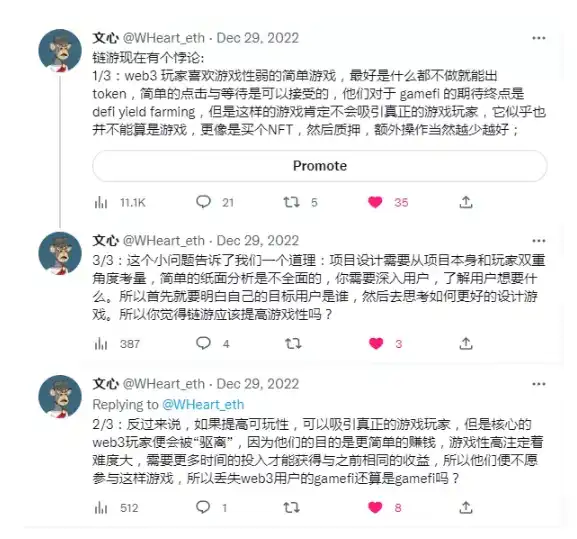
The chain Travel paradox?
I asked a veteran MMO player, and he told me, "They don't care if it's fun. They're watching a movie or something when they're moving bricks." So, even the classic web2 gold miners don't care if the game is fun, because it's obvious that they want to make money.
But does chain play really not need to be playable? Of course not, the above just shows that gold mining players do not care about the playability, but like DNF and Fantasy Westward Journey, the reason why they survive for a long time is not because there are gold mining players but the vast number of entertainment players, and the playability is to serve the core users (entertainment players). These users satisfy the boss's gaming experience, the gold mining players satisfy the boss's demand for gold, and the boss provides cash to the project side.
So, the best state is:
Gold miners don't care about gameplay, just gold miners
The average gamer wants to play games to kill time
Krypton gold boss can get a sense of honor through the game, a hundred people, willing to charge money to buy equipment
The game can bring the sense of honor, can bring ordinary players entertainment, can bring gold players money
You need to carefully design your content so that it meets the needs of different types of players, and that it helps the ecosystem thrive while satisfying your own needs. In short, it may be a turning point for chain games to reach a point where players are willing to play the game even if the money part is stripped away, and even if players are willing to pay for a better game experience.
5. Economic model optimization
The chain tour project needs to review the design of the economic model, and do not be limited by the existing project. The rule of Web3 is to fire the new and not fire the old, and it is difficult to make a hit again by simply imitating the design of the previous project.
The original single-currency model was a simple idea, which was to monetize in-game items and allow users to buy NFT and use them in the game to get tokens. However, this design had many disadvantages: for game participants, the rise and fall of token prices had a great impact on the game, and the capital market would directly affect the game ecology, thus leading the game to a death spiral; For investors, unlimited issuance of tokens is not a good investment, and even investors who have confidence in the game are not far away from buying such "doomed assets".
Therefore, the two-coin model appears, which solves the second problem well, separating in-game tokens and investment tokens. Governance tokens are the bearer of project value, and such fixed amount tokens are more suitable for investment. On the other hand, by issuing two tokens, the project side naturally has the opportunity to gain more benefits. Is there a problem with the coin model? Of course! First of all, it doesn't solve the first problem, the rise and fall of the capital market still have a direct impact on the in-game ecology; Secondly, the efficacy of governance tokens has been more awkward, really want to participate in the game governance needs to get enough voting rights, but the premise is to buy a lot of governance tokens, and people with a lot of governance tokens will not focus on the game governance.
Governance, voting, ve model and other gameplay are all learned from DeFi. DeFi's vote on the direction of the protocol can directly affect individual revenue, so many whales are willing to hold, while GameFi's vote will not have much impact on revenue, so there seems to be no reason to hold GameFi governance tokens. As for the pledge of interest, it can only ensure that their assets are not diluted, so governance tokens are generally difficult to maintain the price.
Ideally, the economy inside and outside of the game should be relatively independent, and at the very least, the rise and fall of the token price should not directly affect the game experience of non-gold farming users. The governance of the token needs to increase the actual effective use of the scenario, perhaps involving the upgrading of items later in the game, unlocking hidden levels, etc. Reasonable burning mechanism and holding (pledge) income mechanism also need to be considered, deflationary token prices will be more stable. Don't let the props and tokens obtained in the game can be traded, no one rules that all the props are NFT, so that more rewards precipitation in the game props, traditional game decomposition, synthesis, training and other gameplay can be referred to, all rewards set into tokens is not an unwise choice.
Step 6 Summarize
Making a worthwhile game is challenging, and the key is whether it's worth it. Chain tour project party early issued NFT, coin after you can get a lot of money, then the construction of the game needs "pattern" in it, after all, the money has been in hand. Few projects believe in long-termism, and few Web3 hotspots are sustainable. It is worth thinking about whether to follow the big army to make quick money or to build a carefully honed product.
Then again, while we all know that Web3 needs a new hit, who's to say that a long-lived online game isn't worth it?
Original link
Welcome to join the official BlockBeats community:
Telegram Subscription Group: https://t.me/theblockbeats
Telegram Discussion Group: https://t.me/BlockBeats_App
Official Twitter Account: https://twitter.com/BlockBeatsAsia

 Related Articles