Valuation Frameworks and Market Capitalization Forecasts for 12 Major public Chains: Which are overvalued or undervalued?
原文标题:《 12 条主流公链的估值框架和市值预测:哪些被高估或者低估了? 》
Original article by Tascha Labs
The DeFi way
At any point in time, you can think of the valuation of a blockchain platform as being determined by three things, including:
Adoption and use
The platform moat
Crypto market conditions
How do these 3 factors affect Token valuation/market cap?
1. Adoption and use:
这是基本的估值驱动因素。用户需要一个链的原生 Token 来支付交易费用。更多的活跃用户意味着更多的人需要至少持有一定数量的上述 Token ,从而导致更高的 Token 需求并推动价格上涨。
This is a mechanical relationship that has nothing to do with speculative demand or expectations of price appreciation. So this is a long-term valuation driver.
2. Platform moat:
This affects investors' risk assessment of the platform. If a chain is seen as having a big moat - say, that it's been around for a long time and has strong communities - then more people will see it as a safer bet.
这种看法是否正确是个问题。关键是对更大的护城河和更低的风险的看法使 Token 能够获得溢价,其他条件不变。我把这称为」平台特定的加价「(稍后,你会看到各种链的加价指的是什么)。
3. Crypto market conditions:
投资者的情绪 -- 例如风险偏好水平 -- 会影响对所有 Token 的需求。整体加密的采用水平也是如此。如果没有整体加密市场的背景,单个 Token 的估值就无从谈起。
We can use active address or transaction counts to measure adoption and usage of a chain, while using crypto market capitalization to represent market conditions. So we can get:
Valuation of a chain = a1 * (active address or transaction count) + a2 * (total crypto market cap) + (platform-specific markup)
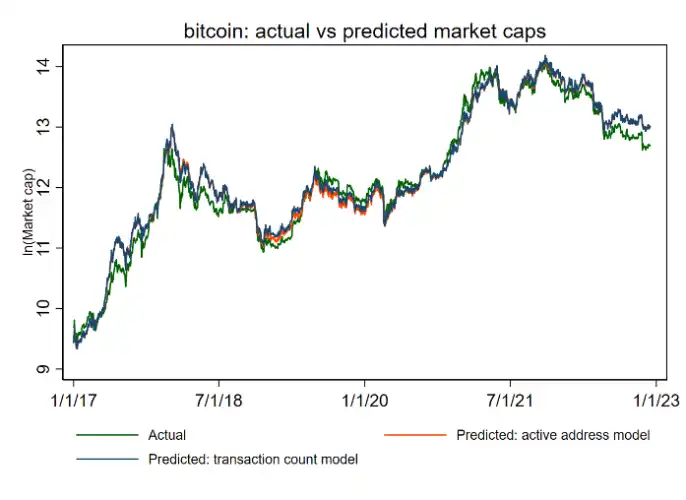
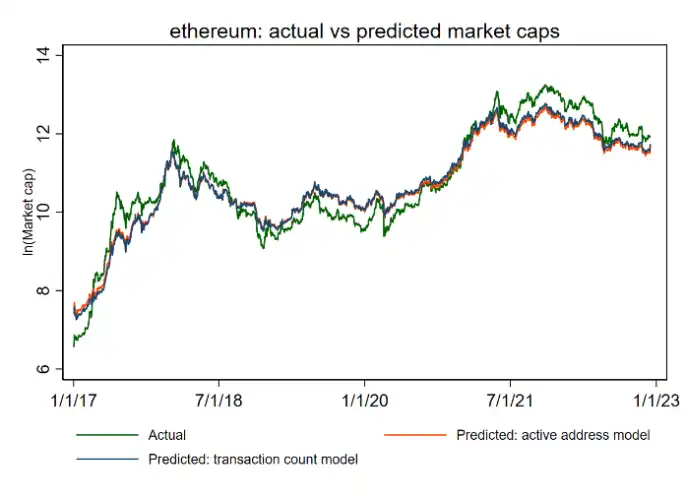
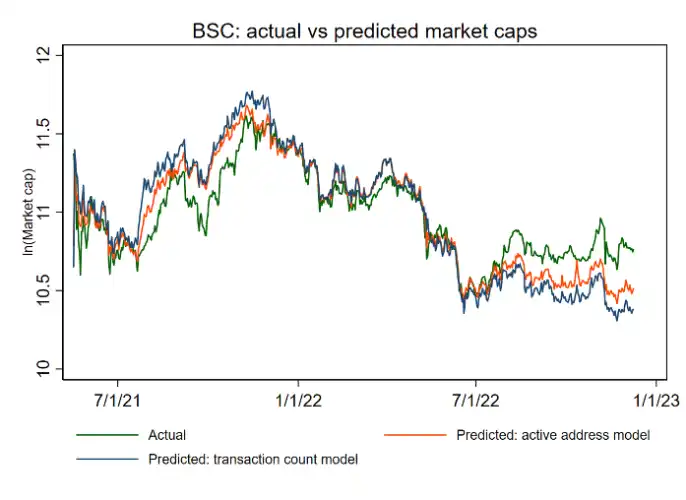
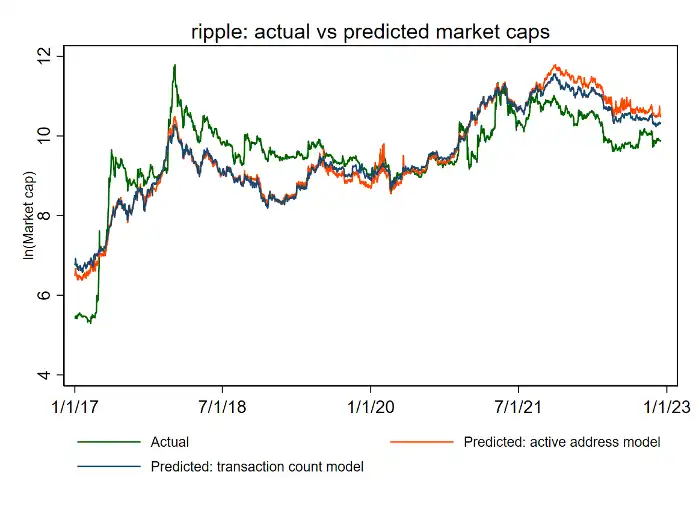
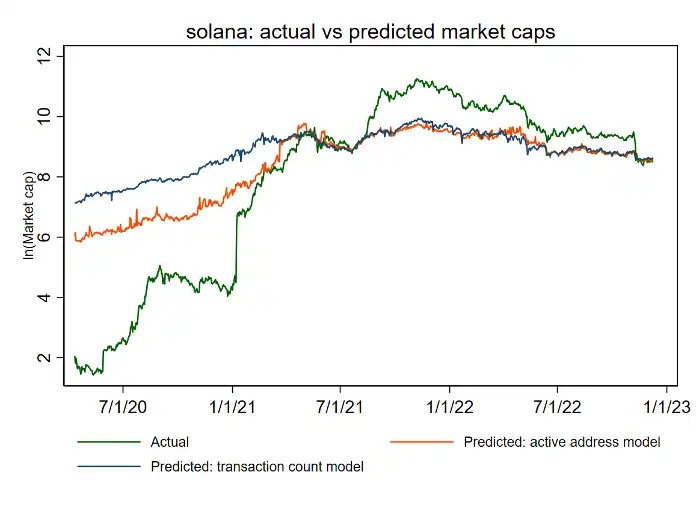
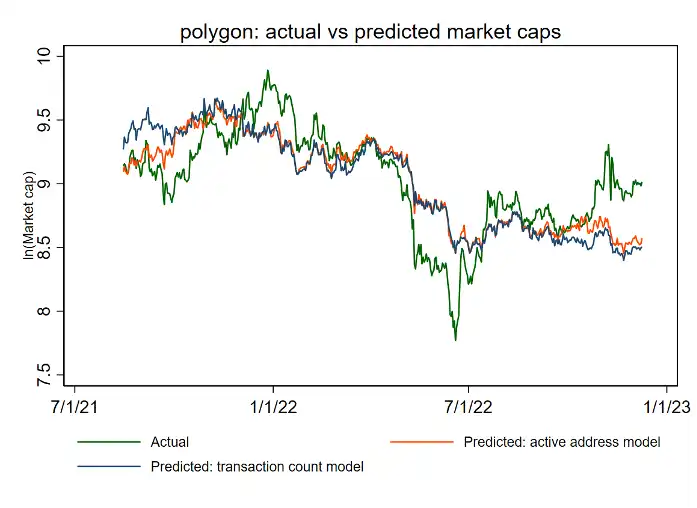
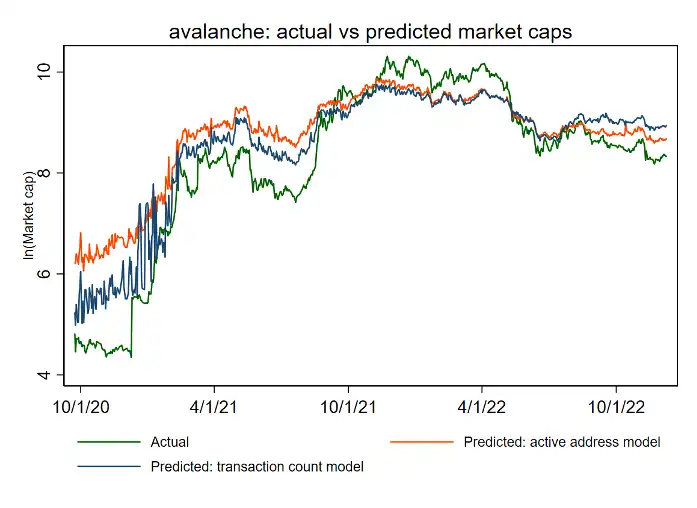
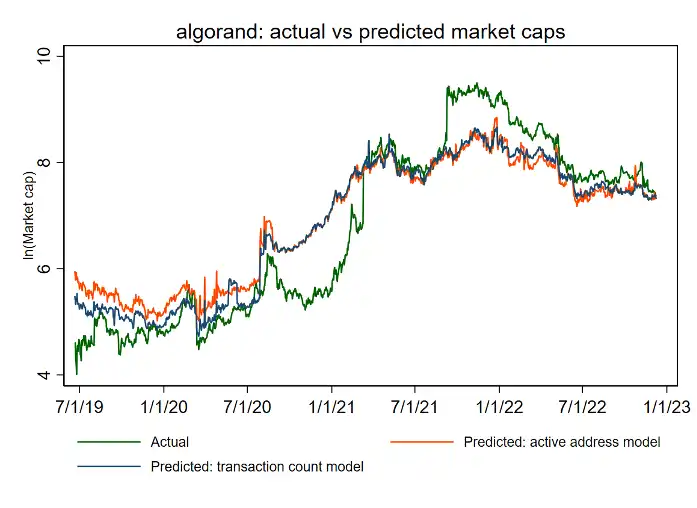
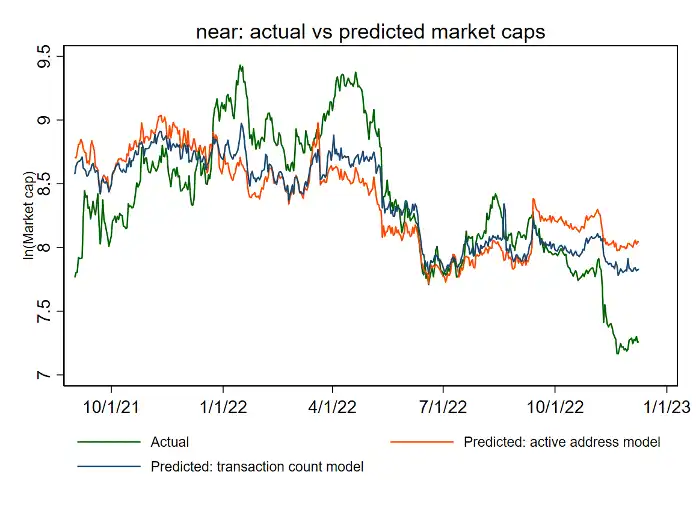
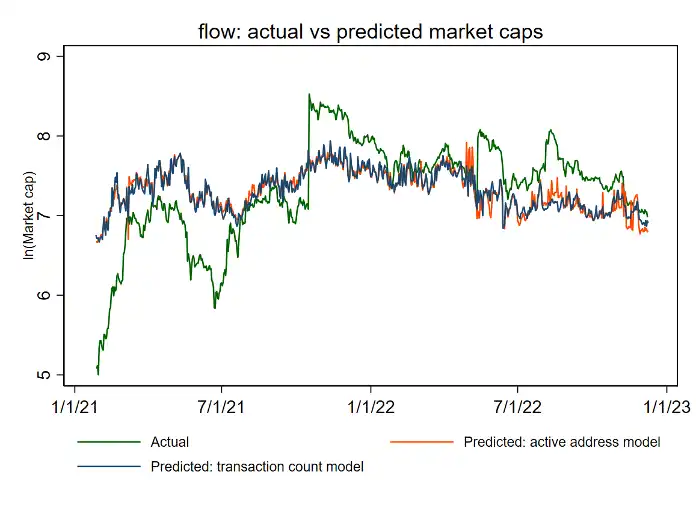
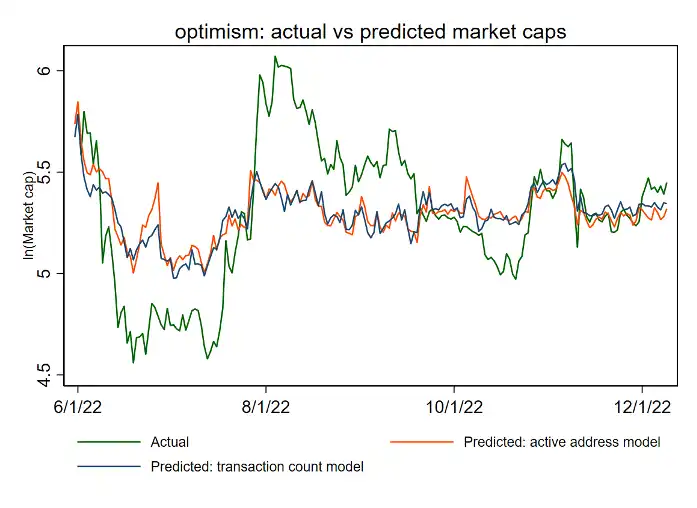
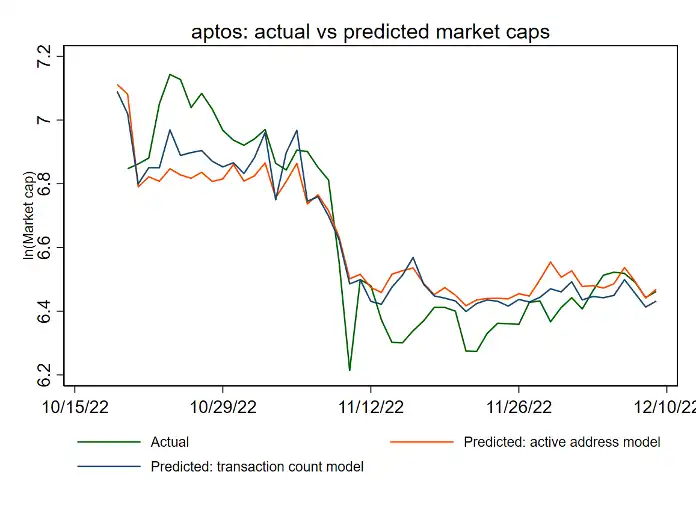
The chart below shows the actual market capitalization (logarithm) of the 12 major blockchains and the market capitalization predicted by the model. These two models measure chain adoption using active addresses and transaction counts, respectively.
About terminology
I call periods when actual market values (green line) are higher than projected valuations (red line and blue line) "overvalued" and vice versa "undervalued."
These are awkward terms, because to say something is overvalued or undervalued implies that there is an objective, fixed real value somewhere.
The reality is that all valuations are relative. A chain's valuation today can only be assessed in light of its past and the overall crypto context.
(It's like your physical location -- a seemingly real and reliable concept, but really just your position relative to the Earth.)
What "overvalued" really means here is that the current market cap is higher than what investors have historically valued the platform if you take into account current adoption levels and crypto market conditions.
But that's just lip service. So let's stick with "overestimated" and "underestimated" for now.
bitcoin
Ethereum
BSC
Ripple
Solana
Polygon
Avalanche
Algorand
Near
Flow
Optimism
Aptos
Here's a ranking of the gap between actual and estimated market values as of two weeks ago, in chain order. Similarly, positive gap = overvalued, negative gap = undervalued.
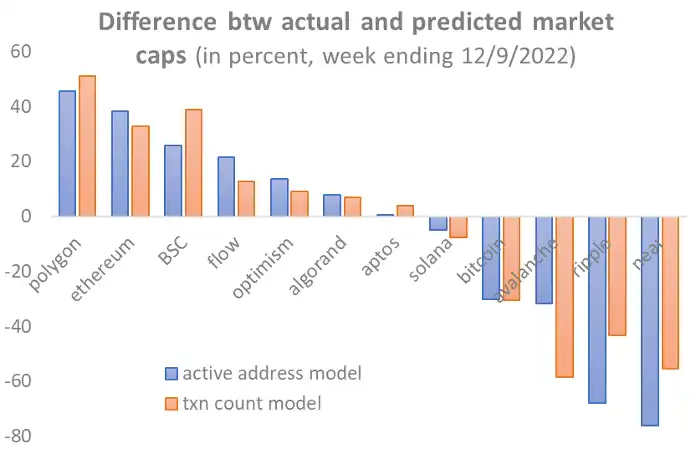
The results showed that by far the most overrated chains were:
Polygon
Ethereum
BSC
Flow
The most underrated chains are:
Near
Ripple
Avalanche
Bitcoin
The rest -- Optimism, Aptos, Algorand, Solana-- are. A small difference of 10%. I think these are more or less within the margin of error.
I know these results will strike a nerve with some people. If your favorite chain isn't in the category you want to see, there are a few things to look for:
First, these are empirical estimates. I am not imposing any personal opinion. So there was no need to shoot the messenger.
Second, there are a thousand reasons why these results do not apply to "current circumstances" - the so-called "this time is different" phenomenon.
例如,你可以说链 xyz 现在的价格较高,因为 Token 供应正在减少,或者市场正在为更高的增长前景定价,因为大项目即将上线。或者链 XXZ 的价格较低,因为它实际上已经死了或即将死去。
Are these valid reasons? Of course.
但不管理由有多充分,请记住,从历史上看,估值过高的时期往往紧随其后, Token 在随后一年的整体市场上表现不佳。这种估值过高与表现不佳的关系非常强烈。
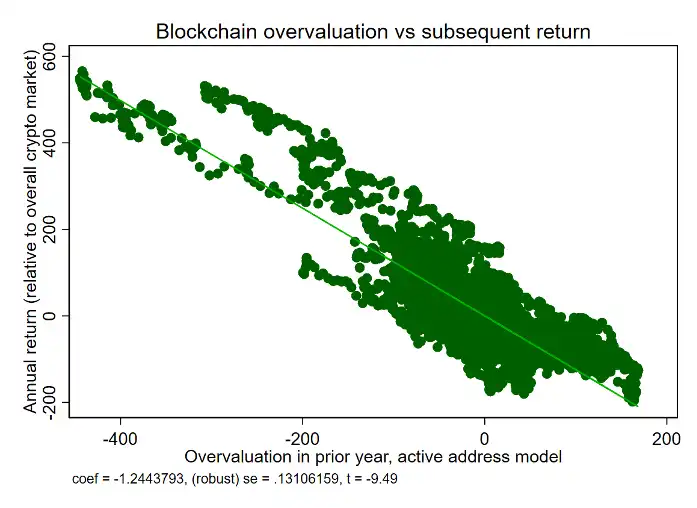
Can the case you have in mind really be an exception? Is it statistically possible?
Third, while these valuation gaps tend to imply regressions, with periods of overvaluation or undervaluation generally lasting six months to a year, there is no way to predict exactly how long they will last.
Just because a chain looks undervalued today doesn't mean it will correct itself tomorrow, and vice versa. The classic "value investor" trap is to buy something that looks undervalued, and it stays undervalued.
When you believe something is undervalued, the better approach is to put it on your radar. But only buy if you see some signs that the trend may be turning.
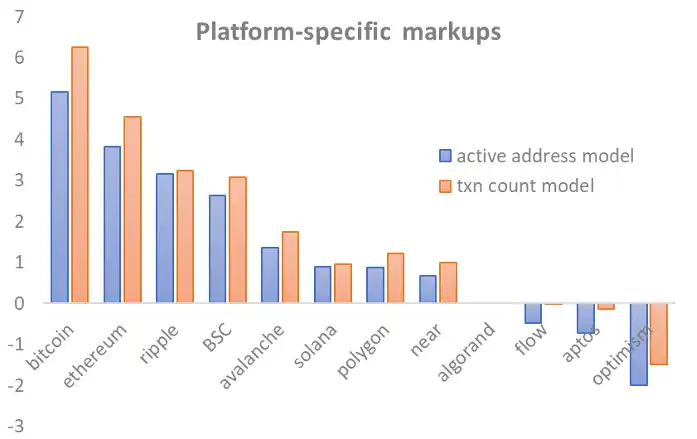
Finally, here are estimates of platform-specific mark-ups. Again, these measure a platform's moat or perceived risk level. If a chain is deemed to have a larger moat, i.e. more likely to continue to survive and grow, then it can command a higher price for the same level of adoption and use.
Among the mark-ups, there are some patterns that stand out. You're very smart. I'm sure you can find out what they are.
最后,虽然这些估值是基于 12 个公共区块链的数据,但同样的框架可以用于评估其他区块链,事实上,任何具有网络效应潜力的 Token 化项目,如游戏平台都可以使用这个框架。
I will soon deploy a simple valuation tool that allows you to insert usage data for any project and get a valuation return on it. It's very exciting for me. Stay tuned for announcements.
Original link
Welcome to join the official BlockBeats community:
Telegram Subscription Group: https://t.me/theblockbeats
Telegram Discussion Group: https://t.me/BlockBeats_App
Official Twitter Account: https://twitter.com/BlockBeatsAsia

 Related Articles