How do cryptocurrency trading platforms manage counterparty risk
原文标题:《 加密货币交易所如何管理交易对手风险 》
David Chaum, founder of eCash/DigiCash
Mary Liu, BitpushNews
If Web3 is to rely on centralized markets, it needs to find a way to manage counterparty risk. This year reminds us that Web3 still needs a centralized market, but "the ideal is rich, the reality is thin."
On the one hand, settlement risk in mainstream stock markets is increasingly likely to disrupt the global economy, as more traders "fan the flames" via social media, such as GameStop; On the other hand, due to the lack of complete hosting coverage, FTX And other crypto markets have caused huge losses to users. These problems stem from the fact that current electronic markets are simply designed to be replicas of open bidding and paper marketplaces -- and the irony is that all major crypto markets are set up in an unprecedented centralized way.
Of course, even the promise of full custodial coverage is not enough to address the risks involved -- operators of trading platforms can easily abscond with their money. Even if settlement and custody risks are addressed, information asymmetry remains a problem. Operators of all types of markets now have access to extremely valuable information about trades and traders, somewhat similar to consumer data in Web2 and Web3, which is likely to be used for all kinds of covert market manipulation. But there has been no significant negative impact because the interests of traders and the market as a whole cannot be easily shaken.
The market mechanism described below can solve these problems. There is no custodial or settlement risk and trader information is for the sole use of the respective trader.
The underlying type of market here is often referred to as a call market (the matching of all the selling and buying prices in a set period of time, also known as a fixed point market). Nasdaq, for example, uses this cyclical auction market for its opening and closing hours, during which traders make trade requests that are meant to be confidential, and only after the period is over are the requests effectively "decrypted" and completed according to the bid and the trades that should be cleared at that price.
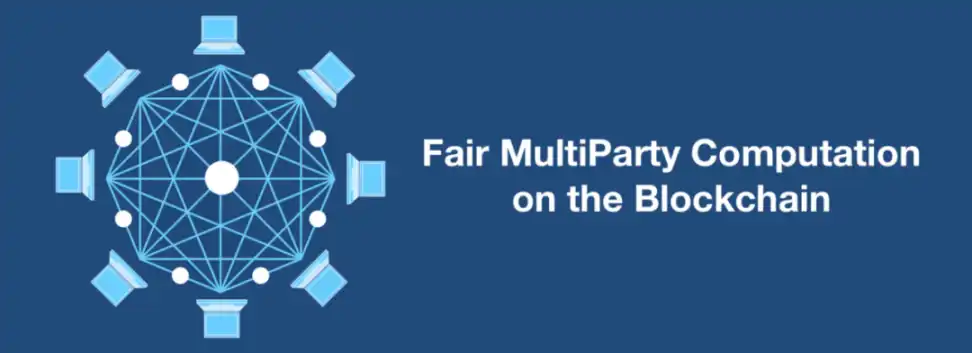
In order not to provide traders' information to trading platform operators, the solution mentioned in this paper is calculated by Multiparty Computation (MPC). I coined the term to describe the increasingly popular encryption techniques that allow multiple encrypted inputs to be converted into plaintext output by a conventionalized algorithm. The "calculation" is actually performed by the encryption protocol itself, so neither party can decrypt the published encrypted inputs, but all parties can be sure that the plaintext output was properly calculated from those inputs.
While most stocks and traditional commodities today are not primarily on blockchain, some are, such as Sixth, a Swiss trading platform. However, in this system, all traded assets are kept on the blockchain in order to address settlement and escrow risks. For example, when the currency pair of the transaction is bitcoin-dollar, bitcoin of course is already on the blockchain, and the dollar will be on the dollar Stablecoin blockchain. As part of the submitting bid or inquiry process, the asset is transferred to the wallet of the asset's local blockchain. But such wallets were created to be held jointly by trading platforms and traders - so-called "multi-signature" wallets. Their value can only be transferred through the cooperation of the two entities.
Once the multi-party calculation shows the above market clearing price, some of the multi-signature wallets will be traded and the rest will be returned. The buying price above the clearing price, and the selling price below the clearing price, are traded at the clearing price in a typical fixed-point market; Non-trading bids and asking prices cause the assets in the relevant multi-signature wallet to be returned to the trader. Such refunds are easy to achieve: The trading platform operator only has to disclose its key for all the multiple signatures, and the zero-knowledge proof provided by a given trader indicates that the trader will not change the specific price promised in cryptographic mode (to ensure an equal number of buyers and sellers to be traded, different price points can be provided for both buyers and sellers). Trading platforms publish keys that are of no value to anyone other than the traders involved, who then use them to regain control of the assets they promised.
A simple way to lock the exchange of assets in a multi-signature wallet is based on the number of fixed hands in the asset pair: For example, one bitcoin for a variable amount of dollars (larger transactions can be made more efficient by multiple parallel markets, each used for a fixed number of hands, such as 2, 4, 8, and 16 bitcoins, but using the same unit clearing price, which will not be covered below). The value of the multi-signature wallet initially transferred by the trader to the variable amount is used as a minimum "commitment fee". Once the MPC determines the clearing price, the variable amount traders transfer the remaining assets to their respective multi-signature wallets, leaving only the exact amount for the final amount.
Finally, the MPC randomly matches all remaining counterparties, each consisting of the bidder's trader and the asking party's trader. This then allows each bilateral pair to complete an "atomic swap" agreement, in which settlement takes place directly as part of the transaction. Such swaps are the only way for parties to unlock the value they place in the multi-signature wallet. As I mentioned earlier, this results in one party keeping custody of the multi-signature wallet of the counterparty on the other side of the trade. The "fluidity" I'm talking about is an atomic exchange technique that encrypts to ensure that either party provides the other with a multi-signed key and leaves before completing the exchange. Thus, parties that bid above the clearing price complete the transaction with randomly selected counterparties that promise less than the clearing price. No third party has custody, which means there is no guardianship risk. And trading is "atomic" - settlement happens at the same time as trading - meaning there is no settlement risk.
However, if those running trading platforms can learn who is associated with a particular bid or asking price, then this information can allow them to manipulate the market, for example by knowing the general positions and trading patterns of participants. To solve this problem, I propose a "hybrid" approach for all communication between traders and trading platforms, which hides who is sending or receiving which messages. In addition, the trader's identity should not be associated with the wallet ID of the underlying asset being traded. In this way, the identity of the user from the trade is hidden, which would otherwise be a useful source of information for anyone manipulating the market.
Whether it is a small probability or not, collusion between trading platforms and traders, or even the potential extortion of traders by trading platforms, can be prevented by the margin issued by trading platforms.
Margin needs to cover only one round of exposure to the fixed-point market, as abuses are exposed before the next, making the maximum support of such trading platforms very practical, in contrast to the unrealistic margin requirements in traditional settlement, and even to the extended trading sessions where risks can accumulate.
It is a fully scalable approach to asset trading markets that includes solutions to custodial and settlement risks, as well as avoiding manipulation through information asymmetry by ensuring that all details remain confidential to traders, and is suitable for crypto markets where the needs are most pressing and acute. Once deployed, it will prove that traditional markets can benefit from the best practices of this encryption.
Original link
Welcome to join the official BlockBeats community:
Telegram Subscription Group: https://t.me/theblockbeats
Telegram Discussion Group: https://t.me/BlockBeats_App
Official Twitter Account: https://twitter.com/BlockBeatsAsia

 Related Articles