Global blockchain industry overview and trends (Part 2)

Original title: "Global Blockchain Industry Panorama and Trends"
Original author: Huobi Research
7. DeFi: The Darkness Before Dawn
The development of DeFi in the early days has been tepid, and the types of protocols are very limited. Most of them are based on the mapping of traditional financial models to the infrastructure of blockchain platforms. Until 2020 In 2020, with the emergence of the automated market maker (AMM) system and liquidity mining, DeFi has experienced explosive growth, attracting a large amount of capital to rush in. At the end of 2021, DeFi's total value locked (TVL) peaked at US$182.16 billion.
Entering 2022, DeFi has also suffered a huge impact under the general environment of macroeconomic uncertainty, geopolitical tensions, black swan events (Terra collapse, 3AC, Celsius and FTX explosions), increased attacks and vulnerabilities on the DeFi chain, and the general downturn in the crypto market. This section aims to reflect the current status of the DeFi market from different dimensions.
7.1 Current Situation of DeFi Market in Bear Market
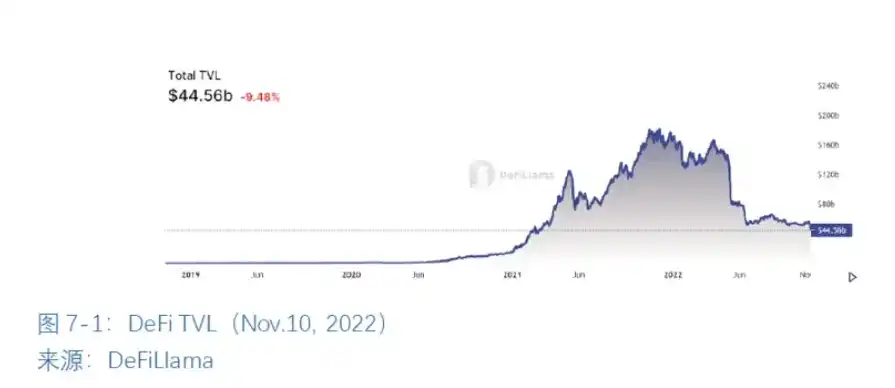
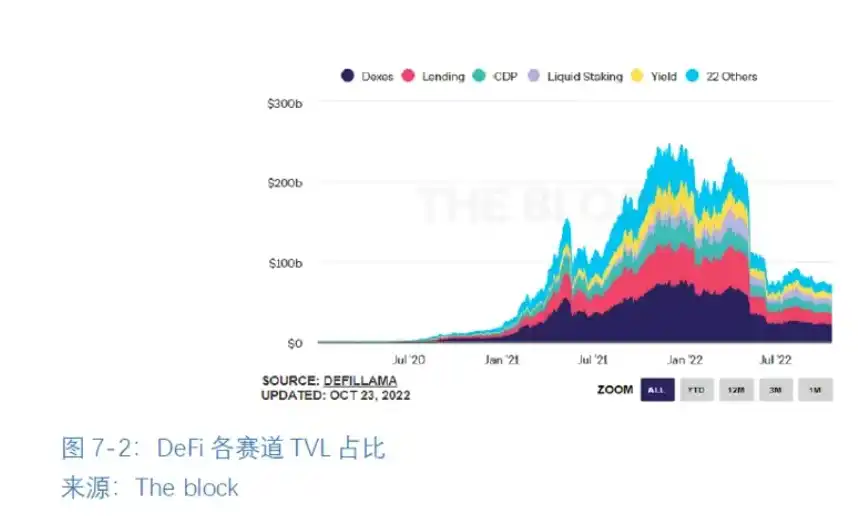
Currently, the total value locked in the DeFi protocol is 44.56 billion US dollars, which has dropped 75.5% from the historical high of 182.16 billion US dollars, directly reflecting the large-scale depreciation and capital withdrawal of the DeFi market. From the perspective of protocol categories, DEX and lending are still the main tracks in DeFi, and the sum of their TVL accounts for about 68.1%, which is a decrease compared to 2021. From the perspective of public chains, Terra's TVL has fallen the most in the past year, mainly because the collapse of UST has caused its public chain value to almost zero; followed by the collapse of FTX, which has had a significant impact on the Solana ecosystem. The TVLs of other major public chains have also declined, such as BSC, which fell by about 45.1%, and Avalance, which fell by about 59.2%. This is not just because of the bear market. According to Beosin's blockchain security report, the DeFi field experienced more than 30 hacker attacks in Q3 2022, causing losses of more than $400 million, which made the entire track even worse.
DEX
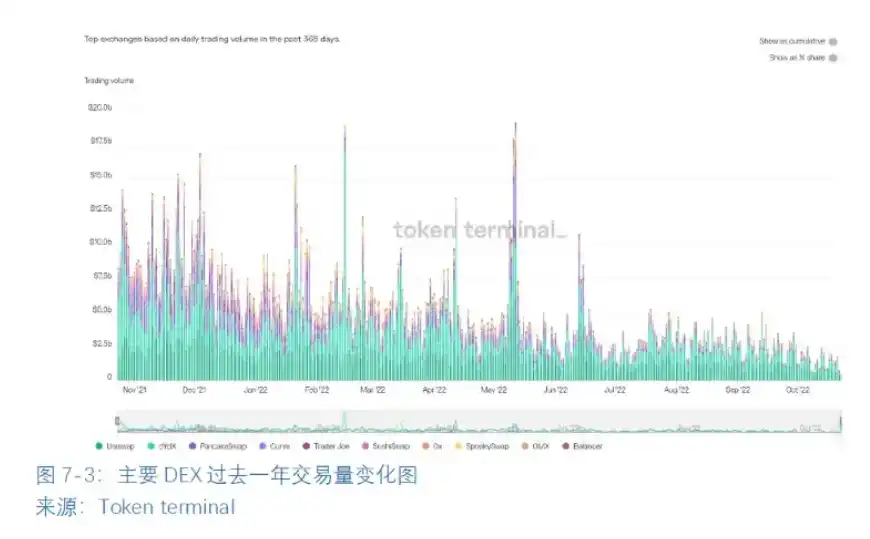
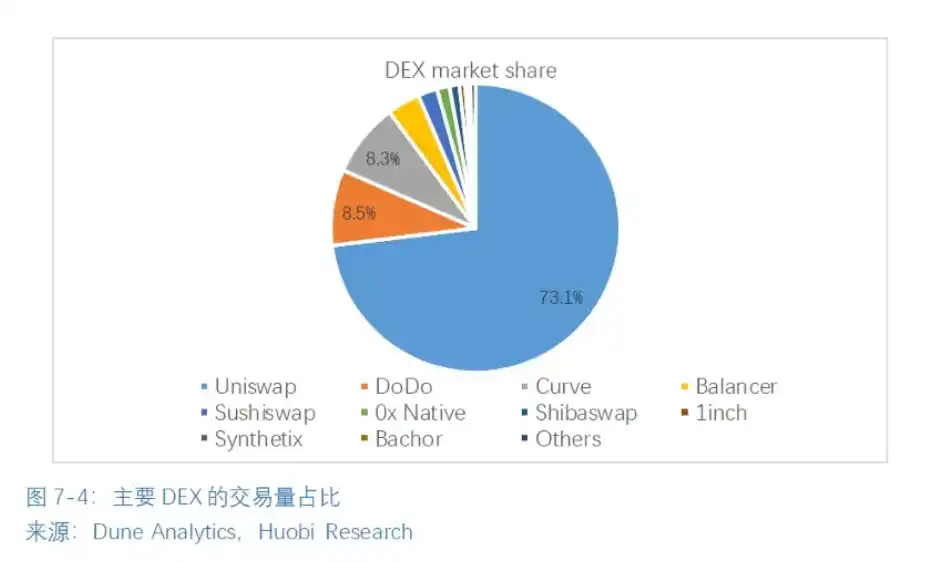
Although DEX has not seen major updates like Uniswap V3 in the past year, various DEX protocols have also made some small upgrades to survive the current crypto market winter.
1. DEX integration of NFT transactions has become a trend. On the one hand, taking the DEX head application Uniswap as an example, it announced at the end of July that it would integrate the existing NFT trading platform Sudoswap to realize NFT transactions, and claimed that users will be able to access the on-chain liquidity provided by sudoAMM in the future. On the other hand, DEX represented by PancakeSwap has also developed and integrated the NFT trading market on its own platform, bringing an increase of up to about 40% in protocol revenue.
2. Promote product diversification and provide one-stop service. At present, many DEX protocols no longer only have the Swap function. They also provide cross-chain, lending, staking and financial management functions on the platform to improve user stickiness and attract more funds. In addition, some AMM-based DEXs (SushiSwap, PancakeSwap, etc.) have also derived the traditional limit order model on the platform to bring users a better trading experience.
3. Full migration to Layer2, accelerating the process of multi-chain deployment. With the gradual implementation of Layer2 technologies represented by Rollup, many DEXs have announced integrated expansion solutions to reduce transaction costs and increase transaction speeds. At the same time, more and more protocols have begun to be deployed on emerging public chains other than Ethereum to capture a larger user base.
Loan
Lending is the second largest track in DeFi in terms of TVL. The total amount of DeFi borrowing has dropped from $28.4 billion to a minimum of $16.2 billion, and the total amount of deposits has dropped from $78.2 billion to a minimum of $40.3 billion. The yield of lending protocols has also dropped significantly. On the mainstream lending platforms Compound, AAVE and MakerDAO, the yields of stablecoins USDC and DAI lenders are only between 0% and 1.5%.
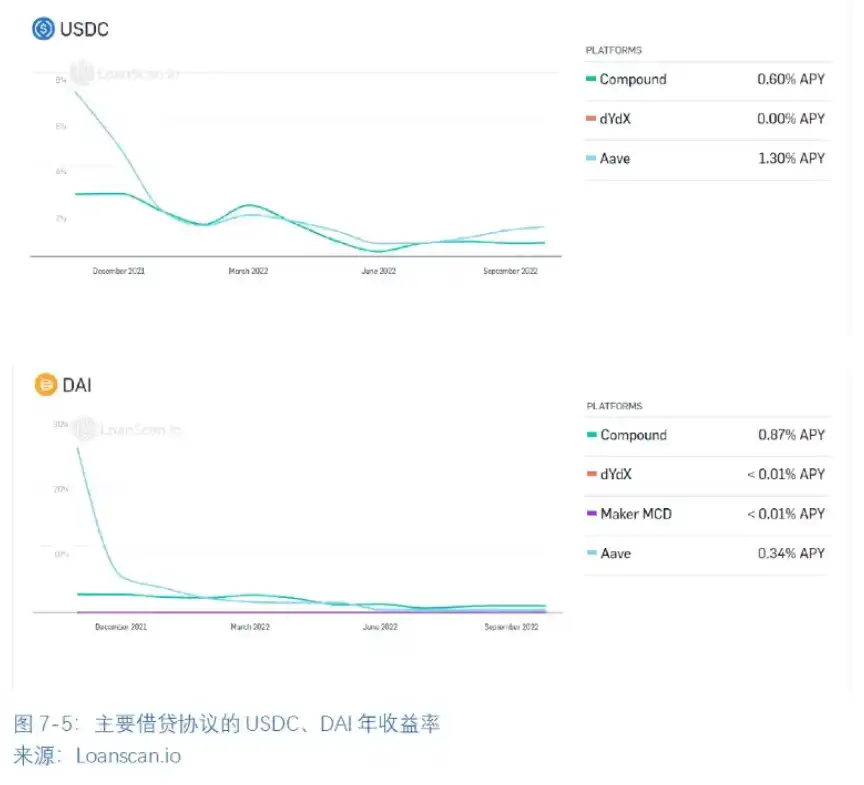
The cold market has caused many lending protocols to actively seek changes in their business. Taking the leading lending application AAVE as an example, its upcoming native stablecoin GHO attempts to use the wide application scenarios of stablecoins to expand the platform development and build its own ecological moat. On the other hand, with the ERC-4626 With the official launch of the protocol, all interest-bearing certificate assets such as Lido's stETH and Compound's cToken can be seamlessly connected to various lending protocols through this interface. In the future, as more types of interest-bearing certificates are included in the mortgage and loan assets supported by the lending protocol, users' capital efficiency will be further improved.
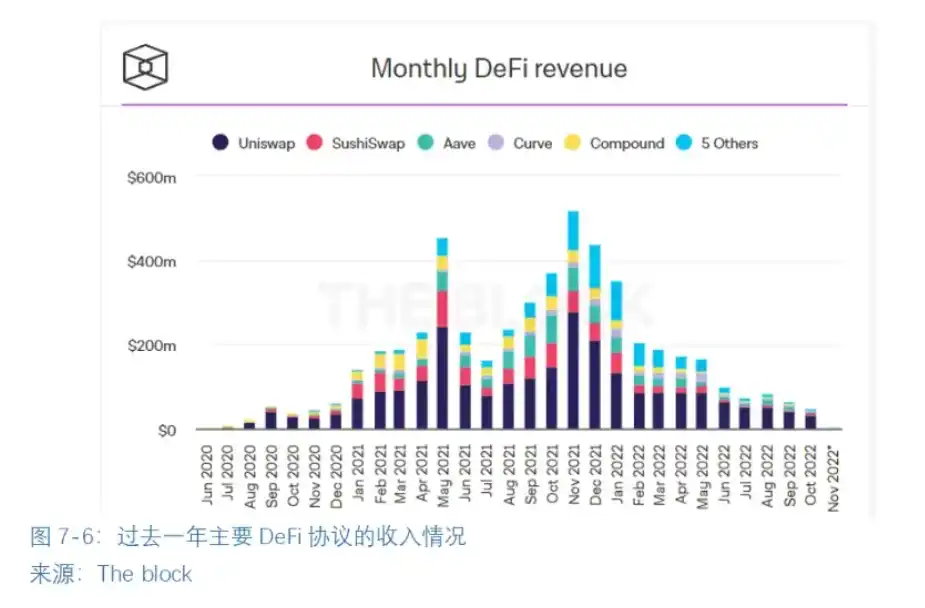
(2) Reshape sustainable Token economy. At present, many DeFi protocols’ Token are difficult to effectively accumulate and capture ecological value. Some existing protocols have begun to experiment with sustainable Token economics, such as Curve’s ve model. If users want to continuously improve their governance capabilities and corresponding rewards, they must continue to stake CRV. This model can solve the problem that whales previously obtained governance rights and returns by purchasing Token in the short term, and it also gives Token value, which helps reduce the circulating supply of CRV. Therefore, more and more protocols have begun to explore optimization in Token economics, trying to achieve secondary growth by giving Token longer long-term value.
(3) Explore DeFi financial derivatives. Currently, all tracks in DeFi are relatively saturated and show an obvious head effect. Before disruptive innovation occurs in the overall environment, it is difficult to find new continents for development. Therefore, new projects can consider focusing on the direction of relatively mature businesses in traditional fields but with fewer on-chain competitors. Most of these categories belong to derivatives. However, although the models of some derivatives protocols are still good, they are still in a very early stage.
(4) Appropriately embrace regulation. Since the Tornado Cash incident, the crypto industry has entered the regulatory sights of modern countries, and the early barbaric expansion is no longer there. In addition to the United States, the European Union will also launch the EU Crypto-Assets Market Framework (MiCA) for DeFi next year for regulation; in the future, this kind of regulation will not only be a certain protocol, but will be completely monitored from the entire blockchain application layer. Therefore, DeFi For the protocol, instead of fighting against traditional financial supervision, it is better to actively embrace them and find a balance between the blockchain world and traditional review.
7.3 Stablecoins
7.3.1 A new round of prosperity and crisis of algorithmic stablecoins
Evolution and collapse
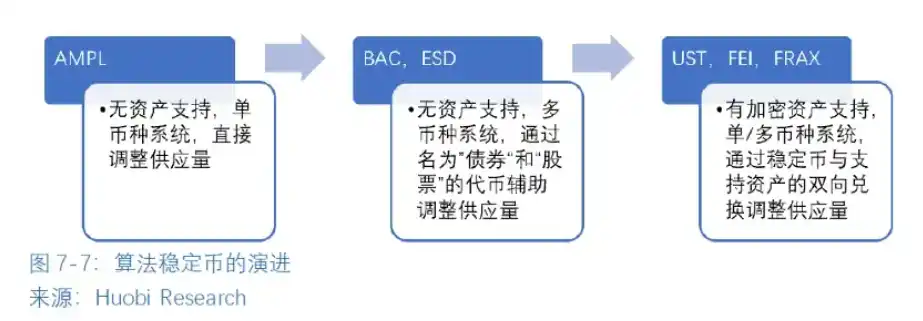
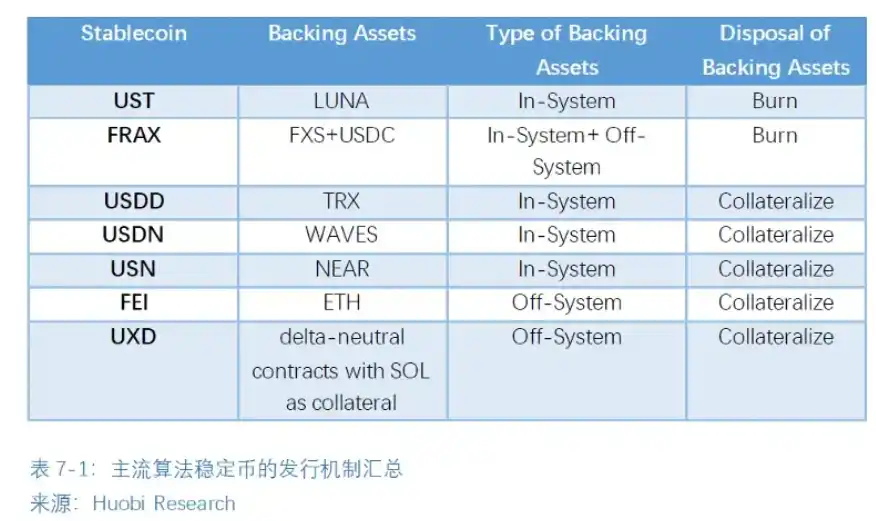
The biggest difference between the third-generation algorithmic stablecoin and the previous ones is that they have sufficient assets as support to avoid the "death spiral". In their issuance mechanism, they all need to destroy or pledge sufficient crypto assets, which almost fundamentally changes the connotation of algorithmic stablecoins. This article still uses the term "algorithmic stablecoin" and defines it as a "stablecoin fully supported by crypto assets." With supporting assets, algorithmic stablecoins can withstand the overall market fluctuations and their own price declines, and maintain long-term price anchoring.
0
1
2
3
4
5
6
7
8
9
9
8
9
8
9
8
9
8
9
8
9 ="" font-decoration-thickness:="" initial;="" text-decoration-style:="" text-decoration-color:="" initial;"="">
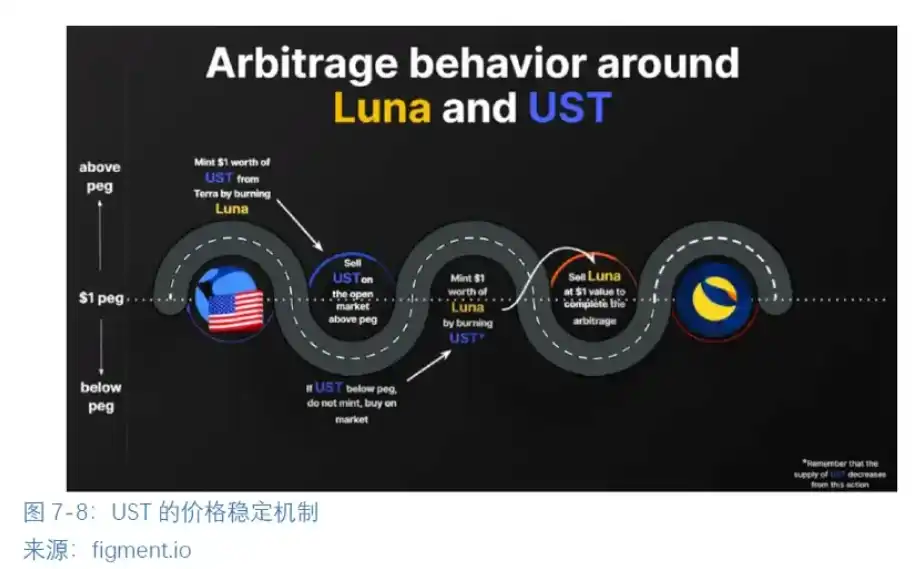
A beautiful mechanism design cannot enable algorithmic stablecoins to achieve scale expansion. The key factor for the expansion of UST, which was once popular, is the lending protocol Anchor on the Terra public chain. Users can deposit UST in it and get a fixed income of 20% APY. With the influx of users, the price of LUNA, the issuance of UST and the TVL of Anchor have all risen together. In March of this year, it even surpassed DAI to become the largest decentralized stablecoin.
However, in May of this year, first the LUNA price continued to fall and Anchor adjusted to a floating rate, and then the UST ratio in the Curve pool was unbalanced and the whales sold it. UST finally quickly broke free and never returned to around $1. The price of LUNA also fell by more than 99%, and Anchor's TVL was halved within a week. UST and Terra 's collapse severely hit market confidence, causing some other algorithmic stablecoins to briefly decouple, and even be characterized as a false proposition by investors.
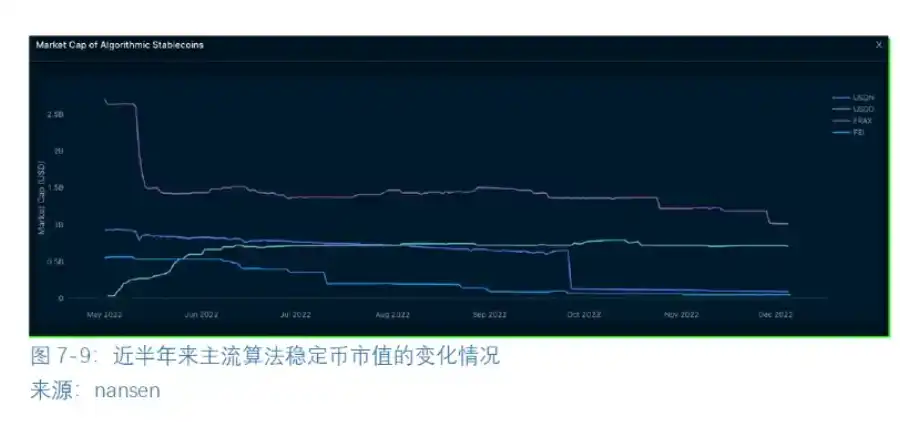
The following figure compares the market value of the current mainstream algorithmic stablecoins before and after the collapse of UST. At that time, the total market value of the top 5 algorithmic stablecoins in terms of issuance quickly shrank from US$23 billion on May 8 to less than US$4 billion on May 22, a decrease of 82.6% in 2 weeks. At present, the total market value of these 5 algorithmic stablecoins is less than US$2.5 billion, which has fallen by about 90% compared with before the collapse of UST.
The only one that can withstand the pressure is USDD. Its issuance mechanism combines the characteristics of algorithmic stablecoins and over-collateralized stablecoins. It stipulates that only whitelisted institutions of TRON DAO Reverse (TDR) can issue USDD in the form of full collateral of TRX (algorithmic stablecoin). TDR has reserved nearly 200% of the collateral assets including TRX, BTC, and USDC (over-collateralized from the outside). Only these whitelisted institutions have the right to destroy USDD and exchange it for TRX. If USDD has the risk of depegging, they will not run it, because this will block the future financial path. USDD has been supported by a number of CEXs such as Huobi, Poloniex, Kucoin, Bybit, Gate, and DeFi protocols such as Sun.io and Ellipsis, and has a wide range of application scenarios. Therefore, its issuance volume has nearly doubled despite the fact that its competitors were almost wiped out, and it was granted legal tender status in Dominica on October 7, 2022. This is the second batch of cryptocurrencies in the world to be granted legal digital currency status after Bitcoin.
Reflection and Inspiration
Why did this generation of algorithmic stablecoins collapse? What was wrong with that seemingly impeccable mechanism?
According to how stablecoins are issued, there are two main types of crypto-asset-backed stablecoins, one is the destruction of supporting assets, and the other is the mortgage supporting assets. The risk of destroying algorithmic stablecoins is that the system may over-mint supporting assets when the prices of both supporting assets and stablecoins fall, resulting in a very serious decline in supporting assets and the collapse of the entire system.
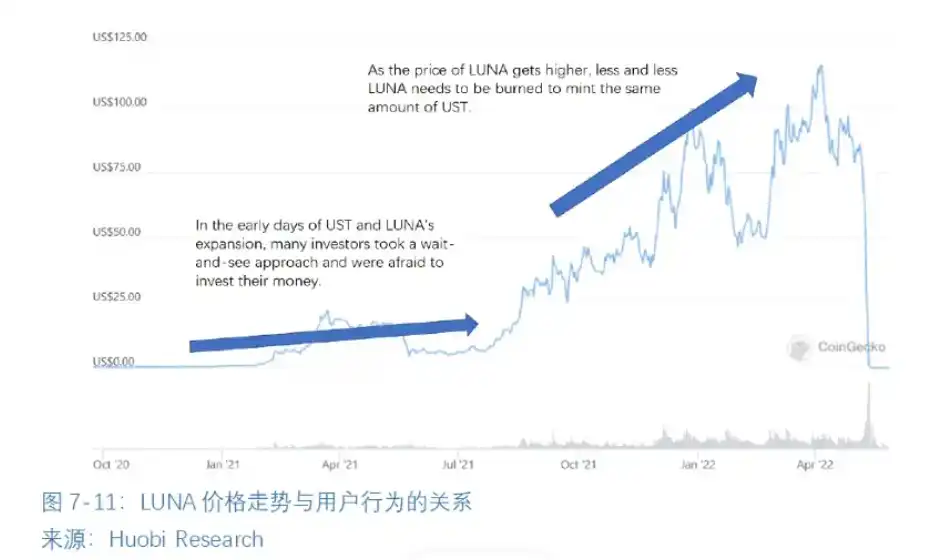
Like burning stablecoins, collateralized stablecoins may also experience a situation where both the supporting assets and the stablecoins fall, and the supporting assets may also be insufficient. At this time, users who redeem first are more likely to get the full amount of assets, while users who arrive later will not be able to get redemption. Users cannot redeem and can only sell stablecoins on the secondary market, causing their prices to fall sharply.
Algorithmic stablecoins are a supplement to over-collateralized stablecoins. For users, if they are more optimistic about the potential for appreciation of an asset, over-collateralizing it can retain future income rights. If you are more optimistic about the recent development and relatively stable income of a certain ecosystem, algorithmic stablecoins are a better choice.
In the future, if there is a new algorithmic stablecoin solution that can guarantee sufficient collateral assets and reserves, a healthy stability mechanism, a wide range of application scenarios and a flexible asset management strategy, it is still possible to gain market recognition.
A promoter is an agreement or entity that, after approval by Aave Governance, can obtain the right to mint and destroy GHO. Promoters can design the minting and destruction methods according to their own business characteristics. In order to control risks, Aave Governance will set an upper limit on GHO minting for each promoter.
The promoter will mainly bring the following changes
(1) Improve the flexibility of the GHO stablecoin system. Multiple institutions can easily issue stablecoins, and the types of collateral assets can have a very large degree of freedom. In addition to the traditional minting methods of mortgaging ETH, AAVE and other Tokens , there may also be various minting methods such as mortgaging real-world assets (RWA), Delta neutral positions, and credit points. This can activate the liquidity of more assets.
(2) GHO exerts the "sardine effect" to accelerate the economic system cycle of the promoter. GHO can achieve the same functions as general stablecoins, but it will be bound to the promoter's own economic model to promote business operations, incentives, Token staking and other activities. If designed properly, there should be many protocols willing to join the ranks of promoters.
The main risk of this move is the increase in the complexity of the protocol, which may be discovered by hackers. Considering Aave's strong technical strength and the issuance cap set by promoters, the overall risk should be controllable. Therefore, it is predicted that GHO is likely to become an important asset with a large scope of application.
8. GameFi & MetaVerse
8.1 GameFi
8.1.1 Gamefi Market Status and Prospect
GameFi is a new sub-track born in the 2020 bull market. GameFi combines games and finance. Gamers play games for fun, while people make money through economic incentives. It cleverly financializes games and brings more new forces to the currency circle. GameFi achieved great success in last year's bull market. However, since the market downturn this year, GameFi has shown a clear downward trend and has a strong correlation with the market index BTC (Figure 8-1 and Figure 8-2). In this year's bear market, projects based on hype and unsustainable profit models have collapsed particularly severely.
According to Footprint's on-chain data, the growth of GameFi projects began to slow significantly in May, with only 41 new projects launched that month. Far lower than the number of projects launched in the first quarter. After a year of development in 2022, BSC now has the largest gaming ecosystem, with more than 582 GameFi projects.
Axie Infinity and Stepn were the most popular GameFi projects last year and this year, but judging from the current average number of active users, they are no longer in the top three, and the daily active users are far behind the top three blockchain games, which also shows that unsustainable game models are not conducive to the development of projects in the long run. On the other hand, Alien Worlds and Splinterlands, two games with less popularity outside the GameFi field, now dominate. Even after the price drop and the lower return on investment, they are still popular among users. This also shows that the playability of the game can to a certain extent prevent it from falling into asset inflation in the downward cycle.
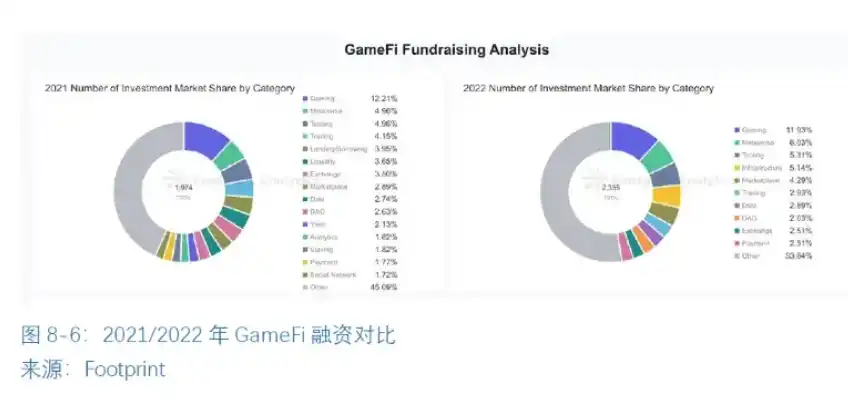
In 2022, capital began to pay more attention to Web3 investment, especially GameFi and Metaverse, as shown in the figure below. GameFi and Metaverse have exceeded the number of investments in Tooling, Trading, and Lending/Borrowing for two consecutive years. Capital investment in these two categories has increased from US$874 million in 2021 to US$2.4 billion in 2022.
8.1.2 X 2 Earn brought a boom, what's the next boom? ="" font-size:" 20px;="" font-variant-ligatures:="" font-variant-caps:="" orphans:="" 2;="" text-align:="" start;="" text-indent:="" 0px;="" text-transform:="" none;="" white-space:="" widows:="" word-spacing:="" -webkit-text-stroke-width:="" background-color:="" rgb(255,="" 255,="" 255);="" text-decoration-thickness:="" initial;="" text-decoration-style:="" text-decoration-color:="" initial;"="">In the first half of this year, Stepn pioneered the introduction of the Move to Earn economic model for the blockchain and achieved great success. A large number of Web2 practitioners have begun to realize that Play 2 Earn is not limited to various games. Adding traditional Web2 industry scenarios Token Economy will still be very popular, X to Earn The model was born under this opportunity. For a time, all scenarios such as sports, learning, singing and even sleeping began to adopt the X To Earn model, trying to transfer the Token incentive model from online scenarios to more realistic offline scenarios. However, looking at the development of X To Earn in the past year, the data is not satisfactory. For example, the highest number of people entering Stepn on a single day in May reached 100,000, but now it is less than 10,000. After the number of people entering the market decreased, the users and investors who entered should no longer be able to calculate the payback period.
For the project side, X To Earn introduces more real-world scenarios to players compared to the Play 2 Earn model, which to a certain extent solves the current problem of poor playability of blockchain games and enhances the interactive stickiness between users and games. However, whether many scenarios really need to join the Token economic model, and whether it is a provably sustainable business model is also questionable.
For users, the X To Earn model projects have a high threshold problem. Users must hold the corresponding NFT to enter its application. This marketing strategy is friendly to early users. Early users often buy at a lower price. With the cooperation of this invitation-based hunger marketing, a large number of users follow suit. With the increase in the subsequent reproduction of NFT, the value is constantly diluted. In the bear market, it is difficult not to be smashed by early users without the entry of newcomers. This kind of FOMO Users who enter the market under emotional conditions often buy at high prices and face the risk of losses. This short-term model of newcomers entering the market to take over the positions of old users is actually the main source of criticism that X 2 Earn is a Ponzi scheme.
X To Earn continues the dual Token +NFT incentive model pioneered by Axie infinity. Once such an economic model is not designed properly, it will seriously affect the value of the Token incentive, and then affect the retention of daily active users. So far, neither Play 2 Earn nor X to Earn can control the inflation of the Token in the game.
In the long run, the influx of X to Earn players will naturally solve the difficulties encountered by the X to Earn project, but the points mentioned above are the urgent problems that X to Earn faces. How to solve the inflation of game NFT and game Token , enhance the ecological construction of the project, reduce the financial attributes of gold farming and truly implement the offline business model, it seems that the solution of all these problems can be the way for X to Earn to get out of the current predicament.
8.2 Current Situation and Prospect of Metaverse Market
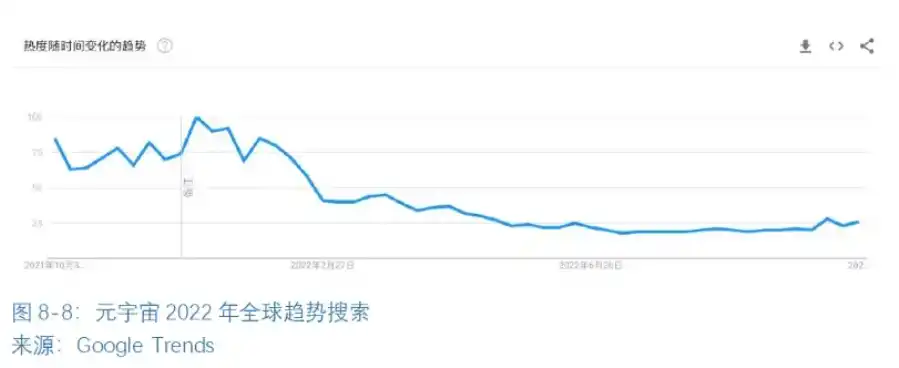
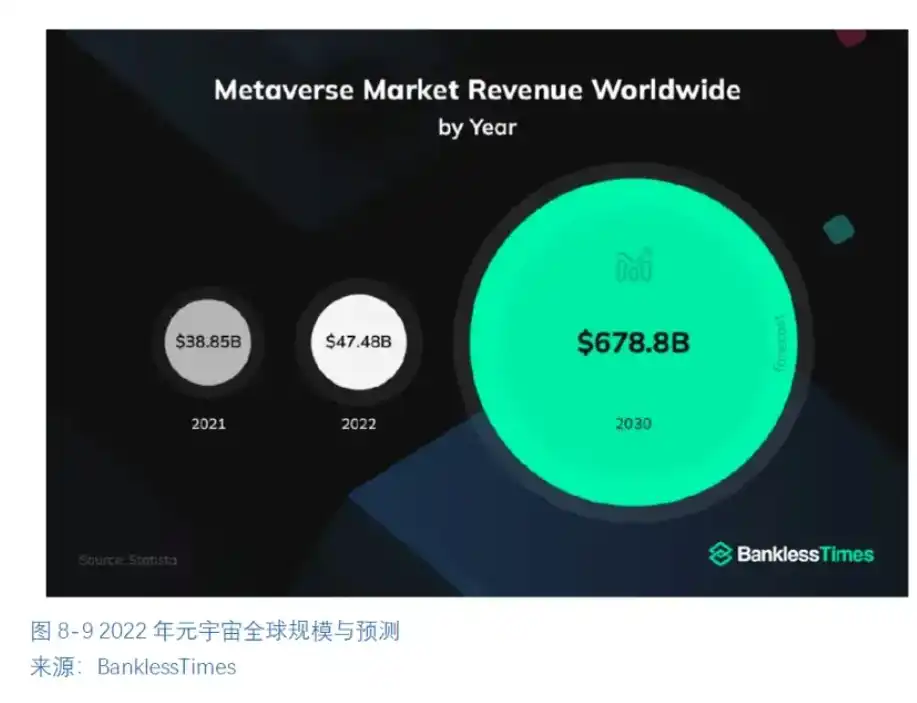
The Metaverse is a new type of Internet application and social form that integrates multiple new technologies. It provides an immersive experience based on extended reality technology, generates a mirror image of the real world based on digital twin technology, and builds an economic system based on blockchain technology. It closely integrates the virtual world with the real world in the economic system, social system, and identity system, and allows each user to produce and edit content. At the industrial level, the underlying technologies of the Metaverse involve 5G, cloud computing, extended display, robots, brain-computer interfaces, artificial intelligence, and blockchain.
At the national level, many governments have already joined forces with enterprises to carry out commercial development and institutional design of the metaverse, thereby seizing industry standards. For example:
China: In January this year, the relevant person in charge of the Ministry of Industry and Information Technology stated at a press conference on the development of small and medium-sized enterprises that they will vigorously support and cultivate a group of innovative small and medium-sized enterprises that enter emerging fields such as the metaverse, blockchain, and artificial intelligence. In addition to the guidance and support for the industrial development of the metaverse at the national level, more than 20 provinces, cities and regions have also issued relevant support opinions to provide a breeding ground for the industry standards and development of the metaverse and support the implementation of related industries.
United States: In March 2022, Biden signed the Presidential Order on Ensuring the Responsible Development of Digital Assets, requiring various agencies to conduct research on technological innovations and regulatory policies such as cryptocurrencies and digital assets, and emphasizing strengthening the United States' leadership in the global financial system and digital assets. Social giants represented by Meta are also actively connecting with policymakers and relevant experts, and putting forward reference suggestions from a professional perspective to coordinate the behavioral norms of all metaverse participants in jointly building a virtual world.
EU: On September 20, 2022, Ursula von der Leyen, President of the European Commission, put forward priorities for 2023. The letter of intent announced an "initiative on virtual worlds, such as the metaverse". The European Commission hopes to ensure that people can have a safe and fair metaverse, and plans to introduce specific legislative proposals in 2023.
South Korea: On July 2, 2022, the South Korean government announced that it would begin investing directly in metaverse projects. According to a statement by Minister of Science and ICT Lim Hyesook, the country will invest more than $177 million to kick-start national industries and companies in the field. It is also one of the first countries in the world to pour money into the field. The investment is part of South Korea's focus on new technologies in its Digital New Deal, a set of guidelines the government is following to drive the development of industry standards and citizens' transition to a fully digital society.
In the field of blockchain, the metaverse has also formed multiple sub-sectors, including: GameFi, NFT, platform, Web3, social, virtual world, etc.
In the Metaverse track, blockchain technology and traditional industries can be organically combined to trigger a large number of opportunities. We can see that traditional technology companies, game companies, Internet companies, etc. are beginning to openly lay out this industry, and the primary and secondary markets of traditional finance have also paid great attention to this track. In the future, we believe that the Metaverse will be one of the bridges connecting the inside and outside of the blockchain and a landmark product.
PoW mining has experienced ups and downs in 2022, mainly due to the crypto bear market and the Ethereum merger. With the advent of the bear market, mining costs have risen, and many mining companies have not made ends meet in the bear market. In addition, due to debt problems, they have sold Bitcoin at a low price, and the number of Bitcoin holdings of mining companies has declined. The expectation of the Ethereum merger has caused some Ethereum mining machines to turn to mining of other PoW-type Tokens . After the Ethereum merger, the network liquidity pledge contract has emerged, which has a significant influence on the Ethereum network verification nodes.
From the perspective of national policies, the biggest impact on Bitcoin mining in 2021 is China's withdrawal policy, which has led to the transfer of Bitcoin mining activities to other countries. The United States has become the country with the largest share of Bitcoin computing power, and some states have introduced supporting policies. For example, Texas uses wind power to support Bitcoin mining companies to use clean energy for mining, and Oklahoma also provides tax incentives for Bitcoin mining companies.
According to HashRate Index data, the distribution of Bitcoin mining pool computing power is mainly Foundry USA, AntPool, F2Pool and Binance, accounting for more than 70% of the computing power. From the market point of view, there are three major factors affecting Bitcoin mining: computing power, computing power difficulty, and Bitcoin price. In 2022, the total computing power of Bitcoin network will be 200 EH/s Nearby, mining difficulty has also been growing. The iteration of mining methods and hardware equipment has driven the growth of Bitcoin network computing power and the rise of mining costs, and miners' income has fallen. Many mining companies are facing financial problems this year. Since mid-June, the price of Bitcoin has fallen below $25,000, close to the shutdown price of most mining machines. We found from the "difficulty/price" curve that compared with 2021, the "difficulty/price" curve in 2022 is generally higher, the profit margin has dropped a lot, the computing power difficulty growth far exceeds the growth rate of Bitcoin prices, and miners are declining, but in August 2022, the coefficient has dropped slightly, but the miners' revenue throughout the third quarter is at a historical low.
There are two types of Ethereum mining machines. One is ASIC mining machine, which is a machine that uses ASIC chips as core computing parts to serve the algorithm and has absolute advantages in performance; the other is GPU mining machine, which is a graphics card mining machine. The currencies that can be mined with ASIC are Bitcoin, Ethereum, and Ethereum Classic (ETC), but Ethereum ASIC mining machines can only be used for ETH and ETC mining, and cannot be converted to other algorithms, so they cannot be sold; the public chains that can use GPU mining machines are Ethereum, Litecoin (LTC), Ethereum Classic (ETC), Dash, and Zcash. In addition, GPU mining machines can also provide computing power in Web3 applications or provide high-performance computing in Web2 data centers.
Before the Ethereum merger, miners had three options: (1) sell GPU mining machines; (2) switch to miners of other public chain networks; (3) support Ethereum hard fork. If miners choose to switch to other networks, the risks in the bear market are immeasurable and the benefits are small, so most miners chose to sell GPU mining machines, causing the price of graphics cards to drop by about 50% since December 2021. The remaining small number of miners went to ETC, and the ETC coin price was around 7. There was a sharp rise in September, but compared with Ethereum, ETC's income to miners is still limited, so its rise is mainly due to speculation. After the successful merger of Ethereum, ETC's computing power increased by 5 times and currently remains at 141.4571 TH/S. DASH's computing power increased briefly in September.
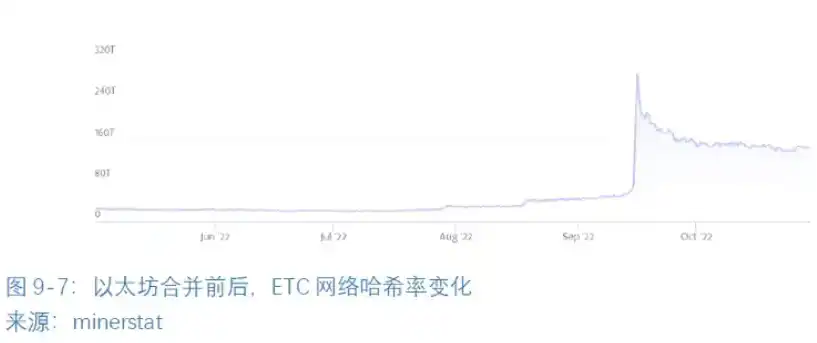
The third option for miners has caused great controversy in the industry. At present, the Ethereum hard fork project ETHW is successful. In the early stage, it was supported by some miners, users and trading platforms. The main ETHW mining pools are 2Miners, F2Pool, Nanopool, HeroMiners, Poolin. The entire network has a total of 209 miners, and the network hash rate is 35.11 TH/s.
9.3 PoS Staking as a Service, Opening a New Era
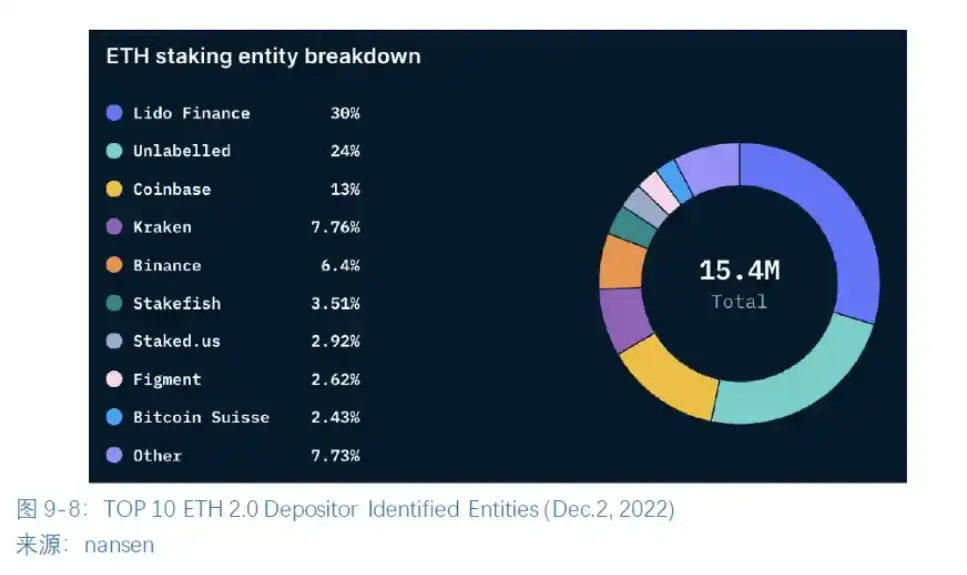
If you don't have 32 ETH or the hardware, you still have the opportunity to participate in network verification and function nodes. There are now three ways: (1) through node operators, known as ETH2.0 staking service providers; (2) custodians; (3) Liquid Staking. Even if you use the staking service of a node operator, you still need to deposit 32 ETH, but you don't have to run hardware. The operator can act on your behalf as a validator, and you need to pay a certain service fee for this. Centralized exchanges and some wallets provide support for small amounts (less than 32 ETH) staking service, which can help small pledgers to gather 32 ETH to participate in staking. The first two methods are similar to escrow services, and it is necessary to ensure that the institution has sufficient credibility.
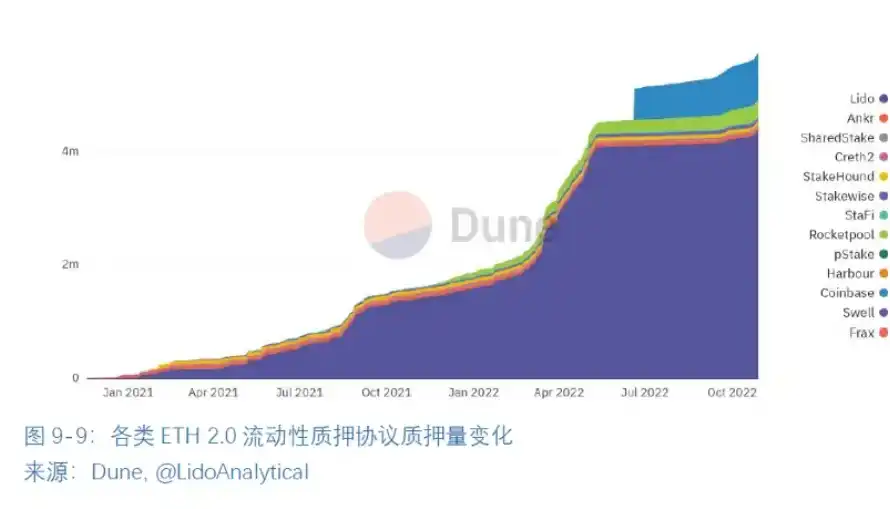
Since the ETH and income pledged by the network cannot be withdrawn now, it is necessary to wait until the next network upgrade. For this reason, the long pledge cycle is a waste of resources for investors, so liquidity pledge was born. The liquidity pledge protocol is to establish a pledge pool smart contract on the Ethereum chain. The protocol supports users to pledge less than 32 ETH, and at the same time casts a 1:1 pledge pool for users Token As a pledge certificate, the certificate can be used in other applications to solve ETH The liquidity problem caused by the long-term lock-up of the pledged deposit.
9.3.1 Analysis of Liquidity Staking Track
Liquidity staking is a direction worthy of attention: (1) The staking track is highly competitive. In addition to ETH 2.0 staking, PoS chains can support related staking services. There are many staking track projects, and there are more than 40,000 staking-related suppliers on each chain. (2) ETH staking has great potential. Compared with the staking rate of PoS chain networks such as Cosmos, the staking ratio of ETH has a lot of room for improvement. At the same time, for the security of the network, the official will also support more stakers to participate. (3) Liquidity staking has already shown its advantages. Liquidity staking is a track that is completely derived from ETH 2.0 and has developed accordingly on other PoS chains. From the perspective of ETH 2.0 staking market share, liquidity staking protocols have already occupied a considerable proportion, with Lido ranking first in staking rate, and other protocols such as Rocket Pool and Stkr (Ankr) are also increasing their market share.
For users, the liquidity staking protocol has three attractions: (1) It is easy to get started. You don’t need to "collect" 32 ETH to participate in network verification income. It can be regarded as a relatively stable and safe fixed income product; (2) Staking Token can be released and withdrawn at any time, with no threshold limit; (3) The staking certificates obtained by users can liberate the liquidity of the staking in the network, improve capital efficiency, and participate in ecological applications such as DeFi; (4) In addition to obtaining the income of network nodes, users may also obtain the governance rights income of the protocol.
Each staking pool and the scheme they adopt will be slightly different:
Lido
The pledge certificate on the Ethereum network is stETH, which can obtain pledge rewards and transaction fees ERC-20 Token . The validator whitelist is selected by Lido DAO through governance. Token $LDO holders have governance rights.
Rocket Pool
The pledge certificate on the Ethereum network is rETH. The difference from Lido is that Rocket Pool does not give the decision-making power of selecting validators to its Token holders. Anyone can become a node operator in the network by creating a "minipool", but they need to meet certain pledge conditions as a security guarantee.
SSV
SSV is regarded as the most anticipated liquidity staking project. Its biggest feature is the complete decentralization of the protocol, and it is known as the king of anti-censorship. The use of Distributed Validator Technology (DVT) technology ensures asset security.
The risks of liquidity pledge agreements have also been highlighted in this year's bear market:
(1) The pledge certificate provided by the liquidity pledge agreement is similar to a futures contract, representing the principal and income of the user's participation in the pledge, and its price is also affected by supply and demand. In this year's bear market, especially when there was insufficient confidence in the expected Ethereum merger, the price of stETH was "decoupled";
(2) All DeFi protocols may face the risk of smart contract attacks. Although liquidity pledge protocols all use multi-signature technology, they are essentially asset custody solutions, which will inevitably lead to asset security risks.
(3) Each liquidity pledge agreement has a different mechanism, but the pledged Token will eventually circulate to the verification nodes. Lido has selected a group of whitelisted verification nodes as pledgers, but there is still a risk of nodes doing evil;
(4) Liquidity pledge certificates participate in various DeFi ecosystems, but there may be situations similar to the depletion of liquidity pools;
(5) Will the liquidity pledge agreement, which accounts for the absolute majority of Ethereum network validators, pose a threat to the decentralization of the network? The governance of the protocol Token may also have a certain impact on the ecology.
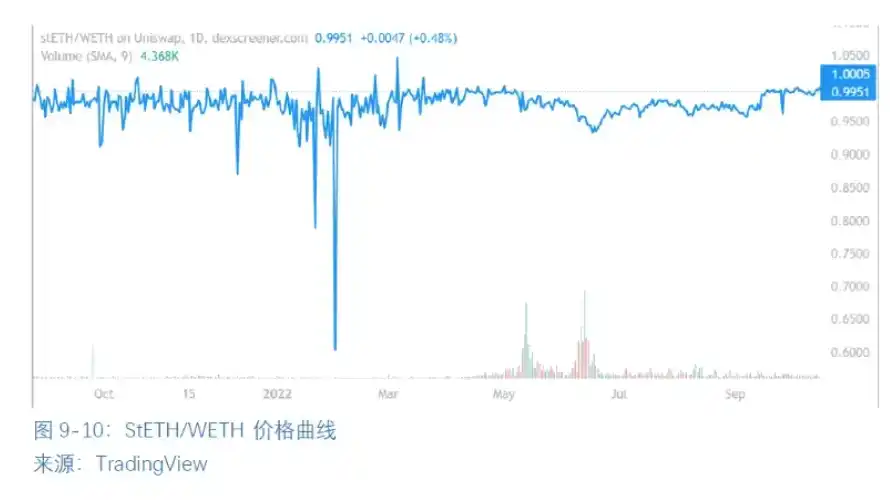
Liquidity staking protocols are also in fierce competition with each other. Their own development needs can be improved from the following two aspects: (1) Cooperate with other DApps to give staking certificates more application scenarios, especially in income products; (2) Deploy more public chains; (3) Improve the security of the protocol, such as in terms of validators. In the long run, the future of the protocol depends on the development of the main chain. Similar to the LUNA crash, it brought a devastating blow to this liquidity staking protocol. Other factors such as the value capture ability of Token and the construction of the on-chain DeFi ecosystem have a certain impact on the protocol. Ethereum's deflation expectations and the increase in staking returns make liquidity staking protocols an opportunity in a bear market.
For global crypto regulation, 2022 is destined to be a milestone year.
In August, Tornado Cash was sanctioned by the U.S. Treasury Department, and the launch of on-chain supervision triggered in-depth discussions in the industry. After the FTX incident in November, the supervision of central institutions such as CEX will be stricter, and trading platform self-discipline and transparent reserve funds may become industry standards.
Mainstream cryptocurrency countries represented by the United States and Europe have put the comprehensive regulation of cryptocurrency on the agenda starting from top-level design this year. In March, US President Biden signed the "Executive Order on Ensuring Responsible Innovation in Digital Assets", which is the first time that the US government has issued overall measures to regulate the crypto market. In October, the European Union basically passed the MiCA and TFR bills, and a unified crypto regulatory framework will be established within the EU in the future. Compared with 2021, 2022 In 2017, the number of positive regulatory policies in various countries gradually increased, while the number of negative regulatory policies decreased significantly. The policies issued paid more attention to cryptocurrency transactions and stablecoins.
This chapter will analyze and study the encryption policies of various countries in the world in 2022, and deeply interpret the development status and trends of global encryption policies.
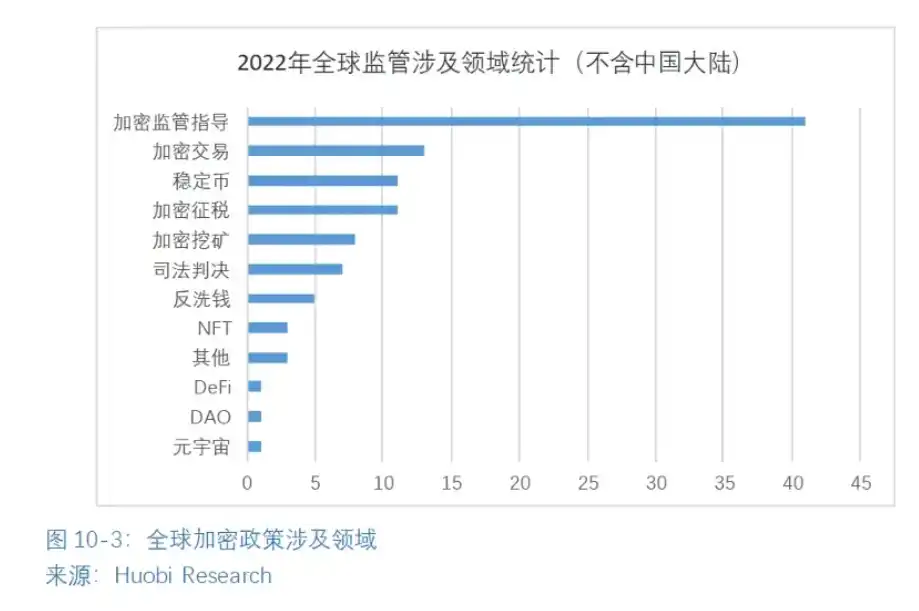
From a regional perspective, the crypto regulatory measures taken by the United States, the European Union, and South Korea are more concentrated and intensive. The United States still maintains the greatest global attention, with a total of 22 federal and state regulatory policies, mainly including crypto transactions, crypto regulatory guidance, judicial decisions, stablecoins, etc.; the European Union has a total of 9, and the regulatory policies are mainly related to crypto regulatory guidance, stablecoins, anti-money laundering, etc. through the MiCA and TFR series of bills; South Korea has produced 8 related regulations, mainly in judicial decisions, stablecoins, crypto regulatory guidance, crypto transactions, etc.
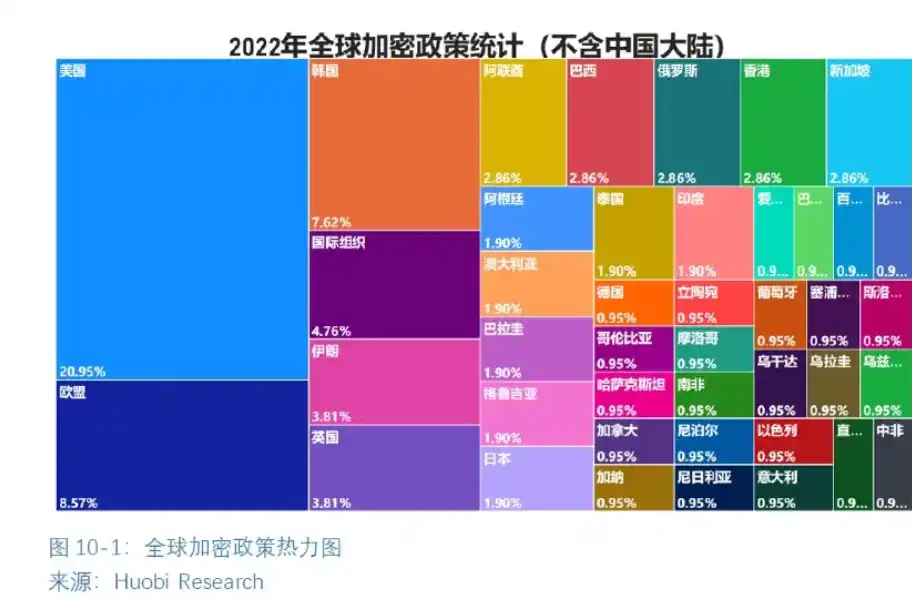
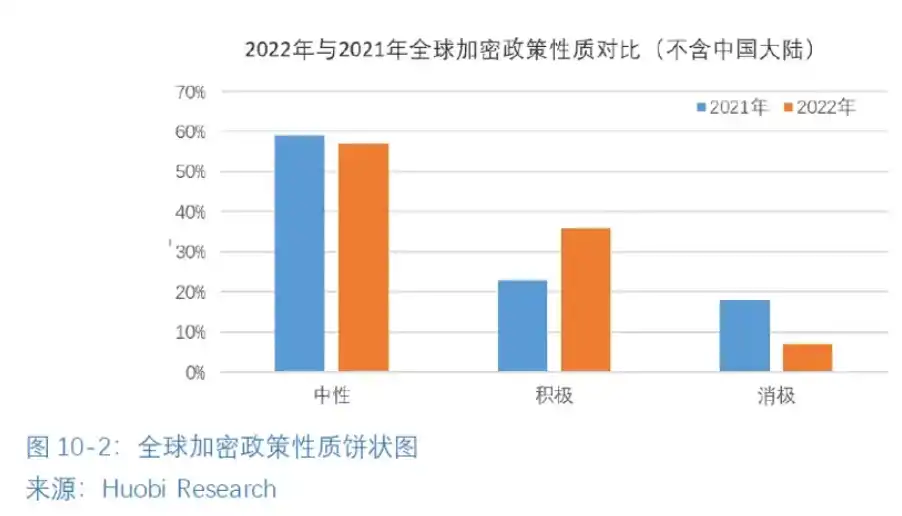
To further analyze the policy orientation of global regulatory authorities towards the crypto industry, we divide the policies into positive policies, neutral policies and negative policies according to the policy types. Positive policies refer to policies that have a positive role in promoting the crypto industry, neutral policies refer to policies that conduct regular management of the crypto industry without any positive or negative effects, and negative policies refer to prohibitive policies or related administrative penalties.
According to this classification rule, in 2022, the proportions of positive policies, neutral policies, and negative policies in the global crypto industry were 36%, 57%, and 7%, respectively. Compared with 23%, 59%, and 18% in 2021, in 2022, the proportion of positive regulatory policies increased significantly, and the proportion of negative regulatory policies decreased significantly. The overall regulatory policy is developing in a clearly positive direction. In addition, most countries still tend to regulate and guide the crypto industry on the basis of moderate supervision.
Classified according to the encryption field, including: encryption supervision guidance, encryption transactions, stablecoins, DAO, NFT and other 12 directions, among which encryption supervision guidance, encryption transactions, and stablecoins rank the top three of all policies, accounting for about 62% of the total statistics. This shows that in order to keep up with the development of the encryption industry, in 2022, most countries or regions are actively promoting the formulation of encryption supervision frameworks and regulatory guidance for corresponding businesses, and supplementing and improving the deficiencies in encryption transaction supervision policies. In addition, affected by Terra The collapse has caused governments around the world to attach great importance to the regulation of stablecoins.
10.2 Global Regulatory Changes
2022 is a year of great significance for global crypto regulation. Europe, the United States and other countries are accelerating the formulation of regulatory frameworks. In the future, as regulatory measures are implemented, the crypto industry will transition from the "wild era" with imperfect regulatory systems to the "legal era" with clear supervision. This section mainly introduces the crypto regulatory frameworks of Europe, the United States and other countries and several iconic regulatory cases.
Previously, in addition to unified anti-money laundering supervision, the EU did not have a clear crypto regulatory framework as a whole. Each member state promulgated regulatory policies based on its own domestic situation, resulting in a fragmented supervision within the EU, making the EU's overall crypto regulatory policy relatively conservative and slow. Once MiCA is passed and implemented, it will directly apply to the entire EU and transcend the legislation of each member state. MiCA will grant additional law enforcement powers to national authorities.
MiCA mainly establishes a regulatory framework for crypto assets outside the existing EU financial law regulation, such as security-type Token and central bank digital currency are not within its regulatory scope. Depending on whether crypto assets need to be anchored to the value of other assets, MiCA classifies crypto assets into electronic money Token ("electronic money tokens" or "e-money tokens", referred to as EMT), asset reference Token ("asset-referenced tokens", referred to as ART) and other types of crypto assets.
EMT aims to anchor its value by referring to only one official currency. It is an electronic substitute for coins or banknotes. Simply put, it is "electronic money", such as the various monetary payment methods we use on the Internet, such as Alipay and WeChat Pay.
ART aims to anchor its value by referencing any other value or right or a combination thereof, including one or several official currencies. ART covers all other crypto assets backed by assets except EMT. For example, stablecoins USDT and USDC backed by the US dollar and treasury bonds, and Pax Gold backed by physical gold assets all belong to ART.
Other crypto assets are all other non-"asset reference Token " or "electronic currency Token " crypto assets, covering a variety of crypto assets. Compared with EMT and ART, the supervision of other types of crypto assets is relatively loose, requiring only the submission of white papers, approval, and compliance with general regulatory rules such as marketing/organization/technology.
MiCA's daily number of transactions and volume for non-euro-backed stablecoins shall not exceed 1 million and 200 million euros. Currently, the three major stablecoins, USDT, USDC, and BUSD, account for more than 75% of the cryptocurrency trading volume, and their daily number of transactions and volume both significantly exceed MiCA's regulations. In the future, if the EU insists on promoting regulatory policies on non-euro stablecoins, it may hinder the competitiveness and innovation potential of the EU crypto market.
DeFi and NFT are not included in the regulatory scope of MiCA. The European Commission is piloting the DeFi "embedded regulation" program. Before the release of the MiCA text, it was rumored that NFT would be subject to the same regulatory review as cryptocurrencies. It may be that they were worried about undermining the innovation of NFT, and ultimately NFT was not included.
The EU public has mixed opinions on the new anti-money laundering bill TFR (Fund Transfer Regulation). Supporters believe that this will help clarify regulatory boundaries and speed up the pace of regulating crypto assets; opponents believe that TRF violates the EU's charter on privacy and that collecting personal identity data may not necessarily help combat money laundering.
The US regulatory framework was later than that of the EU. On September 16, the first draft regulatory framework for the cryptocurrency industry was released. The framework followed the digital asset executive order signed by President Biden in March. The main goals include taking consumer protection measures, maintaining financial stability, preventing the illegal use of cryptocurrencies, maintaining the US leadership in the global financial field, and responsible technological innovation.
10.2.2 CEX supervision is tightened, and on-chain protocol supervision is gradually launched
With the increasing influence of the crypto market, Europe and the United States and other countries are accelerating the promotion of the regulatory framework for crypto assets, but in 2022, when the old and new regulatory systems are replaced, there are many influential regulatory events. One type is FTX, 3AC The collapse of centralized institutions represented by , to some extent, reflects the lack of existing crypto regulatory measures. Another type is the handling of the Tornado incident by regulators, which marks the gradual opening of supervision of on-chain assets and activities.
The FTX bankruptcy is the third most influential bankruptcy event in 2022 after Terra and 3AC. The main problems of the FTX incident are the misappropriation of user funds and related transactions with Alameda Research. At the time of the incident, some US regulators said that they were investigating or had begun investigating related issues a few months ago. However, the reason why the FTX incident occurred has a lot to do with the lack of supervision of crypto assets in various countries. The traditional financial market has a clear regulatory system for reserve assets, related transactions and Alameda Research. Such investment companies also have clear requirements. At present, most countries have unclear responsibilities or blank areas for such supervision of the crypto market. For example, the CFTC usually has jurisdiction over crypto derivatives, and the SEC will supervise crypto assets that qualify as securities according to its rules. These two regulatory agencies can also supervise investment companies, but the supervision of FTX and Alameda Research is obviously insufficient. After the FTX incident, many people called on the United States to strengthen its supervision of crypto assets.
The supervision of on-chain protocols is also a key event, including: Tornado cash was sanctioned by the US Treasury Department, the CFTC filed a lawsuit against Ooki DAO members, the SEC filed a lawsuit against Ripple Labs, and the discussion on whether Ethereum is a security.
From the perspective of regulatory motivation, Tornado Cash was sanctioned because it helped illegal network organizations or individuals such as North Korean hacker organizations to launder large amounts of mixed coins, which does involve issues such as national security, financial stability and network security. No country will tolerate such problems for a long time; the core of the CFTC's prosecution of Ooki DAO members, the SEC's prosecution of Ripple Labs, and the discussion of whether Ethereum is a security is whether crypto assets should be included in the existing securities regulatory system and supervised accordingly. Regulatory agencies such as the SEC and CFTC seem to want to include more crypto assets in their regulatory scope, while the crypto asset party does not want to be bound by existing securities rules, and some people are even looking for and exploiting legal loopholes.
From the perspective of supervision, for serious problems such as Tornado Cash, US regulators directly took strong measures such as arresting developers, prohibiting US users from accessing the Tornado Cash official website, and restricting third-party cooperation platforms; the prosecution of Ooki DAO members was mainly financial penalties such as fines. The SEC's prosecution of Ripple Labs lasted from December 2020 to this year. It has been a while since the Ethereum merger, and regulators such as the SEC have not taken any action against Ethereum. Although the SEC and CFTC Regulatory agencies such as the SEC have the power to regulate securities, and sometimes even have more power to interpret securities laws, but currently regulatory agencies are relatively cautious and restrained when exercising these regulatory powers, and prosecutions by regulatory agencies may sometimes be rejected by courts at all levels.
From the results and impact of the incident, the sanctions imposed by the U.S. Treasury Department did seriously affect the number of Tornado Cash users, but since Tornado Cash is a decentralized application deployed on Ethereum, it is still running on the network and has not stopped. Affected by this incident, some DeFi protocols and developers began to worry about their own security and business compliance. Ooki DAO members were fined $250,000, which set a precedent for regulators to punish DAOs. If DAO If it does something that it needs to be held accountable for, then all relevant personnel may be held accountable. For the multi-signature process, the signer may be held accountable, and for the on-chain governance, the proposer and voter may be held accountable. In the lawsuit between the SEC and Ripple at the end of September, the U.S. District Court rejected the SEC's motion to not disclose the speech documents related to cryptocurrency made by former senior staff Bill Hinman in 2018. From the perspective of judicial litigation, Ripple won a battle.
In the future, there will be more and more supervision on on-chain protocols. For illegal acts involving endangering national security, financial stability and network security, regulators are likely to continue to take strong measures such as sanctions and arrests. For cases involving whether crypto assets are securities, on the one hand, with the introduction of new regulatory policies and more and more precedents, the boundaries of supervision will become clearer and clearer. On-chain protocols can take evasive measures in advance. On the other hand, if they face securities prosecution again, they can argue through regulations and litigation in securities laws.
10.3 Development Trends and Characteristics of Global Regulatory Policies
In the process of sorting out the global crypto asset regulatory policies in 2022, we found that global regulation showed some new trends and characteristics.
Feature 1: Supervision of on-chain protocols may become the new normal
With the continuous expansion of the crypto market, the scale of on-chain protocols has become increasingly important. At present, many on-chain protocols and assets are beyond the existing regulatory laws of various countries, and some protocols even have a tendency to challenge the existing system. Tornado cash was sanctioned by the US Treasury Department, Ooki DAO members were sued by the CFTC, and the discussion on whether Ethereum is a security is just the beginning of the regulatory agency's governance of on-chain protocols. There will be more regulatory cases in the future. Although the crypto community believes in "Code is law", governments will not tolerate attempts to circumvent their laws for a long time. Accordingly, under this new normal of regulation, on-chain protocols will present a considerable demand for compliant markets.
Feature 2: Stricter supervision by central institutions such as CEX
In the next one or two years, the EU MiCA and TFR regulatory bills will begin to be implemented, the US crypto regulatory framework will be gradually improved and legislated, and crypto regulatory policies in more countries will be implemented one after another. A clear and unified crypto regulatory system will emerge within each country, and international regulatory cooperation will continue to strengthen, which will provide the necessary institutional and law enforcement basis for regulating crypto assets.
The FTX incident exposed the huge influence and insufficient supervision, which will prompt regulators in various countries to focus on the risks of central institutions such as CEX. In the short term, they may continue to be regulated in accordance with existing securities laws and regulations. In the medium and long term, they will be more deeply and meticulously regulated based on the new crypto asset regulatory framework. For example, most CEX reserves were previously in a state of lack of supervision. After the FTX incident, Binance, Huobi, Gate.io, KuCoin, Poloniex and OKX announced the release of Merkle tree reserve certificates. CEX The reserve assets have taken a step forward from lack of supervision to industry self-discipline. It is expected that the regulatory authorities of various countries will either require trading platforms to regularly publish asset certificates or force measures such as custody reserves, and the supervision of trading platforms will be more specific and detailed.
Feature 3: Countries are intensifying competition to develop crypto assets
Currently, Singapore is increasingly becoming a global gathering place for crypto assets; in mid-October, Hong Kong Financial Secretary Paul Chan Mo-po published an article entitled "Hong Kong's Innovation and Technology Development", mentioning "promoting Hong Kong's development into an international virtual asset center", and at the end of October, Hong Kong issued a virtual asset policy declaration; the newly appointed British Prime Minister Rishi Sunak is a crypto asset enthusiast and has tweeted in the past that he will work hard to make the UK a global crypto asset center. There is also the Middle East and North Africa region. Statistics show that this is the fastest growing region in the cryptocurrency market in 2022. The UAE has adopted a positive and friendly regulatory policy to continuously attract crypto companies to settle in. In 2022, the country's cryptocurrency market has grown at least 10 times.
At a time when global economic growth is generally slowing down, some countries and regions are choosing to deploy the crypto industry and strive to compete to become the global crypto asset center. Competition for crypto assets will make more countries adopt a more friendly attitude towards crypto assets, which will also encourage more innovations in the crypto industry and promote its continued development.
Overall, looking at the global crypto industry policies in 2022, it can be considered that governments of various countries are actively establishing and improving crypto asset regulatory frameworks and policies, and striving to catch up with the pace of development of the crypto industry, which will standardize the development path of the crypto industry and help promote the crypto industry into the next stage of rapid development.
11. Bear Market Survival Guide
11.1 Bear Market Bottom Judgment Indicators
The crypto industry faces various difficulties in 2022, and the Fed's interest rate hike has made things worse. But the more bearish the market is, the more excellent opportunities there are. Buffett once said: "We welcome market declines because it allows us to pick up more stocks at new, panic-inducing cheap prices." The same is true in the crypto industry. A bear market is a good opportunity for investors, but the question is how to define "cheap prices."
One way is that we can refer to the market bottom indicator to judge the "cheap price". Capturing the bottom of the market cycle allows us to buy high-quality projects at the best time.
The following are several indicators that are of reference value for judging the market bottom.
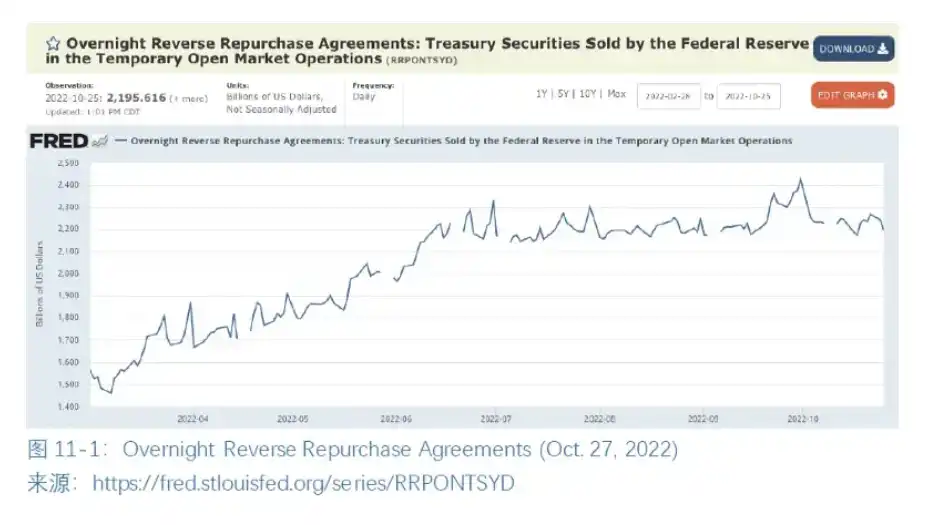
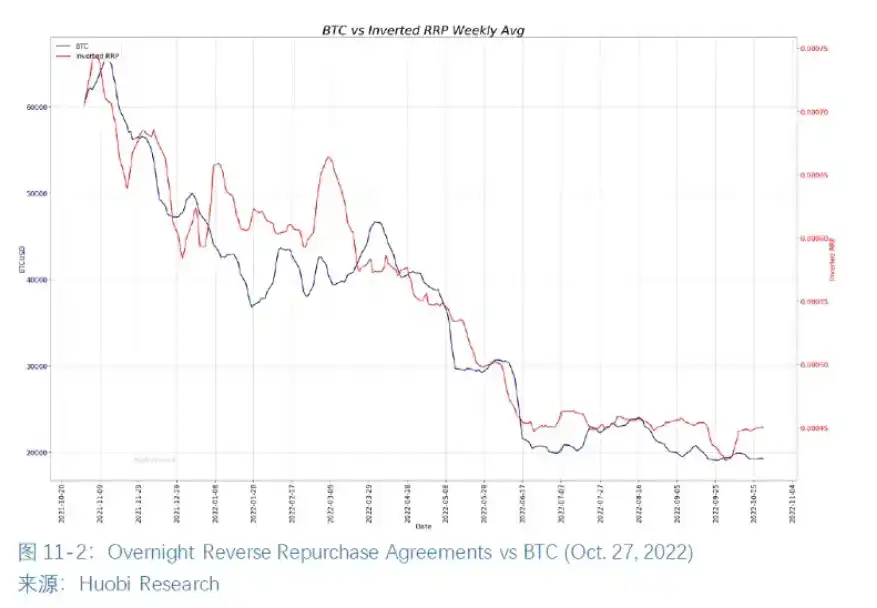
(1)The Federal Reserve's overnight reverse repurchase is an effective condition for judging whether funds will flow into the cryptocurrency market
Overnight Reverse Repurchase Agreement (ON RRP) is a tool used by the Federal Reserve to absorb excess market liquidity. An increase in overnight reverse repurchases means that the Federal Reserve has absorbed more funds, and vice versa. When judging the market bottom, we hope to see a continuous decrease in the number of overnight reverse repurchases by the Federal Reserve, because this means that market liquidity is released, which acts like quantitative easing. Because funds need time to flow, the Federal Reserve's overnight reverse repurchase is a leading market liquidity indicator, which generally leads by one to two weeks. (Huobi Research's industry weekly report has an indicator of the Federal Reserve's overnight reverse repurchase, which is of reference value for judging capital flows and Bitcoin trends. To understand how the Federal Reserve's overnight reverse repurchase affects the liquidity of crypto assets, you can refer to Huobi Research's in-depth research report: Reverse Repurchase Agreements as an Indicator for BTC.
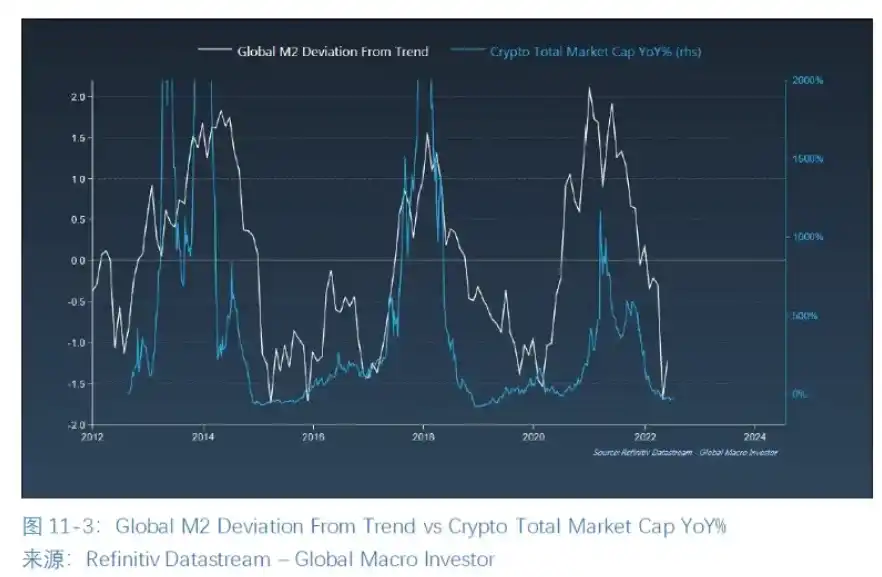
Bitcoin price and total cryptocurrency market capitalization are directly proportional to M2. Bitcoin supply is limited, and as major central banks issue more banknotes, market liquidity will increase and the currency will depreciate. Raoul Pal, CEO of Globalmacroinvestor.com believes that this is the main driving factor for the rise and fall of the cryptocurrency market, not supply: "In the market price of all commodities, I have always believed that demand is more important than supply. It is the ebb in demand that leads to the outflow of funds and the emergence of the denominator (BTC/USD)."
The following chart reflects the relationship between cryptocurrency and M2. It can be seen that the explosive trend of M2 has led to the inflow of funds into the cryptocurrency market.
When the Federal Reserve and major central banks revealed that they would suspend their strict economic policies and implement monetary easing, it was the turning point for M2 to rise. This turning point also announced the end of the bear market cycle. During this period, buying high-quality projects at a relatively cheap price can be in a position with a better risk-return ratio.
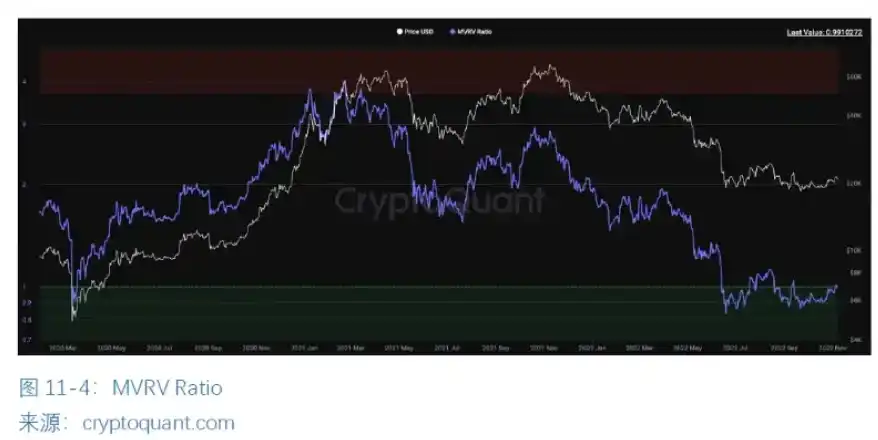
The MVRV ratio is defined as the market capitalization of an asset divided by its realized capitalization. By comparing the two valuation methods, the MVRV ratio can tell us if the price is cheap, which means it is useful for getting market tops and bottoms. MVRV takes both realized and market value into account, making certain values crucial when making investment decisions. If the value is over 3.7, it could be a market top, and a sell position could be justified. If the value is below 1, it could be a market bottom, and taking a progressive long position could be justified.
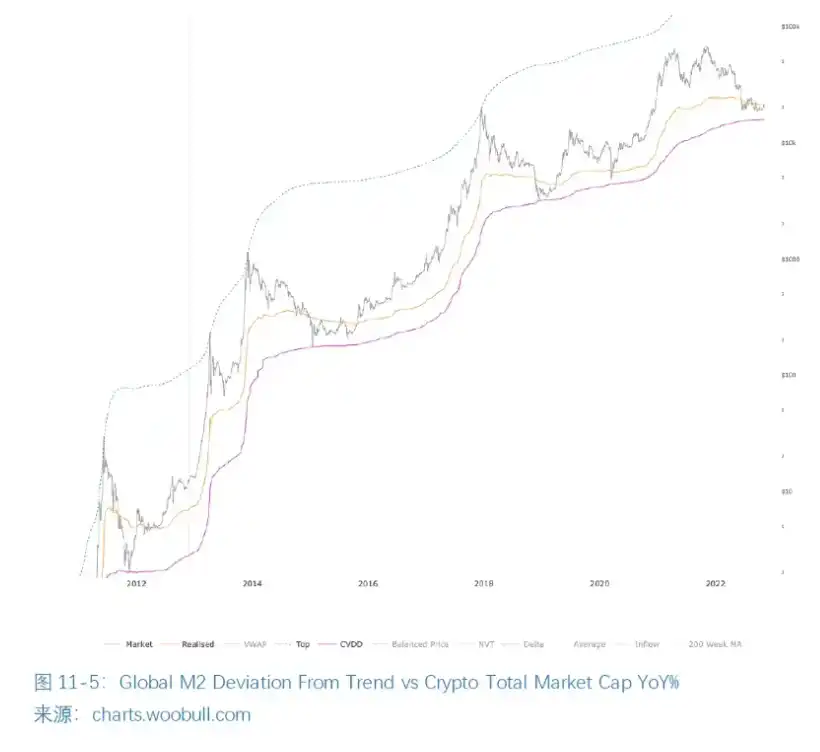
(4)Cash-Increase Price and Cumulative Value Days (CVDD)
(1) Beware of Ponzi schemes
During the bear market, users' attention will be focused on high-yield projects. The hype cost of these projects is lower than that of the bull market and they are easier to be discovered. High-yield projects themselves have huge risks. Project owners will choose to close projects when they have bad market expectations. However, there are also some good projects under construction. Therefore, as a user, the best way is to choose whether to participate after fully studying the project. Here is a summary of the characteristics of some capital projects that appeared in the bear market for readers' reference.
Project economic internal circulation
Most Ponzi schemes promise high returns, but where the high returns come from is a very important question to consider. The mechanism of Ponzi schemes is very fixed, with four major characteristics: (1) A certain fee needs to be paid when participating in the project, and part of these fees are given to early participants; (2) The income cycle is short, and there may be income every week or even every day, which stimulates users to recommend and promote the project; (3) Token There are fewer application scenarios, so there will be a phenomenon of nesting dolls within the project, such as multiple tokens and multiple NFTs (4) The launch time of new features of the project is very short, most of them are imitations, and there is no actual on-chain demand. For example, the minting of various NFTs and the sale of tokens were completed within one month.
No investment institution participation
The community atmosphere is single
(2)Risk of coin theft
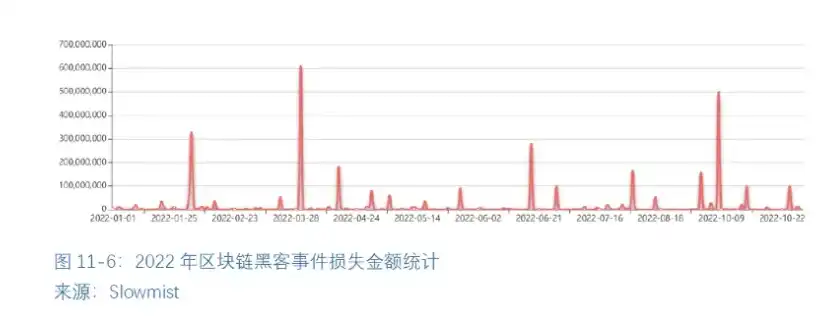
In the field of web3, hacker behavior is more difficult to track and regulate. According to statistics, as of October, there were 273 hacker attacks, with a total loss of more than 3 billion US dollars. For ordinary users, we cannot understand smart contracts, and the risk of hacker attacks brought by smart contracts is unavoidable, but we can at least choose projects that have been audited by institutions such as Certik. The biggest threat to us is phishing attacks. Hackers will use emails, text messages, and fake apps to send us some links. If we accidentally click on these links, wallet information will be leaked, and even some permissions will be signed. So before clicking on any link or signing a transaction, check the link source, transaction address, and transaction content.
(3) Liquidity risk after the deleveraging of centralized institutions
The frequent bankruptcies of institutions this year, especially the FTX bankruptcy, have dealt a severe blow to the crypto industry. We have seen that even well-known institutions are at risk of bankruptcy. For users, the threats of these centralized institutions’ bankruptcies fall into two categories: (1) the bankruptcy of the custodian institution; (2) the bankruptcy of the centralized trading platform.
12. Future Forecast of the Crypto Industry
12.1 The bear market continues to fluctuate, and the bottom range has appeared
From the market situation, it is currently at the bottom of the Crypto cycle. The leverage of centralized institutions and on-chain DeFiDeFi protocols has been basically cleared, and it is mainly for existing users to gamble, and it is not completely affected by the macro-economy. Unless there are more serious systemic risks, such as major market changes caused by regulation, there is limited room for downward exploration. At present, there is value in long-term allocation for mainstream currencies such as BTC and ETH. The price of BTC at around US$15,000 or the price of ETH at around US$1,000 may be the bottom of this round of bear market, and the bottom may consolidate until the first quarter of 2023, and then there will be a decent rebound. The main reasons are:
At the macroeconomic level, after the Fed's four consecutive interest rate hikes of 75bp, the US CPI data showed a significant easing, and several Fed officials also released the voice of slowing down the interest rate hike. Therefore, it is expected that the rate hike will be slowed down from December and stopped around March 2023. In other words, we are already in the stage of turning the pace of interest rate hikes. The most difficult part of this round of interest rate hikes has passed, and the bottom of monetary policy is forming.
In the Crypto market, the outbreak of the FTX incident in November broke the BTC price bottom of $18,000 that had been tested for 5 months, and the price once reached $15,500. However, we believe that the decline and duration since the beginning of this year have basically consumed the speculation and blind optimism in the market, and the FTX incident may have triggered the last drop in the market. Institutions and projects with problems will be cleared out in this round of impact. As the subsequent impact gradually emerges, the market will gradually digest this incident and gradually form a bottom in the shock. It is expected to last until the first quarter of 2023, and the subsequent industry self-rescue and strengthened supervision will help the bottom of this round of bear market to truly form.
12.2 Web2 head social network rushes into the market and seizes the SocialFi track
On October 28, 2022, Tesla CEO Elon Musk completed the $44 billion acquisition of Twitter. Musk has a close relationship with the crypto industry. For example, Tesla currently holds $218 million worth of digital assets. In addition, Musk has been publicly supporting Dogecoin and its more payment applications. Twitter also had some crypto-friendly behaviors before the acquisition, such as the tipping function launched in May 2021 to support Bitcoin payments, and in January 2022, it supported users to use NFT as personal avatars. If Twitter enters the crypto industry, it will fill the shortcomings of the current SocialFi product's poor user experience and insufficient data depth, or become a unicorn in the SocialFi track. Moreover, Twitter will not only be satisfied with social networking, but will become an application platform for Crypto based on social networking, allowing more users to enter the crypto industry and introduce new traffic to Web3.
In addition to Twitter, Reddit and Instagram have also entered the Web3 industry. These top social platforms in the Web2 world are in fierce competition and it is difficult to attract new customers and groups. The Web3 industry is a blue ocean. In order to seize the market and opportunities, these top platforms need to build moats as soon as possible, and even create their own metaverse. We will see these Web2 head platforms bring innovative models next year to promote the prosperity of SocialFi and NFT tracks.
12.3 Technological breakthroughs, cost reduction, Rollup ecosystem explosion
Merging cannot improve the performance of Ethereum, and Rollup is the correct solution for expansion. The focus of Rollup upgrades is to improve performance and compatibility while reducing costs.
ZK Rollup has long been favored by the community, but due to the difficulty of being compatible with EVM, it has not been widely used. Optimistically, zkEVM will achieve a greater degree of progress in 2023. First, a usable zkEVM may appear. The fastest progress is zkSync 2.0. If the research and development goes smoothly, it will realize zkEVM that developers can deploy applications and users can use freely between Q4 2022 and 2023. Polygon zkEVM will also launch the mainnet in early 2023 and strive to reach the level of EVM equivalent (the code of Ethereum smart contracts can be used directly without any changes).
Going further, ZK Rollup cannot just be "just usable". Both zkSync 2.0 and StarkNet have plans to improve performance and reduce costs so that the strength of ZK Rollup can be fully utilized. This step may be completed between the second half of next year and 2024, which coincides with the Bitcoin halving, which may be a tipping point for the market. In addition, Optimism's BedRock will most likely be completed next year, and OP Rollup will continue to improve.
In addition, the introduction of EIP4844 will greatly reduce the gas cost of Rollup. The main cost of Rollup is the cost of calldata. Reducing the cost of data availability is a key move for Rollup to further reduce costs.
Proto-danksharding (EIP-4844) proposes to introduce a new transaction format "blob-carrying transactions". The raw transaction data of Rollup will be stored in the Blob, and the cost is much lower than calldata. EVM does not access this data, but only needs to verify its availability, that is, the KZG polynomial commitment to access this data.
EIP-4844 will make it easier for Rollup to scale up on a large scale, while transaction costs will be greatly reduced. By then, the handling fee of Rollup can be as low as that of other public chains, and the outbreak of the ecosystem is just around the corner. However, its development requires a lot of energy and time, and it is not a matter of overnight. If the development goes smoothly, it may be deployed together with the withdrawal function in the Shanghai upgrade, which is a very optimistic estimate. If the workload is large, it is possible to go online in the second half of next year or even in 2024.
The process of constructing a zero-knowledge proof is relatively complicated. It requires converting the logic of the program into a mathematical operation circuit. The logic of the program includes not only arithmetic operations, but also logical operations such as "and", "or", "not", bit operations, hash operations, and operations on smart contracts. However, digital operation circuits only have addition gates and multiplication gates. It is definitely not easy to simulate complex programs with such a simple tool. When Ethereum was first designed, compatibility with zero-knowledge proofs was not considered, and its opcodes are not friendly to zero-knowledge proofs. Therefore, even for simple transactions such as transfers, the speed of generating proofs for 1 transaction per second can only be achieved. With zkEVM, the complexity of the statements of ZKP proofs will be greatly increased.
This will result in slower proof generation and will require specialized hardware to generate the proof in a timely manner.
At present, it seems that the main way to speed up the generation of ZKP is to customize high-performance ZK acceleration chips. In addition, it is also a good idea to introduce an incentive mechanism to encourage each prover to compete for incentives. Its premise is that the operation of ZK Rollup should be more decentralized. Even if it is centralized in the sorting/execution stage, it must allow multiple teams to participate in the proof stage. This will form a ZK accelerated mining industry similar to Bitcoin mining, pushing the development of ZK Rollup to a more mature state. When the speed of generating proofs is faster and the cost is lower, ZK technology will be more widely used, not just limited to Rollup. ZK acceleration hardware may also take a "GPU-FPGA-ASIC" development path. ASIC is obviously not yet qualified, and it is still unclear which of the first two will win.
The ZK acceleration network needs a long time to develop. Optimistically, there may be projects that can meet basic needs next year, but it is difficult to achieve large-scale outbreaks within a year.
12.5 Multi-chain network promotes the outbreak of DApp Chain
The concept of application chain is not unfamiliar. Cosmos was conceived of this at the beginning of its birth to create an ecosystem of Wanlian interconnection. Application chain is an independent blockchain for specific applications. They are built with the help of the development tools of the main chain. They have the advantages of cross-chain and shared security within the ecosystem created by the main chain. It is no longer a problem for DApp applications to build their own blockchains in terms of technical implementation. Cosmos, Octopus Network, Polygon, Avalanche, and BNB Smart Chain can all provide a DApp Chain construction environment. However, DApp Chain is subject to other conditions: (1) It costs more to maintain its own network security; (2) Whether the characteristics of the main chain itself match the DApp product, such as performance, user habits, EVM compatibility, etc.
Currently, the DApps that have successfully transformed from on-chain ecological applications to independent blockchains include DeFi Kingdoms, dYdXdx, and Axis Infinity. The latter two applications belong to Layer2. In addition, about 46% of the members of the Apecoin community support the construction of ApeChain. This has gradually become a major trend in the future, especially for GameFi and Metaverse projects.
From these DApps, we can see that they were already applications with a certain amount of revenue and users before the chain was built, and they were not too dependent on other ecological applications and could form their own moat, so becoming a DApp Chain can further bring benefits in performance, user experience, and project valuation. In addition, DApp's Token value capture ability can be improved, such as participating in network verification and staking, running its own sequencer or validator to capture MEV, thereby reducing transaction fees, etc. DApp Chain is not only beneficial to itself, but also brings vitality to the ecosystem of multi-chain networks. In order to attract more DApp Chains, multi-chain networks also need to provide support in cross-chain, security, and ecological funds.
12.6 Expansion and upgrade go hand in hand, the storage sector is ready to go
Although decentralized storage has not received much attention this year, it still shows signs of continued progress. The storage sector has or will soon have more real demand, more access channels, and more advanced functions. These advances will drive it to become an important infrastructure in the Web 3 field.
First, the storage protocol stores more real data. Filecoin implemented the Filecoin Plus (FIL+) plan at the end of last year, and the amount of real data stored has continued to increase. As of Q3, a total of 138 customers have used large data sets (100TiB). In addition to Web3 platforms and blockchain projects such as OpenSea, Rarible, MakersPlace, MagicEden, and Project Galaxy, there are also a large number of more traditional customers, such as the University of California, Berkeley, the University of Southern California Shoah Foundation, and Starling Labs. Arweave has reached a cooperation with Meta, and Meta will use Arweave to store digital collections of Instagram creators. Storage protocols are taking on more and more real needs. Compared with the volatility of the crypto market, these needs are more stable and are expected to continue to increase, which can provide a living soil for storage protocols.
The second is more access channels. Arweave has completed the integration of Avalanche and zkSync. This new integration of Arweave (through Bundlr Network) allows users to access Web3 data storage on Arweave and use AVAX, ETH or Token to pay fees to upload data to the Arweave network. This may trigger other storage protocols to follow suit. By expanding more network access, storage protocols will penetrate more aspects of Web 3 and strengthen their fundamental role.
Third, there will be more functions. The most important upgrade for storage is the ability to superimpose a computing layer, which will then enable more functions beyond the scope of the hard disk. At present, FVM cannot be used by users to implement arbitrary logic, Ceramic's access speed is still relatively slow, and the development kit is not perfect enough. It is optimistically expected that the second phase of FVM may be completed between next year and 2024. After the launch of FVM, there may be some special tools for vertical fields of data storage and retrieval to help users better manage data and ensure data security. Ceramic still needs to continue to improve its infrastructure, Stratos These new projects will bring different technical solutions and learn from each other. There is reason to expect new applications and functions to grow on this computing layer based on large amounts of data storage. Of course, this will take longer and may still be in the process of accumulating power next year.
12.7 Strengthening of "embedded" supervision on the chain is on the agenda
Regulation of on-chain protocols is a thorny problem in itself, and it essentially has to be based on cost and feasibility. Several regulatory cases that have emerged this year have all incorporated cases into the existing legal system for supervision or prosecution, such as the U.S. Securities Act and the Bank Secrecy Act, which makes the cost of supervision, prosecution, and law enforcement relatively high. High costs also mean that they cannot be widely applied on a large scale and are only suitable for a few typical cases.
In the next one to two years, with the introduction of regulatory frameworks for crypto assets in various countries and the implementation of regulatory policies, on the one hand, relevant legislation specifically for on-chain protocols may be introduced, such as the DeFi "embedded regulation" solution being tested by the European Union; on the other hand, on-chain protocols may also be required to meet anti-money laundering measures such as KYC and AML. When the costs of supervision, prosecution, and law enforcement are effectively reduced, the relevant supervision of on-chain protocols will be strengthened.
The on-chain protocols that are most likely to attract the attention of regulators may have the following characteristics: First, they have a greater impact on national or economic security, such as the currency mixing protocol Tornado Cash, which helped the North Korean hacker group Lazarus Group launder more than $455 million; second, the founders/developers own or control most of the project's assets, and the founders/developers have real names and are easily monitored, such as the SEC's prosecution of XRP as a security. The regulatory approach may be prevention-oriented, such as requiring on-chain protocols to meet anti-money laundering measures such as KYC and AML, so that the user's true identity can be found as soon as an illegal case occurs. If a certain on-chain protocol is subject to judicial sanctions, on the one hand, the founders/developers/community voting users will be directly punished, and on the other hand, measures such as restricting the protocol's users/protocol assets/partners will be taken.
12.8 More developing countries adopt cryptocurrencies for payment or as their own legal tender
Except for some developed regions such as California in the United States, which adopt crypto payments for the application and experiment of a new technology, most of the other countries under consideration are relatively backward countries such as El Salvador and the Central African Republic. Their characteristics are that their domestic monetary systems are fragile and almost collapsed, and they mostly used foreign currencies such as the US dollar before. But the problem with using foreign currencies is that the domestic economy is affected by the policies of other countries. These countries have suffered serious economic blows in this round of interest rate hikes. Therefore, cryptocurrencies that are not affected by the policies of other countries and have a relatively fair and transparent issuance mechanism naturally become the choice of such countries. Secondly, the Russian-Ukrainian war that broke out this year has brought about a trend of global economic division. Russia has been subject to multiple rounds of sanctions from Western countries. In this case, the trading of cryptocurrencies such as BTC has increased significantly in Russia, and many users hope to avoid asset losses caused by economic sanctions by holding cryptocurrencies. Therefore, war sanctions will also be a reason for countries to support cryptocurrencies and use them as a means of payment to avoid losses. Therefore, we believe that more countries may adopt cryptocurrency payments or become their own legal tender next year.
This article is from a contribution and does not represent the views of BlockBeats
Welcome to join the official BlockBeats community:
Telegram Subscription Group: https://t.me/theblockbeats
Telegram Discussion Group: https://t.me/BlockBeats_App
Official Twitter Account: https://twitter.com/BlockBeatsAsia

 Related Articles