



Has CeFi Hit a Trust Crisis, Is DeFi Ready for the Next Growth Surge?
Original Article Title: "How Far Away is DeFi from the Next Explosion After FTX's Blow-Up?"
Original Article Author: Overnight Congee, The Way of DeFi
Last week, after SBF's FTX platform spectacularly blew up, the entire crypto market felt like a fly had been dropped into a pot of soup, quickly triggering panic among people.
In the previous article, we briefly mentioned that the crypto industry is about to face a major reshuffle, especially in the CeFi and DeFi markets. In this article, we will delve into this topic in detail, observing the current market changes and discussing the future evolutionary trends of CeFi and DeFi.

Image Source: Generated by Unbounded Map AI Tool.
User Panic Withdrawals, CeFi Platforms 'Show' Reserves to Prove Innocence
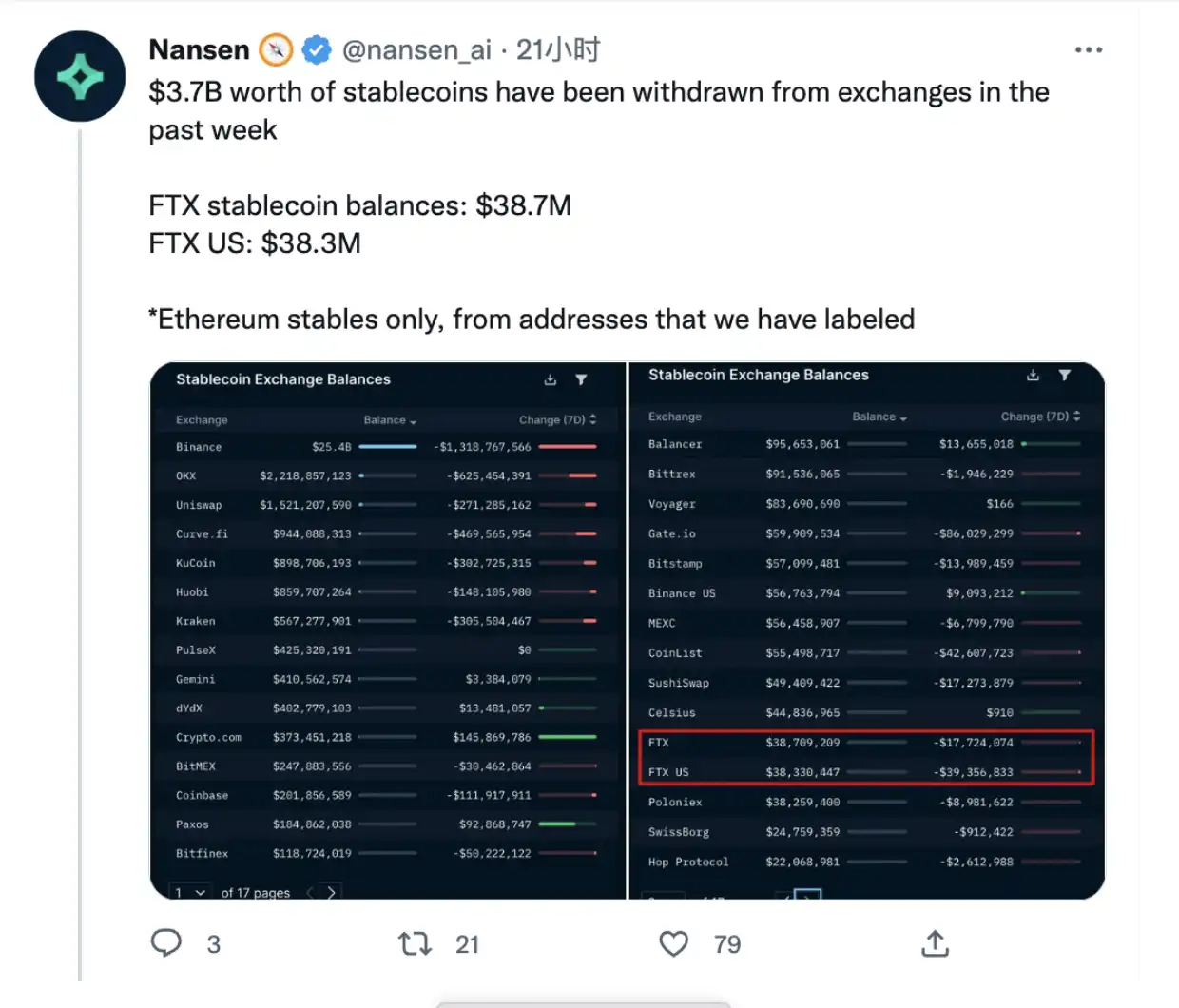
Due to the blow-up of the CeFi-based FTX platform, many users of CeFi platforms took reactive withdrawal actions after this blow-up event. According to data provider Nansen, in the past 7 days, on just the Ethereum network, users withdrew $3.7 billion worth of stablecoins from major platforms (including Binance, OKX, KuCoin, Huobi, Kraken, Coinbase, Bitfinex, etc.).
Facing the panicked exodus of user funds, major CeFi platforms were forced to resort to the old trick of 100% reserve displays to try to regain user confidence.
So far, CeFi platforms that have disclosed reserve information include Binance, Crypto.com, OKX, Deribit, KuCoin, Bitfinex, and Huobi.
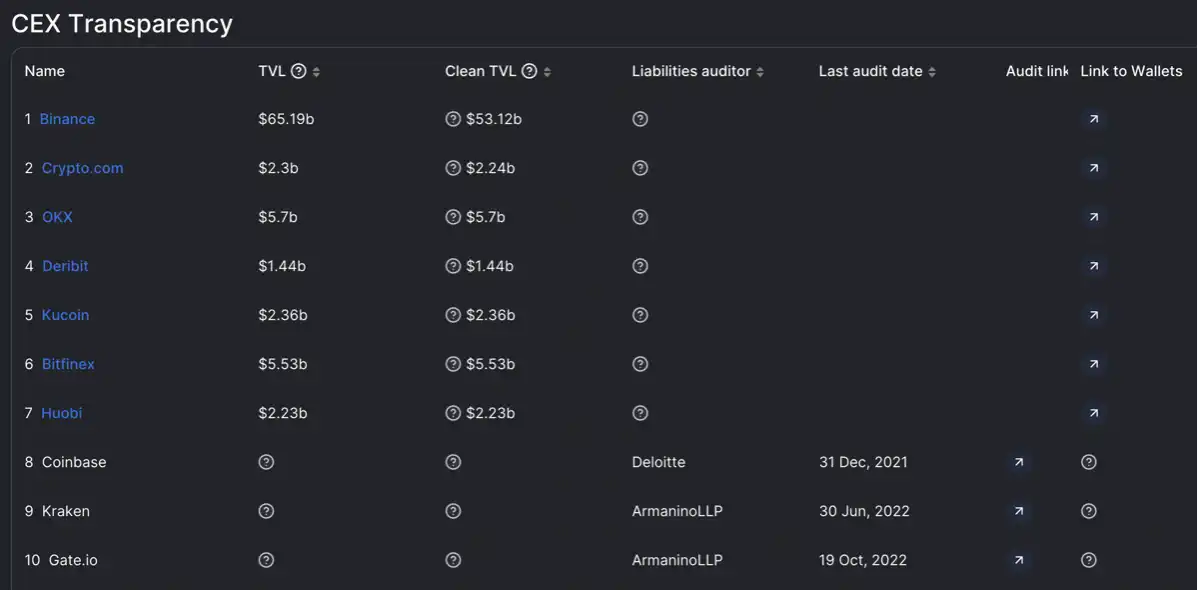
(Data from defillama.com)
However, in my opinion, these data can only prove the strength of these platforms, the essence of CeFi, implying that users need to trust that the platform will not act maliciously. This tests human nature, and if the platform controls the human (the private key holder) whose nature is evil, then the platform is not trustworthy.
Top DeFi Tokens Surge Against the Trend, Derivatives Platforms Benefit the Most
Amid a trust crisis in CeFi platforms, some top DeFi tokens have benefited from a narrative shift, such as the decentralized wallet Trust Wallet's TWT token, which surged by 94.1% in the past week.

The Token of the decentralized derivatives protocol GMX surged by 12.1% in the past week.

The Token of the decentralized derivatives protocol dydx surged by 39% in the past week.

Observing the TVL data changes, we can see that among many leading DeFi protocols, only MakerDAO and dydx showed a net growth in the past week.
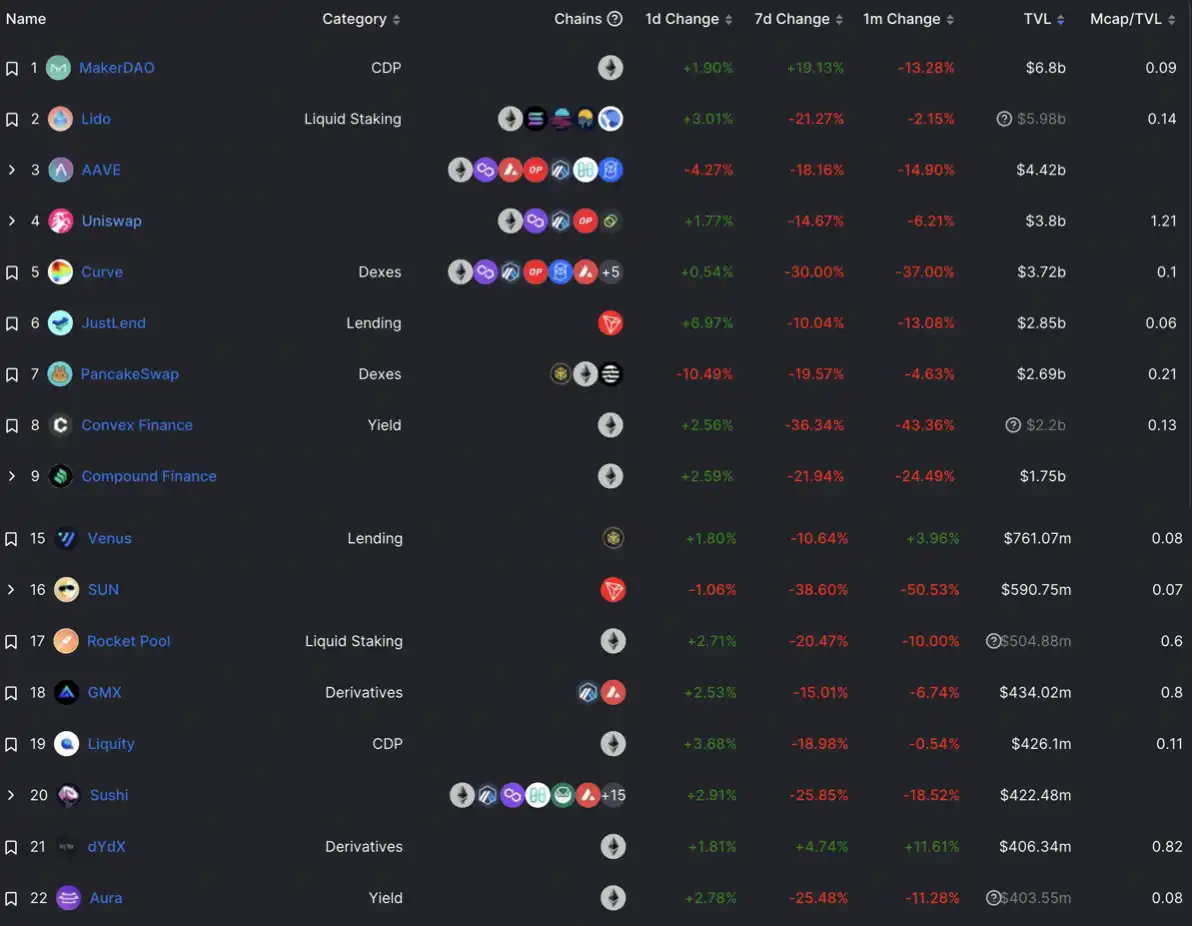
(Data from defillama.com)
This data indicates that in the current bearish market environment, the Crypto market's demand for decentralized stablecoins and decentralized derivatives protocols is growing.
But this demand is evidently driven by mature Crypto users rather than new market entrants.
Future Outlook: CeFi Strengthening Regulation and Transparency, DeFi Enhancing Infrastructure Development
Following the FTX platform's collapse, global regulatory bodies have reason to tighten regulations on Crypto, especially targeting CeFi platforms similar to FTX.
In addition to regulation, CeFi platforms themselves also need to increase transparency. For example, Binance founder CZ recently revealed in an AMA that Binance will collaborate with Ethereum founder Vitalik Buterin to introduce a new Proof of Reserve mechanism. For users, the credibility of a CeFi platform is low if it is unregulated and has opaque financial data.
In the long run, the Crypto market ultimately belongs to DeFi, but the insufficient DeFi infrastructure has provided an opportunity for CeFi platforms to grow. Specifically, CeFi can achieve a better user experience (fast, transactions without gas fees, full-featured, no need for mnemonic phrases, etc.) and iterate on products faster to adapt to changing market demands. For these reasons, in the past few years, CeFi exchanges like Binance have been able to achieve faster development compared to DeFi platforms.
In the next few years, during the window where the DeFi infrastructure is still incomplete, CeFi remains the choice for the vast majority of existing Crypto users and potential new users.
Regarding the future challenges of DeFi and CeFi, Framework Ventures co-founder Michael Anderson commented in an interview with an external media outlet:
"It is obvious that DeFi is the only way we can continue to offer such financial services in the Crypto ecosystem, and the recent situation with FTX has prompted us to double down on everything we believe in, including DeFi and CeFi regulation. Regulation is not something we should oppose or prevent, sensible regulation makes sense..."
Next, let's focus on DeFi, which has clearly become the Crypto sector that investors are most concerned about.
If the first wave of DeFi was due to leveraging the future of Ponzi Token economic design, then the next wave is likely to be based on improved infrastructure.
This includes scaling of underlying public chains (L1, L2, etc.), MEV improvements, account abstraction work, improved cross-chain infrastructure, one-stop integration of DeFi platforms, decentralized infrastructure like Infura, fiat money on/off ramps, etc.
Below, we will use the current most important Ethereum ecosystem as an example to illustrate.
(1) Underlying Public Chain Scaling Issue
First, the bottleneck hindering the widespread adoption of DeFi is the throughput of the underlying blockchain. On the current Ethereum L1 network, each block can roughly accommodate 100 - 300 transactions, with an average TPS of around 12.5. However, once network demand is high, it leads to a surge in gas fees. This results in users having to pay significant fees when conducting transactions like DEX trades. For the average user, this additional expense is clearly unaffordable. To address this issue, Ethereum's network needs to be scaled, and there are currently two main approaches:
(1) Layer 1 (L1) scaling, such as Proto-danksharding (EIP-4844), danksharding;
(2) Layer 2 (L2) & Layer 3 (L3), such as Optimism, Arbitrum, zkSync, StarkNet, Scroll, etc.;
For the first approach (Layer 1 scaling), short-term hopes can be placed on EIP-4844, with development work starting roughly this spring. According to Optimism developer Mofi Taiwo's explanation, the complexity of EIP-4844 lies roughly between EIP-1559 and The Merge. While many community participants hope that EIP-4844 can be included in Ethereum's next hard fork upgrade Shanghai, discussions among developers during Ethereum's 149th ACD call made me somewhat concerned about this.
In the best-case scenario, EIP-4844 will be introduced to the Ethereum network with next year's Shanghai upgrade. However, if delayed, this implies that EIP-4844 may need more time for proper implementation.
It is worth noting that the expected scaling effect of EIP-4844 on L2 has decreased from the initial 100x to around 20x.
As for the full implementation of danksharding, it may take several years to materialize.
Regarding the second approach (L2 & L3), we need to pay more attention to the risk factors of the rollup projects themselves. In Vitalik's recent article "Three Stages of Rollup's Layer 2," he mentioned that most rollup projects currently use temporary auxiliary machinery, implying that these networks still face various types of single-point failure risks.
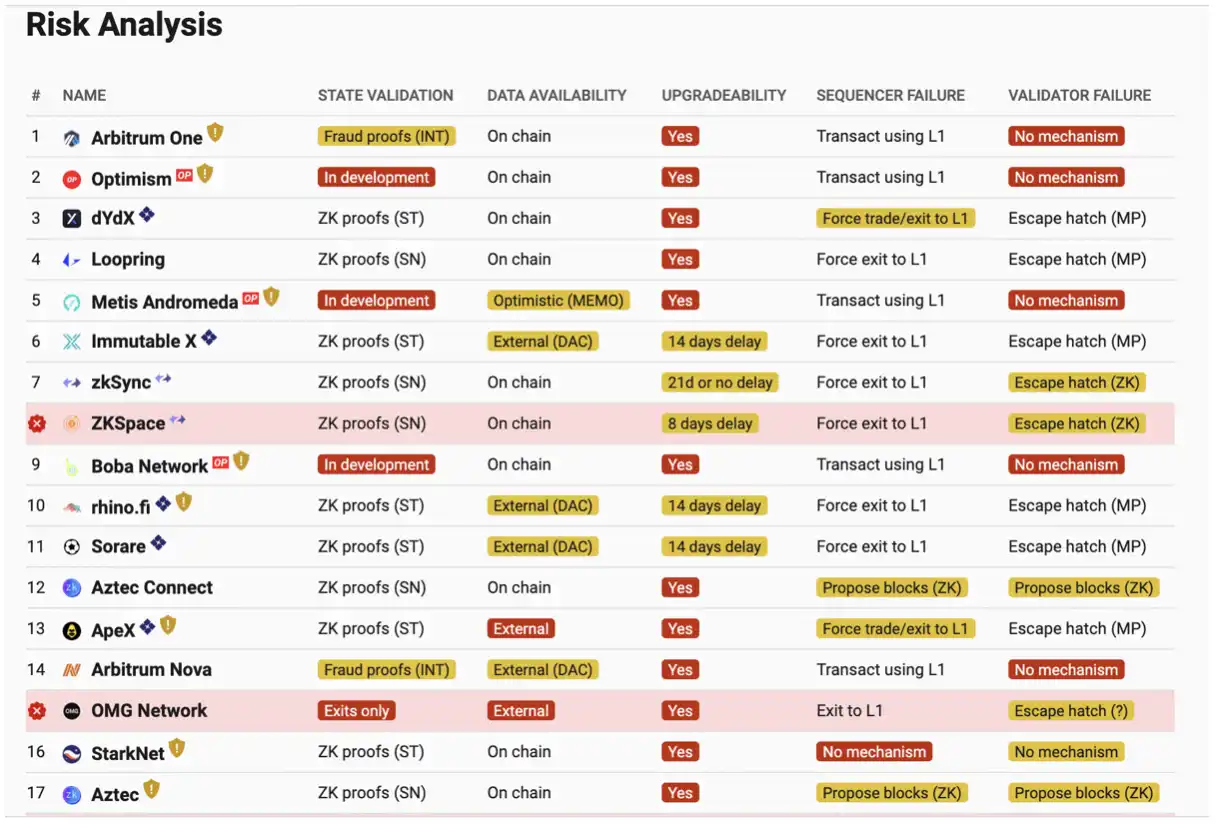
(Statistics from l2beat.com)
DeFi projects built on these Layer 2 networks will naturally inherit the risks of these networks themselves. Although Vitalik did not mention the time required for Rollup to implement the final stage, we can speculate that this may take another 2-3 years.
(2) MEV Improvement
Due to the transparency of the Ethereum blockchain and the rules for protocol-confirmed transactions, current DeFi platforms like Uniswap may experience unpleasant MEV (Miner Extractable Value) issues. In low-liquidity pools, this could lead to significant user losses. According to data, when users use Uniswap, only 1/3 of the fees are paid to liquidity providers, another 1/3 is spent on gas fees, and the final 1/3 is lost due to MEV issues. To address this problem, we need protocols to protect users from malicious MEV or adopt an application-specific chain approach like Osmosis.
(3) Account Abstraction Work
Currently, the vast majority of Ethereum accounts are externally owned accounts (EOA) controlled by private keys. Although they are free to create, users need to secure their private keys or mnemonic phrases and can only use ETH as gas fees, which is not favorable for onboarding new crypto users.
On the other hand, with account abstraction smart contract wallets, users do not need to manage mnemonic phrases (using social recovery mechanisms) and can choose to pay network gas fees using ERC-20 tokens or even fiat currency, greatly enhancing the user experience.
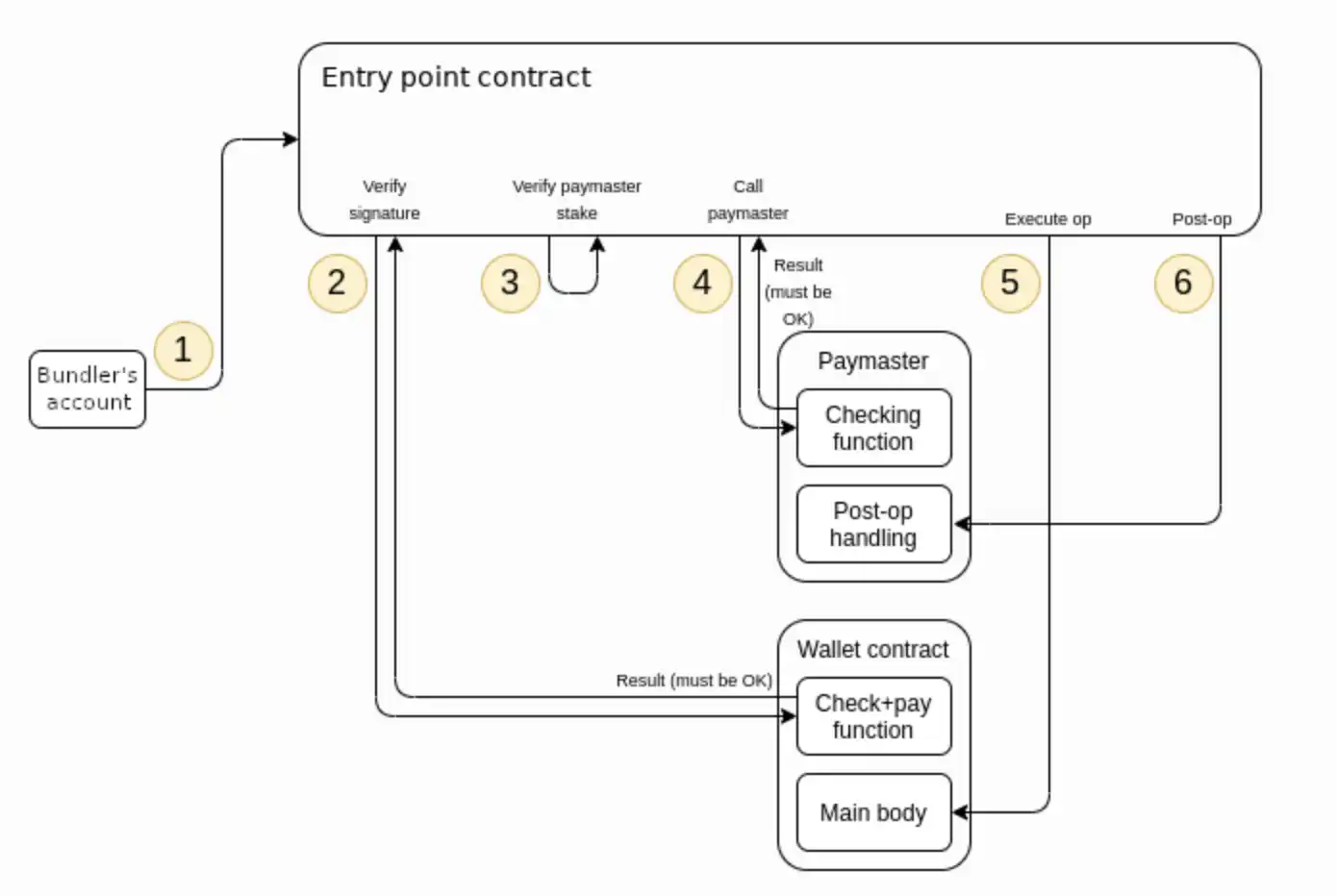
Regarding account abstraction, the most noteworthy proposal currently is EIP-4337. This proposal does not require any changes to the Ethereum consensus layer protocol and introduces the concept of a "paymaster," allowing app developers to subsidize users' network gas fees to improve user experience.
However, creating smart contract wallets comes with a cost, making it unrealistic to achieve large-scale expansion of smart contract wallets under the current constraints of network throughput.
Therefore, EIP-4844 and the development of Rollup infrastructure will be very important for account abstraction.
(4)Improvement of Cross-chain Infrastructure
Due to the inevitable development trend of the Crypto "multi-chain future," cross-chain has become an integral part of DeFi, but due to its complexity, cross-chain has also become a major target for hacks.
According to incomplete statistics, in the past few years, cross-chain bridges that have been hacked include Poly Network, Ronin, Wormhole, Horizon, Nomad, Binance Bridge, Multichain, QBridge, etc., with the highest losses reaching 620 million USD.
The reasons for the attacks include smart contract vulnerabilities, private key leaks, Merkle tree vulnerabilities, etc., while yet to be seen are malicious acts by centralized cross-chain bridges and the weak-chain economic attacks that Vitalik is concerned about.
So far, most users still use multi-signature type cross-chain bridges, which require more trust and are more susceptible to attacks. The IBC protocol adopted by Cosmos is considered the current most secure and mature way of cross-chain bridging, but it still theoretically has security vulnerabilities.
Looking ahead, we expect to see trustless ZK technology and infrastructure such as IBC mature further and serve as a secure link for the entire DeFi ecosystem.
(5)One-stop Integration of DeFi Platforms
Unlike CeFi platforms that provide one-stop services such as spot trading, lending, derivatives trading, and asset management, the services provided by current DeFi platforms are relatively single-purpose. For example, the Uniswap platform only provides spot DEX trading services, Compound only provides lending services, and dydx only provides leverage and derivatives trading services.
For users, what we need more is a one-stop service platform rather than switching back and forth between various applications, which may be a development trend for DeFi in the future.
Final Thoughts
Due to the close relationship between Crypto and centralized fiat, DeFi and CeFi will coexist in the long term, but I would prefer to use a decentralized wallet to store my Crypto assets and rely on relatively decentralized infrastructure to trade them, rather than relying on custodial CeFi platforms. Of course, when there is a need for deposits and withdrawals, CeFi platforms are indeed more suitable for us, as regulation can provide some assurance of the legality of funds.
And with the development of public chains, L1 & L2, and other infrastructure, we can expect that in the next 2-3 years, DeFi will see a new wave of explosive growth.
Original Article Link
Welcome to join the official BlockBeats community:
Telegram Subscription Group: https://t.me/theblockbeats
Telegram Discussion Group: https://t.me/BlockBeats_App
Official Twitter Account: https://twitter.com/BlockBeatsAsia


