OpenSea launches on-chain mandatory royalty tool, royalty discourse and ideological debate
Original article by jason chen
BlockBeats Note: This article is a series of opinions published on Twitter by Jason Chen, co-founder of BuidlerDAOClick to view.
OpenSea launched the enforcement tool of on-chain royalty today. After X2Y2 launched the first shot of royalty reform, other trading platforms in succession began to take a knife to royalty. As the first one to set royalty as an "industry standard", OpenSea continued to hold the banner and began to stand firmly on the side of royalty from the level of on-chain contract. In fact, many people think that royalties are NFT native. However, the concept of royalties does not exist in standard 721 contracts.
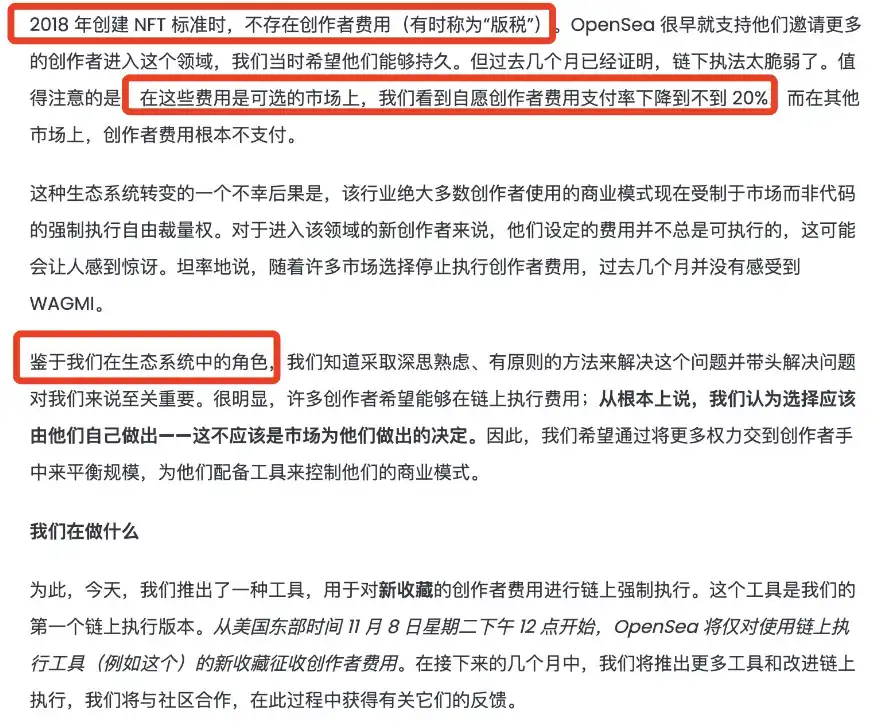
Instead, the function of royalty is defined by OpenSea platform itself, which I also explained in BuidlerDAO's twitter about the past and present life of royalty and the specific implementation method. https://twitter.com/BuidlerDAO/status/1563709967680491521 so as royalties of participant is now also resolutely defend the royalties, after all royalties for project party is a good way to draw, In particular, the volume of OpenSea has been overtaken by other platforms.
Restricting NFT transactions on royalty-free platforms directly through the contract level is like pulling the plug. As can be seen in the following figure, the trading platforms filtered out by this tool are equivalent to being blacklisted by OpenSea. As long as the NFT contract code uses this tool, it will not be able to transfer NFT transactions on the following platforms.
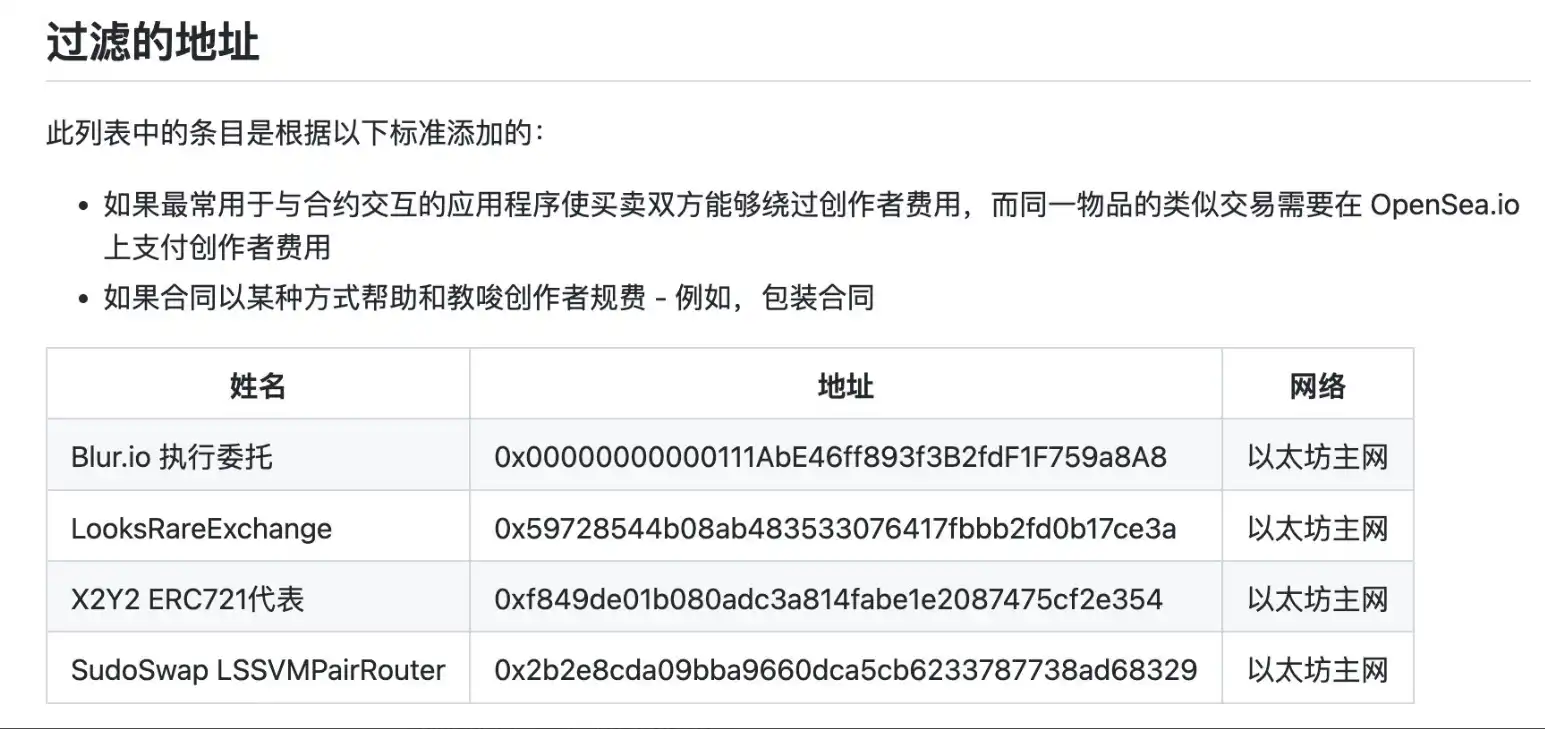
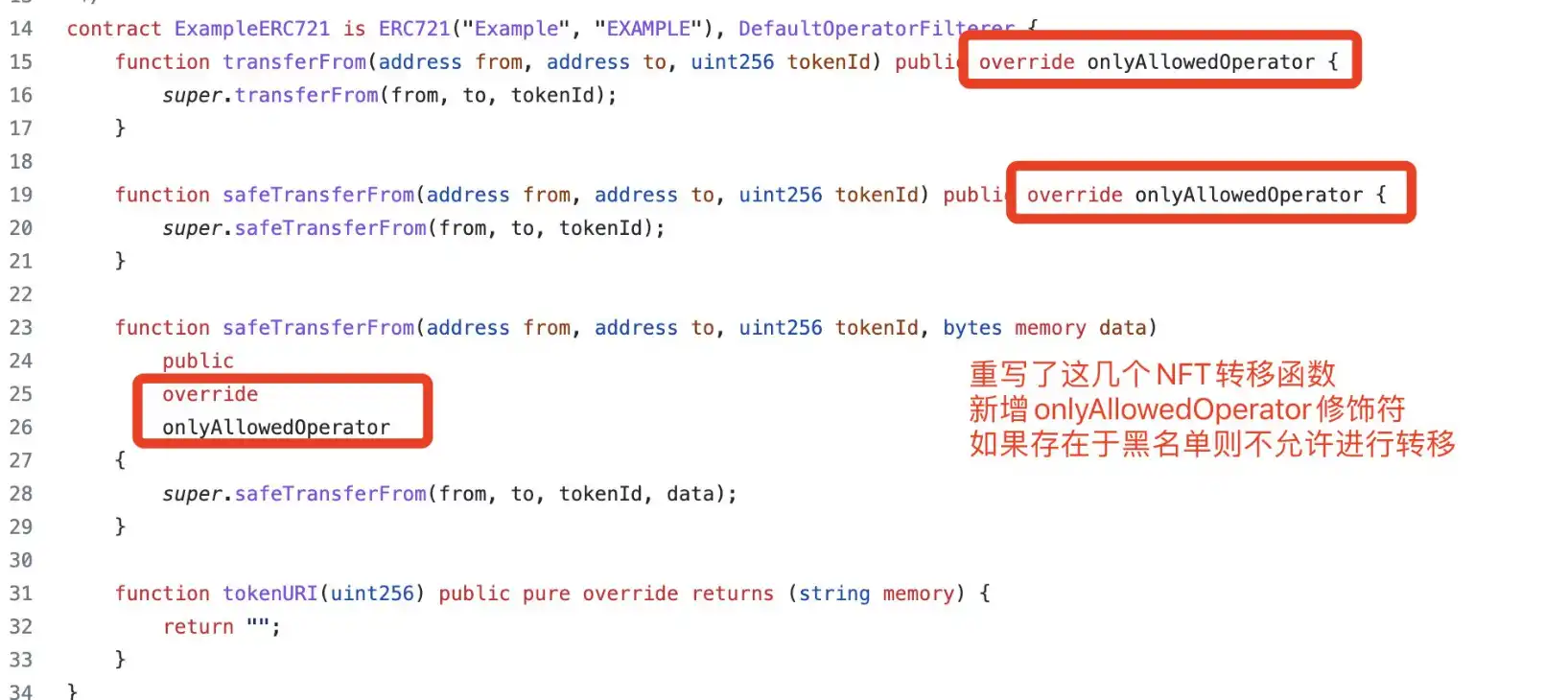
Because this code snippet needs to be implanted in the contract of NFT project, it can only be used. Therefore, this tool is only useful for new projects and projects that can be upgraded by contract. However, the existing old projects cannot use this tool because the code is unchangeable. Therefore, it does not work for blue chip projects such as BAYC and Azuki, which account for the vast majority of trading volume in the market.
Just how many new projects will adopt the tool will have to wait for the bullets to fly, as using it means being completely on board with OpenSea and cutting ties with several other trading platforms. In fact, the copyright dispute between X2Y2 and OpenSea is not about copyright, but about the right to speak, the ideology, and the project side and users.
I just mentioned that copyright is the standard set by OpenSea as the industry giants, and X2Y2 used to boast that they are all trading platforms. Why can OpenSea set standards while I can't? This is a dispute over the right to speak. One side of the protection of traders, this is an ideological battle, everything is still behind the interests and market share, there is nothing wrong with holding the flag, the teacher is famous.
Finally, OpenSea roped in the project side, and X2Y2 and others roped in the traders, and it was difficult to balance the interests of the two. For example, after the project Rug was saved by the community itself, CC0, it was really unreasonable to pay high royalties to the project side. Although we seem to regard first-level mint income and second-level royalty income as common sense, But in fact, it is common for the project side to retain a part of the secondary sale, I personally still prefer royalty reform, rather than strict royalty and royalty.
The original link
Welcome to join the official BlockBeats community:
Telegram Subscription Group: https://t.me/theblockbeats
Telegram Discussion Group: https://t.me/BlockBeats_App
Official Twitter Account: https://twitter.com/BlockBeatsAsia

 Related Articles