StarkWare: One of the Rollup leaders with a $7.9 billion valuation
Original title: Rollup Wars -- StarkWare at a Glance
Original article by Yuyuan Kaka, IOBC Capital
At present, the development trend of Ethereum is more and more towards modular blockchains.
Under the architecture of modular blockchain, transaction calculation and execution on Ethereum are no longer operated by the main network, and this part of the work is transferred to Layer 2 under the chain. This scheme reduces the burden on the main network and greatly expands the performance of Ethereum.
In the future, the Ethereum main network only undertakes the work of completing consensus and data availability, while Layer 2, which undertakes all the computing execution, will become a cloud computing service provider, just like Amazon Cloud and Ali Cloud.
Rollup
Rollup is considered to be the most promising expansion solution at layer 2.
Rollup completes the verification and calculation of transactions under the Ethereum chain, and sends them back to the main network together with the new State root after the transaction update, thereby reducing the space occupation of the main network.

There are two realization schemes in the Rollup, namely Optimistic Rollup and zk-Rollup. Among them:
1. Optimistic Rollupproof of FraudFirstly, it is assumed that all transactions uploaded to the main chain are legitimate, and a challenge period is set to allow the verifier to present proof to challenge the problematic transactions. Once it is confirmed that fraud occurs, the fraudster is punished and the challenger is rewarded.
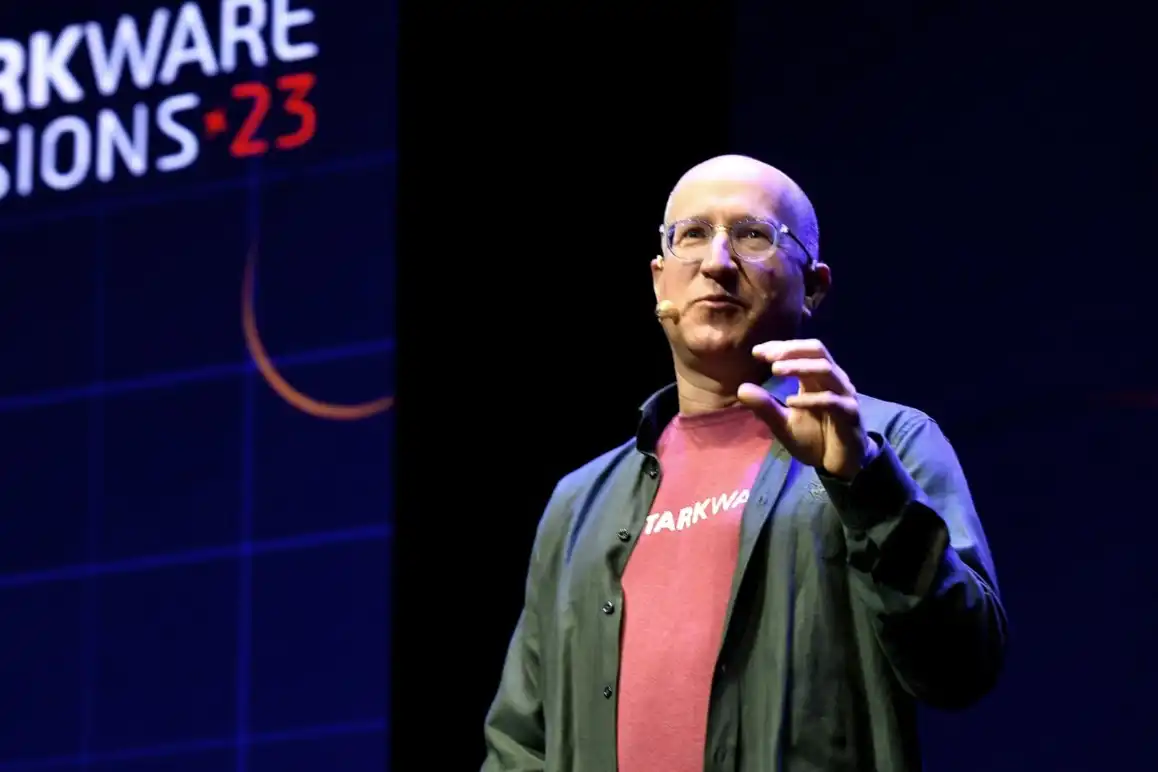
2.Zk-Rollup usesproof of Validity, all transactions are verified and packaged under the chain, and the verified transactions are submitted to the main chain with zero-knowledge proof to prove the validity of the transactions. In the words of StarkWare CEO Uri, "It provides no-trust computational integrity, which is the ability to be confident that the computation is being performed correctly even when no one is watching." Very similar to the idea of early Bitcoin.

Source: Messari
There are three main roles in Rollup:
, Sequencer:It is primarily responsible for collecting transactions from users, sorting them, and uploading new Merkle roots to Layer1's rollup smart contracts, similar to miners.
, Prover:Responsible for calculating and verifying all transactions and generating a zk-proof to prove the validity of the transactions.
, Verifier:It is typically deployed at Layer 1 and is responsible for partially verifying the validity of Prover's proof to ensure that it provides all the information needed to calculate honesty.
Optimistic Rollup can be compatible with EVM, and the technical solution is mature and landed early. For developers, the migration cost is low. The project Arbitrum and modernism have the highest market share in the current rollup. However, because zk-Rollups is not compatible with EVM, its technical difficulty is relatively large, and its development progress is slow. At present, its application is not as extensive as the rollup of OP department that can face smart contract.

Nonetheless, zk-Rollup has many advantages over Optimistic Rollup, such as:
1.Better scalability.This is because zk-Rollups needs to upload less data to the main network than Optimistic Rollups. Because all the transaction information released by zk-rollups to the chain has been verified and attached with the proof, others only need to verify the proof, but do not need to verify the transaction, so there is no need to upload the data related to the verification of the transaction. However Optimistic Rollups needs to accept the challenge of fraud proof. So we need to link that data as well. In practice, zk-Rollup improves performance about ten times more than Optimistic Rollups.
2.The deal was finalized in a short time.The transactions published on the chain by zk-Rollups have been verified and accompanied with the proof, which is relatively easy to verify. Usually, the verification time is about ten minutes. However, Optimistic Rollups submits the trade with fraud risk, so she needs to accept the challenge of fraud proof. So it can not achieve instant withdrawal and other functions.
3.Higher security.Transactions uploaded by zk-Rollups are verified and accompanied by a certificate, which is less likely to be evil. Compared to Optimistic Rollups that may upload transactions with fraudulent content, zk-Rollups has higher data reliability and security.
Vitalik stated in 2021, "optimistic rollups will win in the short term because of its EVM compatibility. In the medium to long term, zk-rollups will win all use cases as zk-SNARK technology improves." In the long term, Vitalik is more bullish on zk-rollups.
Zk - SNARK and zk - STARK
The two leading projects of zk department areZkSync and StarkWare. Among them & have spentzkSync It is zk-SNARK Technology, while StarkWare It is zk-STARK Technology.
zk-SNARK is short for concise non-interactive proof, and zk-STARK is short for extensible transparent knowledge proof. zk-SNARK was born early and its technology is relatively mature, so it has been widely used at present. An early privacy Token project, zcash, used zk-SNARK technology. zk-STARK is regarded as an improved version of zk-SNARK, which is a faster and more convenient implementation, aiming to optimize zk-SNARK and make up for some of its shortcomings.
As can be seen from the name, zk-STARK has the advantages of scalability and transparency compared to zk-SNARK. In addition, zk-STARK also has higher security. The specific reasons are:
1.scalability. With the zk-STARK technique, the prover's running time is at most quasilinear in the computation size and the verification time is polynomial logarithm of the computation amount. However, in zk-SNARK, the prover may face a complicated and expensive proof process, as well as a corresponding long verification time.
2.transparency. zk-STARK does not require a trusted initialization, unlike zk-SNARK, which requires a common reference string for trusted Settings. Instead, it uses random public validations, so there is no need to worry about parameters being broken or modified.
3.security. Since zk-STARK relies on hash functions for symmetric encryption, the collision-resistant property of hash functions brings the ability to resist quantum attacks.
Due to its mature technology and early launch, ZK-SNARK is still the mainstream in the zk field, while ZK-STRak technology is difficult and lacks developers, so it has not been widely adopted. But with significant advantages, we believe zk-STARK will become a more acceptable solution in the future.
StarkWare
StarkWare co-founder Eli Ben-Sasson is one of the world's top cryptographic scientists, a professor at the Technion-Israel Institute of Technology, and a co-inventor of zk-SNARK and zk-STARK technologies. The project was developed using the Turing-complete Cairo language.
The working principle of
The workflow of StarkWare products is shown below:

Let's use StarkEx as an example. StarkNet's workflow is roughly similar.
1. The user first performs operations in the application, usually the client of the application or the front end of the web page. The application performs these actions and then sends transactions to the StarkEx service.
2. The StarkEx service packages these transactions, executes them and sends them to SHARP (Shared prover, shared proof service)StarkWare uses Cairo's Turing-complete language to translate the results of all smart contracts into provable polynomial equations, thus making the smart contracts compatible with proof of validity.
3.SHARP is a Stark - based proof system, which generates a certificate to prove the validity of the batch transaction;
4.SHARP issues Stark proofs to the deployment at Verifier at Layer 1, verified by Verifier;
5.StarkEx Service will send an on-chain status update transaction to StarkNet smart contract deployed at Layer 1The smart contract accepts the new status change only after it has been certified by the Verifier.
product
StarkWare currently has two products:
· StarkEx Provide the application withA customized ToB serviceApplications running on StarkEx can customize their business logic. StarkEx is available for applications such as Defi and gaming to speed up transactions, reduce transaction fees, and enable data availability through either ZK-Rollup or Validium.
· StarkNet Is aA permitless, decentralized, censor-resistant, universal layer 2 network, on which any user or developer can deploy smart contracts written in the Cario language.

These two products correspond to two different business modelsThe former provides customized services for applications and sells them, while the latter provides unlicensed generic services and then charges transaction fees on the network or extracts MEVs as nodes under the principle of transaction costs first.
StarkWare co-founder Eli Sabasson once made a metaphor,Think of StarkEx and StarkNet as computers and clouds, respectivelyBuying StarkEx is like having your own custom computer, and each customer has their own expanded computer. StarkNet is a network, a universal service that anyone can pay for and use.
The following figure shows how StarkNet works. The big difference with StarkEx is thisSequencer replaced StarkEx Service in StarkNet To verify the validity of the transaction, package the transaction, and call the Cairo program for execution, while SHARP does the proof generation work, which is handled by Prover in StarkNet. Currently, both Sequencer and Prover are designated by the official StarkWare team, which raises the question of centralization.

Roadmap
StarkNet has published a roadmap on their blog and says they are moving towards decentralization.

As envisaged, the StarkNet team-building process consists of four phases, which are:
, Step 0-- Infrastructure
, Step 1--Planets: Single operator, single app rollup
, Step 2--Constellations: a rollup for different works as a single operator
, Step 3--Universe: decentralized operators and rollup of multiple apps
In Step 1, only one application runs on one StarkNet instance (a rollup), and developers focus on how to implement their business logic on the expanded StarkNet network.
The next step will be to support running multiple applications on the same StarkNet instance, and these applications will be able to share the same global Layer 2 state. This results in interoperability between different applications, as well as reduced gas costs due to increased economies of scale. At this stage, StarkNet will become a fully functional framework for running multiple applications with arbitrary business logic on top of Ethereum, each instance run by a single operator. From a user's point of view, StarkNet works much like Ethereum, only it scales better.
The last phase is where StarkNet decentralizes operators. In this phase, the team mainly does two things: (1) use rollup to achieve a better consensus mechanism and (2) use the economic model to motivate contributors and operators and attract more participants to decentralize the network.
Cairo language
Cairo (CPU Algebraic Intermediate Representation) is a Turing-complete programming language used by StarkWare to generate STARK proofs for general computations.Application developers can use Cairo to define any business logic and perform off-chain proofs and on-chain validationsWithout manually generating complex circuits or AIR (algebraic mediation code).
With the Cario programming language, any computational proposition can be proved in code quickly and safely. An application written by Cario can prove its corresponding execution logic, and a Cario application can also integrate multiple Cario applications to form SHARP.
SHARP (Shared prover) can aggregate transactions from several separate Cario applications and be used in the same STARK proof.With STARK proofs, the time required to produce a proof is roughly linear to the time required to execute the statement. The time required to verify the proof is logarithmic to the time required to produce the proof.
Since the verification time is much less than the proof time, recursive verification can be implementedJust as one Cairo program can verify the correctness of multiple transactions, one Cairo program can be written to verify multiple Stark proofs. Since only logarithmic time is required to implement the validation, such recursive validation can greatly reduce the validation time.
The StarkWare team launched CairoGeneric Proof Service (GPS), developers can use this service to build their own applications using the Cairo language. They can send their Cairo code containing the business logic to the GPS to prove it and verify it on the chain.
Because GPS enables the use of a single proof to assert the integrity of the execution of different applications, it enables these applications to share the gas cost of proof verification.
Team and Financing
The StarkWare team is based in Israel and is composed of computer science and cryptography developers with backgrounds from the Hebrew University and the Technion-Israel Institute of Technology. It is arguably the strongest team in zero-knowledge proof.
According to StarkWare's website, the team currently has 77 members, plus seven subject advisers and five other advisers. Key members include:
, Eli Ben-Sasson: Co-Founder & The lead scientist, with a PhD in theoretical computer science from Hebrew University, has long worked on computational integrity, cryptography and zero-knowledge proof. Professor of computer science at Technion-Israel Institute of Technology. Founder scientist of Zcash, inventor of zkSNARK and zkSTARK.
, Uri Kolodny: Co-Founder & CEO, with a bachelor's degree in Computer Science from Hebrew University, is a serial entrepreneur with extensive business experience and a strong ability to collaborate.
, & have spentAlessandro Chiesa: Co-Founder & The lead scientist, professor of computer science at the University of California, Berkeley. Founding scientist of Zcash, co-inventor of zk-SNARKs, and core developer of libsnark, the leading open source library for concise zero-knowledge proofs.
, Michael Riabzev: Co-Founder & Lead Architect. Ph.D., Israel Institute of Technology, worked at Intel, IBM.
, Oren Katz: Vice President of engineering. Graduated from Hebrew University in Computer Science, MBA from Tel Aviv University, 20 years of experience as a senior engineer.
In terms of funding, StarkWare has disclosed seven rounds of funding involving 45 investments, disclosed to the publicIt raised $273 millionIn 2022,The Series D round was valued at $7.9 billion, investors include Paradigm, Sequoia Capital and Pantera Capital, as well as Vitalik.
Economic models
StarkWare published their Token economy model in a blog post in mid-July this year. It was originally planned to issue its Token in September, but later released the news to delay the issuance time. As of the time of this publication, there is still no official announcement of the issuance of the token.
The StarkNet Token will have three main usage scenarios: paying StarkNet network fees, pledging to participate in network consensus, and community governance voting.
, Transaction Fees: Currently, fees in StarkNet are paid on ETH. But going forward, the project anticipates that fees will be paid using only native StarkNet tokens. To support a good user experience, automated and decentralized on-chain mechanisms will allow users to pay with ETH.
, Pledge: Certain services that are critical to StarkNet's viability and security may require the pledge of StarkNet Tokens. These services may include sequencing, interim L2 consensus until L1 finality is reached, STARK proof services, and data availability provision. These services are expected to be decentralized by 2023.
, Governance: The proposal to improve StarkNet would require a minimum Token holding threshold. All changes to protocols that are critical to StarkNet's viability, security, and maintenance require a vote, either directly or by proxy. For example, all major updates to StarkNet's operating system require approval from Token holders.
The initial issuance of StarkNet Token is 10 billion, 17 percent to StarkWare investors, 32.9 percent to core contributors, and 50.1 percent to foundations. At the same time, the Token has an additional issuance mechanism, a part of the new foundry Token and transaction fees will be granted to core infrastructure developers and smart contract developers.

The specific purposes of 51 per cent allocated to the Foundation are:
, 9% -- eco-developers, users, and communities. Including some users who interacted with StarkEx before June 1.
, Refund (Rebates) - 9% - community StarkNet Token refund, paid in part from the etheric fang joined StarkNet costs.
, 12% - Grants to researchers and workers who develop, test, deploy, and maintain StarkNet protocols.
, 10% - Strategic reserve to fund ecosystem activities in line with the Foundation's mission.
, 2% - Donated to institutions and organizations that are outstanding in the relevant field, such as universities, ngos, etc., at the discretion of StarkNet Token holders and foundations.
, 8.1% unallocated -- to further support the StarkNet community in a manner determined by the community.
Given the customary allocation of decentralized ecosystems and the long-term benefits of the community, 49.9% of the tokens given to investors and core contributors will have a 4-year lock-in period, and will be released in a 1-year Cliff and linear manner.
From the Token allocation, it can be seen that StarkNet Token rewards give priority to developers of core infrastructure and Dapps, and less to ordinary users.
Operational data
Due to its early launch and relatively mature Scale as a service model, StarkEx, a toB product, has accumulated some users, such as dYdX (now mutable), Immutable X, rhino.fi, celer, and Sorare. According to its website, StarkEx has a cumulative transaction value of $732 billion, while TVL currently has $461 million.

Another product StarkNet, based onWeb siteAt present, there are about 100 applications in the ecosystem, with the largest number being Defi (45), NFTS (24) and infrastructure (18).

Among the more well-known programs,AAVE and Maker Both will be deployed on StarkNet, two days after Aave officially announced the completion of Phase 1 of its cross-chain collaboration with StarkWare. This phase is the smart contract infrastructure of Aave v2 on Ethereum to cross-chain aToken to StarkNet, allowing network users to obtain cross-chain aToken in StarkNet. Back in June, Maker had already launched DAI's transfer between Mainnet and StarkNet.
It is worth mentioning that dYdX, which previously dominated the TVL in StarkEx, left in June and chose a standalone blockchain based on the Cosmos SDK to launch the v4 version of its product. This incident has affected investors' confidence in layer 2 and StarkWare to some extent.
It can also be seen from this incident that applications with real users and influence have more say and initiative in the choice of underlying infrastructure. They do not depend on a single underlying chain, but can actively choose other underlying public chains or even build application chains that meet their own needs.
The old "fat protocol, thin app" narrative may be redefined. For a variety of underlying infrastructure projects, how to seize the ecological quality of application, be retained, has become a current need to rethink the problem, after all, you want to capture more value to capture more users, and really interact with the user is used instead of the underlying, users don't care about the principle of the underlying technology, will only with the application of migration and migration.
conclusion
StarkWare, with a strong technical team, is working on the product as planned: on October 26, they announced that they had completed ZK-EVM using STARK proof Cairo.
At the same time, they also face some challenges. For example, zk-STARK currently has high technical difficulty, slow development speed, and few developers, which brings a lot of difficulties to the development and retention of ecological applications. dYdX's exit took away most of the TVL in the project, exposing the dilemma of the lack of binding ability of the underlying infrastructure to the upper high-quality applications, and also showing the strong discourse power of high-quality applications in the selection of the underlying chain.
However, we are still optimistic about zk-rollup and STARK in the long term due to their technological advantages. StarkWare will continue to be one of Rollup's strongest competitors in the future as Token releases provide incentives and the network moves toward decentralization.
The original link
Welcome to join the official BlockBeats community:
Telegram Subscription Group: https://t.me/theblockbeats
Telegram Discussion Group: https://t.me/BlockBeats_App
Official Twitter Account: https://twitter.com/BlockBeatsAsia

 Related Articles