Decentralized Web: Building permitless DWeb from the bottom to the front end
原文标题:《 IOSG Weekly Brief|Decentralized Web:构建从底层到前端都无需许可的 DWeb 》
By Chloe, IOSG Ventures
preface
On August 8, the U.S. Treasury Department announced sanctions against Tornado Cash, a currency-mixing agreement. The sanctions affected many Ethereum addresses, including Tornado Cash's official website, which was also banned. The move has sparked a lot of controversy in the crypto community, including questions about the "decentralized" vision of Web3.0. If all the previous sites whose encryption projects interact directly with the user can be so easily banned, how much does the "permission-free", "censor resistant" benefits of the decentralized underlying infrastructure matter? Two days after Tornado Cash, $570,000 was stolen from the domain name of Curve Finance, a decentralized trading platform. Curve shows that the problem mainly comes from name servers, where hackers redirect users or their transactions to another malicious website, resulting in a loss of funds. The vulnerability of Web side is again stimulating the nerves of the crypto community. In fact, a discussion on Decentralized Web has been on for a long time. One imagines a decentralized system of interconnected private computers to provide private, secure, censor-resistant access to information and services.
So what are the limitations of the current Centralized Web and how Decentralized Web is constructed? How far are we from Dweb? This article will introduce readers to each of them.
Cweb
HTTP and Client server model
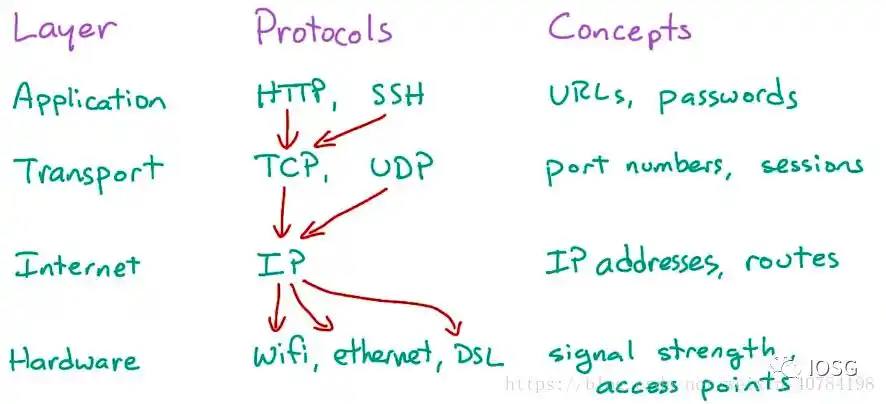
Before we discuss the Centralized Web, let's take a brief look at the interaction model of the Internet. I believe that you have heard of TCP/IP and HTTP protocols, they are widely used in the Internet today, and our lives are closely related. TCP/IP is the transport layer protocol that packages and addresses data to transfer it from one computer to another. HTTP is an application-layer protocol on top of TCP/IP. It specifies the format in which each piece of data can be understood by another computer. Computers under HTTP have different roles, mainly divided into two types: server and client. The hosts that provide services in the Internet are called servers, such as major portals, social platforms, etc. A host that accesses a server to get useful information, such as a variety of home computers and smartphones, is called a client.
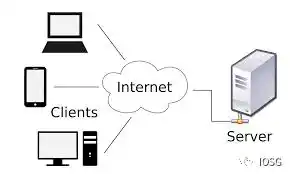
Most of today's centralized web pages use this server-client master-slave architecture. For example, when we want to check the price of a currency on CoinMarketCap, our computer and web browser are the clients, and CoinMarketCap's computer, database and application are the servers.
When our browser requests access to CoinMarketCap, CoinMarketCap's server pulls web pages from the database, combines them into a web page, and returns to our browser. It can be seen that this master-slave architecture is highly dependent on the server, which needs to be responsible for the main data processing, and store user access data and user information. The advantages of this architecture are straightforward, simple, rapid deployment and low maintenance, and are widely cited as contributing to today's Internet boom. However, its defects are also very obvious, the probability of single point of failure or single point of attack is high, and the security is relatively low.
Domain names and DNS
As mentioned above, the Internet is built on the TCP/IP protocol, so we need to address servers by IP address. An IPv4 address is a 32-bit binary number that is typically split into four 8-bit binary numbers. For example, the IP address of the CoinMarketCap page is 108.160.165.139, and we need to send requests to the server through this IP address. However, this string of numbers is so hard to remember that memorizing the IP addresses of all the web pages we frequently visit would be as difficult as memorizing an entire address book. Hence the concept of Domain names. A domain name provides a user-friendly address for any web server available on the Internet. Just as we can't remember the telephone number of our friends, but we can't forget their names. With the domain name, we don't need to enter an IP address to access CoinMarketCap. Instead, we can simply type coinmarketcap.com into the browser.
Therefore, the Domain Name Service (DNS) is just like an address book query, which converts host Domain names into IP addresses. When people want to build their own website, the first thing they often do is to buy a domain name to make it easier for other computers to reach you. Many readers may be wondering, domain names sound like a public good rather than a commodity, so who are we paying for when we buy domain names? Before we answer that question, let's take a look at the governing body behind domain names. The organization that oversees the operation of the domain name system is called ICANN, which is the supreme governing body for domain names worldwide. ICANN will give different suffixes to different regions, countries, operators to operate and maintain.
For example, the CN suffix is given to CNNIC, the COM suffix is given to Verisign, and the operation ownership of MO is owned by the Macao Registration Bureau. Suffixes are generally priced according to the cost and reasonable profit of the operator. Local suffixes such as CN, JP and HK are priced by each region. Some of the money that users pay for domain names goes to ICANN and some goes to the service providers. ICANN, based in California, was originally a non-profit agency affiliated with the U.S. Department of Commerce. So the idea that the U.S. government controls the world's domain names isn't unfounded. In 2016, the U.S. government announced that ICANN would no longer be part of the Commerce Department, but would instead become a self-governing independent agency. But what is clear is that the US government still has absolute influence over it. Which brings us back to the beginning of the article, why the United States government was able to ban the website which is Tornadao Cash. The easiest way to do that would be to put a block on the domain name which is Tornadao Cash. The hackers who attacked Curve also tampered with domain names to direct visitors to malicious websites.
Dweb
It can be summarized that the Centralized Web is reflected in the Client-Server master-slave structure under HTTP to a certain extent, and also in the Centralized management of the domain name. Of course, the Centralized Web is caused by many factors, and this article focuses on the transport protocol and the domain name. In Web3.0, we've seen some solutions to both problems -- IPFS and decentralized domains.
IPFS versus HTTP
IPFS was born out of Protocol Labs, a lab dedicated to the research, development and deployment of network protocols, founded by Juan Benet, a computer science master at Stanford University. Similar to HTTP, IPFS is a TCP/ IP-based application protocol. Unlike HTTP, IPFS is a content-based, not address-based, P2P protocol.
So what are the effects of these differences when we use them? As mentioned above, HTTP works by mapping content to an IP address that points to a server in a specific location that contains resources that visitors need. For example, if we want to play a video on YouTube, our browser will find the location where the video is stored on Google's servers and send it all the way back to us. To speed up this process of return, we also set up a CDN(Content Delivery Network) that can "bring" servers closer to you physically. However, CDN also has geographical limitations, and its role is limited in developing countries with relatively backward infrastructure.
Imagine that there are 100 students sitting in a classroom watching this YouTube video at the same time. Each student's client sends a request to the YouTube server. This process has to be repeated 100 times. It will cause a lot of congestion and waste of resources. So how does IPFS solve this problem? The "address" of IPFS is actually a hash generated from the content. When a student wants to watch a video, instead of looking up the IP address of a centralized server, the student's computer searches the entire P2P network based on the content. If there are students in the classroom who have this video stored on their computers, they will get it from each other, ensuring that the data is from the nearest source.
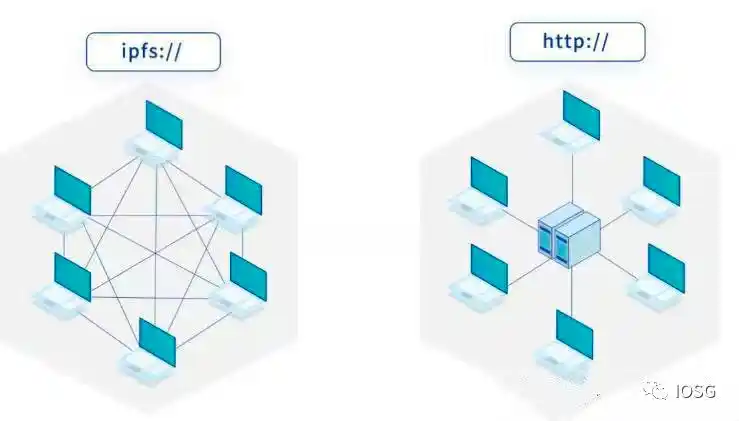
Image source: https://blog.csdn.net/shuoyue0723/article/details/119042236
It can be seen that IPFS is a content transmission protocol built on P2P network. In this network, there is no hierarchical division between server and client, and each node is both client and server. Obviously, IPFS has a lot of "decentralized" advantages. First, IPFS avoids the problem of a single point of failure and enhances network scalability and flexibility. It also has higher performance so that user requests can be processed faster. So why hasn't IPFS, with its many advantages, been used on a large scale? This is a common problem for P2P networks, which are extremely expensive to operate and maintain. For example, the author's node has a problem, but the author does not have the ability to solve. Secondly, there is the problem of coordination. Nodes in P2P networks act independently and do not communicate with each other, which makes it difficult to achieve the task of collective cooperation. Therefore, considering cost/benefit, IPFS may not benefit all organizational structures.
Decentralized Domain Name Service

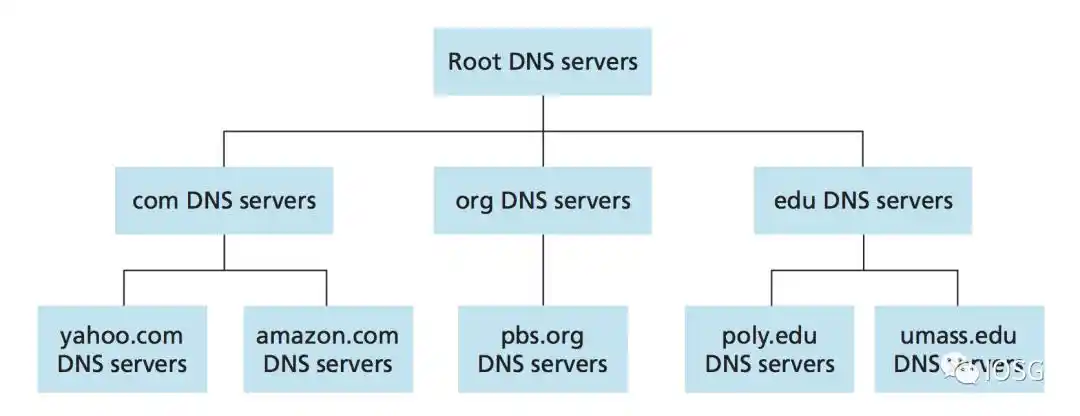
Hashes for content retrieval are more complex than IP addresses, so we also need a decentralized DNS to translate hashes into names that humans can easily understand and remember. How do you understand decentralization here? Let's also look at how the existing DNS operates centrally. Currently, DNS operates in a tree structure. There are only 13 Root DNS Servers with the highest authority in the world. When the top-level DNS server of this hierarchy breaks down, the sub-servers belonging to this server will also shut down, causing a large-scale network failure.
In this context, the concept of decentralized domain name has been proposed, and DNS based on blockchain is currently the most promising solution. Combine the organization form and server architecture mentioned above behind DNS. I can make two requirements for decentralized domain names: 1. The ownership/registration/use rights of decentralized domain names should not be controlled by a centralized force. 2. Decentralized domain name operation should not rely on a few centralized servers, but decentralized operation on the blockchain.
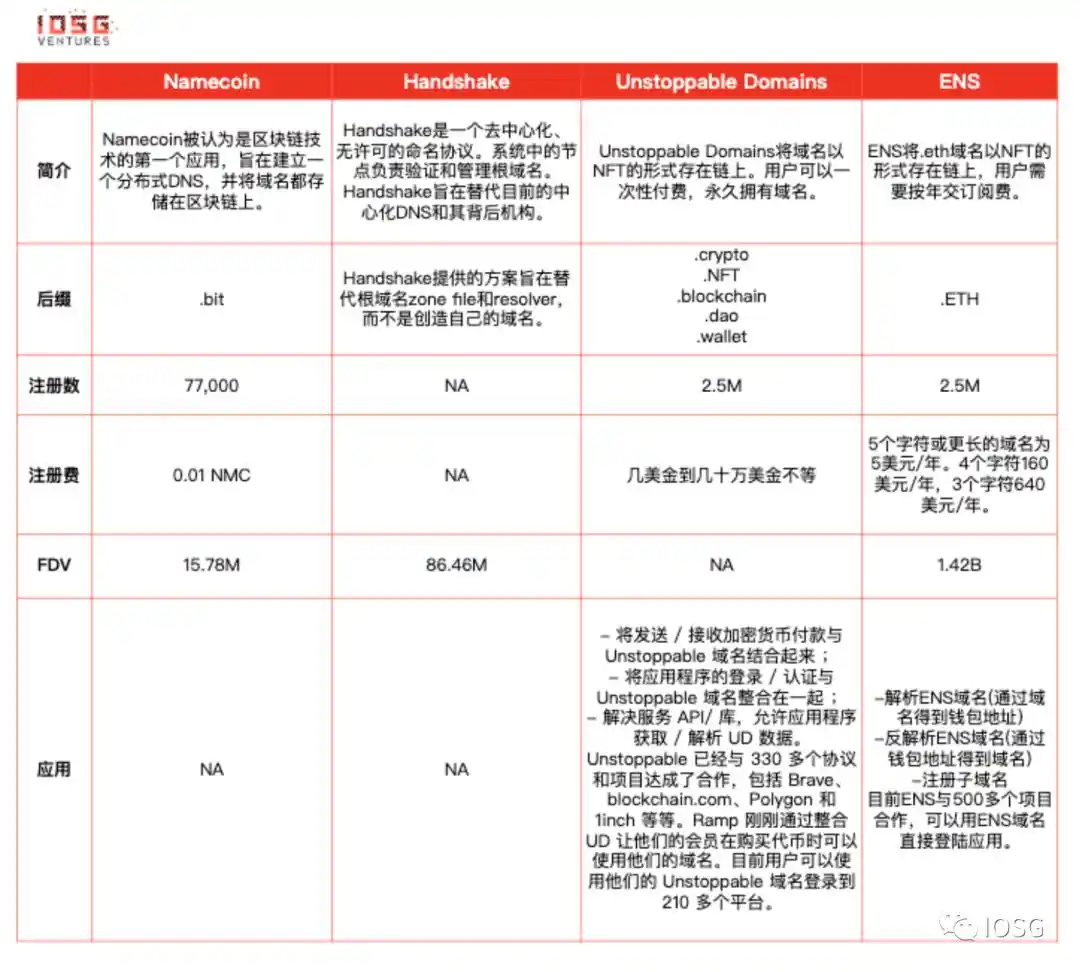
Although it is still early days for decentralized domain name services, we have already seen several projects building towards this goal. Namecoin, for example, was one of the first projects, released back in 2011, but did not see widespread adoption. Handshake is another interesting project, which is positioned as a "decentralized domain name naming and promulgation authority". The two projects with the most sound volume at this stage should be Unstoppable Domains and ENS. Their decentralized domain names have seen high sales, but have not yet been used in large numbers (in this case, mapping with the CID of IPFS), and are mostly stored in wallets as NFTS representing DID.
conclusion
Technology itself is neutral, but the invention of a technology implies the idea and vision of a better future for mankind. Dweb has the characteristics of anti-censorship, and it is difficult for centralized forces to deprive others of the right to exist and express on the Internet by blocking IP addresses or domain names. The author has two thoughts about this: infrastructure itself does not have a value orientation, so anti-censorship is a feature rather than a advantage, how to use the anti-censorship feature of Dweb determines whether this technology will bring progress or disaster. Extreme content such as bloody and violent content that cannot be well controlled will inevitably cause ethical and moral conflicts.
Second, we are still a long way from the maturity of Dweb, the maintenance and collaboration costs mentioned in this article have not been addressed, and IPFS is not necessarily the foundation protocol for Dweb. Although there is a market for decentralized domain names, the underlying DNS system has not yet been established. At the same time, the lack of web development tools like WordPress makes building Dweb very difficult. Still, IOSG holds great promise for the future of Dweb.
Part.2 Investment and Financing Events
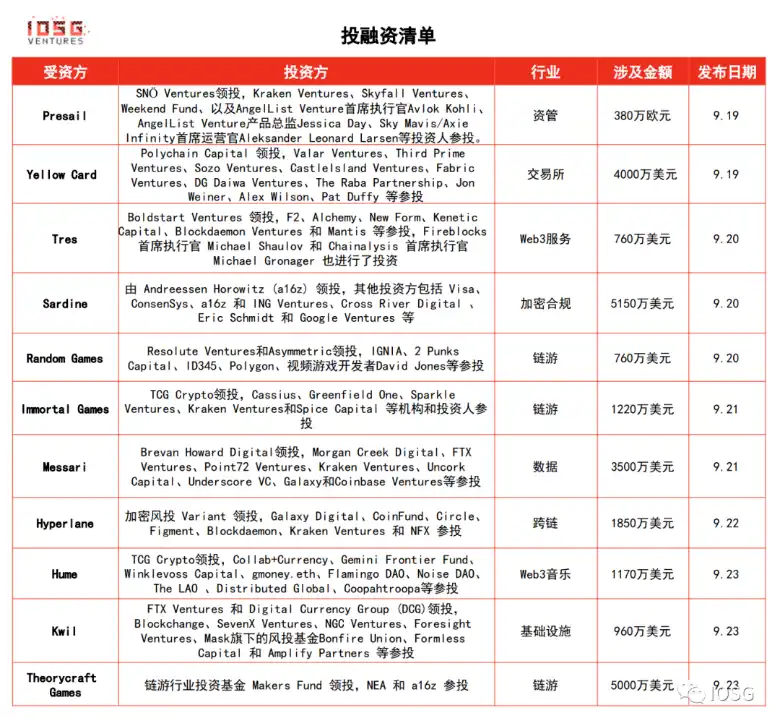
Presail completes €3.8 million seed round
* Web3 tube
Presail, a community-driven Web3 investment management platform, announced the completion of a €3.8 million seed round led by SN Ventures, Kraken Ventures, Skyfall Ventures, Weekend Fund, and Avlok Kohli, CEO of AngelList Venture, and Jessica, Director of product at AngelList Venture Angel investors like Day and Aleksander Leonard Larsen, COO of Sky Mavis/Axie Infinity. The funding round will be used to grow the team and accelerate product development. Presail, based in Oslo, offers a KYC-enabled, anti-money laundering compliant platform to support users investing through crowdfunding.
Yellow Card completed a $40 million Series B financing round led by Polychain Capital
* Trading platform
African (Nigerian) cryptocurrency trading platform Yellow Card Financial has completed a $40 million Series B financing led by Polychain Capital. Valar Ventures, Third Prime Ventures, Sozo Ventures, CastleIsland Ventures, Fabric Ventures, DG Daiwa Ventures, The Raba Partnership, Jon Weiner, Alex Wilson, Pat Duffy and others participated. The funding will be used to expand markets, develop new products and advance strategic partnerships in Africa. As reported in 2021, Yellow Card, an African cryptocurrency trading platform and digital wallet provider, announced that it had completed A $15 million Series A round of funding, with Coinbase participating.
Tres closes $7.6 million funding round led by Boldstart Ventures
*Web3
Web3 financial and accounting software startup Tres has raised $7.6 million in a seed round led by Boldstart Ventures. F2, Alchemy, New Form, Kenetic Capital, Blockdaemon Ventures and Mantis, Fireblocks CEO Michael Shaulov and Chainalysis CEO Michael Gronager have also invested.
Sardine completed a $51.5 million Series B round led by A16Z and joined by Visa, ConsenSys and others
*Defi
Sardine, a fraud detection and crypto compliance platform for the fintech industry, closed a $51.5 million Series B round led by Andreessen Horowitz (A16Z), Other investors include Visa, ConsenSys, A16Z and ING Ventures, Cross River Digital, Eric Schmidt and Google Ventures. The new funds will be used to ramp up marketing efforts and increase sales and international expansion. Sardine's CEO and co-founder Soups Ranjan was previously head of risk at Coinbase and head of crypto at Revolut before starting Sardine in early 2020. Since its inception, the company has more than 135 clients, including FTX, Blockchain.com and Brave, among others.
Sardine offers two main products. The first is the Application Programming Interface (API), which companies can use to address fraud and KYC checks when opening an account or when money is flowing. The second is a payment platform that enables individuals to buy cryptocurrencies and NFTS using bank transfers and cards. The team is also building a risk insights platform. Prior to February news, crypto compliance platform Sardine completed $19.5 million series A financing, A16Z and other investment.
Random Games has raised $7.6 million in seed funding
* Gamefi
Blockchain game developer Random Games announced the completion of a $7.6 million seed round led by Resolute Ventures and Asymmetric, IGNIA, 2 Punks Capital, ID345, Polygon, video game developer David Jones and others participated. Random Games is currently working on Unioverse, a Web3 video game that will allow players, communities, and developers to earn on-chain rewards and digital assets by participating in the game ecosystem.
Immortal Games has raised $12.2 million in Series A funding
* Gamefi
Blockchain data company Thirdwave has completed a $7 million seed round led by Framework Ventures, Animoca Brands, Play Ventures, Shima Capital, Hustle Fund and Oceans Ventures participated. Thirdwave will use the latest investment to further develop its discovery engine, particularly its extensions and data capabilities. Thirdwave provides blockchain data services for Web3 companies, cryptographic projects and protocols, and DAOs, including on-chain activity, customer data, social channel information, website content analysis, etc. Thirdwave aims to provide game developers and Web3 builders with a deeper understanding of the market.
Messari completes $35 million Series B financing, led by Brevan Howard Digital, led by Y Combinator and others * Data encryption analysis platform Messari announced the completion of $35 million series B financing, Brevan Howard Digital led the investment, Morgan Creek Digital, FTX Ventures, Point72 Ventures, Kraken Ventures, Uncork Capital, Underscore VC, Galaxy, and Coinbase Ventures, etc. The funding will be used to expand the team and product offerings, including two new product launches, Protocol Metrics and Data Apps. Messari's funding announcement coincided with Mainnet, an annual crypto conference in New York City that has become the industry's flagship event. This year's speakers include the ceos of Binance and Coinbase and Vitalik Buterin, founder of Ethereum.
Hyperlane closes $18.5 million funding round, led by Variant
* across the chain
Hyperlane, a cross-chain app building platform, announced the completion of an $18.5 million funding round led by crypto venture Variant, Galaxy Digital, CoinFund, Circle, Figment, Blockdaemon, Kraken Ventures and NFX participated. The funding round will be used for recruitment, product development and security, which will include bug bounties and additional audits. The Hyperlane platform is designed to provide developers with messaging apis and SDKS to easily build applications that can be accessed from any blockchain. Hyperlane, based in Greenwich, Connecticut, was co-founded by Asa Oines and Nam Chu Hoai, the first engineers at decentralized finance platform Celo, and Kol, who previously co-led Galaxy's venture capital business. Advisers include Morgan Beller, a partner at NFX, co-founder of Facebook's stablecoin Diem, and Zaki Manian, co-founder of the Cosmos blockchain.
Hume completed $11.7 million A round of financing, TCG Crypto led the investment
* Web3
Music Web3 Music meta-universe developer Hume announced the completion of $11.7 million A round of financing, TCG Crypto led the investment, Collab+Currency, Gemini Frontier Fund, Winklevoss Capital, Gmoney. eth, Flamingo DAO, Noise DAO, The LAO, Distributed Global, Coopahtroopa and others participated in the investment. The funding will be used to create and fund more Web3-based music artists. Hume aims to build a meta-universe of native virtual artists and a platform that connects fans and artists using NFTS so that the community can actively participate in the creative process. "Angelbaby" is Hume's first virtual music meta-universe artist, and has performed in many music events.
Kwil closes $9.6 million funding round led by FTX Ventures and DCG
* Infrastructure
Kwil, a decentralized database infrastructure provider, closed a $9.6 million funding round led by FTX Ventures and Digital Currency Group (DCG), Blockchange, SevenX Ventures, NGC Ventures, Foresight Ventures, Mask's venture funds Bonfire Union, Formless Capital and Amplify Partners, etc. The funding round closed in May. Kwil is the first decentralized, community-owned SQL database solution for building advanced DApps and protocols. Community-owned platforms can make it easier for Web2 developers to access Web3.
Theorycraft Games completes $50 million Series B funding round with A16Z participating
* Gamefi
Game studio Theorycraft Games has announced the closing of a $50 million Series B funding round led by Makers Fund, with participation from NEA and A16Z. The company is using the money to accelerate development of its first game, "Loki," with teams from several massively competitive multiplayer games like League of Legends, Valorant, and Destiny. It is not clear whether Loki will introduce encryption, but Makers Fund, the lead investor in the round, has a portfolio of Web3 companies, This includes a $15m seed round led by MetaKing Studios, $8.2m from Trailblazers Games and $25m from metaverse game Gamefam.
OWC Ventures has raised $400 million in two funds to invest in areas such as crypto and DeFi
* Fund financing
Open Web Collective, a blockchain and Web3 accelerator spun out of NEAR Protocol, today announced the formation of its venture arm, OWC Ventures, to invest in early-stage cryptocurrency startups. OWC Ventures, which has received support from DCG and NEAR, plans to raise $20 million and invest in pre-seed round to Series A funding, said Jeff Lavoie, head of investment at OWC Ventures. In addition to investing in developers, OWC Ventures will also invest in DeFi, SocialFi and games, according to Jeff Lavoie. In addition, OWC continues to operate the OWC Accelerator, which was founded in 2020 and is now in its fourth batch, and its 26 alumni companies have raised more than $360 million in funding.
The original link
Welcome to join the official BlockBeats community:
Telegram Subscription Group: https://t.me/theblockbeats
Telegram Discussion Group: https://t.me/BlockBeats_App
Official Twitter Account: https://twitter.com/BlockBeatsAsia

 Related Articles