Selini Capital CIO: No matter how big Bitcoin is, the central bank will not accept Bitcoin as an asset
Original Title: "Inflation Is Driving Demand For UBI | Jordi Alexander"
Original Source: Blockworks Macro Podcast
Original compilation: Kxp, BlockBeats
The U.S. dollar index DXY has continued to rise recently, and market volatility has increased significantly. What kind of impact will the continued strength of the US dollar have on the market and asset prices? What measures will the Federal Reserve take to affect the liquidity level of the US dollar? What's next for cryptocurrencies like Bitcoin and Ethereum? Michael Ippolito, the co-founder of Blockworks, invited Jordi Alexander, the chief information officer of Selini Capital, to discuss this, which is translated by BlockBeats as follows:
Michael: Welcome everyone to watch today's "On the Margin" program. Today I have invited Jordy, Chief Information Officer of SELINI Capital. Hi Jordy and welcome back to the show.
Jordy: Thank you, Michael.
Michael: First of all, I would like to talk to you about issues at the macro level. Could you talk about your What kind of macro forecasts will you have for the coming year, and what things will you pay attention to?
Jordy: The first is liquidity, which plays a big role in asset prices in the financial market impetus and permeates the entire economy in various ways. People get so used to its presence that they forget that it is not a permanent state. Although the current liquidity situation has eased, I am still concerned about the liquidity in the system. We can see that households and businesses in the United States, as well as households and businesses in some other developed countries, still have a lot of cash in their hands, and this will determine whether we have moved out of inflation or we have moved out of austerity. But I think we're all going to have a hard time getting rid of that until the liquidity is under control. Beyond that, I'm looking at relative interest rates around the world, and I think that's what ultimately drives the currency, not the countries that are borrowing in dollars. Of course, interest rate policy is crucial, but it also depends on how central banks choose between inflation and recession, and where they want to go. In the long run, many situations will still be dictated by future economic conditions.
Michael: Since you have been paying attention to the strengthening of the dollar recently, let’s talk about it first Talk about this topic. In a previous show, Brent talked about his "dollar milkshake theory", pointing out that liquidity will decline due to the shortage of dollars. Why do you think the dollar will strengthen in the future? Why is the strengthening of the US dollar a problem that we need to pay attention to from a macro perspective?
Jordy: Indeed, the international community’s demand for US dollars has not diminished, and the US dollar also has other Advantages that cannot be replaced by money. But in reality, once a crisis occurs, the Fed will provide a large number of dollars to the international market. The result of this is that dollar interest rates rise, which in turn raises other currencies, but countries like Japan cannot afford high interest rates. In my opinion, the strength of the dollar is being abused today, with officials printing more dollars and using that money to buy foreign bonds, creating a bigger balance sheet.

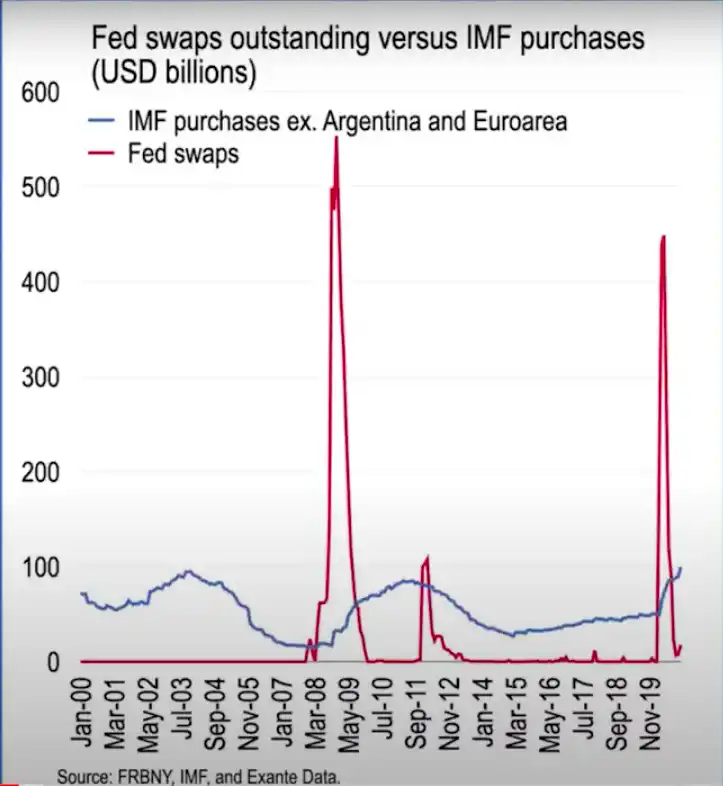
Michael: There are currently two main bodies that are influencing The level of liquidity depends on: one is the Fed, and the other is the Treasury—the Treasury issues bonds and the Fed eventually buys them. Since March 2020, the Federal Reserve has released a large amount of liquidity to the market, and these liquidity is now backtracked due to quantitative tightening, and the market has made a greater reaction. Can you share with us your views on the future liquidity trend and how it will affect asset prices? Do you think the Fed will go into a pivot state and secretly inject liquidity into the market?
Jordy: Quantitative easing always lasts for a long time, while quantitative tightening is short Much more, and the official balance sheet has been expanding, which has become a norm - the accumulated deficit level may reach five trillion or even ten trillion step by step from the past one trillion. Compared to the decline in asset prices, the indirect inflation brought about by the increase in the balance sheet is more critical. The decline in purchasing power has made many people feel dissatisfied. Trump has slowed the trend, and more poor people want to align their rights with the rich. In order to prevent asset prices from collapsing, the Federal Reserve began providing a universal basic income to improve the lives of some people and maintain social cohesion, which is currently the official priority.
Michael: I agree with you. It has long been assumed that the Fed should be responsible for stabilizing prices and improving unemployment, but the former is even more important. So how do you think the universal basic income measure will be implemented, who will get relief, and what will be the mechanism of transfer payments?
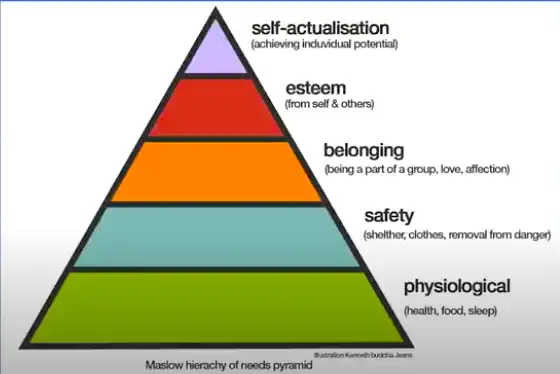
Jordy: There are currently two official tools for redistribution of wealth—taxation and Benefits, such as they can provide benefits to certain groups of people, or they can tax certain types of income of the wealthy. Spain, for example, recently introduced a 5% tax on banks. Butin the United States, it is very difficult to improve distribution through tax increases, and the rich will do everything possible to transfer assets abroad. Therefore, the distribution of welfare has become a more reliable way, and the government can provide subsidies for people's basic living needs (according to Maslow's hierarchy of needs theory). However, this approach does not solve the problem of inflation.
Michael: Can you talk about how measures such as universal basic income can meet the needs of the United States through transfer payments? How will the basic needs of the people affect the financial market? Because I think Gavin Newsom cut the gas tax in California and lowered the burden on people, but in the end it will also push the price of gas up further, so I feel that these measures will still be inflationary in the end.
Jordy: These measures are indeed inflationary and I think it will be cyclical Yes, it won't disappear easily. Inflation levels may indeed remain unchanged in the short term, allowing prices to stabilize for a few months, only to spike again afterwards. At the same time, once the liquidity level drops in the market, the price will continue to climb, bringing the economy to a standstill and even causing stagflation. Financial markets can easily fall into this cycle because if yields start to fall, then asset prices rise, companies overhire, overspend, inflation rises, and then officials have to resort to austerity . So when you think about it from first principles, it's easier to see the end game and the economic balance. Obviously, excess wealth and purchasing power cannot always flow to asset prices because those assets are owned by 10%-20% of the people. So, we're going to have to create wealth for 50%-60% of the population, whatever method is used. We can imagine that there is a wall in front of us, and huge waves are crashing against it. There will always be a moment when this wall will be breached-and whoever can introduce the right legislation to achieve this goal will be the president.
Michael: So what will be the ending you just mentioned? According to you, how can we get water to pass through the walls?
Jordy: I think the most likely scenario is that central banks end up being tools of power and the world Central banks everywhere will gain unprecedented power not only to hold more private information but also to control it. Since 2020, the Federal Reserve will bypass the financial system to directly incentivize certain economic behaviors, targeting to increase the purchasing power of specific groups, including when and where they spend. For example, in Singapore, you will receive a message on your mobile phone saying that you have got two hundred dollars, and you can go to the food center to spend within two months. Such an approach can guide the specific flow of money and purchasing power, because simple easing will only make assets flow to the rich.
Michael: It is true that the Fed is trying to intervene. This is quite unprecedented. They bought corporate bonds and made direct loans to small businesses. Officials sometimes try to step in to block such transfers in the short term, but are unlikely to succeed in the long run. The other thing is, I also think that if the Fed's liabilities were direct fiat currency, it would be very inflationary because the reason we separated the Treasury from the Fed was to make sure that the Fed's liabilities would not become legal tender, Thus avoiding large-scale inflation. Do you think it makes a big difference how the Fed's liabilities become legal tender?
Jordy: I was thinking that for it to be really inflationary, money has to go to people who want to spend money man. If you just hand over money to the bank and the bank doesn't release it, then it doesn't create inflation and the money doesn't go into the real economy. Not only on the demand side, inflation is also showing up on the supply side, and both are increasing, we just don't know by how much. My thoughts on these issues are that people are just willing to keep money in the bank, and it won't be inflationary. However, there will always be people wanting to get out of that mold and buy the real deal. While the dollar is the most powerful currency, it is still just fiat money, just some paper money that people will always want to use to buy real assets. Then, when people put money into the market at the same time, it will definitely cause inflation.
Michael: As far as I know, there are indeed many reasons for inflation, such as geopolitical pressure, which Limiting companies' ability to outsource supply chains. The Fed's solution to the current supply and demand problems is simply to print more dollars, which seems to cover up the problem, but it is tantamount to hitting a stone with a pebble. So how effective do you think officials are in addressing all of these issues, what risks do they have that haven't been fully explored?
Jordy: Every place tends to protect its own people. Therefore, the US dollar has become a weapon, and the local government will print a large amount of money to buy US dollars and foreign debts, thereby increasing the local purchasing power. As a result, the US dollar will be abused, its status as a reserve currency will be reduced, and the international economy will be adversely affected. So as long as the dollar is in that position, there will be a lot of people using it for that purpose, so at some point there will be a rally against the dollar, the question is what will happen then. The euro is in a whole different world, and during the years it has been in operation, it has helped the finances of Spain, Italy, Greece and others. But I think the idea of Europe trying to achieve unity through monetary unification is a little crazy, because it's hard to ensure that every country has the same monetary policy. However, for now, European unity will still be maintained, but the future situation is difficult to predict. Some people might see Bitcoin as an alternative, but I think people use Bitcoin because they want to own something that is not regulated. So, even if the number of people using Bitcoin increased tenfold, it would not be included on the balance sheets of central banks.
Michael: I know you are a supporter of Bitcoin, can you talk about The future trend of Bitcoin, such as whether the era of hyper-Bitcoinization will come? What do you think will be the best future development of Bitcoin?
Jordy: I think Bitcoin is hard to become a unified global currency , because in addition to the long-term problems it needs to solve, Bitcoin's greatest strength is also its greatest weakness-Bitcoin's protocol is difficult to change. So even if someone says we need to solve the security problem in a hundred years, the miners will have no incentive to create security for the network, because they don't get enough Bitcoin, and at this time Bitcoin's predictability and immutability become its greatest weakness. The second is the issue of quantity. The number of Bitcoins in the world is only 21 million, but the population is billions. No one wants to have only a pitiful 0.006 Bitcoins in their wallets, because they are used to the US dollar and have a large amount of currency.
Michael: In your opinion, will there be a perfect currency system in the world , can continue to operate for thousands of years? If we look back, most monetary systems can only exist for a while before their fatal flaws are exposed, and then we can only constantly adjust it. Do you think we haven't discovered the perfect solution, or are we gradually discovering a more complete system?
Jordy: I've been thinking about this for years, It is very difficult to bring together all the features we expect in , such as fair distribution. Once the distribution in the system is no longer fair, then it is bound to collapse. In my opinion, for any monetary system, the incentive mechanism is very important, we need to know which forces will support or oppose the system under the incentive measures. For Bitcoin, where some people may have a lot and others don't, its distribution is indeed difficult to be fair. At this time, some people have some extreme ideas, such as setting up a world currency and issuing one to everyone in the world. This may seem fair, but soon someone can go to Africa and buy millions of this currency. Therefore, it is difficult for us to find an absolutely perfect system, we can only say that Bitcoin is more suitable for our current situation. As for gold, I think its time is over, and it is almost impossible for us to see it regain its glory.
Michael: Why do you think so?
Jordy: As a digital version of gold, Bitcoin has many superior characteristics, but gold does not . First, the central bank can control the gold in its hands; second, gold is difficult to move and difficult to verify. The people who really own gold are basically millennials and baby boomers, and the only ones who will tell us that gold is hard money. At present, it seems that countries like the United States, China and Russia have most of the assets, so only the official or the elderly aged 7 or 80 need to transfer their wealth.
Michael: If Bitcoin finally succeeds, what does it mean for other Crypto? One of the difficulties in investing in Bitcoin actually comes from psychoanalysis, which means that when it goes up, tokens like Dogecoin go up even more. So, what do you think of other Tokens in the Crypto ecosystem, such as Ethereum, what will happen in the future, and what will happen to other Tokens?
Jordy: I've written a bit on this subject and I've brought up a tragedy of the commons , that is, like you said, there will be more beta coins. If people just see Bitcoin go up, see the wealth of the digital ecosystem, see the market cap of digital assets go from 1 trillion to 3 trillion, then they will want to ride on the trend, and then the whole system will self-destruct. collapse. In the long run, the people who own Bitcoin, the ones who actually get rich, won't be the ones chasing the gambling story, or trying to change that in 10 years. I'm pretty confident that we'll no longer have that influence, because by then the people who own Bitcoin will be the ones who are good at saving their money, thus retaining their purchasing power, and not engaging in high-risk activities. Ethereum is going through massive changes and it will eventually become a macro asset. If enough people use Ethereum every day, it could become a currency, but that's still pretty far away. If the price of block space drops and people can send transactions cheaply, Ethereum has the potential to become a commodity. Not only that, but the Crypto field needs many other things, first technology, then L1 and cross-chain bridges, and reliable wallets. The next phase is to design super apps that expand the use of Crypto around the world in the same way that Facebook is used by billions of people.
Michael: The last thing I want to know is, what do you think about asset prices next year? What kind of forecast?
Jordy: At present, we cannot implement a free economy, but we must necessary intervention. However, we don't have the right people to implement these policies yet, so we have to try different approaches first, first with a soft landing and then with a hard landing. However, once these measures are not handled properly, it is bound to cause large-scale riots. In my opinion, asset prices will not rise sharply for at least the next year, but will only fluctuate like a sine function, and every strong rebound during this period will prolong the cycle of inflation. On the debt issue, due to fiscal policy and official revenue and expenditure, bond yields will be controlled, so no one will be willing to buy US Treasury bonds, so they can only be bought by the elderly or banks. So I would say that bonds still have room to fall and at some point in the future we will have a crisis on the long end. I think Crypto will outperform stocks because it has more potential for returns. I do think that tactically you can do well in Crypto, but picking the right token is hard. I ask myself every morning if I have FOMO right now, like if I’m worried that if I don’t pay for ten Bitcoins today, I won’t be able to afford 10 Bitcoins in a month’s time. If that's the case then I should do something about it, but right now I don't feel any FOMO. I think we're going to have more dips and more trouble ahead, so until there's a real sense of FOMO, I think Crypto will still maintain the status quo, although it may also jump up in the future.
< /p>
Thank you, Jordy, this is good suggestion. However, while I would like to continue chatting with you for another two hours, we have to end here. If people want to know more about you, they can follow you on Twitter.
Original Source
Welcome to join the official BlockBeats community:
Telegram Subscription Group: https://t.me/theblockbeats
Telegram Discussion Group: https://t.me/BlockBeats_App
Official Twitter Account: https://twitter.com/BlockBeatsAsia

 Related Articles