The indictment revealed the inside story of Celsius Thunderstorm, misappropriating user assets to manipulate the CEL market
Compilation of the original text: Hu Tao & biscuit, chain catcher
On July 8, the Celsius thunderstorm incident ushered in again Big news, Jason Stone, the former CEO of KeyFi behind the 0xb1 Twitter account, announced a formal lawsuit against Celsius, accusing the company of operating a "Ponzi scheme" while seriously mismanaging its client funds and failing to conduct basic internal audits to explain its obligations and use client assets to manipulate the crypto asset market.
According to Jason Stone's statement, KeyFi, the DeFi strategy deployment company he founded, was acquired by Celsius in 2020, and has since been pledging and deploying DeFi strategies for Celsius. He also disclosed that the previously famous "0xb1" address was actually created by Celsius. In the early days, he was directly responsible for the management and execution of various DeFi revenue strategies, bringing Celsius more than hundreds of millions of dollars in profits.
However, during the cooperation process, Jason Stone discovered that Celsius had many serious violations, including transferring hundreds of millions of dollars of customer deposits to the "0xb1" address for investment. The lack of basic risk controls comes after Celsius executives repeatedly assured him that the company had the necessary hedging transactions in place to ensure that price fluctuations in certain crypto assets would not have a material adverse effect on the company’s ability to repay depositors.
In addition, in 2020, Celsius also used about 4,500 bitcoins (currently worth $90 million) as customer deposits to purchase CEL, artificially inflating price. Jason Stone believes that, in essence, Celsius is manipulating the CEL Token market so that it can use its huge treasury to borrow money, creating a situation where it appears that its income exceeds the amount of debt, but in fact it does not. Previously, Celsius also received a $1 billion loan from Tether.
"Because its business model depends on giving depositors more money than they put in, Celsius must constantly take in new capital to pay its existing depositors In other words, Celsius is a Ponzi scheme,” Jason Stone wrote in the complaint.
After realizing various problems, Jason Stone decided to leave in March 2021, but Celsius has so far refused to pay them their due share of profits. "Given the public speculation about the company's solvency, and my observation that Celsius is loosely connected to the truth, I thought it prudent to finally set the record straight. I have filed legal action against Celsius to settle this matter once and for all."
The following is its indictment Compilation of the core part of , to help readers further understand the details of the Celsius thunderstorm event.
Introduction
KeyFi (“Plaintiff”) to Celsius Network Limited (“Celsius”) and Celsius KeyFi LLC (“Celsius KeyFi”) filed a lawsuit alleging the following:
1. This lawsuit involves the defendant’s refusal to perform its contractual obligations pursuant to a profit-sharing agreement signed by the parties in 2021 Agreement to pay plaintiffs millions of dollars owed. The controversy came to a head when plaintiffs discovered that defendants used Celsius’s customer deposits to manipulate crypto asset markets, failed to establish basic accounting controls that jeopardized those deposits, and failed to fulfill promises to induce plaintiffs to adopt various trading strategies.
2. On June 12, 2022, these issues, which Plaintiff discovered in March 2021, now cause harm not only to Plaintiff, but also to the data using Defendant's platform. Hundreds of thousands of people have been harmed because the defendants are now refusing to accept requests from their clients to recover the assets they deposited and entrusted to the defendants.
3. The defendant operated a "crypto lending platform" that accepted deposits of crypto assets from consumers seeking to earn interest on their crypto assets. The businesses of the defendants depend on their use of these asset pools to generate income by (1) lending these assets to others and (2) investing funds in the crypto market. Thus, the defendants' profits depended on them earning income that was higher than or in excess of the amount of deposits they were required to pay to consumers. Before Plaintiffs appeared in court, Defendants had no unified, organized, or comprehensive investment strategy other than to lend out the consumer deposits they had received. Instead, they're desperately looking for a potential investment that could earn them more money than they owe savers. Otherwise, they will have to use the additional deposit to pay the interest on the previous deposit, which is a typical "Ponzi scheme".
4. The recent disclosure that Celsius had no assets on hand to meet its withdrawal obligations suggests that the defendants were, in effect, operating a Ponzi scheme.
5. KeyFi, Inc. CEO and Founder Jason Stone is a pioneer in the field of modern crypto asset deployment strategies. From August 2020 to March 2021, he managed billions of dollars in crypto asset investments for the defendants.
6. Most of the time, the parties conducted business without any formal written agreement, acknowledging instead that they were in business "based on mutual respect and mutual benefit of trust". From August 2020 to March 2021, plaintiffs generated hundreds of millions of dollars in profits for the mutual benefit of both parties. These profits come in the form of transaction fees, staking token rewards, and other accretive assets. As with any investment relationship, Plaintiffs and Stone are responsible for profiting from the funds provided to them, and Celsius is responsible for ensuring that its investment strategy does not prevent it from repaying depositors in kind.
7. When Stone discovered that the defendants not only lacked basic security controls to protect the billions in client funds they held, but that they were actively exploiting clients The relationship between the two parties began to fray when the funds manipulated the crypto asset market to their benefit. In the most egregious example, the plaintiff discovered that Celsius used customer bitcoin deposits to pull orders for its own encrypted asset "Celsius token" ("CEL").
8. Stone also learned of multiple incidents in which defendants failed to conduct basic accounting that jeopardized client funds. One example included improper accounting of certain amounts owed to customers, leaving the company with $200 million in debt without even knowing how or why it owed the money.
9. These unbelievable losses mean that billions of dollars in customer deposits cannot be returned to these customers should they demand their funds back. Celsius doesn't worry about those risks because it considers the billions of dollars in customer deposits it manages to be its property. Specifically, the terms of service on the Celsius website state that "all digital assets transferred to Celsius as part of the service are owned and held by Celsius itself." Additionally, the Celsius terms of service state that "Celsius does not hold any digital assets", but "owns, holds and/or".
10. When plaintiffs expressed concerns that Celsius was using client funds without proper risk management, Celsius executives repeatedly assured Stone that the firm had conducted Necessary hedging transactions to ensure that price fluctuations in certain crypto assets do not have a material adverse effect on the company or its ability to repay depositors. Stone and his team rely on these representations when deploying certain trading strategies.
11. But these promises are lies. Despite Celsius' repeated assurances, it has failed to implement a fundamental risk management strategy to guard against the price volatility risks inherent in many deployed investment strategies. These failures not only harmed the plaintiffs, negatively impacting profit shares, but have now resulted in Celsius refusing to accept withdrawal requests from clients.
12. Celsius's former chief financial officer shared the same concerns as plaintiffs and repeatedly raised these issues with Celsius' senior management.
13. Faced with mounting evidence of Defendant's disorganization, mismanagement, and fraud, Plaintiff concluded that he could no longer work for Defendant. In March 2021, Plaintiff notified Defendant that he was terminating the business relationship. In retaliation, defendants repeatedly refused to acknowledge Stone's resignation and then refused to pay plaintiffs their share of the profits.
14. The unfortunate events that have unfolded publicly in recent weeks show that the plaintiffs are right - that Celsius has grossly mismanaged its clients' funds and failed to conduct basic Internal audits to account for their obligations and manipulate crypto assets to benefit themselves and their principals.
Jurisdiction and location
……
Factual allegations
……
C.Celsius business model
28.Celsius is an encrypted asset lending platform that facilitates loans for various encrypted assets. Celsius' business model is similar to that of a depository lender, accepting monetary deposits from consumers and then using these funds to provide liquidity to the market through loans and investments. However, in the case of Celsius, depositors surrender their crypto assets to Celsius, rather than fiat currency, in exchange for a promised interest rate.
29. Like a bank, Celsius means investing these funds responsibly, earning a return, paying depositors the interest they earn, and keeping profits. Importantly, savers will lose money if Celsius is unable to invest their money in investments that yield more than the interest owed. However, the core promise of the Consumer Trust is that Celsius has sufficient funds to refund crypto asset deposits to each of its users upon request.
30.Celsius' business model aims to replicate traditional depository banks, but their terms of service attempt to protect them from the same liability. For example, the terms of service stipulate that any funds are not deposited in the customer's account, but become the customer's book property. Celsius can be used as you like. And, unlike traditional depository institutions, Celsius does not carry its own insurance against any loss of client funds. Celsius effectively circumvents the law by taking no responsibility for its clients' funds.
31.Celsius does not provide credit-based loans to consumers, but only to retail borrowers who deposit encrypted assets as collateral. For example, if a borrower wanted to borrow $10,000 against Bitcoin as collateral, they would have to deposit almost four times that amount, locked in at the lowest offered rate. Borrowers must also maintain certain loan-to-collateral ratios or Celsius will liquidate the collateral to secure the loan. This is not the same as margin calls at traditional stockbrokers.
32. Like many other encrypted asset businesses, Celsius issued its own encrypted asset in March 2018, and the Token is named "CEL". The way Celsius promotes the use of its CELTokens is the option to receive interest payments from Celsius in the form of CELTokens at a higher rate than deposits paid by Celsius in other ways. Likewise, customers who repay their loans using CEL are charged a lower interest rate. Crucially, all of Celsius' balance sheets are on a U.S. dollar basis for business operations. Therefore, if the price of CEL tokens rises, Celsius can pay customers less CELToken as interest.
33. Due to the growing demand for crypto-lending platforms, the deposits Celsius holds for its consumers has become unusually large. Indeed, just a few months before this filing, Celsius held more than $20 billion worth of crypto asset deposits.
34. Despite the staggering amount of customer deposits, Celsius and its management have little experience in trading and investing in crypto assets. In the summer of 2020, Celsius sought to participate in DeFi but lacked professional knowledge due to the innovative and complex concept of DeFi generating good financial returns. Seeing an opportunity to use its client funds to participate in the DeFi project boom, Celsius attempted to hire an expert to handle client funds for deployment on DeFi protocols.
D.Celsius recruits Stone and his team to manage its client deposits
35.2020 Over the summer, Celsius approached and courted its crypto asset trading team.
36. Jason Stone is the founder and CEO of KeyFi, a technology company focused on DeFi deployment and related strategies. Stone and his team have had great success in the DeFi space and have been successful in deploying profitable DeFi strategies. The founders of Celsius knew Stone well. Between late 2019 and early 2020, Alex Mashinsk (founder and CEO of Celsius) and Nuke Goldstein (co-founder and CTO of Celsius) invested tens of thousands of dollars in KeyFi.
37.2020, Stone held numerous discussions with Mashinsky and other Celsius managers about the possibility of deploying advanced strategies using KeyFi's expertise. Make money from customer deposits. That summer, plaintiff KeyFi and Celsius struck a handshake agreement that would see KeyFi manage billions of dollars in crypto deposits from Celsius customers.
38. On or about August 19, 2020, Celsius began transferring hundreds of millions of dollars in crypto assets to Stone and his team without a formal agreement . Celsius created a new Ethereum wallet address, called the "0xb1" account, and since then almost all assets transferred by Celsius will be deployed to this address by Stone.
39. At all times Celsius maintained full control over the 0xb1 account; indeed, for most of the time Stone worked with Celsius, he only had access to 0xb1 account. By using a VPN to log into a Celsius-controlled computer account already logged into 0xb1.
40. Soon after, the Celsius platform gave Stone direct access to the 0xb1 account. The reason for this was a "DNS attack" by hackers on the service provider GoDaddy.com. During the hack, which affected all of Celsius's cloud infrastructure and environments, Celsius and KeyFi feared that hackers could completely hijack all of Celsius' network traffic. So, in order to protect the 0xb1 account, Celsius provided Stone with the private key of the 0xb1 account so that he could access it without using a VPN.
41. All deposit and transaction history related to the 0xb1 account can be found at View on Etherscan.
42. Although the value of the assets transferred is staggering and both parties intend to share the profits generated by the assets, there is no formal written agreement between the two parties. This is equivalent to Celsius continuing to transfer hundreds of millions of dollars to Stone, entrusting Stone and his team to invest, all based on the handshake agreement between the two parties.
43. In addition to transferring encrypted assets to Stone for investment, Celsius also used Stone's name to conduct certain transactions, but did not transfer assets to Stone's control . The parties have agreed to record gains and losses from such transactions on KeyFi's income statement for the purpose of calculating KeyFi's and Stone's share of profits.
44. This strategy makes sense because Stone and all the encrypted assets it deploys are provided by Celsius; The actual transfer is important. This strategy also reflects the relationship between the two. The two parties are trusting and trusted parties, the two parties rely on each other, and the funds allow both parties to benefit from each other.
45. On October 2020, Celsius and Stone decided that engaging in certain DeFi transactions required proper risk management and hedging to protect against changes in cryptoassets caused by rising token prices . Specifically, Celsius’ management told Stone that it would monitor Stone’s DeFi activity and deploy certain hedging strategies that could protect against prices. This is because Stone's DeFi strategy is based on Ethereum depositing a large amount of ETH and investing it in a DeFi project that may return, obtaining non-ETH-denominated assets.
2. Celsius / KeyFi Memorandum of Understanding (The Celsius / KeyFi MOU)
46. KeyFi's investment strategy is very profitable. Therefore, on or about October 1, 2020, Celsius Network and KeyFi jointly managed user funds for more than one month. KeyFi entered into a Memorandum of Understanding (“MOU”) in which they worked to achieve a partnership structure in which KeyFi would provide DeFi strategies and its employees with special access to Celsius.
……
55. Both parties respect and trust this special relationship. Because of their high risk and unusual circumstances in the business. Celsius had transferred hundreds of millions of dollars (before the MOU) to Stone and his team without any form of formal written agreement.
56. For its part, KeyFi has agreed to devote all of its resources to capture all crypto financial opportunities to manage Celsius’ investments, all without any formal Protect documents. Among other things, KeyFi relies on Celsius to deploy necessary hedging strategies that complement KeyFi's investment strategy and protect KeyFi from losses on customer deposits due to price fluctuations in the relative value of traded crypto assets. Of course, KeyFi trusts its new business partner Celsius to generally conduct its business with integrity.
3. Asset Purchase Agreement and Service Agreement
……
i.APA Purchase Price
……
ii. Calculation of Remuneration Payment
...
65. Net Profit is defined in APAs and Service Agreements as a function of Gross Margin Profit in Dollars from all activities less certain costs and overhead . Celsius is in violation of the APA and the Service Agreement by refusing to provide KeyFi with accounting and fees for such charges. However, KeyFi estimates that net of such costs and expenses, the gross profit distributable to the parties exceeds $838 million.
66. In violation of the APA, Celsius and the SPV refused to pay KeyFi its share of these profits as agreed upon.
E.Celsius fails to hedge Stone’s DeFi activity
67. Celsius disputs any profits while failing to protect itself from the risk of crypto assets appreciating. Customers of Celsius provide it with encrypted assets and expect to receive them back in the same form. Celsius offers similar assets to Stone and KeyFi to invest in, but with profits assessed in U.S. dollars. This creates the risk for Celsius that KeyFi may make a dollar profit on it, but, if the crypto asset is worth, it may not be able to profitably buy back the underlying crypto asset.
68. For example, Celsius provided 100 ETH to KeyFi with a total value of $100,000 (assuming $1,000 per ETH), and KeyFi’s return on investment consists of A combination of 50 ETH and other tokens worth a total of $150,000 would undoubtedly constitute a profitable dollar investment. However, if during the same period, the ETH price rises to $1,250 per token, Celsius needs to convert its dollar investment into ETH, and it has to use some of those dollar profits to do so. If the ETH price rises further, it may exceed profits and require Celsius to use its own funds to buy ETH. This potential risk, a product of Celsius' relationship with its customers, requiring simultaneous return to them of the kind of funds deposited, was not addressed in the agreement between the parties and therefore remains with Celsius.
69. At any time, there is a simple solution to this risk: Celsius uses futures contracts when providing cryptocurrency to Stone and KeyFi hedge. In other words, if Celsius had bought call options on the spot on the price of each token it offered to Stone and KeyFi, this would have completely avoided risky asset appreciation eroding Celsius’ dollar profits.
70. In fact, Celsius is aware of this risk and the solution. Celsius told Stone that it is tracking its DeFi activity, balancing risk through various hedging strategies, and that such transactions are considered “approved activity” when executing that strategy.
…
75. Celsius failing to hedge was a big mistake. Celsius understands in depth that Stone’s DeFi strategy involves putting a large amount of ETH into a liquidity pool, which has the effect of reducing the amount of ETH in the pool as ETH appreciates. This requires a proper hedging strategy, but during these trades, ETH traded against other cryptoassets and the U.S. dollar. Had Celsius hedged the exact risks as the parties agreed before and after the execution of the APA, both parties would have enjoyed a substantial additional net profit.
F, Stone was informed of the serious mismanagement of its client funds by Celsius
76.2021 1 In September, before and after the signing of the APA and service agreement, KeyFi was appalled by Celsius' improper business practices and ultimately concluded that Celsius' business practices were so corrupt that he and KeyFi could no longer do business with Celsius. Three of Stone's findings formed the basis for his decision to step down as CEO of KeyFi:
77. First, KeyFi realized that since at least February 2020 , Celsius conducted a series of transactions designed to artificially inflate the price of CEL tokens. Connor Nolan, Director of Token Deployment at Celsius, told KeyFi that between February 2020 and November 2020, Celsius used approximately 4,500 bitcoins (currently valued at $90 million) on the open market as customer deposits to purchase CEL at an artificial Raise the price.
78. The purpose of this scheme was both fraudulent and illegal: Celsius induced customers to pay in CEL by offering them a higher interest rate. Then, by deliberately and artificially inflating the price of CEL, Celsius was able to pay even less crypto assets to those customers who chose to receive interest in CEL.
79. Furthermore, by artificially inflating the price of CELs, Mashinsky - who personally owned hundreds of millions of dollars worth of CELs at their peak - was able to greatly Enrich.
80. The scenario also shows that CELs are in high demand and traded. Celsius uses this artificial demand to convince lenders that the CELs it holds in its treasury are a liquid, market-viable asset that can be used as collateral for loans to Celsius. Celsius uses these loans to pay customers interest and to provide customers with loans backed by cryptocurrency collateral. These loans are critical to Celsius' continued operations as Celsius is still struggling to grow its own profits. Essentially, Celsius was manipulating the CEL market so that it could borrow from its vast treasury to create a situation where it appeared to be generating more than it owed customers, when in fact it was not.
81. Second, Stone realizes that Celsius has lied to him about the existence of hedge transactions designed to hedge Stone's ongoing authorized DeFi transactions. Celsius’ failure to implement promised hedging deals hurt more than Stone and KeyFi. Stone learned that Celsius failed to properly hedge all of its profitable activity, exposing other customer deposits (i.e. not managed by the SPV) to potential multi-billion dollar losses.
82. Third, Stone learned of further financial mismanagement which threatened to push the company into bankruptcy. As noted above, Celsius pays a portion of the interest on CEL deposits, as well as a portion of the interest on other cryptoassets such as Bitcoin and Ethereum. For consumers who chose to pay with their deposited crypto assets (rather than CEL Token), Celsius recorded these liabilities on its books in U.S. denomination between 2018 and 2020, even though it paid customers in the underlying Token. Then, as crypto assets appreciated in value, it failed to mark-to-market those assets in its internal books, creating a huge hole in its accounting.
83.2020-2021, cryptoassets such as Bitcoin and Ethereum have appreciated significantly against the U.S. dollar. However, Celsius has failed to update its distributed ledger to reflect the increased dollar value of its liabilities until at least any time before 2021. Accounting errors masked hundreds of millions of dollars in liabilities Celsius was not prepared to pay. When Jason Stone left Celsius, Celsius had a $100-200 million hole in its balance sheet that it couldn't fully explain or fix. Despite the bankrupt balance sheet, Celsius continued to take on more client assets, meaning it continued to accumulate significant debt to the detriment of existing creditors.
G, Ponzi scheme
84. In January 2021, the crypto market started a bull market cycle, resulting in Celsius (who had recklessly and fraudulently failed to hedge its investments) suffering severe exchange rate losses.
85. In January 2021, the price of ETH rose by more than 50% in just a few days and continued to climb in the following weeks.
86. Celsius has huge debts to ETH-denominated depositors, but its ETH holdings are not equal to those debts. Instead, Celsius empowered DeFi strategies, resulting in assets moving from ETH to other cryptocurrencies, and (inexplicably) failing to hedge this well-known risk.
87. When customers tried to withdraw ETH deposits, Celsius was forced to buy ETH in the open market at an all-time high price and suffered a huge loss. Faced with a liquidity crisis, Celsius began offering double-digit interest rates to attract new savers whose funds were used to repay earlier savers and creditors. So while Celsius continues to market itself as a transparent and well-capitalized business, in reality it has become a Ponzi scheme.
H. Jason Stone resigns; Celsius refuses to pay
88. March 2021 , KeyFi is well aware that Celsius lied about implementing the hedge, a mistake that could be financially damaging to Celsius and its consumers. It may also cause irreparable damage to KeyFi's reputation.
89. At the time, Celsius had missed the first payment due to KeyFi (“Profit Payment”) within 15 days of December 31, 2020, And never paid any profits owed to KeyFi or the SPV. Furthermore, the defendants had no intention of paying the required profits under the MOU, APA, and service agreement. While Stone has been authorized to purchase NFTs as an advance payment for a profit share under the MOU, APA, and service agreement, Celsius was unable to provide specifics on the total profit share.
90. On March 9, 2021, Stone notified Celsius that he would no longer be CEO of Celsius KeyFi.
91. After Stone left Celsius KeyFi, Celsius continued to access and control the 0xb1 wallet. Celsius CEO Alex Mashinsky used that control for his own personal gain. In one instance, the Celsius CEO transferred valuable non-financial assets from the 0xb1 account to his wife’s wallet.
92. According to information, since Stone's resignation, Celsius has not found other value-added acquisitions that can make up for the high interest rates it offers savers. Because its business model depends on giving savers more money than they put in, Celsius has to constantly take in new capital to pay its debts to existing savers. In other words, Celsius is a Ponzi scheme.
93. For example, in order to pay its growing debt, Celsius was required to obtain a loan of about $1 billion from Tether. While Celsius paid 5%-6% interest on the $1 billion loan, it owed customers significantly more because it accepted many popular tokens as deposits:
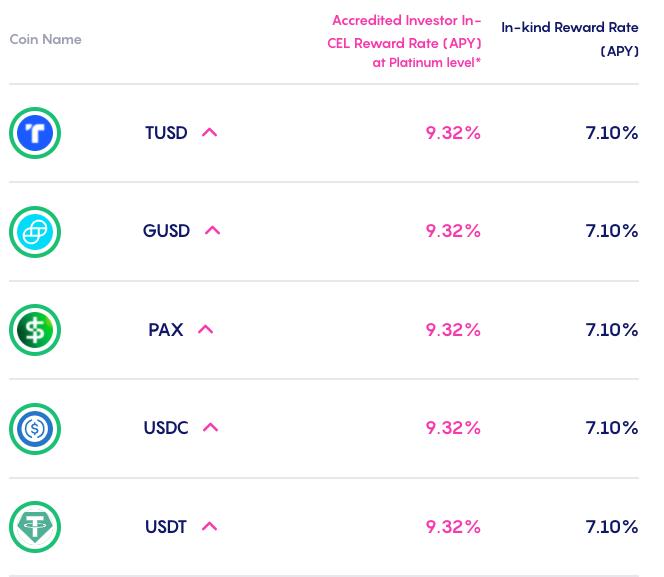

94. Tether loans, along with other Celsius deposits, were used to hide that Celsius was actually insolvent on its balance sheet, with less money in its vaults than owed to depositors. Even so, until recently halting customer withdrawals, Celsius continued to promote its high-interest deposits to entice new depositors to send it more money, repaying earlier depositors.
…
J. Due to mismanagement, Celsius suspended customer withdrawals
J. h4>
99.June 12, 2022 Celsius Announcement: Due to extreme market conditions, today we are announcing that Celsius is suspending all withdrawals, transactions and transfers between accounts. We are taking this action today to enable Celsius to better meet its exit obligations over time.
100.Celsius took this drastic action because it did not have (and still does not have) enough crypto assets on hand to meet the debts it owed its customers.
101. Just a few days before the announcement, on June 7, 2022, Celsius stated that "under our comprehensive liquidity risk management framework, It has enough reserves (and enough ETH) to meet its obligations." This turned out to be a lie. The lie also fits (as above) the representations made to plaintiffs regarding their risk management.
103. According to reports, Goldman Sachs is seeking to acquire the assets of Celsius for a low price of US$2 billion (as of May 17, 2022, customer deposits worth about 118 One hundred million U.S. dollars). To be clear, under the Celsius Terms of Service, Celsius claims that these common consumer-provided assets are its property and are not held on behalf of any client. Any such asset purchases therefore risked wiping out customers' deposits to pay Celsius' own lenders.
104. Plaintiff brings this action to hold Celsius liable for gross mismanagement of customer deposits and breach of its contractual obligations to Plaintiff.
Original link
Welcome to join the official BlockBeats community:
Telegram Subscription Group: https://t.me/theblockbeats
Telegram Discussion Group: https://t.me/BlockBeats_App
Official Twitter Account: https://twitter.com/BlockBeatsAsia

 Related Articles