Investing in Twitter and Coinbase in the past two decades, the methodology of Union Square Ventures (USV)
Original title: "Union Square Ventures: The Thinkers"
Original source: The Generalist
Original compilation: Kxp, BlockBeats
Lefty Gomez He once said that he "rather than being a good venture capitalist, it is better to leave everything to luck"-this is also the choice of many venture capitalists. The reason is that, in venture capital, one success makes up for three previous failures, and if someone participated in the early financing of Google, Facebook, Stripe or Coinbase, then his previous investment mistakes are no longer important. However, there are many investment companies, and it is not easy to choose the best, so some people leave the choice to the goddess of luck and obey the arrangement of fate.
Some people do, and they pin their success on a small scale Randomly pick items from within and leave it to fate. If they happen to invest in one or a few high-yielding businesses, they may all be considered experts for a while. In the VC world, failure is not terrible, because people only remember your success.
If this situation continues, it will be difficult for people to judge whether practitioners are good or bad—— If we only look at investment results, how do we know which investors are relying on luck and which are relying on strength?
In my opinion, time will tell everything, good luck will run out one day, And then we will see the outcome.
Union Square Ventures is definitely a player in the venture capital world, since its inception in 2003 , few other funds can maintain such high performance over such a long period of time. USV not only has outstanding performance, but also achieved a lot of brilliance in history. Its success is largely due to the company's in-depth thinking about the future and its self-summarized investment theories. Therefore, they can choose their investment direction early and then put it into actual action.
Like every successful investor, USV has been lucky. But more importantly, it's also consistently excellent. This article will sort out the company's development, evolution and theoretical methods:
< b>Flatiron Partners: Prior to USV, Fred Wilson co-founded Flatiron Partners with Jerry Colonna. The firm invested in hot start-ups like Geocities and The Industry Standard, which collapsed during the dot-com bust.
Funding setback: Despite their strong resumes, Wilson and Brad Burnham took a solid 18 months to raise First financing to USV. In this process, UT played a key role in attracting institutional investment.
Success: USV's first investment in 2004 was very successful, returning 14 times the invested capital, but the The company's 2012 performance was even better.
Investment Highlights: USV is known for investing in Twitter, Zynga, Coinbase, Tumblr and Etsy, as well as recruiting platform Indeed. dark horse.
Stick to the principle: USV has always controlled the scale of investment, and this prudent approach has also maximized s return.
Preliminary Story
Two veteran private equity investors, Fred Wilson and Brad Burnham, co-founded Union Square Ventures. During the process, they have experienced ups and downs in various markets, and they are a silhouette of the development of the entire New York investment market.
Meeting Partners
In 1996, Fred Wilson finally got a precious opportunity. After nine years of hard work at Euclid Partners, the thirty-five-year-old financier could finally create a company of his own.
The opportunity came quite suddenly: While working at Euclid, Wilson bet $250,000 on A "whitewashed" ex-banker who planned to push online information to users' computer desktops. His idea is that instead of actively opening the web page to browse the news, it is better to let the headlines automatically appear on the screen to achieve the same effect as the TV broadcast. The entrepreneur behind the invention is Mark Pincus, and the invention is called Freeloader, and former AOL product manager Sunil Paul is its co-founder.
A few months after Wilson received the initial investment, Euclid Partners increased their stake and Invested $1 million. Softbank Ventures also joined the round, with Charles Lax leading a $1.6 million round. Both companies are seeing a quick return on investment, though perhaps not as much as it first seems. Eight months after Freeloader was founded, it was sold to Individual Inc. in a mix of cash and stock at a valuation of $38 million. That price represents a return of more than five times for Softbank, and even more for Euclid, even though a sharp decline in Individual Inc.'s stock price has reduced the corresponding returns.
Wilson was so impressed with the Softbank team that after the Freeloader deal was completed, Lax suggested he become a partner in the firm. Even though Softbank was taking a very different tack at the time, it's a bit of an irony that, as one of the most principled investors in the venture capital world, he might have been in an investment firm that is now notoriously unrestrained.
While Wilson wants to take a new step forward, he is not sure if Softbank is a great opportunity. Just as he was thinking about it, another key figure appeared.
A few months ago, Wilson met Jerry Colonna, whose company CMG@ Ventures was considering investing in Wilson. When Wilson arrived at Colonna's office, he was surprised to find his colleague wearing a worn American T-shirt and ripped jeans. At that time, he thought to himself, "Maybe because he is an Internet person." However, wearing very different clothes did not prevent the two from becoming friends.
Colonna always seems to be friends with those around her, including @Ventures' Pincus, He has always considered Colonna as his close friend and advisor. So when Pincus learned that Wilson was considering a new position, he felt compelled to call Colonna and share the news. From Pincus's point of view, the three of them would definitely make a great team.
As a result, Colonna quickly agreed to the matter, and when Wilson When they canceled their meeting for graduation, Colonna realized that he had the same ideas as her, and the two hit it off.
Instead of rejecting Softbank outright, Wilson wanted Softbank to invest in him and Colonna. Flatiron Partners will focus on the emerging tech sector in New York, and Softbank can secure a piece of that market for itself with the investment.
Finally, Softbank agreed to the proposal and became the first partner of Flatiron, Then Chase Bank quickly joined. Meanwhile, Fred Wilson was finally able to run a company of his own.
First attempt
While Wilson and Colonna were building new businesses, the dot-com bubble was upon us. As the public's attention to technology increases, Flatiron has also attracted people's attention. New York Magazine called the firm's partners "the princes of New York" in a high-profile report.
Flatiron's brilliant results have also proved this to people, and this cannot be separated from the two The personal abilities of the two partners - Wilson's strong analytical ability and Colonna's outstanding personality. Flatiron also relied on this perfect combination to win many early Internet hits, including Geocities, Mercado Libre, The Industry Standard, Kozmo.com, TheStreet.com and Yoyodyne.
Among them, investing in Geocities is undoubtedly a landmark victory. Flatiron led the company's $8 million Series B round in 1996 and a Series C round the following year. For the first of these investments, the partners enlisted the help of Jason Calacanis, a young Brooklyn resident who drafted the company's memorandum and helped convince Softbank and Chase to invest with Flatiron.
In 1999, Yahoo bought Geocities for $3.7 billion. While this may seem like a high multiple for Flatiron, in reality, Flatiron has never realized such a large gain on a Geocities deal.
Wilson later said: "Although we made a lot of money, it was gone in a blink of an eye. ’” They are acutely aware that turbulent markets can knock anyone down.
Reunion
After Flatiron collapsed, Colonna left the VC world to become a founder mentor. Today, he's one of the tech world's most sought-after consultants, and his company, Reboot, has established itself as an authority on leadership development.
Although Colonna chose to shine in other fields, Wilson was determined to stay. After Flatiron collapsed, he spent two years learning from it, and reconnected with Brad Burnham by chance.
Wilson met Burnham a few years ago when he was investing in financial information company Multex. While at Euclid Partners, Wilson attended lectures by ADP's Isaak Karaev. Karaev joined the business at a high salary after ADP acquired his startup, a sort of entrepreneur-in-residence role. During Karaev's presentation, it was revealed that he was working on some new work. Wilson approached Karaev to fund his next venture, and soon became one of Multex's first investors. AT&T Ventures also joined Euclid, while Burnham represented the telecommunications company at the time.
At that time, Burnham had been with AT&T for 14 years, with only a short gap in between . In 1989, Burnham spun out of AT&T a start-up called Echo Logic, which focused on software translation so that applications could be used on different computers. While AT&T is the sole investor and majority owner of Echo Logic, Burnham has secured a lot of power for him and his team. However, AT&T's chief financial officer, Bob Kavner, ran into some difficulties, so he created a separate venture fund to manage future businesses and invest in outside ventures. After Echo Logic ceased operating independently in 1993, Burnham joined AT&T Ventures and was promoted to general partner. The company has returned the privilege of its parent company with a stellar track record: Between founding and 1999, AT&T Ventures turned $350 million in seed capital into $1.2 billion.
Flickr and Startup Iceland
< /p>
At Multex's board meeting, Wilson and Burnham got to know each other better and shared their views on the future of the Internet. So in this opportunity, Karaev and his team eventually turned Multex into an Internet company. In March 1999, Multex went public at a valuation of $750 million, but was eventually sold to Reuters for $250 million due to poor management.
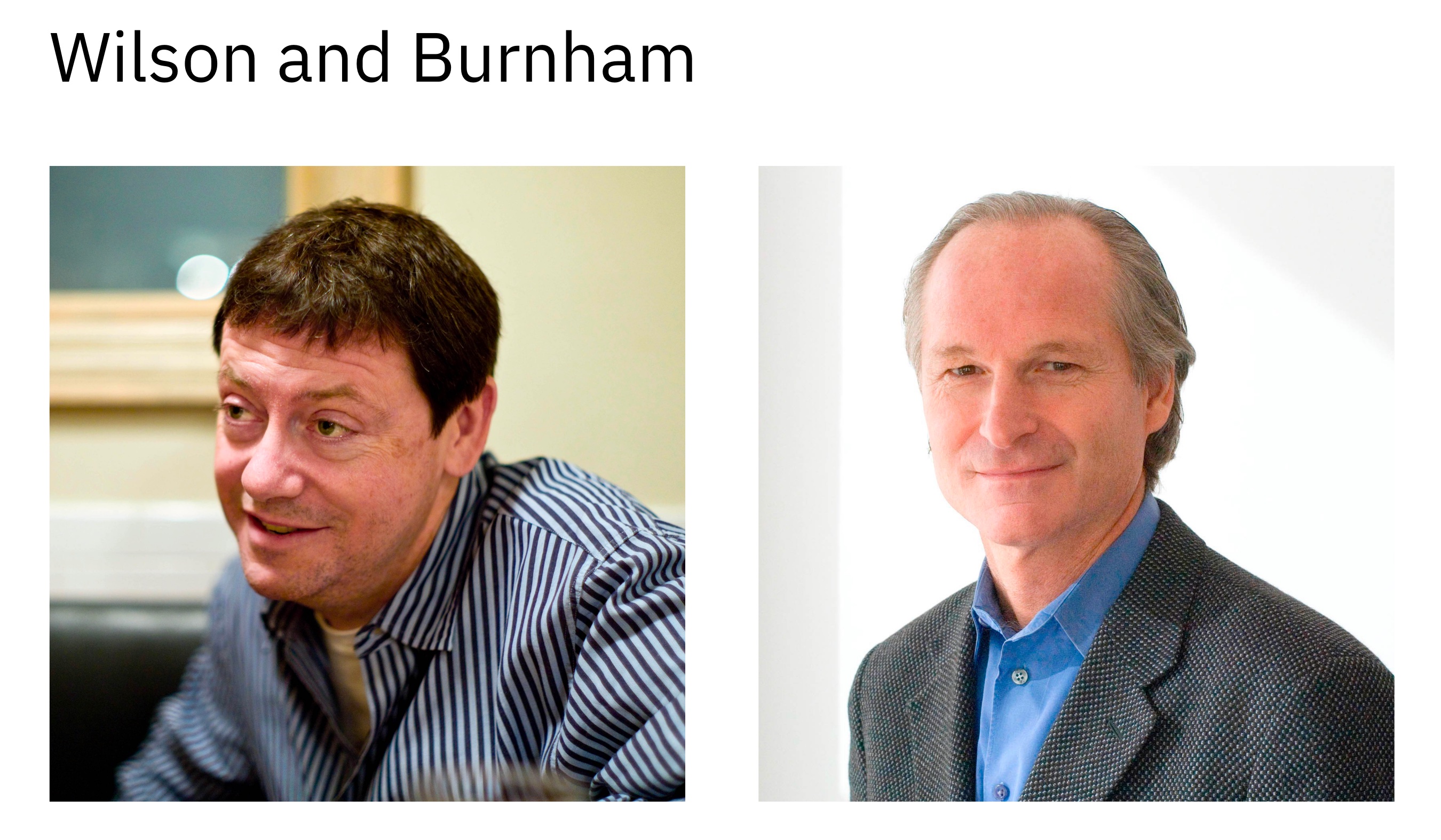
Multex only contributed to the acquaintance of Wilson and Burnham, and it was Tacoda that really made them a partnership . After leaving AT&T Ventures, Burnham helped start-up entrepreneur Dave Morgan launch his company. The two had known each other years earlier, and after Real Media merged with PubliGroupe, Morgan returned to the online advertising business and started Tacoda at Burnham's suggestion.
However, Morgan still encountered some difficulties in financing. Like Flatiron, many VC firms collapsed in the crash. Those that survived were saving money, knowing they would have trouble borrowing money from their partners. “Back in 2001, no VC firm was investing in ad tech,” recalls Morgan.
During the investment process, Wilson and Burnham became closer and closer We stayed in touch for several months, often discussing the future of VC at a French barbecue restaurant. By early 2003, both had secretly inquired about Dave Morgan's interest in collaborating.
“It’s kind of like dating in high school,” Morgan says, “They both want to talk other side". For Morgan, this was clearly the right opportunity.
Morgan's backing helped, and Wilson and Burnham decided to form a partnership to form a venture capital firm, And named after the neighborhood where they set up shop. In October 2003, Union Square Ventures was born.
Company Establishment
Despite their strong credentials, Burnham and Wilson had trouble raising capital, taking 18 months to raise $125 million for USV in 2004. According to people familiar with the matter, they had a difficult time getting their first funding, and Dave Morgan also said of that period: "There was no money anywhere."
The University of Texas Investment Management Company (UTIMCO) investment is certainly a At a turning point, its senior investment officer, Lindel Eakman, pledged to contribute, thereby attracting the attention of other investors. In the end, about two dozen institutions participated in USV's first financing, and they certainly don't regret it now.
As it happens, Dave Morgan and Tacoda were among USV's first investments. A few years later, the company would be sold to AOL for $275 million, bringing it a hefty gain. Though they didn’t know it at the time, Burnham and Wilson’s first income was almost enough to pay off the fundraising.
At the time, Isaak Karaev was also running an investment After the acquisition, Isaak Karaev started another venture, Instant Information. In 2010, the company was also acquired by EPAM.
It didn't take long for USV to find better investments than these success stories.
Outcome
There is no absolutely safe investment in the field of venture capital, but investing in USV is definitely a good choice. Since its establishment, no other investment company has been able to maintain a high performance like it. Wilson and Burnham not only performed well in each year, but also hit a lot of grand slams in the investment world.
Stable income
An institutional investor who has been engaged in venture capital for a long time shared his views on USV. Although his company did not participate in the investment of Wilson and Burnham, his words were full of admiration: "In my opinion, this is a perfect venture capital company."
USV has won accolades for its reliability, and the veteran Investors said, "In the field of venture capital, it is very difficult to achieve stable returns, and the performance of each USV fund is much higher than the average."
/p>
According to this person, all of USV's funds have returned at least 5 times, and some funds have returned much more than 5 times. Except perhaps Sequoia Capital, no venture capital firm has ever achieved such a high return. The Information previously reported that USVs had top returns in 2004, 2012, 2014 and 2016. Among them, 2004 and 2012 were particularly impressive.
Review 2004
USV's first investment fund is definitely the smartest investment in the history of venture capital. As of 2018, the company has reportedly returned 14-fold on its 2004 investment, as its portfolio includes Zynga, Twitter, Tumblr, Indeed, and Etsy, among other high-potential companies.

Fred Wilson said Zynga was the right first choice for USV. The social gaming company was founded by Mark Pincus, and it is through him that Wilson and Colonna met. “I don’t think anyone has ever seen a company with revenue growth that fast,” says former USV analyst and current Spero Ventures GP Andrew Parker. Zynga’s IPO at a $7 billion valuation delivered USV a 65-fold return.
Among these companies, Twitter is undoubtedly the most famous one. However, Burnham recalls, there was no competition for the company. That’s partly because Twitter’s founders—Jack Dorsey, Ev Williams, Noah Glass, and Biz Stone—are not traditionally hard-charging entrepreneurs. So, as one investor put it, the idea is more important than the founder's identity—if a concept is compelling enough, Burnham and Wilson don't care about the founder's personality flaws. The same is true for the founders of Tumblr and Etsy, and as another investor noted, "VCs in New York typically don't invest in these guys."
However, the situation has worked out very well for USV, which led the $5 million About 33% of the shares, and Twitter later IPO at a valuation of $ 14.2 billion.
If Twitter was the company’s most famous investment of the year, Indeed was the least Valuable investment. Burnham reportedly knew USV's founders, Rony Kahan and Paul Forster, before starting USV, and listed the company as one of its first investments. Like Twitter, the job search platform had significant network effects, which was a focus for USV at the time. Indeed had only raised a single round of funding of $5 million before acquiring it for $1 billion.
At the same time, Etsy is also very worthy of our attention. It was invested in by Albert Wenger, who also has ties to USV. Wenger and Burnham had known each other for several years when he joined Delicious, a company in which USV invested. At the time, the company was working in the same building as its investors and desperately needed an experienced executive to help this brand new entrepreneurial team. "Albert was like the only adult in charge in the entire company," one source said of Wenger's work at Delicious.
After Delicious was sold to Yahoo, Wenger joined USV as a venture partner and invested in two projects in the first funding:
Clickable, which generated no revenue, and Etsy, which went public in 2015 at a $3.5 billion valuation.
Wenger became USV's General Partner in 2008. As a computer scientist, he brought a different mindset to Wilson and Burnham, and was an early partner who identified opportunities in developer tools and productivity. At the same time, as an engineer, he is also very good at coding, which led to subsequent investments in MongoDB and Twilio. “Fred and Brad couldn’t have done that deal without Albert,” one source said of the MongoDB funding round. Today, Wenger is the de facto head of USV.
Review 2012
Eight years later, USV continues to write brilliantly. According to the institutional investors I interviewed, the company had its best year in 2012, thanks in large part to its investment in Coinbase.
USV recognized the great potential of blockchain early on. Dave Morgan recalled that the company realized the importance of the blockchain very early, "They told us in 2010 that Crypto represents the future." At the time, the company explained Crypto to its founders at a meeting and explained the Bitcoin mining process in detail.
Crypto reflects USV's changing interest in the business of networking and sees this revolution as a technology The new phase of the application. Dave Morgan said: "They see Crypto as the next-generation Internet operating system, not just for return on investment."
In the blockchain project, USV chose Coinbase and led the transaction platform's $5 million A round of financing, which has also been followed up in subsequent rounds of financing. USVs have historically been adept at increasing or maintaining their stakes, often owning 15-20% at the time of exit. Even after selling its 28% stake in Coinbase, USV reached the DPO with a 7.3% stake. The stake in USV was reportedly worth $4.6 billion after the first day of trading.
It is worth noting that when USV first invested in Coinbase, the partner’s think tank Several newcomers have been added, including John Buttrick and Andy Weissman. Buttrick has extensive legal expertise, while Weissman has experience building Betaworks and a strong personality.
Nick Grossman also joined the firm during this period and became a partner in 2019, very Learn about policy and Crypto. Rebecca Kaden, who joined in 2017 to design Strategy 3.0, and Samson Mesele, who joined in 2021 as general counsel, are also partners in the firm.
Empirical method
How did USV achieve such outstanding performance? Although it is difficult for us to perfectly summarize the management experience of a company of more than 20 years, some of its methods are worth learning from.
Strategy
There are broadly two types of investors in venture capital—strategic investors and opportunistic investors. USV obviously belongs to the former. It has a clear understanding of the market and can make precise investments. So far, USV has drawn up three consecutive strategies, as follows:
Strategy 1.0: In Differentiate user experience in a huge user network and maintain it through network effects.
Strategy 2.0: As the market matures, we begin to seek less obvious network effects, new economic infrastructure, and support for open decentralized data platform.
Strategy 3.0: Leverage networks, platforms and protocols to empower trusted brands that expand access to knowledge, capital and wellbeing.
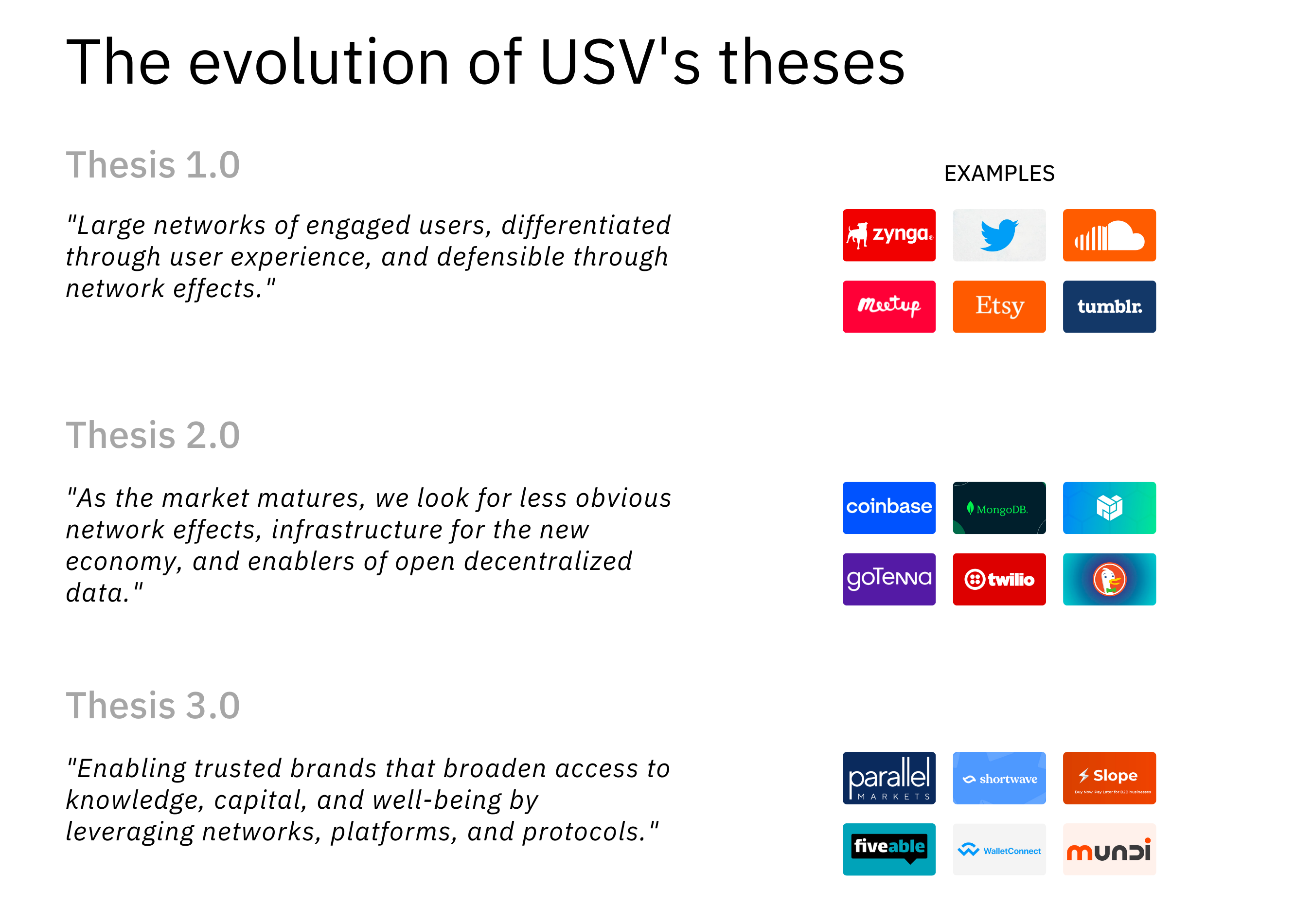
The first strategy achieved very significant As a result, USV interpreted the market very accurately in the mid-to-late 2000s, and correctly participated in the investment of projects such as Twitter, Zynga, Tumblr, and Etsy.
Credit to Burnham for conceiving Strategy 1.0. Some people say that Burnham has very good systematic thinking, is the "builder" of the entire strategic framework, and has the talent to "clarify the future direction of the world".
Wilson commended Burnham for his intelligence, brilliance, and his The ability to control complexity, and these are also important pillars of the cooperative relationship between the two. Burnham developed the general guidelines, and Wilson supplemented and elaborated them.
The formulation of the strategy points out the direction for venture capital, not only makes the project selection more targeted It also provides a reasonable framework for valuation. What’s more, for VCs, relying on strategy means they can take bigger risks on founders’ resumes, as USVs do.
Of course, all of this is based on a correct interpretation of the market. Clearly, USV has done just that, accurately anticipating the rise of social media and Crypto.
Sharing Thoughts
For a business with a proven track record, USV doesn't want to be in the spotlight. One commentator emphasized that the company’s stance prior to the Coinbase DPO was enough to explain its reticence. While other investors jostle for credit, USV has kept a low profile because its numbers speak for themselves.
Although USV rarely celebrates, it doesn't mean that it will choose silence on everything . In fact, Wilson started his blog (AVC) at the same time as USV, and has had articles published almost daily since then. While the rest of the company may not be able to match Wilson's cadence, article writing is also being taken very seriously.
In this way, USV can not only test new ideas, but also keep developing them . And, Wilson's blog has helped him build relationships with entrepreneurs. Andrew Parker said of Wilson that the founders "felt like they knew him before they met him".
Grasp the measure
From the perspective of founders, USV seems to belong to the golden land of venture capital. The company has a degree of relaxation in business handling, knowing that "it is only an investor, not an operator"-many investors fail to realize this. USV is only responsible for making suggestions, without too much intervention, and keeps in close contact with the founding team at all times to understand the latest situation. Fredrik Haga, CEO of Dune, emphasizes this:
USV has established a very Close relationship, they are well controlling their own investment and team size, and are very familiar with the functions of founders, companies, communities and other participants. Although other similar companies can provide more services, none of them understand the real-world background like USV, and good investment advice often only makes sense when combined with reality.
Haga added that the team at USV is "very human, with great empathy ".
When necessary, USV will also take action in person, Albert Wenger once helped Twitter solve the overload problem , and helped optimize its engineering team. A 2008 New York Times article described Wilson's revisions to Etsy's roadmap. However, USV is very measured in other things and will never interfere too much.
USV will also be generous to help founders when they encounter difficulties. Dave Morgan once said, "They will do things that other companies don't do," including funding companies to liquidate in the right way, helping employees out of trouble as much as possible, and so on. In turn, the company has been rewarded, and the founders often make a comeback. USV has funded numerous entrepreneurs on several occasions, including Morgan himself.
Finally, USV will also cooperate with these start-ups by participating in the community to form its own network effects. Employees of participating companies are invited to a Slack group where they can exchange ideas and share advice with partners from other companies. Not only that, USV also provides them with activities such as "Manager Bootcamp", "Women Executive Leadership Program" and "CEO Summit".
Seize the moment
USV is very good at timing and can always enter and exit at the right time. Charlie O’Donnell, founder of Brooklyn Bridge Ventures and former USV’s first analyst, said, “Very few people have the ability to pick the timing.” As mentioned earlier, USV has ridden the tailwinds of social media and crypto, finding excellent investment projects in both markets. (USV has invested in many Crypto projects, including Multicoin Capital, which has also achieved good results.)
For now, USV appears to have exited many of its largest positions. The company sold its Tumblr stake before its value dropped to $3 million as part of a $1 billion acquisition. The same thing happened to Zynga, and USV reportedly sold its stake in the game before its decline. Similarly, it's timing well with Coinbase.
The success of USV is not only due to its good luck, but also to its management strategy . “In these pre-IPO liquidity trades, we typically liquidate 10% to 30% of the position,” Wilson wrote in a blog post. In doing so, the firm not only locks in returns, reduces investment risk, but also secures for the future. Value-added laid the foundation.
Stick to principles
In April, USV announced that it had raised two new funds: a $275 million early-stage fund and a $350 million "opportunity fund." For such a company, these two figures are not unusual, but they are in line with the principles that USV has always set for the scale of fundraising. The company has never raised a larger amount than that because, in their view, too much capital would constrain returns.
A practice like USV is actually contrary to the industry situation, and many other well-known companies have used the past few years to rapidly expand their asset management scale. "Nobody says no to making money," says the previously mentioned investor, "especially when they're already successful." However, USV is an exception. "In my opinion, they are a special enterprise, one of the few investment companies with track record and controlled scale," the same source noted.
Written at the end
The success of USV proves to us the importance of strategy and skill in venture capital. As long as you think hard, practice a lot, and stick to principles, even an early investment that seems to be a fluke can become an opportunity for you to learn and explore.
Benjamin Graham once said, "Successful investment professionals will always stick to their bottom line, and will make repeated considerations before actual action." I believe, Had he been alive, the "Dean of Wall Street" would have had no trouble finding someone who shared his views.
Welcome to join the official BlockBeats community:
Telegram Subscription Group: https://t.me/theblockbeats
Telegram Discussion Group: https://t.me/BlockBeats_App
Official Twitter Account: https://twitter.com/BlockBeatsAsia