Goldman Sachs on rate hikes: Is the market betting too aggressively? The Fed may only need to raise rates one more time.
Original title: Why Markets May Be Pricing in Too Many Fed Rate Hikes
Source: Goldman Sachs Exchanges
Compiled by: Peggy, BlockBeats
Editor's note: After the Federal Reserve re-entered a rate-hiking cycle, the focus of market discussion is shifting from "why raise rates in September" to "how far will this round of hikes actually go." Elevated oil prices, the re-emergence of sticky inflation, and still-strong AI infrastructure investment and defense spending all appear to support higher rates; but at the same time, housing, autos, small businesses, and low- and middle-income consumption are already clearly being suppressed by high financing costs. As "inflation remains above target" gradually becomes consensus, a more fundamental question begins to surface: is today's U.S. economy still suited to being understood through the traditional framework of "economic overheating—rate hikes—cooling demand"?
In the latest episode of Goldman Sachs Exchanges, Robert Kaplan, Vice Chairman of Goldman Sachs and former President of the Dallas Fed, discussed the policy path after the Fed's first rate hike in three years. He acknowledged the necessity of a September hike and also considered one more hike within the year reasonable, but compared with the market's more aggressive pricing, Kaplan leans toward the view that the Fed will then need to pause and re-observe the economy, rather than mechanically entering a continuous rate-hiking cycle.
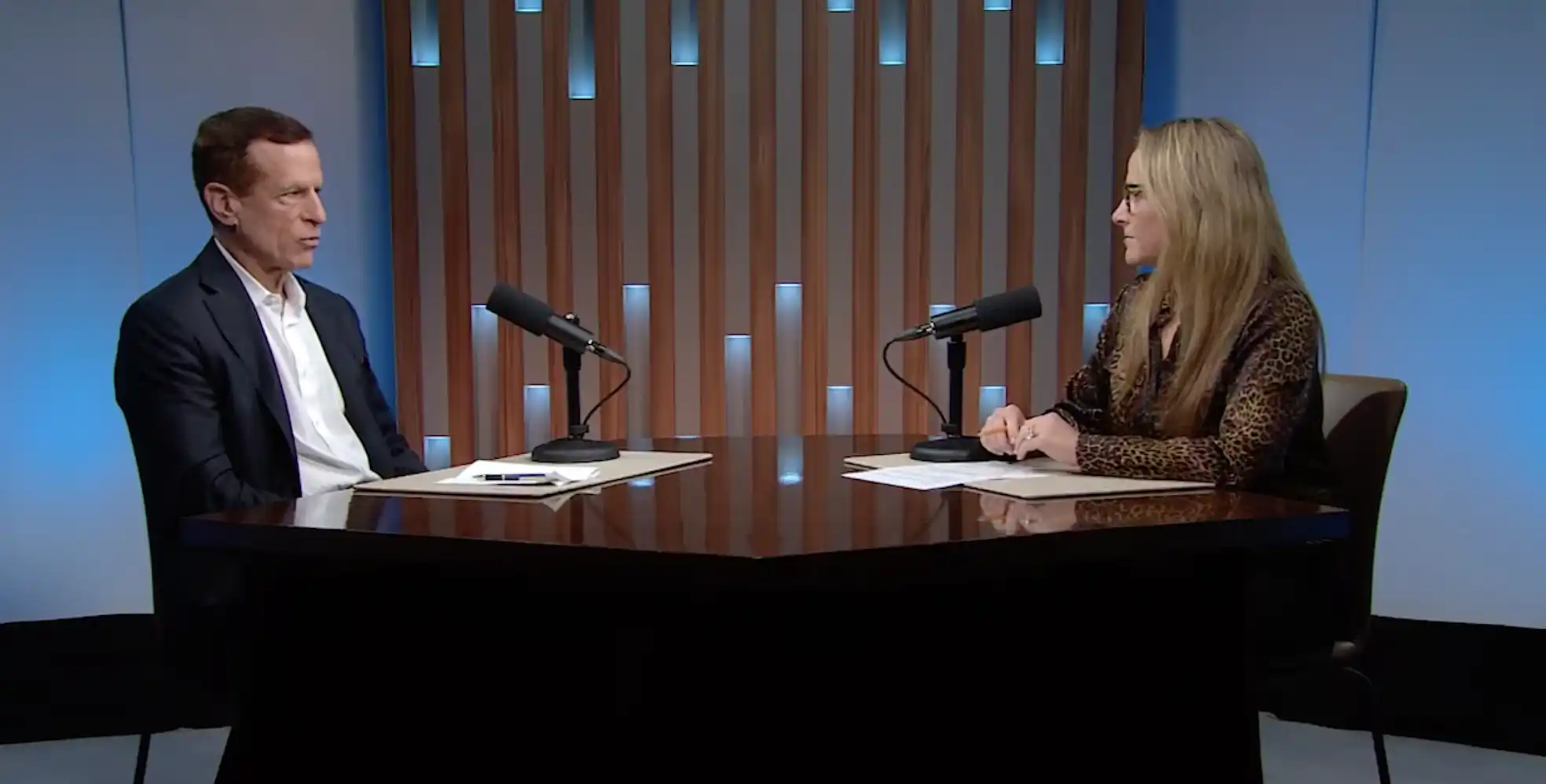
In this conversation, Kaplan effectively breaks down "how many more times the Fed will hike" into a set of more fundamental structural questions: Does inflation come from demand or supply? Which sectors can the policy rate actually suppress? And how much of long-end rates has already detached from the Fed itself and is instead determined by fiscal deficits, energy prices, and bond supply?
First, the nature of inflation is changing, and what the Fed faces is not traditional demand overheating. In the past, when employment was strong, wages were rising, and consumption was expanding, rate hikes could curb inflation by suppressing demand. But current pressures simultaneously come from supply factors such as oil prices, tariffs, and labor supply constraints. The Fed cannot increase oil supply by raising the federal funds rate, nor can it eliminate tariffs, but if a supply shock persists long enough, it may gradually spread into transportation, goods, and services prices. Therefore, the purpose of raising rates now is not entirely to directly eliminate the initial price shock, but to prevent it from evolving into broader second-round inflation. This means the key to future policy judgment is not just whether oil prices are high, but whether oil prices are changing the entire price system.
Second, the economic sectors that monetary policy can affect are misaligned with the current strongest sources of growth. In the past, rate hikes targeted a relatively synchronized economic cycle; now, however, clear divergence has emerged within the U.S. economy. Housing, autos, small businesses, and low-income consumption are highly sensitive to short-end rates and have already been significantly squeezed; but AI infrastructure and defense investment remain strong. More importantly, large AI projects mainly rely on long-term bonds, credit markets, and equity financing, rather than directly relying on the federal funds rate. This means that if the Fed continues to raise rates, the first parts of the economy to be hit may not be the hottest parts, but rather those sectors that have already cooled. The further policy tools are pushed, the more asymmetric their marginal effects may become.
Third, the market is currently cramming two different issues into the single price of "rising interest rates." Short-end rates mainly reflect the Fed's future policy path, but 10-year and longer-term U.S. Treasuries are increasingly influenced by fiscal deficits, Treasury supply, energy prices, and term premiums. Kaplan therefore emphasizes that rising long-end yields cannot simply be interpreted as "the market expects the Fed to hike more times." If the fiscal deficit shows no significant improvement even amid strong nominal growth, then long-term bond investors demanding higher returns is itself a pricing logic independent of the Fed. In other words, the U.S. Treasury yield curve is shifting from a pure monetary policy trade to an outcome shaped jointly by monetary, fiscal, and supply risks.
Fourth, the market's current rate-hike pricing itself still contains an uncertainty premium regarding the new policy framework. After Kevin Warsh took office, the market has not yet fully understood his reaction function—that is, under what inflation, employment, and financial conditions the Fed will act with what magnitude. When the policy reaction function is not yet stable, the market tends to proactively build in a buffer for the "unknown." Therefore, the degree of tightening priced into the current rate curve does not necessarily mean investors are convinced these hikes will ultimately materialize; it may simply be a risk premium paid for uncertainty surrounding oil prices, war, and the new Fed decision-making framework.
If this conversation were compressed into a single judgment, it would be this: the real challenge of this policy cycle is not whether the Fed is willing to keep hiking, but that traditional interest rate tools are facing an increasingly unconventional economic structure.
In this sense, the subject of this article is no longer just whether the next FOMC meeting will hike rates, but rather—when AI CapEx, fiscal expansion, and multiple supply shocks coexist—to what extent monetary policy can still rely on a single policy rate to manage a highly differentiated economic cycle.
The following is the original content (edited for readability):
Key Takeaways
Goldman Sachs Vice Chairman and former Dallas Fed President Robert Kaplan said that because the U.S. economy is showing clear internal divergence, the market's pricing of the Fed's subsequent tightening magnitude may already exceed what is actually needed.
On the Goldman Sachs Exchanges podcast, Kaplan noted that on one hand, artificial intelligence (AI) infrastructure and defense spending continue to boom; on the other hand, rate-sensitive sectors such as housing and autos are already under clear pressure in a high-rate environment. The interplay of multiple forces means the necessity for the Fed to tighten further may not be as strong as the market's current pricing reflects.
· The Fed may hike again, but the scope is limited: Kaplan expects the Fed may raise rates one more time, pushing the federal funds rate to about 4%–4.25%, then pause and reassess economic conditions. But the market is currently pricing in more hikes. Kaplan believes this includes a certain risk premium, possibly reflecting investor uncertainty over oil price trends and how Fed Chair Warsh will adjust policy in response to economic data.
· The neutral rate still matters: Kaplan said that although the neutral rate is not the "only criterion" for determining monetary policy, it still has reference value. In his view, one more hike could push the Fed's policy rate above the neutral level, thereby exerting a "mildly restrictive" effect on the economy.
· A shock with no ready policy playbook: Kaplan describes the current economy as a "low fire, low hire" labor market: tariffs, labor supply constraints from tighter immigration, and oil price shocks are occurring alongside a historic capital expenditure boom. This is a supply-side combination with no textbook precedent. Kaplan believes that in this environment, the Fed's focus is no longer on eliminating the initial supply shock, but on limiting as much as possible the "spillover" of inflation into more goods and services prices.
Key points of the main text
On September 16, the Fed raised the target range for the federal funds rate by 25 basis points to 3.75%–4.00%. In its statement, the Fed said U.S. economic activity was still expanding at a "solid pace," but inflation remained elevated, necessitating further support for inflation's return to the 2% target.
For Robert Kaplan, this rate hike itself was not surprising. The real question is: is this a preventive adjustment, or the beginning of a new cycle of consecutive rate hikes?
Kaplan's answer leans closer to the former.
One more hike may be reasonable, but Kaplan does not think many consecutive hikes are needed
Kaplan believes the Fed's decision to hike in September was reasonable.
In the fall of 2025, the Fed cut rates three times in a row. Entering 2026, the economic environment changed: fiscal incentives were still at work, AI infrastructure investment was expanding rapidly, and geopolitical conflicts were pushing oil prices higher. The Fed initially chose to wait, hoping energy prices would fall back on their own, but this process did not happen as quickly as expected.
What truly worries Kaplan is not just year-over-year inflation, but the fact that recent monthly inflation remains relatively strong.
Data from the U.S. Bureau of Labor Statistics show that August CPI rose 0.4% month-over-month and 3.4% year-over-year; core CPI rose 0.3% month-over-month. This means that although inflation is far below its previous peak, at least in recent data, it has not yet steadily returned to a pace consistent with the 2% target.
But this does not mean Kaplan supports a round of aggressive tightening.
The latest FOMC dot plot itself is relatively restrained. The September projections show a median federal funds rate of 4.1% by the end of 2026, still 4.1% in 2027. Looking at the distribution of dots, among 18 participants, 12 expect the median year-end rate to be 4.125%, 4 expect 4.375%, and only two expect it to remain near current levels.
Kaplan himself prefers a "one step at a time, wait and see" path: one hike has already been delivered in September; if there is no new inflation shock in October, it can be skipped for now; then in December, consider another 25 basis point hike.
That would bring the rate range to roughly 4.00%—4.25%.
Kaplan estimates that the U.S. nominal neutral rate is also roughly around this level. The so-called neutral rate refers to the interest rate level that in theory neither significantly stimulates nor significantly restrains the economy. It is not directly observable data, but rather a policy estimate.
Therefore, in Kaplan's view, if there is another hike in December, the Fed may already be near neutral. After that, whether it needs to move further into restrictive territory requires reassessment, rather than assuming in advance that there will be a series of continued hikes.
Why does the market still bet on more hikes? The key is that the "policy reaction function" is not yet clear enough
The real disagreement between Kaplan and the market is not about "whether there will be one more hike," but about how many more there will be after that.
He believes that the degree of tightening currently priced into the rates market may be higher than the amount of hikes that will actually ultimately be needed.
One important reason is that the market is still paying a risk premium for uncertainty.
First, the policy reaction function of new Fed Chair Kevin Warsh is not yet fully understood by the market.
The so-called policy reaction function, simply put, is the market's attempt to gauge: when variables such as inflation, employment, and financial conditions change, how aggressively and how quickly will the Fed adjust interest rates?
When the market is familiar with a central bank governor, investors can often roughly estimate the policy path based on past speeches and decision-making patterns. But if that playbook has yet to take shape, the bond market typically needs to add an extra "buffer" — that is, a risk premium.
Kaplan therefore argues that some of the rate-hike expectations embedded in the current curve do not necessarily represent investors' conviction that the Fed will inevitably hike that much, but may instead be pricing in "we don't yet fully know how Warsh will react."
He also believes the market is paying a premium for another risk: oil prices staying elevated for an extended period.
If an energy shock ends quickly, the Fed can typically choose to "look through" short-term price increases. But if a supply shock persists for six months, eight months, or even longer, it may gradually spread into more price categories such as transportation, food, manufacturing, and services.
This is also Kaplan's revision of the view that "supply shocks shouldn't warrant rate hikes."
Raising the federal funds rate certainly cannot increase oil supply, nor can it directly bring oil prices down. But it can suppress demand in other sectors, thereby slowing the pace at which energy price increases spread into broader inflation.
Therefore, for the Fed, what truly matters is not how much energy prices themselves have risen, but whether an exogenous shock will evolve into broader second-round inflation.
The Biggest Challenge: AI Is Booming, but Rate-Sensitive Sectors Have Already Cooled
This is also why Kaplan does not favor mechanical, consecutive rate hikes.
Today's U.S. economy is not overheated across the board in the traditional sense, but is showing very clear divergence. AI infrastructure investment is still growing rapidly, and defense spending remains strong; but housing, autos, and businesses serving low- and middle-income consumers have already weakened noticeably. This creates a monetary policy dilemma: the sectors most easily hit by the federal funds rate are precisely no longer the hottest parts of the economy.
Real estate is the most direct example.
High mortgage rates have reduced households' home-buying capacity, while real estate developers themselves often need to rely on short-term financing to support inventory and project turnover. As a result, when the Fed raises short-end rates, these businesses may simultaneously face weakening demand and rising financing costs.
Small businesses and individuals relying on floating-rate loans are facing similar pressure. But the financing structure for AI infrastructure investment is not exactly the same.
Large tech companies and infrastructure projects rely more on corporate debt, long-term bond markets, and equity financing. As a result, they may care more about the entire U.S. Treasury yield curve and credit spreads than the federal funds rate.
Kaplan's judgment is that raising short-end policy rates alone is not enough to significantly stop AI infrastructure expansion.
This also explains why the U.S. economy can simultaneously show two seemingly contradictory phenomena: on one hand, a capital expenditure boom and resilient corporate earnings; on the other, housing and some consumer sectors already feeling clear pressure.
He summed up the current labor market as "low fire, low hire."
This is different from the typical economic overheating of the past. Employment has not deteriorated on a large scale, but companies are also not eager to hire, so the labor market is temporarily not the clearest monetary policy signal.
Kaplan believes the Fed is now facing a very rare combination: a historic capital expenditure cycle, alongside multiple supply shocks including energy, tariffs, and labor supply constraints.
The traditional model of "economic overheating—rate hikes—cooling demand" has therefore become less useful.
10-year Treasury breaks above 5%, the problem is no longer just the Fed
If short-end rates mainly answer "how much more will the Fed hike," then long-end rates are answering another question: at what price are investors willing to hold U.S. government debt for the long term.
This is also what Kaplan sees as the most easily overlooked point in the current market.
U.S. Treasury data show that the 10-year U.S. Treasury yield was 4.96% on September 22 and rose to 5.11% on September 23; 20-year and 30-year yields rose to 5.45% and 5.40%, respectively, over the same period.
Long-end yields are already significantly higher than the current policy rate.
Kaplan believes this part of the move cannot simply be explained as "the market expects the Fed to keep hiking." Ten-year and even longer-dated U.S. Treasuries will increasingly be affected by fiscal deficits, bond supply, and long-term inflation risk.
CBO September data show that the U.S. federal budget deficit was about $2 trillion in the first 11 months of fiscal year 2026, on the surface about $6 billion less than the same period last year; but after excluding payment date misalignments, the deficit for the same period this year was actually about $82 billion higher than last year.
This means that despite still-strong nominal economic growth, the U.S. fiscal gap has not shown significant improvement.
In Kaplan's view, this will force long-term bond investors to demand higher yield compensation. U.S. Treasury bond buybacks can improve market liquidity and debt management to some extent, but Kaplan emphasizes that this is not the same as genuinely reducing the fiscal deficit. Therefore, he believes the core issue for long-end rates has increasingly tilted toward fiscal policy rather than monetary policy itself.
This is also why after the September Fed rate hike, the U.S. Treasury curve did not simply reprice by "another 25 basis points" — a large amount of tightening expectations had already been reflected in the curve, and the long end has its own fiscal logic.
What to Watch Next? Not "Whether the Fed Is Hawkish," but Whether Inflation Continues to Spread
Kaplan's baseline judgment for the next meeting still leans toward "holding off."
The Fed's next FOMC meeting will be held on October 27-28. Before that, the market will receive two sets of key inflation data: the BEA will release August personal income and spending data on September 30, which includes the PCE price index; the BLS will release September CPI on October 14.
If monthly inflation begins to cool, oil prices do not further spread to other goods and services prices, and housing, autos, and consumption continue to bear the pressure of high rates, then the path Kaplan describes — "one more hike in December, then pause and observe" — will be easier to establish.
Conversely, if PCE and CPI accelerate significantly again, or business surveys show that energy and other supply shocks are transmitting to an increasing number of price items, the Fed may not have room to wait until December.
So what truly needs to be observed now is no longer a simple question of "hawkish or dovish."
The more critical variable in this policy cycle is: whether the supply shock has merely pushed up a few prices, or has begun to alter the entire inflation process.
If it is only the former, the market may indeed have priced in too many rate hikes; if it is the latter, today's seemingly elevated rate pricing may gradually be validated by fundamentals.
Welcome to join the official BlockBeats community:
Telegram Subscription Group: https://t.me/theblockbeats
Telegram Discussion Group: https://t.me/BlockBeats_App
Official Twitter Account: https://twitter.com/BlockBeatsAsia