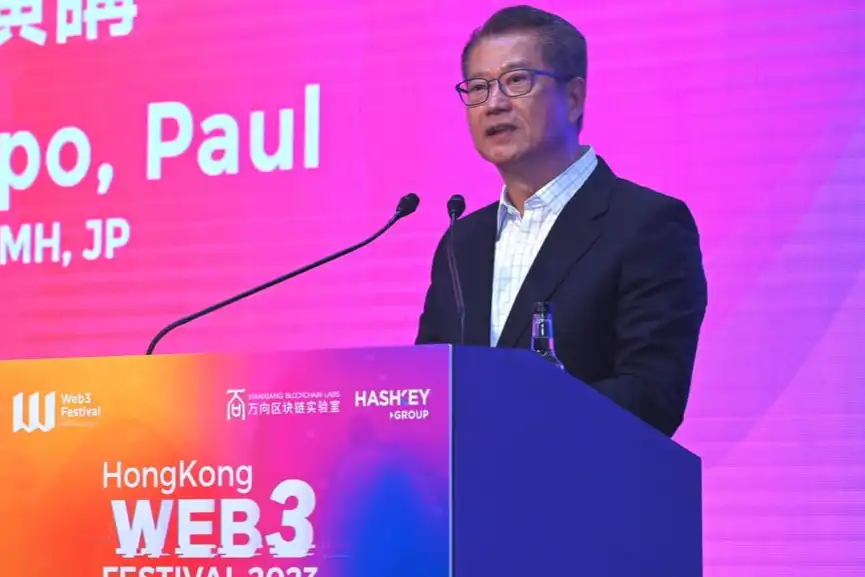
Can Hong Kong usher in the next "Octopus moment" with Web3

Original title: "Will NFT, metaverse developments in Hong Kong help deliver the city』s next 『Octopus moment』 in a post-pandemic world?"
Original author: Bien Perez @《South China Morning Post"
Original compilation: Peter Pan @BlockBeats
【Editor's Note】
< br>
Many people have said that Hong Kong, China has been in the technology industry for more than 20 years, which is more than 20 years that have been missed. The reason why it is said to be "missed" is that Hong Kong is not incapable of innovation.
In September 1997, the Octopus card in Hong Kong was launched and quickly became the most popular local The welcomeelectronic payment system has also become a symbol of the city's ability to cultivate innovative technology.
But in the era of mobile mobile Internet, Hong Kong is one step ahead of the mainland Launched a voice IM application, Talkbox, which was eventually completely surpassed by WeChat; in the more recent era of artificial intelligence, the famous AI unicorn Shangtang Technology was originally established by the Chinese University of Hong Kong Engineering School team led by Tang Xiaoou, but later Shangtang Tang chose to take root in Shanghai. Not only that, Chinese University of Hong Kong, Hong Kong University of Science and Technology and other universities are also sending a large number of talents to enterprises and academia every year.
The slow development of Hong Kong's technology industry was initially blamed by some on the failure of the "Silicon Harbor Project" around 2000.
In October 1998, Tung Chee-hwa, then Chief Executive of the Hong Kong Special Administrative Region of China, in his second policy address after taking office It is proposed to revitalize Hong Kong through science and technology, and to develop Hong Kong into an international innovation and technology center. However, this project has not been able to advance. On the one hand, it is because the government has very little voice in granting land, and on the other hand, it also includes the United States at that time restricting the export of semiconductor manufacturing equipment to Hong Kong.
But these reasons are obviously not enough to explain the later problems. In the upsurge of the mobile Internet and the rise of AI, there are many The companies are all latecomers who only started to develop around 2010. The failures in these fields are mainly due to factors such as high labor costs in Hong Kong, lack of capital attention in the technology field, and imperfect industrial chains and markets.
Wang Tao, the founder of Shenzhen drone company DJI, once served as the third Chief Executive Leung Chun-ying When asked about "Whether DJI will move to Hong Kong" during the investigation, he said: "The world's best industrial chain division of labor is in Shenzhen, and the best engineers are in Shenzhen. The cost of starting a business here is very low. Shenzhen has the best industrialization system. DJI are inseparable.”
In addition, Hong Kong’s real estate industry, financial services industry, trade and logistics industry and The tourism industry accounts for 60% of its GDP, which leads to insufficient attention of capital to technology. For example, although SenseTime's face recognition technology was born in Hong Kong, it relied on the mainland for the capital and market it grew up with. How should Hong Kong break the situation and catch up with the lost more than 20 years?
However, the Web3 industry such as NFT and Metaverse is developing rapidly in Hong Kong, and a new batch of Start-ups led by digital technology, the city may usher in its next "Octopus moment". Last year, Shangtang Technology also returned to Hong Kong and listed on the Hong Kong Stock Exchange. The stock price rose by more than 23% on the first day, which surprised the market.
Perhaps, Hong Kong will gradually remove its label of "innovative ability but not innovative soil". Overtaking on curves on the track.

"Octopus Card"
When the "Octopus Card" was launched in September 1997, this homegrown electronic payment system became the most attractive in Hong Kong. A striking high-tech application, it has thus become a symbol of what can be achieved in a city with world-class infrastructure, the rule of law, business-friendly policies and an expanding skilled talent pool.
According to the Octopus card operator, the wide acceptance by the public has led to the successful expansion of the use of the contactless smart card from the city's public transport network to Parking facilities, tunnel tolls, schools, retail, even for access control in residential and commercial buildings, etc. Since then, the technology has also been adopted by various projects in the mainland, the Netherlands, the UAE and New Zealand.
Even when there were other e-wallet options in the market, most Hong Kongers (70% of about 6.3 million eligible residents) chose e-wallets last year The Octopus digital payment platform was used to store HK$5,000 consumer vouchers provided by the government. As of December 31, 2020, there were approximately 30.4 million Octopus cards in circulation in Hong Kong.
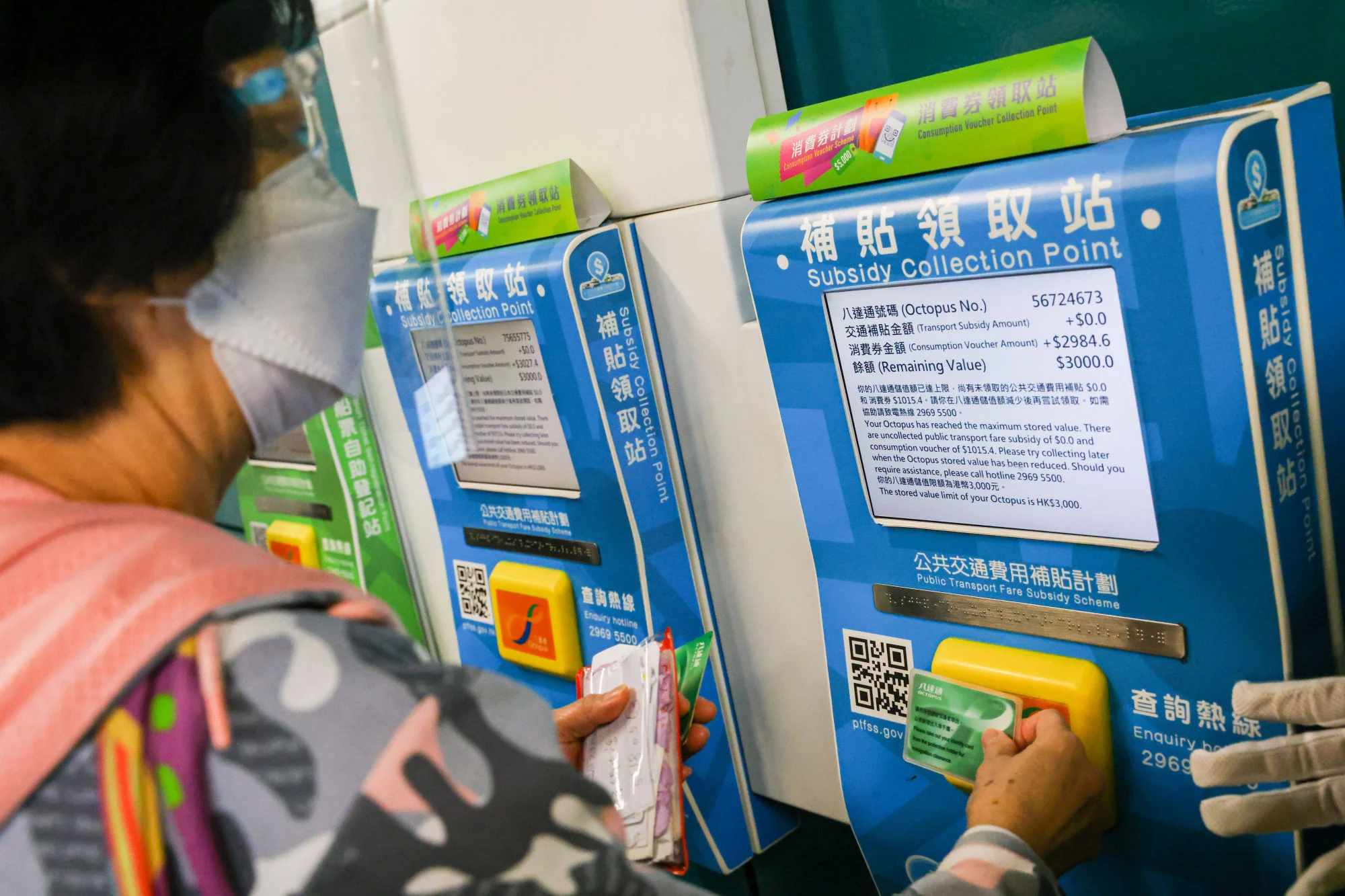
Citizens in deep water Swipe the Octopus card at the MTR station to receive the latest batch of Hong Kong government Coupons
However, after nearly 25 years, the hope of Hong Kong's next "Octopus Moment" has never been realized again.
Achieving this wish has recently been complicated by a string of disruptive events: anti-government protests in Hong Kong, the US-China trade war, the coronavirus pandemic Hong Kong has experienced a series of economic slowdowns and a brain drain due to the pandemic, restrictions imposed by the city's "dynamically zero Covid-19" policy, and amid a recent wave of immigration.
The new crown epidemic has accelerated the expansion of the Web3 industry
However, in After the rapid growth of companies such as artificial intelligence company SenseTime and freight logistics service provider GoGoX Holdings (formerly GoGoVan) in recent years, some research in Hong Kong's technology industry shows that a new wave of companies led by digital technology may make breakthroughs and Become a new mark of the city.
And recently, Yat Siu, co-founder and CEO of Animoca Brands, a large video game and venture capital company headquartered in Hong Kong Cyberport, also said that Hong Kong's technology industry has Some exciting innovations are on display.
Animoca was listed on the Australian Stock Exchange from January 2015 to March 2020 and has currently conducted research on various NFT-related blockchain companies More than 200 investments, including popular NFT marketplace OpenSea, NBA Top Shot digital collectible maker Dapper Labs, and metaverse game Alien Worlds, among others.
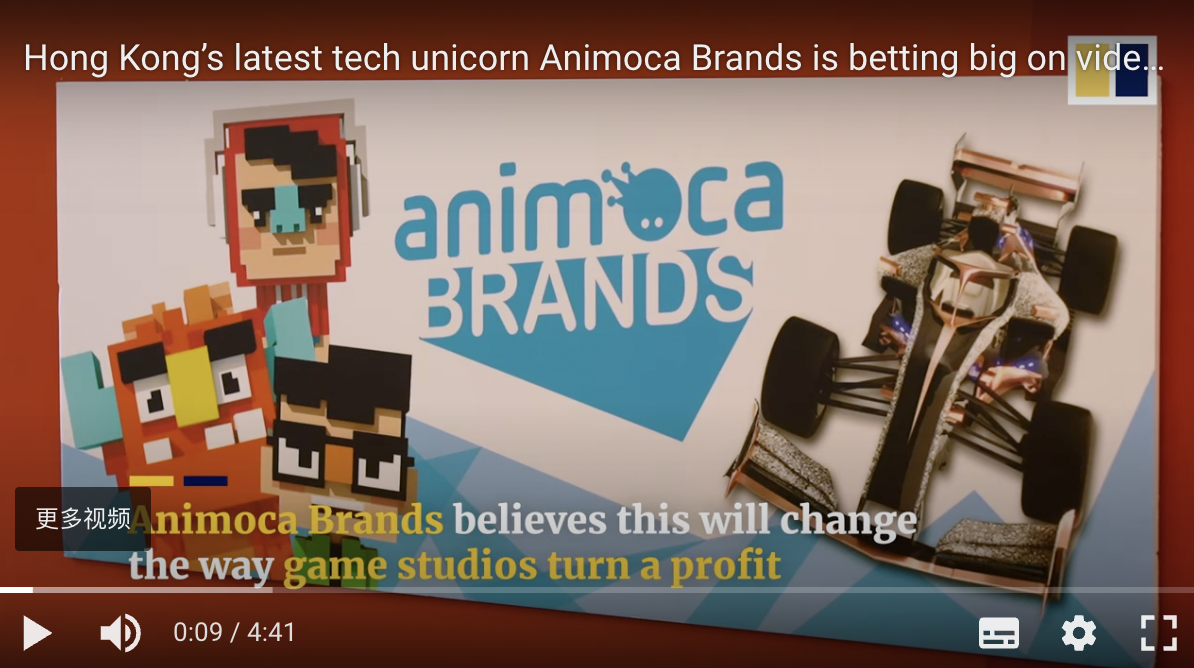
Hong Kong's latest technology Unicorn Animoca Brands bets on video game NFTs
“Industries related to the Metaverse and Web3, including NFTs, have taken off during the COVID-19 pandemic over the past few years. Many new startups have emerged in this space , they are booming in fields like Play to Earn, virtual real estate and e-sports,” added Yat Siu.
The Metaverse is an immersive virtual world where people's digital identities can interact with each other as they would in real life. Web3 is a new version of the World Wide Web based on decentralization and blockchain, the digital ledger technology behind cryptocurrencies like Bitcoin.
NFT is a unique string of blockchain registration data that represents digital file ownership. Therefore, NFTs are considered valuable because people can buy and trade these digital assets like physical objects.
“NFTs represent the future of digital property and the metaverse,” Siu also said, “The space is still young and there are plenty for anyone with an enterprising mind.” Opportunities, this is one of the best areas people should consider when developing their careers and exploring new ideas.”
In addition, the Hong Kong Startup Community with about 5,000 members Casey Lau, co-founder of StartupsHK, also expressed his optimism about this field: "In general, I think Web3 is exciting and will eventually touch every industry."
Immediately afterwards, Lau, who is also the co-host of Asia's largest technology event "RISE", also said, "Although we have not really solved all the problems in Web2, compared with Web1, the market has changed a lot. , but we still need to move on.”
NFT and Metaverse business is booming in Hong Kong
< br>
Web1 is the earliest version of the internet, developed at the initiative of the US government's Defense Advanced Research Projects Agency. Meanwhile, Web2 describes the current state of the internet, with more user-generated content and ease of use.
Web3 takes the Internet to a whole new level, using a decentralized network to return control of data to all users. At present, Hong Kong has formed a vibrant metaverse and NFT enthusiast community, artists adopt cryptocurrency to sell their works as NFT, and various cartoon avatar projects are vying for people's money and attention.
Degenerate Ape Academy is a popular NFT project on the Solana blockchain, They rented advertising space in Central during the recent Christmas and New Year holidays to promote their NFT
In addition, Hong Kong-based Metaworld Development project launched in March A startup that aims to attract people to invest in NFTs. These NFTs are expensive virtual lands created on the Metaverse platforms Decentraland and The Sandbox, and the Metaworld team's strategy is to trade portfolios of virtual lands, lease them out to major brands, and then distribute capital gains to NFT holders.
In the same month, the "South China Morning Post" announced that it had divested its blockchain-based NFT business and independently established a new company called "Artifact Labs" to integrate Hong Kong The art, photos and content of the 118-year-old English-language newspaper are transformed into tradable NFTs. As an independent entity, Artifact Labs also helps turn the property of other organizations, including schools and museums, into digital collectibles.
Of which, the original collectible item, the "1997 Advanced Collection," had sales of $126,000 in March, which was achieved using a technology called ARTIFACT Developed by the blockchain metadata standard. The standard is designed specifically for historical and archival NFTs, built on the Flow blockchain, and a second series of the same NFT sold out in just over two hours in April.
The success of this project shows the continued growth momentum of NFT. According to blockchain data platform Chainalysis, the NFT market has boomed in the past year, and its value has exceeded $40 billion.
blockchain data platform Sales of the global NFT market in 2021, according to Chainalysis
And earlier this month, Internet company Yahoo and Metaverse platform Meta also boosted confidence in Hong Kong's nascent Metaverse industry. Meta says the city will serve as a testing ground, where it will launch initiatives to explore the potential uses of virtual worlds in everyday life. Subsequently, Yahoo also announced that it will launch a series of metaverse activities, explore immersive advertising technology and release a limited number of NFT.
Increasing investment risks, the industry urgently needs supervision
Another On the one hand, Paul Haswell, a partner at Hong Kong-based international law firm Seyfarth Shaw, said, “While Web3 and the metaverse are expected to have an impact on potential local innovation and the development of the Internet more broadly, there are other businesses that need funding and government more support.” Previously, Paul had been advising technology companies.
“The technology industry in Hong Kong operates on two levels.” Paul added, “There are some gorgeous new technologies, such as NFTs and metaverses, the field Huge new investments are being made, and innovators are working to change the way we do business, protect our health and enhance our lives.”
“ Before investing in an NFT of a cat, though, also consider investing in a new health tech startup or a company looking to fight climate change.” Furthermore, “Instead of using NFTs to sell pictures of apes, think about how they could be used to Revolutionize various recording systems and even property transactions in Hong Kong."
Currently, the growing interest in NFTs and virtual worlds has made this field a potential area for fraud and Fertile ground for scams, victims have little recourse, and regulators have been unable to keep up with the fast-moving market.
However, in February this year, according to the government-run cybersecurity watchdog Hong Kong Computer Emergency Response Team Coordination Centre, the risks involving NFTs and Metaverse had been censored. identified as one of the top security threats to watch out for this year. The warning says criminals could steal sensitive user information or access their accounts to steal wealth, whether it's where the assets are traded or stored.
At the same time, the investment frenzy has intensified criminal activity in the sector. The total value of cryptocurrencies phished by illegal online addresses reached $14 billion last year, according to Chainalysis. On June 6, the Hong Kong Securities Regulatory Commission also stated that some NFTs constitute investment products that must be regulated, and warned investors of the risks involved in investing in such tokens.
The problem of brain drain is prominent, and the economy will usher in recovery after the epidemic eases
In addition, there is a growing shortage of skilled labor in Hong Kong's labor market, and there is a constant loss of talent, especially in the field of technology. Some businesses have been struggling to cope with a brain drain amid the latest wave of immigration, with nearly two-fifths of companies already having their operations adversely affected, according to a survey by the Hong Kong General Chamber of Commerce.
Last year alone, about 40,000 Hong Kong people applied to the police for a certificate of no criminal record, which is also an important requirement for immigration to Canada, the United States and Australia. The last time applications were this high was in 1989. Separately, 3,444 Hong Kongers were granted permanent residency in the country in 2021, more than double the pre-pandemic figure in 2019 and 15 times the figure in 2010, according to Immigration, Refugees and Citizenship Canada.
“Brain drain is Hong Kong’s biggest long-term challenge,” said Animoca’s Siu. It has been gradually opened up to allow people to conduct business, and ultimately the loss of diversity and creativity will affect all aspects of Hong Kong business, culture, education and even society.”
< p>Outgoing Hong Kong Chief Executive Carrie Lam Cheng Yuet-ngor also expressed concern, saying in March that strict anti-epidemic restrictions had led to the exit of business talent and that the exodus of expatriates would force more and more companies to Find new talent overseas.
However, Seyfarth's Paul said: "As the epidemic is gradually brought under control, we also need to think about how to minimize losses. Investment in the Northern Metropolis and Northern Metropolis Plan may help to encourage talents to return to Hong Kong.”
At present, there are many advantages of emerging industries such as NFT and Metaverse compared to traditional industries Discussion of the Octopus is still rare, which may also be a big obstacle for another "Octopus moment" in Hong Kong.
But as more economies around the world open up, Hong Kong is expected to follow suit, providing a high-quality platform for creating and driving innovation. “There will always be graduates from good schools who want to start their careers in Asia, and for them, Hong Kong will remain an unmissable choice,” asserts Lau of StartupsHK.
Welcome to join the official BlockBeats community:
Telegram Subscription Group: https://t.me/theblockbeats
Telegram Discussion Group: https://t.me/BlockBeats_App
Official Twitter Account: https://twitter.com/BlockBeatsAsia



 Related Articles