Article Title: Some Views on the Web3 Situation in Hong Kong
Original author: Meng Yan
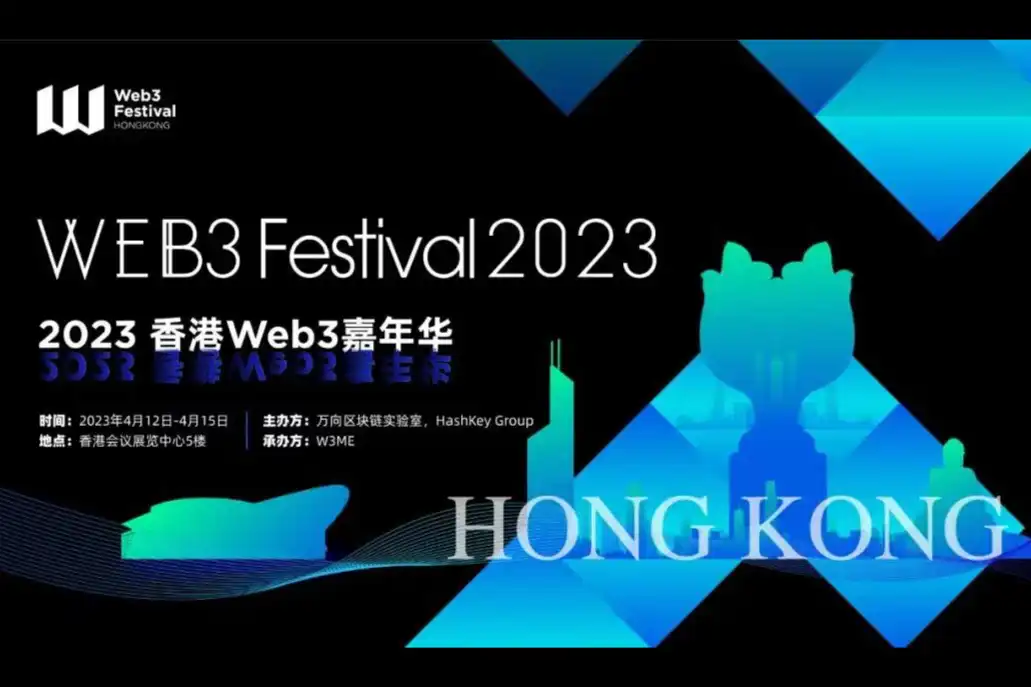
Last week, the Web3 Carnival took place in Hong Kong. Although I didn't go there, I was looking forward to it and paid close attention to the new views and insights. I learned a lot, but I was particularly dissatisfied with the fact that no one mentioned the most important question in the public discussion: What is the decision-making logic behind Hong Kong's Web3 new policy?
This new Hong Kong policy, without Beijing's support, or at least permission, is unthinkable. So this involves a series of questions: why did the government make such a decision? Why did Beijing acquiesce? Is Beijing's attitude based on deliberation or expediency? In the future international political, economic and technological game, will Hong Kong and Beijing's attitude towards Web3 strengthen, weaken or fluctuate? If we do not think and judge these problems, the current development of Web3 in Hong Kong cannot be carried out to the end, and the achievements already made may be lost. Of course, this is a difficult question to discuss, so most people avoid talking about it, and I can understand that. But see a lot of chanting style singing, out of the fundamentals, I believe a lot of it is also disingenuous.
So I put this question out on Twitter, and in an unprecedented situation, although I received a lot of replies from my fellow Twitterers, a lot of the communication took place through private messages and chat, and a lot of people asked me, what are the views expressed by other people who talk to you privately? These exchanges made me feel that it was worth bringing this issue to the table. I share your concerns, but I think there are a lot of points to be made.
Of course, if we only discuss the issue on a case-by-case basis, we should not see the forest for the trees and analyze it in the light of the current international situation. But I don't have the time and energy for a long speech. Therefore, I choose a compromise plan to express my views, which is to list the main views and logic in a way similar to a long tweet, without in-depth analysis and proof, and without explaining and quoting the source of the terms and views involved. First, to establish the evidence, second, to introduce a new example, and third, to facilitate our internal strategic discussion later.
The first thing to consider is the context.
1. The overall situation of the world today is that it is entering a new Cold War phase, which will take 10 to 30 years, most likely around 20 years.
2. This is a cold war with low intensity and gray scale.The two sides of this new Cold War, the United States and China, no doubt have no illusions about returning to cooperation, but they are afraid of the consequences of fierce confrontation and hope to control the intensity of confrontation. Therefore, their attitude is not firm. With the change of time, there will be a lot of swings and ambiguities, and there will be a large space for blending.
3. The main battleground of this new Cold War is technological innovation and the real economy.China hopes to make use of its advantages in real economy to extend upward, gain advantages in scientific and technological innovation, and realize the independence of the whole supply chain from innovation to manufacturing, while the United States hopes to make use of its advantages in scientific and technological innovation to recover the key links of manufacturing, to promote the return of the real economy to its homeland, and to rearrange its supply chain globally.
4. The United States and China have their own risk points. There are two main risks in the US. First, risks to the financial system arising from the historic weakening of the role of the dollar and Wall Street. In the process of supply chain reflux, the United States will experience long-term inflation, so it will be forced to raise interest rates to resist inflation, and this process will cause a large amount of dollars to flow back to the United States, which will make the supply of dollars in the international market insufficient, thus weakening the global status of the dollar and thus the position of Wall Street financial groups.
Of course, this process is conducive to the revitalization of the real economy of the United States, the prosperity of domestic employment, and the increase of the relative influence of the military-industrial complex, but there is a risk of financial instability in the process. The second risk is that the new technological revolution will result in job displacement. More broadly, a few highly skilled people will be left behind by the majority of ordinary Americans. This desperate gap will inevitably lead to deep social contradictions. There are three risks for China.
The first is that, with supply chains moving out of the country and real estate bubbles coming to an end, the debt-driven growth model has become unsustainable for many years, and the process of forced deleveraging poses a threat to the economy, employment and people's livelihood. If the risk is mitigated by printing money, hyperinflation is likely.
Second, due to external blockade and constraints, scientific and technological innovation is increasingly linked with rivals, leading to the risk of overall backwardness. The third is the risk of war.
5. In a cold war in which neither side is resolute enough, the intensity is limited, and each has its own weaknesses and risk points, the two sides must be careful to preserve large channels of communication, coordination mechanisms, room for manoeuvre and room for exchange.The greater the space, the greater the opportunities for peripheral economies, especially those at the competitive border.
The second is about the current technological revolution.
1. A new round of technological revolution is taking place in the United States. The core technologies of this round of technological revolution include: strong artificial intelligence, unmanned vehicles, robots, new human-computer interaction technologies (brain-computer interfaces, etc.), quantum computing, next-generation aerospace technologies, satellite Internet, biological and genetic engineering, new energy and new materials. Blockchain is an institutional technology and will play an important role in this round of technological revolution. However, due to its high openness and low threshold of technology diffusion, blockchain technology is not the focus of competition.
2. The technological revolution, if translated into the new industrial revolution, will determine the outcome of the competition. The current technological revolution in the United States is only in its infancy, and it remains to be seen whether simultaneous technological breakthroughs in multiple fields can chemically interact with each other to spark a new industrial revolution. But if the new Industrial Revolution were to take place in the United States, most of the economic and social problems currently afflicting the country would be swept away. China has not yet established a mechanism for original scientific and technological innovation, and has been dragged into this competition ahead of time, so it is relatively passive.
3. China will do its best to track the technological revolution. China does not have the option of losing the competition in science and technology, because if it loses the competition in science and technology, the industrial chain advantage it has gained before will be wiped out, and it can only make peace at a very unfavorable situation. Therefore, China must do everything possible not to lag behind in this technological revolution. The US is also well aware of this and has imposed a blockade on China's cutting-edge technologies in an effort to ensure that key technologies do not flow into China or be overtaken by China.
China, in turn, is bound to make every effort to break through the blockade and achieve technological leapfrogging, or at least not generational backwardness. In addition to focusing on domestic scientific research for tracking and breakthrough, it will also try its best to acquire advanced technologies through contact with the United States and third parties. This blockade and the confrontation to break the blockade, combined with the ambiguities and exchanges in the new Cold War mentioned in the previous section, will create a lot of opportunities for technological wealth in China and in certain areas around China.
Then there are some views on money and finance.
1. The current US dollar interest rate reflux, in the global status is indeed declining. The BRICS countries' desire to de-dollarize is directly attributable to the US Federal Reserve's interest rate hike.
2. China's acceleration of RMB internationalization at this point in time can indeed achieve twice the result with half the effort. But the current model of promoting the internationalization of the yuan through currency swaps will not generate much seigniorage for China in the foreseeable future. Specifically, China is currently running a trade surplus with most of the world's countries. That is to say, if we had currency swaps instead of dollars, China and its trading partners would pay seigniorage to each other. But since China is a trade surplus country, after the difference, China must pay more seigniorage to other countries than other countries pay to China. Sure, it has weakened the dollar, but not as much as many people think.
3. Another consequence of accelerating the internationalization of RMB is the decline of China's US dollar reserves and the pressure on Hong Kong dollar. A decline in China's US dollar reserves could lead to the withdrawal of US dollar reserves from Hong Kong through the renminbi and Hong Kong dollar swap mechanism, thereby putting material pressure on the Hong Kong dollar peg. This pressure is particularly heavy in the context of a rising dollar.
With the above background, we can discuss the main point.
1. Blockchain does four things.The first is infrastructure as a digital currency and digital asset. The second is to serve as the infrastructure for Web3, creating a next generation Internet of shared ownership. Third, in the historical stage of peaceful coexistence between human and artificial intelligence, as a tool for human control and restraint of artificial intelligence. The fourth is the infrastructure for distributing important resources such as governance power, energy, computing power and data in the super-large distributed network composed of human, artificial intelligence and robots. Therefore, blockchain is also a key technology in the next generation of scientific and technological revolution, is a battlefield.
2. However, the competition of blockchain is not mainly the competition of equipment, technology, process, algorithm and other instruments, but the competition of how to use blockchain as a tool to create a new structure and mechanism, which is a battle of institutional innovation, not instrument innovation.
3. Digital asset markets are unlikely to develop in large countries, but they will find a breeding ground at the interface of great power competition.In terms of digital currency and digital assets, it is undeniable that after more than 10 years of development, a free grey financial market has been formed on the blockchain. This market is not only super innovative vitality, but also a lawless place where fraud, chaos and values are rampant. In the historical era of international competition, competing powers would not allow such a grey financial market to deconstruct and disrupt the financial order in their own countries, so they would all tend to be strict at home. However, at the same time, there is a grey virtual economy area with limited scale and controllable influence outside China, especially in the frontier border area of competition, which is conducive to the two camps to carry out some communication, coordination and blending, and obtain what each camp needs.
4. There will be an active blockchain digital economy industry in the border area of competition between China and the United States.So Singapore, Hong Kong Web3 tale of two cities will continue to play. What they have in common is that as a region with developed rule of law, they will not tolerate the local development of a fraud industry, so they will regulate Web3. The era of ICO and leeks that some people expect will not come again. But when it comes to what can be done, the two cities' thinking should be very different.
5. Hong Kong Web3 is transaction-oriented.In the competition between China and the US, China expects Hong Kong to play the role of trade, finance, currency and technology exchange with the outside world, and the US will also tolerate or even encourage Hong Kong to play this role to a certain extent. Therefore, the Web3 market in Hong Kong will be more transaction-oriented and have a higher tolerance for the existence and development of the gray digital financial market. This shows that the exchange service of mature mainstream digital assets, such as bitcoin, ether, USDT and other assets, is freer, and the custody, mortgage, transaction of mature digital assets will be more friendly, but for ICO and other financing activities will still be very cautious and even strict.
6. Web3 in Hong Kong is still in the pilot period and may be repeated.Hong Kong has just experienced a severe weakening of its role as a traditional financial center, and even the Hong Kong dollar peg against the US dollar is under pressure. It also hopes to win back more shares in the global financial market and gain new features through the development of Web3. However, because Web3 is so new and has no successful experience in other parts of the world, relevant officials may not be able to clearly define the objectives, strategies, measures and risk documentation for the development of the Web3 industry in Hong Kong.
Therefore, the development of Web3 in Hong Kong, whether in the eyes of Beijing or the Hong Kong government, should still be a pilot. If it fails to help Hong Kong achieve its desired goals over a period of time, or even if some risky and disruptive financial events occur due to poor regulation, it may reverse the views of policy makers and lead to policy reversals. Therefore, the Hong Kong government will not relax in terms of regulation. It will make every effort to draw the red line and keep the bottom line.
7. Singapore's Web3 strategy is more robust.In contrast, because ASEAN countries are still a key point in the process of supply chain restructuring in the United States, Singapore's status as a global logistics center, as a sovereign country within ASEAN, has not been weakened but strengthened. In the traditional financial sector, its status as a regional financial center has been strengthened in the past two years. Therefore, under the mentality of winner, Singapore hopes to take a further step in the competition between China and the United States, and hopes to become a dual center of global logistics and digital finance. Therefore, it will have stronger real economy orientation and stronger TradFi combination orientation, and act more steadily.
8. Singapore is less tolerant of grey digital finance. The flip side of a winner's mentality is the fear of something happening.Due to the collapse of Luna, 3AC and FTX last year, Singapore has realized the potential high risk and destruction of non-standard crypto financial institutions. Therefore, it hopes to guide the development of Web3 to be normalized and constructive, and its tolerance to the gray digital financial market will be lower. The performance is to set a higher entry threshold for the relevant business and strong factual supervision.
9. It is not easy for both places to create world-class Web3 social networking, gaming and other 2C projects.Hong Kong and Singapore have a limited population, and both Web3 industries are developed on the basis of their status as international financial centers, so both have prominent financial characteristics. Web3 social and game projects, which win with a large number of users, are not the comparative advantages of the two places.
10. Both places will actively support the development of RWA.Recently, BIS, Citibank and other institutions have repeatedly emphasized the potential of RWA tokenization of real world assets. I believe that this direction will be highly valued by Hong Kong and Singapore. Hong Kong is backed by the mainland and has a huge amount of RWA resources, which can act as a good financial bridge. Singapore has the geographical advantage of guarding the most important supply chain in the world, and can expand trade finance RWA based on transnational supply chain.
Original link
Welcome to join the official BlockBeats community:
Telegram Subscription Group: https://t.me/theblockbeats
Telegram Discussion Group: https://t.me/BlockBeats_App
Official Twitter Account: https://twitter.com/BlockBeatsAsia




 Related Articles