The present and future of Web3 gaming: changes in the economy, gaming business models, and labor markets
Original Title: "The Present and Future of Web3 Games"
Original Author: Joel John Siddharth
Original Compilation: Block unicorn
< /p>
Web3 games are often annoying because of poor game graphics and poor user experience. I will analyze why they exist in terms of changes in the economy, changes in game business models, and the evolution of the labor market.
It's easy to bash the current model of Web3 games as broken experiences. Users need to store keys (wallet seed phrase, private key), go through the ramp, and then spend thousands of dollars to enjoy the game. Why spend so much money playing Web3 games when mainstream games can be better experienced for a fraction of the cost? Who wants to face a group of people screaming WAGMI (we can all make it) when they're losing money on a broken product? I love my GTA V and Red Dead Redemption, and it's too far-fetched for web3 games to compete with them (traditional game companies).
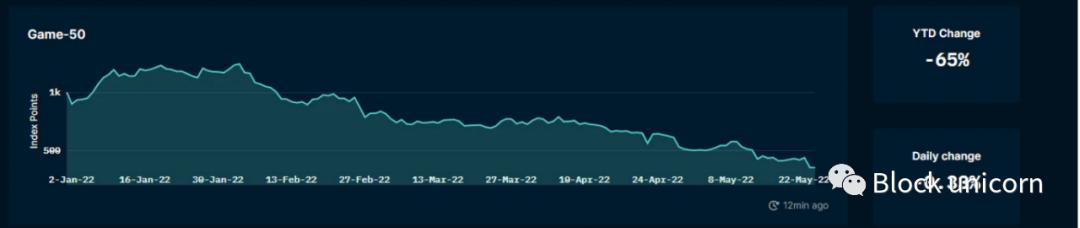
But as an investor who spends a lot of time in games, I think there are aspects of Web3 games that we don't notice. So today I want to take a moment to explain why the trend in the field of Web3 games is unlikely to disappear in the future. This topic first sparked my interest when looking up Nansen's Sector NFT Index. I noticed that the index of 50 games has dropped 65% since the beginning of the year. In comparison, the S&P 500 is down 17%, and Bitcoin is down a whopping 37%. Luckily, we have STEPN to help us make money by walking.
Why no one cares about Web3 games now
What's weird about Web3 games is that we've historically created some interesting financial instruments. In general, no one cares that land sells for a premium in the universe. Because historically, the average person would take a walk in a real park on the weekend instead of hanging out in their digital avatar. That's changing, though, with people partying in "virtual nightclubs" in the Metaverse, according to the Financial Times.
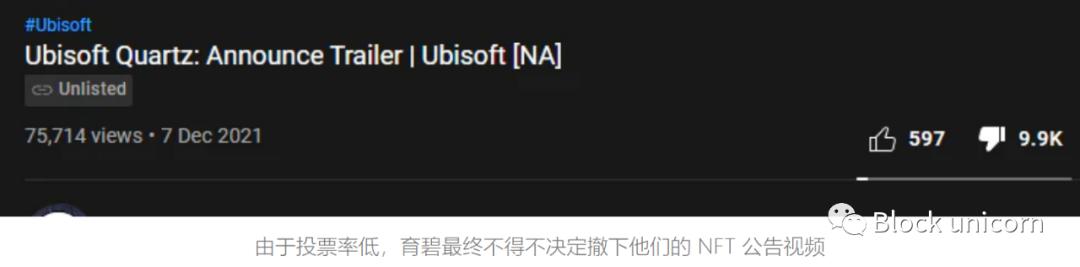
If we inflate prices in order to use digital devices to visit local facilities such as parks, and in some reasonable Reason calls it the future, and people are naturally going to get mad. This is what happens when studios like Ubisoft try to hardcode NFTs into the game experience. It's just that commercialization is in the digital realm, not the actual physical space. Historically, business was a matter of skill, talent and dedication; today, the hands are dirty and sticky. The pay-to-win model removes any semblance of equality and fairness from the game and it annoys people.
Don't worry. I'm not going to trick you into reading a long article about why the current state of Web3 games sucks. I think the reason Web3 games are so annoying is that we always look at them from a traditional perspective. These new types of games will be important because they focus on (1) ownership and (2) asset liquidity. We're not trying to reinvent the wheel, their goal is to create the hoverboard (knowing that you can't do it better than your predecessors, but you still have to invent the future).
Why you should care

This Here are the slides from a talk Anciet001 gave at a gaming conference last month
I learned from @Ancient001's talk about the importance of ownership in games. This basically boils down to (a) three factors - (b) verified scarcity, (c) asset provenance and the ability for users to actually "own" the asset. Today, there's nothing stopping a game studio from doing this, and when a game studio releases a limited-edition asset, there's almost no way to verify its authenticity. In the ticketing world, it has become common for issuers to buy concert tickets and sell them at a markup on the secondary market.
When you buy an NFT today, it is very simple to verify its historical ownership from Ethereum's ledger. Try it out on Steam's marketplace right now, you can see a record of who bought the item in the past, but it's almost impossible to verify. Why is this important? Because of the high frequency of fraud and money laundering of in-game assets, this is a problem that Valve recently acknowledged.
Ownership
Finally, there is the concept of ownership, a digital asset running on an immutable ledger This is interesting because user assets cannot be frozen without due process. One could argue that USDC can now "blacklist" an address, but this would only happen in the event of a major event such as a hack or extortion. Allowing users to own digital assets without the risk of asset failure allows groups that lack the financial system to participate in ways that were not possible before, the game market has existed for more than 20 years, but transferring assets to will not be blocked by PayPal or banks The account functionality is just emerging.
Axie Infinity is controversial because we never had a mechanism for the most sophisticated financial players to interact with retail players. We have Robinhood and Citadel, but those interactions are within a single region of the world and are focused on assets with regulatory and historical precedent. How do you assess which NFTs in the game will skyrocket in price?
AXS assets skyrocket because it connects to an underpaid labor market, mostly by interacting with Organized by guilds of sophisticated traders and hedge funds. Web3 gaming is simultaneously a pathway to leisure and financial engineering. The motivator is no longer just community, fun or recreation. Life-changing money or livelihoods are now in the mix, which will change the dynamics of past games and how users interact with them.
Capital markets play sculptor
According to a report by the Blockchain Gaming Alliance, In 2021, about $4 billion will be invested in web3 game infrastructure. In the first quarter of 2022, approximately $2.5 billion entered the industry. What we don’t realize when we talk about this industry is that founders are motivated to transition from the old ad-driven model to a token-based model because they have access to ready capital and higher valuations.
For scale, in 2021, $30 billion is spent by US gamers on hardware, streaming donations, subscriptions and game purchases. According to a report by Ernst & Young (EY), India spent about $1.5 billion on online games last year. So we're in an environment where there's almost as much investment flowing into the ecosystem every quarter as there's revenue coming in every month. In the long run, this is unhealthy.
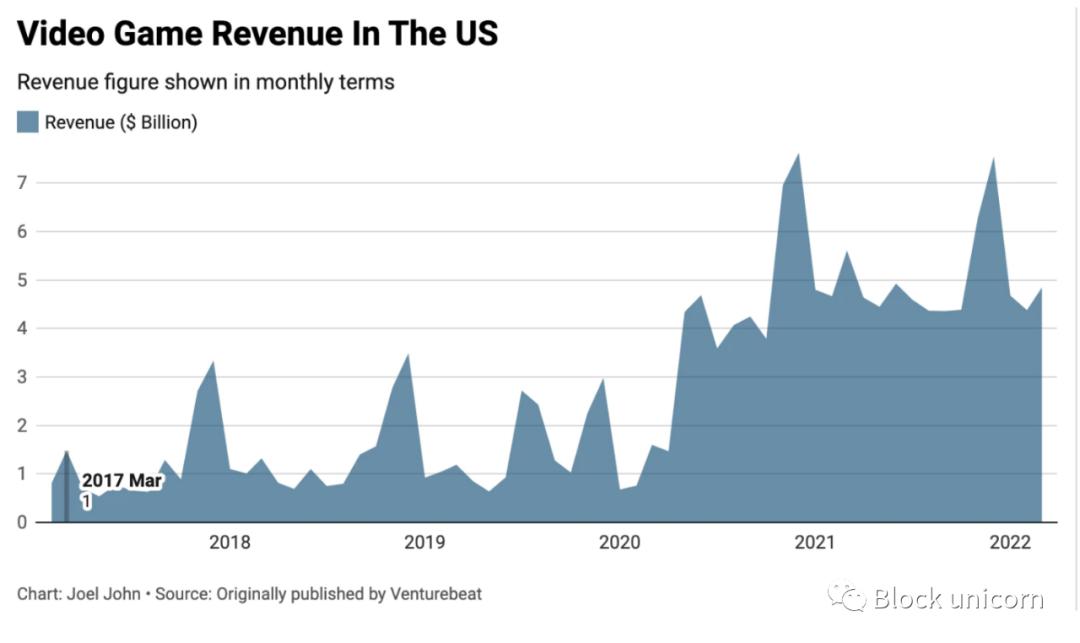
It depends on the resources you use - the largest web3 games today have about 1 million users. According to Richard Chen’s “Dune” query, there are 4 million DeFi users in total. As a benchmark for NFT adoption - OpenSea had around 500,000 monthly active traders at its peak. In other words, we are still exploring how the user base of blockchain-based applications can reach the 100 million mark.
The biggest game studios have an advantage in that they are likely to be the first retail apps with tens of millions of users. By default, free to play games require a large number of users to run consistently. If these studios can convert a small portion of their user base to web3-native users, they can command extremely high valuations. They are incentivized to focus on where the money is and what can help them deliver the most value to shareholders.
Games are platforms
Another reason Web3 games are likely to continue is that they Completely different economic factors were unleashed. Traders/market makers, speculators, and guilds can help create a self-sustaining ecosystem that is beneficial for both publishers and gamers. An ideal game would evolve into a platform rather than a one-off item. Independent third-party users will be able to create services, develop experiences, and sell them. Do you think this is too far-fetched? Take a look at their Twitter interactions (below).
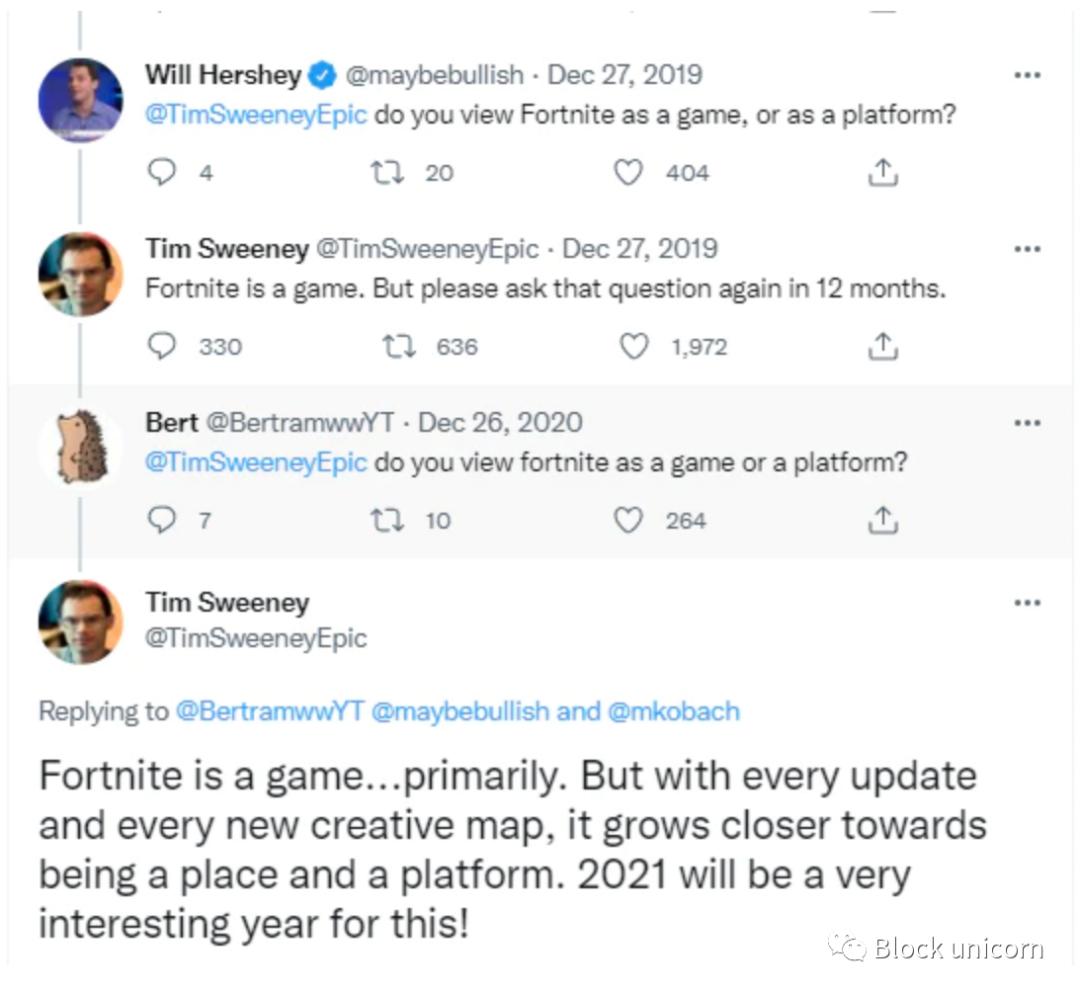
Tim Sweeney is the CEO of Epic Games, the company behind Fortnite. As I opened the game recently, I discovered that in an NFT-driven world, we might have independent artists selling clothing items, game maps, and modifications to the game itself, and the path to that already exists. Games like GTA V, Battlefield 2042, and Age of Empires have custom servers or mod (plugin) based game addons. Creators are not currently paid for these game variations. Ideally, web3 based games should reward both studios (like Epic) and their mod creators.
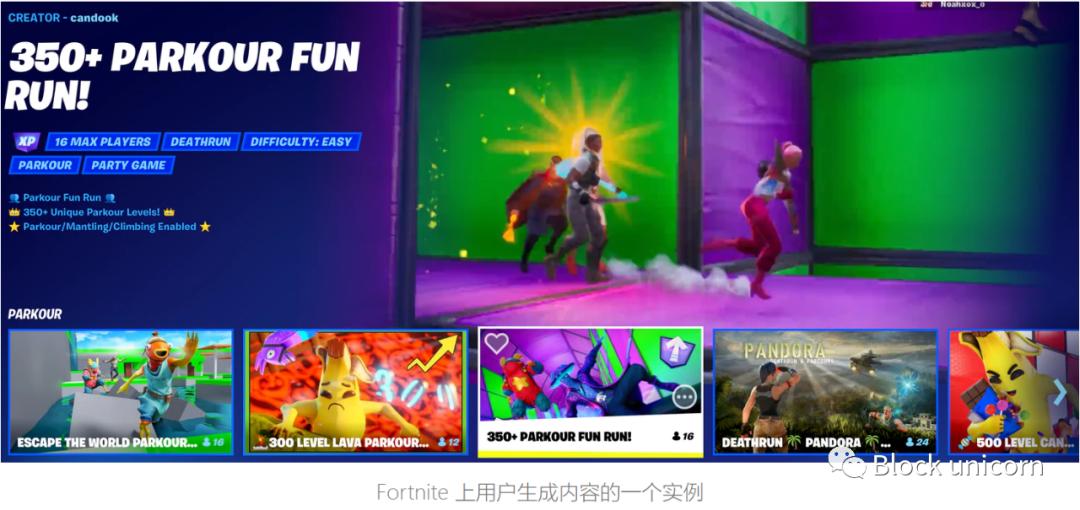
Why do games become platforms? First, it reduces the cost for game companies to keep users engaged. Gamers have a vested interest in finding new experiences developed by other players. Second, the release of large games will mean that independent, creative developers can generate income without worrying about not finding a user base. Third, it paves the way for generating more revenue through in-game subscriptions and purchases. Gaming becoming a platform means we'll see more user-generated content emerge, which in turn keeps players (and viewers) engaged longer.
Financial Primitives for the Emerging Web
Web3 native games sit on the financial infrastructure and gaming experience of the intersection. If the indie community is able to use tools like dao and multi-sigs, or collect in-game assets as payment, this will open up new channels for users that were previously unavailable. These communities also use unconventional incentives. For example, instead of paying with cash, users reward each other with in-game assets.
Essentially, DAOs related to Web3 games can abstract the "dry" side of DAOs and demonstrate the benefits of alternative coordination tools to the general retail audience importance. Because Defi has reshaped the financial market. While the essence of Web3 gaming is for them to play games, it is both elegant and risky to simultaneously allow an 8-year-old to trade with a veteran trader from Wall Street.
The idea of using the same NFT for multiple games is somewhat flawed, and I don't believe interoperability of game assets will happen as quickly as we would like. Studios today have no incentive to create in-game reputation or assets. A closed ecosystem means that users who enter the game stay in the game for a long time, because they can no longer move all their assets elsewhere.
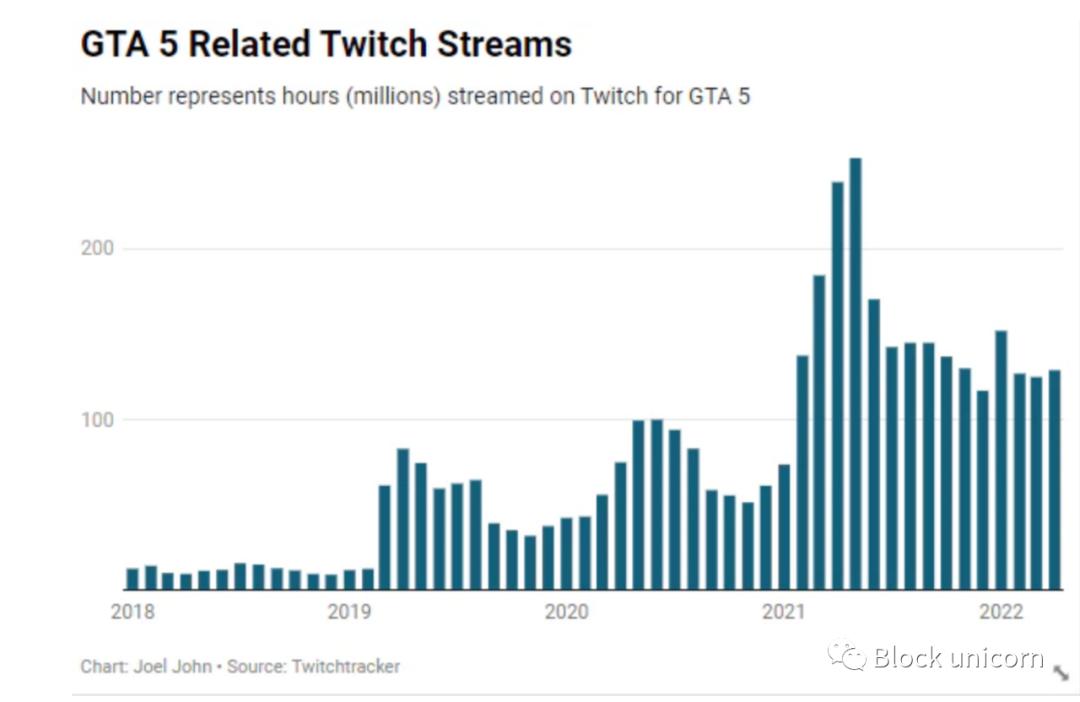
This is why GTA V hasn't seen a major update in a long time . Developers understand that users spending hundreds of hours won't jump ship elsewhere, even if they only release incremental upgrades, and the graph above is a testament to this trend. Even though Rockstar Games isn't announcing a new game, viewers continue to flock to gaming-related streamers.
So how will the transformation happen? In my opinion, interoperability is not the way forward, mobility is. Remember when I said that the game had an incentive to introduce financialization to attract traders? Games can benefit by charging a certain percentage of fees for trading pairs, just like OpenSea's NFT today. If game assets use a standard such as Erc 1155, then it is only a matter of time before a market for these assets emerges.
Players don't try to transfer assets - they trade. Price discovery will lag as the data on the rarity and usefulness of these assets is initially unclear. For example, when a game comes with new characters and weapons, players need to go through the learning curve to evaluate weapon costs and attributes, and try to use different character-weapon combinations. In a market model, these types of weapons would become very rare and expensive, rather than being arbitrarily distributed by the game developer, considering that the efficient market hypothesis would apply to the digital economy in the game.
Community and Identity Trail
So far we have The reasons for the existence of Web3 games are analyzed. We believe there's another reason, and that's the people, and I've been saying that models that make a lot of money are popular because they get paid a lot of money. But the idea of using money alone as a motivation can be flawed. Digital-first forms of the workforce, such as those enabled by the P2E (earn-to-play) model, also bring a sense of community, dignity, and choices that traditional jobs do not allow today.
The idea that making money from games will solve all the problems in today's labor market is utopian and I don't support it. But it’s fair to say that digital-first forms of labor, such as in-game “scraping,” pave the way for people to master key skills like communication, collaboration, and coordination. Traditional forms of education likely fail to equip students with these skills in an increasingly digital workforce.
Guilds like IndiGG allow players to find people who share their tastes and connect them with potential opportunities to generate revenue. This is reflected in their collaboration with Skyweaver. The game itself is free, but there is a $100,000 bonus for players who pass through the guild. To the average knowledge worker reading this, this may not seem like much, but if you come from a small town with no immediate economic opportunities around, it probably won't change your life.
It is often difficult for players to find suitable guilds, and even when it comes to games, economic exploitation of labor is possible. It takes 7 to 12 days for a person to join a guild. According to research by esteemed company founders Utsav Singla and Srijan Jain, only 1 in every 1000 applicants gets admitted. The learning curve for new users is very difficult, including how to set up the wallet, how to participate in the dispute, screening suitable games, and finally how to join the guild. Respct.co has built a platform that allows players to be supported throughout their lifecycle, from discovering a game (like you do on Steam) to paying a fee to a bank account. They currently have around 6,500 academics on their shortlist and are accepting early applications, so you can apply too.
What we don't realize is that digital workplaces like gaming are the richest source of data when hiring employees, e.g. the average eSports player retires at about 26 years old. But they've invested a lot of time in the game's ecosystem over the years and left a solid trail. The time they play, their partners, and the levels they unlock in the game can all be verified and stored digitally. This can be very useful when recruiting, as long as privacy concerns are handled properly.
Web3-native games will eventually lead to a rich on-chain identity layer, and unlike LinkedIn, many claims are immediately verifiable. In the future, employers will use these data sets as a reference for college diplomas. If You're Hiring a Community Manager - What's More Valuable? An administrator with a bachelor's degree and thousands of hours of game community coordination experience, I think I know what to pick.
Looking at Web3 games only through the pinhole lens of graphics and user journeys, there may be limits to what you can see. Instead, one has to look at the macroeconomic factors that drive people to watch these games. Shrinking labor markets, rising aspirations of young people in emerging countries, and the rise of parallel financial infrastructure will challenge existing in-game currencies. Web3 games attract a lot of money, which will mean that the founders will continue to develop these games. The vast majority of them die slowly, like most VC-backed startups. They'll pave the way in the process, and it'll be another way of looking at the game. They are not just avenues for leisure, but economic ecosystems that can sustain distinct user profiles. This may involve traders, streaming users, researchers, service providers.
In my opinion, Web3 games are a Trojan horse that will bring more users to crypto. They focus on young, tech-savvy users who are receptive to digital asset ownership. The challenge for game companies and developers is how to balance economic activity and entertainment, make a game too complex and users will avoid it. Let it lose ownership and asset liquidity, and users will insist on staying in the traditional 3A game masterpieces. If the relationship between the two is balanced, it will bring 100 million users to Web3 games.
Welcome to join the official BlockBeats community:
Telegram Subscription Group: https://t.me/theblockbeats
Telegram Discussion Group: https://t.me/BlockBeats_App
Official Twitter Account: https://twitter.com/BlockBeatsAsia

 Related Articles