Dialogue with KNN3: Web3 also needs reliable algorithms

Original author: 0x137, Rhythm BlockBeats
After Stepn, we have seen various X2Earn applications. From the perspective of Rhythm BlockBeats, the popularity of Stepn fired the first shot of the rise of Web3 applications. In the 10 years of development, we have seen the continuous popularization of the blockchain along with technological innovation: the rise of Ethereum in 2016-17, the blockchain got rid of the narrative of "finding the next bitcoin", various forms of IC0 laid the foundation for the "encryption industry"; the rise of DeFi Summer in 2019-20 has found "application scenarios" for the blockchain, and blockchain technology has achieved breakthroughs at the protocol level such as DeFi, NFT, Layer 1, and Layer 2, " The concept of "Web3" was born and began to popularize; with Stepn's exit in 22 years, blockchain technology began to advance by leaps and bounds at the application level, out of the Internet's characteristics of the prosperous development stage of Facebook, Uber and other applications.
In this article, the author of Rhythm BlockBeats interviewed the Web3.0 data analysis protocol KNN3 project team, from project introduction and positioning, development stage and work focus, development team In-depth understanding of financing and other aspects. In the future, Rhythm BlockBeats will continue to pay attention to the application development in the Web3 field, communicate closely with the founding team, and deeply track the new wave of Web3 development.
Project Introduction
KNN3 Network is an algorithm-based dynamic user relationship graph that aims to provide applications with permission-free and composable relational data The solution becomes the core infrastructure of Web3.0 and the general components of its applications within the ecosystem.

In the current data-rich Web3.0 world, one of the things that developers do for applications is to deal with data on various public chains, which is a very cumbersome job. A small imaginative team may have good product managers and interaction designers, but from the perspective of product architecture, if the team does not have the ability to deeply analyze the data on the chain, it will be difficult to build innovative products applied.
The role of KNN3 in the Web3.0 ecology is to form a complementary relationship with information and data infrastructure such as The Graph and RSS3, and to provide developers with Bring a simpler and purer development process. For example, if a team wants to make a social application, there is no need to repeat the data processing process on the chain, but can directly obtain the Profile of Web3.0 users on RSS3 or CyberConnects, and obtain the relationship between users on KNN3 Graph, and then focus on the development and creation of your own applications on this basis.
The original intention of the team
In the dialogue with Thomas Yu, the founder of KNN3, Rhythm learned that the current mature positioning and concept of KNN3 are also gradually explored by the team in the process of project development of. Thomas told us that KNN3 was originally born from a very simple idea: "We found that there are various data solutions in the entire Web3.0 ecosystem, but none of them can effectively describe the relationship between users."
As mentioned just now, if the current Web3.0 application wants to do further research and mining on the relationship between users, it must do it from the bottom Let’s sort out the data on the chain yourself. Therefore, at the beginning, KNN3 just wanted to connect all Web3.0 users and turn it into a large graph, just like Google used hyperlinks to connect web pages back then.
The name KNN3 comes from a classic supervised learning algorithm k-NN (k-Nearest Neighbors Algorithm), which is the most popular in the Web2.0 world. eBay started to use it on a large scale.
The philosophy of k-NN is very simple. From the perspective of graph science, it uses the similarity of people's past behaviors to form a relationship, and infers people's future behaviors based on this. reflection of things. For example, if you and I have bought the same item for several days in a row, eBay will recommend this item to me when you buy a new item in the future.
Under the k-NN algorithm, the classification of users by the platform has changed from the past label-based static classification to interactive dynamic classification. Each user's behavior is reconstructing the structure of the entire relationship network and enriching the existing relationship dimensions. After the KNN3 team built their own Web3.0 relationship graph, they also had a very pleasant discovery, which laid the foundation for the team to build the core concept of KNN3.
Because the types of data in the Web3.0 world are very open and rich, the type of relationship established is not just an ordinary search relationship, it is also It can be related to assets, past behavior, and hobbies, all of which can be used as the basis for building direct and indirect relationships.
This gave Thomas a lot of inspiration: the role of KNN3 is not only to create a relationship, but to give a real story scene behind the relationship. This concept has become the philosophy that KNN3 has always defined relationships, that is, relationships are subjective, and its value depends on how you define it. As Thomas said: "When you define a mature relationship and get widespread recognition, you actually create value."
Member background
The KNN3 team is mainly composed of three types of members. One is OG in the currency circle. Most of them entered the encryption field in 2015, so they have experienced product development in exchanges, wallets, smart contracts, etc., and have a deep understanding of the encryption industry. One category is excellent Web2.0 algorithm engineers and architects. They have rich experience in large factories and are the main force of research and development in the KNN3 technical team. There is also a category of new members that have been welcomed in the past three months. Many of them are from major Internet companies and have rich experience in algorithms. They are the fresh blood of the team.
Currently, there are 11 full-time members of the KNN3 team, and of course there are many "guerrillas" who contribute to the project in their spare time. When a relatively large topic is developed or a major upgrade is made, everyone will gather together to provide KNN3 with expert advice and technical support in their respective fields.
Development progress
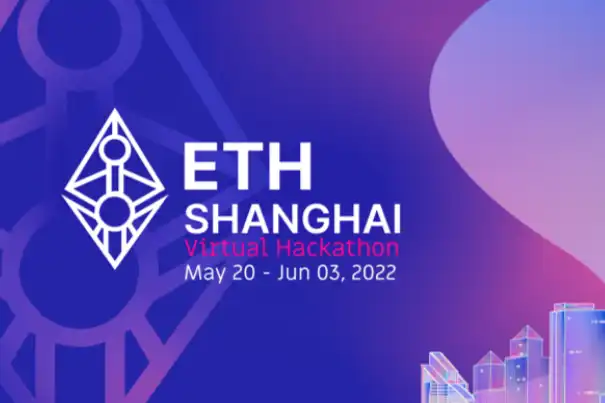
At present, the KNN3 team has officially launched its relationship graph for Web3.0 application integration. In addition, the team will also launch an analysis module plug-in in Q3 this year, hoping to provide more empowerment for the existing data analysis platform. In the upcoming Ethereum Shanghai Hackathon, the team will also focus on providing technical support for teams starting businesses in Web3.0.
Graph QL - Live
KNN3 officially launched its data analysis graph Graph QL in April this year, and Web3.0 application developers can use its API to real-time And seamlessly retrieve the network social relationship of any Web3.0 user. At present, the delay between Graph QL and the Ethereum mainnet is stable at two blocks, which is extremely time-sensitive.

In addition, Graph QL contains multiple types of behavioral connectors and is supported by users' real-time on-chain activities, so it can interpret the deeper relationship between Web3.0 users, not only From a human perspective, it can also be a specific NFT series, etc. For example, analyzing the holders around an NFT series, and other communities associated with the holding.
With these deeper interpretations, KNN3 can bring more imagination to developers and help them create brand new interactive applications. For example, storing social relationships in mutable, stateful NFT applications, etc.
KNN3 Analysis Module MVP - Expected Q3
KNN3 will also provide a pluggable graph analysis component for the analysis platform, which allows data analysts to seamlessly combine KNN3 relationships data and other SQL data on which to build algorithms, share insights, and more.

Currently, there are many data analysis stock platforms on the market, such as DeFi Llma, Nansen, and Dune Analytics. Despite this, the existing platforms have relatively little data depiction at the relational level, and most of the platforms are already packaged graphs that provide given relational data.
So KNN3 will introduce a relational analysis module and integrate it into these existing analysis platforms, so that users of these platforms can not only analyze the existing Smart contracts and data indicators can be analyzed, and the results of these analyzes can be immediately used in the same Quarry to conduct in-depth relationship mining through the relationship graph.
Actually, in Thomas’ view, both Graph QL and the upcoming analysis module are KNN3’s trump card with Web3.0 characteristics. During the communication, he shared a very accurate judgment with Rhythm: "We will not build a SaaS by ourselves, because it means that your future charging model will inevitably return to the traditional Web2.0 model."
Web3.0 is a modular world. As far as the data market is concerned, the recommended algorithm is one end, the source of data is one end, and the execution of the result is the other end. Every component in the industry occurs on a completely different platform, which is completely different from the traditional Internet world, so Old business models can easily run into a wall here too.
It is precisely because of this judgment that the upcoming Ethereum Shanghai Hackathon has become a focus of KNN3's current work.
Ethereum Shanghai Hackathon
In addition to the development of Graph QL and analysis modules, the KNN3 team has planted seeds in the Web3.0 developer community in Asia through this hackathon. The application team will build the future Web3.0 ecology together.

Careful users will find that many Web3.0 projects with Asian backgrounds have strong ecological complementarities and partnerships, such as KNN3, RSS3, Mask Network, ShowMe and other teams are all mutual between strategic partners. Therefore, through the construction of more applications, these ecosystems can also be connected more tightly, as Thomas said: "In an application scenario, you only have to deliver multiple elements to users at the same time and without perception , to have the best results.”

Although the theme of this hackathon is ETH Shanghai, it is aimed at web3 developers around the world. The task of the KNN3 team is to build up the developer base in Asia and make the existing Web3. 0 The number of developers can go to a higher level.
Because the application of the hackathon stage is often in the early stage, many developers from the traditional Internet have not yet adapted to the thinking of Web3.0 product construction. The positioning has not yet found a clear direction. KNN3, as a team with a strong technical background, will provide these application integration solutions, data, and algorithm engineers with direct assistance and cooperation in all aspects of the application.
In addition, through this Shanghai hackathon, the team also hopes to guide more developers to build products based on KNN3. At present, many teams have actively contacted the KNN3 team and brought some very creative ideas to the team, which surprised Thomas: "In the past, we didn't even think that the relationship graph can endow so many interesting applications. ".
Welcome to join the official BlockBeats community:
Telegram Subscription Group: https://t.me/theblockbeats
Telegram Discussion Group: https://t.me/BlockBeats_App
Official Twitter Account: https://twitter.com/BlockBeatsAsia
 Related Articles