DAO, Dunbar Number and Network Effects and What to Pay Attention to in Governance
Original title: "DAOrayaki|DAO, Dunbar Number, Network Effects, and What Governance Should Pay Attention to"
Original author: Raphael Spannocchi
Original compilation: Demo@DAOrayaki.org, DAOrayaki
DAO is an acronym for Decentralized Autonomous Organizations, a novel way of organizing human businesses that provides more freedom to members, reduces organizational barriers, and allows contributors The flow comes and goes, with maximum focus on community and value creation.
Most DAOs start small and attract members and contributors as they tackle challenges and solve problems. As this article will explain, the rate of growth is governed by network effects.
Network effects start out weak but become a powerful force for growth and decline as new users join or leave simply because of other people they know is doing the same thing.

We will describe in detail what network effects are and hint about them How it applies to DAOs, and then focus on the practical impact. While more traditional organizations like corporations or NGOs can also be considered networks, DAOs allow members to join or leave with little to no friction. A deep understanding of growth and decline dynamics is invaluable to founders, pod leaders, and contributors. We hope this article has been of some help.
Key Points:
1 Network Effects Control DAO Growth and Decline
2 Governance should always be mindful of network saturation and culture
3 Dunbar's number means size matters and more Large groups split into smaller groups
4 As DAOs scale, only a common purpose or initiative can maintain team cohesion
Introduction to network effects
Theodore N. Someone who mentioned the term "network effect". He used it to argue that Bell had a natural monopoly and that consumers would ultimately benefit from the consolidation of telephone switches in the company's hands. Fast forward to the 1980s, and Ethernet inventor Robert Metcalfe captured this idea, describing how the value of a communications network is proportional to the square of the number of its users.
A network of two users has only one possible connection, while a network of three users has three, one of four already has six, and so on . The utility of the number of connections and therefore the size of the network is proportional to the square of the number of nodes (nodes squared). In this article, we will use node and user interchangeably, although in reality a node can represent multiple users, or a single user can operate multiple nodes.
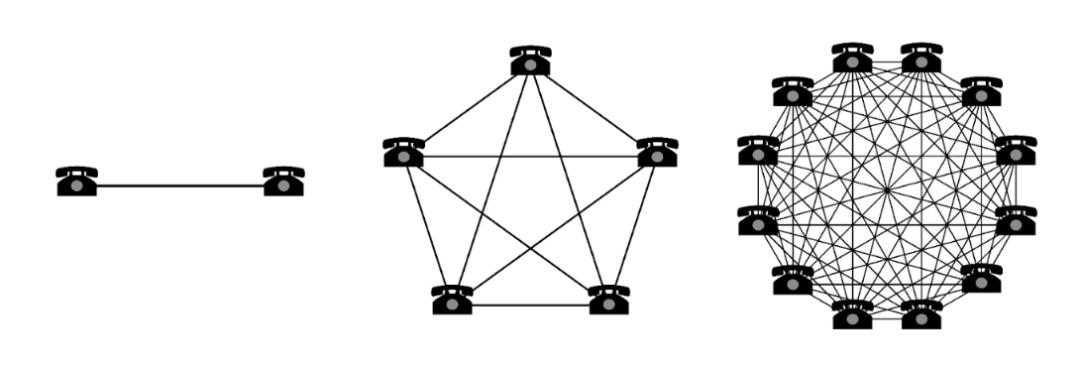
Network effect diagram, source: applico.inc
Social networks like Facebook are the best example of network effects. With each new user, the likelihood of finding known friends on the network increases, as does the cost of switching to another network with fewer users. If the competing network is "sticky", the market will become "winner-take-all", which means:
01 Users get more utility from network effects than from conversions
02 It is costly for users to be active on more platforms
03 High user switching costs
Users can easily remain active on multiple DAOs, which cripples the network effect. In a similar type of DAO (e.g., a DeFi DAO like Sushi), switching is not expensive unless the user already has strong social relationships with members of one DAO who are not members of the other.
Crypto's focus on interoperability has the effect of deliberately reducing switching costs, so the network is less sticky and more fungible.
Demand side economies of scale and critical mass
Demand side economies of scale and critical mass scale Economics generally describe how the price of producing a good falls as the scale of production increases. It's much cheaper to produce one laptop out of a million than it is to have a gifted hardware engineer handcraft a one-off. When costs fall, more people can afford a product, increasing demand, which is known as supply-side economies of scale.
On the other hand, network effects are economies of scale on the demand side. As more users flood a network, its value increases, and more users are willing to pay a higher price.
Harvard Business School Professor Bharat Anand said: "In other words, as the number of corporate buyers or sellers increases, the willingness to pay of buyers increases. ) will also increase.”
The point at which the utility of a newly entered user equals the price paid is called critical mass. Strong network effects can be observed from this point, and the network can often grow without advertising, just by word of mouth and momentum. “Once you gain a significant market share, you can often sit back and let network effects take over,” Anand said. “Effectively, your existing buyers and sellers are your selling force for attracting more buyers. You tend to Very little has to be done.”
Facebook CEO Mark Zuckerberg had an intuitive sense of these dynamics when he was starting out grasp. He narrowed down the initial market size, allowing only users with Harvard email addresses to sign up, giving the product a uniquely elitist appeal. After Harvard's market was saturated, he opened the product to Yale and Stanford students. The product was and still is free to users, thus reaching critical mass faster than a paid product.
Galaxy Digital CEO Mike Novogratz draws a similar comparison: "One of the strengths of the Ethereum narrative is valuing the Ethereum network as much as we do Like Facebook, the more network effects you get...so you look at DeFi (decentralized finance) and stablecoins...that alone brings more awareness and network effects to Ethereum".
An important lesson for DAO founders is to reduce the addressable market in the beginning and focus on a specific niche ( niche) in order to achieve critical mass. If the audience is too small, growth is limited from the start, and if the audience is too large, gaining traction becomes difficult and expensive. The ideal audience for a DAO is large enough that it is reasonable to assume that there are enough contributors and enough problems can be found to solve. But not so big that even an active 100-member DAO is easily overlooked.
Direct and indirect network effects
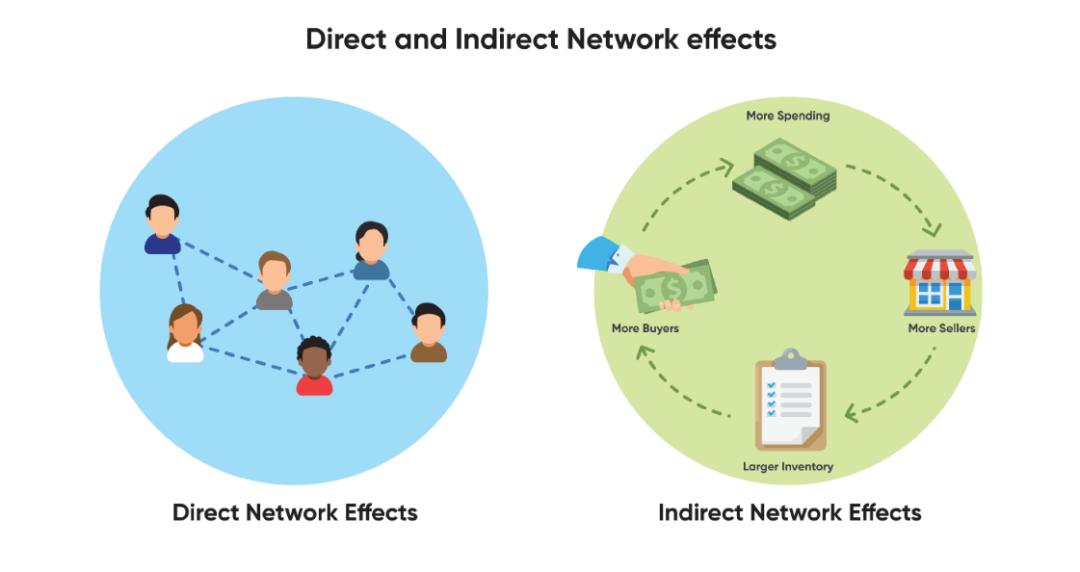
Social networks and instant messengers are direct network effects ( prime example of direct network effects). Every new user adds value to the network. However, platforms like eBay are different. Every new seller adds no value to the seller, if anything, and the increased competition increases price pressure. But additional sellers add value to buyers, who now have a wider variety of items to choose from or see lower prices. Attracts more buyers who add value to sellers, which in turn attracts more sellers. These are indirect network effects.
Many DAOs that sell services face indirect network effects. It doesn't make sense for new members to increase capacity, but without acceptors. For DAO clients, increased capacity means more services or faster turnaround times, which may result in the need for more new members. In a way, DAOs end up being scalable organizations because there is no formal hiring or firing process involved. Contributors flock to DAOs, where they can provide meaningful input, and leave when bored. They often go through some sort of initiation process and perform small tasks to demonstrate their abilities. Afterwards, they take on larger and larger tasks and gain increasing rights and responsibilities from other members, and are codified into the contracts that govern the inner workings of the DAO.
Negative network effects - saturation, notification overload and anger
< /p>
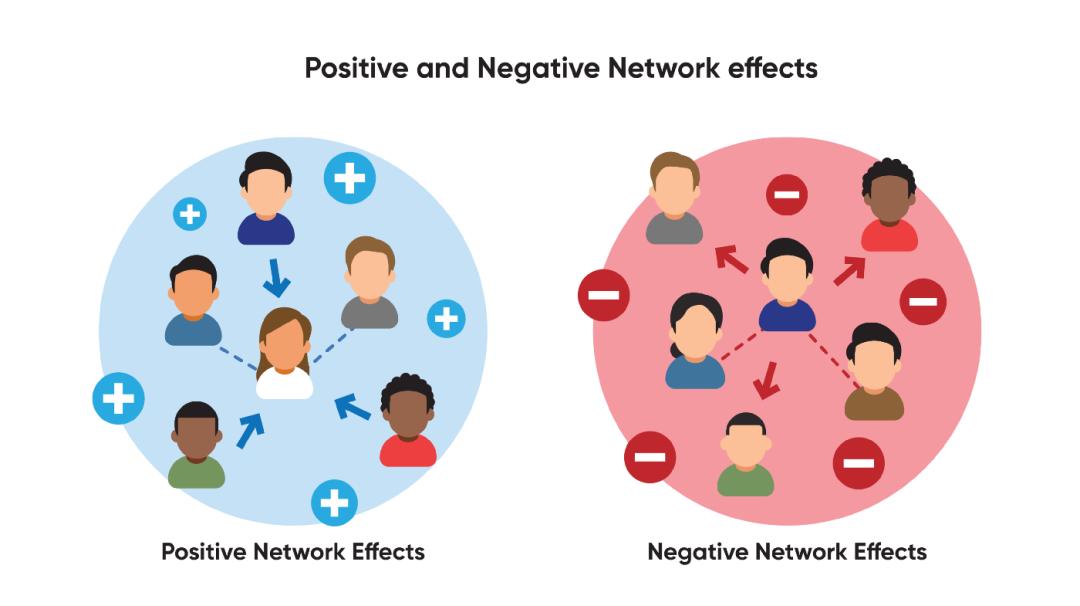
So far we have only discussed positive network effects, virtuous growth cycles that help the network attract more and more users. But where there is light, there must be shadow.
Network effects also work when users leave. Metcalfe's law states that the value of a network is proportional to the square of the number of nodes. A DAO of 100 users would have a scale value of 10,000. If one user leaves, the percentage value drops to only 9,801, a 2% loss for just one user leaving. As the network loses value and other users have no reason to stay, a cascade of losses could begin.
We've seen this start to happen at Facebook and even in DAOs like Friends With Benefits. The toxic debate surrounding Brantly.eth's continued presence as the primary representative of ENS also threatens the negative network effects of the ENS-DAO.
The most common cause of negative network effects is saturation, the point at which the network capacity is exceeded. In the example of a telephone exchange, when the exchange can handle as many users as possible, a call is attempted and the next user who answers the call receives a busy tone signal. A poor user experience leads to frustrated users and slower growth, or worse, users leave.
In a peer-to-peer system, capacity usually scales with users. BitTorrent is a typical example. The more people sharing files, the more bandwidth the system has. But this is not the case with cryptocurrencies, transactions must be verified by a majority of miners or validators in the network. Ethereum users are well aware of network saturation, as most see transaction fees spike during NFT launches or coveted airdrops. Other cryptocurrencies picked up the slack and started the Layer 1 movement, most notably Solana and Terra. Networks like Arbitrum and Optimism build faster, cheaper layers on top of Ethereum, aptly called Layer 2 networks.
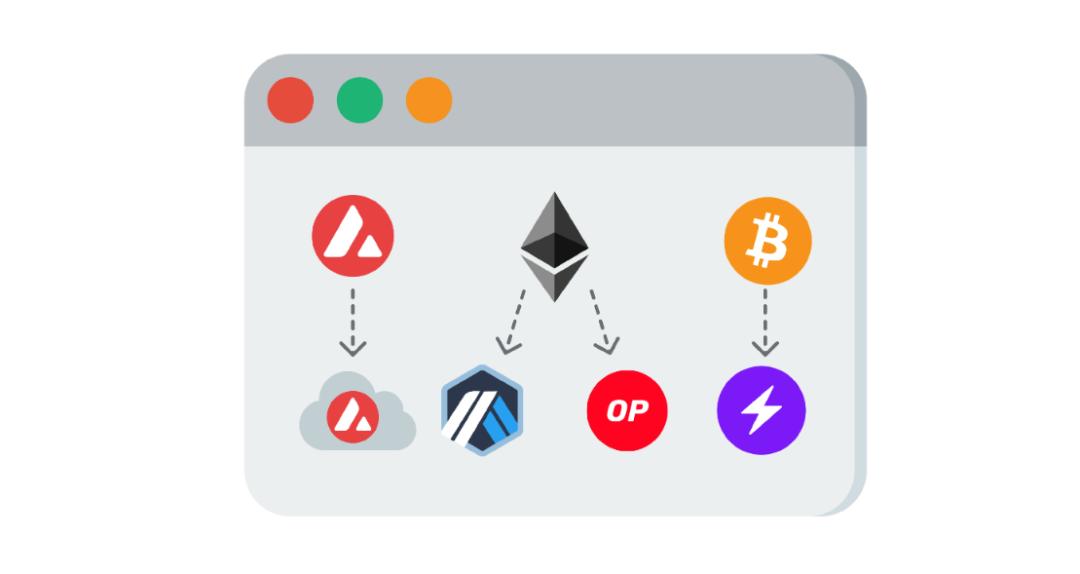
Bitcoin and Ethereum scale through second-layer blockchains. Avalanche through subnets.
With the DAO, there will be saturation in the Discord chat, and when too many people flood the timeline, it can be difficult to keep track of the conversation. Persistent anger and a toxic communication culture can also cause more sensitive users to leave. This changes the makeup of the user base. The ratio of less aggressive users leaving moderate to toxic communicators got worse and eventually destroyed the DAO. The trickle of user departures will lead to churn sooner or later.
Dunbar Number and the Power of Myth
Growth is wonderful, bragging about five-figure Discord memberships is fun, but what are so many people actually doing in The DAO. Chat rooms are flooded with messages and it's impossible to catch up and have a decent conversation. Determining what work to do, what tasks to have, can become so difficult that new members quit first, become passive, and leave after a while.
DAO governance needs to know how to deploy new members so that growth translates into traction and new members become valuable contributors. Two important points to note are the size of the group and clarity of purpose. As it turns out, Robert Dunbar does a good job of establishing the maximum size of a group that can still easily maintain a sense of belonging and cohesion.
Dunbar is a British anthropologist who studies the size of primate groups. He found that the average human being is unable to maintain more than 150 meaningful relationships, and that gossip is the primary mechanism of group cohesion.
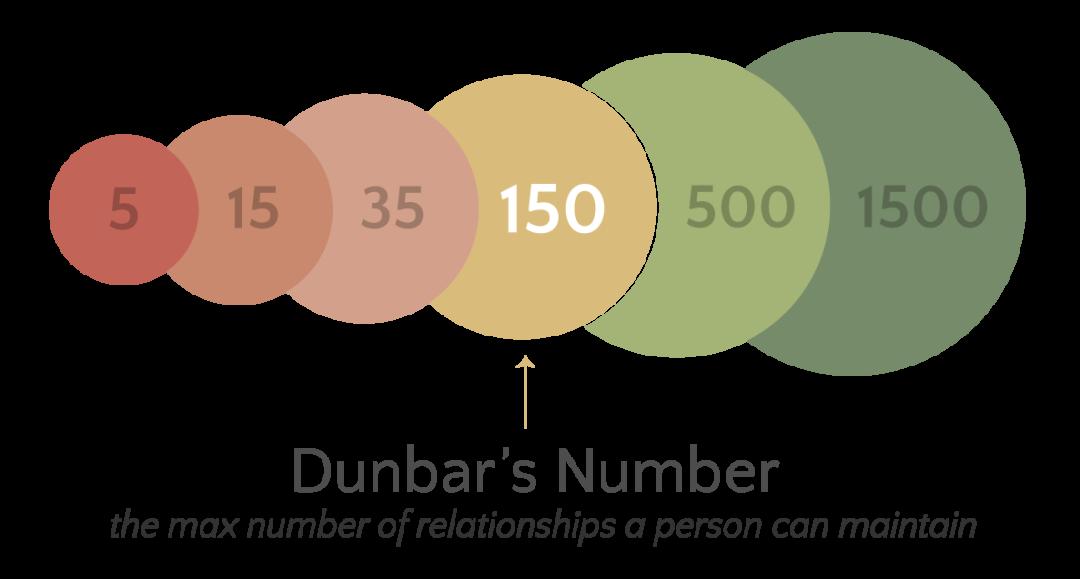
For the explanation of Dunbar number, source: Wikimedia
Dunbar number is an important breakthrough point of DAO. As the number of members increases, the sense of cohesion and "in the same boat" disappears and splinter groups form. These fragmented groups often define themselves as different and better than other subgroups of the same organization, leading to infighting, deteriorating communication, lost productivity, and dissatisfaction.
One way to maintain common purpose and group cohesion in larger groups is by defining a strong sense of shared identity, with a clear and reaffirmed purpose, Even a collective myth. The Christian and Catholic Church could briefly unite a fragmented medieval Europe in the Crusades to fight the "Heretics".

Peter the Hermit preaches the First Crusade. Source: public domain
In the mythology of enlightened modern societies, storytelling is often used to define a common goal and bring together members of an organization of more than 150 members Unite. It is recommended that DAO governance keep an eye on the pulse of group dynamics and split large organizations into Pods and SubDAOs to keep members engaged.
Shared values and purpose are difficult to reaffirm frequently enough to maintain a sense of belonging. DAO members who are committed to community engagement often find them repeating the same message and disgusting, when in fact the audience changes each time. Governance must reiterate the need to maintain the spirit of the DAO and support community engagement.
The actual impact of network effects on DAO governance
In the previous chapters, we have Having briefly introduced the ways in which DAOs can use network effects, we will expand on this in this chapter. Specifically, governance teams need to understand what to successfully steer a decentralized organization.

Cultivate a DAO
When the DAO was launched, governance was focused on growth. When DAOs are not born from successful products, such as NFT launches (BAYC and Loot come to mind), DAOs start with members who want to build something of value and expect to solve a specific problem.
At this point, reaching critical mass and finding a team of members to facilitate the DAO is critical. The coffers rarely allow for generous advertising spending or press budgets. All successful DAOs start with a strong desire to solve a specific problem or form the community they want to build. Reach critical mass earlier in smaller markets because significant market share requires less effort. Another way is to solve a problem that has caused many people's concerns. ConstitutionDAO is a perfect example of the latter. Purchasing a physical copy of the constitution is such an impressive feat that many people join and the DAO can scale rapidly. But these are exceptions.
For a more common example, imagine a DAO that brews beer, let's call it beerDAO. Rather than trying to compete with international brands like Anheuser Busch, beerDAO can focus on creating content and selling starter kits for homebrew or crafting world-class local craft beers (if ready-to-drink products are desired). Small marketplaces allow DAOs to reach critical mass of members in less time.
Governance must find out what is happening if members do not continue to recommend new members. If answers aren't available in conversations with members, thoughtful experimentation can at least make DAOs more interesting. Unexpected breakthroughs are also more likely to occur if founders iterate.
Governance needs to watch out for signs of network effects:
1 Are existing members consistently bringing new member?
2 Are members talking about being part of the DAO without being prompted?
3 Is there an active ongoing conversation in the forum? What was the tone of the conversation?
4 Are friendships and connections formed?
These dynamics cannot be forced, but are signs of community formation. Governance must find out what is happening if members do not continue to recommend new members. Is the purpose of the DAO unclear, or unattractive? Is the task not attractive enough, or the reward not satisfactory enough? Isn't the DAO's culture attractive? If answers aren't available in conversations with members, thoughtful experimentation can at least make DAOs more interesting. Unexpected breakthroughs are also more likely to occur if founders iterate.
Keep DAO members engaged
Governance wants to ensure that new members grow into engaged, Be a valuable contributor and stay. If new members show boredom and dissatisfaction, this will affect the overall dynamics of the DAO and may lead to user departure and negative network effects.
A member who joins but doesn't participate is not necessarily a bad thing. Sometimes new members want to get a seat before they feel confident enough to sign up for a mission or engage in a conversation. Lurkers represent potential waiting for DAO governance to activate. Polls or active participation can reveal specific reasons lurking. If a pattern emerges, it becomes obvious how to activate these members.
Note:
1 The number of active participants is growing, stagnant Or fall?
2 How is the entry experience structured? Is it engaging and easy to understand?
3 Is a closed group formed who is responsible for the task and is not friendly to newcomers?
4 Is the chat full of messages and conversations becoming unintelligible?
Dunbar's number is an important concept to keep in mind when thinking about engagement. Without structure, too much engagement can destroy any chance of meaningful conversation and relationship building, as anyone who has participated in an airdropped Telegram group can attest.
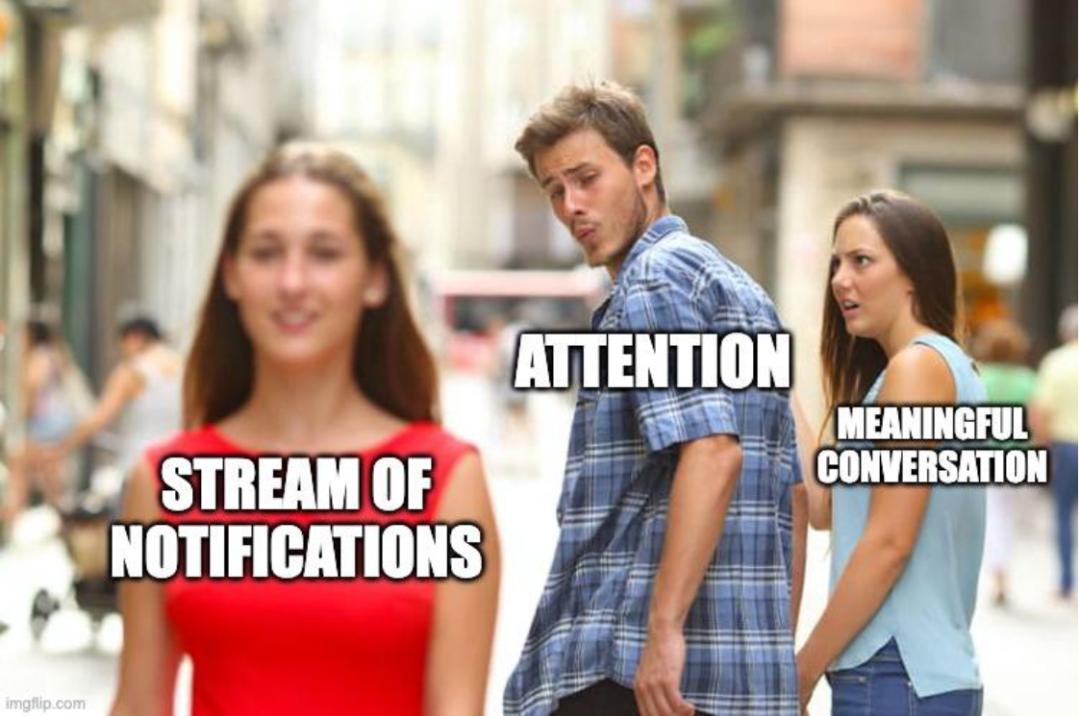
If a DAO is growing and the chat starts flooding with messages, then governance should consider opening specific concerns in Discord channels, or even launch Sub-DAOs that focus on a subset of the broader mission. This is a good question, but one that must be addressed. If the conversation gets swept up by a flood of other users posting, less assertive members will leave, some of whom could become star contributors if they can find room to blossom.
#general, #off-topic and #introduction chats generally cannot be broken down into smaller sub-chats. But a pinned message or a Discord bot can ensure new users quickly find the subgroups most relevant to them. These places can then be managed to remain small and cozy places where meaningful conversations take place and work gets done.
DAO Culture, Mythology and the Art of Storytelling
When the DAO is small and its members Maintaining a common goal is easy when the lines of communication are direct. As more and more members join, interpretations of the organization's purpose begin to diverge, weakening the influence of the entire enterprise.
This is especially true for large, distributed organizations where there is little formal onboarding and requiring members to attend meetings can be difficult. Regular community calls are invaluable, but 12,000 attendee calls mean few questions are answered and only a few opinions are heard.
Without a strong sense of purpose and active community building, DAOs tend to become chaotic at first and then quickly become boring as members just give up Try to get involved.
Since DAOs rarely offer a regular salary, community and friendship are key. Governance must ensure that this can be easily achieved. Buddy systems, newcomer events in small groups, and drop-threshold channels are some of the ways members can get to know each other better and foster meaningful relationships. Ultimately, it will be relationships that bring members together and provide the most value. The cohesion of a DAO determines its staying power in a competitive environment.
Game guilds are a good example where a common goal and a clearly defined mission are shared. A shared passion means new members have common talking points, which helps to bond.
DAO governance should be aware of the following:
1 The common purpose and story of a DAO is often reiterated and mentioned.
2 The mission of the DAO is regularly refined and well understood.
3 There is a common ground and shared values to build upon.
4 A higher purpose and mission can be identified.
It may seem exaggerated to call the DAO's common purpose or common story a place in the mythology of the world organization, but we think it fits the bill. In the long run, tedious everyday stories don't have the necessary appeal and power to motivate members. The power of myths lies precisely in their ambiguity, which helps it fit a wider range of situations than a rigorous essay.
Take Apple as an example: by telling their brand story for decades, users trust Apple to make the best products for successful ideas and to be in the forefront of innovation at the forefront. They are more willing to forgive the occasional mistake, such as a malfunctioning keyboard, because they believe that "Apple is good." That's what organizational myths can do. The vague notion that a certain attitude and aura is associated with an organization is self-fulfilling as long as the core message does not directly contradict the organization's behavior.
Governance should be defined early on:
1 What shared values should the DAO represent.
2 Is there a founding story worth telling.
3 Is there a higher mission worth fighting for.
4 How this identity is maintained through storytelling, and how it is refreshed and fulfilled.
DAO governance should pay attention to whether these values emerge from within the organization and are exploited. Community engagement should relentlessly restate the stories that define the purpose of a DAO, because stories connect human communities in ways that outlast rational goals.
Conclusion
All organizations are networks. DAOs simply allow people to join and leave more quickly. The power of DAOs lies in the extremely low barriers to entry. But so is the barrier to leaving.
Network effects are at the heart of growing and maintaining a vibrant distributed organization that delivers great work. DAO governance needs to ensure they understand these dynamics and set appropriate incentives.
We would like to end this article with the words of American author and entrepreneur Keith Ferrazzi:
"The currency of the real web is not greed, but generosity."
May generosity and a higher sense of purpose inform your decisions.
Original link
Welcome to join the official BlockBeats community:
Telegram Subscription Group: https://t.me/theblockbeats
Telegram Discussion Group: https://t.me/BlockBeats_App
Official Twitter Account: https://twitter.com/BlockBeatsAsia
 Related Articles