Focus on the future of Web3 DAO tools
原文标题:《 Spotlight: The DAO revolution- or the future of web3 DAO Tooling 》
Original author : Henri.M
原文编译:Natalie@DAOrayaki, DAOrayaki
The future of web3 DAO tools
Why DAO is striving to fulfill its mission to be a leading force in Web3, and how DAO tools are a game changer.
John Perry Barlow, a prominent cyber libertarian, once declared that "cyberspace" consisted of transactions, relationships and ideas themselves. With the advent of the DAO and its rapid adoption in the last year, this is an exponential test in an ecosystem that is still learning how to stand on its own two feet.
The DAO opened up a whole new world of possibilities. Decentralized autonomous organizations (and DAC -- decentralized autonomous companies) enable the vast pool of talent flooding the crypto industry to collaborate independently around common goals, away from the barriers of centralization.
Coopahtroopa defines it in colloquial terms: "DaOs are Internet communities with shared caps and shared bank accounts."
Even so, digital communities come in all shapes and sizes, with different needs, goals, and structures. There are social DAOs, collector DAOs, investor DAOs, protocol DaOs, and the list goes on...

DAO needs tools
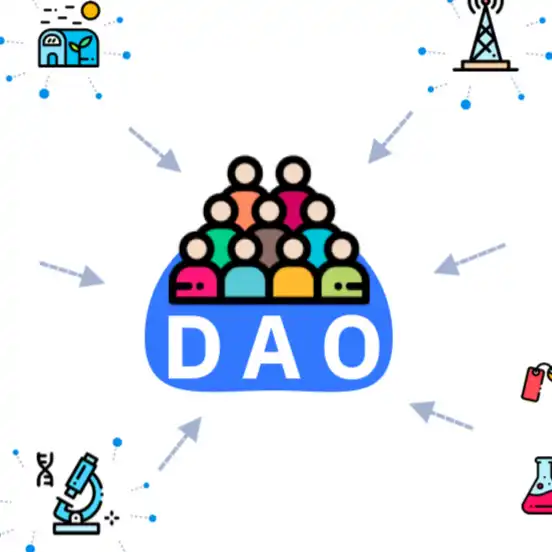
As you can see from the figure above, the CONCEPT of DAO is very broad. If one were to pick two DAOs at random from this list and compare them, one would probably conclude that these are two completely different organizations or "enterprises" with different aspirations, identities and characteristics, and different ways of working.
However, even if we split them into parts, we would find a common underlying structure for all of these organizations, because they all need a social space or messaging tool for members to communicate (namely Discord or Telegram) -- a governance mechanism through which, Members can make collective decisions (such as Snapshot) and a Treasury that funds the operations the DAO votes for.
While this structure laid the foundation for the successful construction and development of DAOs, most of them still faced organizational problems due to a lack of functional tools and network collaboration: clunky, inefficient, and not much communication with the rest of the community.
At the heart of many DAOs are Web3 community projects, and social experimentation requires simple infrastructure setup, which is where platforms like the d0xINFRA framework come in. For example, District0x's framework lowers the barrier to entry for any non-technical person setting up their own DAO. Dora Factory infrastructure, which provides governance tools for DAOs. Next, let's take a closer look at how DAOs can scale more effectively and use tools to build a more powerful infrastructure for the long term.
The challenge of rapid growth
The linear hierarchy that some DAOs credit as key to their rise can easily be the catalyst for their decline. In the early stages, when DAOs were small and run by single-digit member teams, this linear hierarchy seemed like a dream. Everyone can have a voice in governance, and everyone can contribute and be rewarded for their hard work. But as it grew, problems began to emerge.
The unofficial "open door" policies of many DAOs allow these membership numbers to grow rapidly. Daos can grow to hundreds, thousands, or even tens of thousands of members, although some members slowly become inactive (also known as the "DAO free-rider problem" when members start to rely on other members to become active, but still expect a return).
This ultimately affects governance and direction. Without a clear governance structure, DAOs can quickly be swamped with proposals -- and if they are voted in, they need to be implemented. This is where most DAOs fail.
In addition to insufficient progress due to low member activity, gaining too much input can also be detrimental to the DAO's growth. So what is the delicate balance between the two? How does the DAO need to be structured to avoid governance and productivity inefficiencies?

DAO Squads -- "Working Group"
In the ownership of Cryptonetworks, Patrick Rawson argues that for DAO, "the allocation of ownership to similar squads of entities with more professional goals is the key long-term issue to be solved". For squad culture, see DAOrayaki | Squad theory, Culture, Wealth, Products
Rather than taking a bottom-up approach to every decision, DAOs can introduce what Rosen calls "squads" or "workgroups."
Team culture
Whether it's a company, factory, or blockchain community, specialization has been shown time and again to be a better way to divide an organization's "workload" into pieces and break tasks into manageable projects. Continuing with this idea, these teams will be responsible for different key areas that are important to the DAO. Just like departments in a company, there will be "marketing teams", "business Development teams", "QA testing teams", etc.
Just like different departments in a traditional company, DeFi DAO's marketing team can be responsible for developing and executing marketing strategies for the DAO without worrying too much about the Token economics of the project, as this can be responsible for a completely different team within the DAO.
Two important things were achieved through the introduction of the working group:
- Extend the speed of governance - by directly eliminating voting overhead and empowering teams to execute directly without voting on every decision
- Extended operations - Simple division of labor, allowing many tasks to be performed and more problems to be solved at once
Working groups can be used to motivate and appropriately guide DAO members by developing a clear list of "task-like" tasks that can be done quickly to move things forward in a productive way.
Recently we have seen the rise of DAO tools -- special frameworks that allow DAOs to improve community governance, accountability, and general productivity. One of these tools is DAOnative, a startup based in Berlin.
DAOnative -- Gamify DAO participation
Several DAO tools are being built to take an innovative approach to DAO management. For MemeFactory DANK DAO, we decided to use DAOnative to try the gamification "challenge". .
DAOnative is a community growth platform that addresses the real question: What does a DAO need? Any platform that wants to grow using Web3 primitives (i.e., decentralized decision making or NFT) can use DAOnative to attract and reward its members.
DAOnative introduces "challenges" -- treat them as tasks in an MMORPG -- that reward achievers with EXP (experience points) upon completion.
This level of abstraction, while very simple, is necessary to lower the barrier to entry into the DAO for new users while simplifying the experience for others, with the ultimate goal of increasing participation and growing the DAO in a sustainable way.
"An optimistic version of the DAO tool in the future will enable everyone to work more on their own terms, work on meaningful projects and let them express their different interests.
The pessimistic version, on the other hand, is that humans become cogs in the DAO machine. Call it Performance Economy 3.0. Use the DAO tool to completely dehumanize collaboration by assigning reputation scores to humans and automating every aspect.
At DAOnative, we are happy to help steer the DAO in the right direction and help people build more meaningful interactions with their community. We wanted to create a fully open source and transparent game engine that would give people the same opportunity to grow in the DAO. Daos create their own rules, which are visible to all contributors.
What are the biggest obstacles facing DAO tool builders today?
"There's no clear consensus on what DAO is, and we're building tools for something we don't fully understand. DAO evolves with tools, which means that the tools we build will affect what DAO forms and what's possible. It's hard to find the right balance by providing templates without restrictions."
Many builders come to the field without having participated in daOs. While it can be nice to go blank, it's hard to build the right tools without experiencing many of the problems that DAOs face.
The solution is simple: Join the DAO immediately and start contributing.
If you want to grow your DAO in a sustainable way while motivating your members to contribute, participating in a DAO with a relatively specific goal seems to offer a solution. In a fun and interesting way to expand participation, increase productivity and build a stronger foundation for the future of governance.
Extending daOs is a challenge
All in all, we can clearly state that successfully scaling DAO/DAC is a challenge we are currently working on. Governance is a good start, but how to effectively scale operations while motivating participation and effectively directing resources to common goals within a DAO with thousands of members remains a challenge to be addressed.
Once Web3 clears these teething hurdles, we can expect the rise of daOs with meaningful purpose and productive organizational structures to have an unparalleled impact on Web3 and the real world.
Kevin Owocki, founder of Gitcoin and de facto authority on decentralized coordination, also stated at ETH Amsterdam in April that DAO coordination and communication will have the most profound impact on our lives (he specifically used the term "ImpactDAO"), as shown below:

As we witness the optimization of cross-DAO communication and collaboration, it will be interesting to see how the growth of these ecosystems will eventually feed into the defining forces of Web3.
The original link
Welcome to join the official BlockBeats community:
Telegram Subscription Group: https://t.me/theblockbeats
Telegram Discussion Group: https://t.me/BlockBeats_App
Official Twitter Account: https://twitter.com/BlockBeatsAsia
 Related Articles