On the road of "everything can be DAO", can data services find the optimal solution?
From the social DAO Friends with Benefits that helps bring together like-minded partners, the media BanklessDAO that has great autonomy over copyright content prices and transaction methods, to the Gitcoin that funds the construction of decentralized projects on the blockchain, and There is Krause HouseDAO, which has joined forces to buy NBA franchises. "Everything can be DAO" may be just a joke, but DAO, as a future-oriented business organization form, is becoming one of the important trends in the development of Web3.0 by virtue of its unique community autonomy characteristics.
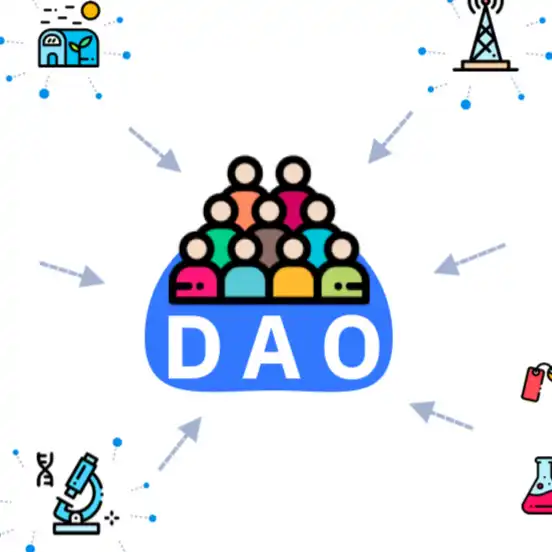
< img src="https://image.blockbeats.cn/upload/2022-09-20/c1b135b110a1b8b3fdbfbdd14b6d30324dade6b6.png?x-oss-process=image/quality,q_50/format,webp">
The picture comes from the Internet: DAO Ecological Map
However, one problem that must be paid attention to is that various community autonomous organizations operating based on the blockchain technology architecture will bring massive data growth on the chain. How to deal with such a large and complex data on the chain has become an urgent problem to be solved. . At this time, various data tools dedicated to on-chain data become very important, whether they are centralized or decentralized. The ceiling of the future development of "DAOization" can even be said to be determined to a certain extent by the collection, processing and analysis capabilities of data on the chain.
At present, the market has emerged A group of representative on-chain data service providers, such as overseas Nansen, Glassnode and domestic OKLink. They have created a batch of convenient and usable data tools to collect the huge and complex activity data on the public chain, and conduct data analysis through technical means, becoming an important source of information for obtaining on-chain activity data.

Picture: Platform tools page of common on-chain data service providers
How to polish the granularity of on-chain data?
There are billions of data on the chain, and it is still expanding. If there is behavior, there will be data , most of the data analysis tools currently on the market will conduct data analysis on the activities on the chain, and label the relevant addresses. Users can learn more about the addresses based on the labels. However, it is difficult to label all addresses by the platform alone, and some professionals know more about certain addresses than the platform.
Some teams have also started trying to convene Many researchers work on labeling products, but the strength of a team is limited after all, and the information between teams is not connected.
The solution to the problem seems to be in There are traces to follow in the development process of traditional Internet. As a free online encyclopedia, Wikipedia was originally established to create a multilingual model based on a free/open editing model. Hundreds of millions of users participated in it, constantly collaborated to supplement the content, mutually confirmed whether the information was second-hand information, and had accurate reference sources. This is what is known as the most "authoritative" Internet reference book today. This kind of potential UGC model is not uncommon in today’s Internet. Compared with iQiyi, station B’s hundreds of millions of users’ spontaneously created videos are enough to rival the PGC market of streaming media.
The same logic is grafted to the link In the data analysis market: If the data tools provided by the data service provider stage are called version 1.0 data tools, then the data tools of version 2.0 require more user participation and co-creation, which are more in line with the characteristics of UGC.
Take the " For the "Private Address Label" function, the platform supports users to add custom labels to the addresses on the chain according to their needs, which greatly increases the convenience of later query and analysis. This is also the advantage that the 2.0 version of the data tool can play.
This function has recently been launched on OKLink The browser address details page has been further optimized after upgrading. The current address details page adds more label feedback, such as the entity/institution corresponding to the address, the degree of association with some risk events, and the address attributes calculated by OKLink big data, which can help users quickly grasp the address information, so as to Set up private labels on demand.

Picture: OKLink browser address label feedback function display
Although the current " "Private Labels" are only visible to users who log in, but if these labels are opened up in the future and can be displayed publicly after review, there will be a lot of room for imagination, forming a similar "Wikipedia" style where everyone edits entries by themselves. After review In this way, all kinds of labels are aggregated together, and the displayed information is naturally more detailed. This is the basic model of "data service DAO".

Image: private address label function
In the tide of "DAOization" in the Web3 market, ordinary users are gradually awakening in data processing and control and have a place. Compared with the model dominated by the data platform, users hope to have a higher degree of freedom and comfort, and jointly participate in various constructions including data tools. While using tools to accept more accurate data, users are also helping the platform improve data information in the process of participating in co-creation.
The API economy that changes the data output pattern
For complex data in the Web3 era, a set of standardized data processing and utilization forms are crucial for service provider output and user reception. Data Tool 2.0 is indeed More precise data should be provided.
Great value after co-creation The address information data on the chain is not limited to the use of individual users. Business organizations such as projects and institutions are also in great need. By accurately and timely controlling the data and knowing the user information behind the address, in addition to discovering the giant whale address, avoiding risks and creating wealth, it also has many functions.
Companies can learn about address User portraits are formed in the information, and products are launched according to the needs. Accurate data is the prerequisite for this step. Project parties can select users who meet their requirements based on the user's past behavior, which applications they have used, the amount of funds traded and other conditions, and launch their products to attract traffic. In addition, mining pools can obtain data on the browser chain of various currencies, mining pool revenue, and mining difficulty data. The data website can directly connect to relevant information, and investment institutions can monitor large-value transactions and key wallet dynamics through it. .
But everything must consider efficiency question. If an enterprise searches for information and reprocesses it by itself from scratch, it is undoubtedly a process of "reinventing the wheel", which not only wastes a lot of time on basic applications, but also makes it difficult to focus on the refinement of main functions.
NFT created by former Coinbase members The search engine project Center has launched an API, which has saved a lot of infrastructure costs for related project practitioners. The same is true for Venly, a project focusing on the wallet and NFT market, which encapsulates its own functional data into an API for use by other projects. The OpenAPI service provided by the data service project OKLink based on the concept of data accuracy also has such functions, providing corresponding on-chain data for various project parties that need address information, such as enterprises, mining pools, wallets, universities, and data websites.

Image: OKLink Open API service page
In various public chains and With more and more ecological projects and complex information on the chain, the data service platform helps users simplify the process of accurately locating the required information. And as the data service on the chain is "DAOized" the voice is getting stronger and stronger. At present, various data service projects are transitioning from PGC to UGC, paying more attention to user participation. There is no doubt that the two go hand in hand.
Although currently on the market, the real Successful "DAOization" scenarios have not emerged in large numbers, but the concept of "user co-creation" may bring more optimization ideas to on-chain data processing tools. This is also the idea of Web3: a free, open, and co-created decentralized Internet.
Welcome to join the official BlockBeats community:
Telegram Subscription Group: https://t.me/theblockbeats
Telegram Discussion Group: https://t.me/BlockBeats_App
Official Twitter Account: https://twitter.com/BlockBeatsAsia
 Related Articles