Fourth round Ethereum 2022 Q1: NFT continues to heat up, Layer2 is still hot
原文标题:《 以太坊状态:复盘以太坊 2022 Q1 》
Ben Giove, analyst at Bankless
South Wind, Unitimes
This article reproduces the financial results of Ethereum, the world's leading smart contract platform, for the first quarter ended March 31, 2022.
01. Key achievements
The figures compare ethereum's performance in the first quarter of 2021 and the first quarter of 2022.
1. Ethereum protocol
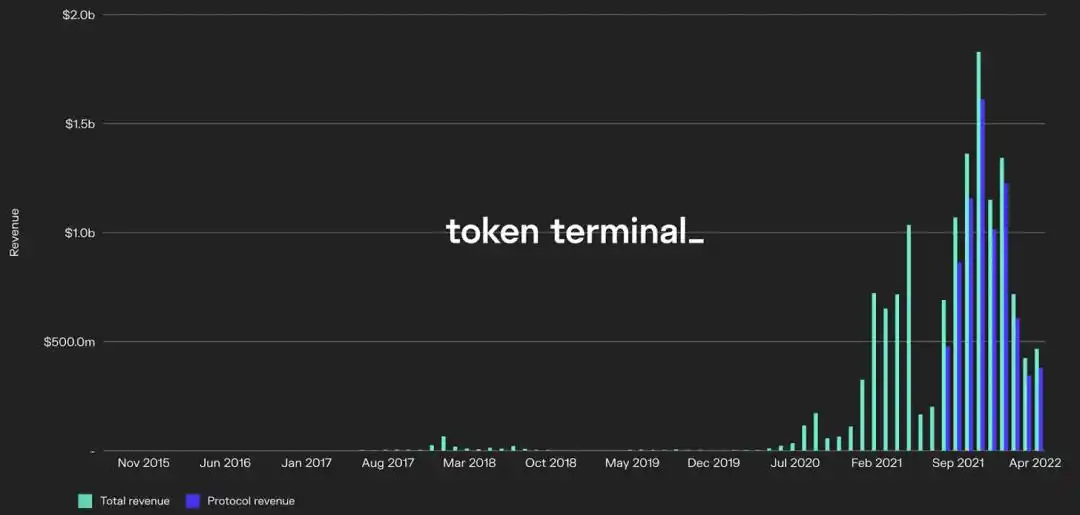
Above: Ethereum network revenue (total revenue) and fee destruction (protocol revenue), source: Token Terminal
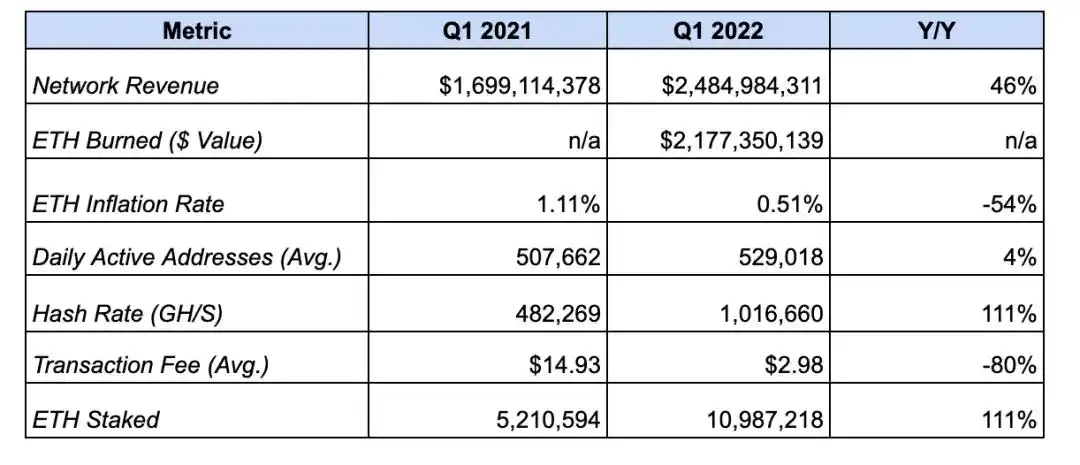
Ethereum network revenue grew 46% from $1.6 billion in q1 2021 to $2.4 billion in Q1 2022. This measures the value of transaction fees paid in ETH by users of the Ethereum network. Of this amount, $2.1 billion (87%) was removed from the circulating supply through the destruction mechanism implemented by IP-1559, which was activated in August 2021.
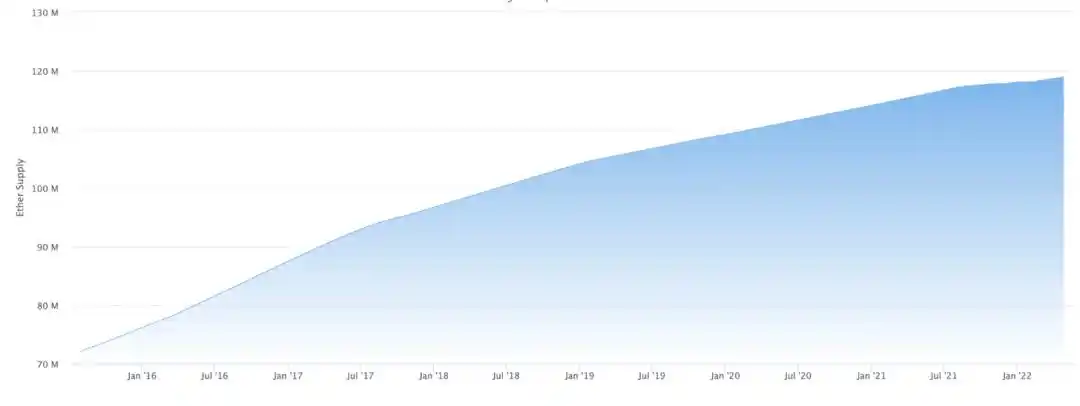
Above: The increase in ETH supply in circulation, from Etherscan
The ETH inflation rate decreased from 1.10% in q1 2021 to 0.51% in Q1 2022, a decrease of 54%. This indicator tracks net changes in ETH supply. New ETH is issued via block rewards (block rewards are paid to miners to confirm network transactions) and ETH is destroyed via IP-1559 mentioned above.
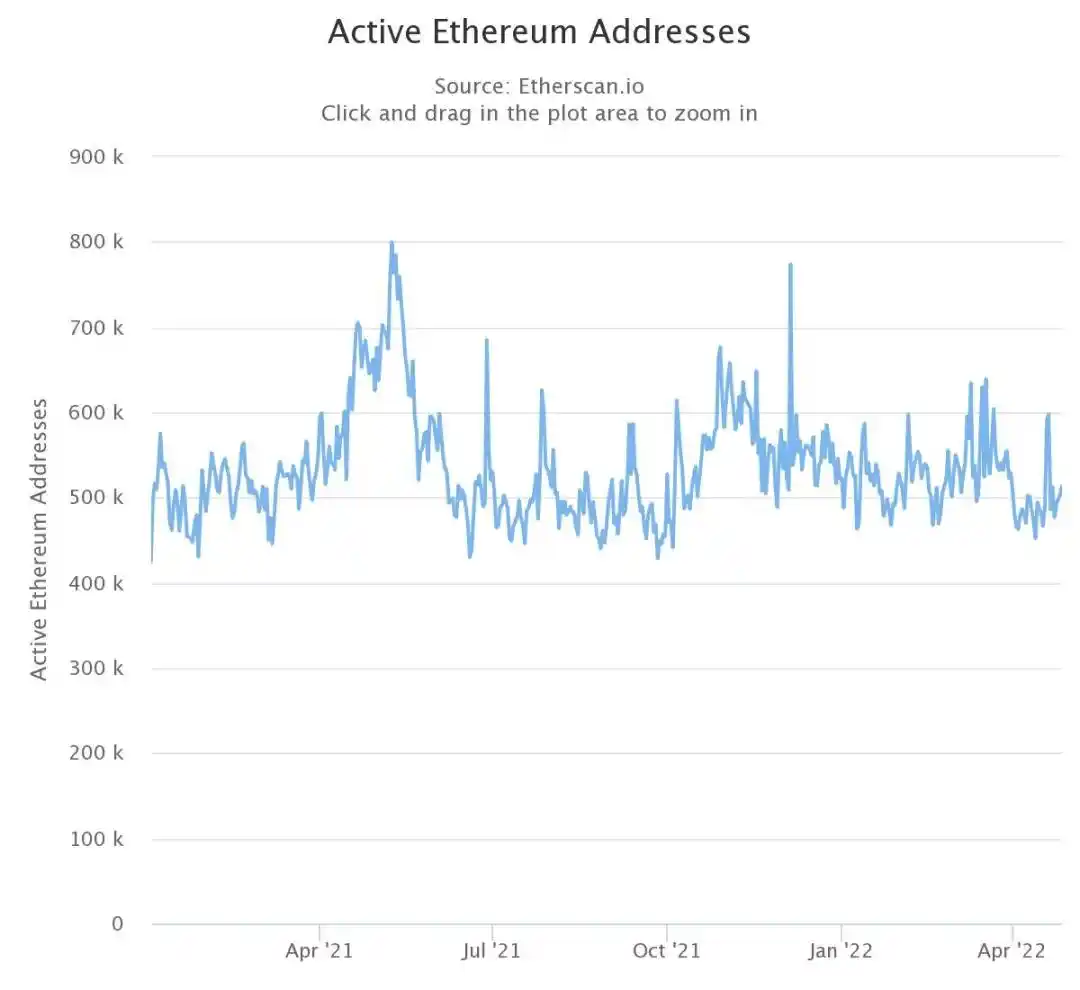
Above: Ethereum daily active address change. Source: Etherscan
Average daily active addresses increased from 507,662 in q1 2021 to 529,018 in Q1 2022. 4%. The metric tracks the average number of addresses interacting with the Ethereum network on a daily basis throughout the quarter.
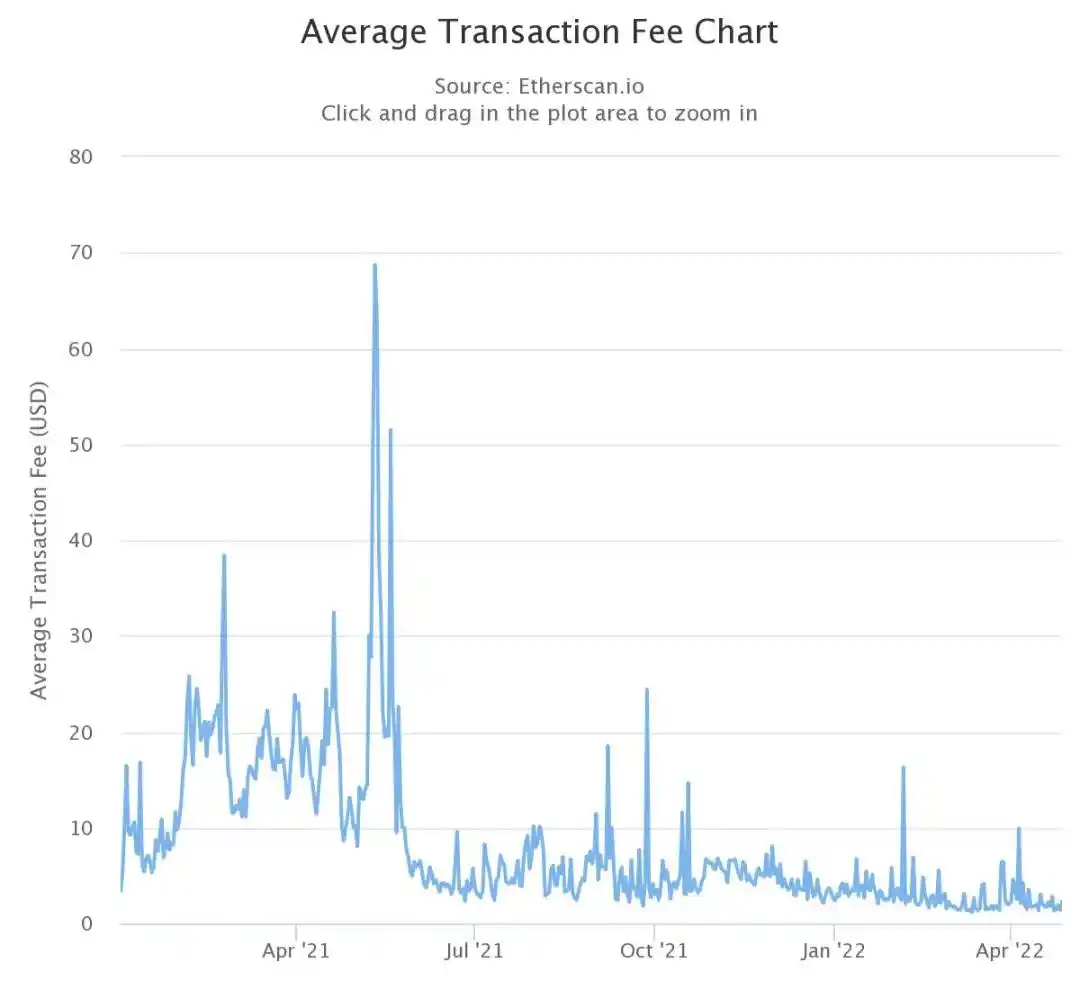
Above: Average Transaction fee (USD) for Ethereum network, source: Etherscan
The average transaction fee for the Ethereum network fell 80% from $14.93 in q1 2021 to $2.98 in Q1 2022. The metric measures the average amount users pay for ethereum block space in order to have their transactions confirmed.
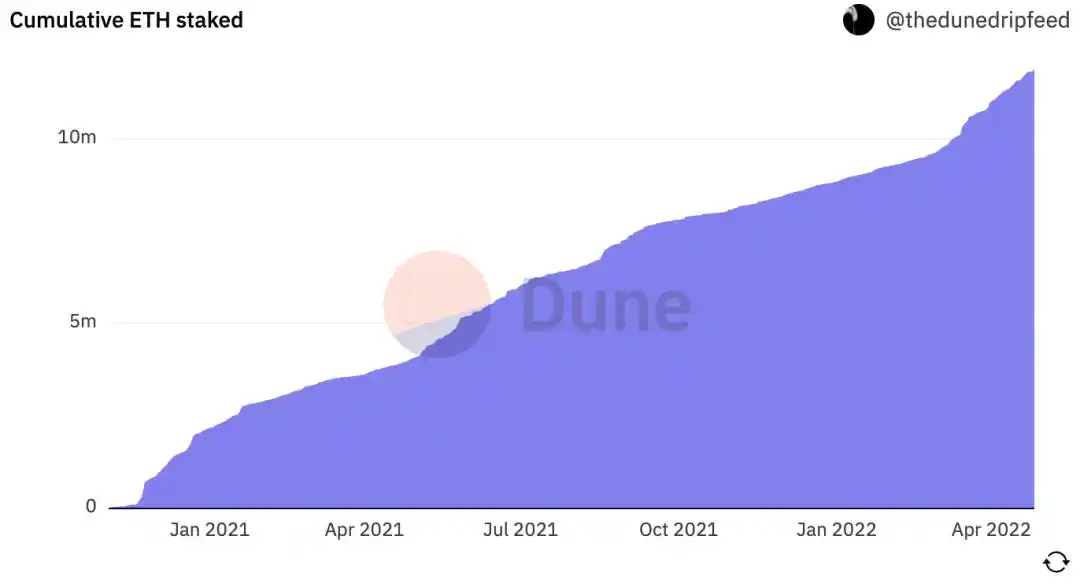
Figure above: The increasing trend of ETH pledged in total. Data: Dune Analytics
The total amount of ETH pledged increased from 5.2 million in the first quarter of 2021 to 10.9 million in the first quarter of 2022, an increase of 111%. This measure measures the number of ETH bets on the Beacon Chain before Ethereum transitioned from using a proof-of-work (PoW) consensus mechanism to proof of stake (PoS). About 9.2% of the total ETH supply is already being bet on the expected "merger".
2. DeFi ecosystem
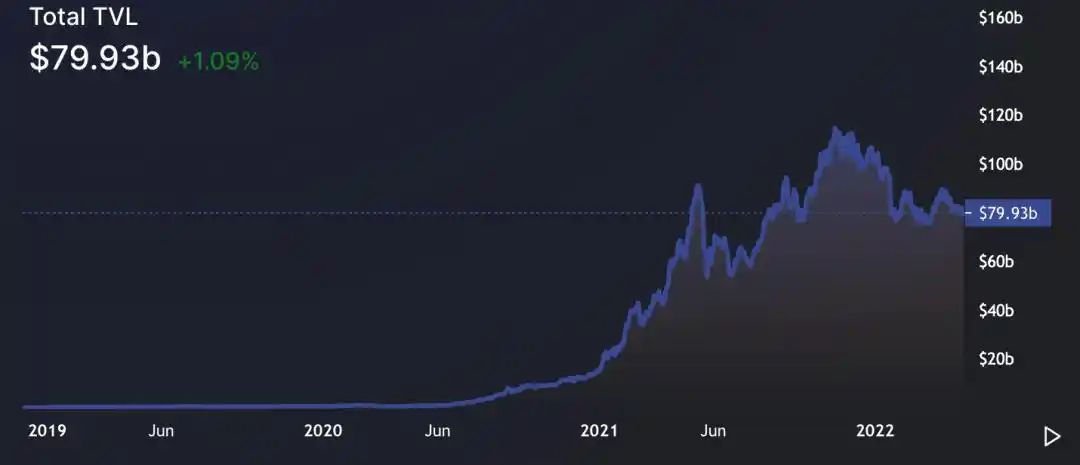
Above: TVL changes in ethereum DeFi protocol. DeFi Llama
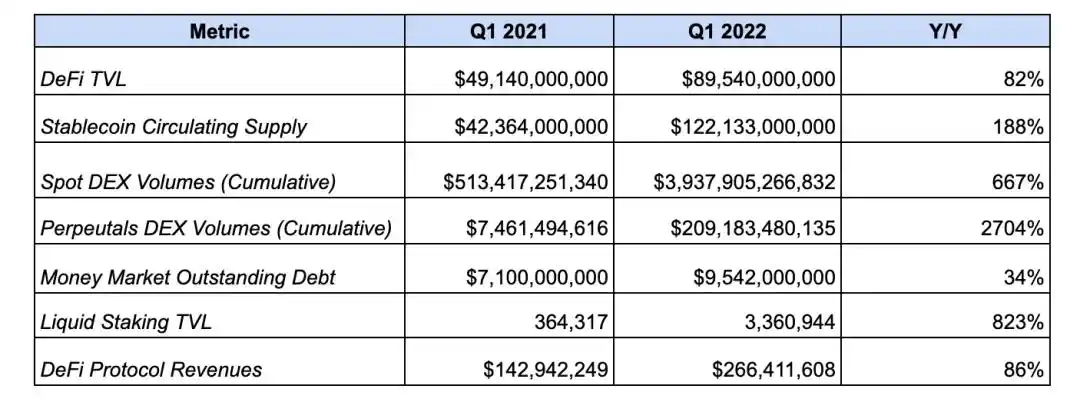
Ethereum DeFi agreement TVL (total lock-in value) has grown from $49.1 billion in Q1 2021 to $89.5 billion in Q1 2022, an increase of 82%. This measure measures the value of assets stored in ethereum-based DeFi protocols such as decentralized exchanges, money markets and option vaults.
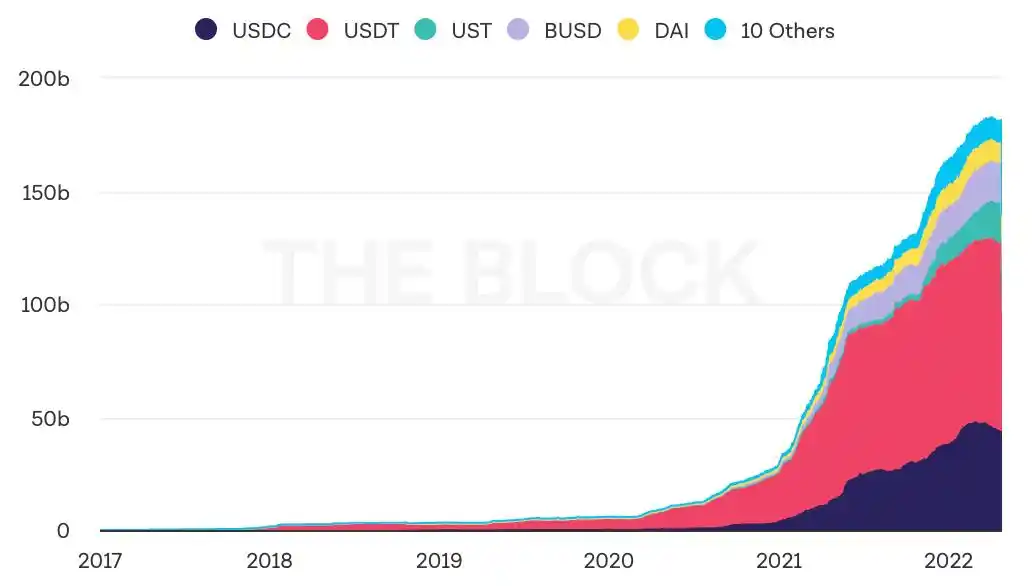
Figure above: Growth in total stablesoin supply, source: The Block
The total circulating supply of staboins increased by 188%, from $42.3 billion in the first quarter of 2021 to $122.1 billion in the first quarter of 2022. This metric measures the centralization of locally published or bridged ethereum. Decentralize the value of stablecoins. Stablecoins included include USDC, USDT, DAI, FEI, FRAX, MIM, UST, LUSD, HUSD, PAX, TUSD, sUSD, and BUSD.
Note: The chart above includes stablecoins on all blockchain chains, not just Ethereum, as data for this metric must be obtained from multiple sources. Still, that largely represents growth for the industry.)
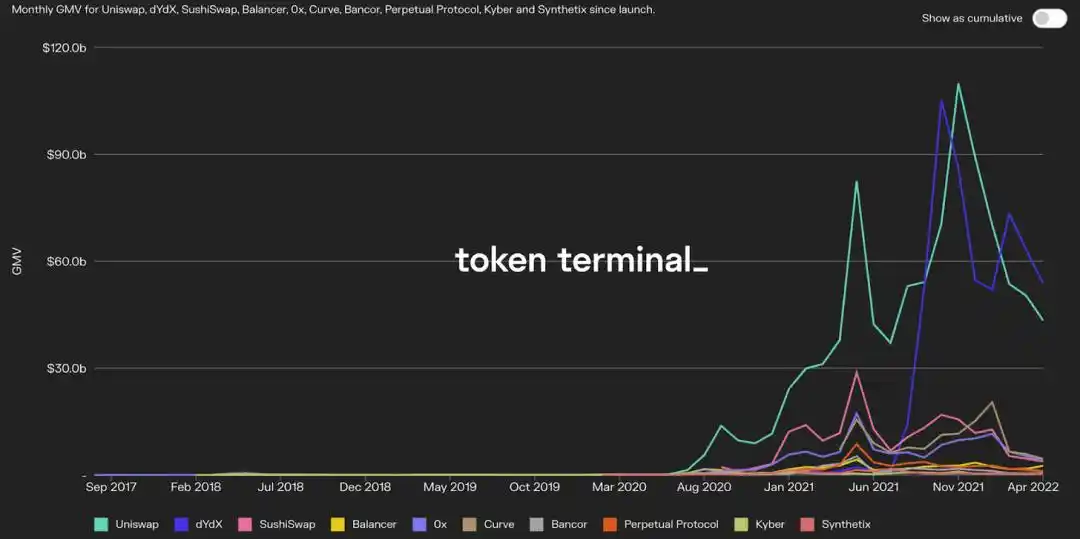
Above: Ethereum-based DEXs trading volume changes for spot and perpetual contracts. Figure source: Token Terminal
Volume on the spot exchanges rose 667 per cent to $3.9tn from $513.4bn, while volume on the perpetuities exchanges rose 2704 per cent to $209.1bn from $7.4bn. They track trading volumes on the DEX exchange on ethereum's main network and the perpetuity futures exchange on Ethereum L2, respectively.
Note: The above chart does not include GMX, whose trading volume is included in the calculation of the trading volume of DEX, the perpetual contract in the chart. The data can be found here: https://stats.gmx.io/
3. NFT ecosystem
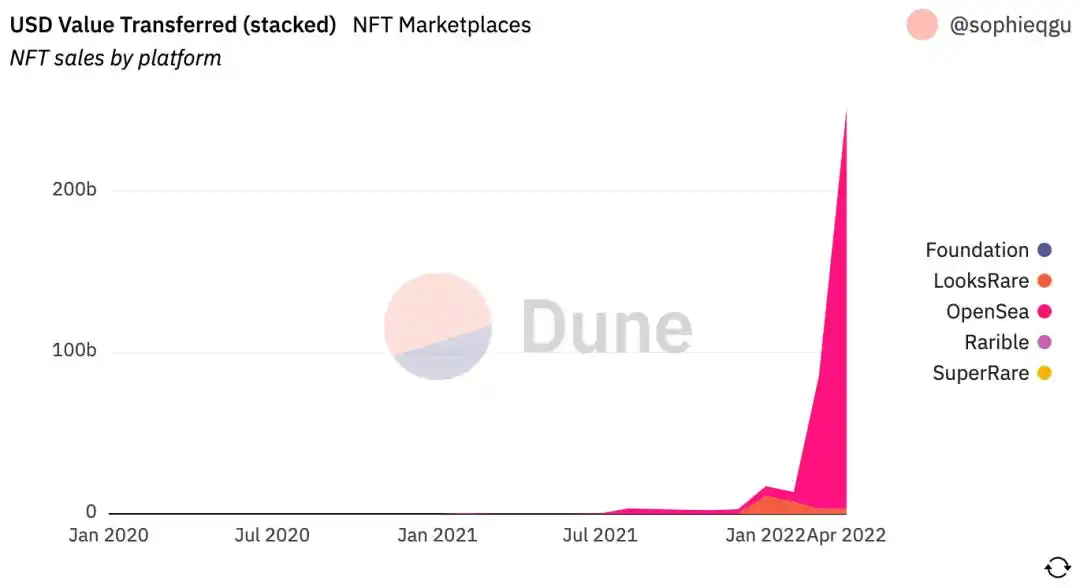
Above: NFT market volume. Source: Dune Analytics
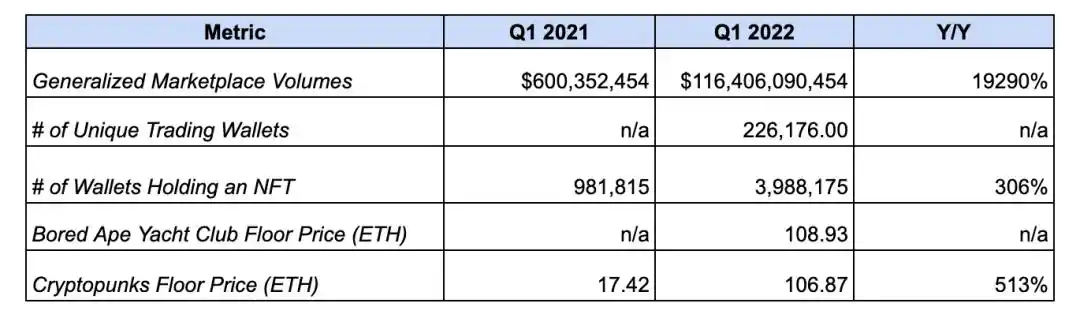
NFT market volume surged 19,290 per cent, from $606.3 million in q1 2021 to $116.4 billion in Q1 2022. This is volume tracking for OpenSea and LooksRare, the two largest generic NFT markets. A total of 226,176 unique wallets purchased or sold NFT in the first quarter of 2022.
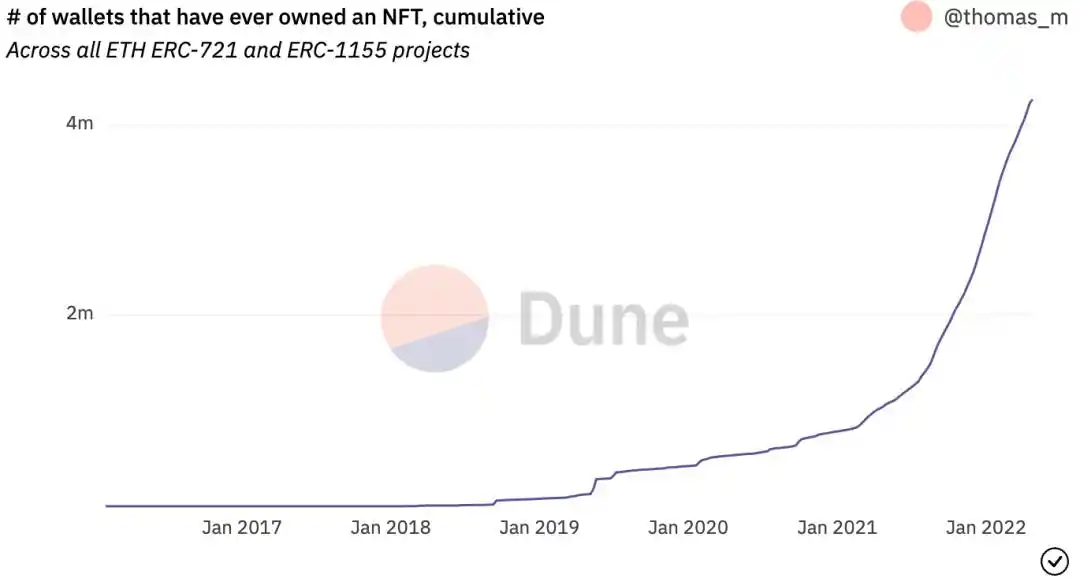
Figure above: Growth in the cumulative number of wallets holding NFT, Dune Analytics
The number of unique wallets holding NFT increased by 306% from 9.813,315 million in the first quarter of 2021 to 3.98 million in the first quarter of 2022. The metric measures the number of wallet addresses at a point in time that hold ERC-721 tokens, the Token standard used to issue NFT.
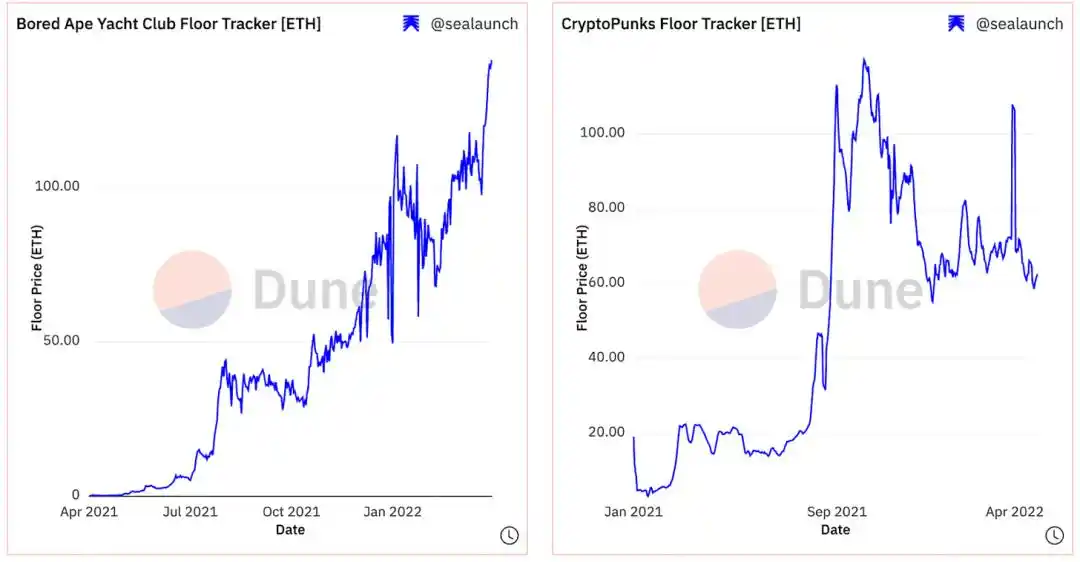
Above: Base price changes for BAYC and CryptoPunks. Source: Dune Analytics
The base price of CryptoPunks increased by 513%, from $17.42 in q1 2021 to 106.87 ETH in Q1 2022. The measure tracks the lowest prices CryptoPunks have sold for recently. Although BAYC (Boring Ape Yacht Club) launched in q2 2021, BAYC, the most expensive profile picture NFT series, ended Q1 2022 with a base price of 108.93 ETH, worth about $351,000 at the price at the time.
4. L2 ecosystem
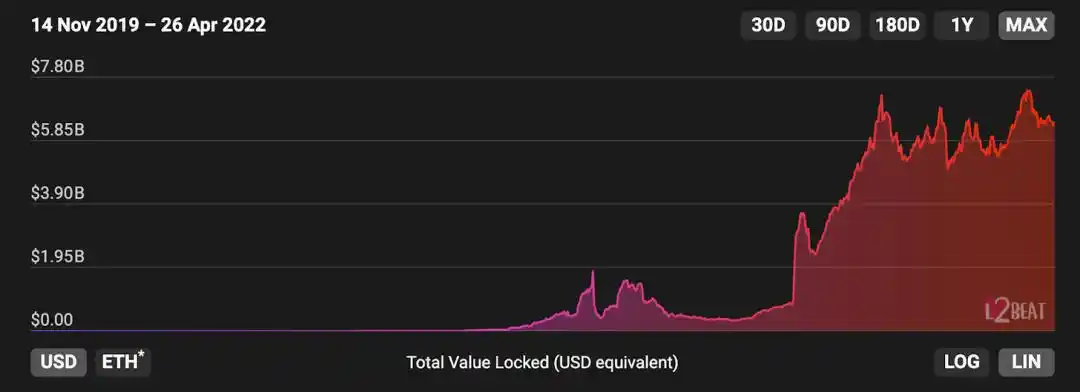
Above: TVL (total lock-up value) in Ethereum L2s network, source: L2 Beat
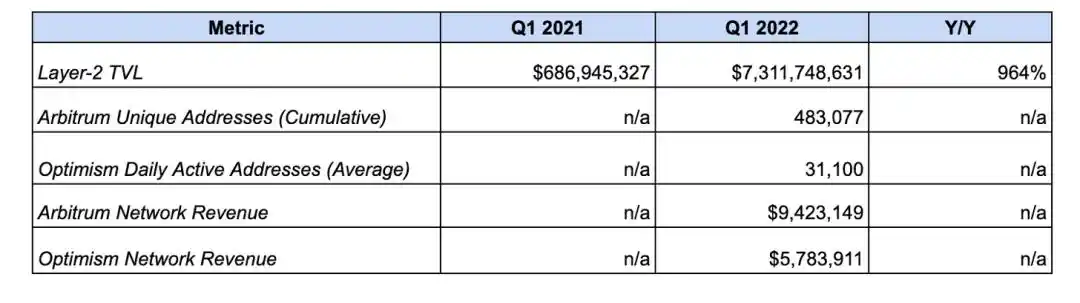
Ethereum L2s network's TVL grew 964% from $686.9 million in Q1 2021 to $7.3 billion in Q1 2022. This metric measures the total value of lock-ups in Ethereum L2s scalability solutions such as Optimistic Rollups, ZK-Rollups, and Validiums networks. As of press time, over $23 billion of assets (including $4.2 billion of ETH) have been connected from the Ethereum network bridge to these L2s networks and other L1 blockchains.
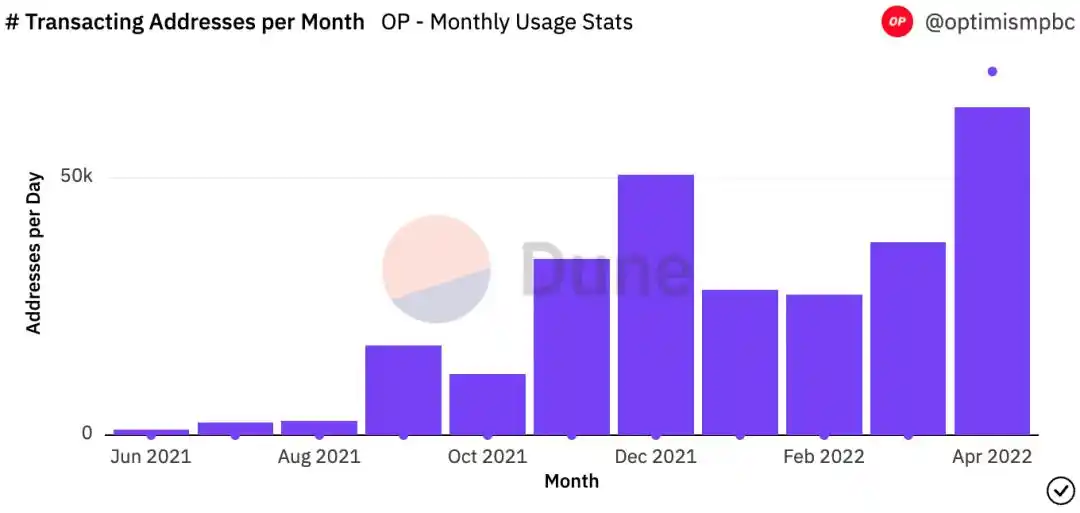
Figure above: Monthly active addresses of the Optimism network. Source: Dune Analytics
The average number of monthly active addresses in the Optimism network is 31100, while the number of cumulative unique addresses in the Arbitrum network is 483077. This measure measures the average number of addresses that traded on the Optimism network (an Ethereum-based Optimistic Rollup) each month during the quarter, And the total number of unique addresses on the Arbitrum network (Arbitrum is also an Ethereum-based Optimistic Rollup). Given that both L2 networks were launched in the third quarter of 2021 and the limited data available for the two networks, year-to-year comparisons are not possible.
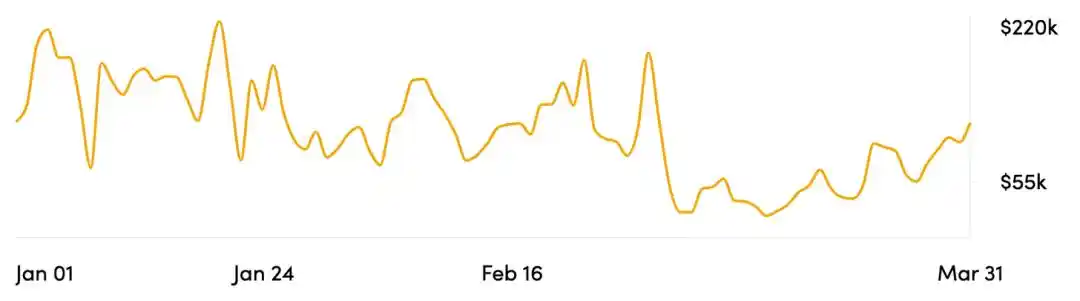
Above: Daily network income of Arbitrum. Source: Cryptofees. Info
Arbitrum network revenue was $9.4 million, while Optimistim network revenue was $5.7 million. This measures the transaction fees paid by users using ETH in the two L2 networks of Arbitrum and Optimistim respectively.
02. Ecosystem essentials
1. Stable fixed currency, Curve war, and bribery
There were a number of exciting developments in Ethereum during the first quarter of 2022, perhaps the most important of which was the continued growth of stablecoin. As mentioned earlier, the circulating supply of staboins on the Ethereum network grew by over 188% year over year to over $122 billion. In particular, algorithmic stablecoins such as FRAX and UST have enjoyed huge growth relative to their competitors. This growth suggests that capital may not be fleeing the Ethereum economy in large numbers, despite market weakness.
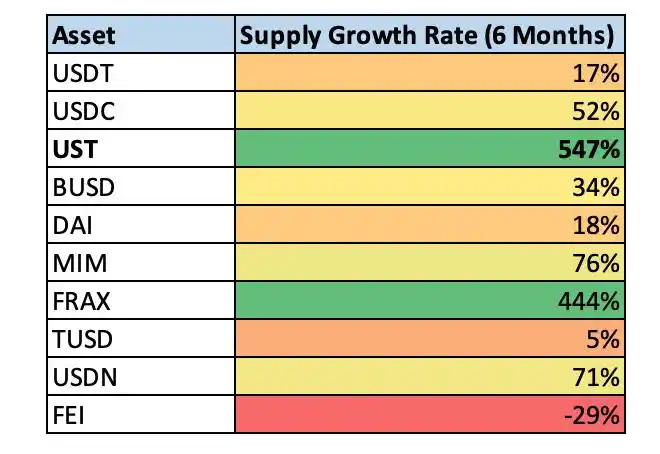
Figure above: Stablecoin growth rate in 6 months, source: Coingecko & AMP; Bankless
A more notable secondary effect of the stabocoin boom is the continued development of the "Curve war". This is a battle between some major stabocoin DAOs to build liquidity on Curve, DeFi's largest decentralized exchange. In the first quarter of 2022, as these stablecoin DAOs increased their holdings of CVX (The native Token of Convex Finance) (because the Convex protocol controlled a large supply of CRV (the governance Token of Curve), Its holdings were more than 73% of the total CRV, so controlling Convex was equivalent to controlling Curve), and the "conflict" took a central position.
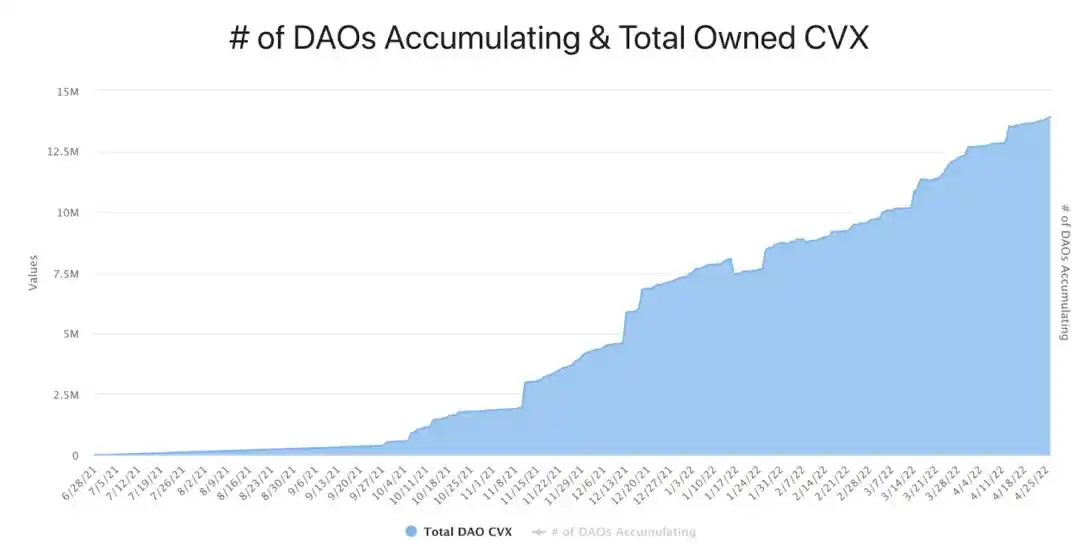
Above: Amount of CVX tokens held by DAOs. Source: DAOCVX.com
In coordination with their CVX purchases, these DAOs paid more than $89.2 million in "bribes" to CVX holders who locked up their CVX tokens to secure their votes to direct CRV Token rewards to different liquidity pools above Curve. With annualized returns of CVX bribes exceeding 40%, the first quarter of 2022 solidified the concept that these bribe payments can be an important source of cash flow for holders of strategically important governance tokens.
In addition, THE first quarter of 2022 saw a number of protocols (Ribbon Finance, Balancer, Yearyearn, etc.) proposing or implementing conversions to the vote managed Token model, hoping to replicate the success of Curve.
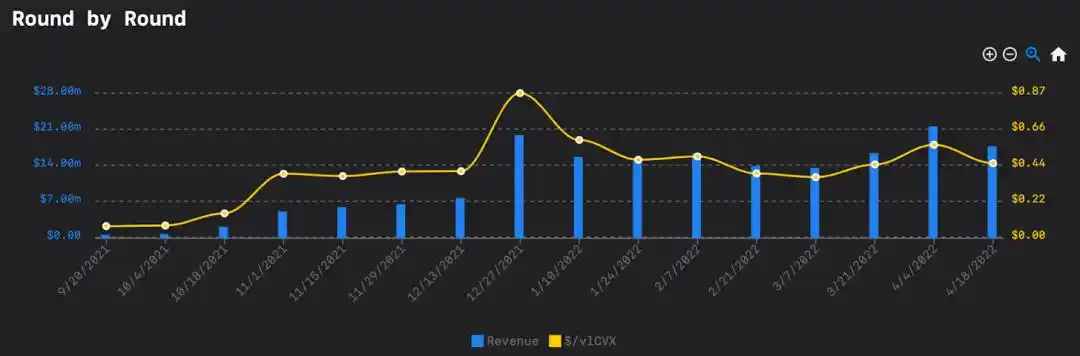
Above: The value of bribes paid to CVX holders (blue bar chart) and the revenue earned per CVX (yellow line). Source: Llama Airforce
Several exciting deals were also announced during the quarter:
Alchemix V2: This is the second iteration of Alchemix, the DeFi lending protocol for self-repayment loans, which includes strategies to support a large number of new collateral assets and generate income.
Aave V3: This is the third version of Aave, a multi-chain deployed DeFi money market, with a new Portal for cross-chain lending, a feature that enables cross-chain casting and destruction of tokens.
Syndicate Protocol: Allows the creation of on-chain investment clubs.
2. NFT seems to be heating up
The NFT ecosystem on Ethereum experienced several major changes in the first quarter of 2022, thanks to the explosive growth momentum of the previous two quarters.
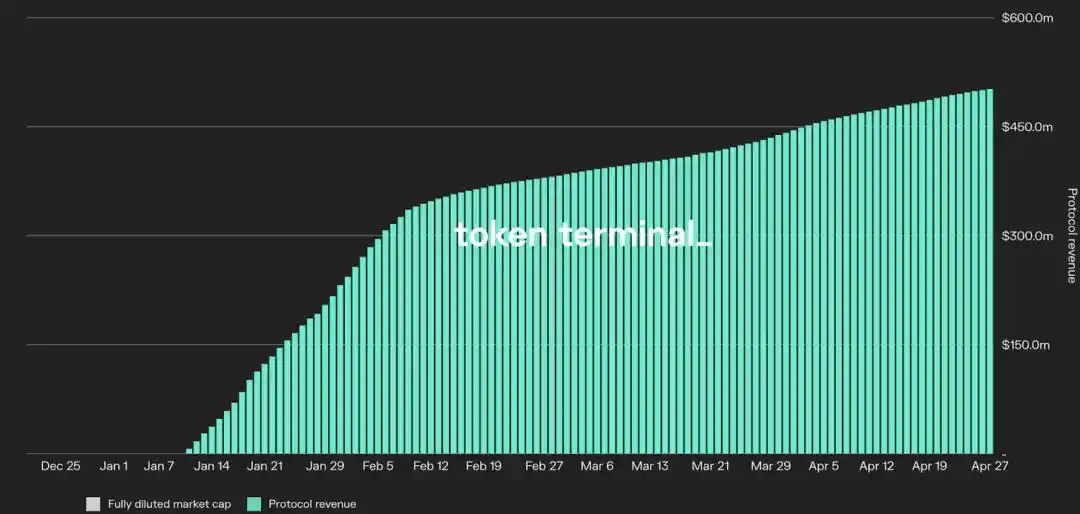
Above: revenue growth of LooksRare in the NFT market. Figure source: Token Terminal
One of them is LooksRare, launched in January 2022, a new generic NFT market and competitor to OpenSea, which previously dominated the space almost entirely. LooksRare launched a vampire-like attack on OpenSea by airdropping its native governance Token LOOKS to OpenSea users.
The NFT marketplace also allows LOOKS Token holders to pledge their tokens for Token issues and ETH based fee income generated by the platform. While this has led to allegations of money laundering in order to secure these awards, LooksRare generated more than $22.1 billion in transactions in the first quarter of 2022, generating more than $444 million in revenue for its pledgers. While LOOKS 'valuation at the time of writing is 79% below its all-time high, LOOKS Rare appears to have transformed the industry from an oligopoly to a duopoly.
Another major development in q1 2022 is Yuga Labs as an ecosystem powerhouse. Yuga Labs' Boring Ape Yacht Club (BAYC) has now become a celebrity favorite, and the collection is now the most valuable NFT Head (PFP) collectible at BAYC's base price. Yuga has also made several major moves to consolidate its position in the nascent sector of the Ethereum economy.
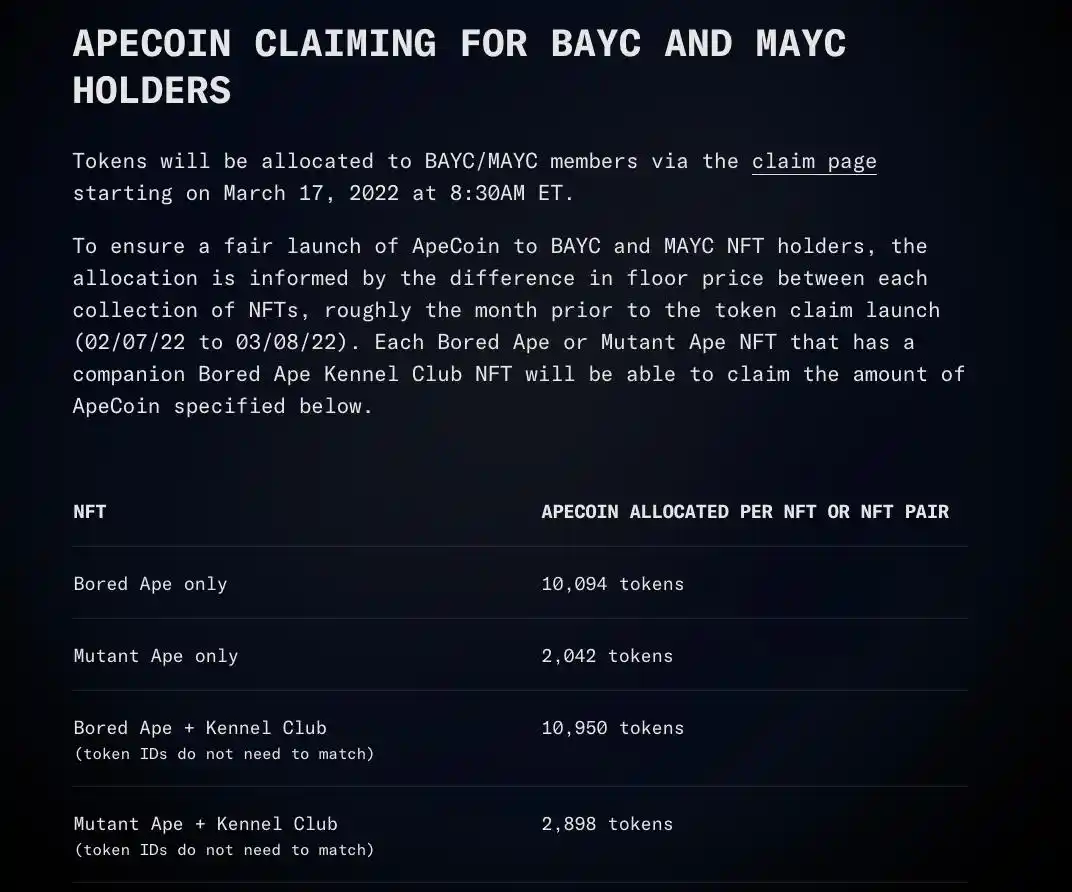
Above: Distribution of APE Tokens airdropped by Yuga Labs to BAYC and MAYC holders. Photo source: Apecoin.com
First, Yuga Labs acquired intellectual property from Larva Labs' NFT series, including Cryptopunks and Meebits. Shortly after, Yuga Labs announced the release of Apecoin (APE) Tokens, in which a portion of the Token supply was allocated to BAYC holders, with some airdrops exceeding six figures.
APE's price is currently at an all-time high, with a fully diluted valuation of over $20 billion, and will serve as a governance and utility Token in Yuga Labs' ecosystem of various metasurverse projects, such as the recently released Otherside. These developments have made Yuga Labs a blue-chip brand and meta-cosmic media giant in the NFT ecosystem.
3. L2 is still hot
Ethereum's burgeoning L2 (second tier) ecosystem continued to grow in the first quarter of 2022.
As previously noted, TVL locked into the Ethereum L2 network grew 964% year-over-year to over $7.3 billion as of the end of Q1 2022. To sum up, how to rank the TVL of these Ethereum L2 networks against other L1 networks, these Ethereum L2 networks are ranked fifth in TVL. Arbitrum is among the top ethereum L2 networks with over $2.1 billion in TVL.
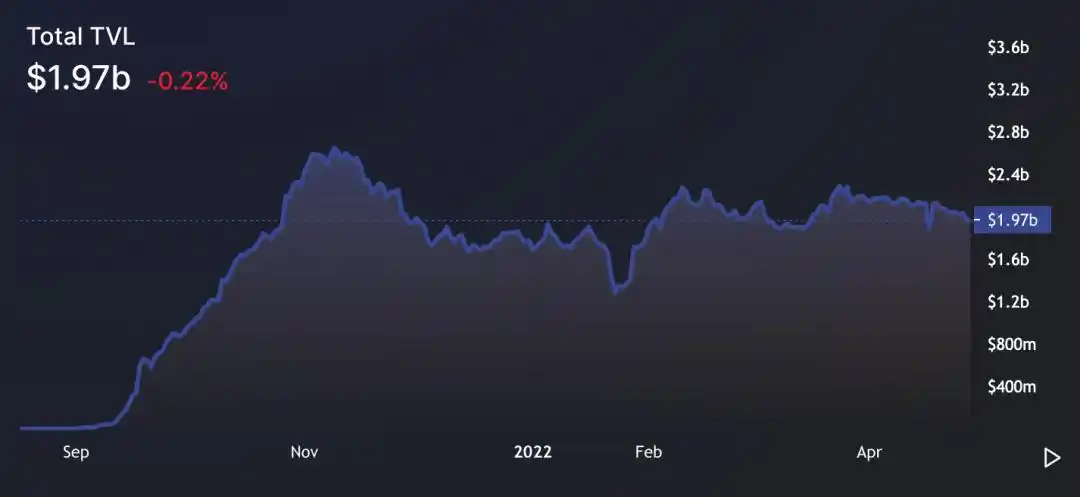
Above: TVL change of Arbitrum network. DeFi Llama
Of the many native applications for L2 networks, the most attractive are from the derivatives industry. Derivatives apps like dYdX, Perpetual Protocol and GMX have become three of the top five decentralized perpetual-contract exchanges by volume, thanks to the scalability offered by L2 networks, They run on StarkEx, Optimism and Arbitrum respectively.
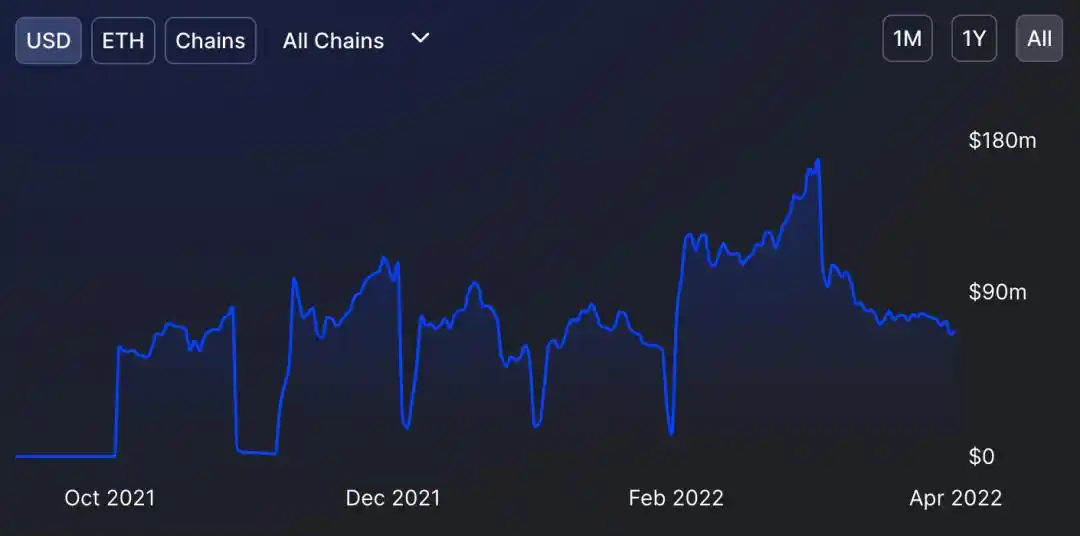
Above: TVL changes for decentralized options exchange Dopex. DeFi Llama
Like perpetuities, options, another type of derivative, are beginning to gain meaningful traction on the L2 network. Dopex And Lyra, two decentralized options exchanges, operate on Optimism and Arbitrum, respectively. Together, the two apps have more than $119 million in deposits, and both are among the top five most-used apps on their respective L2 networks.
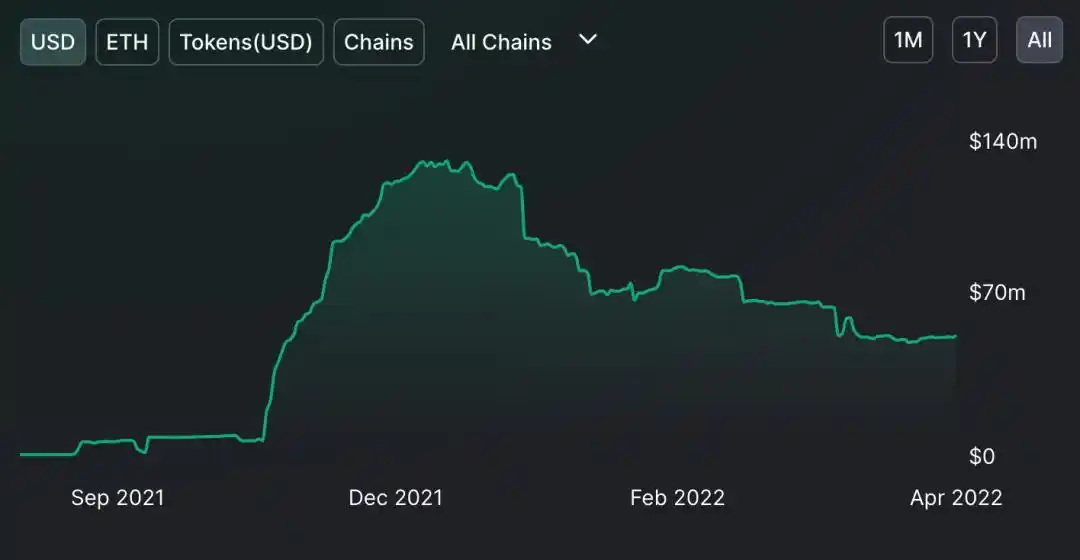
Above: TVL changes for Lyra, a decentralized options exchange. DeFi Llama
These derivatives agreements, along with other L2 native projects such as Tracer DAO, Jones DAO and Vesta Finance, appear poised for further growth with several favorable factors, such as volatile market conditions, The increased desire of DeFi native investors to hedge and find alternative sources of income, as well as the upcoming launch of Native Tokens by their respective Rollups networks (more on that below).
03. Outlook
While the market faces a vortex of macro headwinds, there are several catalysts on ethereum's horizon that seem to strengthen its fundamentals, competitive positioning, and Token economy.
1. Merge, merge, merge
The most important is the upcoming PoW to PoS merger, a shift that will bring many major changes to the Ethereum network and ETH assets. In terms of the Ethereum network, the merger will reduce the energy consumption of the Ethereum blockchain by an order of magnitude, as the energy consumption of PoS is much lower than that of PoW. This helps reduce Ethereum's environmental impact and increases its appeal to traditional institutional investors, who tend to consider ESG (environmental, social and governance) requirements when making asset allocation decisions.
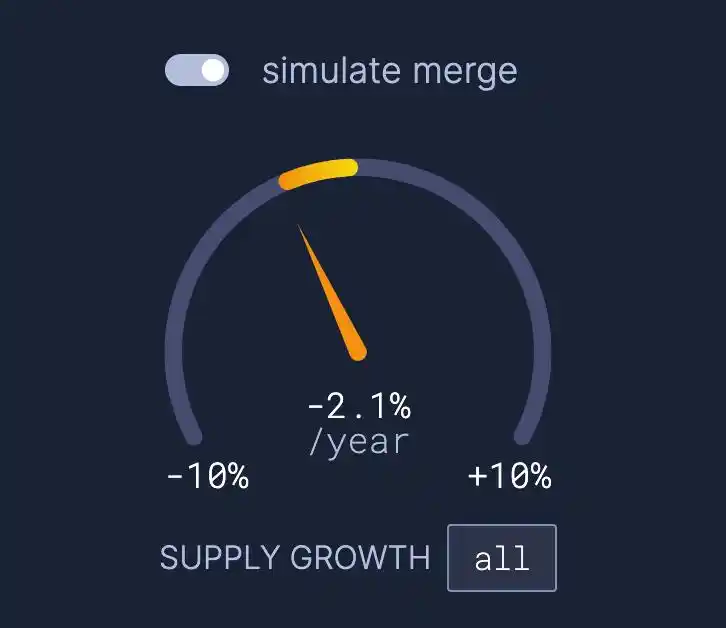
Figure above: Estimated additional issuance rate of ETH after merger. Photo source: Ultrasound. Money
The merger will also have a significant impact on ETH's supply plans and value proposition. While IP-1559 has led to a sharp drop in ETH inflation, the transition to PoS seems likely to bring about a deflationary ETH. Based on the amount of ETH currently pledged and the Gas consumption since THE activation of IP-1559, ETH is expected to experience deflation with a projected release rate of -2.1%.
While the currently pledged ETH is in a non-transferable state and will gradually unlock and become liquid after the merger, this huge supply shock could have a long-term effect similar to that of halving bitcoin, as it greatly reduces the selling pressure on ETH. The merger may also establish ETH's pledge rate, which is expected to reach as high as 10%+ risk-free pledge rate after the merger, further increasing ETH's attractiveness as a cash flow productive asset and Internet native bond.
In addition to changing Ethereum's ESG profile and ETH assets, the merger will help pave the way for future scalability upgrades to Ethereum, such as sharding and Danksharding. This will allow Ethereum to better meet the growing demand for transactions in its economy.
2. Rollups launches native tokens
Another major catalyst for Ethereum's growth was the launch of L2 Token. While L2 networks have gained meaningful traction without native tokens or network-wide incentive plans, the launch of governance tokens for these L2 networks looks set to fuel their growth and deliver the long-awaited "L2 Summer".
The first domino in this regard fell this week on April 26, when Optimism announced that it would launch and use its native Token OP in its web governance system and, most likely, spur activity in its nascent and rapidly growing DeFi ecosystem.
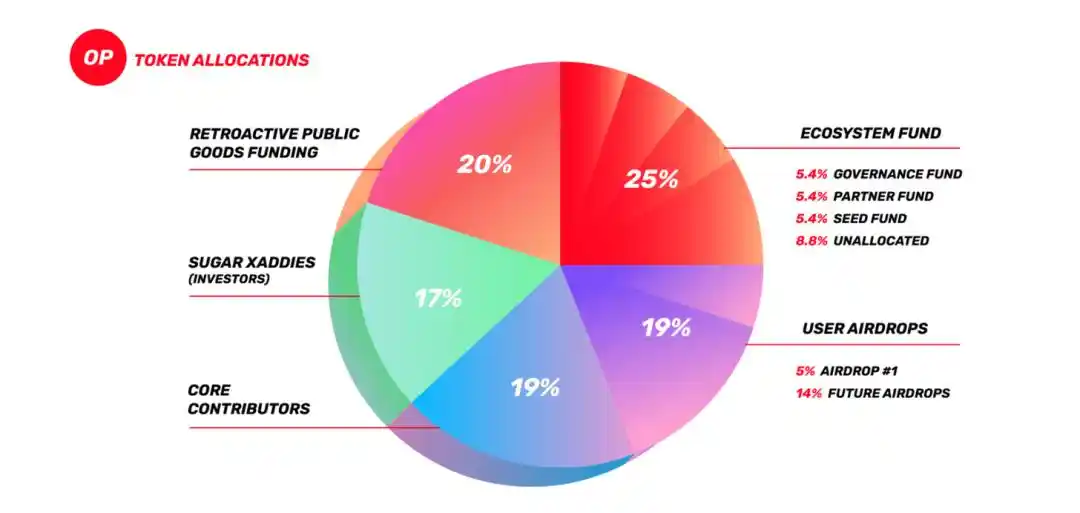
Above: Distribution of OP tokens. Source: Optimism Docs
As we've seen with the explosive growth of incentivised ecosystems like Avalanche, Polygon, and Fantom, this strategy has been very effective in guiding web usage, mobility, and developer activity. If implemented, Optimism would reasonably experience a similar level of growth.
In addition to Optimism, Two other universal Rollups networks, Arbitrum and ZK Sync (Optimistic Rollup and ZK Rollup, respectively) are prime candidates to drive similar growth in web usage by launching local Tokens. Although Arbitrum has not confirmed whether it will launch local tokens, ZK Sync has revealed that They will have a Token to implement decentralization of their Rollup sequencer, which is responsible for bulk publishing of transactions from the Rollup L2 network to the L1 network.
The rollout of these Rollups local Tokens and incentive programs should be an important catalyst for Ethereum to regain market share (ethereum's total DeFi TVL share in the sector has fallen to 51% from 80% this time last year). And increase accessibility for everyday users participating in this decentralized economy.
04. Comparison table between 2021 Q1 and 2022 Q1
1. Ethereum protocol
2. DeFi ecosystem
3. NFT ecosystem
4. L2 ecosystem
This post is not published by Ethereum or the Ethereum Foundation.
** This article represents the views of the original author only and does not constitute any investment opinion or recommendation.
The original link
Welcome to join the official BlockBeats community:
Telegram Subscription Group: https://t.me/theblockbeats
Telegram Discussion Group: https://t.me/BlockBeats_App
Official Twitter Account: https://twitter.com/BlockBeatsAsia
 Related Articles