EVM Equivalence: Unlocking a New Paradigm for Ethereum Growth

Original title: "EVM Equivalence"
Original author: David Hoffman, co-founder of Bankless
Original compilation: Nanfeng, Unitimes
EVM Equivalence: It is completely consistent with the EVM (Ethereum Virtual Machine) specification.
EVM equivalence is designed to create an Optimistic Rollup with "minimal differences" from Ethereum.
EVM equivalence extends the properties of Ethereum to L2s networks. It blurs the line between Ethereum L1 and L2 Rollups start.
This is the difference between "scaling on Ethereum" and "scaling Ethereum itself".
Optimistic Rollups, a perfect clone of the Ethereum EVM share not only the security of Ethereum, but also all aspects of Ethereum's network effects.
Other L2 design structures do not have the same privilege to capture all the network effects of Ethereum and are always better than L2 with EVM equivalence Networks are more specialized.

EVM compatibility is dead. EVM compatibility either optimizes generality by sticking to Ethereum standards (thus choosing the same standard as everyone else), or building something completely different, highly optimized for a specific use case (like ZK-Rollups).
To fully extend the full power of Ethereum to the L2s network, we need more than just EVM compatibility.
We need EVM equivalence.
1. Compatibility vs equivalence
Rollups hailed as our scaling savior: "Finally an L2 network that can run Uniswap!"
Some of the earliest Rollups networks were implemented by completely recreating Uniswap, that is, using custom code on top of a custom Rollup.
This is not good enough.
The network effects of EVM extend far beyond Solidity. A host of supporting tools give Ethereum developers superpowers. Because these tools also run on the EVM standard, they are not suitable for custom rollups. Not to mention the huge effort required by the protocol developers to create something Solidity compatible!
With EVM equivalence, the EVM itself can be copied and pasted into L2. Everything is the same under the hood.
2.EMV is a city
David Mihal gave me such a metaphor:
“Open source code is like a city. It is created spontaneously from the bottom up by many developers who identify problems and build solutions. Over time, the city becomes optimized, robust, and efficient… the EVM chain is Like Las Vegas' version of Paris; they try to artificially replicate the organic."
Open source software is a public product, owned by each Community maintenance and upgrades.
Developers who use open source software encounter all kinds of problems while using it; some problems are trivial, some are critical, and some problems are in between between. Some developers take the time to fix these issues and then lobby the community for their input. If the community sees value, then that contribution is merged. New standards were created, and the usability and robustness of the software increased.
Like a fledgling city, builders come and produce what the surrounding community needs and values. Shared resources and utilities are produced, and since it's code, it never decays. It's a one-way street that adds value; as long as everyone is working on the same basis.
Each developer builds in their own direction and finds their own specific contribution to add to the collective. Over time, a highly robust public product results from the collective contributions of thousands of developers.
Geth
This is the story of Geth. Geth has slowly absorbed meaningful contributions from Ethereum developers over the past few years and produced a software with the strongest network inside and outside of Ethereum.
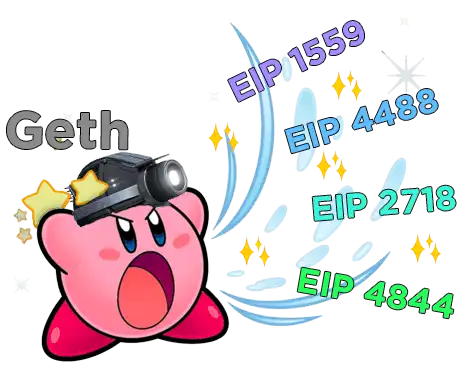
This is why Geth has become a fundamental reference point for a large part of the crypto industry. Forking Geth and creating a non-Ethereum blockchain is still contributing to the foundation upon which Ethereum rests.
If Geth forks away from this reference version, it is equivalent to the largest network effect in the deviation Web3. The more one-time replication moves in different directions, the more manpower and resources are required to keep up with the core network.
3. EVM main vehicle group
If you want to go fast; then you go alone. If you want to go far, then go together.
The larger the main car group, the faster the efficiency and speed. Air resistance is distributed over a wider group; as the size of the main car group increases, so does the efficiency of the group. Riding in the middle of a main group is mostly effortless because you can keep up with the entire group. Since the leader of the main group is exposed to the full force of wind resistance and must expend extra energy setting the speed of the team, the leader of the team will often ride out.
But when the leader gets tired and the pace slows down, many new "contributors" who have been at the back of the team before will come to take their place.
EVM equivalence (left) vs EVM compatibility (right)

Groups of caterpillars in the rainforest move faster than individuals< p>
The development speed of the open source community will always exceed that of the centralized team. The reason this industry is moving so quickly is that it is a collaborative flywheel. We build on each other's success, and when one of us goes to the front, he takes us to the front together -- sort of like these caterpillars.
EVM equivalence is a bottom-up, boom-city-like public good. EVM compatibility, on the other hand, is just a one-time copy of it.
There are countless different ways to deviate from EVM, but only one way to follow EVM.
4. Duplicate the application layer
Create one with EMV equivalence The L2 ecosystem is critical to maintaining the network effects of composability and interoperability!
Rollup network with EVM equivalence allows for instant cross-chain copy-pasting of codebases. Development and innovation within a single EVM-equivalent Rollup network can be seamlessly transferred to any other EVM-compatible Optimistic Rollups and to Ethereum itself. Since everything is developed based on the EVM standard, the network utility of Ethereum L1 can be extended to the L2s network, and innovations on L2 will be reflected back to the entire ecosystem.
When a line of code is deployed on an Optimistic Rollup, the meaning of the line of code is greater. If you're an open source developer and you want your code to be widely used, you'll naturally want to use an EVM-compatible Optimistic Rollup, because your code will be immediately compatible with all other EVM-equivalent Optimistic Rollups.
If you write code once, but that code runs seamlessly on 1000s of compatible chains, the value of the code you generate is enormous big.
EVM equivalence takes EVM network effects to a whole new level.
Optimistic Rollups that do not have EVM equivalence will not be able to benefit from this shared network utility. Optimistic Rollups without EVM compatibility lack the design philosophy of "minimum difference", breaking the relationship between the Ethereum network and Optimistic Rollups with EVM equivalence and these L2s networks without EVM equivalence.
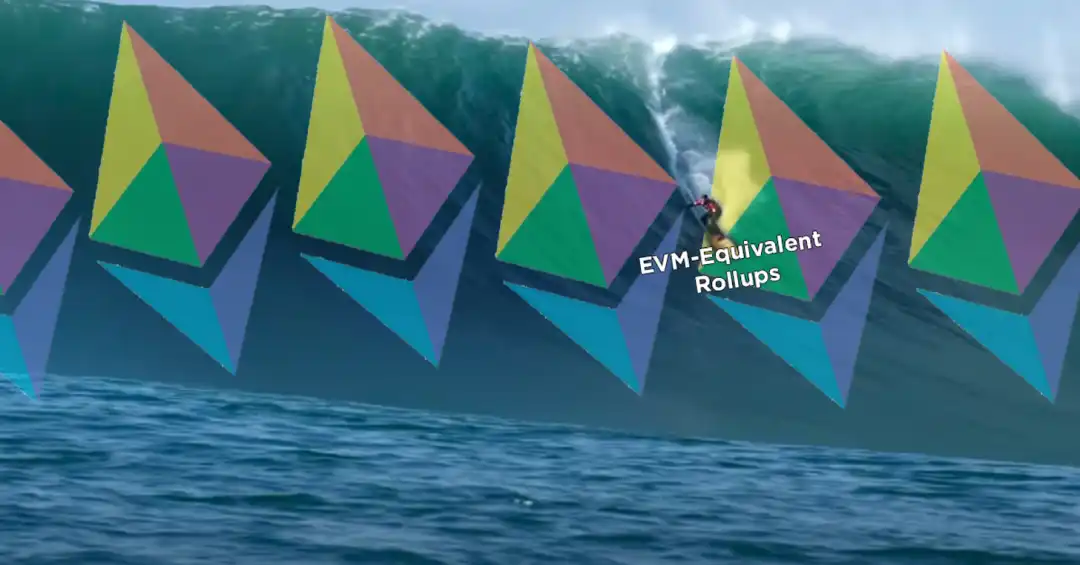
The huge wave of Ethereum network effects will get bigger with each new Optimistic Rollup with EVM equivalence. If you're not surfing this wave, then you're going to have to swim like hell to catch up.
5. Replication protocol layer
These EVM network effects are not only applicable to Ethereum application layer. It also applies to the protocol layer itself; this is where it gets really interesting.
Since Optimistic Rollups with EVM equivalence have "minimum differences" with Ethereum, they provide Ethereum with an actual production A platform for testing new EIPs in the environment.
Currently, EIPs (Ethereum Improvement Proposals) use the Ethereum testnet for testing. EIPs are tested multiple times on the testnet to ensure that there will be no glitches when they are finally integrated into Ethereum L1.
This is always risky as there is no "minimum difference" between the testnet and Ethereum. Implementing an EIP in a Goerli or Koven testnet is not the same as implementing an EIP in Ethereum; the difference lies in the scale, importance, and nature of economic activity on top of Ethereum, which testnets cannot match. There are always some "unknowns" when implementing an EIP onto Ethereum L1.
EVM equivalence provides a solution.
When an EIP is successfully implemented on an Optimistic Rollup with EVM equivalence, this basically gives the Ethereum L1 chain a Strong guarantee that the same EIP can also be successfully integrated on Ethereum L1 without errors. Optimistic Rollup with EVM Equivalence provides a realistic production environment where there is real economic activity and real capital risk to test EIPs against. EIPs can be tested at the Optimistic Rollup layer without the risk of damaging or affecting the entire system.
When the L2s network generally adopts the same EIP, it sends a signal to Ethereum L1 that the EIP is loved by the community and can be Securely integrated into Ethereum L1.
Optimistic Rollups with EVM equivalence enables Ethereum to sense the willingness of participants on its L2s network, making each L2 network a Become an antenna that meets the needs of Ethereum users. The domination & control governance of traditional finance (TradFi) and Web2 shifted to the sense & respond paradigm of Web3.
Since each Optimistic Rollup has its own sovereign economy, it will implement various EIPs independently and asynchronously according to the needs and desires of users , has nothing to do with the rest of the Ethereum ecosystem.
Over time, as more and more independent Optimistic Rollups see value in the same EIP, those best EIPs will Dominate the pattern of L2 Optimistic Rollups. When an EIP starts to dominate the entire field of Optimistic Rollups, that EIP will signal to Ethereum L1 that it is a good EIP and that it is safe to implement it at the L1 protocol layer. As shown below:
There will be a lot of Optimism forks on Ethereum! As these forks all accept the same EIP, this will signal to Ethereum L1 that this EIP is desirable and secure.
6.EVM equivalence, summary
EVM equivalence Significance: Ethereum has shed the shackles of its L1 shackles. Ethereum can be extended to the L2s network. The dividing line between Ethereum L1 and L2s networks with EVM equivalence has become very blurred.
7. "Vacuity Fear"
"There is no vacuum in nature of." - Aristotle
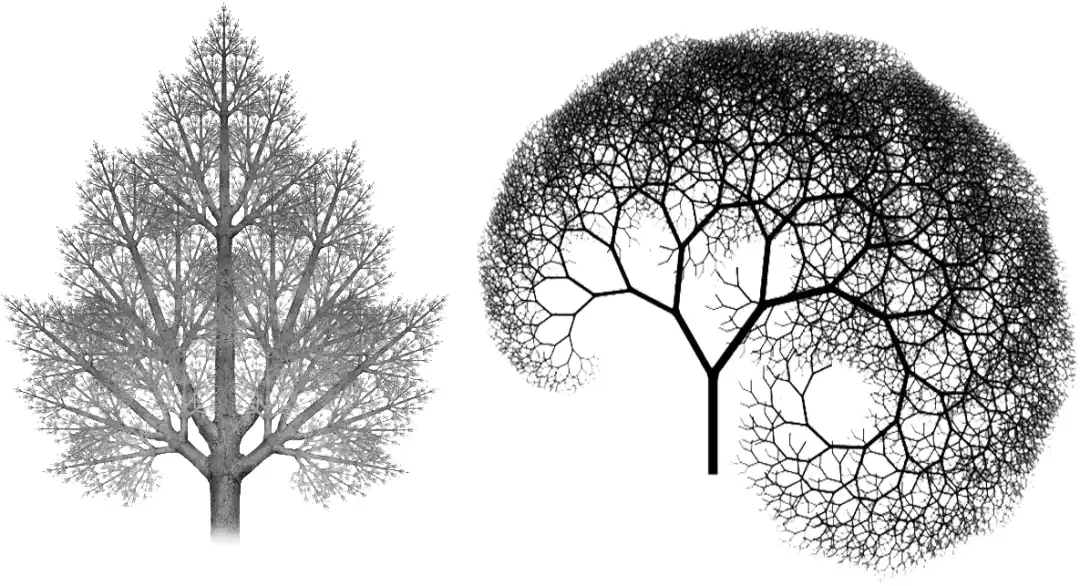
Nature is really good at filling in the blanks. The more evolved a creature is, the more space it occupies. Animals eat and reproduce to the maximum extent their circumstances allow. All plants are the embodiment of fractals, because fractals are algorithms for maximizing surface area. The increased plant surface area increases its ability to absorb sunlight from the leaves and nutrients from the roots.
(Editor's note: fractals have the morphological characteristic of filling space in the form of non-integer dimensions.)

The Amazon rainforest is one of the most biodiverse regions in the world, with less than 2% light down to the ground, as trees capture sunlight very efficiently.
The last mile problem
The last mile is the last leg of a journey, the whole journey Contains the movement of people and goods from the transportation center to the final destination. "The last mile" describes the difficult last leg of transporting people and packages from a hub to their final destination. Some of the challenges of "last mile delivery" include reducing costs, ensuring transparency, increasing efficiency and improving infrastructure.
Nature is really good at solving the last mile. This is a natural consequence of "survival of the fittest"; the organisms best able to reproduce and reproduce will fill the gaps in their environment.
Even within an organism, fractals are fundamental patterns that increase the size and efficiency of an organism. The lungs are responsible for capturing oxygen and distributing it into the blood; the circulatory system is responsible for delivering oxygen and other nutrients to the very ends of the organism.
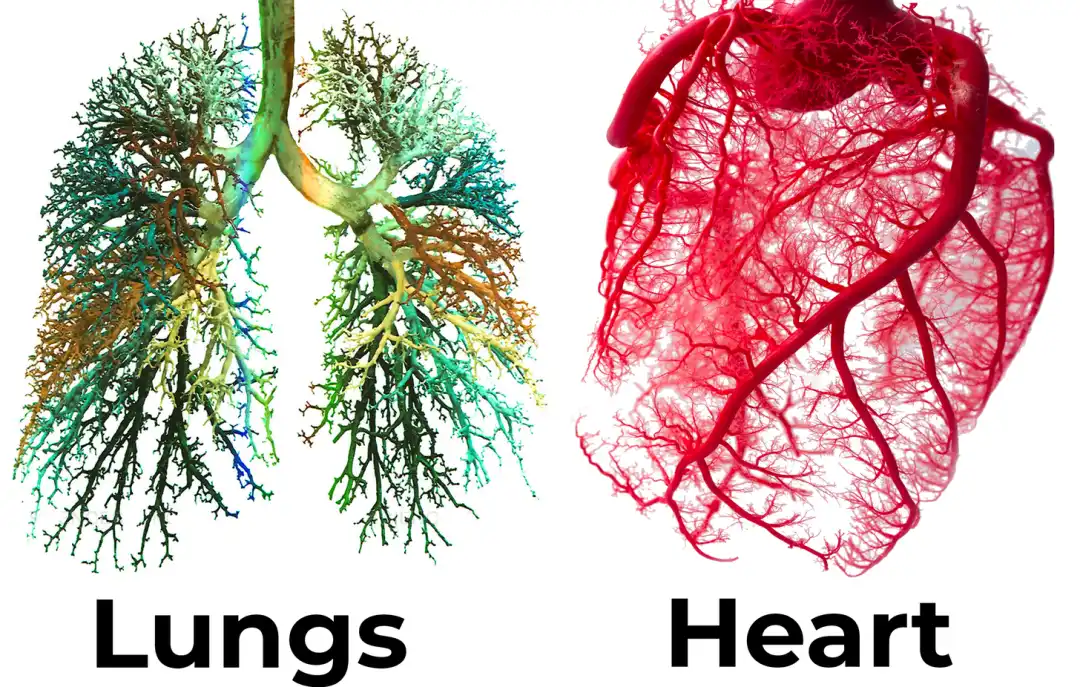
Fractals are structures in which each substructure has the same properties as the overall structure. Fractals can be thought of as never-ending patterns, and reproducibility and reproduction make up fractals.
Only replicable and reproducible structures can effectively fill the gaps in nature. The crypto space is a huge space; there is still a lot to build. But if we want to fill all these gaps with new structures, we need systems that can replicate and reproduce.
EVM equivalence creates the foundation needed to produce these features.
With the EVM equivalent Rollup ecosystem, Ethereum can replicate and multiply at an extremely fast speed, focusing on user needs and updating code to reflect these needs.
Each L2 network can go in its own unique direction and specialize in whatever it wants. A successful network of L2s with many users and a lot of value will signal to other L2s that they have found something of value. We all know the crypto industry is really good, and once something proves useful, it is copied.
For example, from 2013 to 2015, the PoW-type fair start, in 2020, the income farming during the summer of DeFi was plagiarized, in 2021, the fork of L1 Geth, etc.
Once a certain L2 discovers a new value source, this value source can be replicated and shared throughout the ecosystem, and eventually introduced into the ecosystem the center of the system.

*voice of David Edinburgh*: This app developer has discovered food! See, EVM equivalence brings it into L1 for sharing. The young developer is guaranteed unlimited funding and Twitter followers.
8.EIPs are the new genes
Richard Dawkins (Richard Dawkins)'s book The Selfish Gene discusses how each gene of an organism becomes the smallest unit of life, whose inherent egoism in its own protection and reproduction provides the basic model on which all life depends .
Good genes will survive. Bad genes will die.
As an organism evolves and adapts, the genes that make it healthy propagate throughout the species over time by replicating and multiplying. Beneficial random mutations in an individual organism help it survive and thrive better than other organisms, so the gene goes from being present in only one instance to being present in all possible instances because it is a good gene.
In the world of modular Ethereum, EIPs are the new DNA.
Good EIPs will propagate effectively. Bad EIPs will go away.
Ethereum is a responsive adaptive system, Optimistic Rollups with EVM equivalence allows new genes (EIP) to be implemented first, and then After this new EIP proves its viability, the EIP is propagated outward to the remaining Optimistic Rollups. If that EIP is good enough, it will go all the way back to the beating heart of Ethereum: L1.
Ethereum becomes an organism capable of responding and adapting to its environment, even as its environment changes over time. Biological organisms have fixed genes from their origin, and Ethereum has the ability to create and integrate new genes as needed to keep up with the ever-changing needs of the world.
Discovering value in the EVM equivalence paradigm, being able to turn that value into a public good that can be shared across the entire Ethereum ecosystem, not just Only for a specific L2 network.
9. Retrospective public goods: building infrastructure for the entire ecosystem
Optimism is pioneering a new model of funding public goods, injecting Silicon Valley-style financial incentives into projects that build public goods.
It has potential as a technology startup, but as a product it is a public good.
Revenue from L2 block space fees will flow directly to innovators and founders who build useful content for Optimism L2. The RPGF invests money into the future, empowering builders of public goods with the assurance that if they build useful public goods, there will be money waiting for them.

Impact = value.
The combination of RPGF and EVM equivalence means that when Optimism L2 builds something useful, it can be immediately replaced by a used by all other parts of the ecosystem.
The sale of block space on the Optimism Network will transform not only into the infrastructure of Optimism L2, but into all L2s Infrastructure, which will eventually turn into the infrastructure of Ethereum itself. The blockchain ecosystem is notorious for underinvesting in infrastructure and public goods.
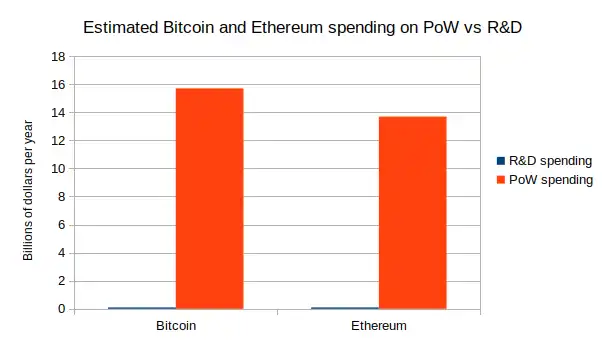
Source: Vitalik
The combination of RPGF and EVM equivalence gives us the solution The first promising avenue for the Tragedy of the Commons, not just for Optimism, not just for L2s, not just for Ethereum, but for the entire planet:
Step 1: Fund public goods on Optimism;
Step 2: Extend these public goods (for free!) to all other L2s networks.
The third step: Integrate these public products into Ethereum;
The fourth Step 1: Extend the scope of these public goods from Ethereum to the world.
Step 5: Resolve the global coordination failure and unlock the future of Star Trek.

Original link
Welcome to join the official BlockBeats community:
Telegram Subscription Group: https://t.me/theblockbeats
Telegram Discussion Group: https://t.me/BlockBeats_App
Official Twitter Account: https://twitter.com/BlockBeatsAsia

 Related Articles