Why is it so important to read the mental model of encryption?
原文标题:《 加密的心理模型 》
Originally written by RainandCoffee
Block unicorn
If I were asked to simplify the journey of my life, I would say it's a long list of decisions (ultimately -- decision tree). Every decision that is made shifts the line somewhere else. These decisions will change future outcomes. So the question that comes to mind is -- how can we make the "best" possible decision that leads to a favorable outcome?
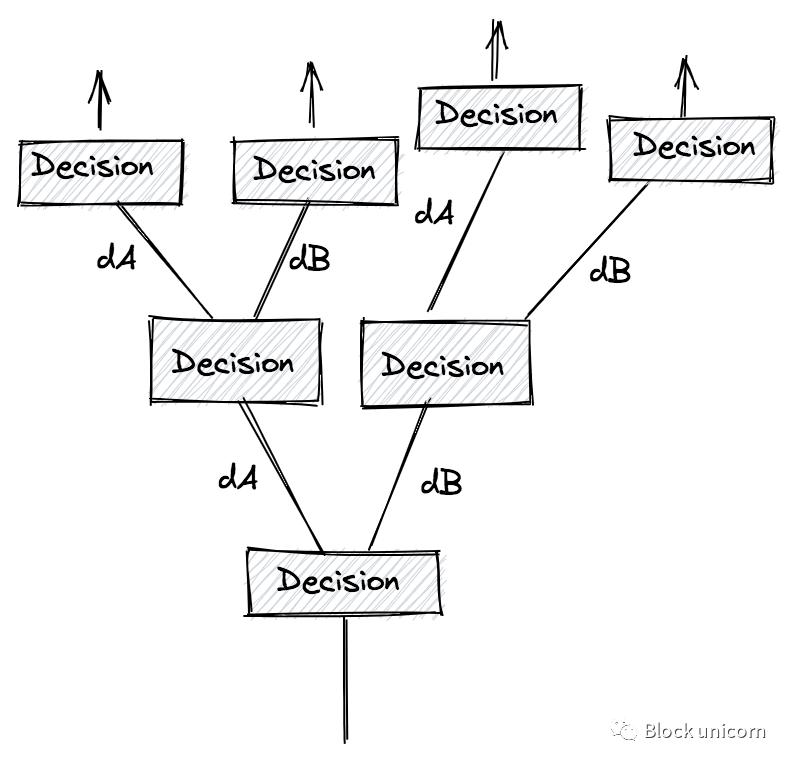
Let me introduce you to the concept of mental models, how these models help us make decisions, and how they increase our chances of achieving our goals. In this case, how do we make decisions that have a positive impact on our crypto journey? We can make decisions that may increase our chances of success, and here's how it works.
The idea of a mental model is to find a way to assess how something works. Then by understanding how something works, it will help you make better decisions afterwards. Basically, we can maximize efficiency by not repeating the same mistakes.
This means that by being able to understand how a model (or protocol) works, we can guide our decisions into beliefs. These decisions often have different lengths of commitment, and trade-offs must be made anyway. These trade-offs may be small, but they can have a significant impact in other situations.
For the most part, we just let it go and don't ask ourselves why -- a good example is locking in a narrative without understanding the basic catalyst for a particular narrative in a cryptocurrency. Most people will probably do a few searches on CT or Google to get the "idea" of the project. However, that's as far as most people get. It does nothing to get a conviction and usually -- in most cases -- results in failure.
So what can be done? We can use established mental models to simplify the concept of a project. I don't mean just knowing x enables X, but identifying the core components of a protocol and how they interact. And the range of catalysts. In most cases, this should give us a clear idea of what kind of belief to make.
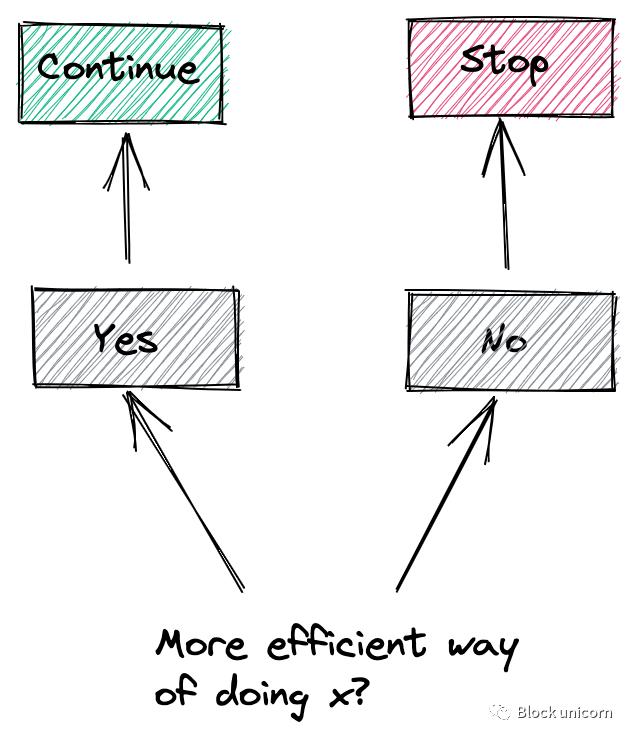
The First model we'll look at is First Principles. The concept of the first principle is to find the most effective way to solve a problem from scratch. The best way to relate this to encryption is to use it to compare similar protocols -- ask yourself if this way of doing X is more efficient than this way of doing X. If so, that will certainly light something up in your brain and increase your belief. As for figuring out what works best, you can ask yourself a few questions.
- Which systems support this protocol? How do they work?
- Was the previous version of this protocol more effective? Can we innovate?
- If we could innovate, what could we do differently?
- Is there a competitor that fits these metrics better?
If you find yourself realizing that this version is more efficient than the previous version, you've found significant value. However, if you find yourself realizing that previous versions are better for parameters. Then, more often than not, you should probably move on. Unless there is some other catalyst in favor of that version.
The second very useful model is the higher level. The concept of the model is to determine whether a protocol more effectively changes the entire underlying concept, or whether it just changes a cog in the system. For example, do protocols change small points after forking an already existing protocol, or do they change the entire underlying layer -- in a more efficient way? In many cases, redoing something in a slightly different way doesn't add much value. But if you innovate in a completely different way, you're more likely to create something original that adds value. What you are determining here is basically the level at which a project is being optimized.
It is also important to continue to see if you have obtained the agreement of belief. Here, you should reassess over time what catalysts are coming, what stories are playing out, and how to best position yourself to deal with them. If you are aware that there is a problem somewhere, you should try to fix it. So if you realize that your original belief was wrong, there's no harm in changing it. This ultimately leads to the minimization of what we call regret. Basically, you should always choose the long-term decision with the least regret in your current state of mind. So by constantly reevaluating your decisions, you will be able to determine the best decision. Therefore, by choosing the least regretful decisions in your current situation, you will be able to live with fewer regrets.
Let's move on to something more personal, the way I like to work, and whether I can optimize it. I've had this conversation before when people have asked me to describe how I work. The most appropriate way to describe my workflow is to use the concept of Flow State. The best way to describe the flow state is to think of it as "in the zone." This is basically a state in which you are engrossed in something. This is usually seen as very positive and I tend to agree with that, but let's look at the other side of the coin. Is there a downside to this way of working? By going into flow, I tend to bury my thoughts in certain pieces of information, sometimes turning them off with other updates. This can and has caused me to sometimes not notice things I probably should have. I think the thing I can do better is get new information by constantly listening to advice about what I'm doing. This means prioritizing certain avenues while recognizing that I need to allocate time to renew myself.
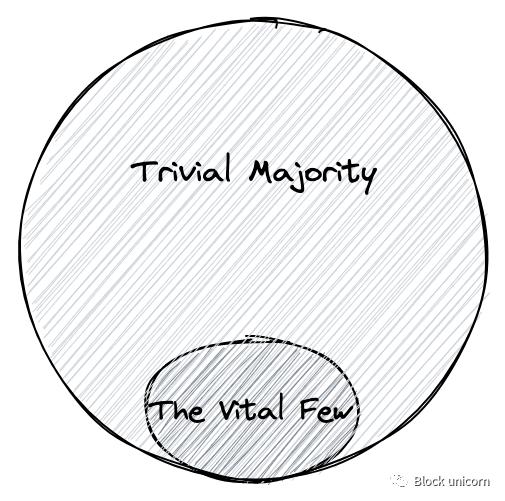
I think a good way to get better at this is to look at the Pareto principle. The idea of the Pareto principle is that most of your effects come from a few causes. Basically, the idea is that a significant minority will change the outcome more than the majority. So taking a short time to get better at something, getting the latest information by researching new things, and even taking advice from others -- all lead to better results in the end.
Finally, let's look at Bayesian learning theory, and in particular Bayesian inference. The idea is to update the probability of something because you get more available information or evidence to support it. In cryptocurrencies, we can use it to modify our beliefs as updated with the latest information available. If you realize that decisions you made in the past were wrong, you have the ability to reevaluate and change your beliefs to one that fits your newer mindset as you gain new information. This will eventually result in a much higher probability of a belief (Bayesian probability).
The original link
Welcome to join the official BlockBeats community:
Telegram Subscription Group: https://t.me/theblockbeats
Telegram Discussion Group: https://t.me/BlockBeats_App
Official Twitter Account: https://twitter.com/BlockBeatsAsia

 Related Articles